

Eisenkot vows to form government within 8 days, accuses Likud of stalling unity talks
Yashar chief seeks coalition deal with B’Yachad’s Bennett, who prefers unity gov’t with Likud, but Netanyahu’s party reportedly refusing to join without ultra-Orthodox parties
 Add ToI as a Preferred Source on Google
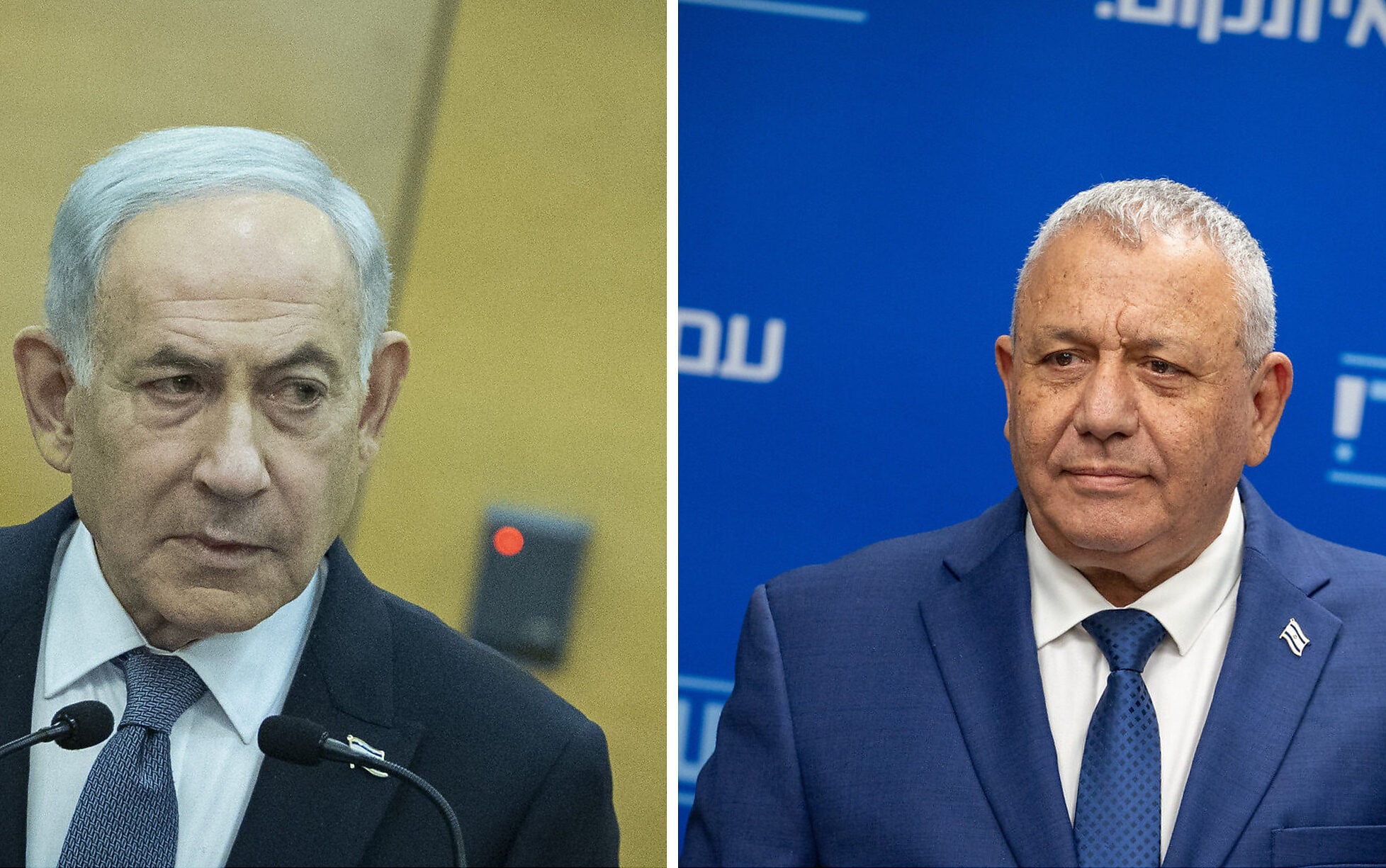
Yashar party chair Gadi Eisenkot said Friday that he intends to form a government within the eight days remaining in the mandate he received from President Isaac Herzog, accusing Prime Minister Benjamin Netanyahu’s Likud party of dragging out coalition talks in an effort to force a repeat election.
Eisenkot, whose mandate expires on December 6, has reached coalition agreements with Avigdor Liberman’s Yisrael Beytenu and Yair Golan’s The Democrats. Together, the three parties hold 36 seats in the 120-member Knesset.
Even with former prime minister Naftali Bennett’s B’Yachad party, Eisenkot’s four-party bloc holds only 48 seats, well short of a 61-seat majority. To fill the gap, Eisenkot can either rely on the support of two Arab-led parties or the two ultra-Orthodox parties.
Eisenkot’s preferred option, for the time being, appears to be a combination of both of those options: a coalition with both the Haredi United Torah Judaism party and Ra’am, the more moderate of the two Arab parties.
Such a government would violate campaign promises of key Eisenkot bloc members who vowed not to sit with Arab-led and ultra-Orthodox parties, but the inconclusive results have forced all of them to make compromises in order to prevent another election.
One last option available to Eisenkot would be a unity government with Netanyahu’s Likud. The Yashar chairman insisted in a lengthy Friday social media post that he is prepared to compromise in order to bring about such a coalition but said that Likud was not willing to seriously negotiate toward that end.
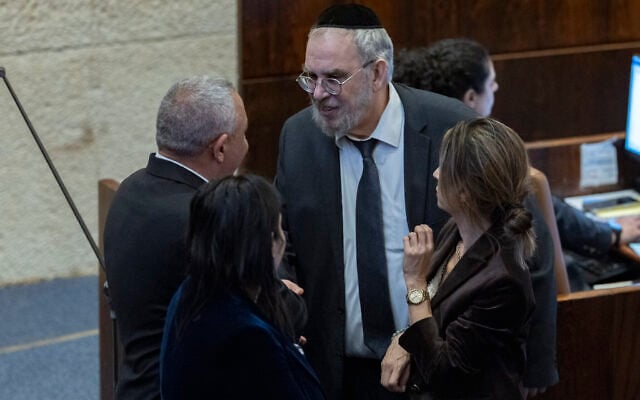
Likud, in turn, accused Eisenkot of having already struck a deal to form a “dangerous left-wing government” and of handing out cabinet posts while sending his negotiating teams to unity talks. The party also accused him of trying to legitimize governing alongside Arab parties it called “terror supporters.”
Minutes later, Likud said in a second statement that despite Eisenkot’s conduct and given the challenges facing Israel, “our hand is extended to form a unity government, and we will do everything we can to achieve it.”
Neither Netanyahu’s bloc nor the so-called change bloc led by Eisenkot secured a parliamentary majority in the October 27 election.
By law, President Isaac Herzog can extend Eisenkot’s mandate by up to 14 days. If Eisenkot fails to form a government, Herzog can give another lawmaker 28 days to do so or inform the Knesset speaker that he sees no possibility of forming a government.
If the president’s efforts fail, at least 61 lawmakers would have 21 days to request that another Knesset member be given the mandate, in a final attempt to avoid another election. That lawmaker would have 14 days to form a government.
Eisenkot said negotiating teams from Yashar and Likud had met only five times over the past two weeks, with Likud rejecting requests to meet more frequently.

He accused Likud of refusing to agree to a state commission of inquiry into the failures surrounding Hamas’s October 7, 2023, attack, remove what he described as extremists from the government, or discuss forming a government that would pass legislation requiring military or national service for all.
Eisenkot said Likud had placed “the worst” unity government option on the table: “the same government, the same partners, no change, no conscription law.”
“I do not intend to cooperate with such a charade,” he added.
Eisenkot said his bloc had been willing to compromise on the terms for establishing a state commission of inquiry and on changes to the judicial system, but accused Likud of failing to put “any concrete proposal on the table” during the two weeks of talks.
He said his door remained open if Likud was prepared for “serious negotiations and partnership that includes compromise.”
Eisenkot seeks deal with Bennett
Bennett reiterated Friday his preference for a unity government with Likud, with Eisenkot serving first under an arrangement in which he and Netanyahu would take turns as prime minister. However, Bennett signaled he was willing to pursue an alternative if such a deal proved impossible.
“If all the major Zionist forces in Israel can participate, that is far preferable,” Bennett said in a statement. “If that proves impossible, we will move forward with a less desirable alternative.”
Bennett, who met one-on-one with Netanyahu last week, has expressed opposition to forming a government with the ultra-Orthodox or Arab parties.
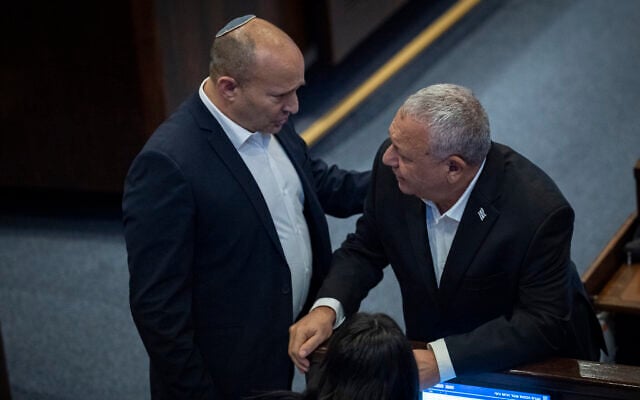
Bennett and Eisenkot are set to meet Sunday after reportedly postponing a meeting scheduled for Thursday amid disagreements over military conscription. The conscription of ultra-Orthodox men was a key issue in last month’s election, with parties in Eisenkot’s bloc campaigning to end their sweeping exemptions from military service.
In June 2024, the High Court of Justice ruled that the government must begin enlisting eligible ultra-Orthodox men after their longstanding blanket exemptions expired.
Earlier Friday, Eisenkot said he was working to reach a coalition agreement with B’Yachad “soon,” after reaching agreements with fellow bloc partners Yisrael Beytenu and The Democrats. B’Yachad is the only party in Eisenkot’s bloc that has yet to reach a coalition agreement with Yashar.
Golan warns against unity with Likud
Yair Golan, leader of The Democrats, on Friday touted his party’s agreement with Yashar, while warning coalition partners against pursuing a unity government with Likud that would keep Netanyahu in power.
“I am pleased to announce that we have reached significant agreements with Yashar and [its chairman] Gadi Eisenkot,” Golan said in a statement. “Throughout the negotiations, we worked to build a genuine partnership, out of shared responsibility for Israel’s future.”
Under the coalition agreement, The Democrats would receive four ministerial portfolios and chair key Knesset committees, including the Constitution, Law and Justice Committee, which Golan said would be “a guardian of Israeli democracy.” The agreement also includes a commitment to repeal the judicial overhaul passed under Netanyahu.
“We promised to be the backbone of the change camp,” Golan said. “We stood by our principles, kept the camp together and proved that it is possible to reach agreements and build a partnership.
“Not all the partners have joined the effort. Some are still considering a unity government with Likud, which would mean keeping Netanyahu in power,” he added. “That is a danger to Israel’s future and a squandered opportunity for change that the public gave us.”
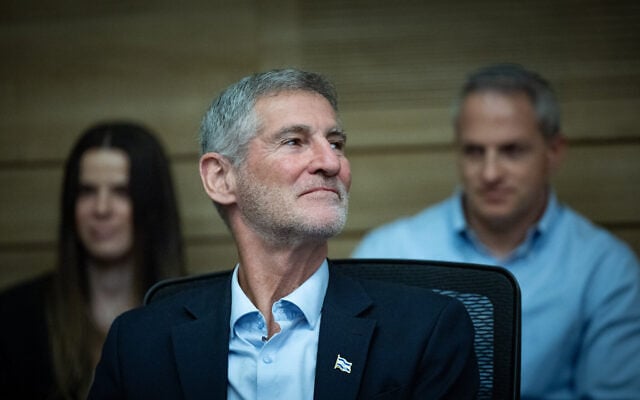
Golan’s remarks appeared aimed at Bennett, a fellow change bloc member.
The Democrats’ agreement followed a brief freeze in talks by Golan, who objected to Yashar’s ongoing negotiations with Likud over a possible unity government.
Yashar and The Democrats announced their agreement Thursday, two days after Golan halted negotiations.
Golan has advocated forming a minority government with the support of the Arab-led parties, arguing that it was the only realistic option for removing Netanyahu from power. Liberman has opposed such an arrangement, preferring a coalition with the ultra-Orthodox parties, while Bennett has favored a unity government with Likud.
Eisenkot pledged Friday to keep working to expand any government he forms to include those seeking to return Israel “to the right track, toward stability and safe harbor.”
Report: Eisenkot vows not to form unity government without Liberman, Golan’s consent
Channel 12 reported later Friday that Eisenkot has pledged to Liberman and Golan that he will not move forward with a unity government without their consent.
Eisenkot reportedly told Liberman and Golan that they would make the decision together. Both party leaders have signed coalition agreements with Yashar and have ruled out sitting in a government with Netanyahu.
A senior figure in the Eisenkot-led bloc told Channel 12 that Netanyahu remains committed to his ultra-Orthodox allies, undermining Bennett’s argument that a unity government would better address the burden on military reservists.
“At every meeting, Netanyahu’s offer of a unity government has included the ultra-Orthodox, with an agreed-upon draft law,” the official said.
“Presenting unity as a solution to the reservists’ problem is wrong. In a government with Likud, we’d get both exemptions for the ultra-Orthodox and Netanyahu,” the official added.





The Times of Israel Community.