

UTJ rabbis said to give go-ahead to launching official talks with Eisenkot
Sides said to reach agreement on ultra-Orthodox conscription legislation; Bennett, unhappy with development and keen for unity with Likud, delays talks with Yashar until Sunday
 Add ToI as a Preferred Source on Google
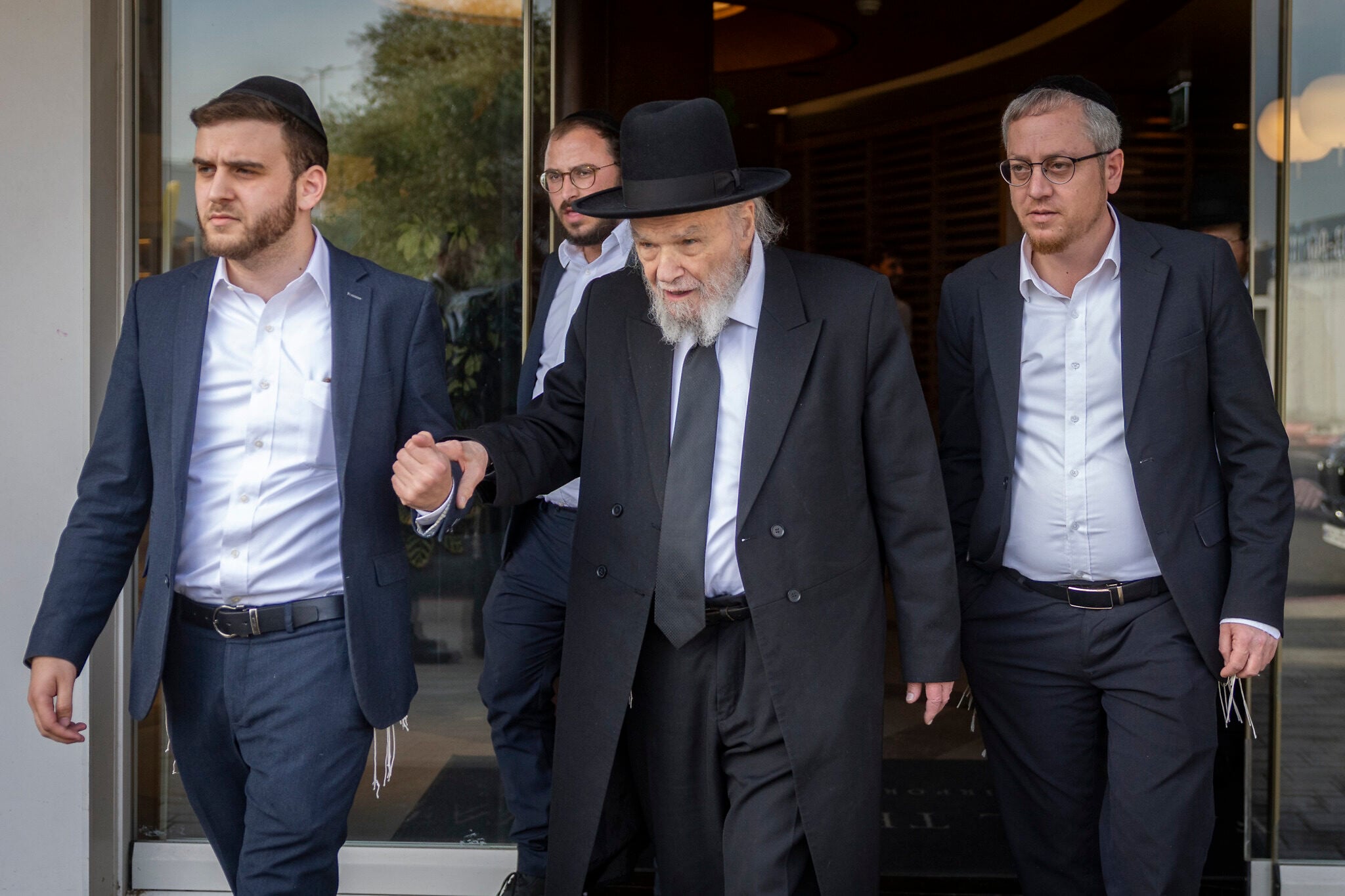
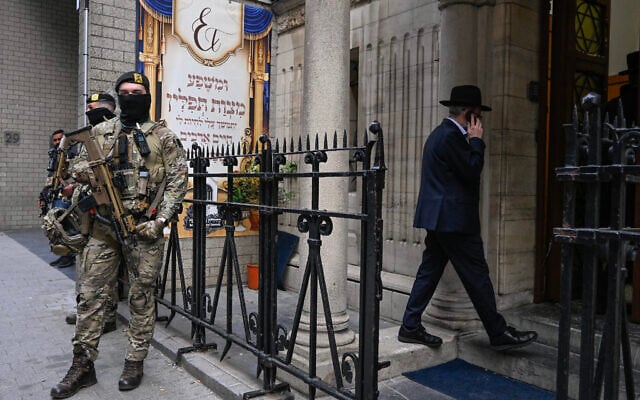
The rabbinic leaders of one of the two factions that make up the ultra-Orthodox United Torah Judaism party greenlit official coalition talks with Yashar head Gadi Eisenkot on Thursday, Hebrew-language media reported.
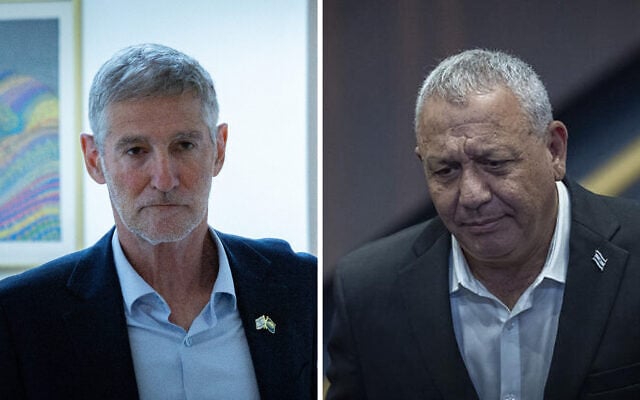
The step by UTJ’s Degel HaTorah faction would signify a dramatic breakthrough in Eisenkot’s efforts to form a government as he continues working to lock down his four-party bloc.
Yashar has already reached an agreement with Avigdor Liberman’s secular right-wing Yisrael Beytenu and Yair Golan’s center-left Democrats, but has not yet signed a deal with Naftali Bennett’s B’Yachad. In addition to his core bloc and UTJ, Eisenkot is expected to bring the traditionalist Arab Ra’am into the fold, giving him enough seats to swear in a majority government.
His path to governance is not yet certain, however, as Bennett reportedly pushed off B’Yachad’s talks with Eisenkot until Sunday due to disagreements over legislation on Haredi military conscription.
The former prime minister would prefer Eisenkot form a unity government with Prime Minister Benjamin Netanyahu and leave the ultra-Orthodox parties out in the cold to curtail the Haredi community’s decades-long exemption from military service.
But Eisenkot, whose party has held several rounds of negotiations with Netanyahu’s Likud, has reportedly offered UTJ an end to enlistment quotas for Haredi men actively involved in Torah study in exchange for their support in swearing in a government, which he hopes to do by the end of next week.
Degel HaTorah’s decision to make official its coalition talks with Eisenkot’s bloc followed a meeting between the faction’s spiritual leaders, Rabbi Dov Lando and Moshe Hillel Hirsch, in Bnei Brak on Thursday evening.
The meeting took place upon Hirsch’s return to Israel from a fundraising trip in the US earlier on Thursday. Channel 12 reported that Netanyahu attempted to meet him at the airport as part of his efforts to persuade UTJ not to break its decades-long partnership with Likud, but was rebuffed.

The Ynet news site reported that UTJ MKs Ya’akov Asher, Yitzhak Goldknopf, Yitzhak Pindrus and Meir Porush were scheduled to meet Sunday morning with attorney Boaz Ben Tzur to formulate their approach before beginning the talks with Eisenkot.
Ben Tzur has already assisted UTJ over the course of its unofficial talks with Yashar by drafting conscription legislation that can withstand scrutiny by the High Court of Justice, the Kan public broadcaster reported.
Both Goldknopf and Porush are members of UTJ’s Agudat Yisrael faction, suggesting the decision by Degel HaTorah’s rabbinic leaders to continue talks with Yashar was party-wide.
Earlier, the Kan public broadcaster reported that through unofficial talks UTJ and Yashar have reached an initial deal on a draft law after the Haredi party hired Ben Tzur to help draft legislation that can withstand scrutiny by the High Court of Justice.
Yashar, UTJ agree on principles of Haredi draft law
According to the Kan report, the framework Haredi conscription agreement between Yashar and UTJ would scrap enlistment quotas for the ultra-Orthodox community, tighten oversight to ensure yeshiva students exempt from service were actually engaged in Torah study, and establish additional service tracks for Haredi men.
The sides also reportedly agreed that ultra-Orthodox rabbis would call on those not engaged in Torah study to enlist.
Ben Tzur is expected to meet early next week with attorney Raz Nizri, who represents Yashar in the negotiations, to work on drafting the legislation and overcoming potential legal hurdles.
Assuming the process with UTJ goes smoothly, Eisenkot is expected to swear in a new government as early as next week.
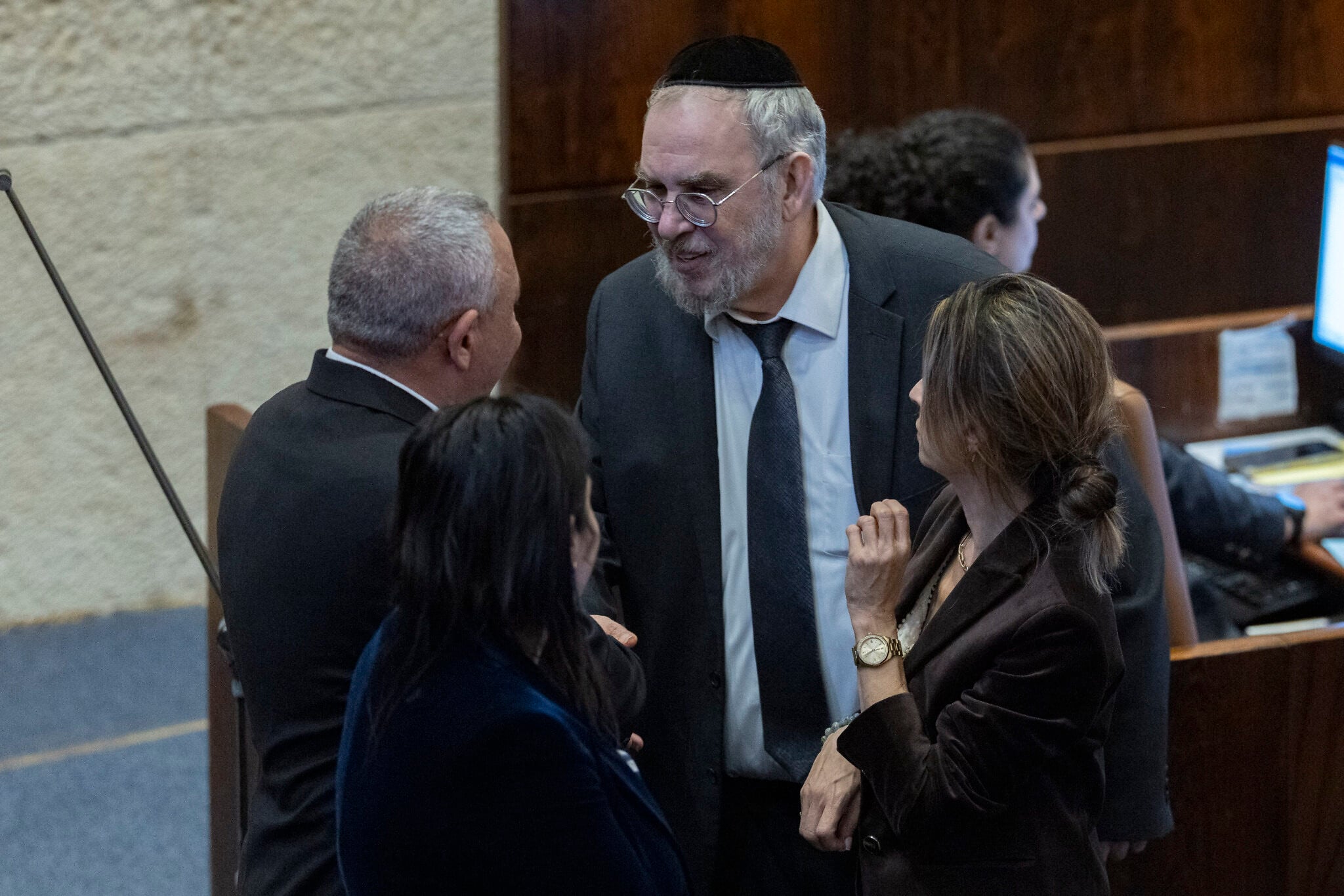
To that end, the Saudi Al-Hadath channel reported on Thursday, citing an Israeli source, that the White House had reached out to Eisenkot to arrange a face-to-face meeting in the event that he succeeds in swearing in a government.
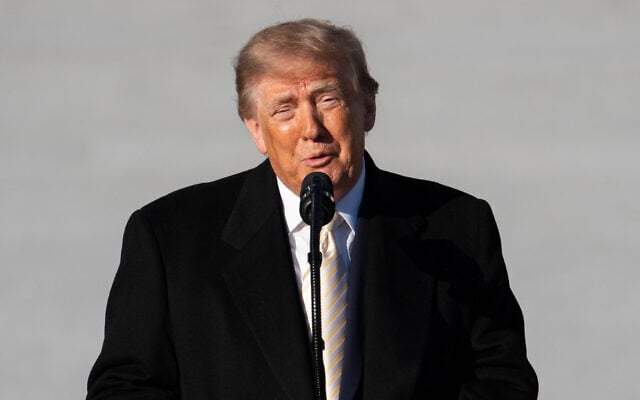
Eisenkot, the source told the television outlet, is eager to meet US President Donald Trump to discuss bilateral ties and the Iran threat.
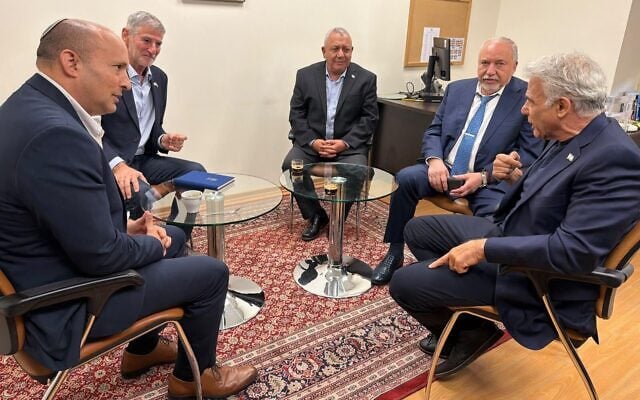
The Yashar leader will work to get US-Israel ties back on track, with a special committee headed by former prime minister and B’Yachad No. 2 Yair Lapid to examine improving ties, including trying to convince Washington not to suspend military aid, said the source.
Eisenkot intends to continue talks with Lebanon and Syria, added the source.
Bennett, unhappy with draft framework, still pursuing unity with Likud
But there may be bumps in the road for Eisenkot, after Bennett put the brakes on B’Yachad’s negotiations with Yashar on Thursday evening, pushing a meeting off until Sunday, over disagreements surrounding the ultra-Orthodox draft framework.
According to Walla, Bennett delayed the meeting after Eisenkot’s negotiating team failed to provide the detailed framework he had requested outlining protections and benefits for those serving in the military.
The report said Bennett recognized that bringing UTJ into a government would require compromises on Haredi conscription — one of the reasons he says he favors a unity government with Likud — but was unwilling to abandon his core demands on the issue.
Walla said Bennett’s representatives had repeatedly requested a detailed plan, but that Eisenkot’s team had presented only its objectives rather than the framework Bennett was seeking.
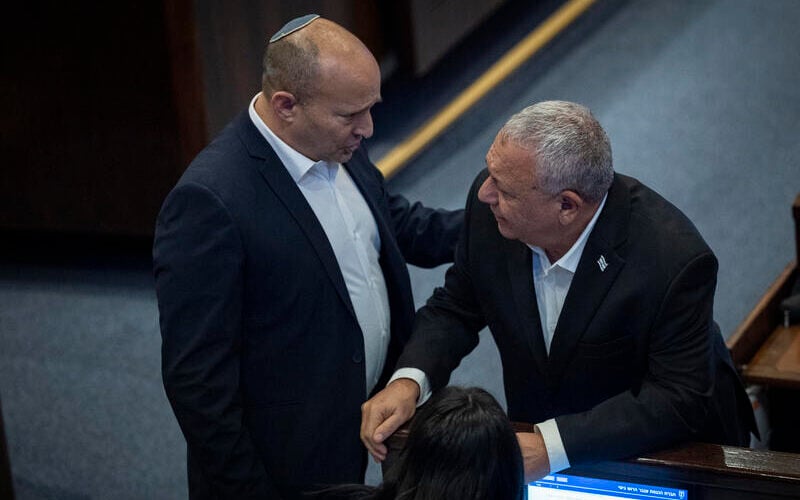
Channel 13 separately reported that Bennett was keeping the option of unity with Likud open even as Eisenkot appeared to be moving in a different direction.
“If we get the impression Netanyahu is serious, we’ll wait before swearing in the government,” he was quoted as saying.
According to the outlet, Bennett’s advisers held conflicting views over which path to pursue — unity with Likud or a coalition with UTJ and Ra’am.
Political strategist Shalom Shlomo, who is overseeing contacts with Likud, was said to favor a unity government built around an “alliance of those who serve,” while chief of staff Nir Novak was said to prefer an Eisenkot-led government backed by Arab parties. Bennett denied that account.
The network also said Bennett was dissatisfied with the proposed division of senior ministries, having sought the defense portfolio before Eisenkot agreed that it would go to Liberman’s Yisrael Beytenu.
Liberman warns Netanyahu could use rotation offer as ‘ploy’
Meanwhile, Liberman warned on Thursday that Netanyahu could offer Eisenkot a unity agreement as a “ploy” to derail the formation of a new government.
“The change government is taking shape,” Liberman wrote on X. “I wouldn’t rule out the possibility that [Netanyahu] will offer Gadi Eisenkot a rotation in which Netanyahu would serve second, but everyone needs to understand: this is merely a ploy.”
The hawkish Yisrael Beytenu chair argued that Netanyahu wanted a repeat election and would drag out unity talks until the last moment, then seek a pretext to break them off.
Even if a unity government is formed, Liberman said, Netanyahu would try to trigger a crisis within months and take Israel back to the polls.
“All the players in the political arena need to internalize this,” he concluded.
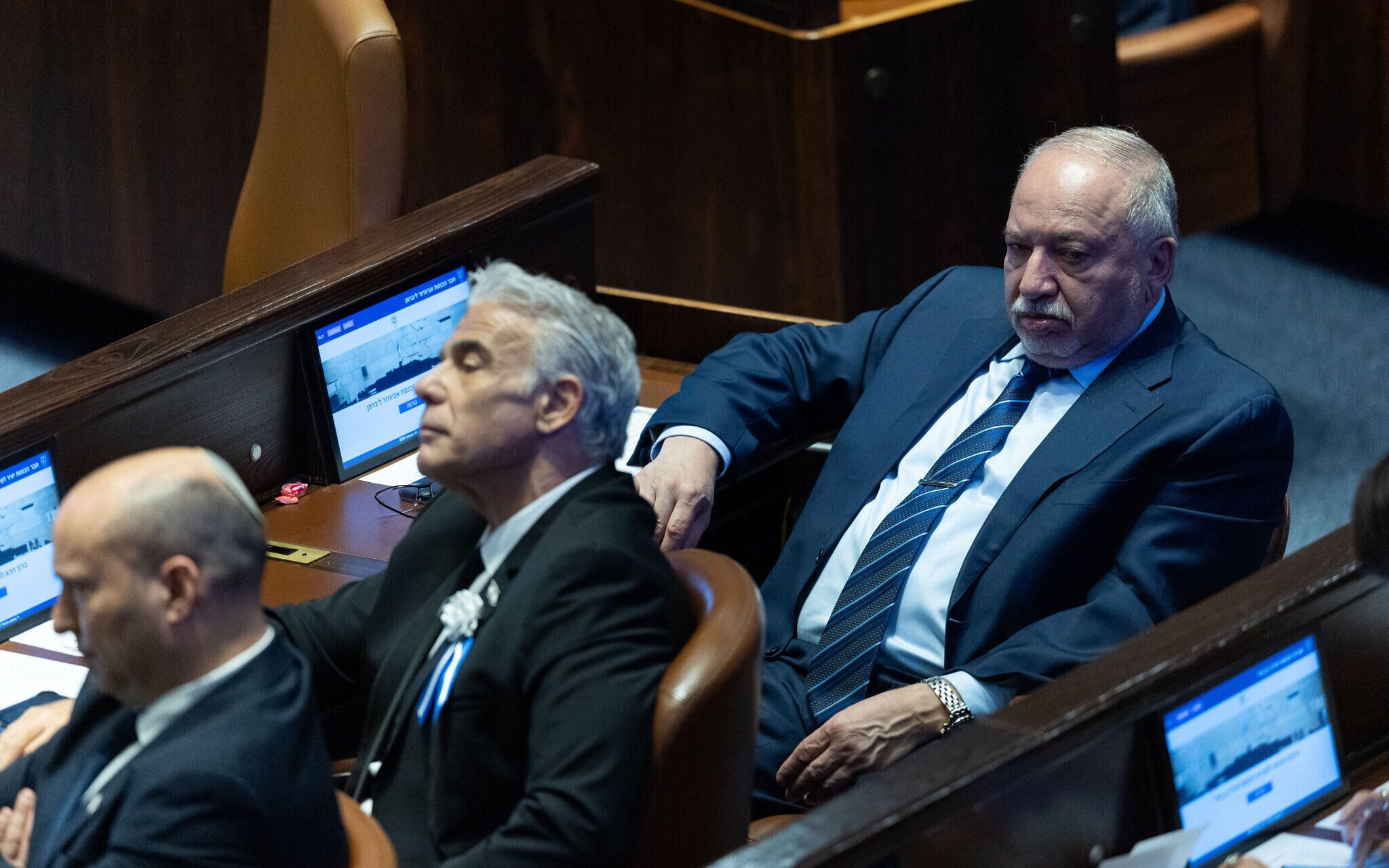
At the same time, Ra’am chairman Mansour Abbas has reportedly signaled that his party would demand a role in determining whether a new government takes office, amid speculation that it would abstain from voting altogether.
Abbas, according to Channel 12, informed the parties in the Eisenkot-led bloc that they should not “count on Ra’am abstaining.”
“We’ll either vote in favor of forming a government in exchange for our demands, or we’ll vote against. We won’t sit on our hands,” the network quoted Abbas as saying.
Earlier on Thursday, Abbas predicted the next government would be comprised of the four Zionist anti-Netanyahu parties — Yashar, B’Yachad, Yisrael Beytenu, and the Democrats — as well as Ra’am and UTJ.




The Times of Israel Community.