

Turnout among Israel’s Arab voters could make or break hopes to unseat Netanyahu
Pollsters expect 63% Arab turnout, up 7% from 2022; with opposition bloc largely against Arab parties joining coalition, community leaders hope they can still wield influence
 Add ToI as a Preferred Source on Google
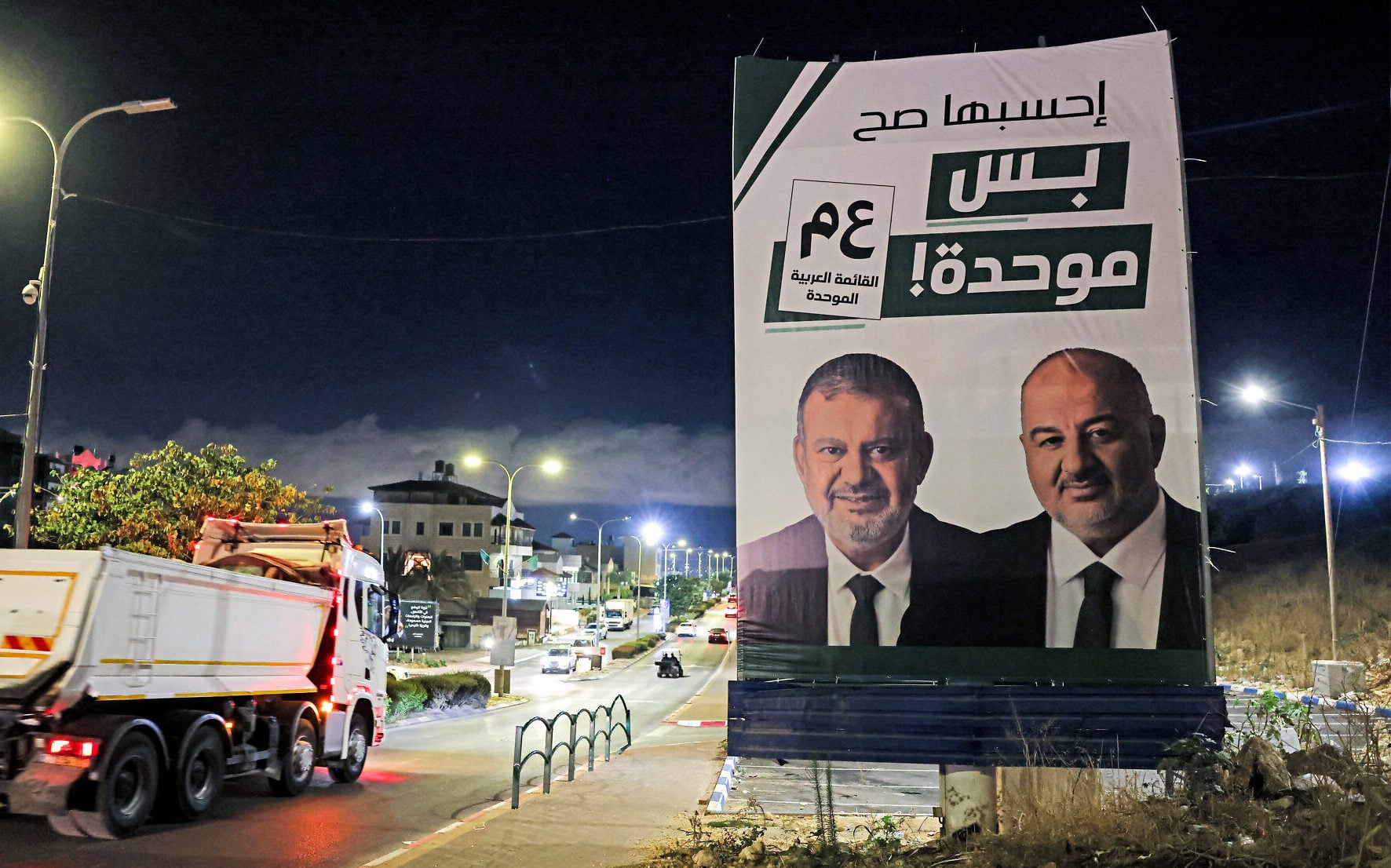
Israel’s Arab leaders are urging members of the minority community to vote in big numbers in next week’s election as they seek to unseat Prime Minister Benjamin Netanyahu and topple the most right-wing government in the country’s history.
High turnout by the 21 percent Arab minority, over 2 million citizens, could nudge Israel’s complex coalition arithmetic in favor of an anti-Netanyahu bloc led by former IDF chief of staff Gadi Eisenkot.
“We can ensure the formation of a new government of change,” Mansour Abbas, an Islamist dentist-turned-politician who heads the Arab-majority Ra’am party, told Reuters in his office in Nazareth, Israel’s most populous Arab city.
Abbas and other Arab leaders face one big obstacle to their goal of playing a role in any future administration without Netanyahu: Eisenkot has so far ruled out forming a government with the parties that most Arab Israelis will vote for, citing a lack of shared values. Most opposition parties say they will only partner with explicitly Zionist platforms.
But Abbas thinks there will be room for maneuver, perhaps after the vote, largely thanks to the cold, hard realities of electoral math.
Opinion polls suggest Eisenkot’s patchwork bloc of centrist, right- and left-wing parties will get the most votes but will fall short of a majority, and will need Arab support, either as coalition partners or from outside, to prop up a minority government.
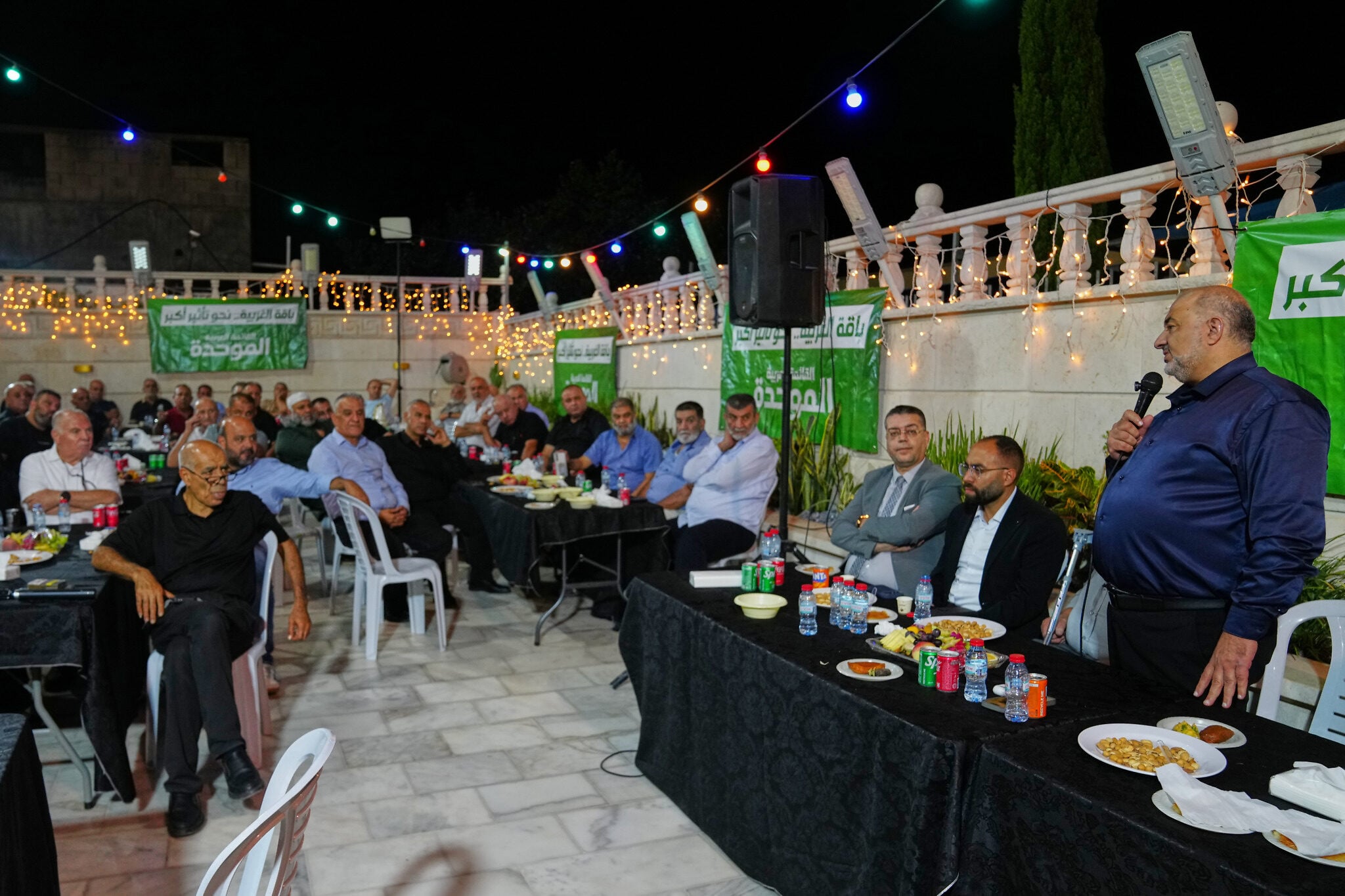
“We want to replace the right-wing government… to end the wars and these policies, to stop the expansion of settlements and to address the failure to stop settler attacks,” Abbas said.
“We also want a government that brings shared security and peace for Palestinians and Israelis,” he added.
For now, Eisenkot is sticking to his position. “I will not align myself with any Arab party,” he said in a podcast this month, citing among other issues their refusal to label Hamas a terrorist organization.
If any bloc fails to form a workable government, that could lead to a period of political deadlock, then fresh elections in 2027, with Netanyahu left in charge in the meantime.
But Netanyahu, for one, appears to be taking the threat of some sort of Eisenkot-Arab alliance seriously, or at least sees it as an opportunity to rile up his base. His campaign has used doctored images and AI-generated videos to depict his rivals embracing Arab leaders.
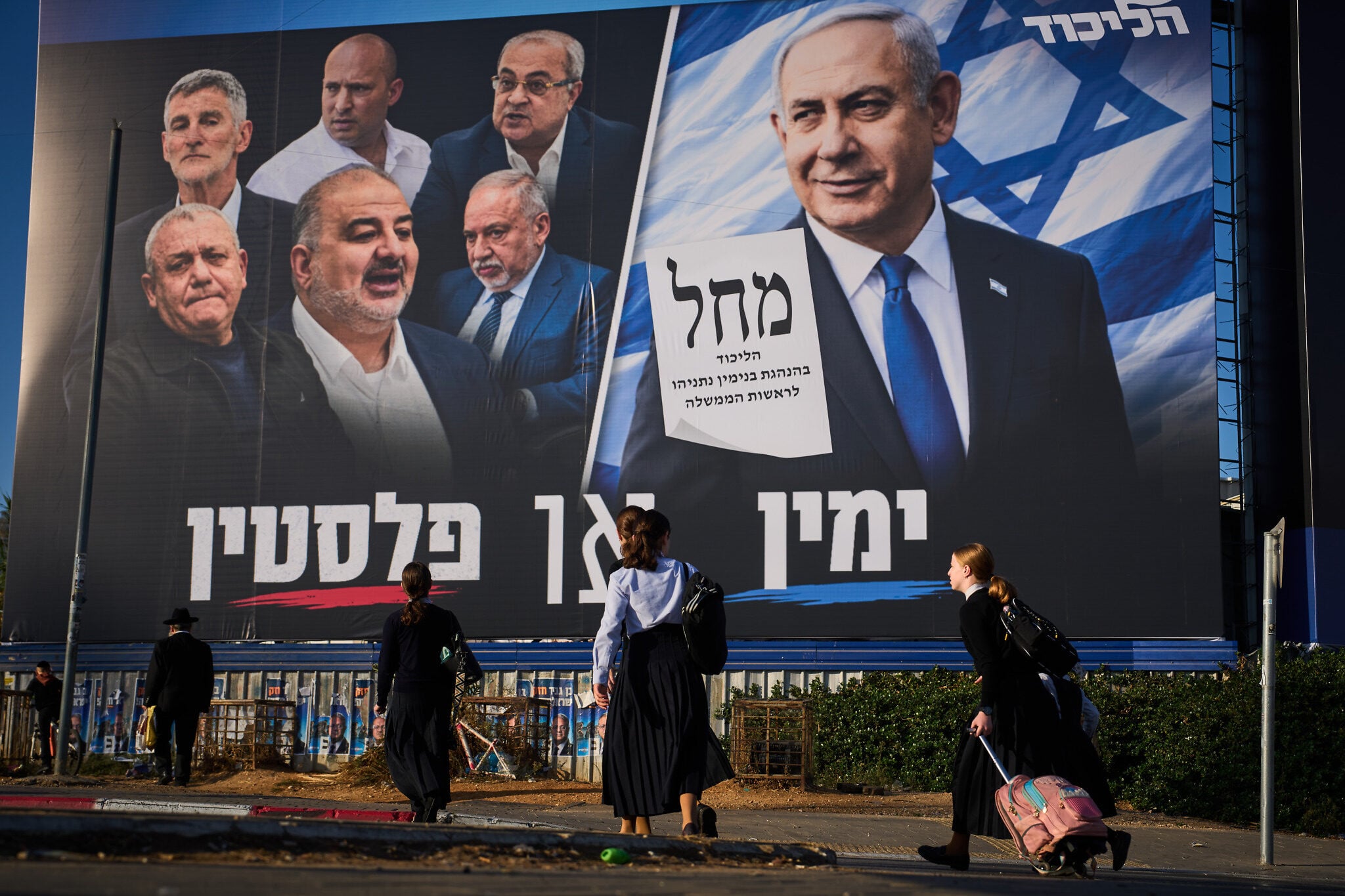
Abbas’s own career shows such alliances can be made. In 2021 he became the first Arab Muslim to join an Israeli coalition, in a government led by Naftali Bennett, now a right-wing member of Eisenkot’s opposition bloc.
That government collapsed after 18 months, partly over disagreements between Ra’am and the rest of that government.
This time around, Abbas said he could paper over those differences.
To win over Jewish parties, he has taken the unprecedented step of giving the number two spot on his slate to a Jewish former police official, Yoav Segalovitz.
“It sends a message of partnership with the Jewish community and with Jewish citizens,” Abbas said.
Israel’s election will be the first since the October 7, 2023, Hamas attack, and is being viewed as a referendum on the leadership of Netanyahu, Israel’s longest-serving leader.
Recent polling shows Eisenkot’s Zionist opposition bloc winning the most seats, hovering around 52 to 56 in most surveys, with Netanyahu’s right-wing bloc winning between 48 and 52 seats in the Knesset. But nearly all polls show both blocs well short of the 61-seats needed to form a majority government.
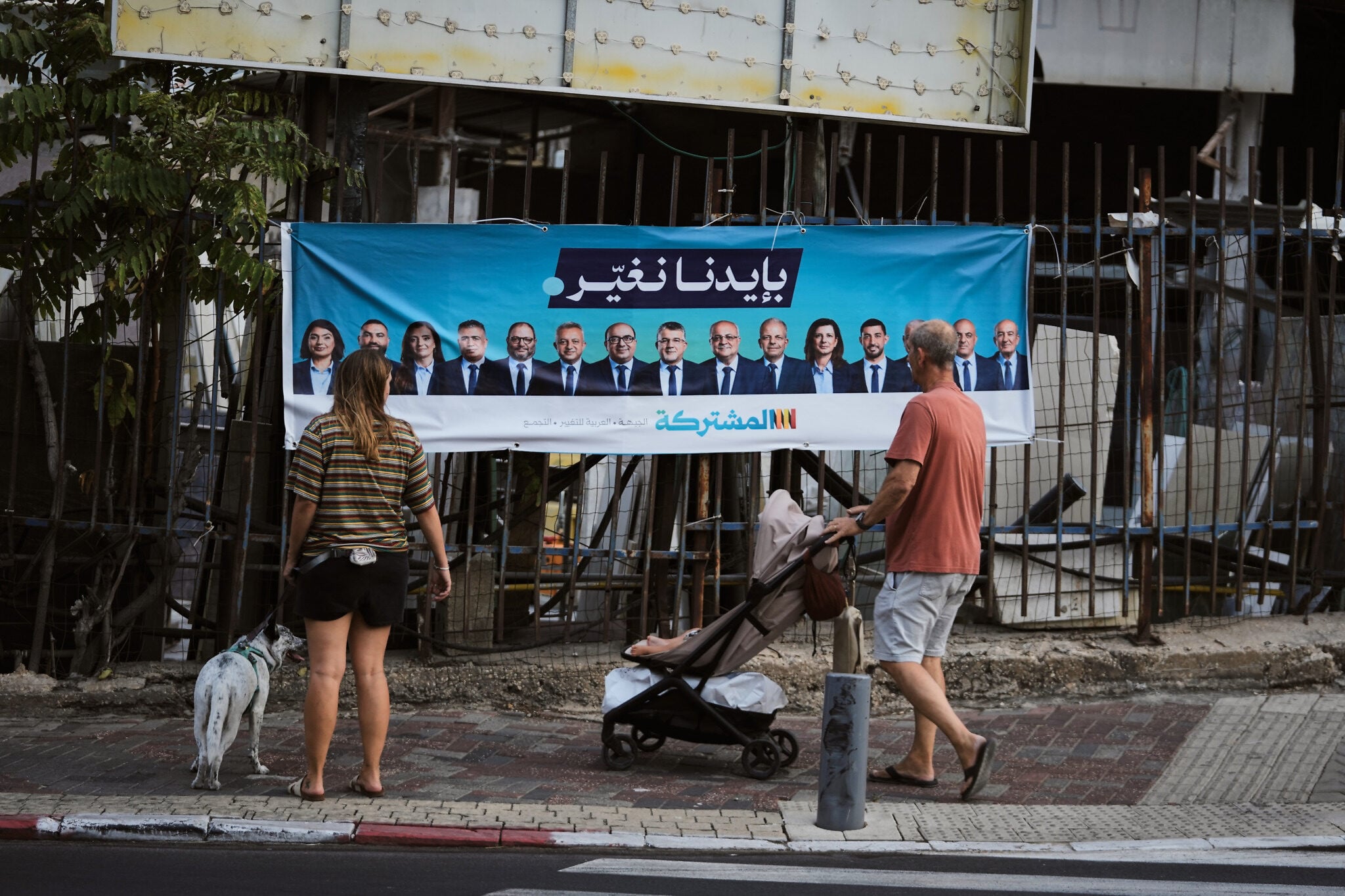
Abbas’s Ra’am party is projected to win around five seats, with a further eight or nine going to the Joint List, a coalition of three other Arab parties.
But following the October 7 disaster and the wars it sparked, Jewish Israelis are also seen as far less willing to take a chance on allying with an Arab party that is likely to oppose most military action.
Voters galvanized against far-right push
Ahead of the vote, Bezalel Smotrich, Netanyahu’s far-right finance minister, proposed a plan to “Judaize” areas around Nazareth in the north and in southern Israel where most Arabs live, describing it as similar to settler expansionism in the West Bank.
Party organizers in Nazareth are hoping to capitalize on Arab anger with Netanyahu, Smotrich and fellow far-right minister Itamar Ben Gvir, who oversees the police, as well as frustration with rising crime in their communities.
Last week, canvassers with Abbas’s party handed out flyers near Nazareth’s massive Church of the Annunciation.
“There is a greater need this time than ever before to go out and vote in large numbers,” said one of the people they approached, 74-year-old Gassan Bsoul. “The danger is greater than in the past.”
Netanyahu’s Likud and Smotrich’s Religious Zionism vowed last week to send nearly 2,000 activists to polling stations in Arab communities during the elections, over unsubstantiated claims of fraud by voters and vote counters.
The activists will be posted in addition to formal observers that each party can send to polling stations. The additional Likud and Religious Zionism activists will thus have no official function or ability to perform oversight, raising questions as to the purpose of their presence and concerns of potential voter intimidation.
Yousef Jabareen, head of the Joint List, said in response that Smotrich and other right-wing figures were “trying to intimidate the Arab public through lies and racist campaigns.”
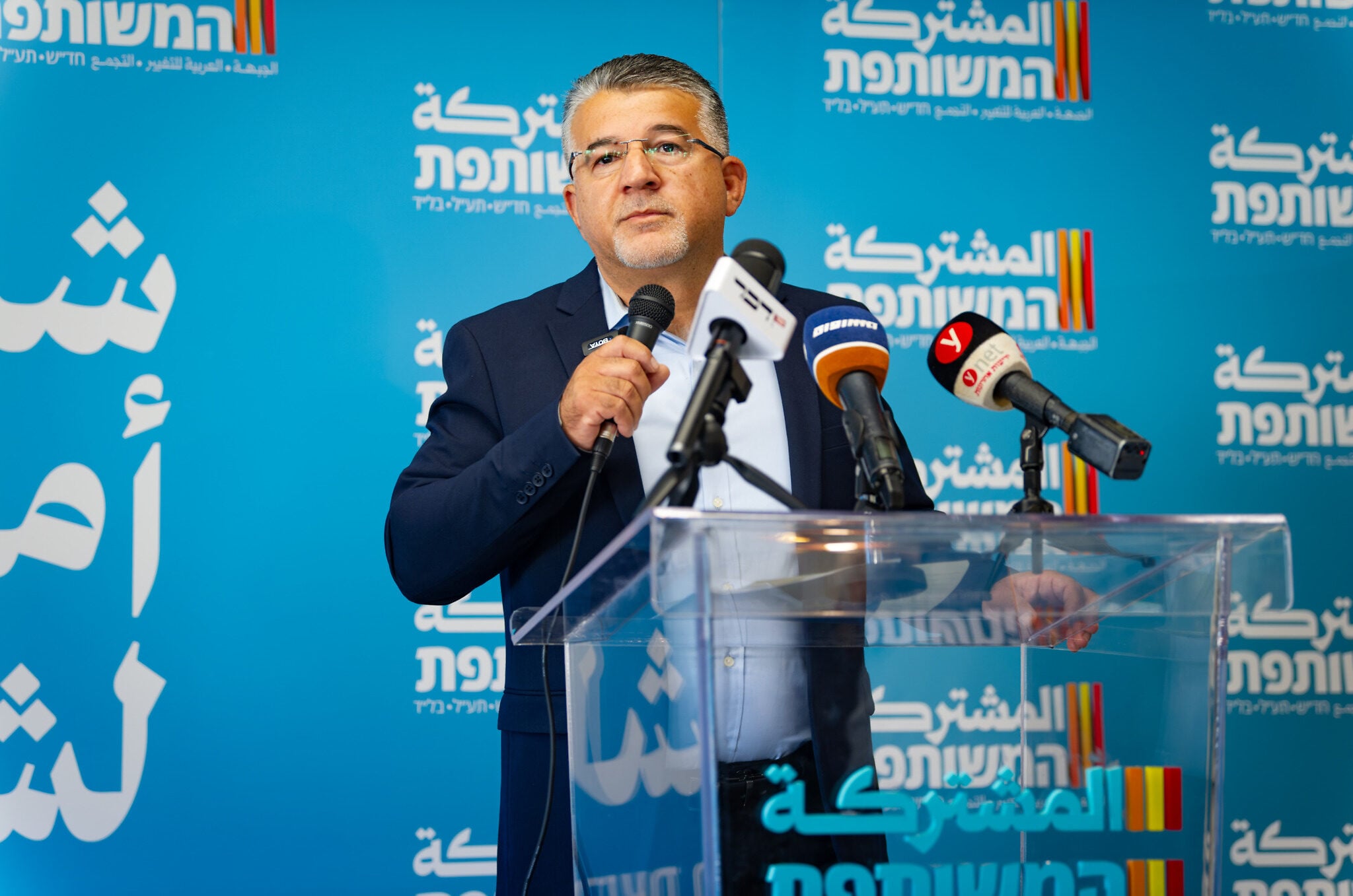
Israeli pollsters expect Arab voter turnout to be higher than in previous rounds of elections in 2022 and 2020. The Stat-Net Research Institute, based in an Arab Druze town near Haifa, projected a turnout of 63%, compared with 56% in 2022.
While Abbas has tried to position his party to potentially join the government, leaders of the Joint List have said they could wield just as much influence by staying in opposition.
Ahmad Tibi, of the Joint List’s Hadash-Ta’al faction, said his group was ready to form “a preventive block to support [a government] from the outside.”
He said the Joint List would join an Eisenkot-led government in voting “to establish an official commission of inquiry into October 7,” a stated priority of the former military chief and his partners.
“We are placing as our top priority getting rid of the extreme right-wing government of Netanyahu, Smotrich and Ben Gvir,” Tibi said.




The Times of Israel Community.