 Add ToI as a Preferred Source on Google
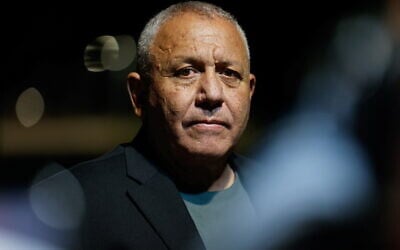
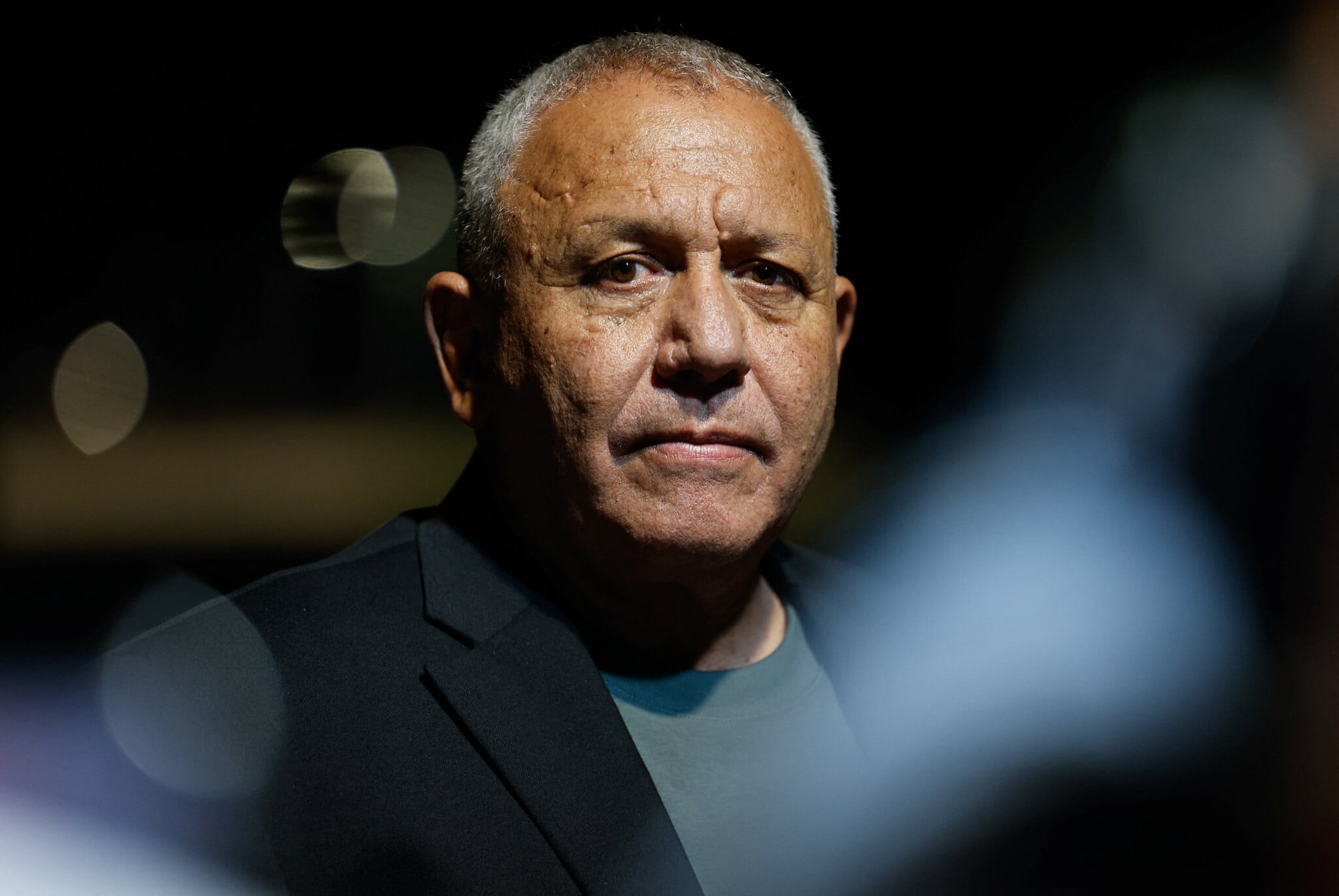
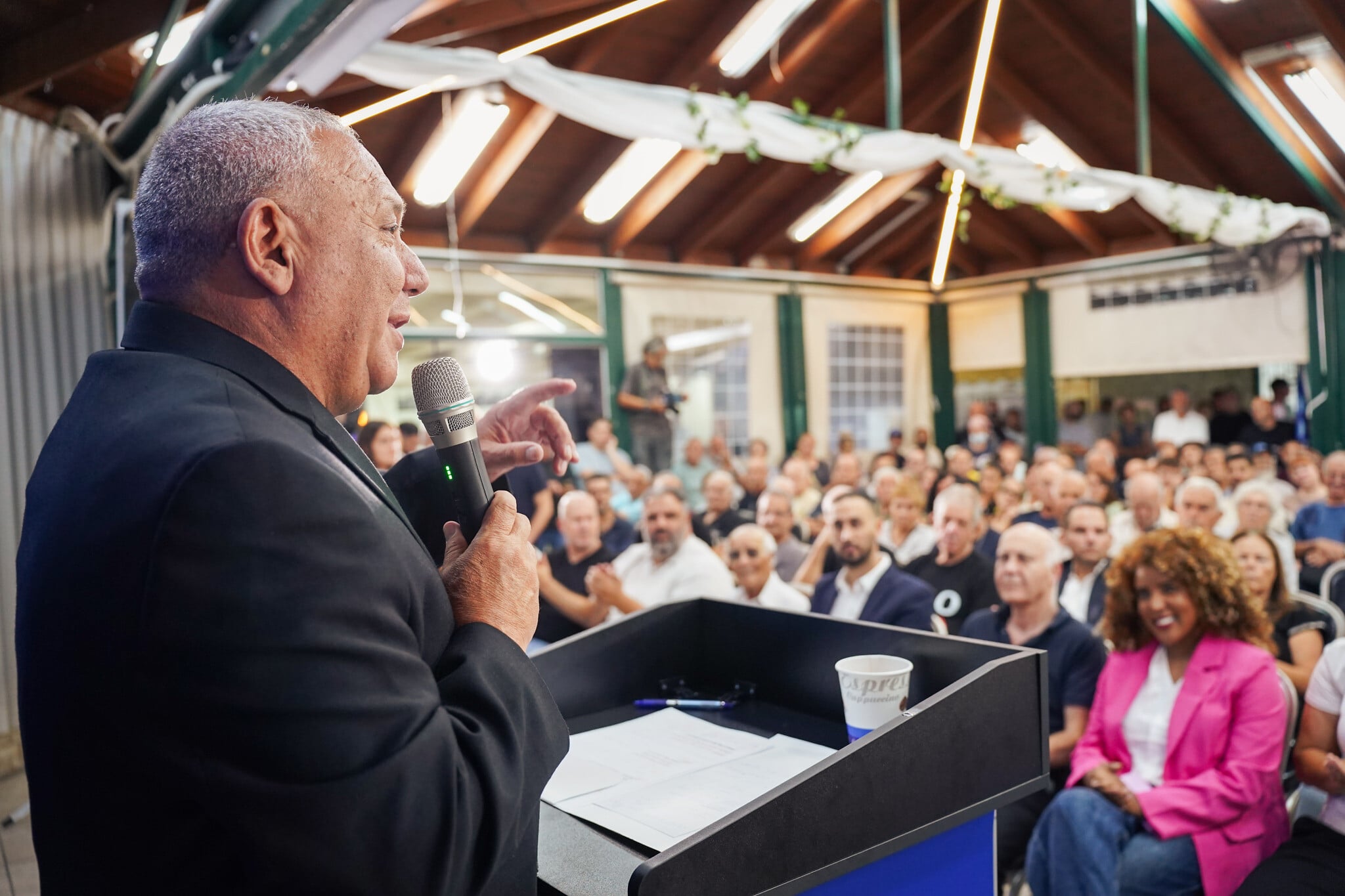
Three years after the October 7 massacre, Yashar party chairman Gadi Eisenkot has been speaking in cemeteries and conference halls. An afternoon of media interviews on Sunday was followed by a memorial ceremony for Capt. Omer Neutra, a 77th Battalion tank commander who fell three years ago and whose body was abducted to Gaza. That evening, Eisenkot headlined an election rally before 1,200 people in Ramat Gan.
How does one go in a single day from charting a political future to remembering a national disaster, and from delivering a eulogy to reciting campaign talking points?
For Eisenkot, who is bidding to become Israel’s next prime minister, these jarring transitions are not merely a matter of scheduling. Eisenkot, who entered politics just four years ago — and who became a bereaved father two months after the outbreak of the October 7 war — carries in his body and soul a particular iteration of the profound tension currently gripping Israeli society as a whole: the pull between a grief that refuses to let go and the urgent necessity to move forward and wage a principled political struggle.
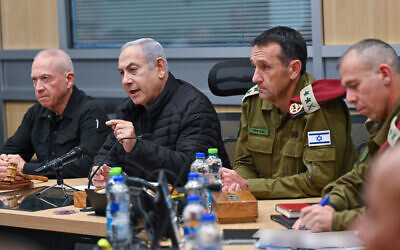
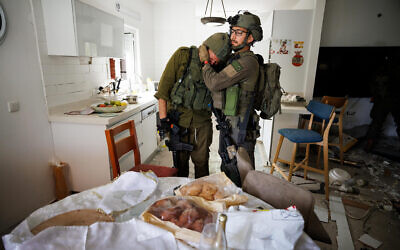
Many observers outside of Israel are unfamiliar with Eisenkot’s tragic personal story. They do not know that on December 7, 2023, his fifth child, Gal — a 25-year-old soldier in the elite Maglan commando unit — was killed in combat in the northern Gaza Strip. At the time, Eisenkot was serving as a ministerial “observer” in the narrow, five-member war cabinet that handled all of Israel’s most consequential security decisions. It is hard to imagine a more painful personal and political drama: Eisenkot was one of a tiny group of leaders directing the very military campaign in which his son was killed.
On the third day of the traditional Jewish mourning period (shiva), he told The Times of Israel in our interview on Sunday, a government minister came to his home to pay respects and casually mentioned that the cabinet was about to hold a critical operational discussion. Eisenkot decided to leave his house, get into his car, and head out to take his seat at the table.
That was the moment, he says, when he resolved, days after the terrible loss, to continue his political career. “I can’t turn back the clock,” he says quietly. “I will do everything I can to be worthy of the heavy price Gal paid.”
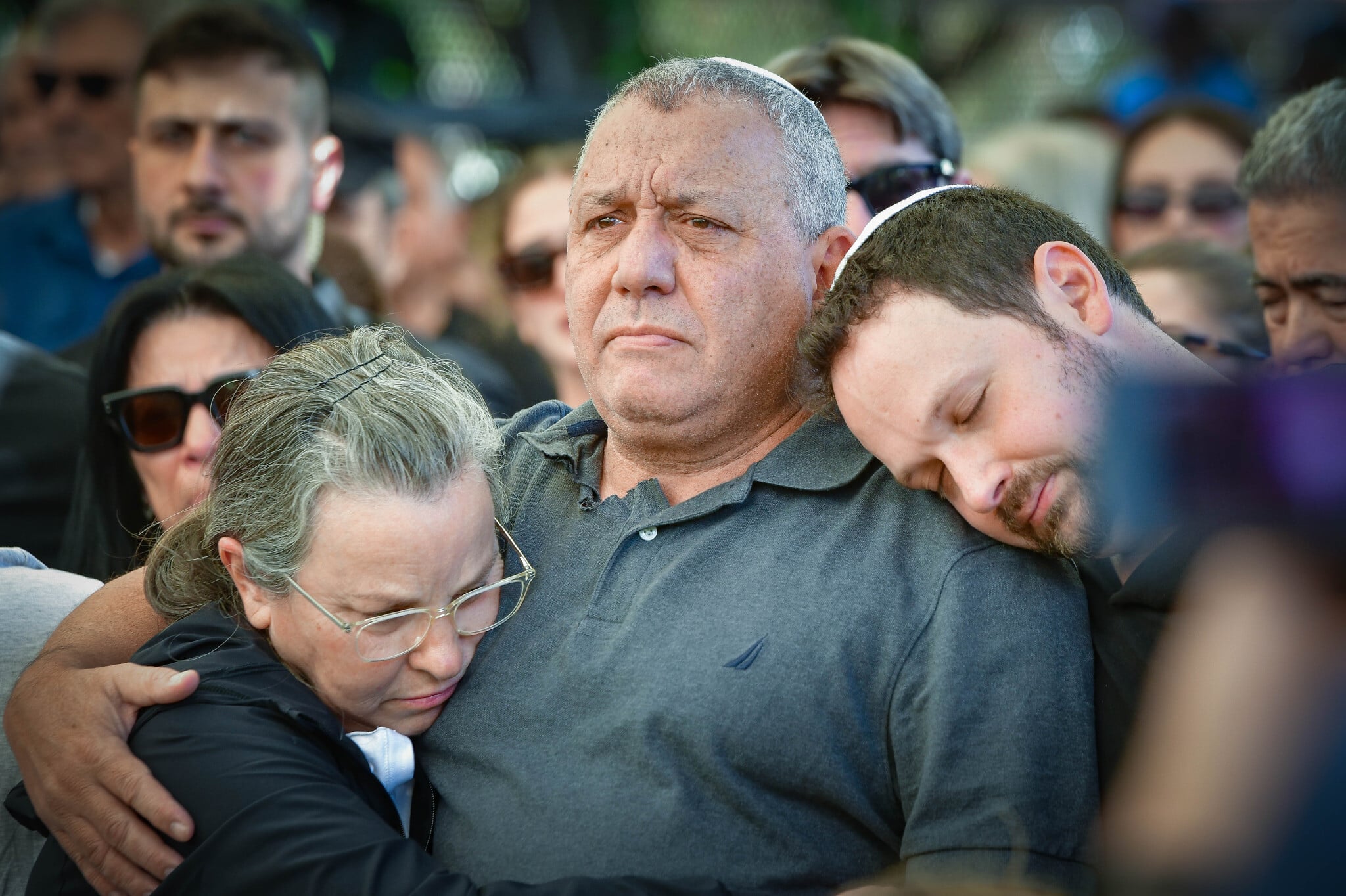
Eisenkot entered politics in August 2022, joining the National Unity party led by Benny Gantz, whom Eisenkot had succeeded as IDF chief of staff. Born to Moroccan immigrant parents in Tiberias, Eisenkot was a baby when his family moved to Eilat, Israel’s southernmost city. He grew up in the geographic periphery, enlisted in the Golani Brigade at 18, and ultimately forged a 41-year military career, eventually relocating to the central city of Herzliya.
I can’t turn back the clock. I will do everything I can to be worthy of the heavy price Gal paid
If elected, he would become Israel’s first prime minister of Mizrahi (Middle Eastern or North African Jewish) descent. Interestingly, he made little use of his Mizrahi background during his lengthy military career or his political life. Until recently, that is.
The ruling Likud party’s voter base is famously far more Mizrahi than Ashkenazi (European Jewish), and for the first time, Eisenkot has realized that he must actively play the demographic card to attract voters. The task remains delicate, and Eisenkot’s campaign team debates daily how to strike the right chord regarding the ethnic divide without coming across as patronizing.
For months now, Eisenkot has led Prime Minister Benjamin Netanyahu in polls asking voters who is better suited to run the country. A Kan public broadcaster poll early this week showed Eisenkot leading 41% to 38%, while a Maariv poll days earlier showed him ahead 44% to 38%. His campaign emphasizes this sustained advantage, noting that in none of the election cycles of the past decade has a centrist challenger consistently beaten Netanyahu on the core “suitability” question.
But the public trust he seeks to convert into an electoral victory has yet to translate into a solid, 61-seat parliamentary majority. The bloc he nominally leads, ranging from political right to left with his Yashar roughly in the center, currently lacks a definitive path to forming a government, and the possibility of another political deadlock hangs heavily over the election now just three weeks away. Eisenkot is not actively seeking the support of the two Arab-majority parties, but he is also entirely unwilling to accept a scenario in which Netanyahu remains in power as a caretaker prime minister if his anti-Netanyahu bloc wins more seats.
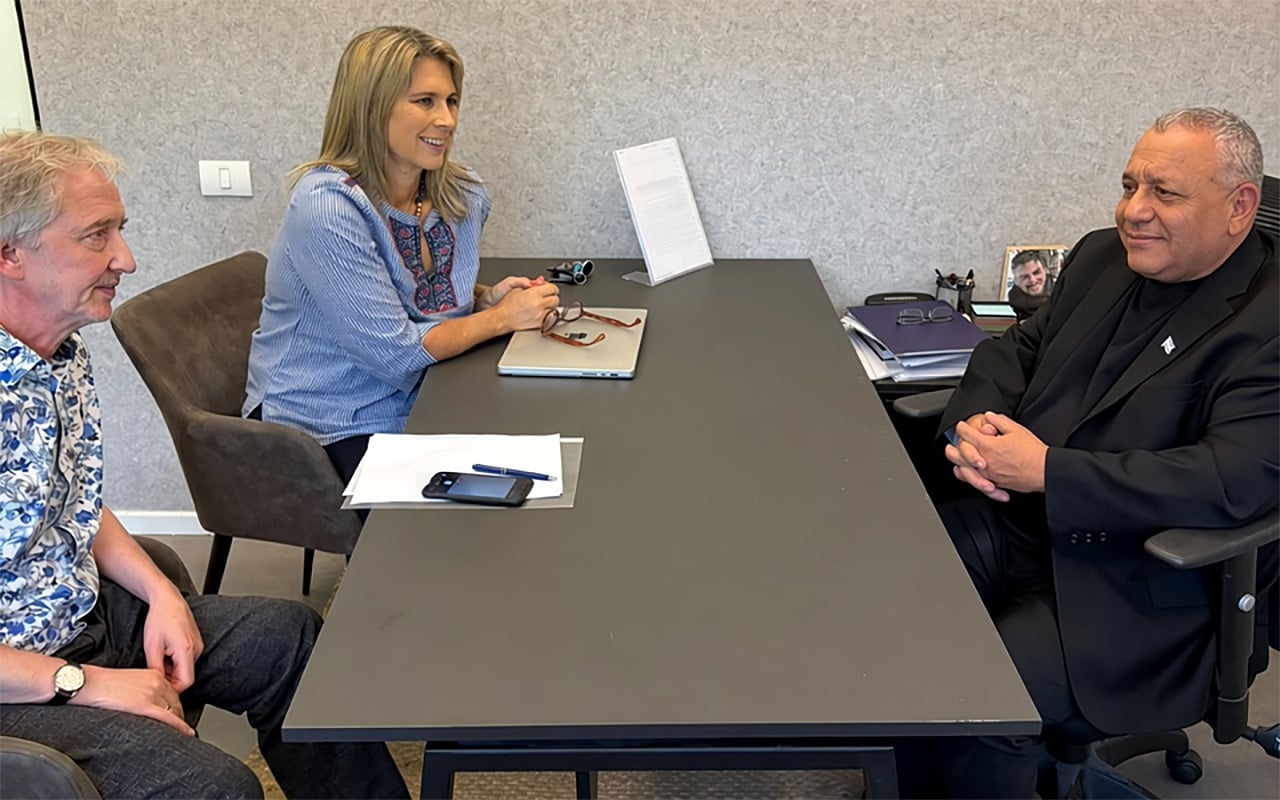
In his wide-ranging interview with The Times of Israel, conducted in Hebrew, Eisenkot levels a blistering political indictment against Netanyahu, labeling him an “anti-leader” and describing the specific moments inside the war cabinet when he completely lost faith in the prime minister. At the same time, he lays out what he would do differently: crack down on Jewish terrorism and redefining relations with the Palestinian Authority, repeal controversial legislation, expand mandatory national service, and attempt to advance sweeping regional agreements under American auspices.
Asked how the country can finally begin to heal from the trauma of October 7, he repeatedly returns to two terms that anchor the conversation: responsibility and personal example.
“This election,” he declares, “is a choice between responsibility and running away from responsibility.”
Below is a lightly edited transcript of the interview.
The Times of Israel: If you are elected prime minister, you will come to the job as a father who lost his son in combat. Former prime minister Ariel Sharon lost a young son in an accidental shooting at home, but your specific case is unprecedented: Your son fell in war while you were in the government. How would that trauma affect your judgment as a national leader?
Gadi Eisenkot: That issue was present at the very beginning of the war. The supposed dilemma existed in those early cabinet discussions [after the October 7, 2023, Hamas-led invasion and massacre], because I knew my son was taking part in the fighting. But because I had spent 41 years sending soldiers on highly dangerous missions, it never crossed my mind that this could influence my decisions. After October 7, I thought such catastrophic damage had been done to the State of Israel that if we did not strike Hamas a decisive blow, we would have no future in the Middle East.
And during the shiva, you actually left home to take part in an important security discussion. How did your family react to that?
They accepted it. I explained to them exactly why I was going. When I look ahead, this loss instills in me an even greater commitment, far beyond the commitment I had throughout my military life.
If, God forbid, the current right-wing coalition wins again, it will lead Israel in dark directions that we can already see unfolding
My family also asks me, “Why do you need this [politics]? You’ve been there, done that, served the country, paid a terrible price. You can just get on with your life.” But I believe the State of Israel — and I am not exaggerating — is at a historic crossroads. If the change I believe in comes about, the country will turn toward the place it needs to go: a Jewish, democratic, liberal, and strong state that actively wants to belong to the international community of nations.
If, God forbid, the current right-wing coalition wins again, it will lead Israel in dark directions that we can already see unfolding before us: a less democratic, less liberal country, and in my view, also a less Jewish one.
Anyone who wants to impose full sovereignty over all of Judea and Samaria [the West Bank] and bring another 2.8 million Palestinians into Israel is endangering the Zionist enterprise and the Jewish demographic majority. Anyone who wants to weaken the Supreme Court and crush the judiciary is endangering democracy.
So this election is fundamentally about the future of the State of Israel. That is what drives me from morning to night to do everything I can to win, and to not allow Netanyahu and his coalition to build a state based on the concept of “a people that dwells alone.”
Your campaign often appears highly cautious. In Jerusalem, for example, you are barely visible. It seems you are afraid of making mistakes and of how the other side will exploit every statement. And the challenge is extremely difficult in any case because you are facing a man who, for almost an entire generation, is the only prime minister [Israelis] have ever known.
It’s difficult, because Israeli society is engaged in a profound, fundamental debate over the very identity of the State of Israel. That environment inevitably brings the discussion back to the place where Netanyahu feels most comfortable: frightening the public, stirring up hatred between different sectors, and reducing everything to toxic questions of internal identity.
It’s important to remember that I founded a political party just 12 months ago, with six people. It has come a long way and today it actually leads in the polls. But that doesn’t make me complacent. I am very worried, and out of deep concern for the country’s future, I am working to win.

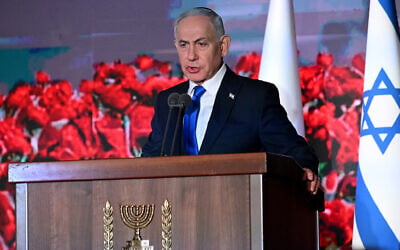
I am acutely aware that an entire generation has grown up here knowing only Benjamin Netanyahu as prime minister for three decades. From the time he was opposition leader against Yitzhak Rabin to this day, now running against me, three themes keep recurring in his messaging. The first is that only he knows how to deliver security — and we all saw how he catastrophically failed on October 7. The second is his claim that I will bring about a Palestinian state — whereas he was the one who regarded Yasser Arafat as a true partner, gave up 11% of the territory in the Wye River Memorandum, returned part of Hebron, and publicly committed four times to a Palestinian state. The third is his claim that I will ally with [Islamist Ra’am party leader] Mansour Abbas, when I know how hard he tried to woo Mansour Abbas [into a coalition in 2020].
He explicitly exploits the basic fears of Israel’s Jewish population, which were greatly intensified on October 7. We must not allow him to perpetuate the culture of fear and lies that he has instilled. That is why I feel both fierce determination and an enormous sense of responsibility.
They tell me he is strong among young people. Well, in current polls of young people, I am actually in first place. For the past two months, I have been ahead of him in polls on the core question of preference for prime minister. I checked 30 years back: there has never been a candidate who managed to be ahead of him like this just a month before an election.
At the same time, one cannot underestimate his experience, his political ability, and his extensive track record of manipulating the Israeli public.
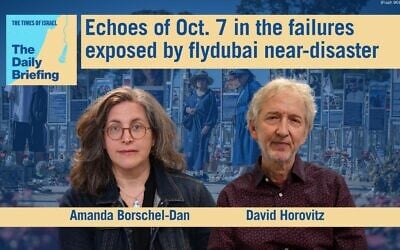
By virtue of his position, he is also at the center of every national event. There is a near-disaster on a flydubai flight, and he immediately invites the heroes to meet him on the tarmac. How do you contend with the power of incumbency?
I’m giving interviews around the clock to explain to the Israeli public that this is exactly the culture of lies that has dragged the State of Israel down.
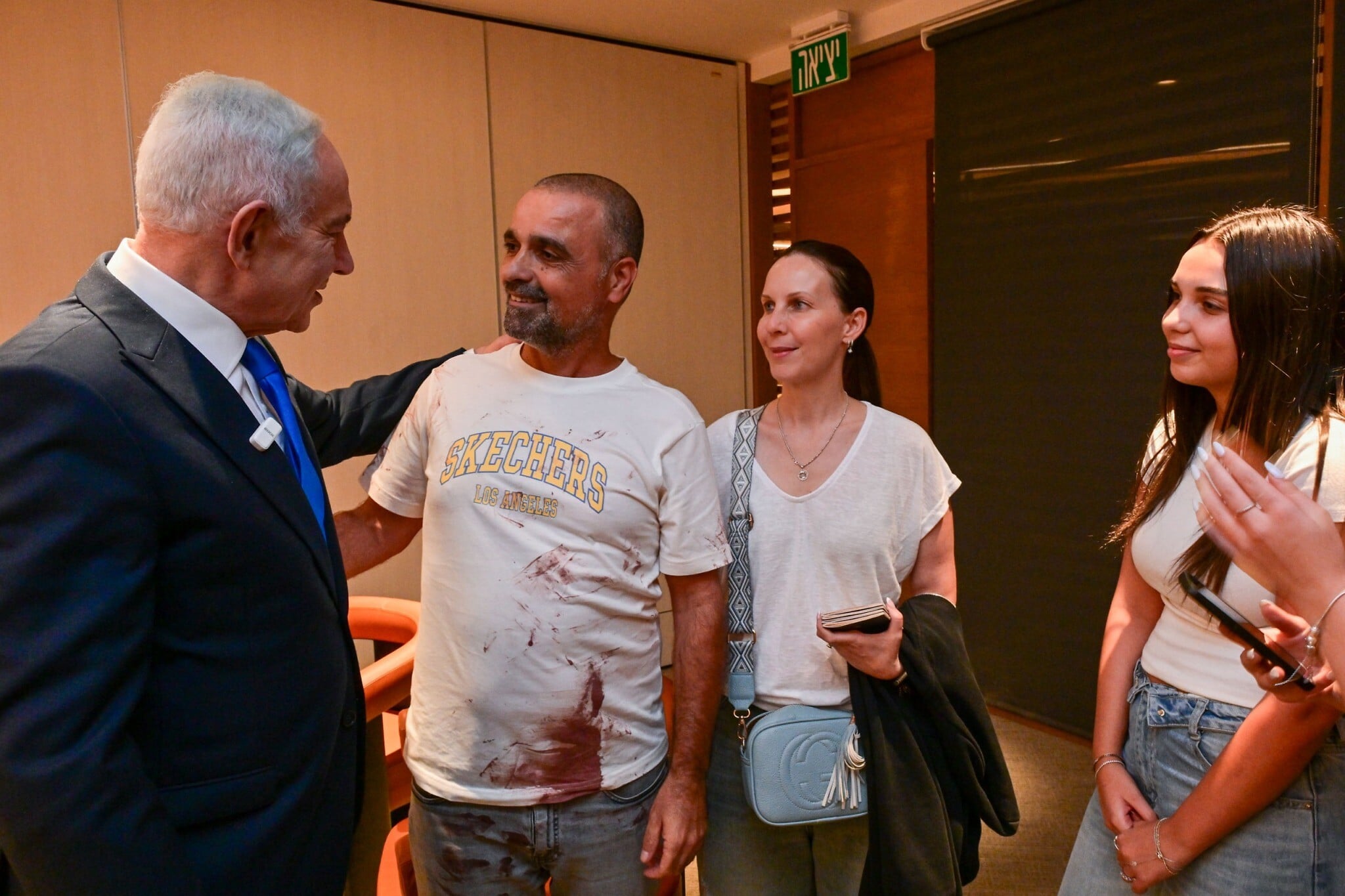
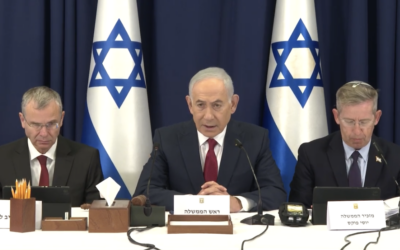
Leaders are tested by results. Netanyahu brought upon Israel the greatest disaster since its establishment. He then defined the war aims, and none of them was achieved except the return of the hostages — and that was largely thanks to US President Donald Trump. Netanyahu actually opposed those hostage deals. I sat with him in the war cabinet, I saw exactly how he torpedoed them, and that is precisely why I left the government after eight months.
The flydubai plane incident is an excellent example. He takes an incident that constitutes a massive security failure, which was averted only thanks to the extraordinary heroism of Israeli civilians and an Indian pilot, and shamelessly leverages it for a photo op.
Netanyahu is an anti-leader. All my life I have had a basic rule of leadership: when there is a failure, you step forward, investigate, and take full responsibility. When there is success, you give others the credit. He always does the exact opposite
In my eyes, Netanyahu is an anti-leader. All my life I have had a basic rule of leadership: when there is a failure, you step forward, investigate, and take full responsibility. When there is success, you give others the credit. He always does the exact opposite. Instead of firing the transportation minister, taking decisive action, and establishing an investigative commission, he evades responsibility.
Are you calling for Transportation Minister Miri Regev to be fired?
Absolutely. Because of the ongoing failures in her ministry. The flydubai incident is part of a much broader, failed culture of appointing unprofessional people, political cronies, Likud Central Committee members, and mediocre individuals who are completely incapable of doing their jobs. If there had been a serious professional in charge [at the ministry of overseeing the vetting of foreign airline pilots], he would have done the job correctly.
Should Shin Bet chief David Zini also resign because of this incident?
We need to examine exactly what the Shin Bet’s responsibility was and what the Mossad’s responsibility was. It is not entirely clear to me yet who is ultimately responsible. I know these jurisdictions were only regulated a year ago, and I do not know what exact arrangement was put in place by the National Security Council.
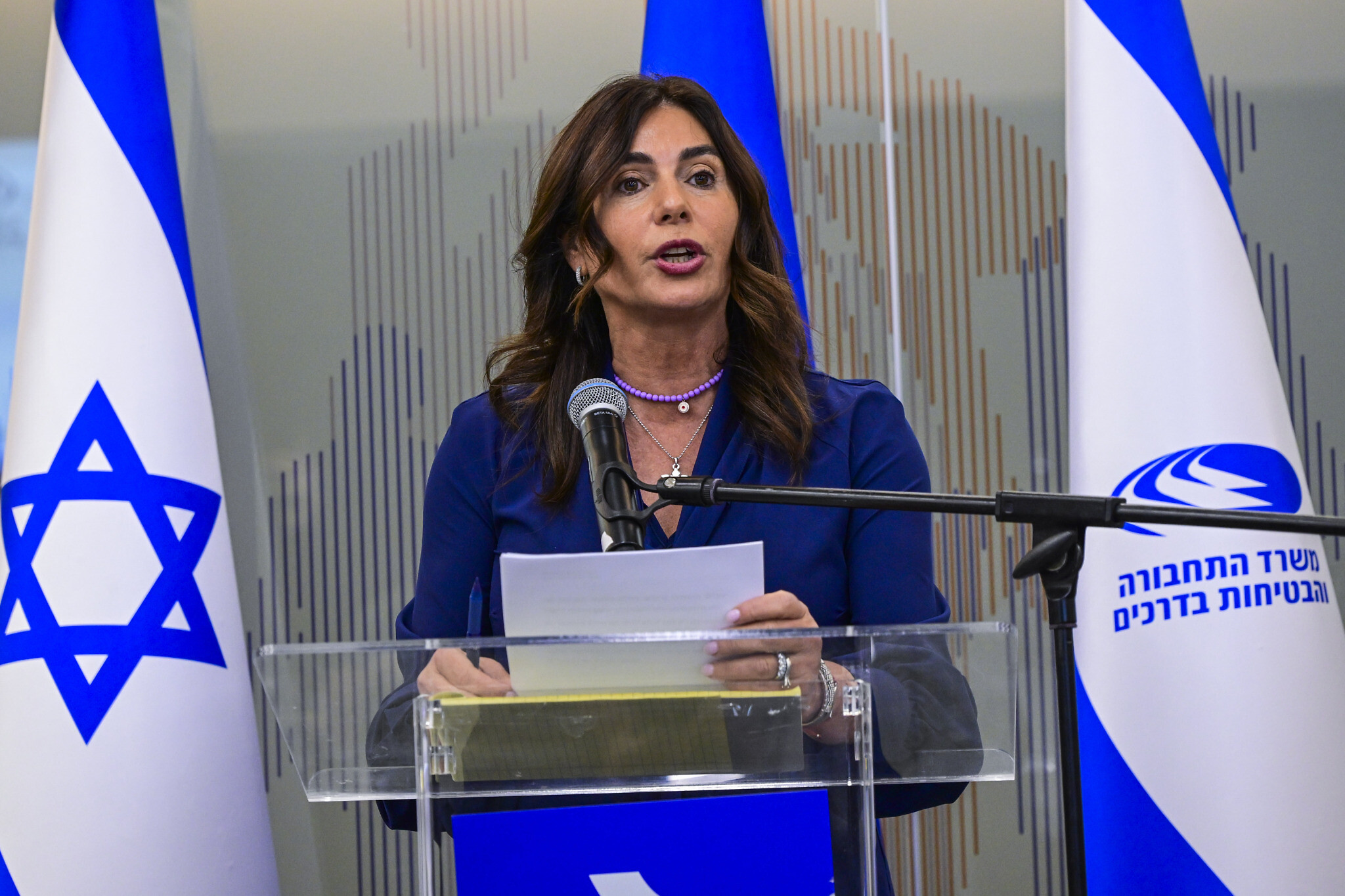
So you are not calling for Zini to be fired?
I am calling for an immediate examination and a thorough investigation. After October 7, I publicly called on the head of the Shin Bet, the IDF chief of staff, the prime minister, and the defense minister to resign, even though the Shin Bet chief and the chief of staff are very good personal friends of mine. I love and respect them both. But otherwise, the concept of responsibility has no meaning. Netanyahu has completely emptied it of meaning.
So this election is also about the political culture and the future path of the State of Israel, about our internal identity and the kind of leadership we want. Do we want leadership that knows how to speak in slick slogans but repeatedly fails the test of results?
Netanyahu stood in the Knesset exactly four years ago and confidently presented his goals: normalization with Saudi Arabia, jump-starting the economy, reducing crime, and confronting the Iranian threat. On internal security, he has dragged us to a terrible place. In Iran, there were indeed very significant operational achievements, but the broader war aims were never achieved.
I praised the operations and the military missions in real time. But the ultimate test of a leader, again, is the test of results, and by that measure, he has failed.
When you entered the emergency government after October 7, you helped stabilize it to some extent. Suppose that after the coming election we reach another political deadlock, and President Isaac Herzog proposes a rotation agreement: you will be prime minister for the first two years, Netanyahu will receive a presidential pardon for his corruption trials and serve as defense minister, and then he will replace you. What would you do?
I am prepared to do a great deal to resolve the political quagmire and make national unity possible. In my view, that is the most critical component required for our ability to move forward.
On the other hand, Netanyahu says in every English-language interview that he is the “commander in chief.” If you are the commander in chief, you failed catastrophically. In my view, after the disaster of October 7, he is simply not fit to be defense minister.
But is that a scenario you are actively taking into account, given the deadlock indicated by the current polls?
My goal is to defeat him outright in the election and bring about Netanyahu’s retirement from political life. I think that is where the healing of the State of Israel will begin. I do not hate him, and I am not seeking personal revenge. I just think he failed.
I do not hate him, and I am not seeking personal revenge. I just think he failed
No one would imagine former Shin Bet chief Ronen Bar or former IDF chief Herzi Halevi returning to active service after October 7. Did anyone think Golda Meir could come back as prime minister after the 1973 Yom Kippur War? It is inconceivable.
Who would you cooperate with in order to achieve a 61-seat majority in the Knesset?
The foundation is our four parties: Naftali Bennett’s B’Yachad, Avigdor Liberman’s Yisrael Beytenu, Yair Golan’s Democrats, and my party, Yashar. There are four strict conditions for any additional parties to join our coalition: acceptance of Israel as a Jewish and democratic state, recognition of the foundational values of the Declaration of Independence, mandatory national service (whether military or civilian), and recognition that Hamas is a terrorist organization. Anyone who accepts those things can be a partner.
Is the ultra-Orthodox United Torah Judaism party invited too?
If only. It would be enormously significant if a Haredi party accepted those conditions and said, Let’s now see how we practically implement enlistment. Then we could sit down and discuss the “how.”

Are you meeting with representatives of the Haredi parties?
There was one meeting with people from the Degel HaTorah faction [of UTJ] three months ago. I haven’t met them since.
And are they moving in your direction?
They are saying the exact opposite. Today, MK Meir Porush from the Agudat Yisrael faction [also of UTJ] declared that they will not enlist, stating, “We will die rather than enlist.” That is un-Jewish behavior; it is entirely illogical, and it cannot be accepted.
Maj. Gen. (res.) Nitzan Alon, the former commander of the intelligence task force for locating hostages, and Brig. Gen. (res.) Dror Shalom, head of the Defense Ministry’s Political-Security Bureau, have said in recent days that it would have been possible to bring hostages back much earlier without giving up strategic military achievements.
They are both correct.
How did you see this dynamic from inside the war cabinet?
The first major deal was on November 24, 2023. There was an agreement to release 104 Israeli civilians in exchange for 240 Palestinians who had not committed serious offenses — mostly women and minors. On the final day, Hamas wanted to conceal the young Israeli women. It had a dark reason for doing that, because of the sexual assaults.
When the issue reached the cabinet, there was a major argument. Unfortunately, I was the lone voice saying: instead of trying to teach [Hamas leader Yahya] Sinwar a lesson and telling him that if the women aren’t released by tomorrow we go back to war, let’s continue the deal.
I wanted to get all the wounded out — for example, Hersh Goldberg-Polin — and the elderly hostages. I said: Let’s take this step, get ten, twenty, thirty more out, and then return to fighting.
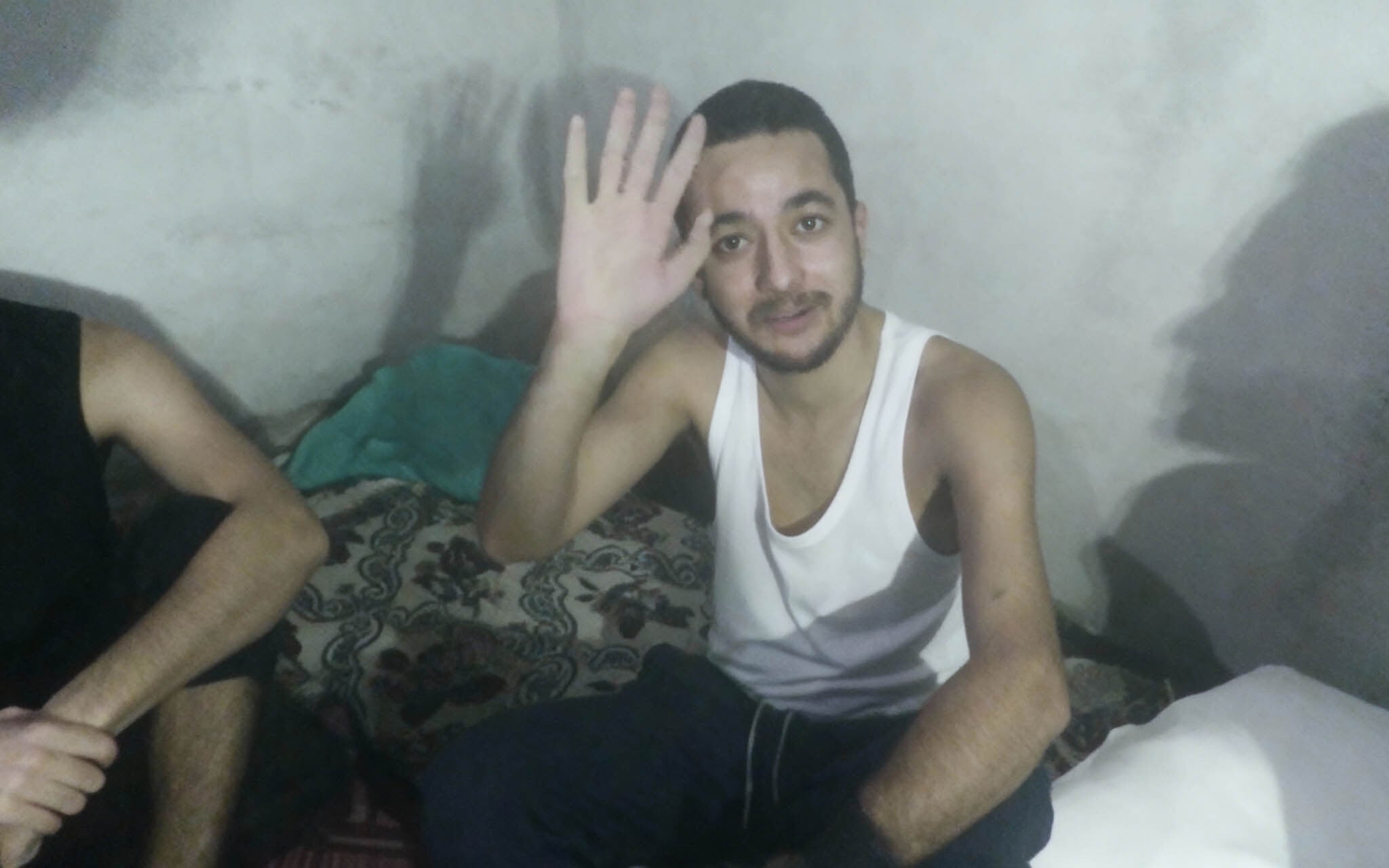
Unfortunately, the entire cabinet opposed it. In the background was a constant threat from [National Security Minister Itamar] Ben Gvir: If you don’t return to the war within ten days, I will bring down the government.
The next major event was, in my eyes, a real betrayal of trust. On May 27, 2024, Netanyahu brought a hostage release framework to the cabinet and asked for our support. We all raised our hands in favor of the framework, including Netanyahu himself. Two days later, it was leaked negatively to the media through his political mouthpieces, and he publicly condemned the very agreement that he himself had brought to a vote. He suddenly said it was a bad agreement.
Then, days later, president Joe Biden publicly presented the framework. For a moment I thought it was a clever Netanyahu maneuver, choosing to reveal it through the Americans, but it turned out that they had simply called his bluff — that he did not actually want the framework he himself had proposed, and that he was actively working to undermine the deal.
Women and children were abducted on his watch, and he deliberately did not do what was necessary to get them out
That was the straw that broke the camel’s back for me. I decided to leave the government because I had completely lost faith in him. Women and children were abducted on his watch, and he deliberately did not do what was necessary to get them out. Even when he presented a deal and we voted for it, he secretly worked against our decision. That is completely unacceptable behavior.
What would you do differently regarding violence by Jews in the West Bank? You commanded the Judea and Samaria Division during the period known as “mowing the lawn” after Operation Defensive Shield in the early 2000s, meaning you worked hard to eliminate Palestinian terrorism.
We defeated the suicide bombers. We beat that terrorism by the end of 2004.
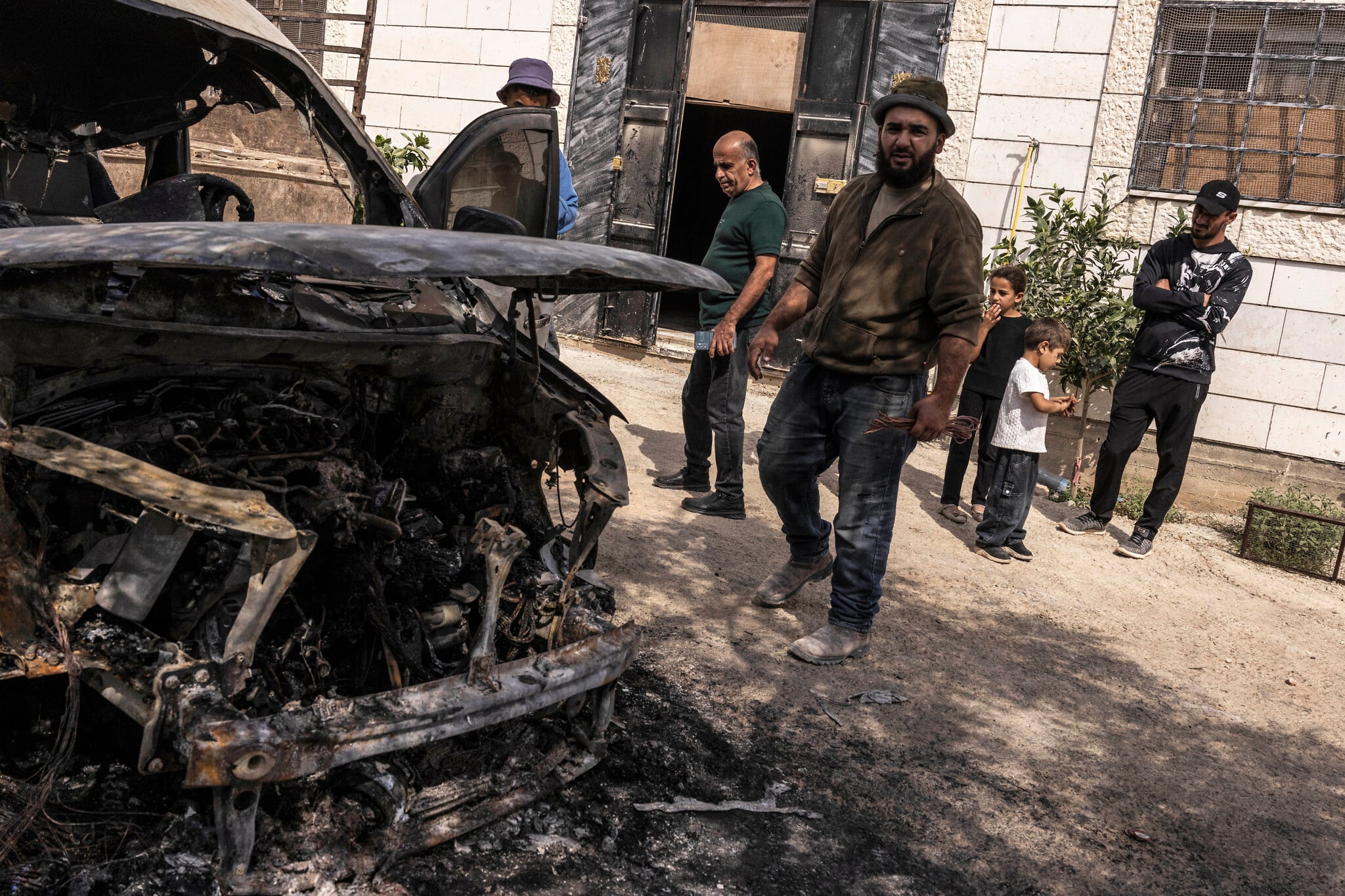
But today you face the reverse situation: extremist Jewish violence against Palestinians. How would your actions differ from what is happening under the current government?
Because of his coalition needs, Netanyahu systematically dismantled the military’s ability to govern Judea and Samaria. There was a table with four legs: the Shin Bet, the police, the Civil Administration, and the IDF. He took the Civil Administration leg and gave it to [Finance Minister Bezalel] Smotrich, and he took the police leg and gave it to Ben Gvir. The table collapsed. That is why there is currently anarchy there. Today there are hundreds of armed Jews roaming around and rioting, all winked at by the government.
There is a fundamental clash of approaches as regards Judea and Samaria. The government has effectively adopted Smotrich’s approach: dismantle the Palestinian Authority and create Israeli sovereignty in Judea and Samaria. [Right-wing political candidate Ofer] Winter says the exact same thing.
But Avigdor Liberman, who is also part of your bloc, is now talking about dismantling the Palestinian Authority and canceling the Oslo Accords.
Yes, but Liberman proposes bringing in the Jordanians instead of the Palestinian Authority. I oppose that too, because it is a misguided proposition. I am adamantly opposed to the presence of any foreign army between the Jordan River and the Mediterranean Sea. There is only one army, and that is the IDF. A Jordanian army or a Palestinian army must not be brought in.
Will you act against Jewish terrorism as aggressively as you did as a military commander against Palestinian terrorism?
The first step will be to reconnect the system that actually governs Judea and Samaria: we will dismantle Smotrich’s ministry [within the Defense Ministry], which currently enables the anarchy, and we will return the Border Police to operate under the IDF.
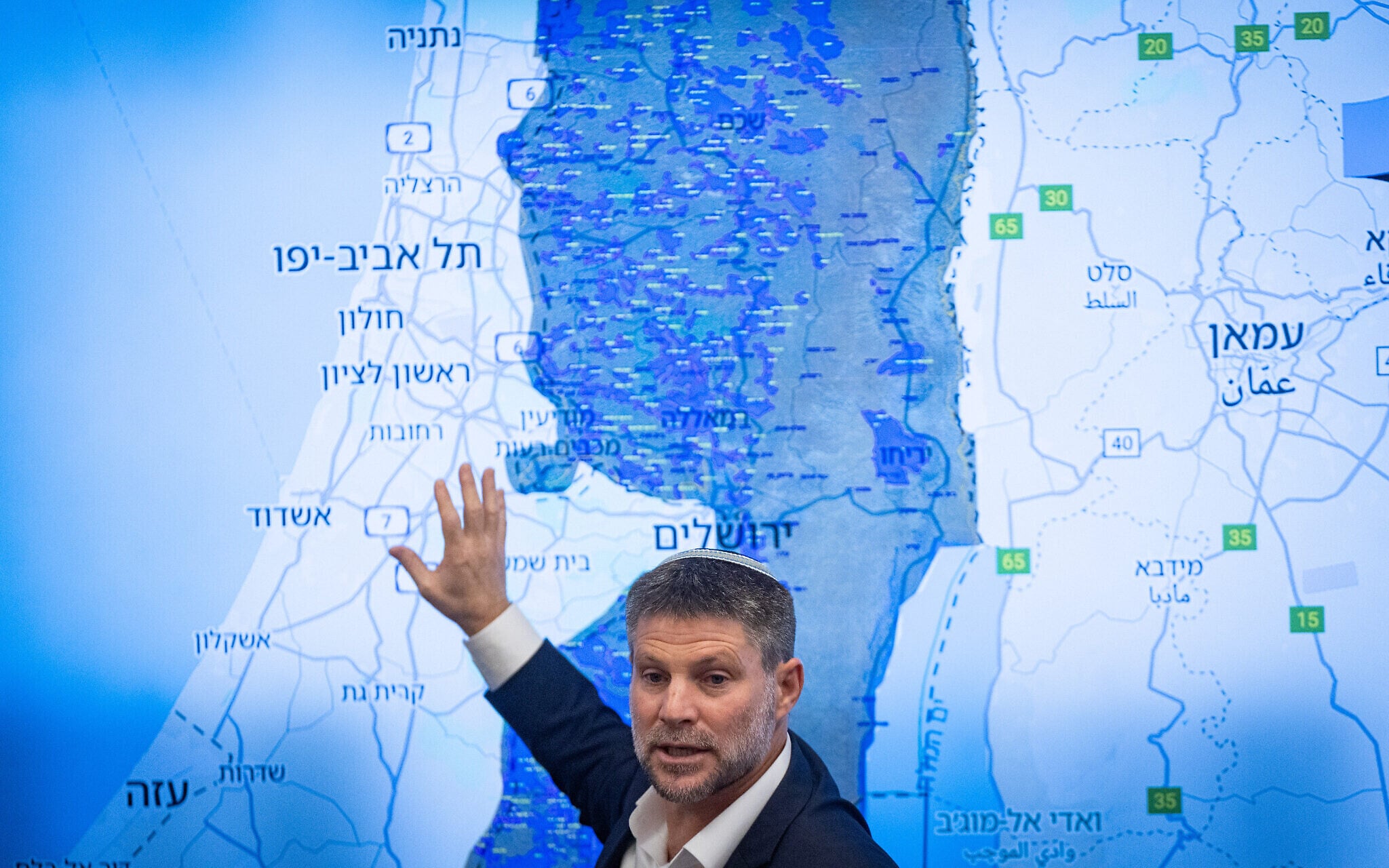
Will you restore the use of administrative detention against Jewish suspects?
Yes. The second step will be to restore administrative orders in order to legally remove Jewish terrorists from Judea and Samaria. The next stage is to continue fighting Palestinian terrorism while carefully distinguishing between the terrorists and the broader civilian population. The living conditions of the Palestinian population in Judea and Samaria need to be improved. Outside investment can be brought in, including from wealthy Sunni countries. Older Palestinians can be given permits to work in Israel, subject to strict Shin Bet approval. The Palestinian Authority needs to be allowed to govern the 2.8 million Palestinians. I do not want to govern them.
What is your overall approach to the West Bank, the Palestinians, and the settlements?
I support settlements provided they conform strictly to the map of Israel’s security interests and to the law. This current government allows people to settle wherever they want, in Areas A and B [where the Palestinian Authority exercises control], and creates a complete mess. We need to create the conditions for a permanent-status arrangement in the future. Will it be autonomy or a state-minus? That is the geopolitical space I am talking about. But it certainly will not have an army, and with overriding Israeli security control.
Without evacuating settlements?
Without evacuating settlements. If I am elected, all illegal outposts in Areas A and B will be evacuated immediately. Everything legally approved by the state in Area C will remain and will be examined as appropriate.
Regarding the judicial overhaul, which laws would you advance; which laws passed by the outgoing government would you repeal?
First, we’ll immediately cancel the law changing the Judicial Selection Committee [which is to take effect after the election]. It is a corrupt law designed so that politicians will select judges according to a partisan key. We will immediately cancel the measures aimed at weakening the attorney general, and we will repeal the law that transferred the department for investigating judges into the political hands of the justice minister.
We will immediately pass a government decision establishing a formal state commission of inquiry into the October 7 massacre
Alongside that, we will pass a law preventing a criminal defendant from forming a government, we will limit a prime minister’s tenure to eight years, and we will cap the size of the cabinet at 24 ministers.
In addition, we will immediately pass a government decision establishing a formal state commission of inquiry into the October 7 massacre.
Another thing we will do is pass a universal service law for all Israeli citizens: military, national, or civilian service, including national service for Arabs.

As for the severe problems in Haredi education, we will pass legislation to stringently implement the State Education Law. Any institution that does not enter the state education system within four years will simply not receive state funding. Children in the Haredi community are growing up here without the Zionist ethos, without the Declaration of Independence, without core curriculum studies like math and English, and without civics lessons. They do not understand the role of the state, they do not know what democracy is, and they proudly say, “We will die rather than enlist.” We will stop that in order to save the country.
How will you act on the Gaza front? The Americans are waiting for the ceasefire agreements to be fully implemented, while the Israeli public is watching the Hamas terrorist organization train and rearm, even as Israel’s targeted killings continue.
This is the Netanyahu way. He is afraid to make difficult decisions, because of domestic political considerations, and thereby harms Israel’s long-term security and strengthens Hamas.
There are immense risks in the Middle East, but a unique opportunity has also emerged to build a multi-theater initiative with the American administration: to look at the entire region, at what has happened over the past three years, and at the opportunities
But what will you do differently?
I look at the big picture. You cannot only look at Gaza. There are immense risks in the Middle East, but a unique opportunity has also emerged to build a multi-theater initiative with the American administration: to look at the entire region, at what has happened over the past three years, and at the opportunities.
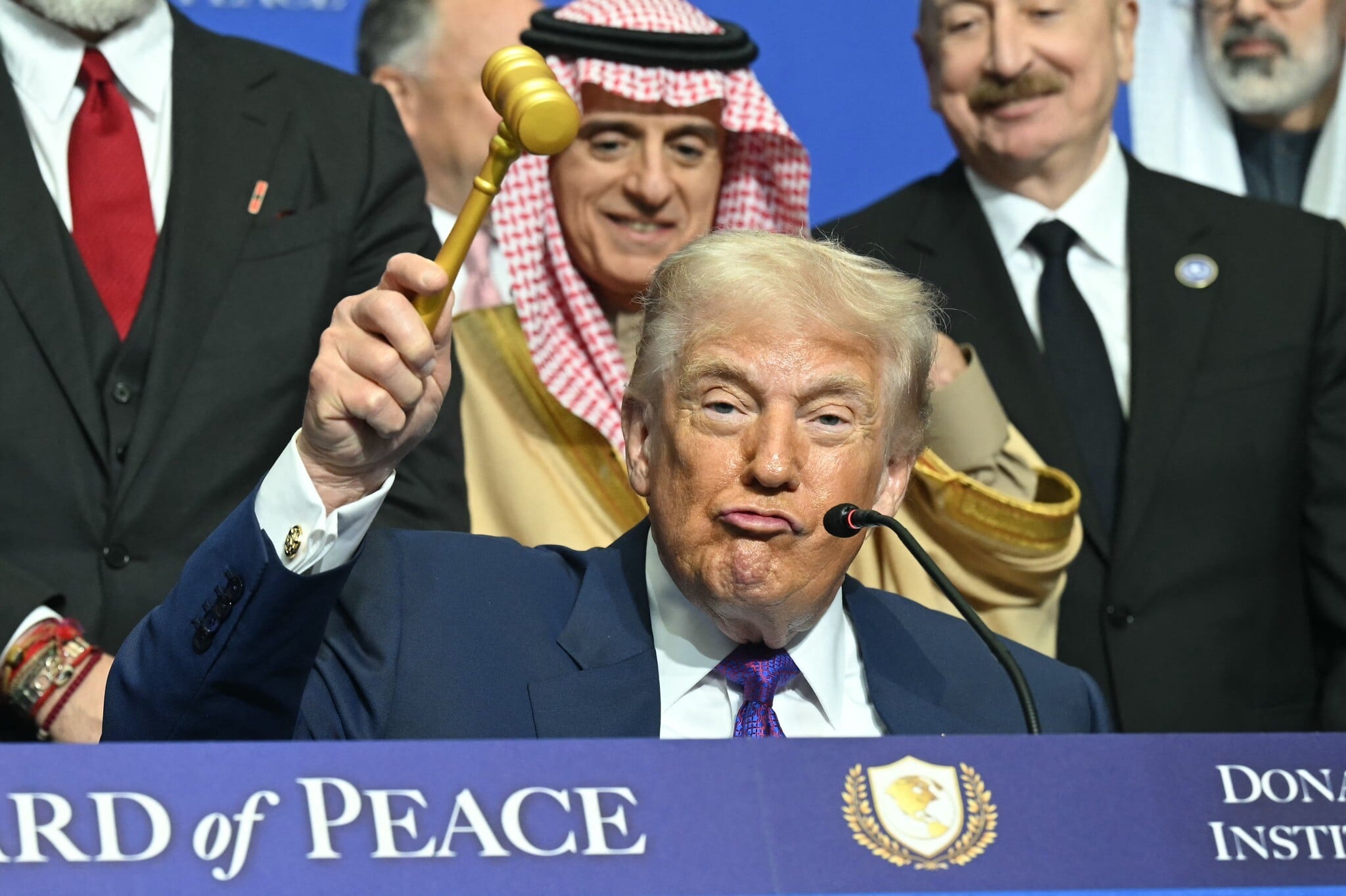
First, the existential risks must be addressed. Iran currently has 440 kilograms of enriched uranium. If the Iranians decide to break out [to the bomb], they could take just 300 centrifuges and enrich their stockpile from 60% to 90% [purity], and they could obtain 10 nuclear weapons in short order.
So a comprehensive plan must be built with the Americans to prevent this, to act to destroy the capability, and to establish an intrusive inspection regime.
The Americans currently have an opportunity to deal with the nuclear program and create a geopolitical linkage between the Strait of Hormuz, the Iranian economy, and the nuclear program. We need to help them and aggressively advance that.
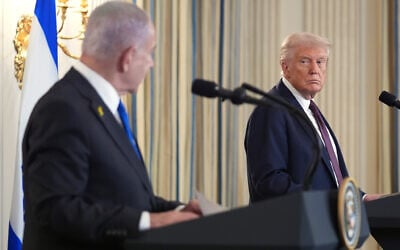
The next thing is Gaza and Lebanon. There is continuity between governments. Therefore, what Netanyahu officially agreed to with the Americans will be binding on me as well. I will advance President Trump’s 20-point postwar plan, but strictly from a position of strength, with the absolute basic condition being Hamas’s total disarmament.
That is a prerequisite for restoring civil governance, bringing in a multinational stabilization force with those 20,000 armed men having trained in Egypt, and beginning reconstruction. But Hamas must disarm first, otherwise none of it will happen.
When people talk about regional arrangements and bringing Saudi Arabia into the fold, those countries also demand significant changes in the West Bank and in Israel’s treatment of the Palestinians.
I will take the necessary steps in Judea and Samaria strictly out of an Israeli interest, not as a political gesture to the Saudis. I will improve the security reality, prevent Palestinian homes and villages from being torched by extremists, and use an iron fist against anyone who acts outside the law. That is exactly how I acted throughout my military service. [Those attacks] did not happen when I was chief of staff.
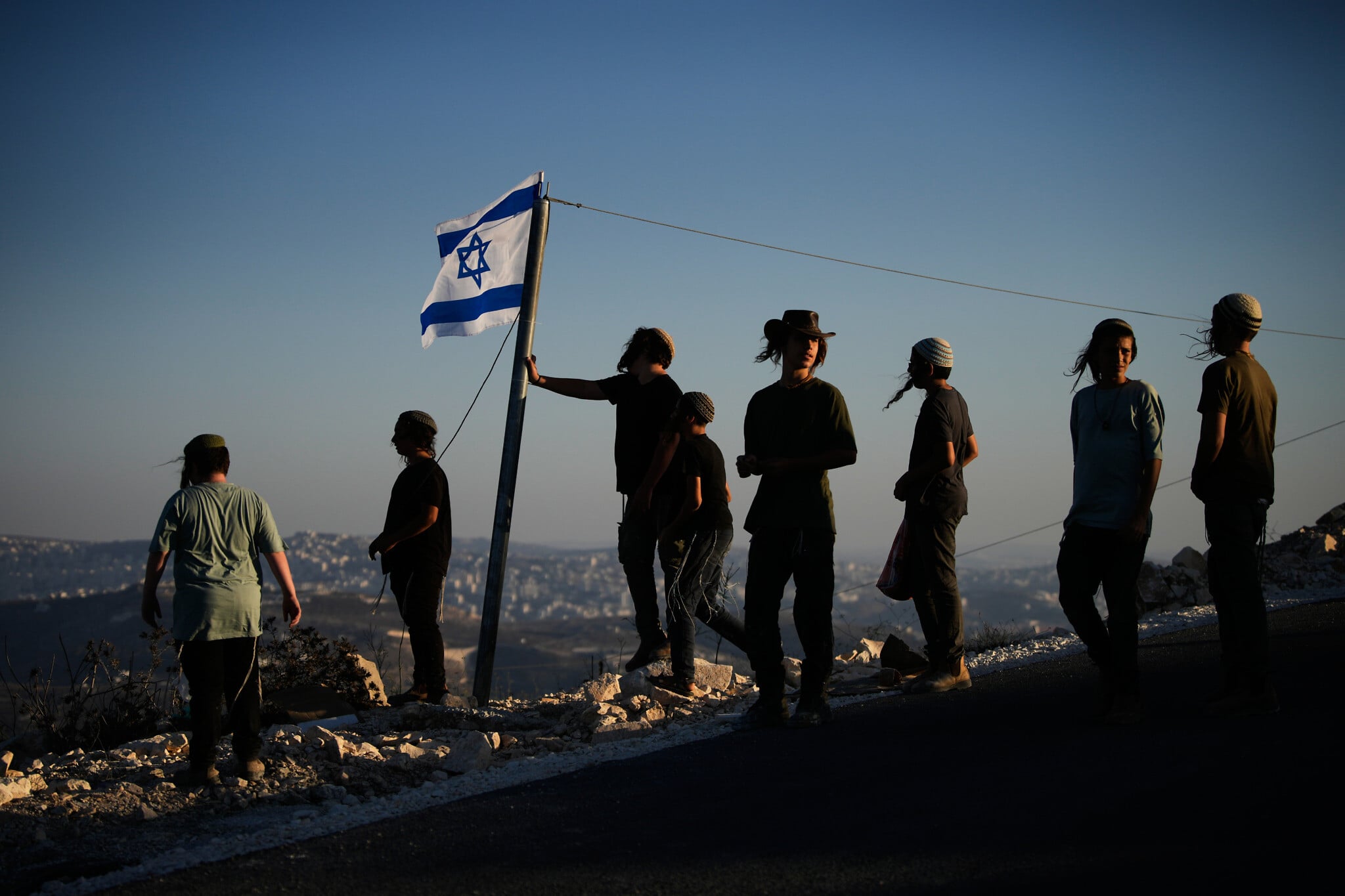
The next thing is to take advantage of the fluid situation in Syria. There is a major risk there: [Ahmed] al-Sharaa is originally a very extreme person, an ISIS man. I have no illusions about him; together with the Americans operating in Syria, I killed many people from his organization.
But we need to ask whether there is an opportunity to take the 1974 Kissinger interim agreements and improve them significantly, with strict security arrangements that would finally bring about the removal of foreign forces from Syria.
Including an Israeli withdrawal from Mount Hermon and key strategic positions in Syria?
The primary condition is the total removal of the Turks and the Russians. Regarding Mount Hermon and the specific security arrangements, that has to be negotiated.
I was prime minister Ehud Barak’s military secretary. In January 2000, I was in Shepherdstown with Madeleine Albright’s American delegation, Farouk al-Sharaa’s Syrian delegation, and our own delegation. We sat there for 10 or 11 days and negotiated.
We need to talk from a position of strength and with ironclad American guarantees. There needs to be an American umbrella, oversight, and a commitment that will make it possible for Israel to take calculated risks. The deeply problematic thing Netanyahu has created over the past three years is a growing, dangerous distance between American interests in the Middle East and Israeli interests.
We have deeply shared interests with the United States: preserving stability in the Middle East, strengthening the moderate Sunni camp, weakening the radical Shiite axis, weakening the fundamentalist Sunni axis, and then bringing about regional economic prosperity. A strong Israel that is a strategic asset to the Middle East is also an asset to the United States. I support moving forward toward building a “NATO of the Sunni states.” Israel has a great deal to contribute in early-warning intelligence and defensive systems.
We have demonstrated that capability. There are Arab countries in the Gulf that are quietly receiving Israeli protection today. I connect this as well to the broader pursuit of peace, something Israeli leaders have unfortunately stopped talking about. We want peace.
We need to strengthen relations with Egypt and Jordan and the Abraham Accords countries, and additional states should be actively brought in. I think there could also be an opportunity with Lebanon
First of all, we need to strengthen the peace treaties that have already been achieved. They cannot be taken for granted, because there is also deep concern that they could slide backward. So we need to strengthen relations with Egypt and Jordan and the Abraham Accords countries, and additional states should be actively brought in. I think there could also be an opportunity with Lebanon.
Do you believe regional initiatives and a renewed call for peace could also improve the dire situation of Diaspora Jews facing antisemitism?
Absolutely. A large part of my wife’s side of the family lives in the United States, and they ask me how the situation can be improved. The first thing is a fundamental change in Israeli policy: Israel is not “a people that dwells alone.” It is a vital part of the community of nations. We know how to bring the world not only security and tech, but also science, sports, and culture. I recently met cultural figures who told me they are simply no longer invited to international festivals.
Israel is not ‘a people that dwells alone.’ It is a vital part of the community of nations. We know how to bring the world not only security and tech, but also science, sports, and culture
But critics abroad will say: That’s all very well, but first stop killing people in Gaza.
We are forced to defend ourselves. You have to look honestly at where this began. But Netanyahu’s distinct lack of wisdom and his terrible political-strategic judgment have brought Israel so low that there are 12 countries currently waiting to impose sanctions on it. Even the Americans are beginning to examine the possibility of imposing sanctions on formal Israeli actors in Judea and Samaria.
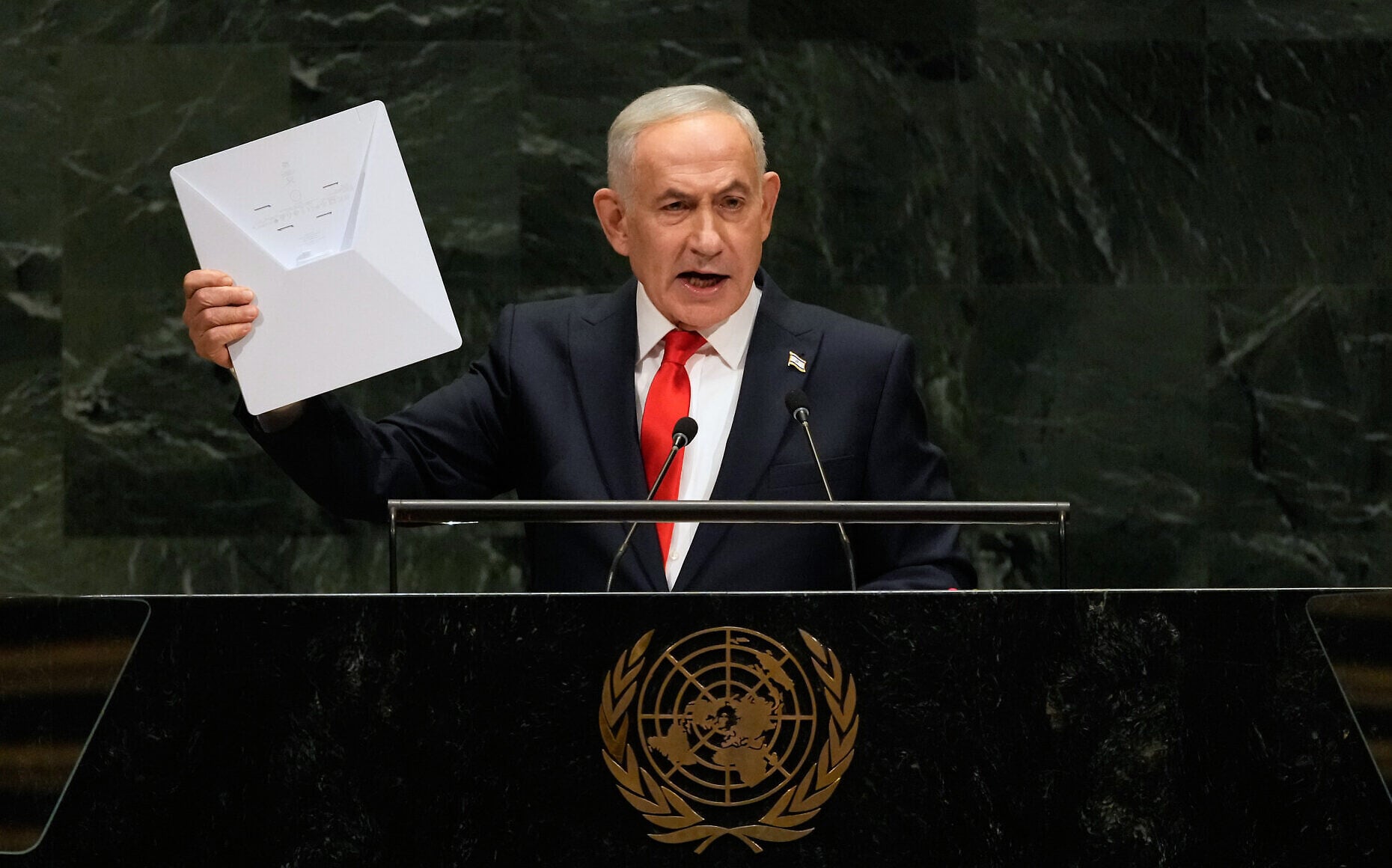
We will change that through a rational government. Netanyahu’s government is pursuing an entirely irrational policy: initiating confrontation solely in order to strengthen his domestic political base. He confronts everyone for that singular purpose. David Ben-Gurion’s original vision was to reach a strategic alliance with Turkey and Iran. That obviously will not happen in the near future, but we fundamentally want to be part of the family of nations.
I truly think that for domestic political reasons, Netanyahu wants a continuing, endless war. He does not want it to end, because the state of emergency gives him the power to remain in office. With this conduct, he is actively endangering the future of the State of Israel.
Israeli citizens will have to imagine, when they stand at the ballot box, a government with Gadi Eisenkot as prime minister, with Liberman and Bennett in the positions of foreign minister, defense minister, finance minister, versus a Netanyahu government in which Ben Gvir is defense minister, Smotrich is foreign minister, Tally Gotliv is justice minister, and [Likud propagandist Yaakov] Bardugo is communications minister.
Do you believe that simply replacing the government would quickly reduce global hostility, and even slow the antisemitic attacks around the world? It will not solve antisemitism.
Antisemitism existed long before this war and will continue long afterward. But the fact that Israel will finally have a rational, sensible government that acts with quiet self-confidence and knows how to do the right things will drastically change the situation.
What about the rift within Israeli society itself? Millions of supporters of Netanyahu’s coalition are convinced by polls they see on the pro-government Channel 14 that Netanyahu is going to win, that Likud is getting ten seats more than Yashar. If you win, they may simply not believe the result. Extremists may take extreme action, and it is not clear that Netanyahu will go quietly. Is that concern exaggerated?
It’s not exaggerated.
The political reality has brought us to the point where today I am the person who will receive the greatest trust from the Israeli public. The broader public will trust me more than others and will accept my leadership because of what I represent, for many reasons. I spent 41 years in the military, I was [IDF] chief of staff, and more than 20 years ago I was already at a prime minister’s side for two years. I spent two and a half years in the Knesset, passed legislation, and spent eight months in the war cabinet. Netanyahu tries to present his experience against mine, but he too became prime minister in 1996 with zero executive experience in the job.
The question wasn’t about your experience, but about the possibility that the other side will simply not accept your victory, and that there will be extremists who take action.
I don’t rule that out. Therefore, I need to win as decisively as possible. That is exactly why I am traveling around the country constantly. From here I am going to a town-hall gathering with 1,200 people in Ramat Gan, to persuade them to vote for me. In the reality that has emerged, it will be very difficult for Netanyahu not to accept the election results.
Netanyahu has adopted a pattern of winning by not losing. He delegitimizes 21% of Israel’s citizens [the Arab population], and he hopes to win. And if he does not win an outright majority, even in a situation of 52 seats versus 58, he hopes the other side will be unable to form a coalition and that he will simply remain caretaker prime minister indefinitely. I will not allow that to happen. I will convince my colleagues to replace him.
I do not want the support of the Arab parties
In other words, you will try to form a minority government, with outside support from the Arab parties?
I do not want the support of the Arab parties, and I am not calling on them to support me. If we reach a situation where I do not have a 61-seat majority, I will bring my government to a vote and call on Likud as well, and on all the Zionist parties, to support me. I believe it cannot be ruled out that at least one Haredi party will stay out of the vote and strategically abstain.
We are publishing this interview at the time of the October 7 anniversary. Beyond the election question, what is required of you as a leader to help the public, and all of us, heal from this unprecedented disaster? Would even a state commission of inquiry enable that healing?
Israeli society’s recovery will take significant time. It will not happen all at once. We will have to win, but we will also have to demonstrate a leadership that allows all Israeli citizens to feel that they are a valued part of the Israeli story. There must not be a situation in which one side feels defeated and the other victorious.
Netanyahu can talk about patriotism until the cows come home. His sons dodged service: one spent most of the war in the United States and the other did entirely minor service. People know the price I paid, how I raised my children, and how he raised his. It is clear to me that Netanyahu’s grandchildren will not enlist in the army. And it is clear to me that my grandchildren will enlist, just as I raised my children and all of them performed meaningful service
I think I am the only person who can do that today, because of what I bring with me: my personal background, the fact that I grew up in the geographic periphery and rose from the bottom, the fact that I was chief of staff [of the IDF], and unfortunately, also the very heavy personal and family price I paid [in this war].
At the end of the day, Netanyahu can talk about patriotism until the cows come home. His sons dodged service: one spent most of the war in the United States and the other did entirely minor service. People know the price I paid, how I raised my children, and how he raised his. It is clear to me that Netanyahu’s grandchildren will not enlist in the army. And it is clear to me that my grandchildren will enlist, just as I raised my children and all of them performed meaningful service.
Maybe Netanyahu’s English is much better, and maybe he is an excellent rhetorician and storyteller. But when it comes to actions, Israel’s citizens will need to choose between responsibility and running away from responsibility; between enlistment and mutual responsibility on one hand, and draft-dodging and desertion on the other: He has no government without the Haredi parties that refuse to serve.
The choice will be between worthy leadership and corrupt leadership. His leadership is corrupt. He is the first prime minister to stand trial as a criminal defendant.
People ask me what the difference will be with me as prime minister. I don’t want to be a populist and say that, of course, the Prime Minister’s Office’s bloated expenses will fall by 50%, and everything related to the prime minister’s wife’s demands by 95%.
To this day he has not taken responsibility for even a single second. There has not been a single occasion on which he stood up and said, “I take responsibility.” And he certainly does not set a personal example.
This week, memorial ceremonies are being held throughout the country. Netanyahu cannot come to the cemeteries. In every poll, 60% of the public do not want to see him, 65% to 70% want a state commission of inquiry, and 60% to 65% want universal enlistment. My challenge is to turn that widespread sentiment into votes.
I look at the polls and I am convinced that in 21 days, Netanyahu will no longer be prime minister of Israel. It makes no sense for a man who failed in the greatest failure since the establishment of the state, who for three years failed to achieve either the war aims or any of the goals he presented in the Knesset, to continue ruling through a cynical policy of divide and rule and a culture of lies.
What victory is he asking for? He wants to win with the exact same coalition that was with him on October 7. The same coalition that will perpetuate the social divide, draft-dodging, the unfairness whereby state funds go to the unproductive people in Israeli society rather than the [battered] communities of the north?
Therefore, I am convinced that Israel’s citizens will send him home and choose a different leadership. I am utterly certain of this.

The Times of Israel Community.