

‘You want to call Trump, Bibi?’: How incoming president’s wrath was leveraged to close hostage deal
Top Biden aide’s new book reveals dramatic 11th-hour talks before January 2024 agreement as well as outgoing president’s desire to give final speech rebuking his party’s anti-Israel direction

 Add ToI as a Preferred Source on Google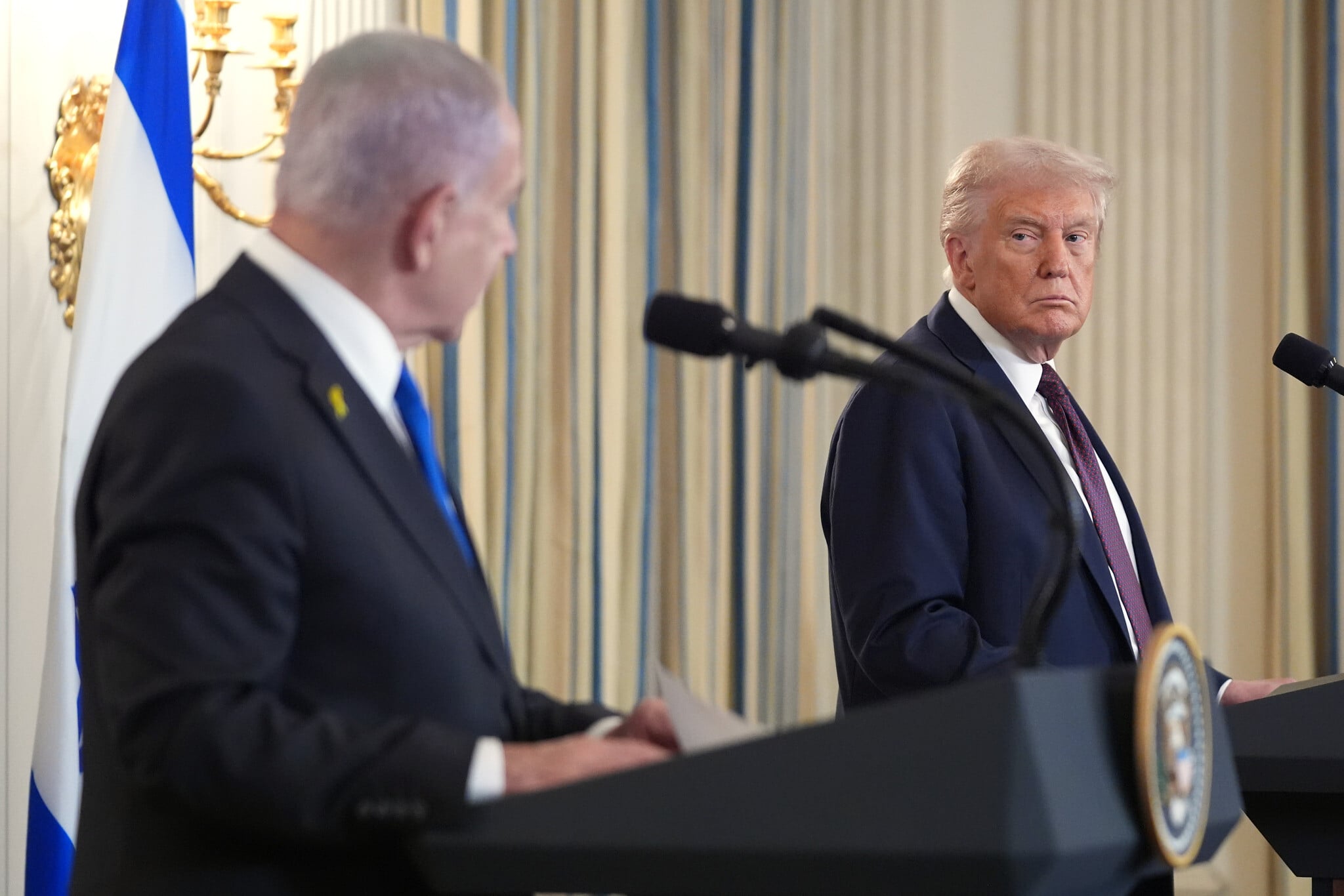
Donald Trump wasn’t even president yet, but he loomed large over the hostage negotiations between Israel and Hamas in the days ahead of his January 2024 inauguration.
According to a book published Tuesday by Brett McGurk — who was a top aide to then-US president Joe Biden — threats were repeatedly issued to Prime Minister Benjamin Netanyahu and Israeli negotiators that they would face Trump’s wrath if they slow-walked just as the talks were on the precipice of a deal.
The effective threats were issued by Trump’s Mideast envoy Steve Witkoff, who McGurk worked with after Trump won the November 2024 presidential election, in a seemingly unprecedented level of cooperation between outgoing and incoming administrations.
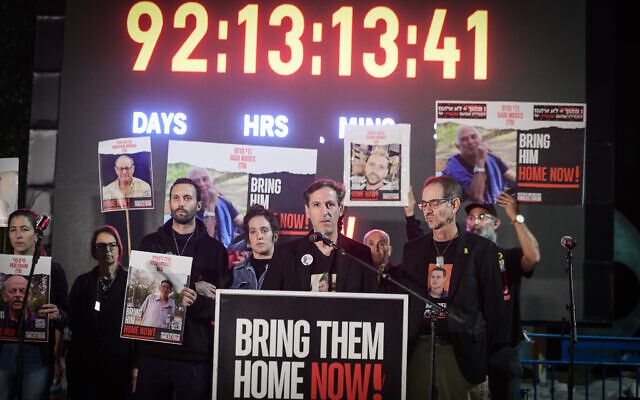
McGurk’s book, “Brink: Inside the Race to Free the October 7th Hostages” reveals the dramatic swings in the negotiations mediated by the US, Egypt and Qatar to secure the release of 251 Israeli hostages taken captive by Hamas-led terrorists during the October 7, 2023, massacre, which sparked a years-long Gaza war.
The mediators succeeded in brokering an early ceasefire in November 2023, which saw Hamas release 105 hostages in exchange for Israel freeing 240 prisoners. But that deal fell apart after one week, and McGurk spent the rest of Biden’s term in office trying to replicate that framework.
The book argues that Hamas proved the main obstacle to talks in the spring and summer, refusing to even offer a list of the hostages it was prepared to release. Some of Israel’s main negotiators have pushed back on this narrative, suggesting that Netanyahu’s politically motivated reticence allowed the war to aimlessly drag on.

In May 2024, the US began pushing a phased deal, which would first see the release of female, elderly and severely ill hostages over a six-week truce period, during which negotiations would be held on the terms of a second phase where Hamas would release the remaining hostages in exchange for an Israeli withdrawal and permanent end to the war.
But after Hamas captors executed six Israeli hostages at the end of August 2024, McGurk drew the conclusion that no deal would be reached as long as Hamas leader Yahya Sinwar was still alive. Israel didn’t manage to kill him until a month and a half later.
Bipartisan collaboration to overcome new Hamas demands
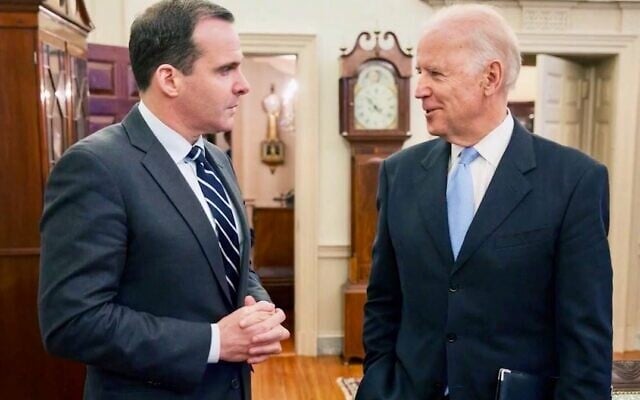
Trump was elected president the next month, and McGurk recalls in the book how he subsequently called the incoming president’s top aide and son-in-law Jared Kushner, requesting his assistance in helping secure the still-elusive hostage deal.
“Unless we worked together, it wasn’t going to work,” McGurk — who has served in both Democratic and Republican administrations — briefly told The Times of Israel in an interview ahead of his book’s publication.
Trump would go on to publicly demand that Hamas release the hostages by his January 20, 2025, inauguration or there would be “ALL HELL TO PAY.”
Read more: US pressure on Israel harmed talks with Hamas to release hostages — Biden aide
“Every negotiation can benefit or suffer from setting deadlines. And Trump’s… really helped,” McGurk acknowledged to ToI, which obtained an advance copy of his book.
By the beginning of January 2025, Hamas finally offered a list of the hostages it was prepared to release, while attaching two new demands — the release of 300 Palestinian prisoners serving life sentences for involvement in deadly terror attacks against Israelis and the expansion of the initial IDF pullback from Gaza, the top Biden aide recalls in his book.
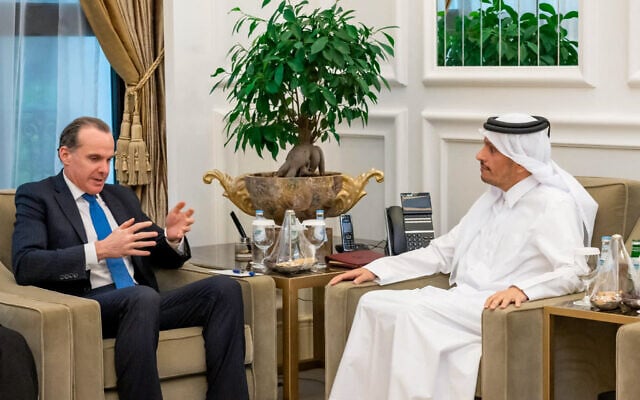
McGurk and Witkoff then met in Doha with Qatari Prime Minister Mohammed Abdulrahman Al-Thani, who told him that he could get Hamas to come down to 110 “lifers” and an Israeli withdrawal to a perimeter 700 meters deep into Gaza.
While McGurk found Hamas’s new demands to be unacceptable, Witkoff was not deterred.
“’This is all bullshit… We’re saving lives here, and we can’t fail because of a line on the map or seventy-five versus one hundred prisoners,'” the book quotes Witkoff as having said.
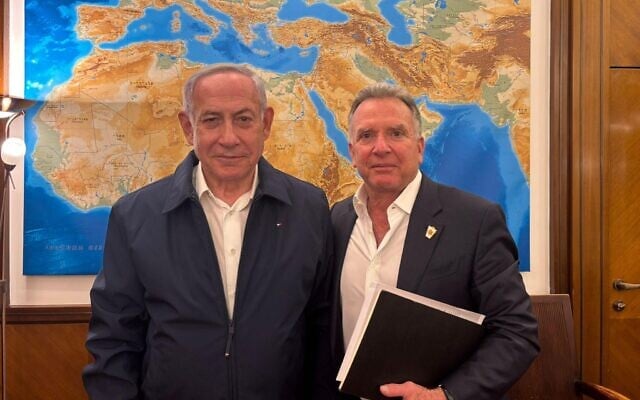
Witkoff proposed flying to Israel the next day to push Netanyahu to accept the terms that the Qatari premier thought he could coax Hamas into accepting.
McGurk admits having been uncomfortable with the optics of a Trump aide taking the lead in the meeting with Netanyahu, but Witkoff was understanding, and the sides agreed that the Biden aide would continue helping run the talks from Doha, while also dialing into the Trump envoy’s sit-down with the Israeli prime minister.
‘All for three hundred meters?’
During the January 11 meeting, Netanyahu did indeed push back on the terms laid out by McGurk over the phone, insisting that the mediators hold the line and force Hamas to cave as it had done on many of its previously issued demands.
But Witkoff wasn’t having it.
“’We close this deal tomorrow with 110 (lifers). If you want to fight over ten or twenty prisoners, you’ll never get the hostages. Come on,'” the Trump aide is quoted as having said.
McGurk then offered a letter from Biden that granted Israel the right to resume the war if Hamas did not negotiate the second phase hostage releases in good faith. Witkoff chimed in that Trump would also endorse the letter, which Netanyahu said would be helpful in getting him on board, before some of his aides began pushing back.
“’What Brett just said, that’s Trump’s position, so if you want to walk away, then you can call Trump, and you’ll hear it from him. Come on, guys… You want to call Trump, Bibi?'” Witkoff responded.
When Netanyahu tried to deflect blame onto his hardline cabinet, Witkoff went further. “So, you leave hostages in tunnels for what, another hundred days, forever, all for three hundred meters? That’s your position? Are you kidding me?”
Netanyahu then asked to discuss the matter internally, and McGurk ended the call.
It’s unclear what happened immediately after, but two Arab officials familiar with the negotiations credited Witkoff for having exerted an unprecedented amount of pressure on Netanyahu.
‘You said we had a deal. ‘L’chaim!’
Later that night, McGurk says he got a call from Witkoff informing him that Netanyahu had agreed to the new terms.
The proposal was sent to Hamas for its final approval on January 13, and while the terror group was given 24 hours to respond, it ignored that deadline.
On January 15, Witkoff told Al Thani, “I’m leaving (Doha) tonight. And if we don’t have this deal by tonight, I’m telling Trump the Qataris and Egyptians couldn’t deliver it.”
Several hours later, the mediators received a positive response from Hamas.
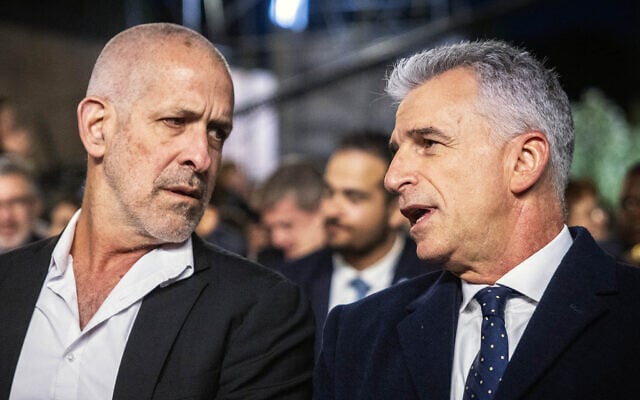
Then-Shin Bet chief Ronen Bar popped open a bottle of whiskey and poured shots for the negotiators in the room.
“I don’t drink this brown stuff,” Witkoff protested. But he decided to make an exception on this occasion. (Then-Mossad chief David) Barnea raised his glass. “L’chaim!” the Israeli toast, “To life!”
Trump then broke the news on his Truth Social account, declaring that the hostages would be released shortly.
McGurk says he called Biden, who was quick to congratulate his Mideast adviser.
“Mr. President, this is your deal, it’s your deal from last year, and from the start, the only way to end this war,” McGurk responded.
The agreement almost unraveled the next day, though, when Netanyahu added a new condition of approving up front the names of the 110 lifers to be released.
Informed of the development by Barnea, Witkoff lost it. “Are you fucking joking right now?”
“It’s our prime minister,” Barnea responded.
“’No, no, you opened the fucking Black Label,’” Witkoff said, his voice rising. “’I don’t drink that stuff, but I did, because we had a deal, and you said we had a deal. ‘L’chaim!’ I told Trump we have a deal; there’s one thing you don’t do with me, or Trump. Back out of a fucking deal!’”
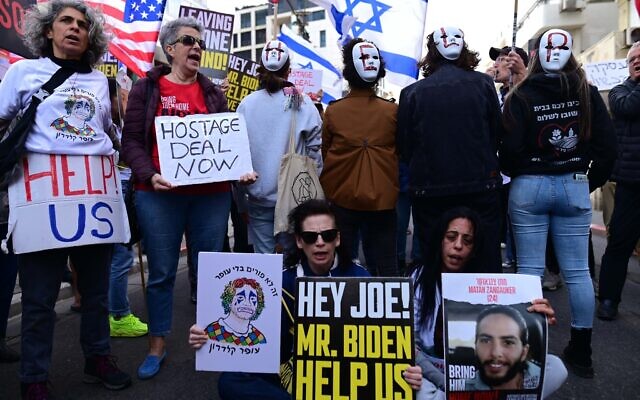
“‘You tell your prime minister this is over, or he can call Trump, and I’ll go out right now and say the Israelis don’t give two shits about their hostages,’” McGurk quotes Witkoff as having said.
“Barnea stepped toward him, finger pointing. ‘Steve, I am the director of Mossad! You don’t tell me about the hostages. I’m sorry, you’ve crossed a line,'” the book recalls.
“Witkoff pulled out his phone. ‘Trump can say right now on Truth Social the Israelis don’t want the deal. I’ll call him right now,'” the Trump aide said.
Barnea then asked for 45 minutes to speak to his boss. Witkoff gave him 30 before walking away.
The Mossad chief returned later that night and said the Qatari premier could make an announcement about the deal moving ahead. The first hostages were released on January 19 — Biden’s last full day in office.
In his interview with The Times of Israel, McGurk acknowledged the essential roles played by Trump and Witkoff in securing the January 2025 agreement, but argued that the circumstances had shifted radically in favor of an agreement around the November 2024 election.

The Biden aide pointed to Israel’s killing of Sinwar and defanging of Hezbollah along with the thwarting of a second Iran missile attack.
“There was a fundamental change in the whole balance of power that changed the dynamics of the whole negotiation,” McGurk told ToI.
‘I’m worried about my party’
McGurk in the book recalls how Biden called him on January 18 to express his desire to give one final speech about the Middle East conflict.
“’I’m worried about my party,'” McGurk quotes the president as having said.
“Biden said some members of his party were moving toward positions that would have made it impossible to secure a hostage deal, and that could endanger Israel’s future,” McGurk writes.
Biden said he had listened to critics who had pushed him to exert more pressure on Israel throughout the war. He had sometimes acted upon that advice, but those critics ended up being wrong, the president maintained.
“’They don’t know what it took to get this done,’” McGurk quotes Biden as having said. “’And they have no damn idea how close we came to a big war.’”
McGurk jotted notes from the call and told Biden that he’d put a speech together.
“Don’t hold back,” Biden responded. “I want to draw a line.”
McGurk crafted remarks that highlighted how Biden was leaving office with Washington’s strategic position in just about every country in the region in a much better place.
McGurk acknowledged that the speech was softened by other Biden aides, but the president still went on to assert, “Some said my policy of a firm support for Israel while relentlessly pursuing diplomacy risked drawing America into a wider war in the region.”
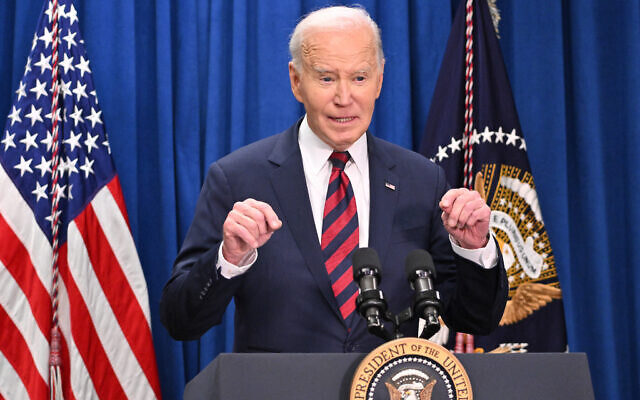
“I listened to those voices…. But I concluded abandoning the course I was on would not have led us to the ceasefire we’re seeing today, but instead, it would have risked the wider war in the region that so many feared. Now the region has been fundamentally transformed,” Biden said in his January 19 remarks.
Speaking with The Times of Israel on Sunday, McGurk addressed the lack of focus in the book on Palestinian suffering in Gaza, where tens of thousands of civilians have been killed since October 7, and the vast majority of infrastructure has been reduced to rubble.
“The issue of the human suffering in Gaza is not diminished at all. The question from the start was, how do you bring this crisis to a close in a way that stops the war and brings the hostages home? Those issues are completely intertwined,” he insisted.



The Times of Israel Community.