

Eisenkot smoothly got his candidate elected Knesset speaker. Becoming prime minister remains a whole other challenge
Matan Kahana comfortably defeated Netanyahu’s pick. The two Arab parties voted for him; the two ultra-Orthodox parties did not. There are lessons there for Eisenkot, but learning them may not be enough

 Add ToI as a Preferred Source on Google
David Horovitz is the founding editor of The Times of Israel. He is the author of "Still Life with Bombers" (2004) and "A Little Too Close to God" (2000), and co-author of "Shalom Friend: The Life and Legacy of Yitzhak Rabin" (1996). He previously edited The Jerusalem Post (2004-2011) and The Jerusalem Report (1998-2004).
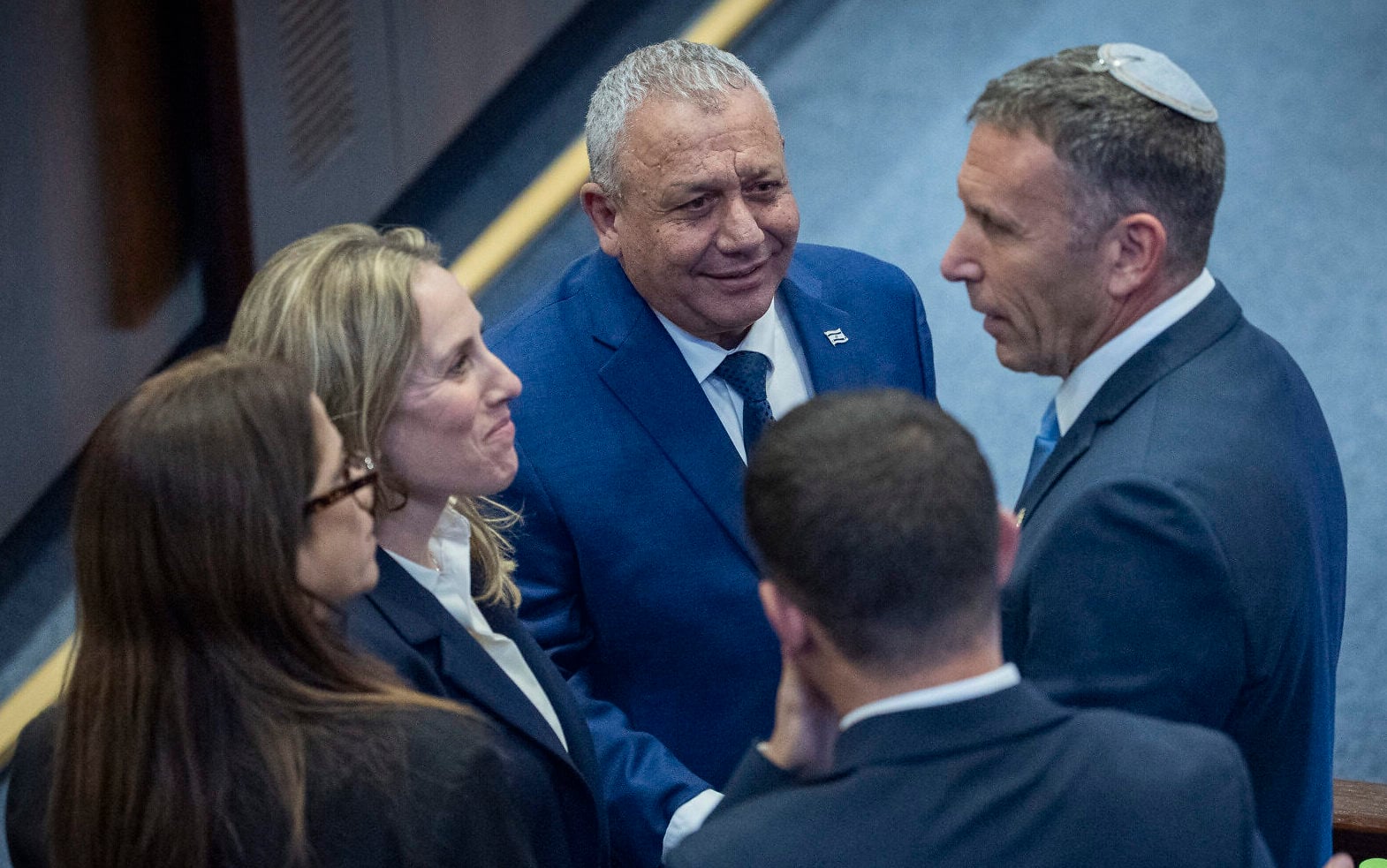
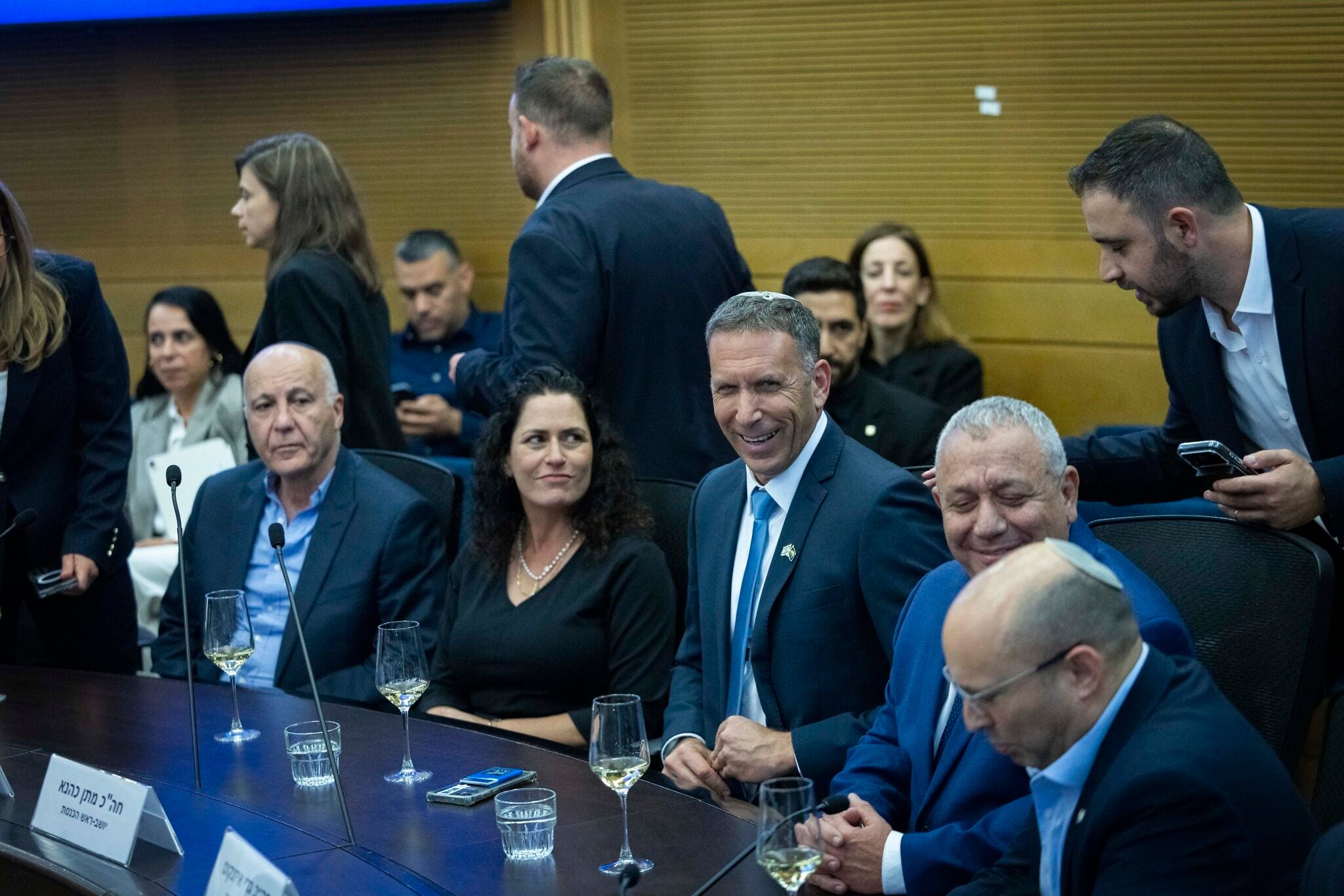
The transition of authority in the Knesset late on Tuesday night was dignified and gracious — remarkably so, given the wider political context and the specific bitterness that had preceded it.
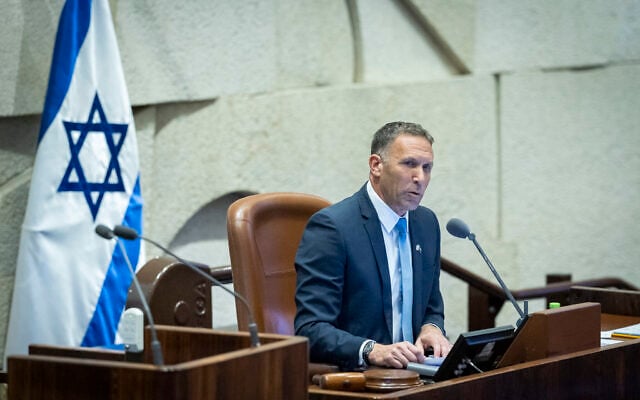
Amir Ohana, the outgoing speaker of our parliament, invited Matan Kahana, his elected successor, to the front of the House to take the speaker’s chair, and smilingly handed him the speaker’s gavel as they crossed.
Taking his new seat, and waiting patiently for other MKs to take theirs, Kahana then delivered a brief but important address that was heard in respectful silence — in stark contrast to the heckling and abuse that had attended the voting process, with Otzma Yehudit’s predictably unrestrained and contemptuous Tally Gotliv the worst offender.
Kahana began and ended his remarks with the final sentence of Psalm 29 — “The Lord will give strength to His people; the Lord will bless His people with peace.” And in between those carefully chosen bookends, in a nation largely at war these past three years, he politely denounced his fellow MKs’ behavior. He upbraided them for their complicity in the spread of “extremism, hatred, and division” now so prevalent in social media, and implored them to embrace the school of thought of the House of Hillel, whose followers “made a concerted effort to understand those with whom they disagreed.”
Kahana also declared the Knesset to be “the home of all citizens of the State of Israel, regardless of religion, race, or gender” and promised to serve as “the speaker for all of them.” This pledge was concretized soon afterwards when, over the objections of the bloc of parties led by Prime Minister Benjamin Netanyahu, he presided over the election of nine deputy Knesset speakers, two of them from parliament’s Arab parties.
Strikingly, while expressing the hope that a new government would be formed under his Yashar party leader Gadi Eisenkot, and that it would work toward correcting, via consensus, “the system of checks and balances between the three branches of government,” Kahana also declared that, “until that happens, and for as long as I am the speaker, the Knesset of Israel will unquestioningly obey the court’s rulings.” He was, of course, referring to the outgoing coalition’s frequent threats to defy, and occasional actual defiance of, High Court rulings, and its partially completed legislative push to subjugate the judiciary to its will.
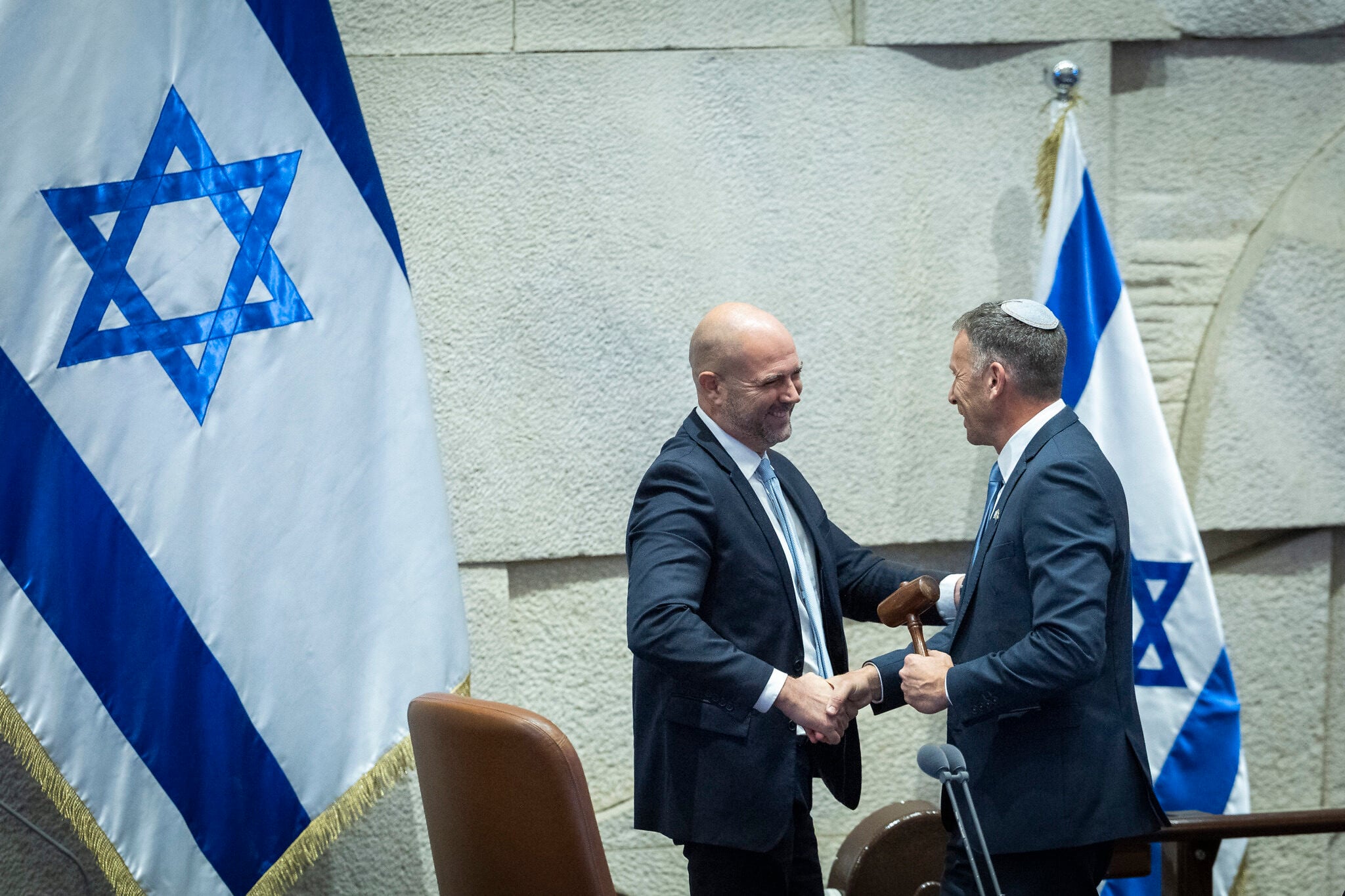
Ohana’s graceful departure is worth mentioning, because it contrasted so sharply with the shouted denunciations from coalition benches during the vote in which Kahana was elected: He won the speaker’s job with the support of 18 of the 19 members of the two Arab parties, who were castigated as “terror supporters” and, by Netanyahu in a brief, prepared statement to reporters outside his Knesset office before the vote, as the “Muslim Brotherhood.”
Ohana himself defied the High Court in refusing to organize a new vote for state comptroller, after the election of Netanyahu’s lawyer Michael Rabello to the post was annulled over the non-secrecy of the ballot and Rabello had withdrawn. It was Ohana himself, of course, who had allowed the vote to elect Rabello to proceed, defying the Knesset’s legal adviser, when coalition members had been ordered to document their own votes to prove they had backed Netanyahu’s candidate.
It is also worth noting that Ohana, a firm Netanyahu loyalist, was nonetheless pushed aside by Netanyahu, who chose not to submit his candidacy for speaker against Kahana’s, and instead selected another Likud MK, Ofir Katz. This was a nod to the two ultra-Orthodox parties whose support Netanyahu is desperately seeking to retain in the coalition-building struggle against Eisenkot, both of which have recently indicated that Ohana should never have been elected speaker in the first place because he is gay.
Yitzhak Pindrus, a lawmaker for the United Torah Judaism party, said last month that his election was a “desecration of God’s name”; Shas leader Aryeh Deri was quoted as having repeatedly expressed regret for his and his party’s support for Ohana: “We have no divine assistance because we helped appoint Ohana,” Deri was reported by Channel 13 as having said.
Whom to rely on?
For all Kahana’s ambitious promises of a new era in the Knesset, his power and that of the legislature are nonetheless limited. The anti-Netanyahu parties — the four Jewish ones and the two Arab ones — have a 67-seat majority in parliament, and therefore can advance legislation on which they are agreed. This marks a rare period in Israeli history where the legislature is at direct odds with the executive.
But it is potentially a limited period, since Netanyahu remains prime minister, and his government remains in power, unless and until Eisenkot can cobble together a coalition.
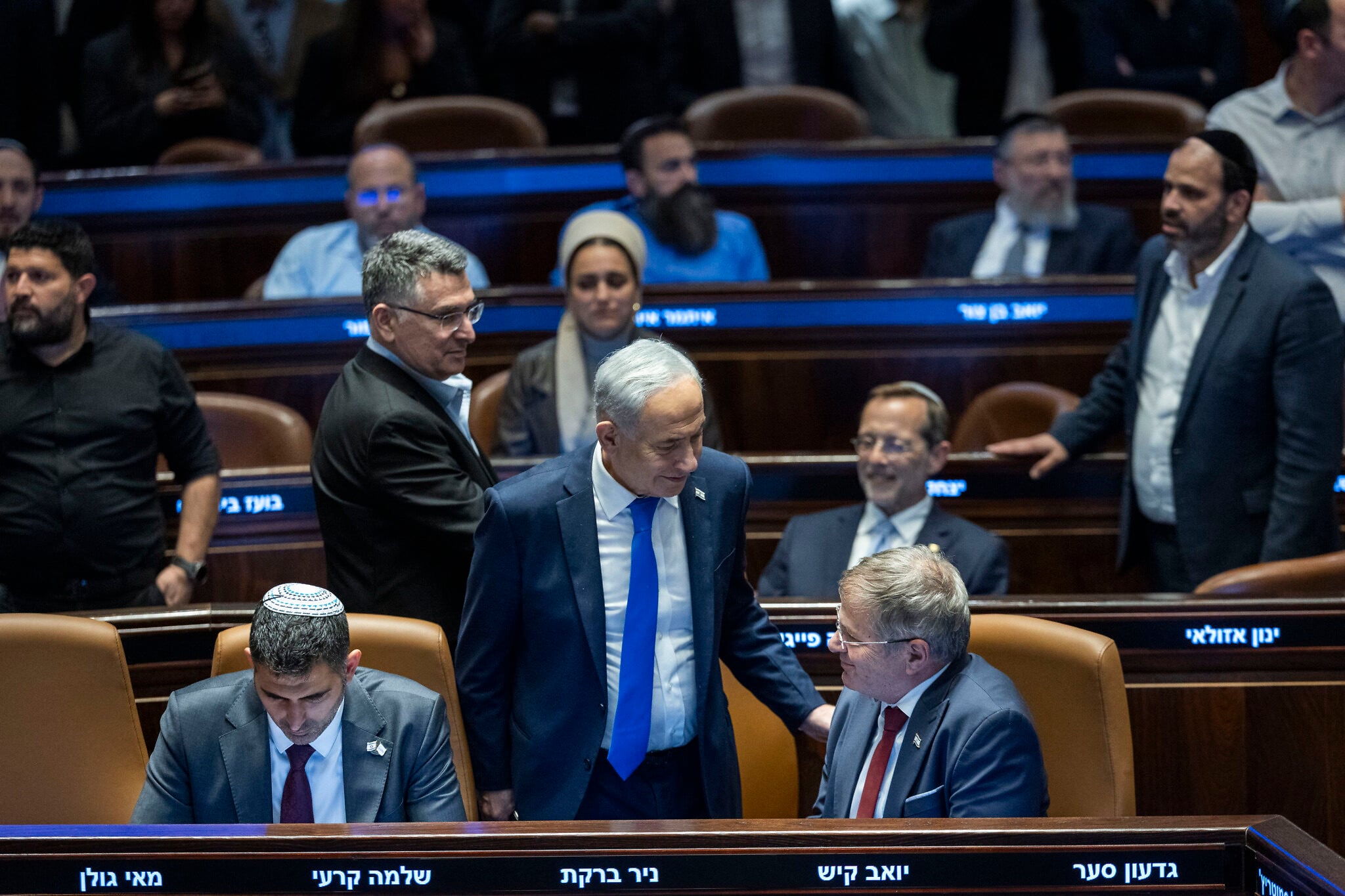
Significantly, both ultra-Orthodox parties voted for Ofir Katz as speaker — 13 votes that had no effect on the final outcome but showcased that their allegiances have not shifted, even though Eisenkot and his ally-rival Avigdor Liberman have been making truly dramatic attempts to woo one or ideally both of them into a coalition.
Liberman has reversed years of the most bitter opposition to the ultra-Orthodox parties, and centrally to their relentless demand to enshrine in law the non-conscription of their young males. He and his right-wing Yisrael Beytenu party prevented the establishment of a Netanyahu-led government in April 2019 over the issue, vowing, “Yisrael Beytenu will not join any government with the Haredim and the messianics. Not Shas, not UTJ and not the Smotriches” (the last, a reference to far-right Religious Zionism leader Bezalel Smotrich).
Following last month’s election, however, Liberman has not merely begrudgingly recalibrated, but actively championed and led the effort to win over UTJ and Shas. Newly installed as chair of the Knesset’s Foreign Affairs and Defense Committee, he on Monday promised “the fairest law, one that is accepted by the [IDF] chief of staff, the High Court and [UTJ spiritual leader] Rav Lando… It will not be conscription for everyone.”
Nonetheless, in the Knesset on Tuesday, UTJ, with which the Eisenkot-led bloc had believed it was making some headway, chose not even to abstain but rather to back Katz.
By contrast, those 18 of the 19 MKs from the Arab parties — on whose support Eisenkot has said he does not wish to build a coalition, and whom Liberman has emphatically rejected as potential coalition-backers from within or without — voted for Kahana.
That first test of the political waters reinforces how complex Eisenkot’s path to the premiership remains. Some reports have suggested he will, nonetheless, attempt to swear in a government — even a minority government if necessary — with the support of the Arab parties, defying Liberman and others within his bloc and hoping that the goal of ousting Netanyahu takes precedence over their aversion to reliance on Ra’am and, especially, the Joint List.
Other reports claim Eisenkot might consider the “unity government” that Netanyahu has been demanding — and that another ally-rival, Naftali Bennett, may be angling for — provided that he, Eisenkot, gets first turn as prime minister in a rotation agreement. (Bennett, who declared in interviews two days before the election that “Netanyahu must go home,” that he had “lost all trust in him,” and that he was “tearing the country apart,” met with the prime minister for two and a half hours on Wednesday, without so much as telling Eisenkot ahead of time.) This is a deal that Netanyahu would seem highly unlikely to accept, and one that would run against Eisenkot’s relentless insistence that Netanyahu, as the prime minister on October 7, 2023, must have no further place in public office.
Accepting the mandate to form a government from President Isaac Herzog on November 8, Eisenkot said that the results of the election — which saw Netanyahu lose his majority, but Eisenkot and his allies nowhere near gaining one, with the Arab parties holding the balance — meant that “No one will be able to fulfill all the [campaign] promises they made, and all of us will need to compromise.” But partnering with Netanyahu goes against everything Eisenkot has said since the election as well, notably when he declared Netanyahu “unfit to remain in office for even one minute more” after the prime minister’s viciously anti-Arab speech at last week’s Knesset swearing-in event, and subsequently accused Netanyahu of fueling a “violent and racist” campaign against Arab citizens.
The anti-Netanyahu bloc’s success in installing Kahana as Knesset speaker certainly constitutes a blow to Netanyahu and a genuine achievement by Eisenkot. It began work immediately on Wednesday on repealing parts of the judicial overhaul legislation — including laws that had politicized the selection of judges and weakened the authority of the attorney general.
But it has apparently concluded that legislating for the establishment of a state commission of inquiry into the October 7 catastrophe, a central and urgent campaign goal, is just too time-consuming in this high-stakes period when Eisenkot is trying to form a government — while it would be relatively straightforward to accomplish if he is able to get a coalition sworn in.
This underlines how fleeting the success of Kahana’s election may yet prove, and how much of a sideshow it ultimately could be. Anything the Knesset does in the next few weeks, any broader promises of a new parliamentary era, can and will be undone if Eisenkot cannot cement a viable government. And if Tuesday night’s vote showed anything in that wider, genuinely important context, it is that the ultra-Orthodox parties, deemed his more convenient partners, are highly unlikely to come through, while the Arab parties, deemed beyond the pale, would likely do so.
The essential question remains, therefore, as it has for the past three weeks, whether there is any path by which Eisenkot can turn the Knesset arithmetic that on Tuesday enabled Matan Kahana’s election as speaker into a viable coalition before his mandate expires on December 20.





The Times of Israel Community.