

At protest tent outside Knesset, new MK pitches unity coalition against long odds
From former left-wing voters to religious Zionists, visitors to Likud MK Elisha Madan’s encampment hail his push for unity government, while emphasizing opposition to Arab parties

 Add ToI as a Preferred Source on Google
Nava Freiberg is The Times of Israel's deputy diplomatic correspondent.
On the way to a tent set up outside the Knesset calling for the formation of a unity government between Prime Minister Benjamin Netanyahu and his chief rival Gadi Eisenkot, a Jerusalem cab driver was bluntly skeptical of the prospects for such an outcome.
“They’re not interested in anything except one thing: Bibi going home,” declared the driver, referring to the motives of Netanyahu’s opponents.
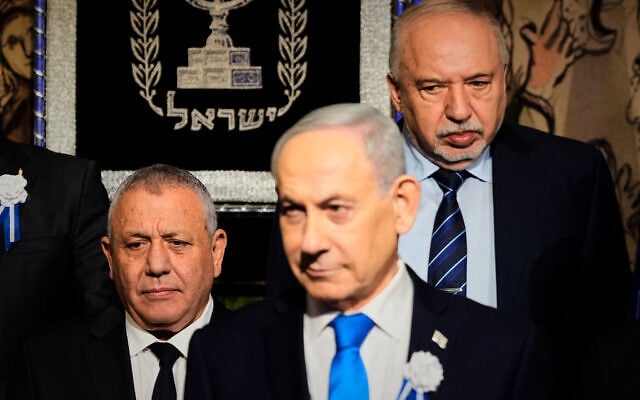
His frustration reflected the deep mutual distrust between the rival political camps, complicating recent efforts to form a broad coalition between Netanyahu’s Likud and Eisenkot’s Yashar, the two largest parties in the newly elected Knesset.
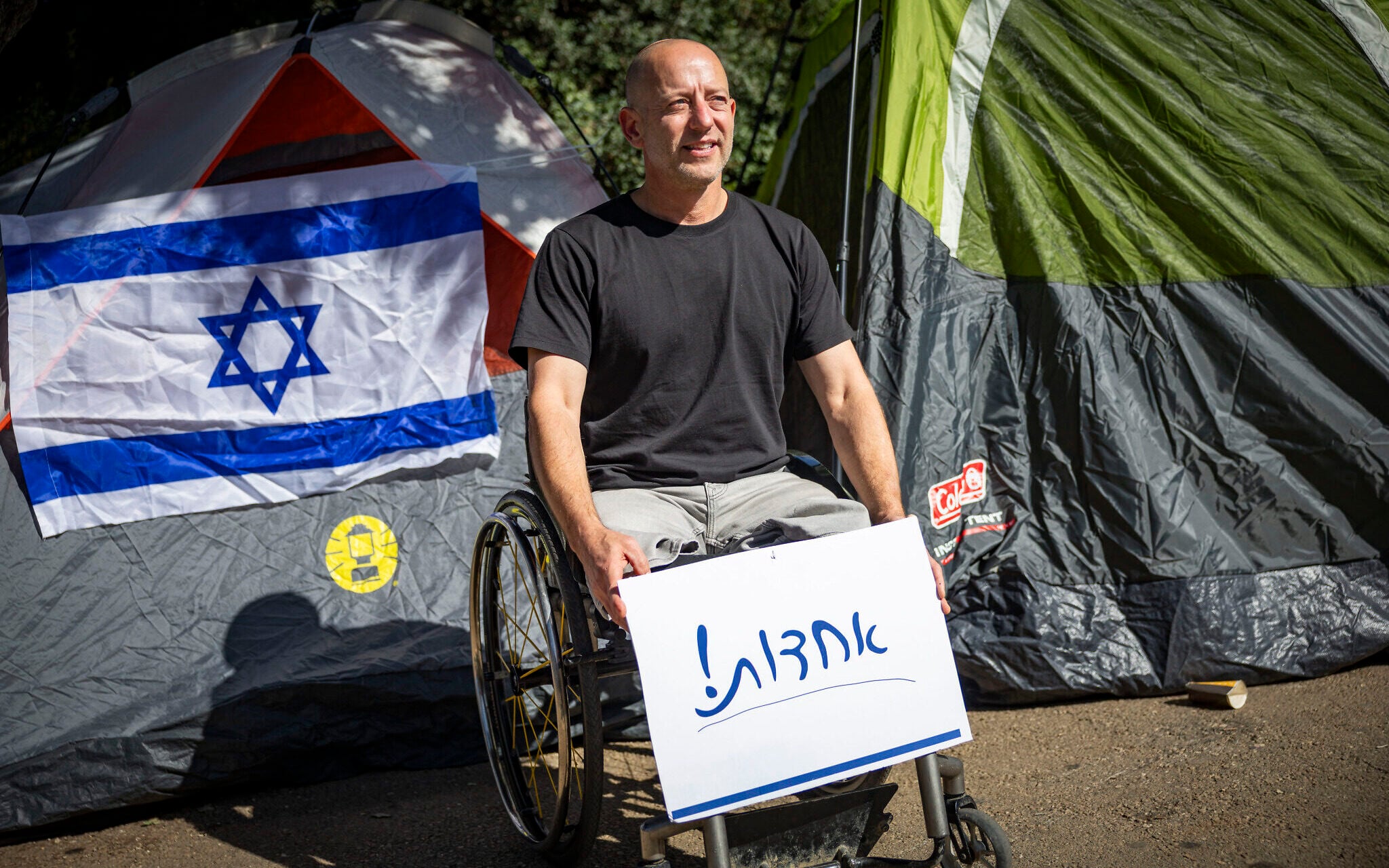
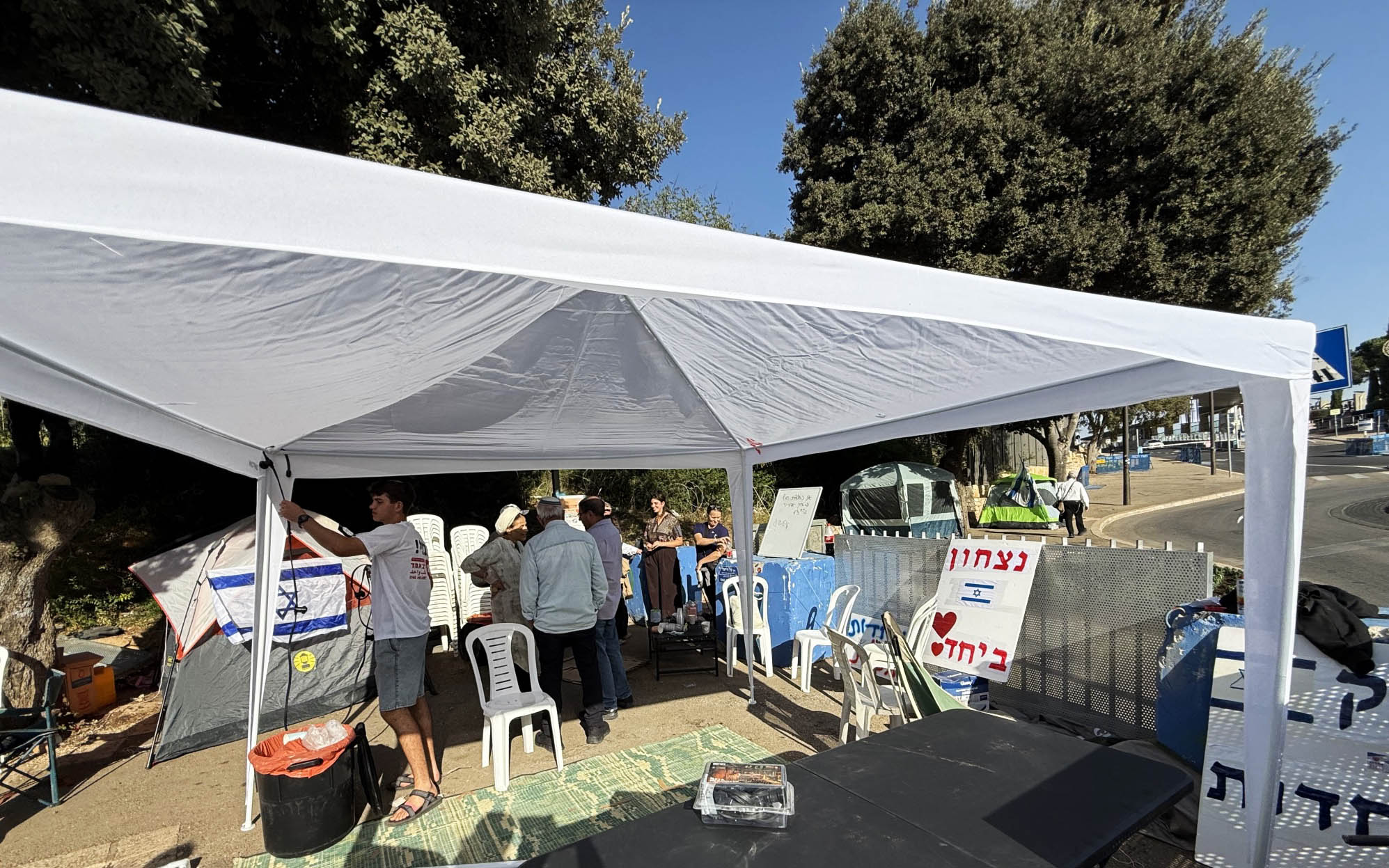
On the flipside of that skepticism sits the unity tent, pitched Saturday night by newly sworn-in Likud MK Elisha Madan, a reservist who lost both legs fighting in Gaza in 2024 and was later personally recruited into politics by Netanyahu. He has vowed to keep the encampment up until a broad Zionist government is formed.
By early Monday afternoon, the makeshift encampment had grown to at least eight tents, with attendance shifting between a dozen and several dozen visitors, many of whom hailed from the same political camp as Netanyahu and Madan. Yet even those who came to support the new lawmaker’s mission were doubtful it would be enough to break the current political deadlock.
Netanyahu has called for a broad Zionist-led coalition encompassing Likud, the ultra-Orthodox parties and other Jewish-majority factions, but has insisted that he remain prime minister, at least for the first stage of a rotation agreement.
The premier’s opponents have questioned whether he would honor a premiership rotation agreement with Eisenkot, and accuse his government of deepening the divisions he now ostensibly seeks to overcome, all while grievances such as the failures leading to the Hamas-led October 7 attack and the issue of ultra-Orthodox conscription loom large.
Eisenkot — who is tasked with forming the next coalition — does not have the numbers to form a governing coalition without bringing in help from parties outside his anti-Netanyahu bloc or relying on outside support from Arab factions. He has indicated he may be open to a coalition that includes Likud, but not to Netanyahu as prime minister.
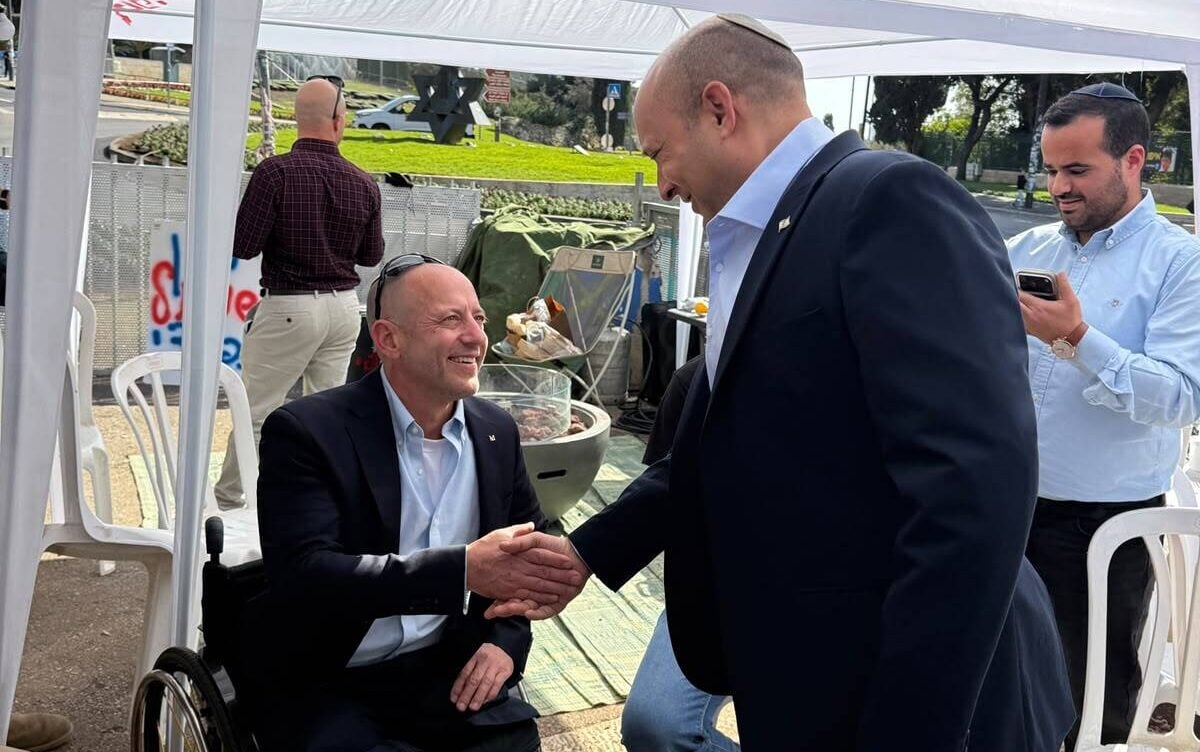
Despite the long odds, the idea of unity has some salience. On Monday evening, Madan’s tent drew its first visitors from the opposing political bloc, including Yashar MKs Chili Tropper, Matan Kahana and Shira Shapiro, followed later by Eisenkot himself, who was photographed sitting and laughing with Madan. On Tuesday, B’Yachad party head Naftali Bennett stopped by.
But while political rivals appeared increasingly willing to unite in Madan’s tent, the prospects of an actual big-tent coalition remain slim.
Madan has drawn wide attention for his turn to street activism, a rare move for a sitting Knesset member, and on Monday afternoon it was the latter role that claimed his focus. Decamping for the nearby parliament building, he left behind a handwritten note on a whiteboard explaining he was partaking in a Foreign Affairs and Defense Committee meeting and would be back when it concluded.
While the tent’s mission is focused on political unification, visitors on Monday spoke of their desire for a national unity that transcended coalition jockeying.
David, an American immigrant from Chicago who teaches at a yeshiva in the West Bank settlement of Eli, said he found resonance in Madan’s desire to bring the solidarity he experienced on the battlefield into the political arena.
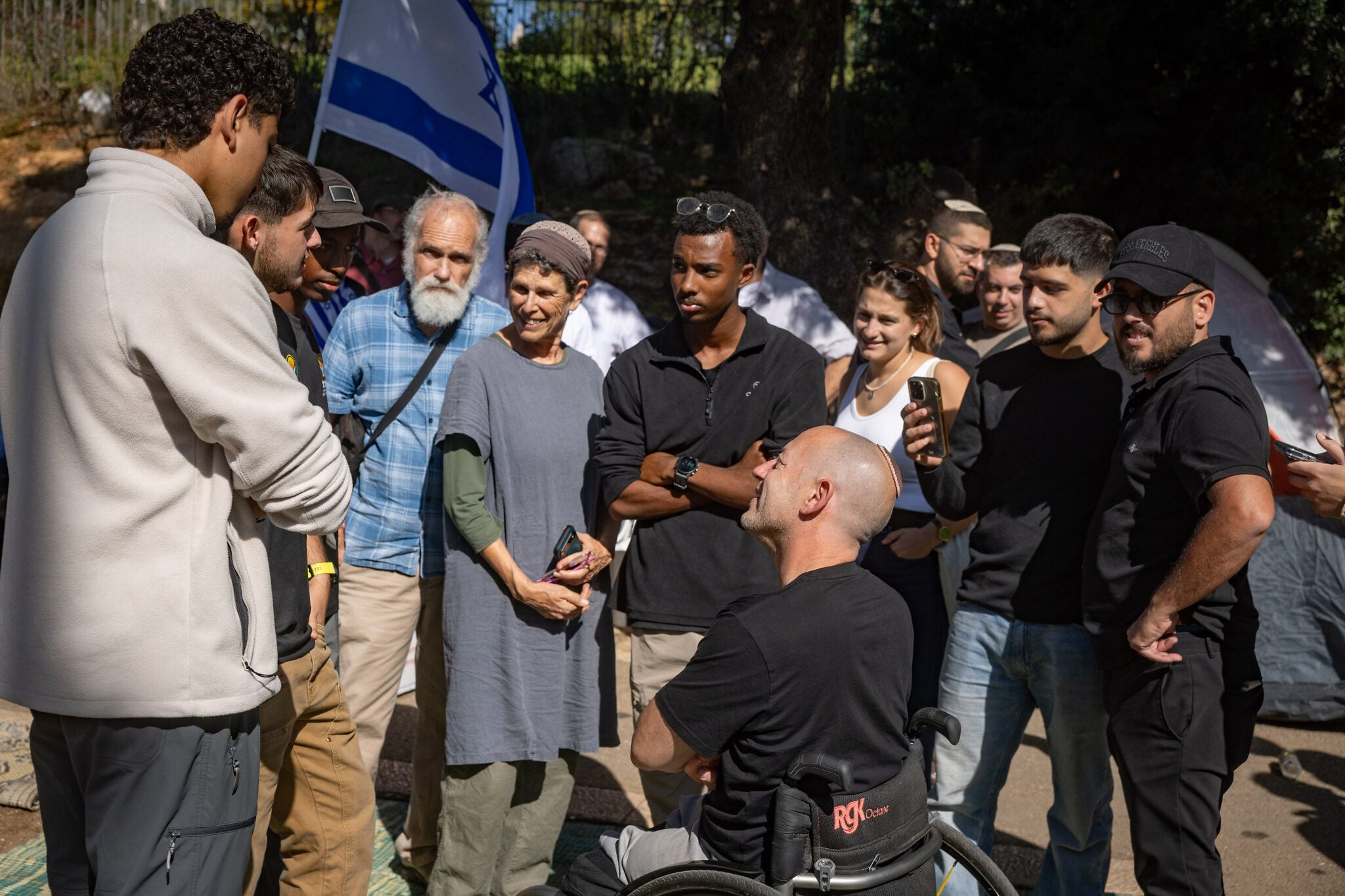
With children, relatives and students of his serving in the military, and former students among the war’s dead and wounded, David said the spirit he witnessed among soldiers stood in painful contrast to the political discourse.
“There’s unity at the front. There’s unity in the army, and people understand that we’re all in this together,” he said. “And it’s so disheartening to hear politicians and the media feeding on disunity.”
Ron, a fellow visitor and friend of David’s, acknowledged criticism that Netanyahu and his coalition partners had failed to promote national unity themselves, such as with their radical overhaul of the judiciary, but asserted that “no [politicians have] been representative of unity” and “that’s why we need it.”
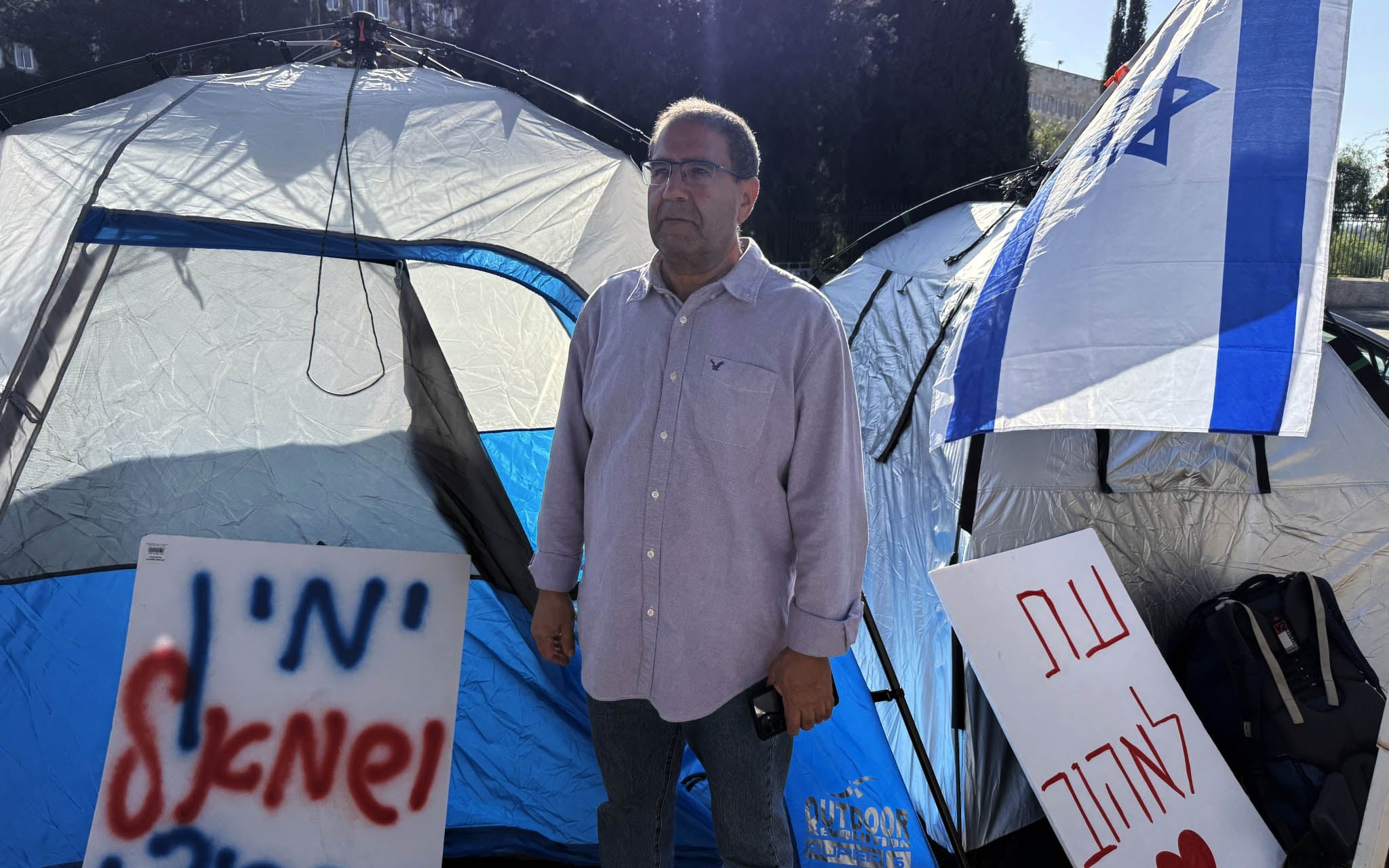
David noted that he favored Netanyahu serving first in a rotation agreement with Eisenkot mainly for the ostensible diplomatic and security benefits that could arise from his close relationship with US President Donald Trump during the latter’s remaining time in office.
Some visitors came with less to say about the political bargaining, including several 18-year-old volunteers from Lev Echad, a national emergency volunteer organization, one of whom said they had come simply “to support the cause.”
But most visitors said they were supporters of Netanyahu and his partners.
Yossi Ohana, a former left-wing voter whose political journey eventually led him to Likud in the last two elections, said he was touched by Madan’s yearning for unity, remarking in Hebrew, “My heart goes out to the gesture he made.”
“Still, personally, at the moment, I would prefer another election,” he continued, positing the right had failed to mobilize its full electoral strength in the recent election and would perform better in another round.
For most of his life, Ohana said, he had voted for the left, supported the Oslo Accords and Israel’s 2005 withdrawal from Gaza, wanted Ra’am in government, and even refused to serve in the West Bank as an army officer in 1988.
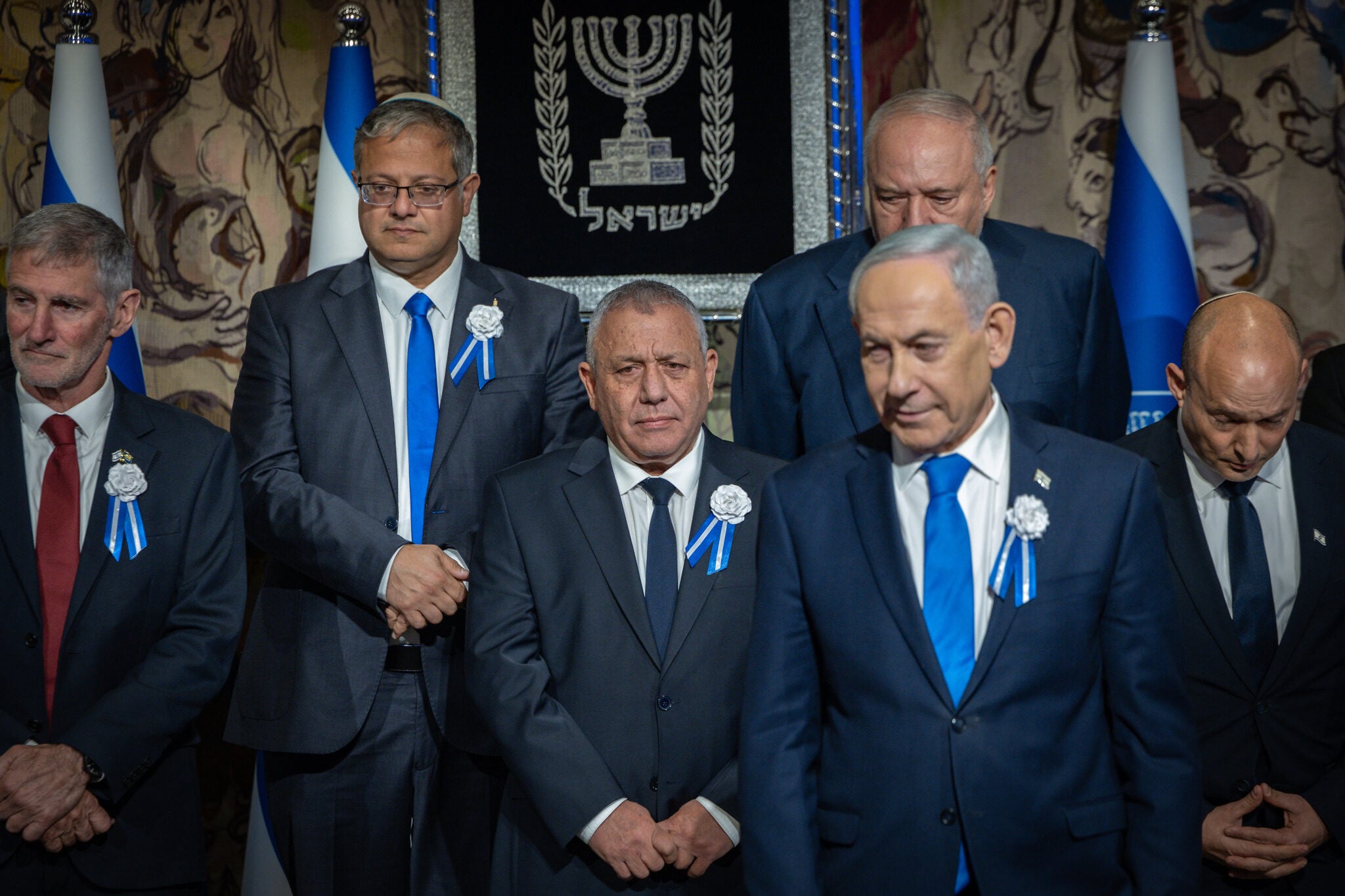
“But I don’t like to say that I was ‘disillusioned,'” he said of his transition to Likud. “I have more or less remained in the same place. I think it’s actually the left that has moved and become more extreme, and was unable to look reality in the eye and change.”
In sync with many of the tent’s visitors, Ohana opposed any government that would include the Arab parties, whose leaders he became increasingly wary of following the October 7 attack. He accused them of rejecting Israel’s Jewish identity and feared them wielding decisive influence over matters of national security.
“For them to be integrated into and influence the country’s security affairs — that’s really suicide. I’m deeply worried,” he said. “I really can barely sleep because of what’s happening right now.”
Many of those pushing for unity, including at a number of right-wing rallies since the election, have cast it as a prophylactic against reliance on Ra’am or the Joint List for a governing coalition, reflecting persisting aversions to Arab participation in government.
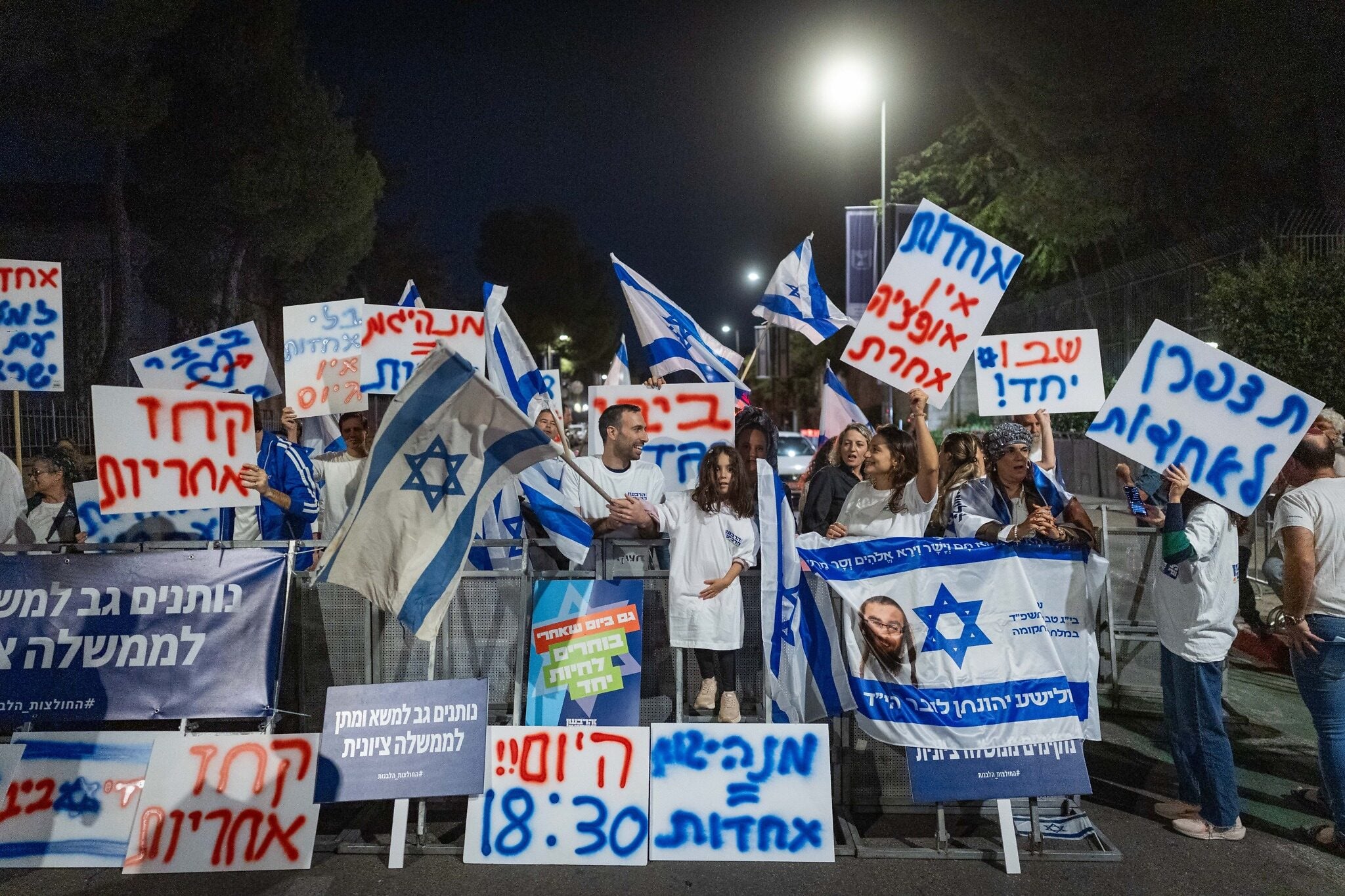
David, who voted for Bezalel Smotrich’s far-right Religious Zionism party in last month’s election, was critical of ultra-Orthodox parties over their nonparticipation in military service, describing parts of the Haredi community as living almost autonomously and failing to understand shared national responsibility.
Still, he distinguished them from Arab parties, whose inclusion he said he would reject so long as they refused to accept Israel’s Jewish character.
Elsewhere at the encampment, an elderly male visitor declared that “all of Islam is extreme.” The man invoked the biblical description of the Jewish people, encamped in an actual wilderness rather than a political one as now, as “a nation that dwells alone.”






The Times of Israel Community.