

Liberman appointed head of Knesset defense panel, vows to tackle Haredi draft issue
Yisrael Beytenu leader says he will summon defense chiefs to appear before committee; Defense Minister Katz warns against turning panel into ‘political circus’
 Add ToI as a Preferred Source on Google
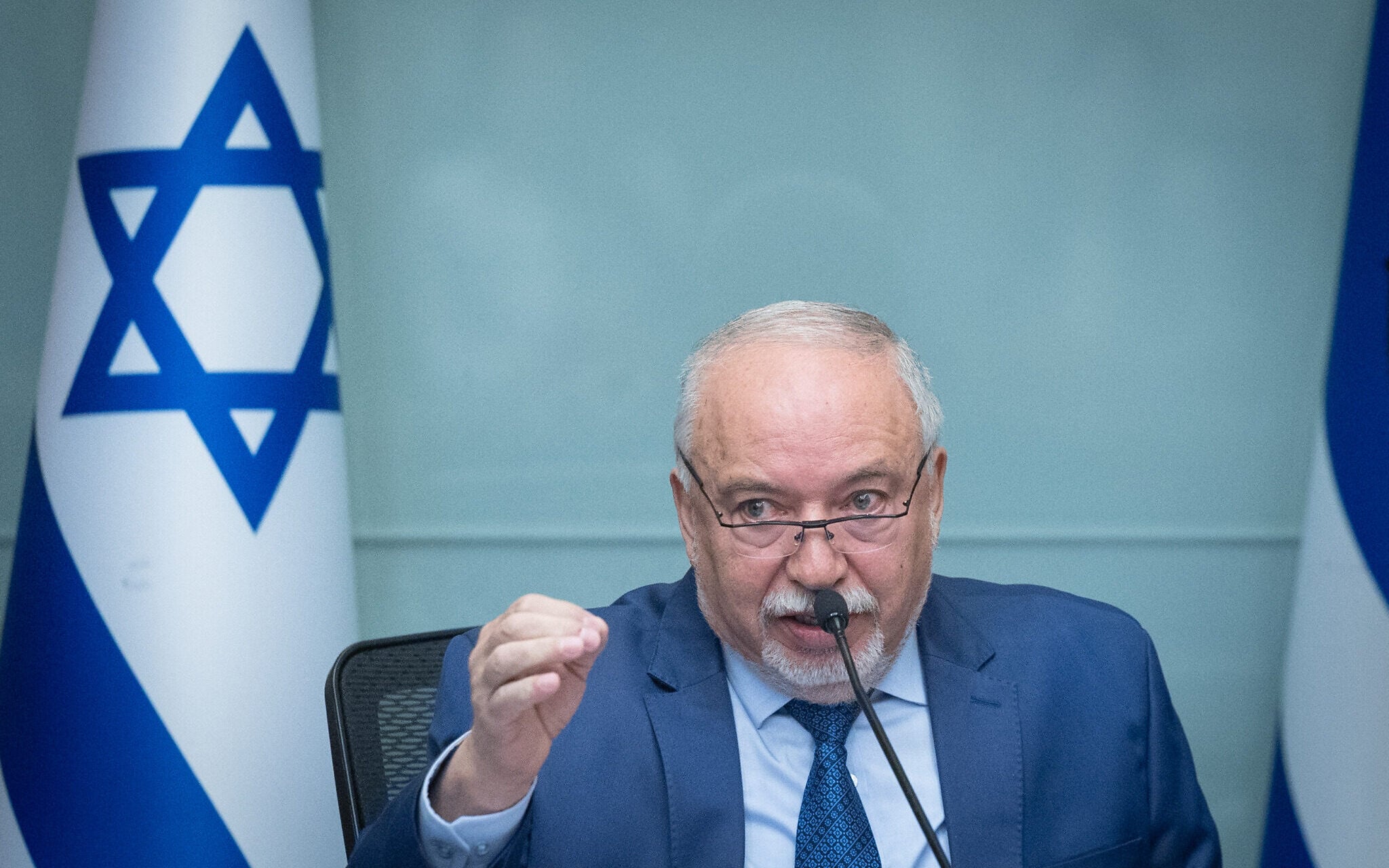
Yisrael Beytenu chair Avigdor Liberman was approved as head of the Knesset’s temporary Foreign Affairs and Defense Committee on Monday, with eight members voting in favor and none opposed.
The appointment is part of a push by the bloc led by Yashar party chief Gadi Eisenkot to take control of key parliamentary bodies, even as he has yet to secure a governing coalition.
Liberman said the panel would begin discussing ultra-Orthodox conscription legislation Monday afternoon and that he would summon top security officials — Israel Defense Forces Chief of Staff Lt. Gen. Eyal Zamir, Mossad chief Roman Gofman, Shin Bet chief David Zini and Israel Police Commissioner Daniel Levy — to appear before it.
He argued that any conscription proposal must be approved by Zamir, the High Court of Justice and Rabbi Dov Lando, the spiritual leader of the ultra-Orthodox Degel HaTorah political faction.
“It won’t mean conscription for everyone, but it will be the fairest law,” Liberman said.
Liberman has long been known as a secularist and a staunch advocate for Haredi enlistment. In 2019, he broke from Prime Minister Benjamin Netanyahu due to disagreements over Haredi military service.
Earlier this month, he dropped his years-long veto on forming a government with the ultra-Orthodox parties seeking to codify their constituents’ longstanding but informal exemption from military service.
Liberman called for his opposition bloc to reach “painful” understandings with the Haredi factions in order to unseat Netanyahu. He later insisted that he still believed in enlistment for everyone, while proposing his 2018 draft bill as a basis for negotiations.
In a landmark decision in June 2024, the High Court of Justice ruled unanimously that the government must draft ultra-Orthodox yeshiva students into the military, since there was no longer any legal framework to continue the decades-long practice of granting them blanket exemptions from army service.

The court ruled that a government decision from June 2023 instructing the army not to begin drafting eligible Haredi men — issued after a law allowing for blanket military service exemptions expired — was illegal, and that the government must therefore actively work to conscript ultra-Orthodox recruits to the IDF.
When Netanyahu’s governing coalition released its own draft bill regulating Haredi enlistment in 2025, Liberman’s party savaged it, calling it an “evasion law” and saying the “real right” did not support it. It likewise did not pass.
In key respects, Liberman’s 2018 bill — the one he is now offering as a basis for negotiations — is weaker than the 2025 bill he slammed. Unlike the 2025 bill, the 2018 bill does not penalize individual draft evaders, has lower annual Haredi enlistment targets, and operates on a longer timeline.
Liberman’s bill was drafted in a different era: years before the October 7, 2023, Hamas-led massacre and Israel’s plunge into years of a punishing multifront war that has seen thousands of men perform hundreds of days of reserve military duty. Due to that war, the IDF has said it needs 12,000 new soldiers to fill out its ranks — a figure that was not requested in 2018.
Liberman also said Monday that he would ask the committee’s legal adviser to appear in order to discuss the issue of ultra-Orthodox conscription.
In his comments, Liberman addressed suspicions of foreign interference in the October 27 election, saying there were “far too many discrepancies” between the police and the Shin Bet’s handling of their respective investigations. He called the gaps “unreasonable” and said they “don’t make sense.”
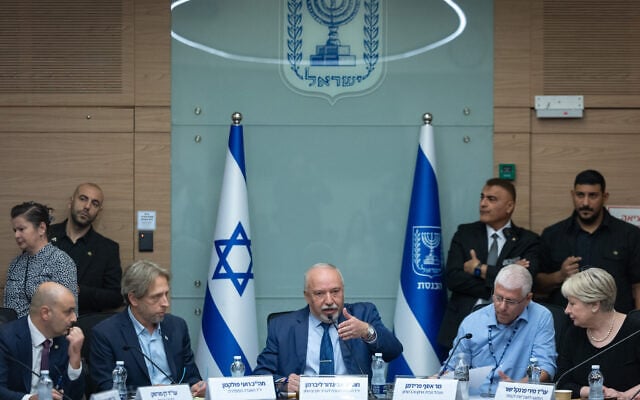
He also called for the urgent formation of an intelligence subcommittee and a joint committee on the defense budget, saying those matters “cannot wait.”
Liberman said the committee would focus on the conditions of conscripts, reservists and career servicemen, and called for the IDF’s multi-year plan to be central to its discussions. That plan, unveiled in January, is meant to guide the military from 2026 through 2030, as it reinvigorates its combat capabilities.
Netanyahu insists on ultra-Orthodox parties in government
Also on Monday, Defense Minister Israel Katz warned against turning the committee into a “political circus,” saying he would not allow it to be used as a tool for political attacks on the IDF and the government.
Katz said he would approve summonses for IDF representatives to appear before the panel only on professional grounds, following prior review and coordination, for updates and parliamentary oversight of the military and the government.
Meanwhile, Prime Minister Benjamin Netanyahu reiterated his call for a national unity government, insisting that the ultra-Orthodox parties will remain part of any future coalition and that legislation regulating the status of Torah students will be negotiated “in agreement with them.”
“A national unity government is the only government capable of confronting the challenges facing us. To achieve it, it must include all parties that regard the State of Israel as the state of the Jewish people,” he said in a statement Monday.
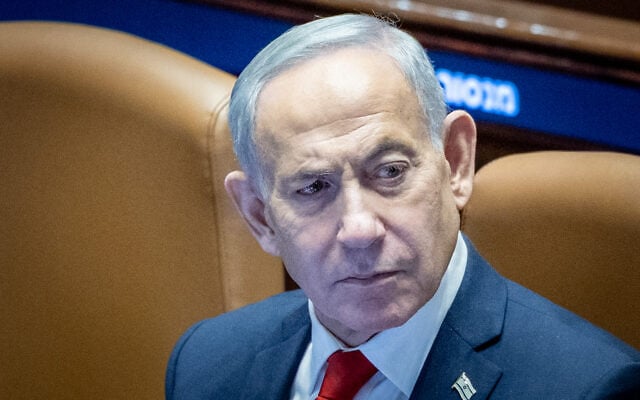
“In any government that is formed, we will stand together with our Haredi partners and, in agreement with them, enshrine in law the status of those who study Torah,” Netanyahu added.
The remarks came a day after representatives from Netanyahu’s Likud and Eisenkot’s Yashar parties held coalition talks, with no breakthrough reported. Eisenkot, who was given the mandate to form a government by President Isaac Herzog, has also been speaking with Haredi parties about coalition building, though disagreements over the military draft remain a major obstacle.





The Times of Israel Community.