

In legislative blitz, Knesset advances bills to scrap Netanyahu’s judicial and media overhauls
Eisenkot-led bloc pushes forward legislation that would reverse political control over appointments of judges, remove curbs on attorney general; opposition boycotts votes on Likud bills
 Add ToI as a Preferred Source on Google
Ariela Karmel is a political correspondent at The Times of Israel. She previously reported for Calcalist and Haaretz. She holds an MA in Middle Eastern and African History from Tel Aviv University and a BA in Political Science from the University of British Columbia.
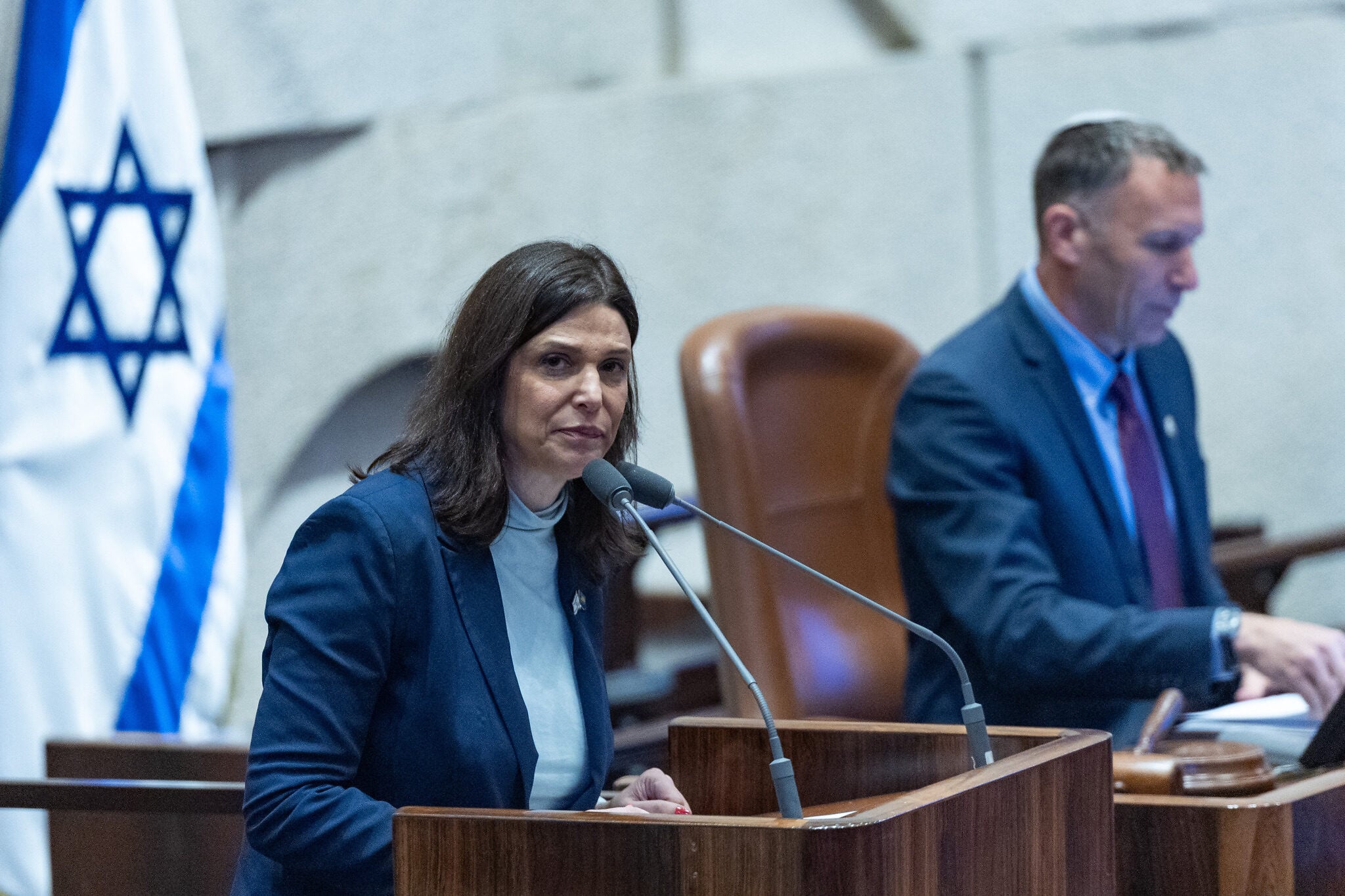
Leveraging its newfound majority in the Knesset, the bloc led by Gadi Eisenkot advanced legislation on Wednesday to begin dismantling major policies enacted by the outgoing government of Prime Minister Benjamin Netanyahu, including key elements of its judicial overhaul, as well as a controversial law expanding government control over broadcast media.
In a series of preliminary votes, lawmakers approved bills reversing changes that increased political influence over the appointment of judges and weakened the attorney general’s authority, including by allowing the government to disregard her legal opinions.
The votes marked a first step in the anti-Netanyahu bloc’s efforts to undo the outgoing government’s legislation, which it had pledged to do ahead of the October 27 election. It is proceeding with the rollback even as the prime minister remains in office as a caretaker, and as Eisenkot’s prospects of unseating him are still uncertain.
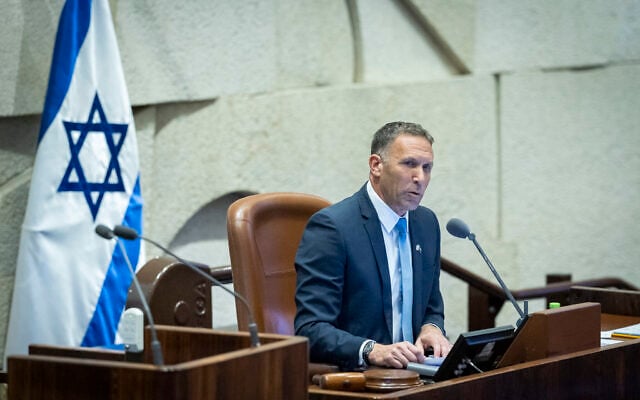
The legislative blitz was possible because yesterday, MK Matan Kahana of Eisenkot’s Yashar party was elected Knesset speaker, giving its camp control over the plenum’s agenda. Eisenkot’s four-party bloc holds 48 seats, but commands a parliamentary majority with the support of the Arab-majority Ra’am and Joint List parties, which together hold another 19 seats and also oppose Netanyahu.
Wednesday’s votes also exposed the deep divisions between the outgoing coalition and its opponents. Netanyahu’s Likud party brought forward legislation targeting Arab lawmakers who have refrained from explicitly identifying Hamas as a terrorist organization, and protecting the Jewish ritual laying of tefillin in public spaces, which opposition secularist lawmakers oppose. Both bills advanced through their preliminary readings without opposition because Eisenkot’s bloc and the Arab parties walked out of the chamber in a boycott of Likud-led bills, accusing Netanyahu’s party of attempting to embarrass and divide the parties seeking to replace him.
The Arrangements Committee, which governs Knesset operations at the start of a new parliamentary term, earlier voted 12-9 to exempt the Eisenkot-led bloc’s bills from the usual 45-day waiting period for private members’ legislation. It also approved exemptions for the two Likud-sponsored bills.
Knesset Legal Adviser Sagit Afik explained that longstanding parliamentary practice allows such exemptions at the beginning of a Knesset term for legislation necessary to form a government, or where there is a substantive justification for urgently moving the bills forward. She said the bills met that requirement because changes to the Judicial Selection Committee legislated by Netanyahu’s government had already taken effect, and legislation concerning the attorney general and broadcast media was due to enter into force soon.
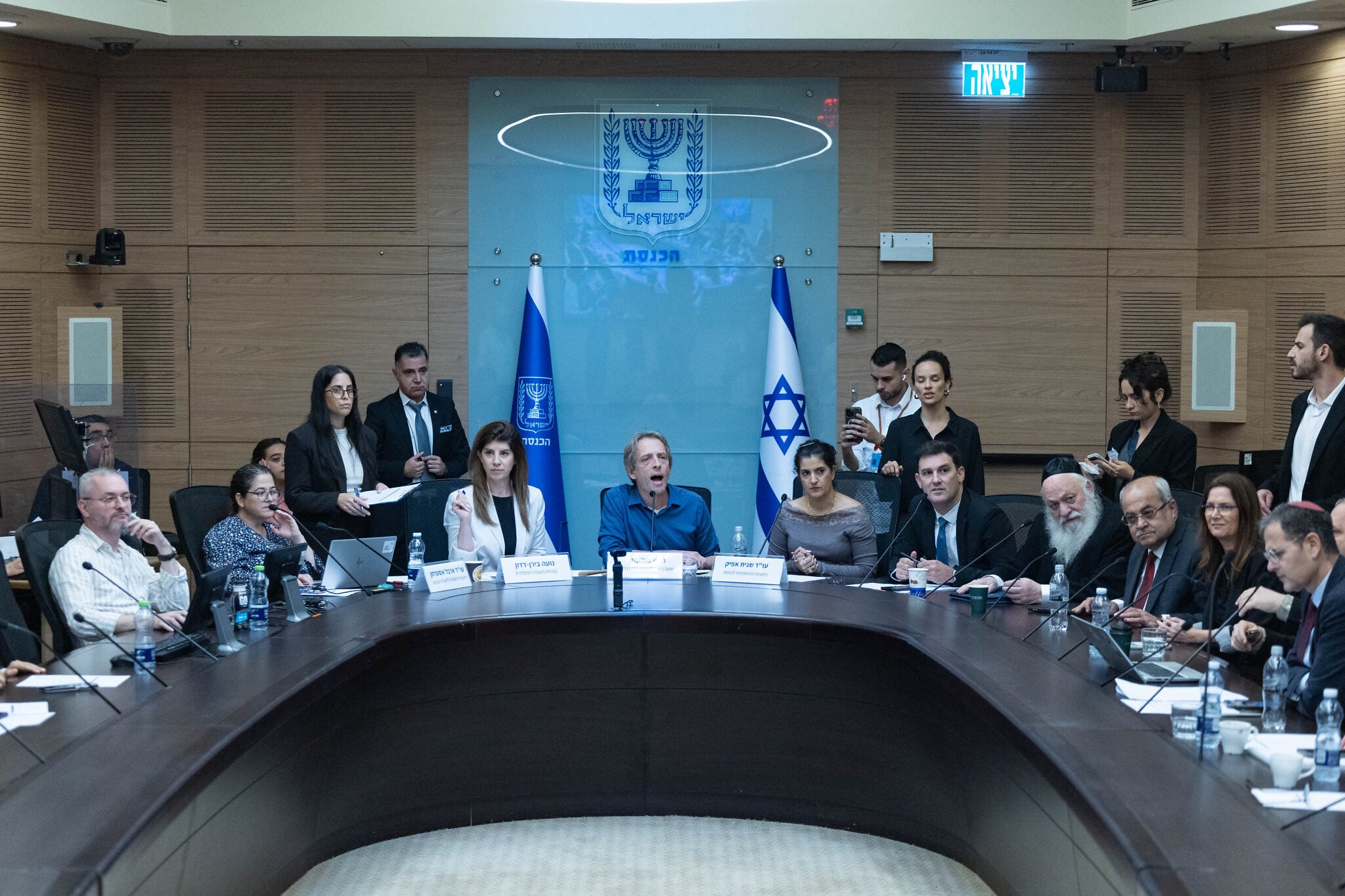
Afik also noted that the media law in particular was passed through a legislative process “marked by numerous procedural flaws,” arguing that the Knesset was “entitled to seek the repeal of legislation it believes was enacted through a flawed process.”
The timetable to advance the legislation, which now must be assigned to special committees for review and pass three additional readings before becoming law, remains tight as Eisenkot’s mandate to form a government runs until the end of December. If he fails to form a coalition, the mandate to do so could go to Netanyahu, which would give the caretaker premier control over the Arrangements Committee.
Under a reported compromise, Eisenkot’s bloc agreed to delay advancing some bills until next week in exchange for the Netanyahu bloc ending its filibuster on Tuesday against electing Kahana as Knesset speaker, according to Hebrew media reports.
As a result, lawmakers removed some other bills from Wednesday’s agenda, including those that would impose prime ministerial term limits; repeal a law giving the justice minister control over internal investigations of the police; and reverse legislation restricting when a prime minister could be declared incapacitated, widely seen as intended to shield Netanyahu from losing his seat due to his corruption trial.
In addition, committee deliberations on the bills approved Wednesday were expected to be postponed to Monday.
Reversing the judicial overhaul
The Knesset voted 63-47 to advance two bills repealing two key elements of the Netanyahu government’s judicial overhaul: an increase of political control over judicial appointments and a weakening of the attorney general’s powers, one of the Israeli system’s few checks on executive power.
The first law, passed in March, dramatically reduced the judiciary’s influence over the nine-member Judicial Selection Committee that makes Supreme Court appointments. It replaced the two representatives of the Israel Bar Association on the committee with lawyers chosen separately by the coalition and opposition. It also gave representatives of the coalition, opposition and judiciary veto power over lower court appointments, where no single bloc previously held a veto, and granted the coalition and opposition veto power over Supreme Court appointments.
The repeal bill, sponsored by Democrats MK Efrat Rayten and other lawmakers, seeks to reverse those changes, restoring the committee’s previous composition and voting rules.
“Today marks the beginning of healing and repair,” Rayten told the plenum. “These repeal laws are not intended to destroy, but to repair. They are intended to erase four destructive and divisive years.”
The second law, passed in July and set to take effect in January, would allow ministers to disregard the attorney general’s legal opinions, which are currently binding, and give the coalition effective control over appointing and dismissing the attorney general, which is meant to be an independent position.
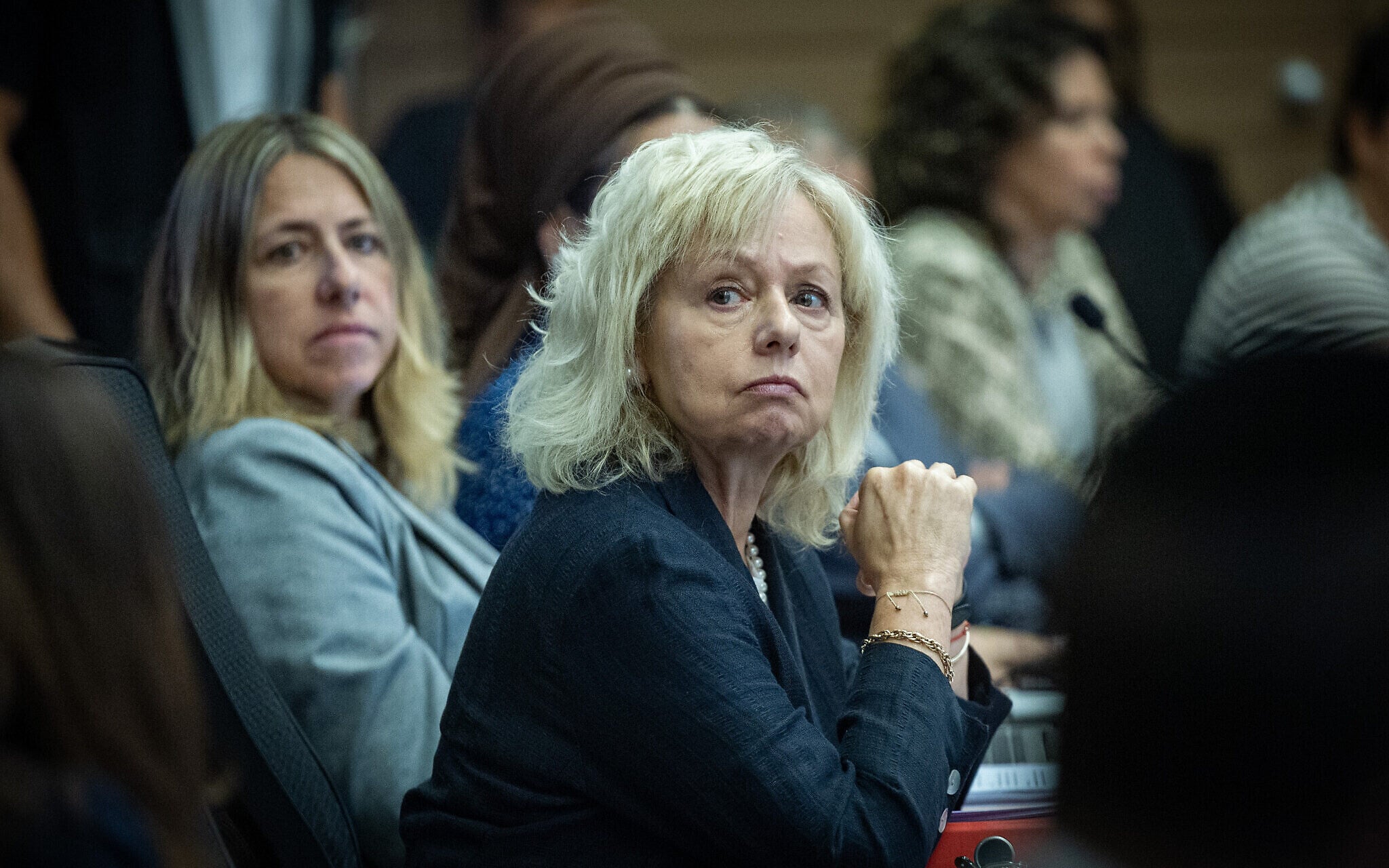
The bill weakening the attorney general drew fierce criticism from opposition lawmakers, legal experts and good-governance watchdogs, who warned that it would remove a crucial constraint on government power in a political system that already lacked many of the checks and balances found in other democracies. Netanyahu’s coalition argued that Attorney General Gali Baharav-Miara was overly activist and obstructed the will of the electorate.
The repeal bill, also sponsored by Rayten and other lawmakers, would restore the attorney general’s authority and independence. Its explanatory notes cited “significant constitutional difficulties” in the original legislation and concerns over harm to the rule of law and democratic checks and balances, while pledging to pursue future reforms through an orderly process that preserved the attorney general’s independence.
Justice Minister Yariv Levin fiercely opposed both repeal efforts. He argued that restoring Bar Association representatives to the judicial committee would bring back conflicts of interest and corruption, and described the push to repeal the attorney general law as “hysterical and shameful.”
“Everything you are trying to repeal will return, and with even greater force,” Levin promised.
Both bills were referred to the Arrangements Committee, which is expected to assign them to a temporary committee chaired by Democrats party MK Gilad Kariv.
Repealing the media overhaul
Lawmakers also voted 63-49 in a preliminary reading to repeal a controversial law that significantly expanded government control over the broadcast media and news sector.
The law, spearheaded by Communications Minister Shlomo Karhi and passed in July, overhauled media regulation by removing longstanding oversight mechanisms, minimum journalistic standards, obligations to invest in original Israeli productions and restrictions on cross-ownership of outlets. It also gave the government greater influence over television ratings and allocation of state advertising.
The legislation drew intense criticism from opposition lawmakers, media organizations and good-governance watchdogs, who warned that it would undermine press freedom and media independence. The High Court of Justice subsequently froze implementation of parts of the law following petitions alleging constitutional violations and serious procedural flaws.

The repeal bill, sponsored by B’Yachad MK Eitan Ginzburg and other lawmakers, would restore the previous regulatory framework, citing serious procedural flaws and insufficient professional and legal scrutiny.
“This law must be repealed, and the broadcasting market must be regulated anew, but in the right way,” Ginzburg told the Knesset, describing the legislation as “disorganized” and riddled with “internal contradictions and substantive problems.”
Karhi denounced the repeal effort, referencing longstanding accusations that the media is biased against Netanyahu, and declaring that “the left-wing monopoly has already been shattered.”
“Even if you repeal the law, you will not succeed in stopping the revolution or blocking new and diverse players,” he told lawmakers. “You do not want a diversity of opinions. You are afraid of transparency and the truth.”
The bill was expected to be assigned to a temporary committee chaired by B’Yachad MK Merav Ben Ari, which would prepare it for subsequent readings.
Likud legislative counteroffensive prompts walkout
As Eisenkot’s bloc advanced its bills, Likud sought to turn the tables by bringing forward two pieces of legislation, which prompted pro-Eisenkot lawmakers and those from the Arab parties to walk out of the plenum.
Both bills, sponsored by Likud MK Ofir Katz, were potentially politically embarrassing for the parties seeking to replace Netanyahu and could have exposed divisions within their ranks. One would strip MKs who refused to recognize Hamas as a terrorist organization of their parliamentary rights, including their salaries. That appeared aimed at Arab Ra’am and Joint List lawmakers, some of whom have publicly condemned the October 7, 2023, Hamas-led massacre and the killing of Israeli civilians but have stopped short of explicitly describing Hamas as a terrorist organization.
The other would prohibit interference with the Jewish ritual laying of tefillin in public spaces and educational institutions. That touches on longstanding disputes over religious rituals in public spaces, particularly the placement of tefillin stands near schools. While laying tefillin is not prohibited in Israel, municipalities have occasionally restricted unauthorized tefillin stands.
כל הח״כים של גוש השינוי יחד עם המפלגות הערביות יצאו מהמליאה בזמן ההצבעה על חוקי ״התפילין״ ו״חמאס״
מפלגת ישר בראשות איזנקוט: לא נשתתף בהצגות של הליכוד. כל הצעה של הליכוד היום היא הטרלה מביכה ובגדר טריקים ושטיקים. pic.twitter.com/DLcoTxrVST
— HolySmoke???? (@HolySmokexxxx) November 18, 2026
Rather than participate in votes on those bills, lawmakers from Eisenkot’s four-party bloc, which holds 48 seats, and the Arab-majority Ra’am and Joint List parties, which together hold 19 seats, walked out of the chamber, leaving Likud to advance both bills without opposition.
The Hamas recognition bill passed its preliminary reading 48-0, while the tefillin bill passed 44-0.
“We will have no part in Likud’s political theater,” Yashar said in a statement. “Every proposal Likud has put forward today is an embarrassing attempt to provoke a reaction through political tricks and gimmicks.”
“In its four years in power, Likud never bothered to advance these bills. Only now, when all it has left is political theater, has it decided to bring them to a vote,” the party said.
Yashar faction chairman Roy Folkman accused Likud of attempting to sow divisions within the Eisenkot-led bloc. “We will not let them drive a wedge between the parties of the ‘change bloc,’” he said. “We will keep working to repair the damage the outgoing government has left behind.”







The Times of Israel Community.