

Board of Peace envoy to visit Russia and Japan, seeking new sources of support
Nickolay Mladenov will meet with Lavrov in Moscow, aims to secure funding in Tokyo, as panel overseeing Gaza ceasefire bogged down by Israeli foot-dragging and political paralysis

 Add ToI as a Preferred Source on Google
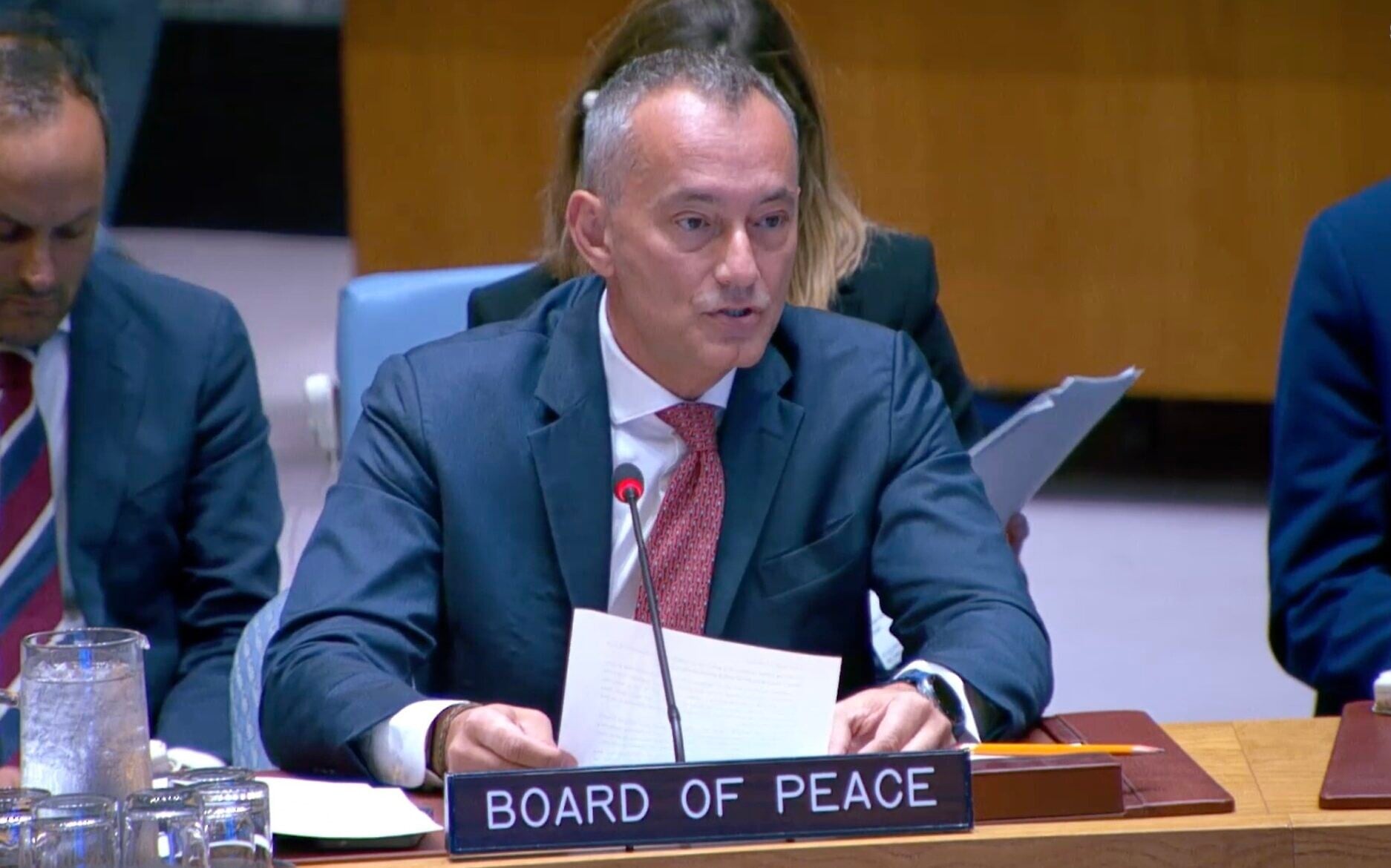
The Board of Peace’s top envoy Nickolay Mladenov is slated to travel to Russia and Japan later this month, as the US-controlled body monitoring the Gaza ceasefire seeks additional sources of support, amid stalled progress in the rehabilitation of the war-ravaged Strip.
Mladenov — who serves as the Board of Peace’s High Representative for Gaza — will visit Moscow next week, where he will meet with Russian Foreign Minister Sergey Lavrov before holding similar meetings in Tokyo, an Israeli official and a Palestinian source familiar with the matter told The Times of Israel on Thursday.
The travel points to an effort by the Board of Peace to secure political support and funding from some less typical sources after receiving less than 2 percent of the $17 billion that was pledged mainly by the US, Gulf and Muslim countries earlier this year.
While Russia may not be able to offer significant funding as it is marred by the war in Ukraine, more active involvement from the UN Security Council permanent member state could prove helpful to the Board of Peace. Japan, meanwhile, has been identified by the US-controlled body as a key potential donor country, the Israeli official said.
Mladenov’s office declined to comment.
Earlier this week, the Board of Peace submitted a bleak update to the Security Council about its progress in building off of last year’s ceasefire agreement in Gaza, which was supposed to see Hamas hand over its weapons, the entrance of a new technocratic committee to govern the Strip, the withdrawal of Israeli forces and the commencement of reconstruction in the enclave.

Hamas on July 30 agreed to the Board of Peace’s disarmament proposal, but implementation has stalled due to opposition from Israel.
The Board of Peace report to the Security Council faulted Hamas for continued military activity and crackdown on the Palestinian population in Gaza.
But it also called out Israel for refusing to even test the terror group’s seriousness about handing over its weapons, as Jerusalem has withheld approvals needed to operationalize the governing, police and security forces that are meant to replace Hamas.
The report also criticized Israeli restrictions on aid entering the Strip, which the board said went well beyond justifications regarding Hamas’s potential exploitation of “dual-use items” for military purposes. Repeated assurances by Israel to fulfill humanitarian commitments have gone unmet, which led to scenes of backed-up sewage flowing into tents during heavy rains earlier this month, after pipelines went unfixed.
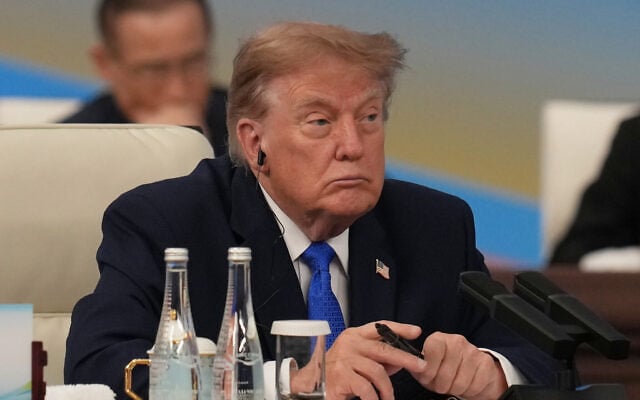
US President Donald Trump, who chairs the board, asked Prime Minister Benjamin Netanyahu for more cooperation in Gaza during a phone call earlier this month, and Board of Peace envoy Tony Blair subsequently met with the Israeli premier and other political leaders, but those engagements have yet to produce major results, according to a diplomat from one of the Middle East countries mediating the Gaza ceasefire — Egypt, Qatar and Turkey.
The Board held off on exerting more pressure on Israel in past months, believing that Netanyahu was unlikely to take steps that would expose him to criticism of being soft on Hamas from political opponents in the lead-up to the October 27 election.
But that vote did not produce conclusive results, and efforts to form a new coalition could take several more months. Netanyahu remains the caretaker prime minister, and his approach toward Gaza has not shifted.

Democrats aligned on board’s goals, but seek more transparency
The Board of Peace is also adapting to a new political reality in Washington where Democrats are set to take control of both houses of Congress in January, thanks to overwhelming victories in the November 3 midterm elections.
On Wednesday, the top Democrat on the House Oversight Committee penned a letter to Jared Kushner, Trump’s special envoy and Board of Peace architect, warning of potential congressional investigations into conflicts of interest arising from his financial interests and his diplomatic work on behalf of the administration.
A Democratic lawmaker, speaking on condition of anonymity, clarified that the Board of Peace is unlikely to be a primary target of Congressional Democrats, who are more concerned with other foreign policy issues.
“There’s not a lot of trust in a body that has christened Trump chairman for life, and we are going to demand to see a lot more transparency than what they’ve been offering to date, but we also recognize that the 20-point plan is the only game in town for bringing relief for Palestinians and are prepared to work with the Board of Peace in order to do that,” the Democratic representative said.

Congress could, in theory, block the $10 billion pledged by Trump to the board, but only a tiny fraction of that has actually been transferred, and the administration did that by repurposing already-appropriated funds, making it harder for the legislative branch to thwart or oversee the transfer.
More moderate Democrats are also set to control top positions on many of the congressional panels that hold some sway over the Board of Peace, dulling the potential for progressives to block the efforts of a panel they see as too aligned with Israel.
In preparation for the shift on Capitol Hill, the Board of Peace hired Shelley Greenspan, an official in former president Joe Biden’s administration, to lead its outreach with Congress.
The Board of Peace declined to comment on this report.





The Times of Israel Community.