

Democrats formally nominate Hakeem Jeffries to be next US House speaker
The pro-Israel moderate, poised to be first Black speaker, secured majority of 251 votes in secret ballot, but faces future battles with party’s left-wing flank over Israel, AIPAC
 Add ToI as a Preferred Source on Google
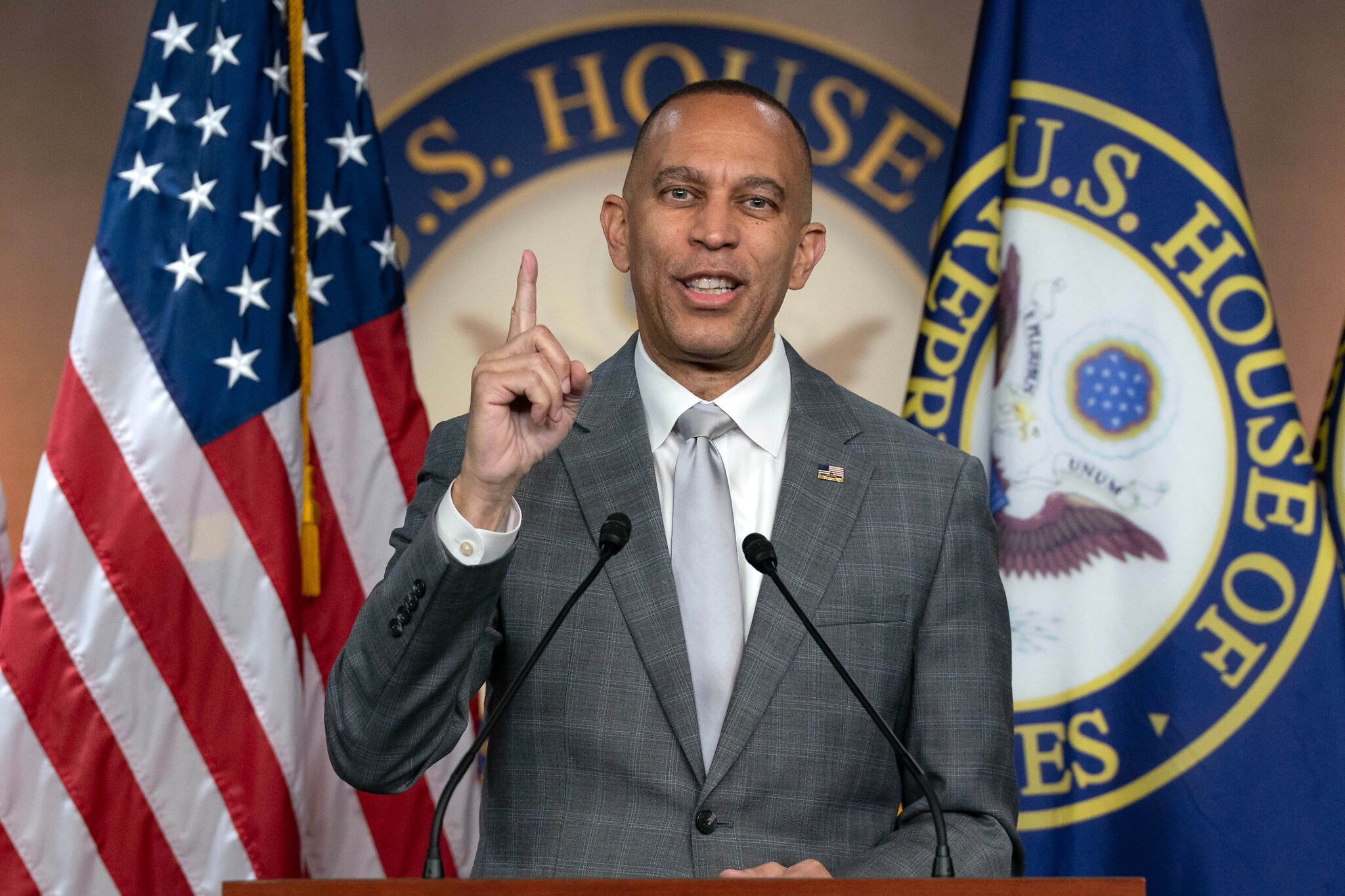
Hakeem Jeffries is on the cusp of becoming the first Black speaker of the US House of Representatives after the chamber’s Democratic lawmakers elected him their leader Wednesday following a sweeping midterm election triumph.
The 56-year-old New Yorker secured 251 votes in a closed-door, secret ballot, with 11 cast against his nomination, according to US media.
Jeffries, a moderate pro-Israel voice in the Democratic Party, faced no declared challenger, although opposition from some newly elected progressives had exposed divisions over how Democrats should wield their newfound power.
His nomination puts him on course to preside over a commanding Democratic majority during the final two years of President Donald Trump’s term, as his party prepares to reverse Republican policies and investigate the administration.
Jeffries must still win a formal vote of the full House when the new Congress convenes on January 3, after which he will become the first Black politician to hold the powerful post. With a large Democratic majority, that vote is seen as something of a formality.
Both returning Democrats and incoming lawmakers participated in Wednesday’s election, including progressives who had sought concessions on issues ranging from US military support for Israel to the influence of money in politics. Jeffries has been endorsed by the pro-Israel lobby AIPAC, which is unpopular in the Democratic Party.
Jeffries had requested a recorded vote rather than a nomination “by acclamation” — without a formal ballot — as some allies had hoped.
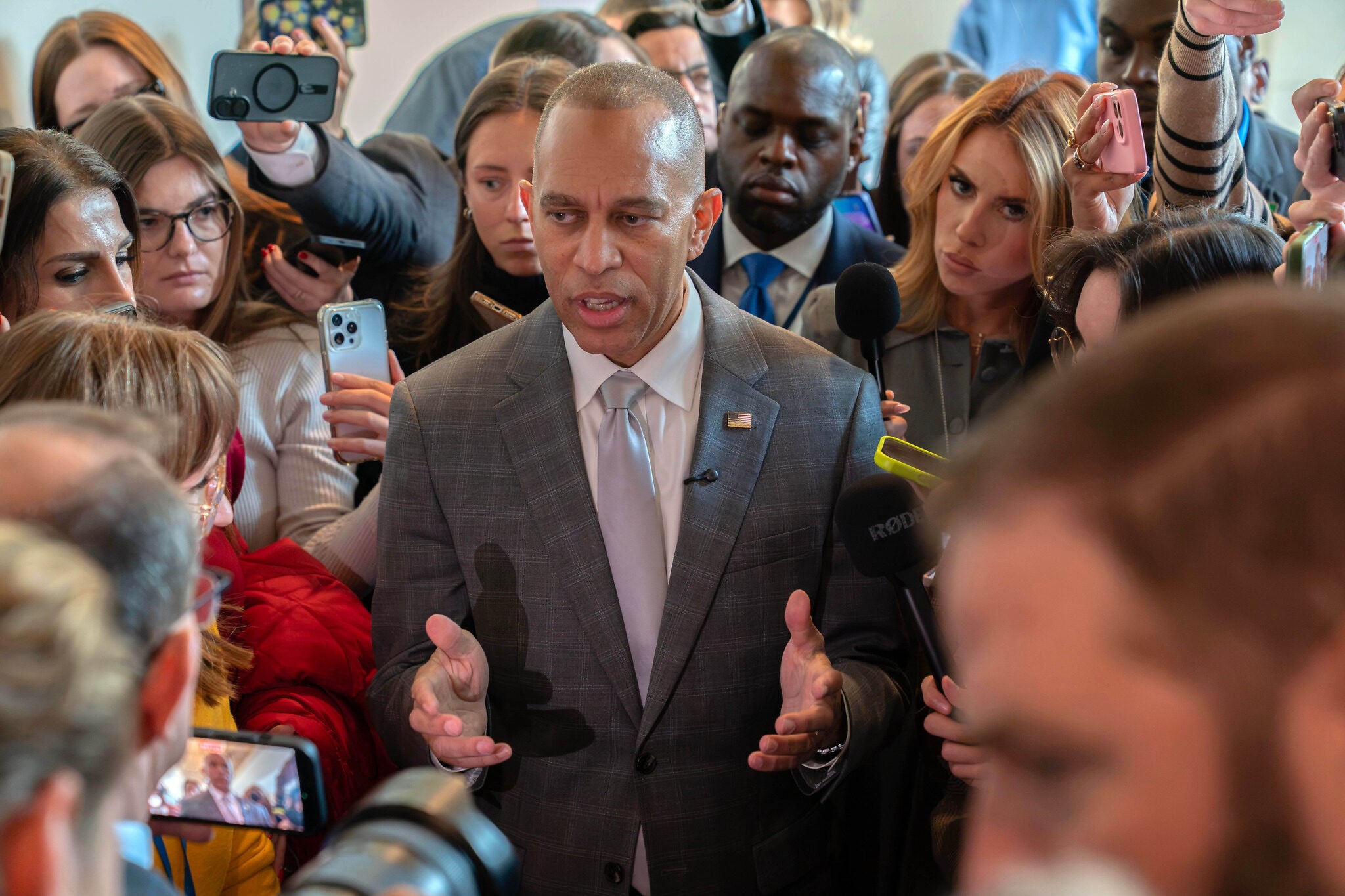
He argued that every Democrat should have an opportunity to weigh his experience, record and vision, citing the precedent set when the party last took control of the House in 2018.
The ballot remained secret, with the overall tally made public but individual votes kept anonymous.
Ahead of the election, Jeffries met progressive lawmakers to discuss issues including Israel and healthcare, with proposals to lower the Medicare eligibility age and expand coverage among the topics discussed.
The Democratic leader has also sought to shift attention to the party’s plans for governing after voters handed Republicans a crushing defeat amid anger over the Iran war and soaring fuel costs.
“Folks are drowning in this Republican economy, and House Democrats are committed to turning that situation around, beginning on day one,” he told reporters Tuesday. “We’re going to relentlessly fight for an affordable America.”
Brooklyn roots
Born in 1970, Jeffries grew up in the deprived Brooklyn neighborhood of Crown Heights, which has a large Hasidic Jewish population. He was raised amid the crack cocaine epidemic and the emergence of a burgeoning rap scene.
His parents were social workers who emphasized education and achievement. His father, Marland, had a rule for his sons: “Whatever you’re going to be, you’re going to be beyond a master’s degree.”
Jeffries studied at Binghamton University, Georgetown and New York University before joining the prestigious Paul, Weiss law firm.
His student years were not without controversy. In 1992, he defended his uncle Leonard, a professor who had endorsed an antisemitic claim about Jewish involvement in the slave trade.
Jeffries denounced a “media lynching” in a campus article, citing Nation of Islam leader Louis Farrakhan, one of the most prominent antisemites in the United States, as similarly maligned. He later told The New Yorker the episode was a “snapshot in time” he had long forgotten.
But his ambitions lay in politics, where he initially struggled to break through Brooklyn’s established Black leadership. He twice challenged state lawmaker Roger Green, losing by 18 points in 2000 and 24 points two years later.
“Hakeem was an outsider. I was an insider,” New York Attorney General Letitia James, then an advisor to Green, recalled to The New Yorker.
Jeffries finally won a state legislative seat in 2006, building a record that included curbing police retention of information about people stopped and frisked but never charged.
Elected to Congress in 2012, he rose steadily through the Democratic ranks, defeating veteran progressive Barbara Lee for caucus chairman in 2018. Four years later, he became the first Black politician to lead a party in either chamber of Congress when Democrats chose him to succeed Nancy Pelosi in 2022.

He also served as a prosecutor during Trump’s first impeachment trial in 2020.
His gift for rhetoric found a national audience during that trial, when Jeffries concluded a blistering speech by quoting fellow Brooklynite the Notorious B.I.G.: “And if you don’t know, now you know.”
Last year, he spoke for eight hours and 45 minutes against Trump’s sweeping tax-and-spending bill, setting a House record. The legislation passed anyway.
Pro-Israel leader will face uphill battle with party’s left flank
As speaker, Jeffries is set to preside over one of Washington’s most powerful institutions and stand second in line to the presidency behind the vice president.
His party has promised investigations into Trump and his administration, while lawmakers remain divided over Israel, healthcare and how aggressively to pursue their agenda against a president who retains veto power.
But he stands to face a formidable task in managing a Democratic coalition spanning centrists and an increasingly assertive left flank, at a time when many in the party have taken more critical stances on Israel and AIPAC.
His support for Israel and ties to AIPAC have angered a number of progressives who want to see party leadership apply greater pressure on the Israeli government.
Advocates have blasted Jeffries for opposing an amendment to end US military assistance to Israel and pressured him to reject AIPAC’s support and criticize its election spending.
Still, earlier this month, Jeffries called for “dramatic change” in the Middle East, and reiterated his support for a two-state solution for Israel and the Palestinians.
“The status quo is unacceptable, and we need dramatic change. And that looks like, as far as I’m concerned, making sure you have a safe and secure Israel, living side by side as a Jewish and democratic state with an independent Palestinian state that provides dignity and self-determination for the Palestinians,” he said at a weekly press conference.
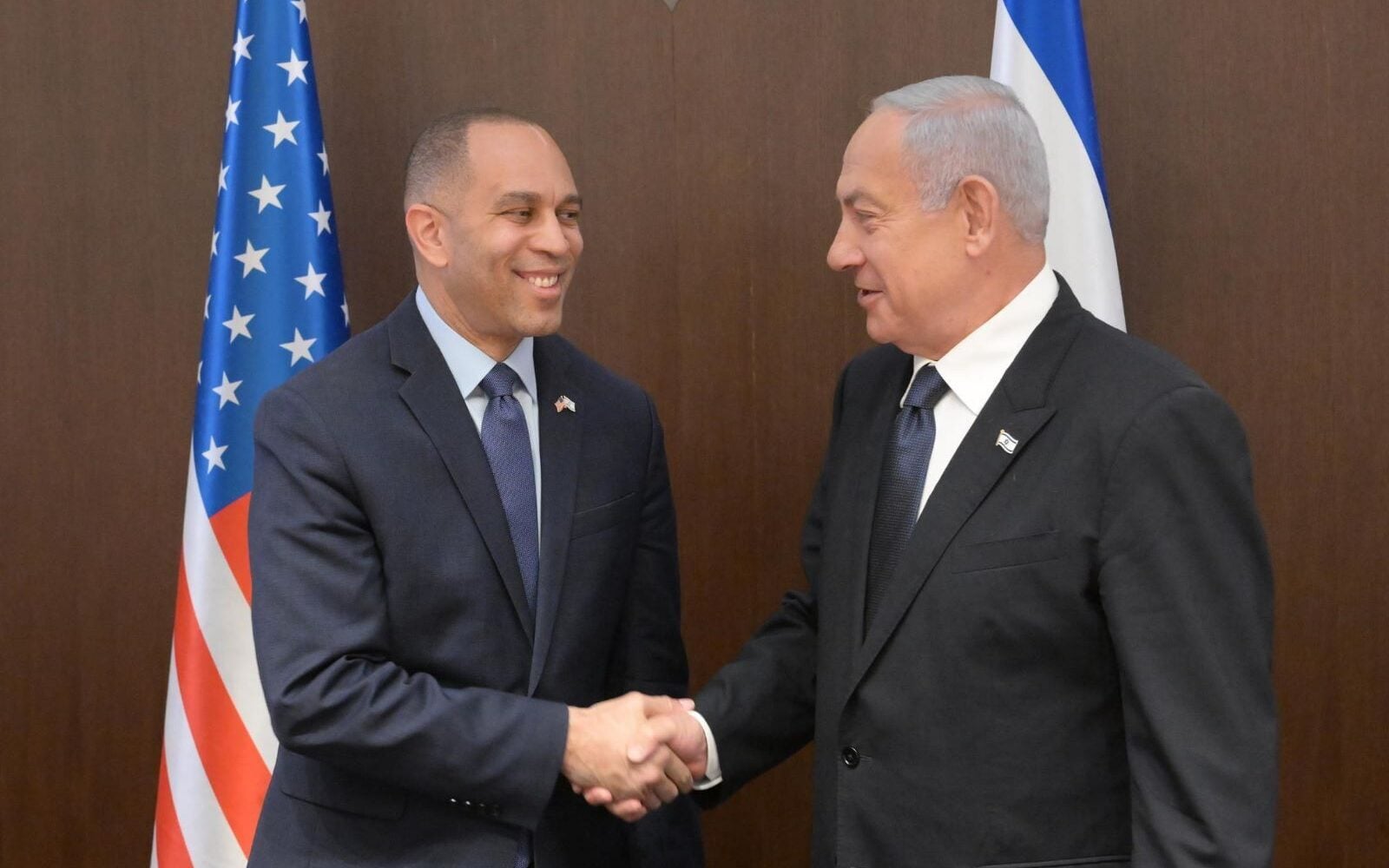
Jeffries’s nomination contrasts with a more competitive leadership contest among Senate Democrats, where veteran party chief Chuck Schumer, likewise a pro-Israel moderate, faces a challenge from progressive Maryland Senator Chris Van Hollen, a critic of Israel.
Van Hollen has attracted support from prominent left-wing figures, including Sen. Bernie Sanders, but acknowledges he is the underdog. Senate Democrats will elect their leader in early December.
Republicans chose their own congressional leaders last week, elevating Trump ally Jim Jordan in the House and retaining John Thune in the Senate.








The Times of Israel Community.