

Yoav Segalovitz, first Jewish candidate on Ra’am slate, wants to ‘break down walls’
Former Yesh Atid lawmaker and policeman acknowledges his views differ from socially conservative Ra’am on some issues, but says he would rather focus on genuine partnership
 Add ToI as a Preferred Source on Google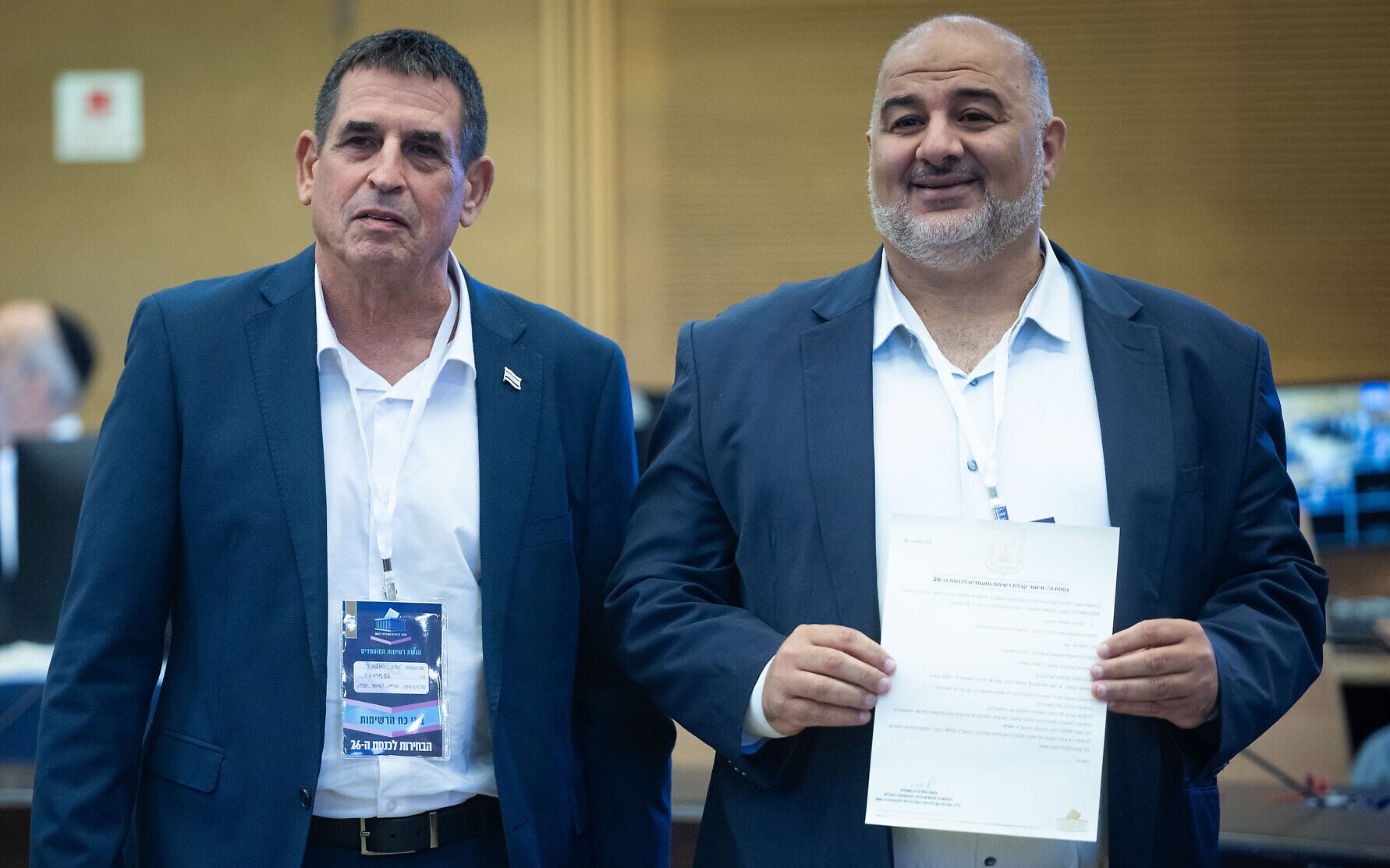
Yoav Segalovitz, a Jewish former police officer, might not seem like the most obvious recruit for an Arab, Muslim party in Israel.
But ahead of Israel’s general election on October 27, he has jumped ship from the centrist Yesh Atid party to join Ra’am, one of two Arab lists contesting the vote, becoming the first Jewish candidate to run on the party’s ticket.
In an interview with AFP at his home in Tel Aviv, he said he hoped for a genuine political partnership between Israel’s Jewish and Arab communities.
“If we want life here to be good, we need to break down walls, not reinforce them,” he said.
“Walk into a hospital and you’ll find everyone there: Arabs, Jews, Muslims, Druze, Christians. And there is no problem. Questions of identity don’t exist there,” he added.
“This country needs to resemble a hospital much more, in the positive sense of that comparison.”
Segalovitz, who served in parliament with Yesh Atid since 2020, believes he is uniquely placed to build bridges between the two communities.
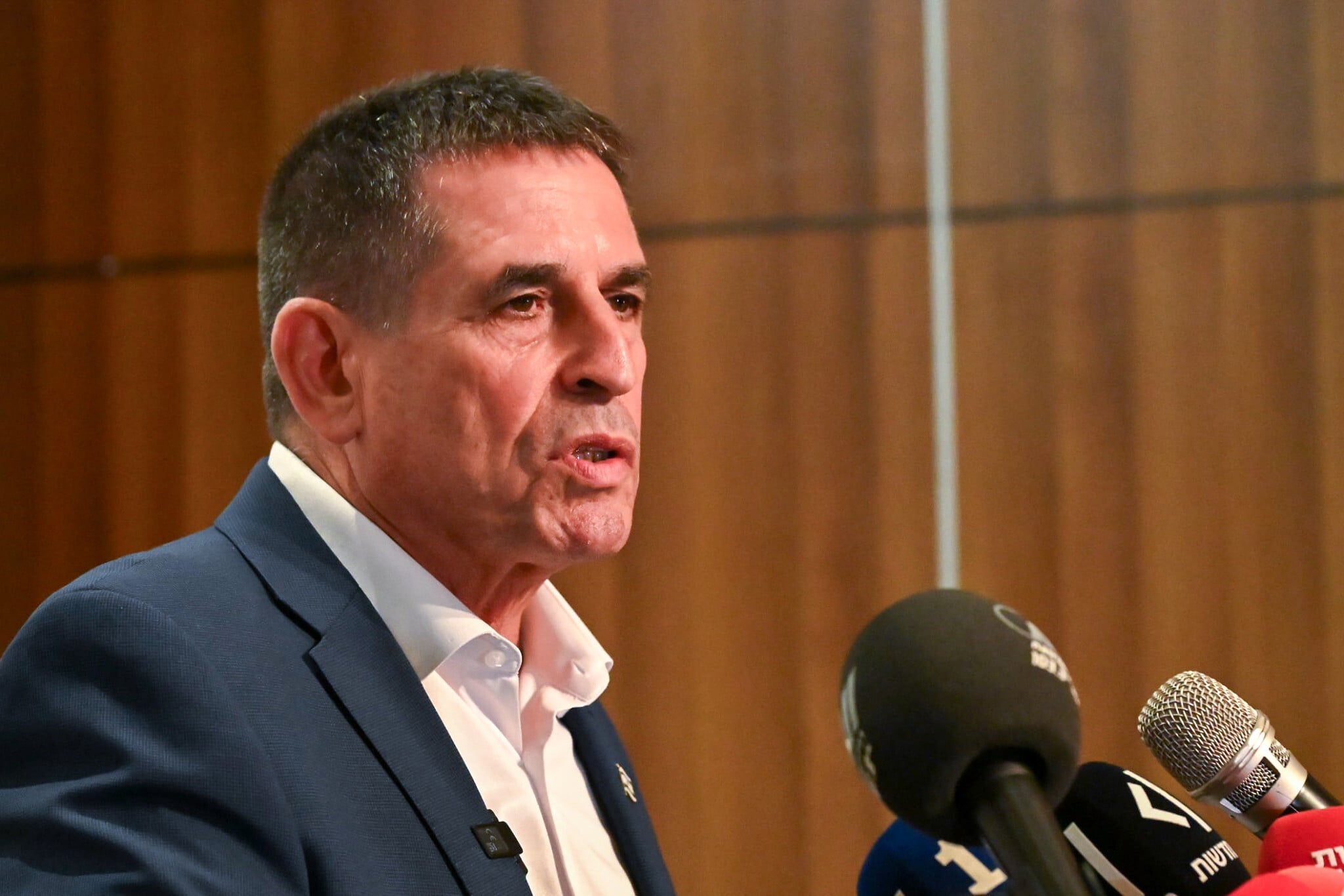
His ties to Israel’s Arab minority — whose members he called “an economic, social and cultural engine” — date back to his tenure as deputy minister for public security in the 2021-2022 government.
In that role, he was tasked with tackling violent crime in Arab communities, a scourge that has claimed hundreds of lives in recent years.
His efforts helped bring about a modest but measurable decline in homicides in 2021, reversing a trend that had been moving steadily upwards since 2014.
But under current National Security Minister Itamar Ben Gvir, a far-right politician who scrapped Segalovitz’s program, killings in Arab communities have surged to record levels.
According to a tally by the Abraham Initiatives watchdog, 172 Arabs have been murdered this year so far.
Arab Israelis make up around 20 percent of the country’s population but account for the vast majority of murder victims.
“The state of personal security in Arab society is a catastrophe. Our statistics are on a par with the worst countries in South America,” Segalovitz said.
“You can’t sustain an economy, a society, a culture, education or development when people are afraid to walk down the street,” he added.
‘Sitting at the table’
A self-described secularist, Segalovitz acknowledged that his views on issues such as civil marriage and LGBTQ rights differ from those of Ra’am, a socially conservative Muslim party.
He said he would retain freedom to vote independently on certain topics.
Rather than dwell on those differences, however, he said he preferred to focus on integration. In Ra’am, he found what he described as the only Arab political partner committed to influencing policy from within the government.
The other three Arab parties, Hadash, Ta’al, and Balad, will contest the election on a joint slate that is expected to remain in opposition. One of them, Hadash, is a communist party that has fielded Jewish candidates and leaders in the past. It does not define itself as an explicitly Arab party, but its candidates and voter base are predominantly Arab.
“Ra’am is currently the only Arab party that explicitly says: ‘I want to integrate, to be a partner, and to influence from within the existing Israeli establishment.'”
“The other Arab parties don’t say that. They oppose it,” Segalovitz said.
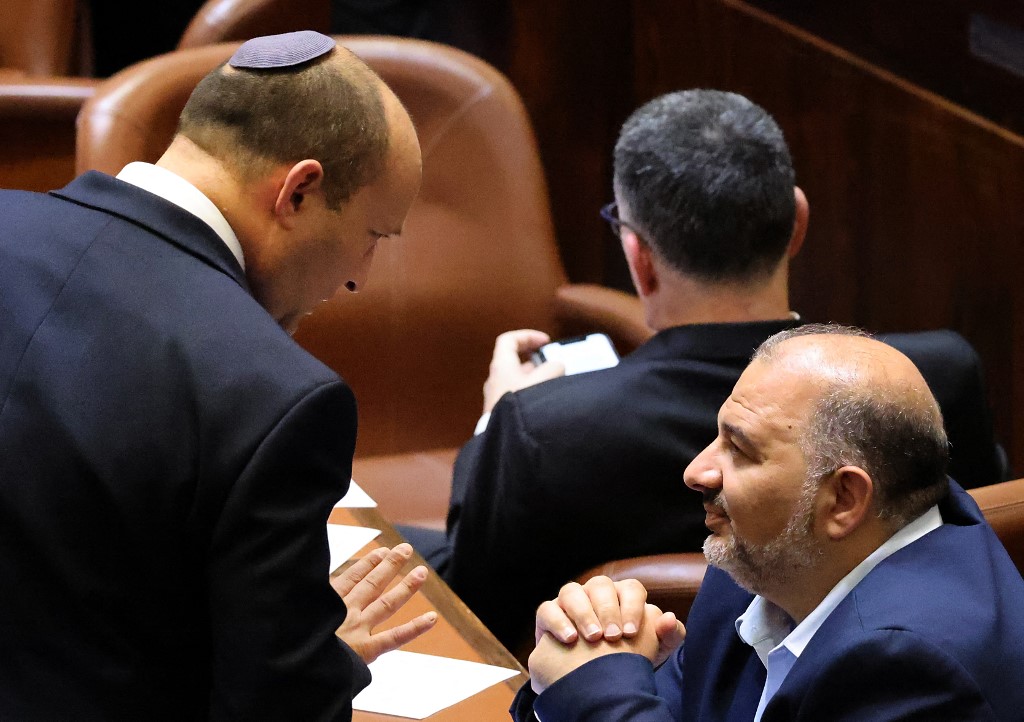
For decades, parties representing Israel’s Arab minority refused to join governing coalitions for ideological reasons.
Ra’am became the first Arab party to join an Israeli government when it entered the 2021-2022 coalition, long before Segalovitz came on board.
Whether such an opportunity will arise again remains unclear.
Prime Minister Benjamin Netanyahu, who heads the most right-wing government in Israel’s history, has long accused Ra’am leader Mansour Abbas of representing the Muslim Brotherhood. Abbas has rejected this.
Meanwhile, Netanyahu’s main rival for the premiership, Gadi Eisenkot, has clashed with Abbas over the issue of Palestinian statehood.
Polls suggest Ra’am will win just four to six seats in the 120-member Knesset, but that may be enough to place the party in the role of kingmaker, providing the opposition with the numbers needed to unseat Netanyahu.
Whatever the election outcome, Segalovitz urged Arab citizens of Israel to continue seeking a place at the center of political decision-making.
“No one loses their identity by having influence. Everyone should simply look at where they can contribute and benefit,” he said.
“Influence can only come from sitting at the table where decisions are made.”









The Times of Israel Community.