

Netanyahu’s anti-Arab campaign has found Gadi Eisenkot’s Achilles’ heel
PM is exploiting prospect of a political partnership with Arab parties to put his main rival on the defensive and drive a wedge between Eisenkot and Liberman; Eisenkot needs to urgently reclaim national agenda
 Add ToI as a Preferred Source on Google
Shalom Yerushalmi is the political analyst for Zman Israel, The Times of Israel’s Hebrew current affairs website
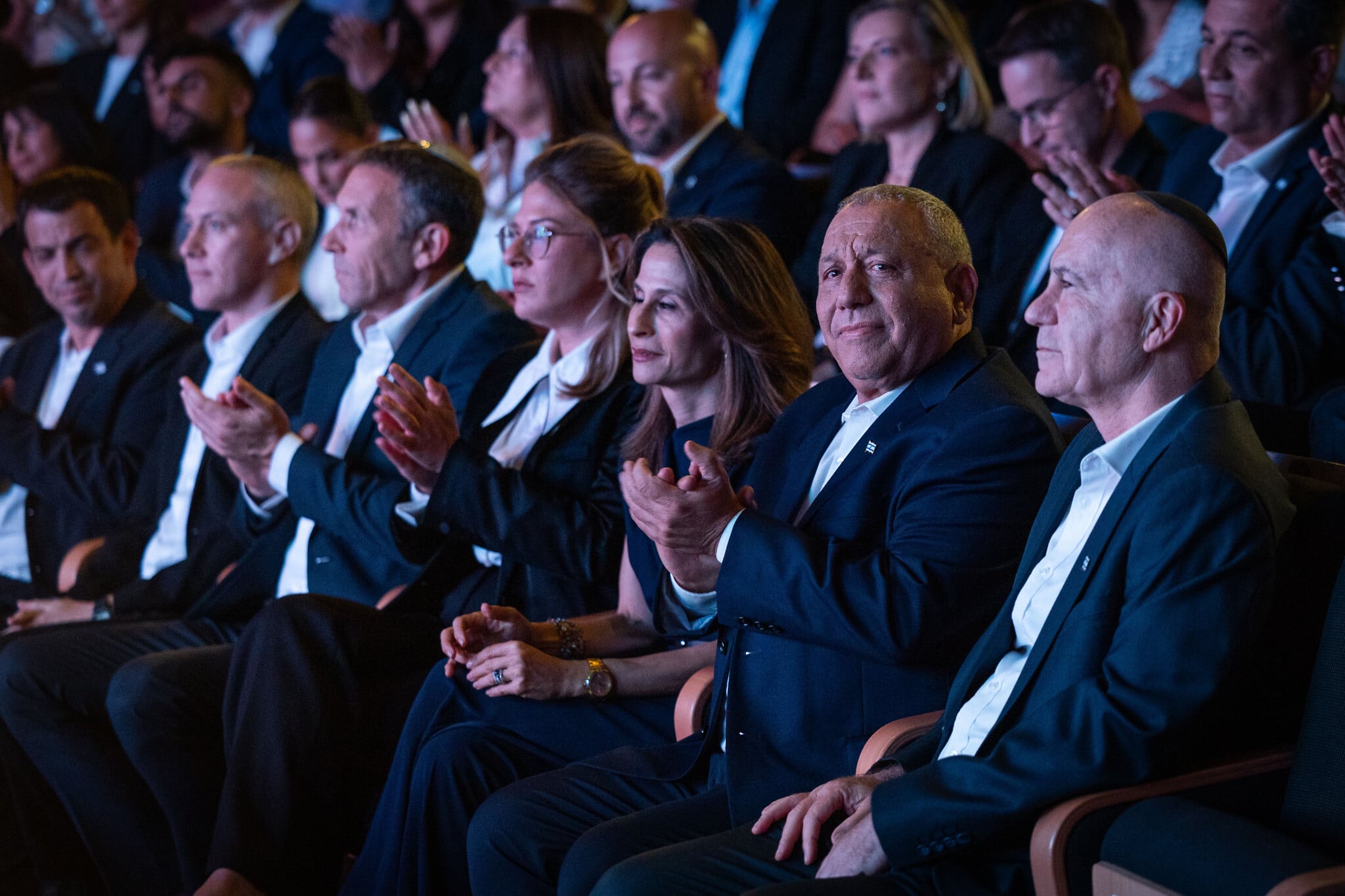
Gadi Eisenkot made no commitment to bring the largely Arab Ra’am party into a future coalition when he met northern Bedouin local authority heads at Zarzir on Tuesday.
After the head of the Tuba-Zangariyye council, Mueid al-Heib, told Radio Nas, and subsequently Channel 12, that Eisenkot had pledged to approach Ra’am, a party with Islamist roots, Eisenkot’s Yashar party released 32 minutes of recordings from the meeting. They show the council head raising the issue, and Eisenkot not responding to the point; the council head later acknowledged that no promise had been given.
But what is particularly interesting is not the news item itself, but the sheer panic that gripped Eisenkot and his team when the reports broke and quickly gained traction, with the Yashar party leader scrambling to refute the claim.
Naturally, Prime Minister Benjamin Netanyahu and his Likud lawmakers fueled the uproar — Eisenkot is Netanyahu’s main rival in the October 27 elections — releasing rapid-fire videos and giving multiple media interviews. “Don’t say you didn’t know. Eisenkot will form a left-wing government with Yair Golan, Liberman, and the Arab parties,” Netanyahu warned.
By name-dropping Golan — the former IDF deputy chief of staff who now leads the left-wing Democrats party — Netanyahu effectively weaponized him as the ultimate radical boogeyman to scare right-wing voters. His statement was immediately echoed by Likud MKs Amir Ohana and Avichay Buaron, and a chorus of other party spokespeople.
In response, Eisenkot defensively reiterated that his partners in government would only be those who recognize the values of the Declaration of Independence, accept Israel as a Jewish and democratic state, and are prepared to perform either military or civilian national service. His defensive statements also included a new condition aimed directly at Mansour Abbas and his Ra’am party, intended primarily to calm the political storm generated by Netanyahu.
“Parties that do not recognize Hamas as a terrorist organization that Israel must destroy will not be part of the government the party forms,” Yashar said in a statement. As things currently stand, only one prospective Ra’am lawmaker meets that strict condition: Yoav Segalovitz, the Jewish former senior police officer and ex-Yesh Atid MK who is now running on the Ra’am slate.
This political saga dominated the news cycle on Thursday, and continues to resonate. Netanyahu, it turns out, has managed to drive a wedge between Eisenkot and his hawkish opposition partner, Avigdor Liberman, over the highly sensitive issue of Arab political participation.
That became overt when Eisenkot demanded in a Thursday morning interview with Israel Radio’s Reshet Bet that his partners in the anti-Netanyahu “change bloc” recognize his leadership of the bloc now — since Yashar is polling far above the other parties in the bloc, at around 23 seats — and rally behind him.
He also warned them against aspiring to the premiership themselves with limited electoral backing and a small number of projected seats. That was a reference to the collapse of the 2021-22 coalition, led by Naftali Bennett, which fell apart when members of Bennett’s seven-strong Yamina party defected to the Netanyahu camp.
Liberman hit back immediately, pointedly demanding that Eisenkot “make clear exactly who his partners will be the day after the election.” (Liberman, whose Yisrael Beytenu party is polling at around eight to nine seats, is adamant that he is a candidate for prime minister.)
Reclaim the discourse
This public, intra-bloc bickering looks set to continue through to Election Day.
Netanyahu will ruthlessly taunt that Eisenkot plans to form a government with Arabs and dangerous leftists. It is the 2026 version of Netanyahu’s infamous 2015 election day tactic, where he panicked his base into turning out to vote in higher numbers by warning that Arab citizens were heading to the polls “in droves.” (In fact, Arab turnout that day was 63.5%, compared to 76% among Jewish voters.)
And Eisenkot will continue to offer half-hearted, apologetic denials, while Liberman and fellow right-wing opposition party leader Naftali Bennett of B’Yachad, who also aspires to again become prime minister, nip at his heels.
It is hard to see how a campaign conducted entirely on the defensive can actually be won. For now, the anti-Netanyahu “change bloc” is losing ground, and shedding seats in several polls.
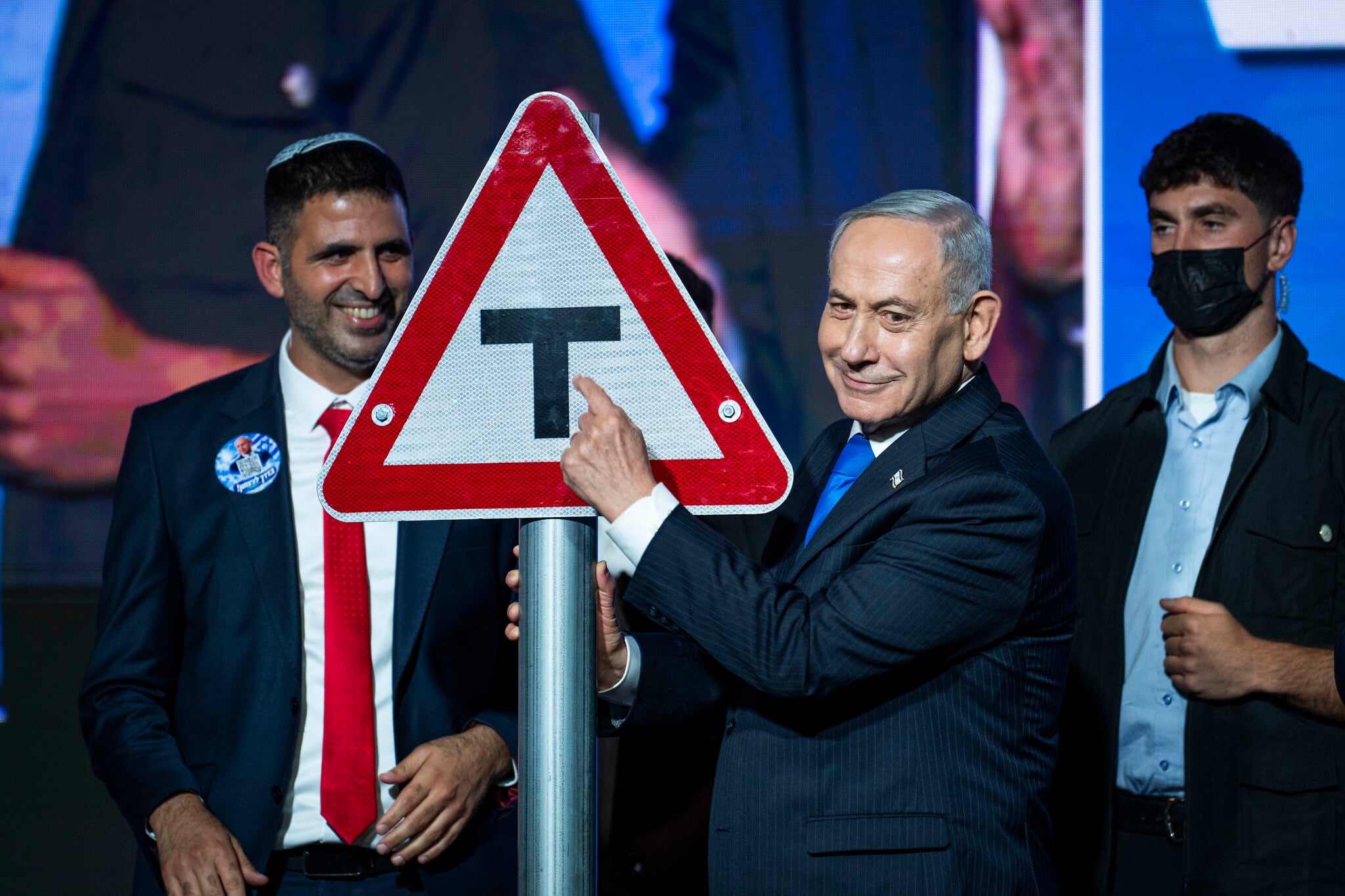
At the launch of Likud’s official campaign on Thursday night at the Tel Aviv Expo, Netanyahu displayed a red road sign at a junction pointing either right or left. “There is no straight ahead,” Netanyahu declared, in a mocking play on the name of Eisenkot’s Yashar (“Straight Ahead”) party.
Also Thursday, I heard Rafi Ben-Shitrit, the number-two candidate on Liberman’s Yisrael Beytenu slate, lamenting: “The image that has taken hold among the public is that there is a Netanyahu bloc and a left-wing bloc with the Arabs, and that’s it. We have to put an end to this brainwashing.” Ben-Shitrit is a former mayor of Beit She’an and was a longtime Likud activist, whose son Alroy was killed in battle at the IDF’s Nahal Oz base in the Hamas-led October 7, 2023, onslaught. He is a founder of the October Council, the forum of bereaved and hostage families campaigning for a state commission of inquiry into the failings surrounding the invasion and massacre.
It is unclear what lies behind Eisenkot’s apologetic posture. Is he distancing himself from the Arab parties solely for calculated electoral reasons, or does he genuinely not want them in his government and coalition? Would openly discussing a potential Jewish-Arab partnership in government hurt him electorally?
Apparently so. Following the October 7 massacre, the Israeli public has shifted sharply to the right. The prospect of a government reliant on an Arab party deeply deters many voters, even if that party is loyal to the state.
Eisenkot has a problem. He cannot expect the Arab public to support him without asking for anything in return; that, after all, is the essence of politics. But Eisenkot also knows that he cannot mathematically form a government without Ra’am’s explicit support; even with it, his numbers may still fall short.
He will have to contend with this paralyzing dilemma until the election, and perhaps long afterward. It is a critical test of his leadership and his ability to navigate a viable path to victory. So far, he has failed to formulate an adequate, convincing response to Netanyahu’s aggressive anti-Arab campaign.
He should invest his primary efforts in reclaiming the national agenda, and fast. Eisenkot and his partners need to return the public conversation to the terrain of their own campaign: the October 7 disaster, and Netanyahu’s prime culpability for failing to prevent it; the imperative — relentlessly opposed by Netanyahu — to draft ultra-Orthodox men into the military; Israel’s deepening international isolation and the global spike in antisemitism; the crushing cost of living; the brain drain of Israel’s best and brightest; the judicial overhaul, and institutional corruption and dysfunction.
Rather than enabling Netanyahu to set the agenda, these are the burning issues that must be brought to the fore in these critical days, less than six weeks before Israel goes to the polls.



The Times of Israel Community.