

High Court bans parties from tracking voters on election day, angering Likud
Court overturns election committee ruling, says voter tracking violates legally enshrined right to privacy; Justice Minister Levin accuses justices of seeking to sway election against government
 Add ToI as a Preferred Source on Google
Jeremy Sharon is The Times of Israel’s legal affairs and settlements reporter
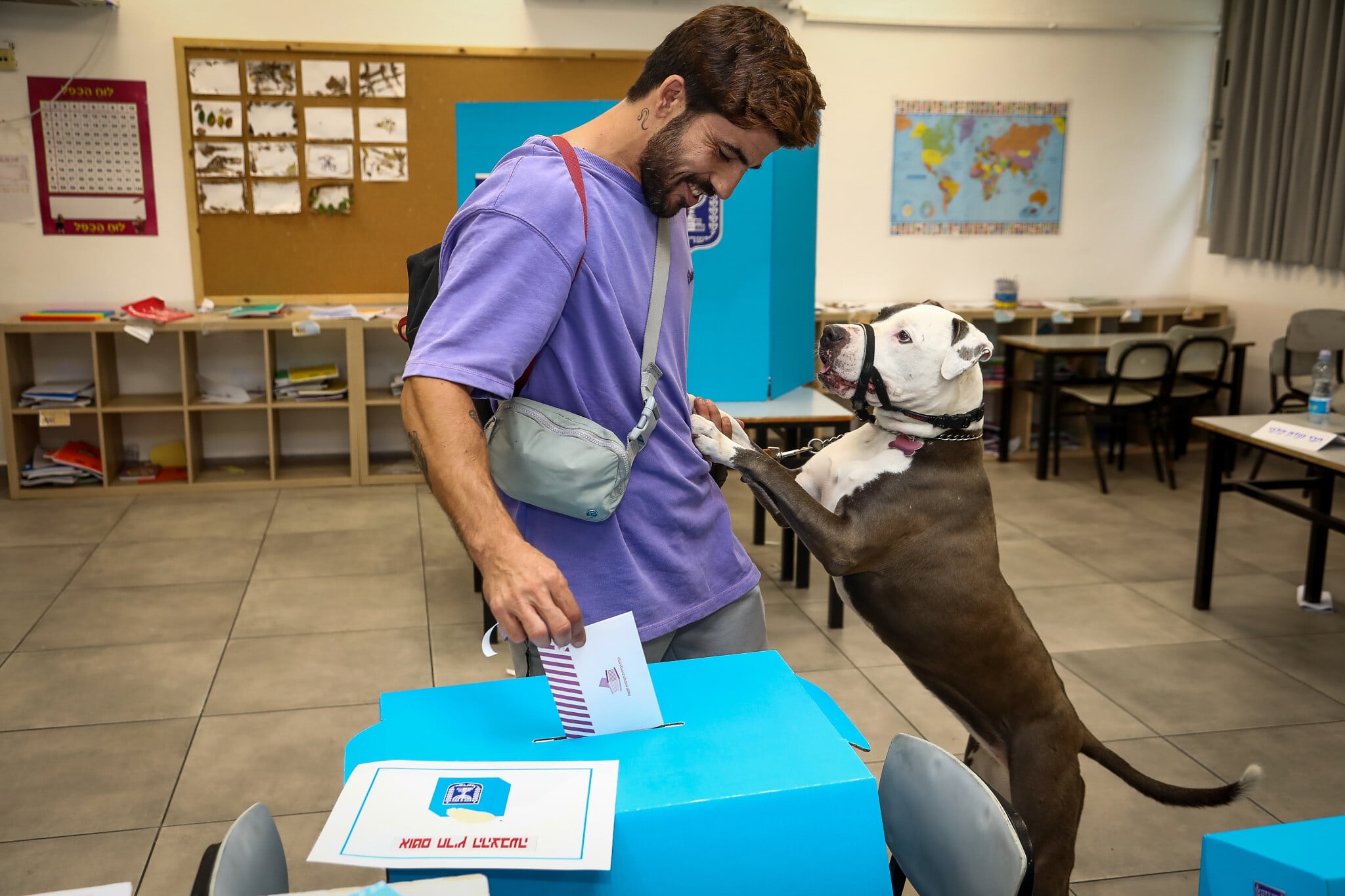
The High Court of Justice ruled unanimously Thursday night that the practice of party-appointed polling station representatives tracking which voters cast their ballots on election day is illegal, and explicitly banned the use of such data, overturning a previous ruling by the Central Elections Committee.
In its ruling, the court pointed out that there is no legal basis to permit the practice, and that it also violates a specific clause of the Protection of Privacy Law and the right of Israeli citizens to privacy.
“I will reiterate and clarify that, in the absence of explicit legal authorization, party representatives at polling stations are not permitted to pass on to their parties information regarding a person’s exercise of the right to vote,” wrote Justice Yael Willner in the ruling regarding the upcoming election.
Likud ministers reacted furiously to the decision, with Justice Minister Yariv Levin accusing the High Court of trying to sway the elections in favor of the opposition in order to stop a new right-wing government from making appointments to the Supreme Court and to stop further right-wing reforms to the legal system.
The Likud and ultra-Orthodox parties in particular have made extensive use of this data to boost their voter turnout in recent election cycles, and the Likud party lawyers argued in court that their election day operations would be severely harmed if this practice was banned.
The court ruling overturned a decision by the Central Elections Committee earlier this month that had given a green light to the practice.
Opposition parties did not immediately respond to the ruling, but Shachar Ben Meir, a good governance activist who petitioned the court against the practice, praised the decision, saying it was no one’s business whether someone votes or not, “and especially not any party’s business.”

Since at least 2020, political parties, especially the Likud and the Haredi parties, have been using voter data provided to them by party-appointed polling station representatives to track who has voted, which enables them to call and message their likely supporters who have not yet voted to go out and vote.
But good governance and privacy activists petitioned first the Central Elections Committee and then the High Court of Justice against the practice, arguing that it violated the right to privacy and had no basis in law.
In the ruling written by Willner and supported by Justices Alex Stein and Chaled Kabub, the court said that previous case law has determined that if an administrative act violates a basic right specified under the law, then there must be legislation explicitly permitting that action.
Willner wrote that no such legislation exists, and that even though the practice has been in use for several election cycles, such a “custom” does not replace the need for legislation.
Levin denounced the court over the decision, and said it would drive right-wing voters “in their droves” to the ballot box on election day.
“The High Court justices know that the election is about the question of who will appoint 10 Supreme Court justices in the next government — me as justice minister in a Netanyahu government, or a justice minister in a government of Yair Golan–Abbas–Tibi,” he said in reference to left-wing and Arab party leaders.
“They are trying to stop the wheels of change that have begun turning and prevent us from completing the reform. As far as they are concerned, all means are legitimate in order to influence the election results.”
Ben Meir, together with other activists who petitioned the court with him, insisted, however, that the court had been right to uphold voters’ right to privacy.
“It is no one’s business whether we voted or not, and certainly no party’s business. The information provided at the time of voting is meant to verify voters’ identities and ensure there is no double voting, and nothing more,” Ben Meir said.
He also called on the public to ensure that the political parties abide by the ruling on election day, to note if party polling station representatives record voter information, and to demand that they stop if they do so.










The Times of Israel Community.