

US rejects Abbas’s entry visa, forcing him to again address UN virtually
Palestinian official tells ToI that State Department notice on rejection of his request for a visa cites alleged association with a terror group, but doesn’t elaborate further
 Add ToI as a Preferred Source on Google
Jacob Magid is The Times of Israel's US bureau chief
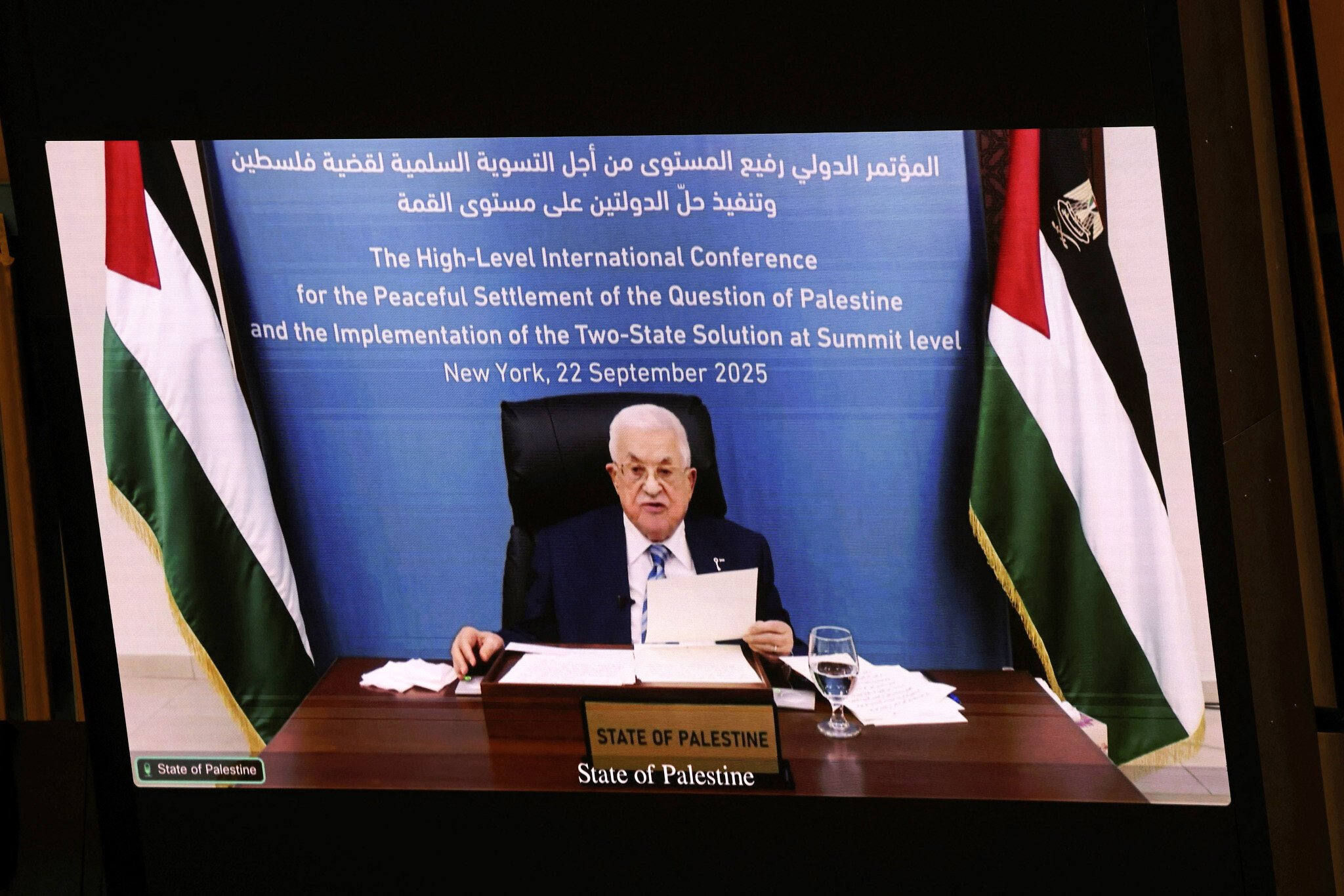
For the second year in a row, the United States has denied Palestinian Authority President Mahmoud Abbas’s application for an entry visa to speak next week at the UN General Assembly, US and Palestinian officials told The Times of Israel.
Abbas’s office was notified of the decision on Wednesday, with similar rejections issued to dozens of other PA officials who were hoping to travel with him, a Palestinian official said.
A second Palestinian official shared the notice he received from the US State Department, which cited the reason for the rejection as “Section 212(a)(3)(B) which prohibits the issuance of a visa to a person who at any time engaged in terrorist activities or was associated with a terrorist organization. This is a permanent ineligibility.”
It was not immediately clear if Abbas’s visa was rejected on the same grounds.
In light of the ban, the Palestinian Mission to the UN submitted a resolution to allow Abbas to address the body virtually as he did last year, according to a Western diplomat, which will be brought before the General Assembly on Thursday. Abbas is slotted to speak on September 24 — the same day as Prime Minister Benjamin Netanyahu.
US President Donald Trump’s administration justified the ban last year by claiming the PA had taken steps to undermine prospects for peace.
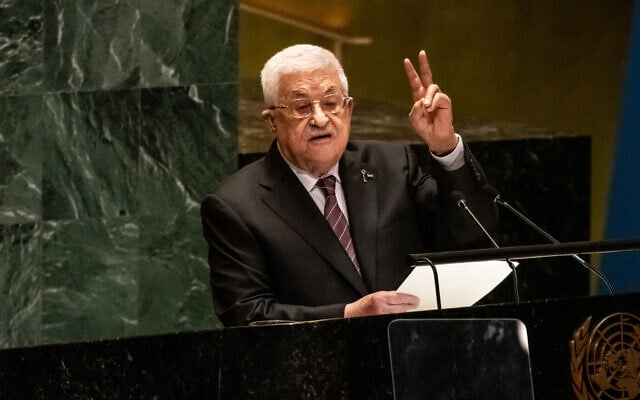
Washington did not elaborate at the time on its specific grievances with Ramallah. The move was seen as part of an effort to undermine a conference that France and Saudi Arabia were hosting ahead of the General Assembly’s main week that was aimed at promoting a two-state solution to the Israel-Palestinian conflict.
No such meeting is being held this year and Ramallah was hoping that Washington would ease its stance on the matter.
But last month, a US official told The Times of Israel that the administration planned to keep the ban on PA officials in place.
Abbas’s office still submitted entry requests earlier this month to attend the UN General Assembly, as Ramallah was informed by Washington that it would not be barred from at least applying, a PA official said.
But Washington’s position did not end up changing, as it continues to maintain a frosty relationship with the PA.
A PA official told The Times of Israel that US Ambassador to Israel Mike Huckabee rejected requests from Ramallah to join him during a visit he made to the central West Bank village of Turmus Ayya earlier this month.
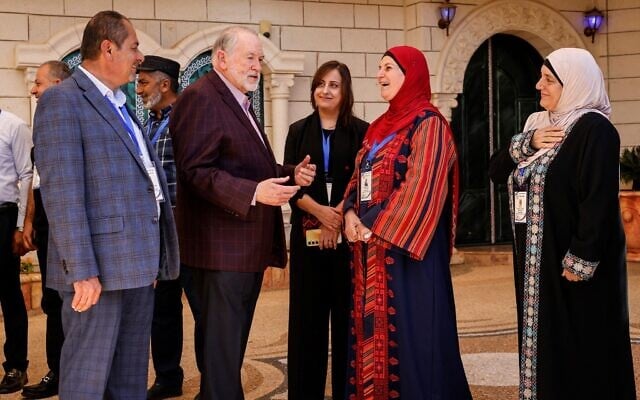
A source at the US embassy denied that such a request was made, explaining that Huckabee visited in a private capacity to meet with Palestinian-American citizens impacted by settler violence.
A Turmus Ayya resident, speaking on condition of anonymity, said the visit was a positive development because it helped raise awareness about the phenomenon of rampant, unchecked settler violence.
However, he said Huckabee’s comments characterizing the perpetrators as a fringe and unrepresentative minority did not play well in the village, where most believe that the settler violence is part of a systemic effort by the government to force Palestinians off their land.
Last month, a senior PA official expressed “concern” to The Times of Israel that the US was “replicating” what he said has been Netanyahu’s strategy of bolstering Hamas at the expense of the PA.
The alarm was raised two days after US envoy Jared Kushner held a rare in-person meeting with Hamas chief Khalil al-Hayya in Egypt, before proceeding to Jerusalem for a sit-down with Netanyahu. Kushner did not stop in Ramallah to see anyone from the PA, which the Trump administration has largely sidelined.
“The PA can play a critical role in stabilizing the situation in Gaza and the West Bank and should not be ignored,” the Palestinian official said, speaking on condition of anonymity.
The official recalled how successive Netanyahu governments authorized Qatari payments to Hamas, which bolstered the terror group at the very time the PA was working to weaken its grip on Gaza, even as Jerusalem gradually disengaged from the more moderate PA and took steps to delegitimize it.
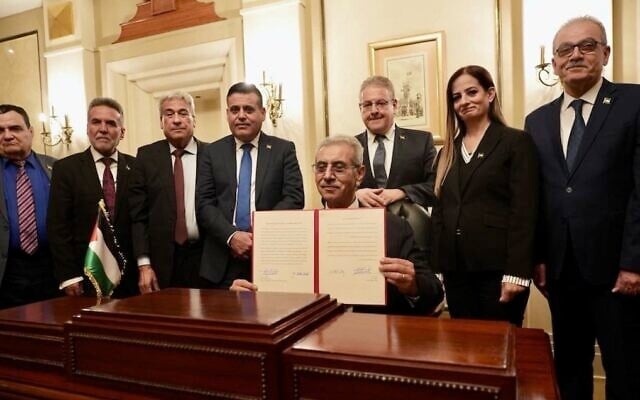
Through its Board of Peace, the US has established a new Palestinian technocratic committee that is slated to temporarily replace Hamas in governing Gaza until the PA has implemented a series of reforms.
The PA official was careful not to explicitly criticize the Trump administration, with Ramallah apparently recognizing it has limited leverage at the moment.
In a Fox News interview last month, Kushner was asked about the possibility of the US recognizing a Palestinian state. He dismissed the idea for the time being while knocking the PA.
“Before we can even talk about the political nature of a state, what we want to see is that the Palestinians can govern themselves. With the PA, they fall very, very short on the standard we need for somebody who can qualify for a state,” he said. “They have a lot of reforms they need to do, which the Saudis, the French and everyone agrees with us on. Governments are working on what the right set of reforms are.”
The Palestinian official insisted that Ramallah was working on implementing such reforms, but is significantly hobbled by a growing list of punitive measures taken by Netanyahu’s government that have brought the West Bank economy to the brink of collapse.




The Times of Israel Community.