

Palestinian official worries US ‘replicating’ PM’s strategy of boosting Hamas at PA’s expense
Concern expressed to ToI after Kushner meets with Hamas chief and Netanyahu, while ignoring Ramallah; Trump aide says PA should focus on reforms, which the official accuses Jerusalem of hobbling

 Add ToI as a Preferred Source on Google
A senior Palestinian Authority official expressed “concern” on Tuesday that the United States was “replicating” what he said has been Prime Minister Benjamin Netanyahu’s strategy of bolstering Hamas at the expense of the PA.
The remarks to The Times of Israel came two days after US envoy Jared Kushner held a rare in-person meeting with Hamas chief Khalil al-Hayya in Egypt, before proceeding to Jerusalem for a sit-down with Prime Minister Benjamin Netanyahu. Kushner did not stop in Ramallah to see anyone from the PA, which the Trump administration has largely sidelined.
“The PA can play a critical role in stabilizing the situation in Gaza and the West Bank and should not be ignored,” the Palestinian official said, speaking on condition of anonymity.
The official recalled how successive Netanyahu governments authorized Qatari payments to Hamas, which allowed for the bolstering of the terror group, even as Jerusalem gradually disengaged from the more moderate PA, which supports a two-state solution, and took steps to delegitimize it.
The official was careful not to explicitly criticize the Trump administration, with Ramallah apparently recognizing it has limited leverage at the moment.
Kushner was asked in a portion of a Fox News interview that aired on Tuesday about the possibility of the US recognizing a Palestinian state and dismissed the idea for the time being, while knocking the PA.
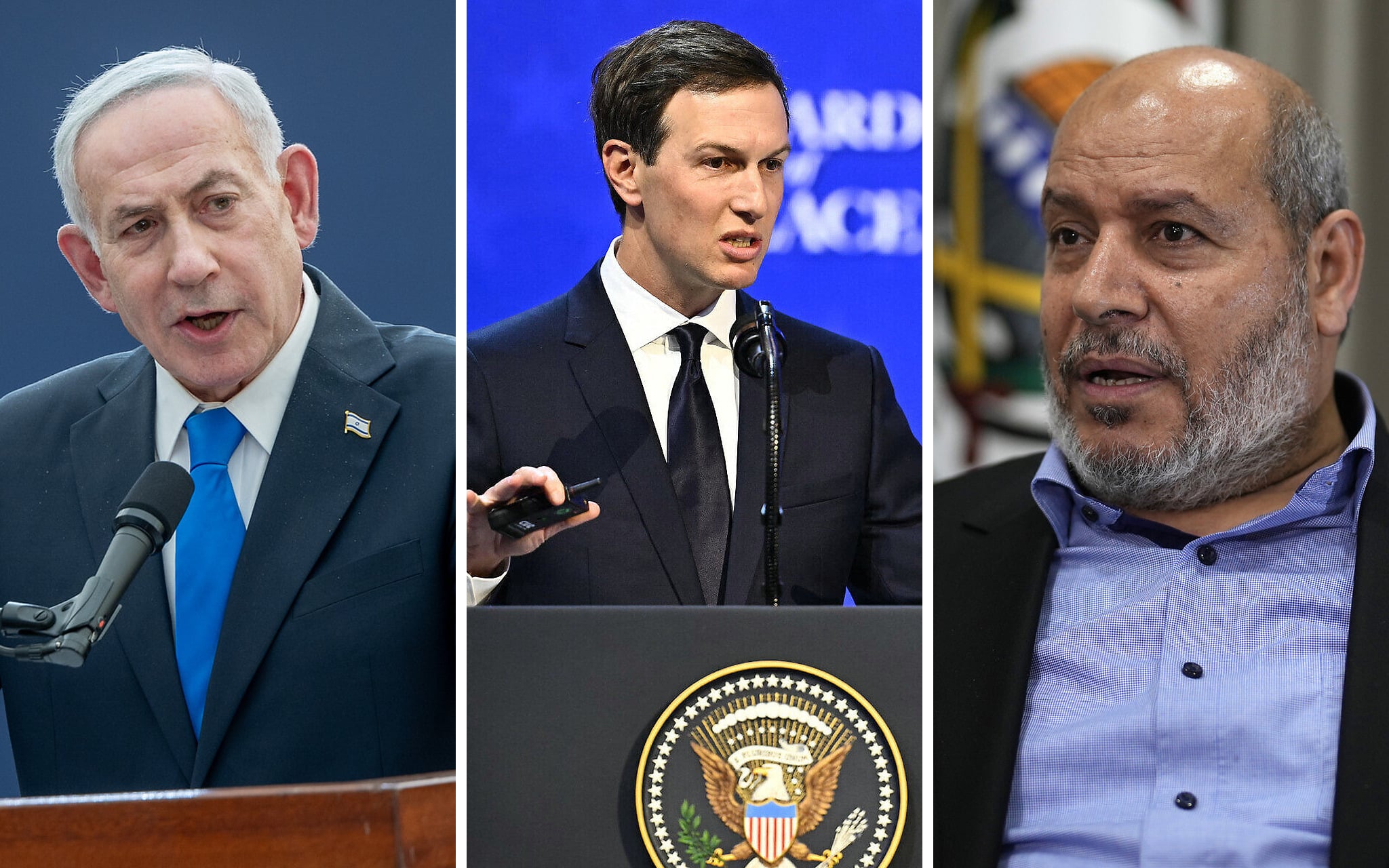
“Before we can even talk about the political nature of a state, what we want to see is that the Palestinians can govern themselves. With the PA, they fall very, very short on the standard we need for somebody who can qualify for a state,” he said. “They have a lot of reforms they need to do, which the Saudis, the French and everyone agrees with us on. Governments are working on what the right set of reforms are.”
“Whether they’ll actually do it is another question. They’ve been threatening to reform for a decade now,” Kushner added in reference to the PA.
He recalled how the US established a technocratic panel to govern postwar Gaza in place of Hamas, adding that “maybe we can talk about a political horizon later on in the future” if the new committee demonstrates that it can effectively manage the coastal enclave.
The US plan for the Gaza Strip envisions that body, the National Committee for the Administration of Gaza, handing over control of the territory to the PA once the latter completes a series of reforms.
The Palestinian official insisted that Ramallah was working on implementing these steps, but was significantly hobbled by a growing list of punitive measures taken by Netanyahu’s government that have brought the West Bank economy to the brink of collapse.

For example, the official said the PA reformed its textbooks amid accusations from Israel that they have long included incitement against Jews.
The official said the curriculum was updated online but that the PA education ministry does not currently have the funds to print the textbooks en masse, as Israel continues to withhold billions of dollars in funds.
Kushner bullish on Abraham Accords expansion after Israeli election
Kushner was also asked during the Fox interview whether he thinks the normalization agreements between Israel and Arab and Muslim countries known as the Abraham Accords could still be expanded during the remainder of Trump’s second term in office.
“We have a lot of very good, active conversations going with countries — some obvious, some not obvious,” responded Kushner, who is Trump’s son-in-law.
“Once we get this Gaza situation moving forward, that will hopefully deescalate the tensions here,” Kushner said, referring to his efforts to advance the US-controlled Board of Peace’s disarmament plan, which has been approved by Hamas but rejected by Israel.
He then noted a second factor holding up efforts to expand the Abraham Accords as he seemingly knocked Netanyahu’s government, whose hardline policies toward the Palestinians have turned off countries from normalizing relations with the Jewish state in recent years.

“Israeli politics are complicated, and Israeli politics in election are even more complicated. Hopefully, when we get after the Israeli election, there will be some opportunities for expansion,” Kushner said.
He did not explicitly call out Netanyahu’s hard-right coalition, which Arab diplomats have long maintained has become a primary obstacle in expanding the Abraham Accords.
Regardless, Kushner said Trump was committed to building on the initiative he launched during his first term, when he brokered normalization agreements between Israel and the United Arab Emirates, Bahrain and Morocco.
“Everyone always said we can’t have normalization (with Israel) until the Palestinian issue is resolved. But what we showed through the first batch of the Abraham Accords (agreements), is that the Emiratis are actually the biggest donors to Gaza, and they’ve done a ton to help the Palestinian people,” he said, alluding to Abu Dhabi’s funding of over 40% of the humanitarian aid for the Strip during the recent war there.
“It’s only by having relations with Israel that they’re able to help the Palestinians hopefully achieve a better outcome for themselves,” Kushner argued.




The Times of Israel Community.