

Will this election mark the end of the road for Netanyahu?
Despite major headwinds, analysts predict PM could still retain power, citing centrality of ‘identity politics’ and the opposition’s failure to capitalize on public anger over Oct. 7
 Add ToI as a Preferred Source on Google
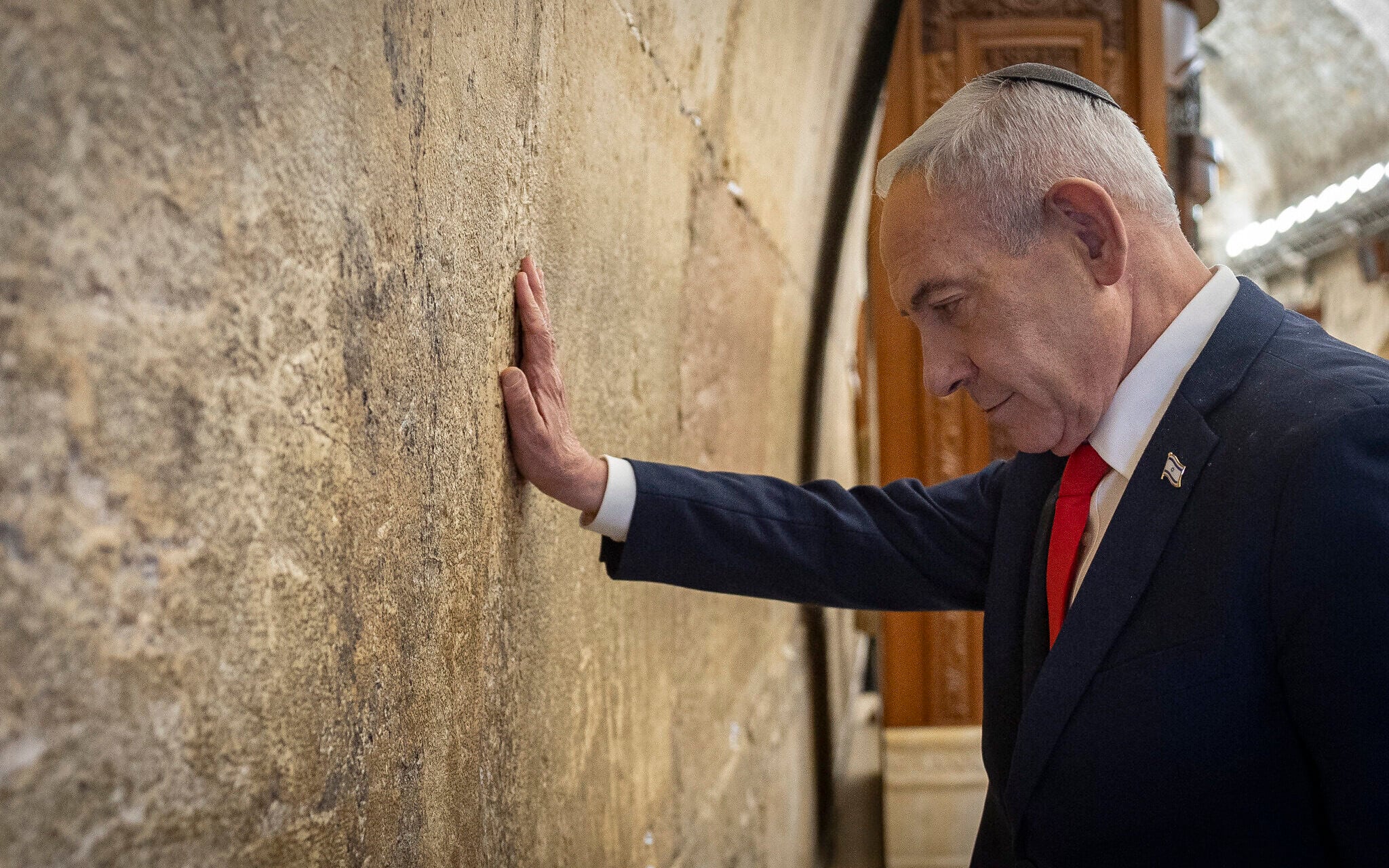
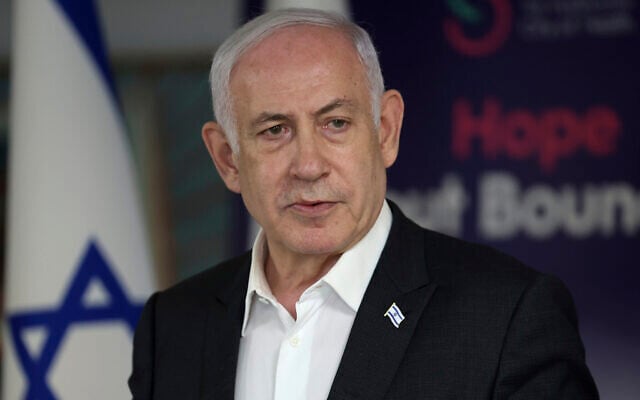
JTA — He’s been called a “political Houdini,” the man with “9 political lives,” and a “political genius,” but could Prime Minister Benjamin Netanyahu’s more-than-19-year stint at the helm of Israeli politics be coming to an end?
After the October 7 attacks and wars in Gaza, Lebanon and with Iran, and after four years of leading a far-right, ultra-Orthodox government, the October 27 vote appears to be a referendum on both his time in office and the country’s future character.
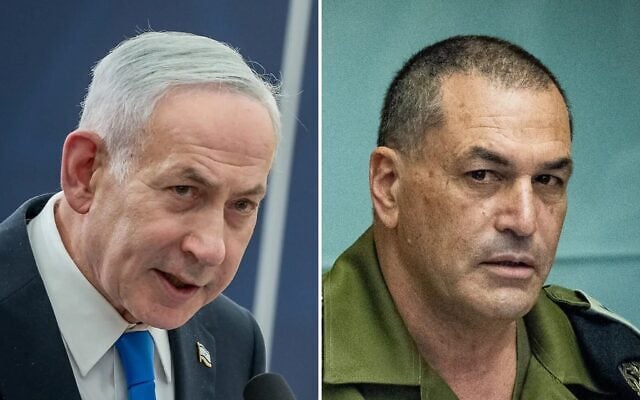
If the most recent opinion polls heading into Tuesday’s vote are correct, support for Netanyahu since the last election in 2022 has fallen dramatically and he might struggle to form a government – if he even manages to outperform his main rival, former Israel Defense Forces chief Gadi Eisenkot.
Despite the odds against him, political analysts are not ruling him out just yet. Gideon Rahat, a senior fellow at the Israel Democracy Institute and a political scientist at the Hebrew University of Jerusalem, said Netanyahu’s staying power – and his chances of holding on to that power – boiled down to three major bodies of support that he continues to hold on to.
The first, Rahat said, was the ultra-Orthodox, who have been able to avoid military service. Then the far-right, who have seen their ideological goals – namely settlement expansion and de-facto annexation of the West Bank – move forward under Netanyahu. And third, he said, were his personal supporters.
“He has really established himself a personal cult, and convinced his supporters that he is the only person that can rule Israel,” Rahat said.
“He has convinced himself that he is the state of Israel and the state of Israel is him, and cannot distinguish between himself and the state,” he continued. “He’s convinced his supporters of that too.”

Rahat added that because Israel is dominated by “identity politics,” Netanyahu’s successes or failures on the military front had done little to sway voters.
Those who identify and support Netanyahu believe his narrative – that a “deep state” exists in Israel, that the establishment is working against him and that he is not to be blamed for what went wrong, especially on October 7.
“Netanyahu is a more skillful politician than any other politician in Israel’s history,” Professor Jonathan Rynhold, from the department of political studies at Bar-Ilan University, near Tel Aviv, told JTA.
“He is ruthless, even though that’s not a skill unique to him, but he is just able to outmaneuver everyone else,” he said, underscoring that Netanyahu takes the external image he projects “far more seriously than any other Israeli politician.”
Despite that, said Rynhold, the past four years of Netanyahu and his ideological ultra-right-wing and religious coalition pushing policies, some counterproductive to the longest war in Israel’s history, “have left many Israelis feeling that if they have another government like this they will have to consider leaving the country.”
Rynhold cited: efforts by the government to overhaul the judiciary, which some view as a serious threat to democracy; the failure to enlist the ultra-Orthodox into the military even as the army has said it faces extreme manpower shortages; and the rise of far-right populist figures, namely government ministers Itamar Ben-Gvir and Bezalel Smotrich, who have pushed their ideologies.
“There’s a feeling that if he [Netanyahu] is prime minister again, this will further deepen and institutionalize these issues in ways that will make many Israelis lose hope for the future of the state,” Rynhold said.

But is that fear enough to unseat the man who has held a firm grip on Israel’s political system for nearly two decades?
This is not the first time the 77-year-old leader’s political career has appeared to be in trouble – only for him to surge back to power.
In 2021, Netanyahu was briefly ousted from power by former prime ministers Naftali Bennett and Yair Lapid. Between 2019 and 2021, as he remained prime minister, he took the country through four rounds of elections in a bid to hold onto power, and much earlier in his career, following his initial term as prime minister from 1996-1999, he was voted out.
But this time, he carries much more baggage in the form of criminal indictments that have found him knee-deep in a corruption trial for the past few years and other scandals that have dogged him throughout his political life.
And the stakes feel much higher. For the leader who portrays himself as Mr. Security and Mr. Diplomacy, voters look set to punish him for his failures in those wars, for increasing threats of international sanctions, which Netanyahu himself referred to this past weekend when talking about creating a shadow crypto economy to combat economic isolation, as well as for domestic policies that some believe have overwhelmingly favored his coalition partners at the expense of the rest of society. But is the dissatisfaction enough to remove him from power?
And if it is, can the ideologically unaligned opposition led by Eisenkot pull itself together to outmaneuver a master political player who has already stated he has no intention of retiring from politics?
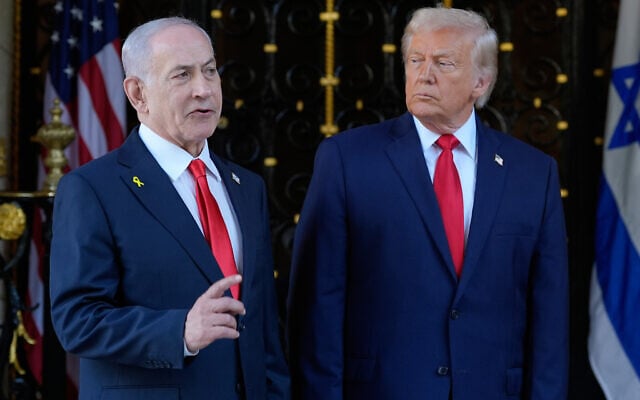
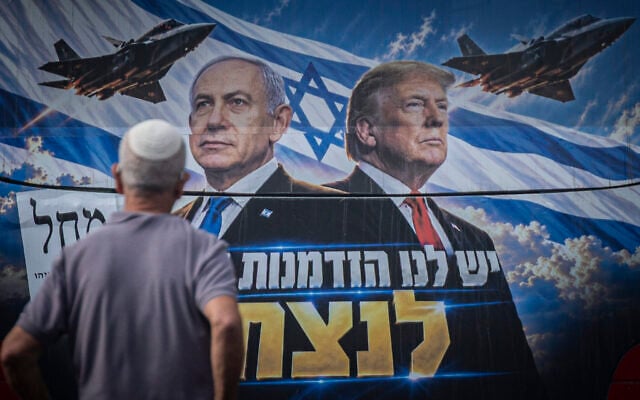
Just this week, Netanyahu received a second, even more forceful, endorsement from one of the world’s most prominent and powerful world leaders: President Donald Trump.
But Trump’s endorsements for the incumbent leader seem to be having little impact on the predictions that Netanyahu might be in real trouble this time.

A poll taken by Israel’s Channel 12 News the day after Trump’s announcement on October 18 had 64% of respondents saying it would not influence their decision on who to vote for and 17% said it made them less likely to back Netanyahu. About 12% said Trump’s announcement would reinforce their decision to vote for Likud.
The poll also found that Eisenkot had widened his lead over Netanyahu as the preferred prime minister with 45% versus 33%. And, it projected that Netanyahu’s ruling Likud party would only win 21 seats, down from the 32 it held in the outgoing parliament, the Knesset. And Eisenkot’s Yashar Party was on track to potentially win 24 seats.
Udi Sommer, a professor of political science who heads the Barak Leadership Center at Tel Aviv University, said that Netanyahu’s loss or victory also depended on Eisenkot and the opposition parties.
Like Netanyahu, their track record over the past three years is also not exemplary.
“Netanyahu failed on October 7 – and in the months and years leading up to October 7 – but after October 7, it was also the failure of Yair Lapid, the head of the opposition, which has a major function in a parliamentary democracy to call for accountability,” Sommer said.
“If things were the other way around, if Lapid had been the prime minister, and Netanyahu, the head of the opposition, on October 8, in the morning, there would have been a different prime minister, or at least you would have had a different set of decision makers,” he said, pointing out how Lapid “disappeared politically.”
“He was the second biggest party, with 24 members of Knesset, and soon he’s only going to have two,” Sommer pointed out.
He said that while Netanyahu’s outgoing coalition will likely lose seats, because the country has swung to the right aligning with the views of his coalition partners and due to the opposition’s weakness, he could very well hold onto power.
Sommer said that the drop in support for Netanyahu, as well as disagreements inside the right-wing bloc that he has failed to smooth out ahead of the election, showed the “clear punishment that voters are inflicting.”
However, he said, the opposition has been even less effective, “unable to capitalize on that dissatisfaction,” and failing to demand accountability from Netanyahu for the failures that led to October 7.
With none of the final polls giving either candidate or bloc of parties enough to form a majority government, none of the analysts were willing to predict the outcome of Tuesday’s vote and certainly none were ready to eulogize Netanyahu’s political career just yet.
However, among the scenarios they touted was a situation whereby either the two biggest parties headed by Netanyahu and Eisenkot form a centrist alliance or another election sometime in early 2027.
Both possibilities might leave Netanyahu in power and afford him the opportunity to reverse his fortune and prove his legacy as a political survivor.


The Times of Israel Community.