

Live updates (closed)
 Add ToI as a Preferred Source on Google

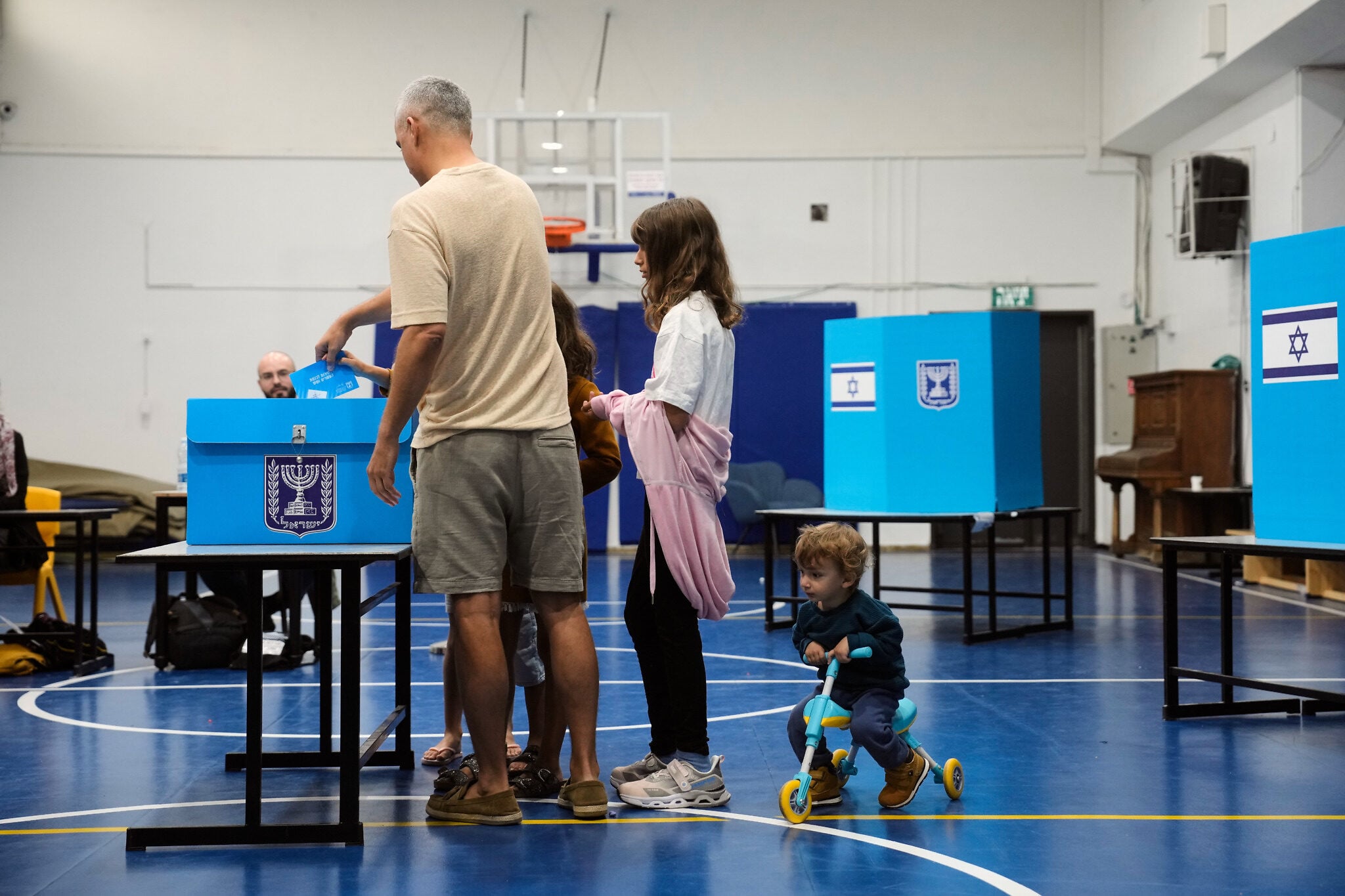
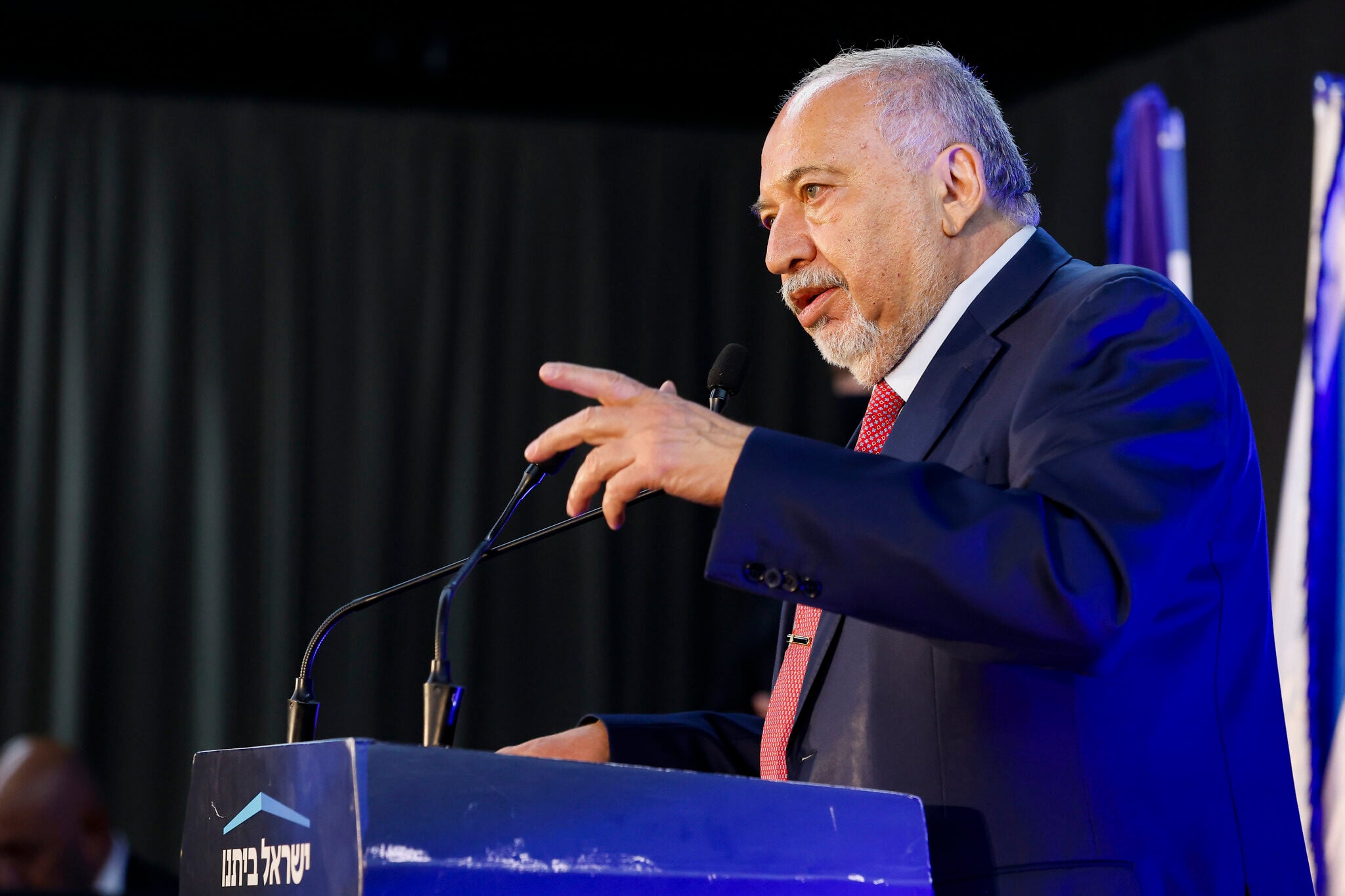

Key updates, 27 October 2026:
Syria says death toll in Jordan strikes rises to 8
Syria says the death toll in Monday’s strikes in its south has risen to eight, as Jordan says it had targeted “terrorist organizations” after a deadly jihadist attack on a church.
Health officials say “hospitals in Daraa province have received eight victims, including an elderly man and three children,” in addition to four wounded, raising an earlier toll of five dead.
El-Sayed campaign disavows PAC ad linking US inflation to Israel
Abdul El-Sayed’s Senate campaign has disavowed a pro-Palestinian group’s new ad that critics say invokes antisemitic tropes about US support for Israel.
The ad comes from Rebellion PAC, which is fronted by left-wing political commentator Cenk Uygur. It depicts a couple in a supermarket saying they cannot afford groceries because they have to set money aside “for killing Palestinians.” It concludes by stating that the Michigan Democrat’s GOP opponent “is for they/them,” referring to Israelis.
In a statement to the Jewish Telegraphic Agency, an El-Sayed campaign representative says the ad “is not affiliated in any way” with his campaign and that it did not speak for him.
“Abdul is focused on pushing back against Trump’s agenda that is raising prices for Michiganders,” campaign spokesperson Roxie Richner says in the statement. “No one speaks for Abdul but himself and his campaign.”
Syria shuts main border crossing with Jordan after airstrikes
Syria has closed the Nassib border crossing with Jordan, suspending passenger and commercial traffic in both directions due to developments on the ground in Daraa province, the Syrian General Authority for Border Crossings and Customs says in a statement.
The closure comes after Jordan’s air force struck what it described as militant hideouts in southern Syria, saying suspects behind last week’s deadly church attack in the kingdom were linked to “terrorist groups” operating there.
The Nassib border crossing is Jordan’s only passenger and commercial border crossing with Syria.
Bolsonaro’s party acknowledges Brazil presidential runoff results
Brazil’s Liberal Party, which housed Senator Flavio Bolsonaro’s presidential campaign, acknowledges the country’s presidential runoff results, according to a statement from the party’s head Valdemar Costa Neto.
Bolsonaro was defeated on Sunday by President Luiz Inacio Lula da Silva in the runoff vote. The senator had refused to concede and said he would seek to annul the election.
“We recognize the presidential election results,” Costa Neto says. “But we believe the issues raised need to be properly clarified.”
Key Update
St. Louis Blues condemn ‘Israel Kills,’ ‘Free America from Israel’ signs at hockey match

St. Louis Blues’ Justin Barron is congratulated by teammates Philip Broberg (6) and Aleksanteri Kaskimaki (41) after scoring during the first period of an NHL hockey game against the Vegas Golden Knights October 22, 2026, in St. Louis. (AP Photo/Jeff Roberson)
ST. LOUIS — The St. Louis Blues have condemned what they called an antisemitic protest during a game last week at Enterprise Center.
Signs that read “Israel Kills” and “Free America from Israel” were held by fans in the stands Thursday when the Blues played the Vegas Golden Knights.
In a statement, Blues owner Tom Stillman calls the signs “vile messages of hate” that were “unfortunate and unforgivable.”
Stillman says the fans who held the banners were ejected from the arena.
The 2026 Freedom Convoy, which said it was responsible for the protest, disagrees with Stillman’s characterization of the signs.
“Criticizing Israel is in no way, shape or form antisemitic,” the group says in a statement.
Saudi-led coalition reports interception of Houthi ballistic missiles
The Saudi-led coalition in Yemen says it intercepted and destroyed three ballistic missiles launched by Yemen’s Houthis toward Saudi Arabia’s Eastern Region as the fighting between the kingdom and the Iran-aligned group intensifies.
Saudi Civil Defense had issued early warning alerts for a potential hostile threat in the Eastern Region and in Kharj governorate, before later saying the danger had passed in both areas.
Key Update
IDF says troops arrested Egyptian national who breached the border fence overnight
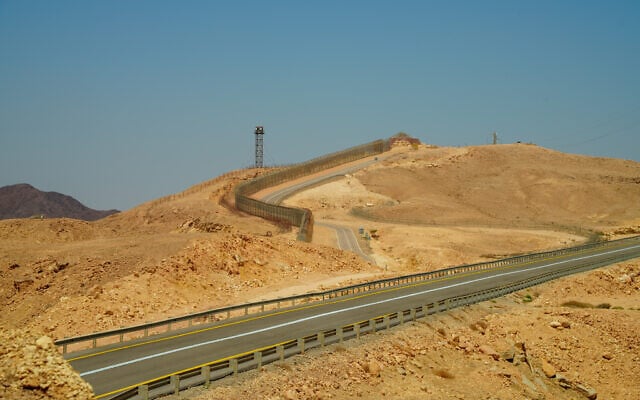
An illustrative photo of the Israel-Egypt border, September 9, 2025. (Yaniv Nadav/Flash90)
An Egyptian national crossed the border fence into Israel overnight, before being apprehended by troops, the military says.
The IDF says the civilian was spotted by soldiers monitoring surveillance cameras crossing the Egyptian border near the Israeli town of Nitzana.
Troops were dispatched to the scene and the man was detained and taken for further questioning.
The IDF says it views the incident “gravely,” and continues to be on heightened alert in the area during election day.
Incidents of people illegally crossing the Egyptian border into Israel have been relatively rare in recent years.
Voters start casting ballots as polling stations open across Israel
Polls are now nationwide, as Israeli voters begin to cast their ballots for the 26th Knesset.
Some 7.3 million people are eligible to vote, with polling stations to remain open until 10 a.m.
The final opinion surveys published before polls opened showed a tight race between Prime Minister Benjamin Netanyahu’s bloc and the opposition factions led by former IDF chief Gadi Eisenkot’s Yashar party, though both are forecast to fall short of a ruling majority if they maintain their campaign promises not to govern with certain other factions.
Key Update
Families of those slain and kidnapped on Oct. 7 urge Israelis to remember victims when they vote
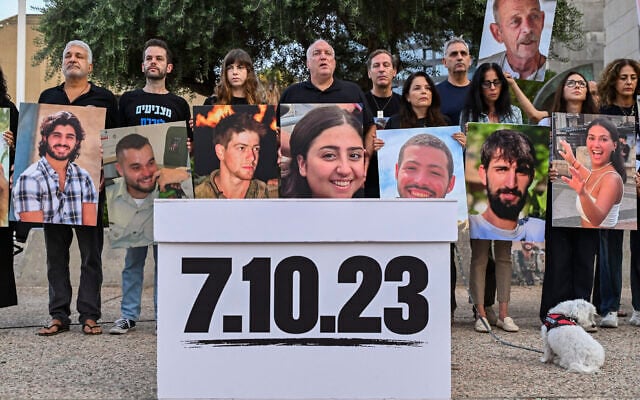
Bereaved families who lost loved ones in the October 7, 2023, Hamas-led massacre observe a minute of silence and deliver a special statement at Hostages Square in Tel Aviv on the morning of the national election, October 27, 2026. (Avshalom Sassoni/Flash90)
At 6:29 a.m., the hour when Hamas terrorists began the October 7, 2023 terrorist attack, family members of those killed and taken hostage on that day gather in Tel Aviv’s Hostages Square for a moment of silence, followed by statements asking Israelis to go out and vote, in memory of those who can no longer exercise that right.
Sigal and Yoram Yehudai, parents of Ron Yehudai, who was killed at the Nova desert rave, tell how their son hid in a yellow garbage dumpster that day, waiting to be saved.
“On October 7, that cursed day, the State of Israel abandoned our beloved son Ron,” says Sigal Yehudai. “It abandoned him and all the citizens of Israel when it allowed thousands of terrorists to launch a murderous attack on the State of Israel. And it abandoned our Ron again and again, until 11:47 a.m.,” when he was killed.
Yehudai thanks the tens of thousands of Israelis who left their families and jobs all over the world to vote in the election, to support the nation.
She asks the citizens of Israel to do the same, to vote for parties that have committed to establishing a state commission of inquiry that “will give us answers and bring peace to our weary souls.”
Her words are echoed by 12 other sets of parents, including Eyal Eshel, father of Roni Eshel, the surveillance soldier killed at the Nahal Oz army base; Einav Zangauker, whose son, Matan Zangauker, was abducted and released in October 2025; Ruby and Hagit Chen, parents of Itai Chen, a soldier killed on October 7, his body taken captive, all familiar faces from months of struggling to bring home the hostages and bodies of those killed in Gaza.
“My brother loved this nation and its people,” says Ofri Tzur, whose brother, Amir Tzur, was a paramedic killed in battle in Kibbutz Kfar Aza. “Through his courage, Amiri teaches me what responsibility means. On the other hand, there are those who try to evade responsibility and obscure the truth. To convince us that everything has returned to normal. That we can elect the same government again. As though nothing happened.”
She asks Israelis to go out and vote, in memory of the fallen, for the future, for the children’s future, for the sake of hope.
At the end of their statements, the speakers sign their names on a giant ballot box that is white rather than blue, mimicking the traditional Israeli death notices.
Key Update
Former chief rabbi Yitzhak Yosef casts vote at Rishon Lezion polling booth
Rabbi Yitzhak Yosef, the former Sephardic chief rabbi of Israel who sits on the rabbinical council of the ultra-Orthodox Shas party, casts his vote in the central city of Rishon Lezion.
Earlier this year, Yosef made headlines when he said there was “no chance” Prime Minister Benjamin Netanyahu would ever repent of his secular lifestyle, but that Yashar party chairman Gadi Eisenkot, the opposition frontrunner might. The comments were interpreted to hint at Shas’s shifting political alliances.
In August, he reportedly told students not to vote for Shas and called for the toppling of the right-wing coalition.
And this month, in another challenge for the current coalition’s return and for the far-right Otzma Yehudit, Yosef wrote a letter prohibiting support for the party because Itamar Ben Gvir, its chair, has ascended the Temple Mount.
זריזין מקידימין: מנהיגה הרוחני של ש״ס הראשון לציון רבי יצחק יוסף הצביע כעת כשהוא מלווה ביו״ר ועדת הבריאות ח"כ יוני משריקי pic.twitter.com/5Iw5hgNY1j
— משה ויסברג (@moshe_nayes) October 27, 2026
Shas leader Deri votes in Jerusalem, warns of ‘danger to Judaism’
Ultra-Orthodox Shas party leader Aryeh Deri casts his vote in the Har Nof neighborhood of Jerusalem, issuing an alarmist warning that high turnout among Arab and left-wing voters threatens Judaism, as he urges his supporters to head to the polls.
“There is a real struggle here over Judaism, over the Torah, and above all, over obedience to Torah authority,” Deri says. “I ask everyone, without exception, to go out and vote immediately. This is truly a situation in which Judaism is in danger. All the great Torah sages are weeping and pleading.”
Deri goes on to warn of expected high turnout among left-wing and Arab voters, portraying their participation in the election as a threat to Judaism.
“There are expectations of very high voter turnout in left-wing strongholds and in the Arab sector. Tens of thousands have come from abroad to vote, bring down the government and harm the Torah,” he claims.
The rhetoric echoes a familiar campaign tactic employed by Prime Minister Benjamin Netanyahu and his political allies, who have repeatedly sought to mobilize right-wing voters by stoking fears of Arab voter turnout and the prospect of a left-wing government supported by Arab parties.
Deri earlier this month declared that Shas will not join or support the next government unless it passes legislation preserving sweeping military service exemptions for Haredi yeshiva students.
The declaration follows a similar ultimatum from United Torah Judaism, the other major Haredi party, with which Shas signed a surplus-vote agreement ahead of today’s election.
אריה דרעי מצביע (צילום: יעקב כהן) pic.twitter.com/DLtBOHuSey
— משה ויסברג (@moshe_nayes) October 27, 2026
Central Elections Committee says over 95% of polling stations reported opening
The Central Elections Committee says more than 95 percent of polling stations have reported that they have opened around the country.
While there may be a few delays in the opening of stations, the fact that some stations haven’t reported in does not necessarily mean that they have yet to open, it says.
Police investigating after Yashar billboard set on fire in Dimona
Police are investigating after a Yashar party billboard was set on fire at the entrance to the southern city of Dimona overnight.
אלמונים הציתו הלילה שלט של גדי איזנקוט בכניסה לעיר דימונה. המשטרה חוקרת ופועלת להתחקות אחר זהות החשודים ולעצור אותם pic.twitter.com/XXQw58UZPt
— ilana curiel (@ilanacuriel) October 27, 2026
Key Update
International delegation, including British MPs, said barred from West Bank ahead of Palestinian conference
An international delegation, including British MPs, was blocked yesterday from crossing into the West Bank for a conference in Ramallah to oppose Israel’s rule of the territory.
The group was set to participate in Progressive International’s and Birzeit University’s Second Ramallah Congress, which includes meetings with Palestinian academics and civil society groups.
The delegation of 23 representatives from France, Spain, Luxembourg, Switzerland, Greece, Holland, Ireland and the US was stopped at the Allenby Border Crossing and held for nine hours, Labour MP Sam Tarry tells the UK’s Guardian newspaper.
“They made a political decision very clearly based on the fact they didn’t want people to witness what’s been going on in the West Bank, especially ahead of the elections,” Tarry says.
The British Guardian newspaper says it contacted the Israeli embassy for a comment.
President Herzog and wife cast their votes in election: ‘No one can be allowed to spoil or undermine it’
President Isaac Herzog and his wife Michal cast their votes for the Knesset in the neighborhood of Rehavia.
“It is a great privilege to go and vote, and I am proud that Michal and I have exercised the basic right of every citizen,” he tells reporters.
“I hope this will be a true holiday for democracy,” he says. “No one can be allowed to spoil or undermine it.”
“We are all equal today,” he continues. “This is our day to go and make an impact and vote.”
הנשיא הרצוג ורעייתו הצביעו בירושלים: "יום חג אמיתי לדמוקרטיה לא ניתן לאף אחד לקלקל ולחבל בכך. כולנו שווים היום זה היום שלנו ללכת להשפיע ולהצביע" pic.twitter.com/6LzZXtv8aM
— חזקי ברוך (@HezkeiB) October 27, 2026
בחירות2026: נשיא המדינה יצחק הרצוג ורעייתו הצביעו בבחירות בשכונת רחביה בירושלים pic.twitter.com/PEc2QrnVO5
— חזקי ברוך (@HezkeiB) October 27, 2026
Party leaders cast ballots as polls open, urge supporters to vote
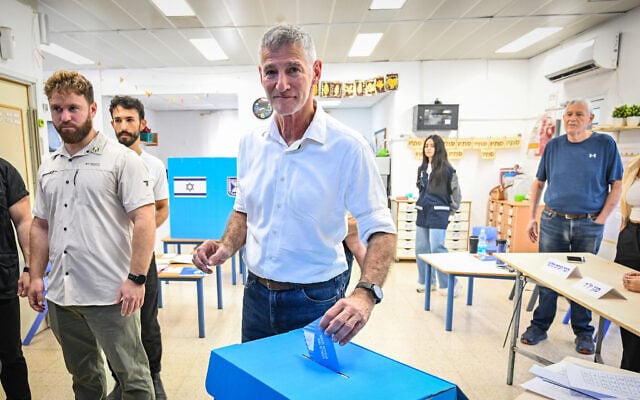
The Democrats party chairman Yair Golan casts his vote at a polling station in Rosh Ha'ayin, in the general election, October 27, 2026. (Reuven Schwartz/Flash90)
Party leaders begin casting their ballots as polling stations open across Israel, urging supporters to turn out in force in an election that will determine the country’s next government.
Democrats leader Yair Golan votes in Rosh Ha’ayin alongside his wife and grandson, declaring: “Today, we are saving Israel.”
“We fought for four years in the streets, and now we’re taking the fight to the ballot box,” he says, calling for a strong Democrats presence in the next government.
The leader of the Otzma Yehudit party, National Security Minister Itamar Ben Gvir, votes in Kiryat Arba alongside his wife, warning that a victory for the opposing bloc would produce “a Mansour Abbas government.”
“Netanyahu will be prime minister, and we will be the right-wing standard-bearer of that government,” he says.
“For the sake of the people of Israel, for the eternity of Israel, for the unity of Israel. Vote with your heart, and we will achieve great success,” says People of Israel chairman Ofer Winter as he casts his ballot in Mitzpe Netofa.
Winter has pledged to support a Netanyahu-led government, but his party has consistently polled below the electoral threshold. Whether it manages to enter the Knesset could prove significant in determining the balance of the blocs.
Joint List chairman Yousef Jabareen, meanwhile, calls the election a “fateful day,” saying the Arab public “believes in its ability to bring about change and send the fascist government packing.”
Arab voter turnout could prove decisive in the closely contested election, with Jabareen having pledged to support any government capable of replacing Netanyahu’s coalition, even from outside the governing coalition.
Eisenkot opens election day in Nir Oz with former hostage, slams government for evading responsibility

Yashar chairman Gadi Eisenkot (L) meets with former hostage Gadi Mozes in Kibbutz Nir Oz, October 27, 2026. (Yashar)
Yashar chairman Gadi Eisenkot begins election day campaigning at Kibbutz Nir Oz, one of the communities hardest hit by the Hamas-led October 7, 2023, attack, alongside former hostage Gadi Mozes, in a symbolic choice of location before casting his own ballot elsewhere later in the day.
“I am proud and moved to begin this day with Gadi Mozes, a symbol of the Israeli spirit and strength, of Israelis’ commitment to one another and their commitment to the state,” Eisenkot says.
“I pledge to do everything I can to ensure that we are worthy of the price you paid, the price the kibbutz paid and the price we all paid, and to bring healing and repair to all citizens of Israel,” he continues.
Mozes, an 81-year-old Nir Oz resident who endured 482 days in Hamas and Palestinian Islamic Jihad captivity, has campaigned for Eisenkot, a former IDF chief of staff who lost his son Gal and two nephews while they were fighting in Gaza during the war.
Noting the absence of any members of the coalition, Eisenkot accuses Prime Minister Benjamin Netanyahu and his government of continuing to evade responsibility for the failures that enabled the attack.
“If anyone in the government had even a shred of responsibility, they would have started their morning here, in the Gaza border communities,” he says. “Three years after the failure, they continue to evade responsibility.”
As party leaders cast ballots, coalition leaders warn of disaster, opposition promises renewal
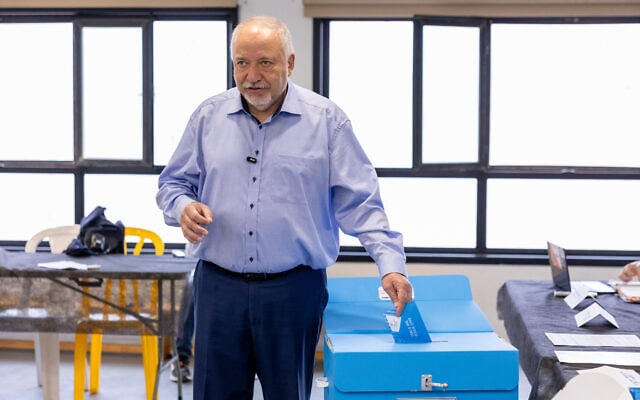
Yisrael Beytenu party head Avigdor Liberman arrives to cast his ballot at a polling station in the West Bank settlement of Nokdim, during the general election, October 27, 2026. (Noam Revkin Fenton/FLASH90)
The stark contrast in messaging between Israel’s governing coalition and opposition is on display as party leaders cast their ballots, with Netanyahu’s allies continuing a largely negative campaign focused on the dangers of their opponents taking power rather than touting their own government’s achievements, while opposition leaders promise change and national renewal.
Religious Zionism leader Finance Minister Bezalel Smotrich votes in the West Bank settlement of Kedumim, warning against supporting parties at risk of falling below the electoral threshold — a clear reference to Ofer Winter’s People of Israel party, which he and Likud unsuccessfully sought to pressure into withdrawing.
“We do not gamble with our security, our existence or our identity,” he says, warning that wasted votes could lead to “a left-wing government with our enemies that will bring disasters upon us.”
Meanwhile, voting alongside his wife in Ra’anana, former prime minister and B’Yachad leader Naftali Bennett invokes the spirit of October 7, declaring that Israelis who stepped up to save the country during the Hamas-led attack must now do so again at the ballot box.
“We are a nation of lions who, on October 7, went out to save the country when there was no government. Today, October 27, this nation of lions is going out to save the country once again,” Bennett says, promising “enormous, historic change” and an “incredible future for our children.”
Yisrael Beytenu chairman Avigdor Liberman, voting alongside his wife in the West Bank settlement of Nokdim, expresses confidence that the opposition will emerge victorious and form a “Zionist coalition” committed to establishing a state commission of inquiry into October 7 and passing a universal military draft law.
“The era of Netanyahu and ultra-Orthodox rule must come to an end,” he declares.
Stalls belonging to Charedi Public wrecked near several polling stations — report
Stalls belonging to the Charedi Public party were wrecked outside several polling stations in Bnei Brak, Beit Shemesh and Beitar Illit, party activists tell Israel National News.
Footage posted by reporter Hezkei Baruch appears to show the aftermath of such an attack, and an activist following a man he accuses of destroying the stand.
Opinion polls have shown the party will likely fall below the 3.25 percent electoral threshold.
פעילי מפלגת ׳הציבור החרדי׳ טוענים שהותקפו וכי הושחתו דוכני הסברה, מחוץ לשורת קלפיות בערים בני ברק, בית שמש ובית״ר עילית. תלונה הוגשה לועדת הבחירות ולמשטרת ישראל.
במפלגה אמרו כי הם קוראים למשטרת ישראל לפעול ולשמור על זכות ההצבעה בערים החרדיות. pic.twitter.com/3kUfjV0cqd
— חזקי ברוך (@HezkeiB) October 27, 2026
Intel agrees to buy Israeli startup Classiq Technologies, in deal estimated to be worth over $2 billion
US semiconductor giant Intel agrees to buy Israeli startup Classiq Technologies, the developer of an operating system and software tools for quantum computers.
The US chipmaker did not disclose the price tag, but the deal is estimated to be worth between $2.2 billion and $2.3 billion, according to reports in the Hebrew press.
The deal marks Intel’s second-largest acquisition in Israel since it bought Mobileye, a Jerusalem-based maker of self-driving technologies, for over $15 billion, in 2017.
“For more than a decade, Intel has made remarkable progress in quantum computing by applying its semiconductor innovation, advanced manufacturing prowess and systems engineering expertise to the development of scalable silicon spin-qubit technology,” says Intel CEO Lip-Bu Tan. “Joining forces with Classiq transforms Intel’s Quantum Computing Group into a full-stack quantum computing business.”
Founded in 2020 by CEO Nir Minerbi, CTO Yehuda Naveh and his son CPO Amir Naveh, Classiq has developed a software operating platform that works across all major types of quantum hardware. The platform is tailored to help data scientists, computational scientists, and engineers work on quantum algorithms and build programs and applications with high-performance computational power that hold the promise of speeding up solutions to today’s most complex real-world problems.
The platform simplifies the creation and design of complex quantum circuits and is geared to allow businesses and organizations without in-house quantum experts to build quantum applications that can resolve complex calculations in areas such as the automotive industry, automation, finance, and drug discovery in the pharmaceutical industry.
“Since our founding, Classiq has focused on making quantum computing practical and accessible by enabling developers, researchers and enterprises to create scalable quantum applications without requiring deep expertise in quantum circuit design,” says Minerbi. “Together, Intel and Classiq can help unlock the benefits of quantum computing and accelerate its adoption sooner.”
Bennett’s party accuses Likud of illegally tracking voters at polling stations; CEC disputes claim
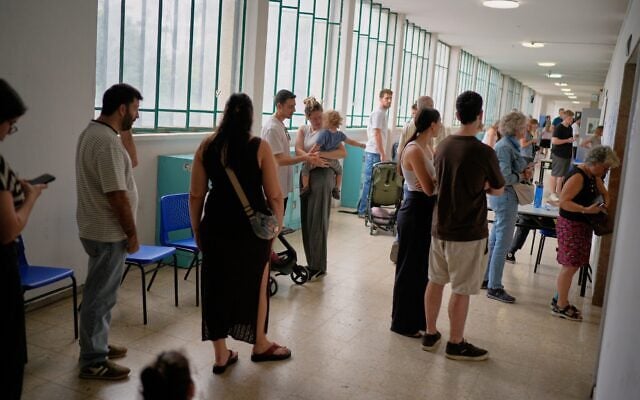
Voters wait in line to cast their ballots at a school used as a polling station during the general election in Tel Aviv, October 27, 2026. (AP Photo/David Goldman)
Former prime minister Naftali Bennett’s B’Yachad party accuses Likud representatives of illegally tracking voters at polling stations and reporting information about them through a smartphone app, allegations the Central Elections Committee (CEC) says it has received no reports to substantiate.
B’Yachad alleges that Likud representatives inside polling stations are using an app to track voters and relay information to their party, in violation of election law and CEC guidelines, and says it has filed a complaint with the committee.
Responding to the allegations, the CEC says the claims circulating online are incorrect, stressing that “as of now, the committee has received no reports of such activity.”
It says it received one isolated report of photography at a polling station in a moshav in central Israel, but that the polling station official involved stopped taking pictures after the rules were explained to her.
The CEC reiterates that party representatives are prohibited from sharing information with their parties about whether individual voters have arrived at polling stations or cast their ballots, including through smartphone apps.
Following the CEC’s response, B’Yachad says it has received additional reports from its representatives on the ground of Likud officials using the Elector app at polling stations in a moshav in the Lower Galilee, prompting it to file another complaint.
The allegations come after the High Court of Justice ruled last week that polling station officials and party-appointed observers cannot count, via digital means, the number of voters who have voted on election day and transmit that information in real time to the political parties they represent.
The ruling followed allegations that Likud had developed a smartphone app allowing its representatives at polling stations to collect information about individual voters and relay it to campaign headquarters, in violation of election law.
Houthi official says Egypt ‘declares war’ with vote to okay military support for Saudis
SANAA, Yemen — A Houthi official says that the Egyptian parliament’s decision to authorize military support for Saudi Arabia to defend against the Iran-backed group’s attacks was a declaration of war.
“Egypt and its parliament declared support for what is called the defense of the Kingdom of Saudi Arabia, and in doing so, it declares war against the Republic of Yemen,” says Mohammed Ali al-Houthi, a member of the Houthis’ political bureau, in a Telegram post.
Voters in West Bank’s Ofra voting for continued expansion of settlements, and to keep left-wing Democrats out of government
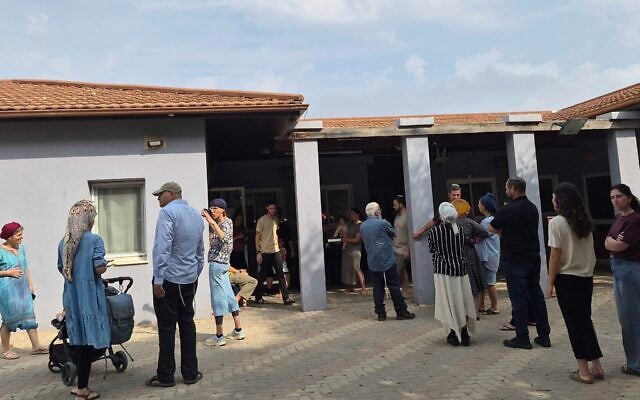
Voters queue to cast their ballot in the West Bank settlement of Ofra, October 27, 2026. (Jeremy Sharon/Times of Israel)
Voters queuing to cast their ballots in the settlement of Ofra in the central West Bank say they are voting to preserve government support for the massive increase in settlement expansion witnessed over the last four years, and to prevent the Arab parties and Yair Golan’s Democrats party from forming a coalition.
Amir Levy, who has lived in Ofra, one of the first West Bank settlements, for thirty years, says he voted for the ultra-nationalist Religious Zionism party headed by Finance Minister Bezalel Smotrich because of tax breaks he has introduced and funding for religious pre-military academies he has boosted, and because he has enabled the profusion of settlement farming outposts, which are technically illegal under Israeli law but which have received backing from government ministries and agencies.
“I’m disappointed about his position on Haredi enlistment, but I think he’s done much more good than beyond this one issue,” Levy adds, in reference to Smotrich’s backing for legislation that would reinstate blanket military service exemptions for ultra-Orthodox yeshiva students.
Levy says the stakes are high in the election because, he asserts, the left wing is desperate to remove Prime Minister Benjamin Netanyahu from power and will join with the Arab parties to remove him, something he fiercely opposes.
“Yair Golan will be devastating for the right wing, for the settlements, for the pre-military academies; he will separate religion and state,” Levy adds.
“If it was just [Yashar party leader Gadi] Eisenkot, then fine, but Eisenkot will have to have Yair Golan in government.”
Naama, 25, grew up in Ofra although lives in the nearby settlement of Kida. She voted for Ofer Winter’s right-wing People of Israel party, which in many polls was struggling to cross the electoral threshold.
Naama says she backed Winter because he would change the way the war against Hamas in Gaza is conducted, because “he sees the other side of the political aisle as an opponent, not an enemy,” and because of his position demanding ultra-Orthodox enlistment in the IDF.
She says that when the wars following the October 7, 2023, Hamas invasion and massacres began, her husband was still doing his compulsory military service, and subsequently served over 150 days in reserve duty.
“It’s a bummer, he goes happily to reserve duty, but we want equality in military service from everyone,” she says, adding that this should include not just the ultra-Orthodox but “Arabs, leftists, and everyone,” and noting that performing national service instead of military service would also be acceptable.
The outgoing government’s efforts to reinstate military service exemptions for Haredi men have been politically damaging for the Religious Zionism party since the community is overrepresented in reserve duty, while only very few ultra-Orthodox men enlist.
Asked about the stakes in the election, Naama says she is worried “the extremes” will get into government, citing Yair Golan specifically, and also expresses opposition to the idea of a Palestinian state.
“Every time concessions are made in diplomatic agreements, the security situation gets worse, so it seems a bit stupid to continue with the idea.”
Gal Gadot: I’m voting for change, I hope today will be good for us all
Actress Gal Gadot posts an Instagram story of herself voting in the Israeli election.
“That’s it, I’m exercising my right to vote, and I ask all of you to go out and exercise your most basic, most important, the most democratic right, and to vote for who you believe in,” says Gadot in a recording she makes of herself at the polling booth.
“I’m voting for change, and I hope that today, Tuesday, paamayim ki tov (Tuesdays are traditionally viewed in Jewish culture as a lucky day) that it will only be good for us all,” says Gadot, blowing a kiss at the camera.
Gadot and her family live in Los Angeles.
The former Wonder Woman actress received an honorary degree from Bar-Ilan University on Monday night.
גל גדות:"אני ממשת את זכות ההצבעה שלי ואני מבקשת מכולכם לצאת ולממש את הזכות הכי בסיסית, הכי חשובה, הכי דמוקרטית שלכם ולהצביע " pic.twitter.com/7mRUAC4FD3
— Gil mishali גיל משעלי (@gilmishali) October 27, 2026
Voters of all stripes head to polls in northern coastal city of Nahariya

Hannah Goldstein, left, and her husband, Chaim Goldstein, outside the polling station in Nahariya on October 27, 2026. (Diana Bletter/TImes of Israel)
Wheeling baby strollers and walkers, clad in crop tops and modest dresses, some sporting tattoos and others wearing kippot, a diverse cross-section of Nahariya residents queue up to cast their ballots at a local high school this morning.
“It feels like a holiday even though everyone has different ideas,” says Betty Boingiu, who tells The Times of Israel she is voting for Gadi Eisenkot.
“Netanyahu has been in power long enough,” says her neighbor, Chana Goldstein. “He was good, but it’s time for a new broom.”
A man standing nearby disagrees. “You don’t make a change after two difficult years,” he says, declining to give his name. He says he is casting his vote for Prime Minister Benjamin Netanyahu.
Rishon Lezion deputy mayor says he is under investigation for sexual assault of employee
Rishon Lezion Deputy Mayor Avi Haim announces he is the senior municipal official under investigation for sexual assault of an employee.
The announcement comes after he decided not to continue pursuing the gag order on his name.
Three arrested over alleged scheme to bribe people to vote Ra’am, police say
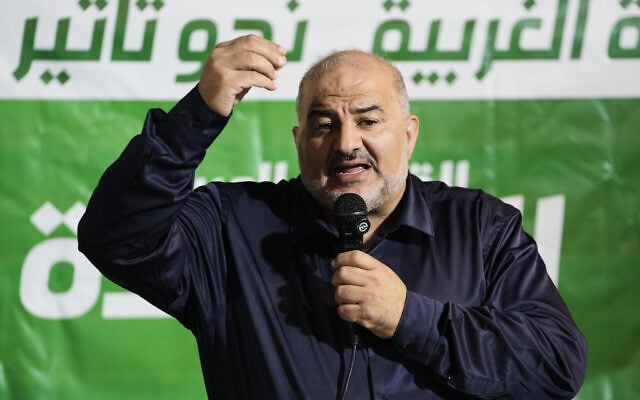
Ra'am party leader Mansour Abbas speaks to supporters during a campaign event ahead of the Knesset election, in the northern town of Baqa al-Gharbiyye, October 8, 2026. (AP Photo/Mahmoud Illean)
Three men from Bedouin communities in the south were arrested overnight on suspicion of involvement in a scheme to bribe people to vote for the traditionalist Arab party Ra’am, police say.
Officers who searched the suspects’ homes found evidence including envelopes containing tens of thousands of shekels in cash, according to police.
The three will be brought before a judge today for a hearing on extending their remand, police add.
Ra’am slams the “sham arrests that aim to thwart Ra’am and bring down voting in Arab society.”
The activists were arrested in their homes hours before polls opened, “not near polling stations or voters,” the party says.
The party adds that the arrests are “part of the political use” National Security Minister Itamar Ben Gvir has made of the police.
Herzog at election headquarters: This is a holiday of democracy, we share a common fate here
Visiting the Central Election Committee headquarters, President Isaac Herzog says that “it is a real holiday of democracy, and no one can be allowed to ruin it — quite the opposite, this is our opportunity, all of us, to influence our fate, the fate of our children, and the fate of our grandchildren.”
“What’s more,” he continues, “it is something that is deeply embedded inside of our spirit, as a very democratic nation.”
Herzog says that Israelis “must remember and not forget, even though we are putting different slips in the ballot, and we are expressing different opinions, in the end we have a common fate. A common fate in this land, a common fate in our beloved country, and this election process is another way to express our love for our country.”
הצטרפו לשידור החי: נשיא המדינה מגיע למרכז השליטה בכנסת ישראל https://t.co/JnmvpZynS9
— ועדת הבחירות המרכזית (@electionknesset) October 27, 2026
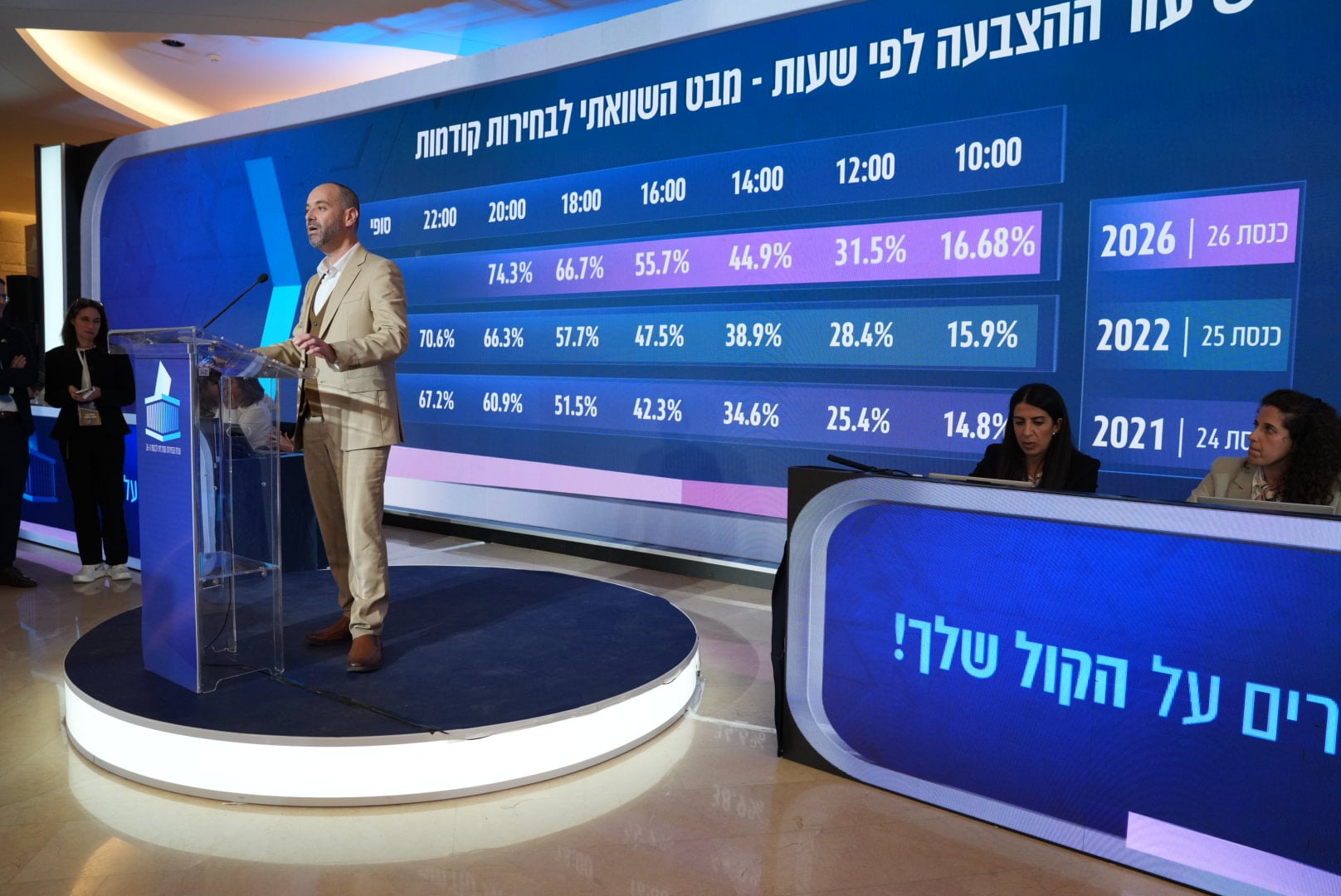
Turnout at 16.7% as of 10 a.m., 1.2 million votes cast, with highest turnout at this hour since 1981
Voter turnout stood at 16.7% as of 10 a.m., according to the Central Elections Committee, up from 15.9% at the same time in the 2022 election.
With 1.2 million votes cast, it is the highest turnout at this hour since 1981 — when Menachem Begin was reelected as prime minister.
Key Update
People of Israel, Yisrael Beytenu report alleged ballot irregularities, file complaints with CEC
Ofer Winter’s People of Israel party and Avigdor Liberman’s Yisrael Beytenu party report alleged voting irregularities at several polling stations, filing complaints with the Central Elections Committee (CEC).
People of Israel says its ballot slips, marked with the letter “Chaf” (ך), were missing from some polling stations, while at others they had been “turned over to make them appear to be blank ballots.” The party also reports an incident in which a voter allegedly “attempted to remove all” of its ballot slips from a polling station It urges the public to “remain vigilant” and report irregularities.
Separately, Yisrael Beytenu reports a “serious irregularity” at a Beersheba polling station, where a voter allegedly received a partially open ballot envelope already containing a Likud ballot slip. The party says polling station officials confirmed the incident to its representative, who insisted it be documented in the official record.
Gadi Eisenkot’s Yashar says it has received reports of “deliberate damage” to its ballot slips, including theft, removal from polling stations and being turned over. The party also reports “extremely long lines” at polling stations in areas with strong support for Eisenkot, raising concerns that access routes are being deliberately blocked to suppress turnout.
“This constitutes a serious violation of election integrity and the public’s right to exercise its vote,” Yashar says, adding that it will file a formal complaint with the CEC shortly.
Key Update
Smotrich stokes fears of Arab turnout, urges right-wing voters to abandon smaller parties

Finance Minister Bezalel Smotrich casts his ballot at a polling station in the West Bank settlement of Kedumim, during the general election, October 27, 2026. (Hillel Maeir/FLASH90)
Religious Zionism leader and Finance Minister Bezalel Smotrich seeks to stoke fears of high Arab and left-wing voter turnout in an increasingly desperate appeal to right-wing voters to abandon smaller parties, after the Central Elections Committee announced that turnout had reached 16.7% as of 10 a.m., up from 15.9% at the same hour in 2022 and the highest recorded at that hour since at least 1996.
“The high turnout is the result of unusually high voting rates in the Arab sector and left-wing strongholds,” Smotrich claims, even though the nationwide figures do not establish which communities are driving the increase.
“Based on the published figures, there is absolutely no chance that parties currently below the electoral threshold will cross it,” he declares, despite the early turnout figures offering no basis for such a conclusion. “Don’t throw your vote in the trash.”
His appeal appears directed primarily at those considering voting for Ofer Winter’s far-right People of Israel party, which has resisted an intense pressure campaign by Smotrich and Prime Minister Benjamin Netanyahu’s Likud to withdraw from the race amid fears it could siphon votes from other right-wing parties or waste them by failing to cross the electoral threshold.
Smotrich’s warning also echoes a familiar campaign tactic employed by Netanyahu and his allies, who have repeatedly sought to mobilize right-wing voters by stoking fears of high Arab turnout and the prospect of a left-wing government supported by Arab parties.
UK prosecutors charge 2 with national security offenses over RAF Fairford incident
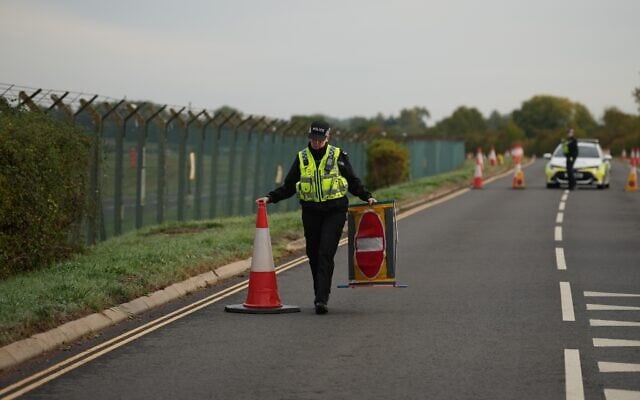
Police officers guard a road leading to RAF Fairford, after an incident in Fairford, England, September 28, 2026. (Alastair Grant/AP)
British prosecutors says they charged two men with offenses under the National Security Act following an incident in September at RAF Fairford, an airbase used by the US to strike Iran.
Police said last week they had rearrested two men on suspicion of assisting Iranian intelligence in connection with the incident.
The base had been used by US bombers to carry out strikes on Iran, but American B-1 bombers were withdrawn shortly after five British men were arrested outside the military base in southwest England in the early hours of September 27.
British Prime Minister Andy Burnham said earlier this month that the activity at RAF Fairford was likely to have been coordinated in Iran, which Iran’s ambassador to Britain has denied.
Ben Gvir lashes out over reported US-backed plan to form unity government without him
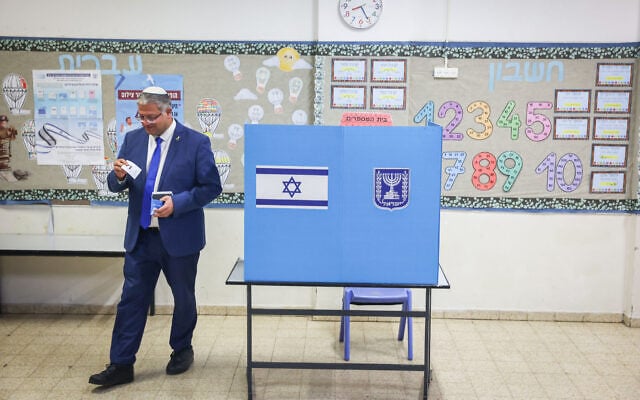
National Security Minister and Otzma Yehudit party chairman Itamar Ben Gvir casts his vote at a polling station in the West Bank settlement of Kiryat Arba, during the general election, October 27, 2026. (Flash90)
Far-right National Security Minister Itamar Ben Gvir of Otzma Yehudit accuses Prime Minister Benjamin Netanyahu of planning to exclude him from the next government in favor of a unity coalition with opposition leader Gadi Eisenkot of Yashar, following reports of US efforts to broker such an arrangement.
“To my deep regret, this is what Israel Hayom is revealing this morning: Prime Minister Netanyahu has pledged to the US administration that, after the elections, he will form a unity government with Eisenkot and without Ben Gvir,” he writes on X.
“The plan includes signing diplomatic agreements and Netanyahu receiving a pardon from the president,” Ben Gvir adds.
Israel Hayom reported overnight that US President Donald Trump is pushing for a unity government comprising Netanyahu and Eisenkot, with the prime minister reportedly indicating in closed-door discussions that he would be willing to abandon his far-right allies to advance regional diplomacy.
According to the report, the US-backed proposal outlines a rotation government in which Netanyahu would serve for approximately two years, advance the Abraham Accords, particularly with Saudi Arabia, and then retire from politics.
US officials reportedly suggest that President Isaac Herzog could pardon Netanyahu from his corruption trial as part of the deal, though the President’s Residence has denied involvement in such discussions.
Eisenkot has repeatedly ruled out serving in a Netanyahu-led government.
“If you want a strong Ben Gvir in the government, rather than a weakened Ben Gvir in the opposition, I need your support at the ballot box,” Ben Gvir urges voters as they head to the polls today.
Eisenkot’s Yashar warns of ‘systematic attempt’ to sabotage voting, with its ballot slips being removed, files complaint with CEC

Yashar party chairman Gadi Eisenkot, visits a polling station in the southern town of Ofakim during Israel's general election, October 27, 2026. (AP Photo/Ariel Schalit)
Gadi Eisenkot’s Yashar party says it has filed an urgent complaint with the Central Elections Committee following further reports of its ballot slips being removed, defaced, or turned over at polling stations across the country.
“The large number of incidents raises serious suspicions that these are not isolated mishaps, but rather a systematic and deliberate attempt to sabotage the democratic process, prevent citizens from exercising their right to vote and influence the election results,” the party says.
“Anyone who tries to steal ballot slips is trying to steal the election,” it adds. “This is a serious violation of election integrity and the fundamental right of Israeli citizens to vote.”
The party calls on the CEC to intervene immediately, conduct frequent inspections at polling stations, and replenish missing ballot slips.
Report finalized on why Iranian warships took part in drill off South Africa’s coast against President Ramaphosa’s orders

The Iranian navy ship Naghdi is seen docked at Simon's Town Harbour in Cape Town, South Africa, January 9, 2026. (AP Photo/Nardus Engelbrecht)
CAPE TOWN, South Africa — A report into why Iranian warships took part in naval drills off South Africa’s coast this year against the instructions of South Africa’s president has been finalized, his office says.
The report has been received by South African President Cyril Ramaphosa but will remain confidential while he reviews it, his office says in a statement.
The participation of Iran in drills also involving Chinese and Russian ships off Cape Town in January came at a time of heightened tensions between the United States and Iran, and sparked harsh US criticism of South Africa for allowing Iranian warships to take part.
The drills took place during mass protests in Iran and a crackdown that killed more than 7,000 people. The US and Israel launched military strikes against Iran a month later to start the war.
Ramaphosa ordered the investigation, led by a retired judge, in February, saying there was a “failure to heed the instruction” that Iranian vessels that had already traveled to South Africa for the planned exercises not take part.
In reversal, Holland pulls out of Eurovision; Dutch broadcaster cites ‘sensitivities’ over Israel

3,000 drones depict the logo sign in preparation for the Eurovision Song Contest in front of castle Schonbrunn in Vienna, Austria, April 27, 2026. (AP/Matthias Schrader)
The Netherlands will not participate in next year’s Eurovision Song Contest, its broadcaster NPO says in an apparent reversal, citing “sensitivities” over Israel’s participation.
“We have known for some time that Israel’s participation elicits various reactions in society and causes discussion and division… therefore, after consultation with the Board of Broadcasters, the NPO has decided to forgo participation in 2027,” Jurre Bosman, NPO’s media director, says in a statement.
Jet de Ranitz, NPO’s executive chairman, acknowledges this would disappoint many Dutch Eurovision fans and stresses that the contest will still be aired on the public channels.
However, he says: “We must conclude that it is currently too early to participate in the Eurovision Song Contest in 2027.”
“Due to the sensitivities surrounding the themes currently at play, we have decided to take a step back for the time being,” added De Ranitz.
Last month, the NPO umbrella public broadcaster said it had decided to “carefully” return to the 2027 contest after “extensive discussions” with the European Broadcasting Union, noting that the “sensitivities have not gone away” that led to the initial boycott.
It is unclear what led to the reversal.
Israeli woman lightly hurt in stone-throwing attack in West Bank

A car that was hit by a stone on Route 60 highway near the West Bank settlement of Rehelim, October 27, 2026. (Magen David Adom)
An Israeli woman was lightly injured in a stone-throwing attack on the Route 60 highway in the West Bank, medics say.
Magen David Adom says the 20-year-old motorist was attacked near the settlement of Rehelim.
She is being taken to Rabin Medical Center in Petah Tikva in good condition, with an injury to her face, MDA adds.
IDF: Voter turnout among soldiers stands at 30% at 10 a.m., almost 5 points higher than in 2022
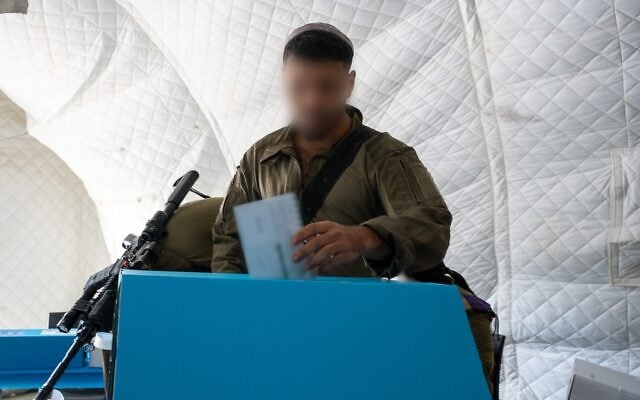
IDF troops vote in Israel's national elections at a military base in the Gaza Strip, in a handout photo published on October 26, 2026. (Israel Defense Forces)
Voter turnout among IDF soldiers stands at 30% as of 10 a.m., according to the military.
In the last election, in 2022, it was 25.7% at this hour.
The IDF began voting in the national election a week ago, with 850 polling stations deployed at military bases across the country and beyond Israel’s borders.
Key Update
Hendel’s Reservists joins growing list of parties reporting ballot irregularities
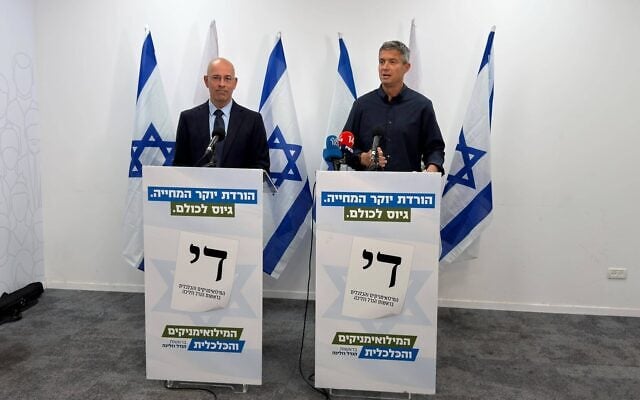
Reservists-Economic Party chairman Yoaz Hendel and his co-chairman Yaron Zelekha speak in Modiin, October 20, 2026 (Reservists-Economic Party)
Yoaz Hendel’s Reservists-Economic Party says it has filed a complaint with the Central Elections Committee over reports of missing and defaced ballot slips at several polling stations, joining a growing list of parties reporting alleged voting irregularities.
“After Likud’s fake news campaign, we received numerous complaints about our ballot slips being defaced or removed,” Hendel says, urging voters to ensure that slips bearing his party’s letters Dalet-Yud (די) are available.
“The forces trying to bring us down will not succeed,” he adds. “The reservists who saved the country will save it again now. We will establish a Zionist government in spite of them.”
The complaint follows similar reports from Ofer Winter’s People of Israel party, Gadi Eisenkot’s Yashar party, and Avigdor Liberman’s Yisrael Beytenu party, which have also appealed to the CEC.
Voters report Charedi Public voting slips are missing from Bnei Brak polling stations
Voters report that Charedi Public voting slips were not found at polling stations in Bnei Brak, and they had to ask election supervisors for them.
A voter tells the Kan public broadcaster: “Only once my wife requested did they start moving slips around and suddenly ‘find’ them.”
“Not everyone feels comfortable asking polling booth supervisors who are all Haredi why voting slips are missing,” the voter says.
B’Yachad: Man removing party signs in Tiberias attacks activist who tried to stop him
Former premier Naftali Bennett’s B’Yachad says a man tearing down party signs attacked one of its activists in Tiberias who tried to stop him.
Footage shared by the party shows the man tearing down banners of B’Yachad, Yisrael Beytenu and Yashar and shoving the activist as she yells at him to stop. The two can be heard hurling obscenities at each other.
A complaint has been filed to police, B’Yachad says.
טבריה: קריעת שלטי בחירות של מפלגת ביחד – בראשות בנט. pic.twitter.com/MTD0gPiOkr
— זירת החדשות (@ZiratNews) October 27, 2026
Syria condemns Jordan’s airstrikes as ‘unacceptable violation’ of airspace
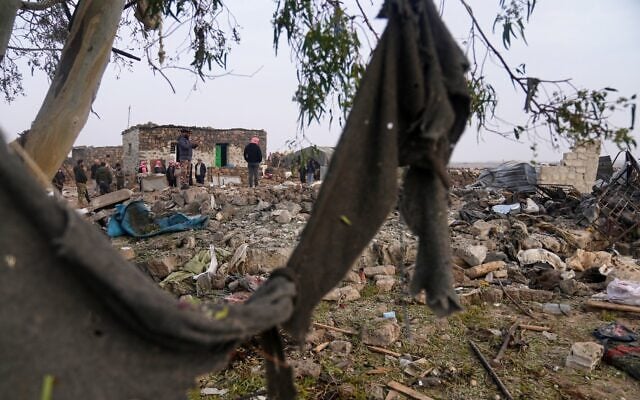
Men inspect the aftermath of a Jordanian airstrike in Al-Tuff, in the countryside of Daraa province in southern Syria, October 27, 2026. (AP Photo/Ghaith Alsayed)
DAMASCUS, Syria — Syria condemns strikes on the country’s south by Jordan a day earlier that Amman said targeted the Islamic State jihadist group in retaliation for a deadly church attack last week.
A Foreign Ministry statement expresses “condemnation and rejection, in the strongest terms,” calling the strike “an unacceptable violation and breach of Syrian airspace without any prior coordination.” It also says the attack was “a blatant violation of the principles of good-neighborliness and Syrian national sovereignty.”
Large Bedouin Arab voter turnout in Rahat amid anger over Ben Gvir
Bedouin Arabs, including a reportedly unprecedented number of women, arrive at a polling booth in the southern town of Rahat telling The Times of Israel that far-right National Security Minister Itamar Ben Gvir has united them and galvanized them like never before.
They refer to a massive uptick in housing demolitions under the current government, to a lack of effort to deal with gun violence in the Arab sector and to cancellations of funds and agreements made during the government of Naftali Bennett and Yair Lapid, which for the first time included an Arab party — Ra’am, under Mansour Abbas.
The Times of Israel is told that half the town had already voted, in contrast to previous elections when voting traffic only picked up in the evening.
During the March 2015 election, Prime Minister Benjamin Netanyahu famously warned that Arab voters were moving in massive numbers to the polling stations and that the left was bringing them in buses.
Citing that quote, many Rahat voters said that today, Arab Israelis are indeed going to vote in droves.
Father of slain soldier Itay Chen called ‘traitor’ outside polling station
Ruby Chen, the father of Staff Sgt. Itay Chen, who was killed during the Hamas-led October 7, 2023, onslaught, is verbally accosted outside a polling station in Netanya while holding a photograph of his fallen son.
Video of the encounter shows Chen standing alongside another man wearing a sticker promoting Naftali Bennett’s B’Yachad party, as a voter confronts Chen, repeatedly calling him a “traitor” and making obscene gestures toward him.
Chen’s son, a 19-year-old Israeli-American soldier, was killed on October 7 while battling the Hamas invasion of southern Israel, and his body was taken captive to Gaza before being returned by Hamas on November 4, 2025.
אביו השכול של איתי חן מגלה שהוא בוגד, מחוץ לקלפי בנתניה pic.twitter.com/TBwYyT2KBp
— Ben Caspit בן כספית (@BenCaspit) October 27, 2026
CEC says no evidence of systematic ballot tampering after complaints from multiple parties
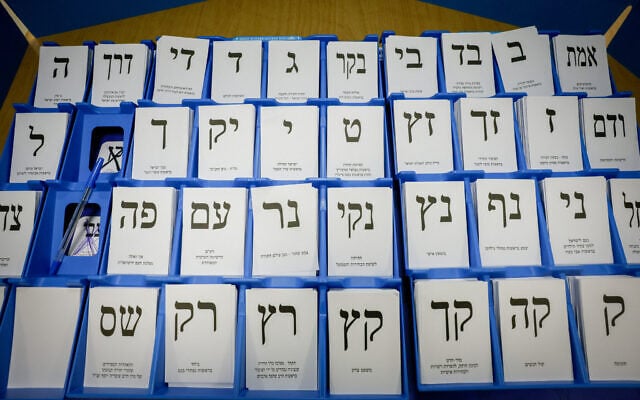
Voting slips at a polling station in Jerusalem during the general election, October 27, 2026. (Rachel Alroey/FLASH90)
The Central Elections Committee (CEC) says there is no evidence of systematic tampering with ballot slips, despite a growing number of complaints from political parties alleging irregularities at polling stations across the country.
“Contrary to claims circulating online, there are currently no indications of systematic tampering with ballot slips,” the committee says, adding that individual reports are being addressed immediately.
The statement comes after several parties, including Gadi Eisenkot’s Yashar, Naftali Bennett’s B’Yachad, Ofer Winter’s People of Israel, Avigdor Liberman’s Yisrael Beytenu, Mansour Abbas’s Ra’am, and Yoaz Hendel’s Reservists-Economic party, reported alleged irregularities, including missing or defaced ballot slips and other suspected attempts to interfere with voting.
The CEC urges the public to rely on its official channels for updates.
Key Update
Netanyahu casts his ballot in Jerusalem, urges Israelis to vote
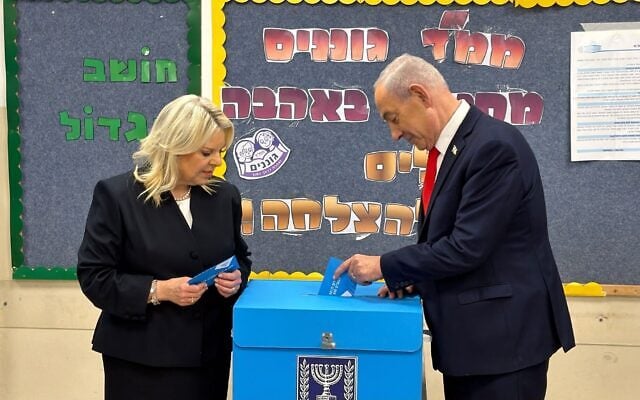
Prime Minister Benjamin Netanyahu (R) votes alongside his wife Sara, in Jerusalem, October 27, 2026. (Haim Zach/GPO)
Prime Minister Benjamin Netanyahu and his wife, Sara, cast their ballots at a polling station in Jerusalem on election day, according to a statement and photo released by the Prime Minister’s Office.
“Go vote!” Netanyahu urges Israelis in Hebrew.
Voter turnout at 31.5% as of noon, highest at this hour since 1973 election
Voter turnout stood at 31.5% as of noon, according to the Central Elections Committee, up from 28.4% at the same time in the 2022 election.
It is the highest turnout at this hour since 1973, in the first election held after the Yom Kippur War.
Netanyahu warns once again of Arab voters ‘racing to the ballots,’ accuses Ra’am activists of ‘trying to steal the election from us’

Prime Minister Benjamin Netanyahu in a election day video, October 27, 2026. (Screenshot/Likud)
Dusting off a controversial playbook from previous elections, Prime Minister Benjamin Netanyahu warns that Arab voters in the south are “racing to the ballots.”
In a video to Likud voters, Netanyahu also claims that “they are trying to steal the election from us,” referring to what he claims are three “senior Ra’am” figures who he says were arrested with money-filled envelopes on suspicion of bribing voters.
The is no indication that the suspects were senior Ra’am figures.
“It’s serious,” he says. “It’s criminal. They will reach every single person. You have been warned.”
According to a police statement, police arrested three residents of the Segev Shalom and Ar’ara BaNegev Bedouin communities overnight on suspicion of election bribery. Searches of their homes uncovered envelopes containing tens of thousands of shekels in cash along with Ra’am ballot slips, with the police saying the money was intended to be distributed to voters in exchange for votes for Ra’am.
He warns that Arab voter rates in the Negev are far higher than those of Jews, without explaining where he got those statistics from. “You must go out and vote,” he urges.
“You also must race to the ballot,” he says.
“No beach, no barbecue, everyone goes out to vote Likud.”
“What hangs in the balance is the future of our Jewish state,” he says, warning that a victory by opposition Zionist and Arab parties “will bring an end to the Jewish state as we know it.”
Netanyahu has sent out multiple social media posts in the past hour, warning of what he says is high turnout on the left and among Arab voters and low turnout on the right.
Key Update
Shin Bet chief says elections going ‘well so far’ during visit to CEC command center
Shin Bet chief David Zini visits the Central Elections Committee’s command center at the Knesset, touring its departments alongside committee chairman Justice Noam Sohlberg and acting director general Dean Livne to observe how the election is being conducted across the country.
During the visit, Sohlberg thanks Zini for the Shin Bet’s assistance in preparing for the election, saying, “When the elections came around, you gave us the attention we very much needed, and for that, thank you.”
Zini says election day has proceeded “well so far,” adding that “this should not be taken for granted.”
“Voter turnout is high, and we can confidently tell the citizens of Israel that the elections are being monitored and conducted in a proper and inspiring manner,” he says after touring the facility.
Regev echoes Netanyahu’s unsubstantiated claims of election theft amid high voter turnout
Likud Transportation Minister Miri Regev echoes Prime Minister Benjamin Netanyahu’s unsubstantiated allegations of election fraud, claiming that unnamed actors are attempting to steal the election.
“They’re trying to steal the election and the country from us,” Regev declares in a post on X, urging supporters to vote. “It’s either the right or Palestine.”
Her comments follow Netanyahu’s warning that Arab voters are “racing to the ballots” and his claim that “they are trying to steal the election from us,” reviving a familiar campaign tactic of stoking fears over Arab voter turnout.
The allegations come despite the Central Elections Committee saying there is no evidence of systematic election fraud or vote tampering.
Likud ministers and their allies have expressed alarm over reports of high turnout in Arab communities, including Rahat, and, they say, low turnout in Likud strongholds.
צאו להצביע!
כל קול יכריע.
מנסים לגנוב לנו את הבחירות ואת המדינה.
צאו ותצביעו.
זה או ימין או פלסטין ???????? pic.twitter.com/sAJQxPLDjZ— מירי רגב (@regev_miri) October 27, 2026
Amid high turnout, election committee says polling stations will stay open after 10 p.m. if people are waiting in line
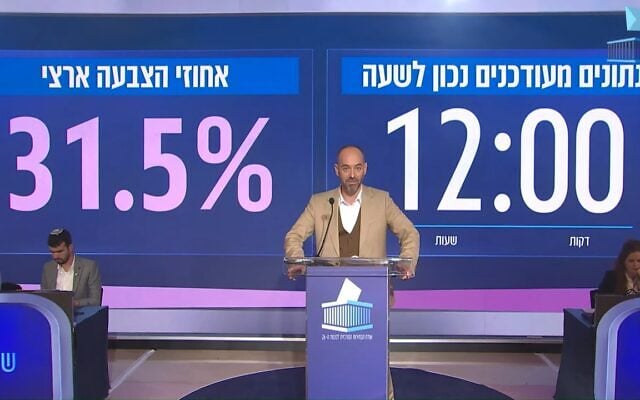
Dean Livne, acting director general of the Central Elections Committee, issues an update from the CEC's command center at the Knesset, October 27, 2026. (Screenshot: Central Elections Committee)
Dean Livne, acting director general of the Central Elections Committee, says polling stations will remain open after 10 p.m. if people are still waiting in line to vote.
The voting stations opened at 7 a.m. and are set to close at 10 p.m.
“At many polling stations, there are lines. When you reach a high voter turnout, there will always be lines,” Livne says in an update from the CEC’s command center at the Knesset.
“We promise, everyone will vote. If there is a line at 10 p.m., the polling stations will continue to operate until everyone who arrived by 10 p.m. has voted. There is no need to worry,” he says.
IDF: Troops kill Palestinian terrorist who crossed Gaza’s Yellow Line
The IDF says troops killed a Palestinian terror operative who crossed the “Yellow Line” in the southern Gaza Strip earlier today.
“Immediately after the identification, the forces eliminated the terrorist to remove the threat,” the army says.
Man arrested near Democrats head Yair Golan with knife; police deny attempted stabbing
The Democrats say a man was arrested after he apparently tried to stab party chief Yair Golan in Tel Aviv’s Mesila Park.
Golan’s security detail blocked the man as he approached the party leader “in an intimidating manner” while Golan was campaigning, the party says.
A large knife then fell out of the man’s clothes onto the ground, and the security detail tackled him and alerted police, who detained him, the party adds.
Golan is quoted in the party’s statement as saying the incident “is the direct result of the poison machine operated by” Prime Minister Benjamin Netanyahu “and his Qatari agents.”
“The incitement and violence won’t intimidate us,” Golan says.
Police confirm in a statement that they arrested a suspect near Golan, a Jerusalem resident in his 20s, in possession of a knife, but deny that there was an attempted stabbing.
אמברגו: תיעוד מהתקרית סביב יאיר גולן. pic.twitter.com/n9RmOXD3L4
— אמברגו (@embargo1news) October 27, 2026
Elections committee bars UTJ from tracking voters after report of violation
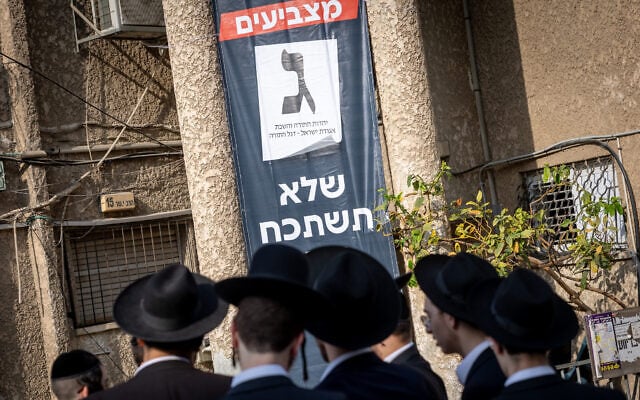
A campaign poster fo the United Torah Judaism in Bnei Brak, during Israel’s Election Day, October 27, 2026. (Chaim Goldberg/FLASH90)
Central Elections Committee chairman Justice Noam Sohlberg issues an interim order prohibiting the ultra-Orthodox United Torah Judaism party and its representatives at polling stations from tracking the number of people who have voted in today’s election.
The order follows a petition filed by the Movement for Quality Government in Israel, a nonprofit that promotes democracy and good governance in Israel.
Earlier, Channel 13 reported that UTJ had instructed its representatives at polling stations to track and report which voters had cast their ballots and which had yet to vote, using handwritten records, in violation of a High Court of Justice ruling issued last month.
Sohlberg orders UTJ to submit its response to the petition by 2:15 p.m.
In northern Druze town of Yarka, clan ties and gratitude for Netanyahu guide votes
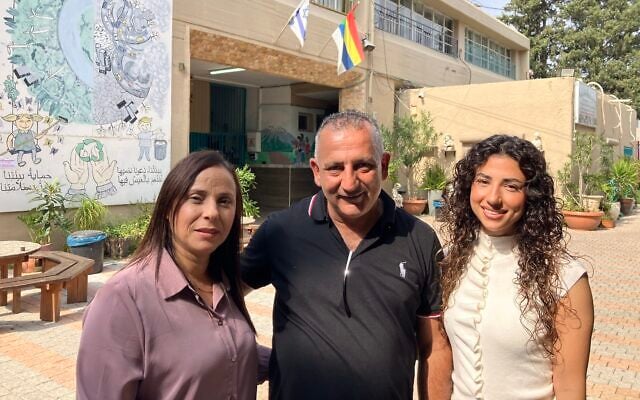
Najla Mula, left, stands outside the polling station in Yarka with her husband, Wassim Mula, and their daughter, Merna, with a Druze flag and an Israeli flag behind them on October 27, 2026. (Diana Bletter/Times of Israel)
At a voting station in the northern Druze town of Yarka, Munir Mula says he is voting for Prime Minister Benjamin Netanyahu’s Likud party because “he helped the Druze in Sweida, Syria, and we want to thank him.”
Polling stations across the town are largely organized by family. At one station, voters who belong predominantly to the Mula clan, one of Yarka’s largest and most prominent families, cast their votes for Netanyahu because one of their family members, Mula Mula, is number 42 on Netanyahu’s slate.
“We’re voting for Netanyahu, and we hope it will be good for the whole nation,” says Najla Mula as she leaves the polling booth where only two posters are hanging: one of Netanyahu with Mula and one of Hamad Amar, who is number seven in Avigdor Liberman’s Yisrael Beytenu slate. “We hope that whoever is voted in, it will be good for the entire country.”
Other residents spend the morning harvesting olives and then go to the voting stations afterwards.
“Here in Yarka, we feel stuck in a war, and it’s important to vote to bring about change,” says Sarah, who asks that her last name be withheld. “More than three years of war is sad.”
She is casting her ballot for Amar because he is a close friend of her father’s.
“People vote for Liberman because of Hamad Amar or Netanyahu because of the Druze in Syria, or because he is part of their family and they want a family member in the Knesset,” Sarah says. “Nobody is voting for Itamar Ben-Gvir.”
Long lines, slow identification processes reported at voting booths in Arab communities; high turnout seen in Negev Bedouin areas
Long lines and slow identification processes are reported in some Arab communities, drawing accusations of an intentional attempt to interrupt voting.
At the same time, the Central Elections Committee’s area-by-area data on the voting so far shows high turnout in southern Negev Arab communities.
Yaela Raanan, a member of a team promoting election integrity in the Bedouin community, tells the Haaretz daily that people are waiting several hours to vote and that a process of checking identification is holding up voting in Negev Bedouin towns.
“There is a feeling it is on purpose, because this is happening in many locations,” he says.
In Tel Sheva and Segev Shalom, police officers have been seen entering polling stations, according to Haaretz.
The Adalah Arab legal aid group says it has received reports of long delays present in Arab communities in the Galilee and the south, and that election supervisors are managing voting slowly and asking irrelevant questions.
At a Kafr Qara polling booth, it was reported that only one person had voted by 10 a.m., the group says.
Ofakim full of posters for coalition parties, with activists for opposition Yisrael Beytenu admitting ‘support here is weak’
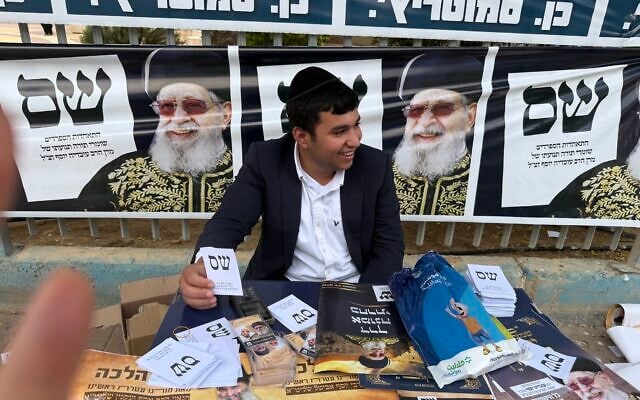
Yosef Levy hands out tickets and charms at a Shas stall outside a polling station in Ofakim, a right-wing religious stronghold hold in southern Israel, October 27, 2026. (Sue Surkes/Times of Israel)
In Ofakim, a southern town where more than half of the population voted for Likud or the Sephardic ultra-Orthodox party Shas in 2022, the political posters are pitching for the coalition parties.
In the Ramat Shaked neighborhood, two young men at a small stall representing Avigdor Liberman’s Yisrael Beytenu are trying to hand out information. “Support here is weak,” they admit. Yisrael Beytenu is the only party from the opposition bloc to be seen outside the polling station.
At the Shas stall, Yosef Levi is handing out charms — pictures of the late rabbi Ovadia Yosef with a piece of willow leaf stuck behind plastic on the other side.
“Put this in your car, and you’ll never crash. You won’t need car insurance!” he shouts to passersby.
Inside the polling station, young Shirel Elhazov is looking at the list of parties and telling her sister, “Vote either Likud or Ben Gvir.”
Shirel was visiting her grandmother in Ofakim’s western Mishor Hagefen neighborhood on October 7, 2023, when Hamas terrorists knocked on the door.
During the Hamas rampage through the town, 52 people, including residents, soldiers, and police officers, were cut down, 39 of them in Mishor Hagefen.
The family survived, but the scars remain. “I can’t support [Yashar’s Gadi] Eisenkot because he’s with Yair Golan [leader of the left-wing Democrats],” she says. “Did you hear Golan saying that there are innocent people in Gaza? What, and there were no innocents in [Kibbutz] Be’eri [where Hamas terrorists murdered around a 10th of the community and kidnapped 30 people]? We weren’t innocents?”
A woman running a stall for Avi Maoz’s far-right, religiously conservative party Noam sees on her cellphone that 50 percent of Arabs in Rahat have already voted, by contrast to previous years, when Arabs turned up to the polling stations mainly in the evenings. “We’re crazy that we gave them the vote,” she says to nobody in particular. She tells The Times of Israel, “They have their lands, Dubai, Iran. They’re desperate to emigrate. The British brought them in and suddenly the Arabs had been here for 2,000 years.”
Casting ballot, Eisenkot vows to set Israel ‘on a new path’
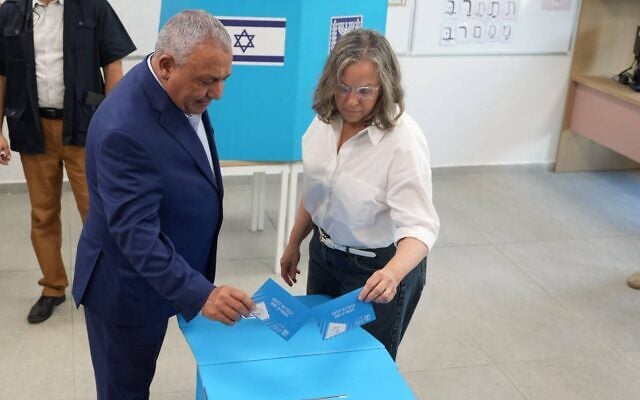
Yashar chairman Gadi Eisenkot casts his ballot in the 2026 Knesset election, alongside his wife, Hannah, October 27, 2026. (Yashar)
Yashar chairman Gadi Eisenkot casts his ballot in Herzliya, accompanied by his wife, Hannah, and other family members, as supporters greet him with chants of “Who’s coming? The next prime minister!” and “Gadi, Gadi, Gadi!”
Some in the crowd chant “Bibi, Bibi, Bibi,” referring to Prime Minister Benjamin Netanyahu by his nickname.
“We are setting Israel on a new path,” Eisenkot says after voting. “We will be worthy of your trust. I promise.”
עכשיו מקלפי ההצבעה בהרצליה ???????? pic.twitter.com/GqVGFKGg8L
— Gadi Eisenkot – גדי איזנקוט (@gadi_eisenkot) October 27, 2026
Man shot dead, another moderately wounded in Tayibe, police say
A man was killed and another was moderately wounded in a shooting in the central Arab town of Tayibe a short while ago, police say.
The circumstances of the shooting are under investigation, and there currently does not appear to be any link to the election, police add.
Bedouin town of al-Atawneh tops turnout rate, with 64.1% of voters casting ballots
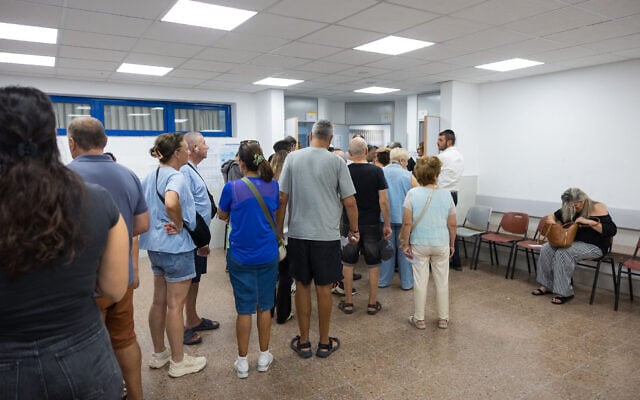
Israelis stand in line to cast their ballots at a polling station during the general election, October 27, 2026. (Liron Moldovan/FLASH90)
While overall voter turnout across the country stands at 31.5% as of noon, some towns have recorded much higher rates, according to data from the Central Elections Committee.
Topping the list is the Bedouin community of al-Atawneh in the Negev Desert, near Hura, where 64.1% of eligible voters had cast their ballots by noon. A total of 75 votes had been cast in al-Atawneh.
Many other small towns have similarly high turnout rates, reaching nearly 50%.
Among larger cities, outliers include Rahat, with a turnout of 39.9%, or 11,972 votes, and Modiin, with 36.7%, or 22,720 votes.
Voter turnout among IDF soldiers stands at 48%, over 3 points higher than in 2022
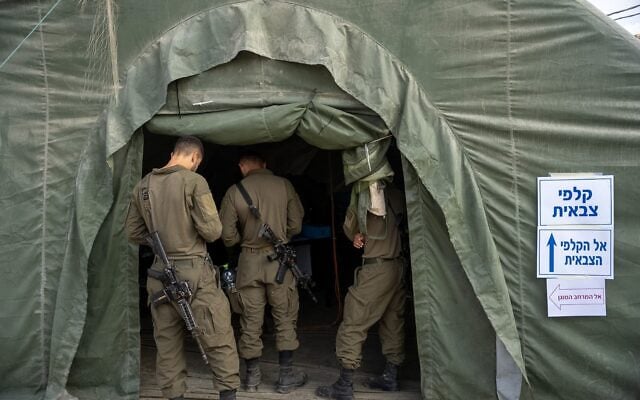
IDF troops vote in Israel's national elections at a military base in the Gaza Strip, in a handout photo published on October 26, 2026. (Israel Defense Forces)
Voter turnout among IDF soldiers stands at 48% as of 1 p.m., according to the military.
In the last election, in 2022, it was 44.4% at this hour.
The IDF began voting in the national election a week ago, with 850 polling stations deployed at military bases across the country and beyond Israel’s borders.
Yashar accuses Netanyahu of laying groundwork to challenge election results with baseless fraud claims
Gadi Eisenkot’s Yashar party accuses Prime Minister Benjamin Netanyahu of attempting to undermine confidence in the election results, following claims from the premier and other Likud figures that the election is being stolen, without evidence.
“Netanyahu is panicking and has begun making up stories and claiming that the election is being stolen. This is no accident. He is already laying the groundwork to challenge the election results,” Eisenkot’s party says in a statement.
The warning comes after Netanyahu claims that his opponents are trying to “steal the election.”
Yashar urges supporters to deliver an overwhelming victory over Likud in order to leave no room for Netanyahu to dispute the outcome.
“Today’s margin must be enormous, a lead that cannot be manipulated,” the party says.
Key Update
Ben Gvir, in Arab city, calls on supporters to vote to counter Arab Israelis’ ‘crazy voting rate’
National Security Minister Itamar Ben Gvir delivers a video statement from the Arab city of Kafr Qassem, calling on supporters to vote for his Otzma Yehudit party to counter the “crazy voting rate” in Arab communities.
“Now it’s up to you. If you want this country to stay Jewish and Zionist, if you don’t want it to be in the hands of Mansour Abbas and Ahmad Tibi, go out and vote,” Ben Gvir says, referring to the leader of the Arab-majority party Ra’am and a member of the Joint List, respectively.
כעת בכפר קאסם. אל תתנו להם לנצח!! pic.twitter.com/u3beOnzTkO
— איתמר בן גביר (@itamarbengvir) October 27, 2026
Daughter says 94-year-old father insisted on voting, died after returning from polling station
Israel Kreis, 94, dies after returning home from voting, his daughter tells the Ynet news site.
His daughter, Shirley, tells Ynet that she took her father, a Ramat Gan resident, to the polling station after he insisted on going to vote for Yashar leader Gadi Eisenkot.
“I took him by car to vote, and on the way back, as soon as he got out of the car, he collapsed and died at the entrance to the building,” Shirley says.
Voters in Maale Levona settlement and its farming outpost worry about evacuation, territorial concessions to Palestinians
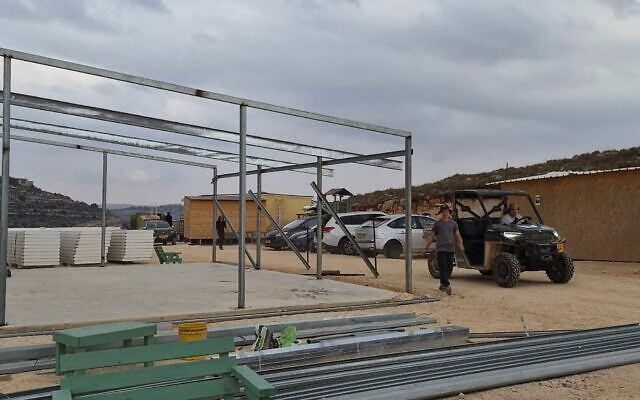
The Ram Farm West Bank settlement outpost where residents were building a new communal building ahead of the coming winter, October 27, 2026. (Jeremy Sharon/The Times of Israel)
Residents of a settlement farming outpost on a hilltop in the central West Bank say they are worried that a government formed by the opposition parties would demolish their nascent settlement and remove them.
The residents of Ram Farm just south of the Maale Levona settlement declined to be interviewed at length, saying they were “people of deeds, not words,” and that all their efforts were being invested in building a new communal building before winter sets in.
The outpost was established in the spring this year in coordination with the Benjamin Regional Council, the local municipal authority, and the Amana settlement organization, which finished paving an access road last week, but lacks cabinet approval and so is technically illegal.
Illegal farming outposts have become an election issue, with critics asserting that they have been used by the outgoing government to displace Palestinians. Opposition parties have said they would demolish such outposts, while Prime Minister Benjamin Netanyahu has lauded their establishment.
Over in Maale Levona, Valery Nirman, 82, says he voted for the ultra-nationalist Otzma Yehudit party because of the stance of party leader National Security Minister Itamar Ben Gvir in favor of annexing the West Bank and against territorial concessions to the Palestinians.
“The Palestinians were in Jordan and were kicked out; they were in Lebanon, and they were kicked out from there too; they try to take countries from their owners,” claims Nirman, who has lived in Maale Levona for 35 years but was born in Russia.
Zohar Hindi says he voted for the Likud party, declaring that no other politician in Israel would lead the country as effectively as party leader Prime Minister Benjamin Netanyahu.
“Everything he’s done until now has been amazing; there’s no one who can replace Bibi,” says Hindi, using Netanyahu’s nickname. Hindi rejects criticism of Netanyahu over the catastrophic October 7, 2023, invasion and massacres by Hamas, maintaining that it was the security chiefs who failed on that day, not the prime minister.
Addressing another key election issue, drafting the ultra-Orthodox into military service, Hindi says there is no need for it, claiming there are “enough draft dodgers who are not Haredi who do not enlist,” and calling the issue “just a political gimmick” with which to attack the Likud party.
Voter turnout at 44.9% as of 2 p.m., highest recorded turnout for that hour
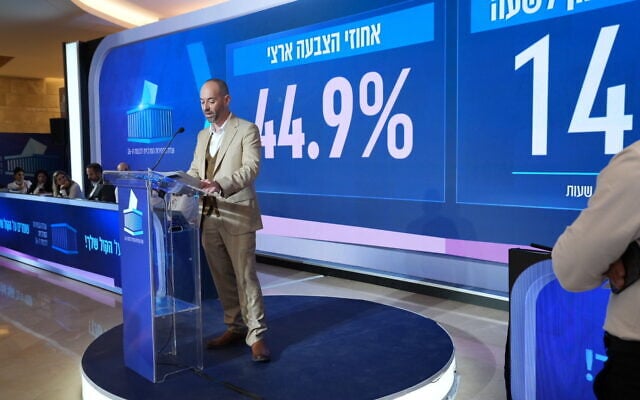
Dean Livne, acting director general of the Central Elections Committee, announces record-high 44.9% turnout as of 2 p.m. on election day, October 27, 2026. (CEC)
Voter turnout stood at 44.9% as of 2 p.m., according to the Central Elections Committee, up from 38.9% at the same time in the 2022 election.
It is the highest turnout at this hour since hourly numbers were first recorded in 1973, with over three million people having voted. The previous record at 2 p.m. was in 1988, 2.7 percent points lower than in 2026.
“We have surpassed all the records kept by the Central Elections Committee. There hasn’t been such a nationwide voter turnout since 1973,” says Dean Livne, acting director general of the Central Elections Committee.
Prison service says voter turnout among prisoners stands at 68.1% as of 2 p.m.
Voter turnout among eligible prisoners stands at 68.1% as of 2 p.m., according to the Israel Prison Service.
The IPS says voting at its facilities across the country is proceeding as usual.
Charedi Public reports voter intimidation, attacks on activists as campaign booth vandalized
Charedi Public chairman Moti Leitner says his party has received hundreds of reports of intimidation and harassment at polling stations, as videos show ultra-Orthodox youths vandalizing a booth manned by party activists in the West Bank settlement of Modiin Illit and setting campaign materials on fire.
“In recent hours, we have received a wave of reports of intimidation and bullying at polling stations, including the removal of [Charedi Public] ballot slips from polling stations, attacks on our activists and, even more seriously, threats against voters,” Leitner says.
He claims voters have been warned that if the party’s ballot slips are found in ballot boxes, their votes will be identified and they will face retaliation.
“We call on the Israel Police to get its act together and do its job,” Leitner says. “Otherwise, we will witness one of the most violent and fraudulent election campaigns in the ultra-Orthodox community.”
פעילים של מפלגת הציבור החרדי הותקפו מחוץ לקלפי במודיעין עילית על ידי עשרות צעירים חרדים. העמדה של המפלגה הושחתה וחומרי ההסברה הועלו באש.
איפה המשטרה? @IL_police pic.twitter.com/p1m27zqNWG— אהרן רבינוביץ (@AronRabino1) October 27, 2026
Soldier filmed beating Palestinian detainee in southern West Bank; IDF says incident under review
An IDF soldier was filmed this morning beating a Palestinian detainee in the South Hebron Hills, in the southern West Bank.
Footage shows a soldier repeatedly striking the detainee in the head as he and another Palestinian are bound and blindfolded.
According to Palestinian reports, the IDF arrested two Palestinians, a father and his son, after settlers attacked their home.
The IDF said troops were dispatched to the area following a report that an Israeli civilian had been assaulted, and that the Palestinian suspects resisted the forces.
“Upon arrival, the troops acted to remove the suspects involved in the assault. After they refused to leave for an extended period and physically resisted the troops, a closed military zone order was issued to disperse the gathering. Two Palestinians were arrested. The suspects continued to resist the troops during their arrest. The use of violence is unacceptable. The soldiers’ conduct is being reviewed and will be addressed in accordance with the findings,” the IDF said.
قوات الاحـ"تلال تعتدي بالضرب على عيسى مسعف ونجله رامي في مسافر يطا جنوب الخليل، وتعتقلهما عقب هجوم مستـ"وطنين على مسكنهما والاعتداء على عائلتهما. pic.twitter.com/LG7axlsnel
— فلسطين بوست (@PalpostN) October 27, 2026
Colombia announces withdrawal from Hague Group, citing body’s actions against Israel
Colombia’s government says it will withdraw as a member state and co-chair of The Hague Group of countries, citing the body’s actions against Israel.
The Hague Group of countries says it seeks to uphold international law and processes, including the International Criminal Court warrants against Prime Minister Benjamin Netanyahu and former defense minister Yoav Gallant for alleged war crimes in Gaza.
“Colombia officially requested its withdrawal from the Hague Group — a group created to isolate and attack Israel — and we reject that approach,” says government spokesperson Miller Soto in a video shared on X.
Two activists for Democrats party punched at Holon campaign booth
Two activists from The Democrats party have been punched in the face at a campaign booth in Holon, one of whom was said to have lost consciousness.
Video of the incident shows a man approaching the booth as activists for the left-wing party attempt to block his path, before he punches two of them in the face, knocking one to the ground.
The Democrats identify the assailant as an individual affiliated with far-right National Security Minister Itamar Ben Gvir of Otzma Yehudit and say party chairman Yair Golan has interrupted his election-day schedule to travel to Holon and meet with the victims.
The assault follows an alleged attempt to stab Golan in Tel Aviv earlier today.
“The incitement by outgoing Prime Minister [Benjamin] Netanyahu has fully trickled down to the grassroots,” the party says in a statement. “We will not allow anyone to disrupt the proper conduct of the elections, and we will not be deterred or intimidated by threats and attacks.”
A man punches two activists for The Democrats party in Holon on election day, October 27, 2026. (The Democrats)
Joint List accuses Netanyahu of inciting against Arab voters, vows to defeat him at ballot box
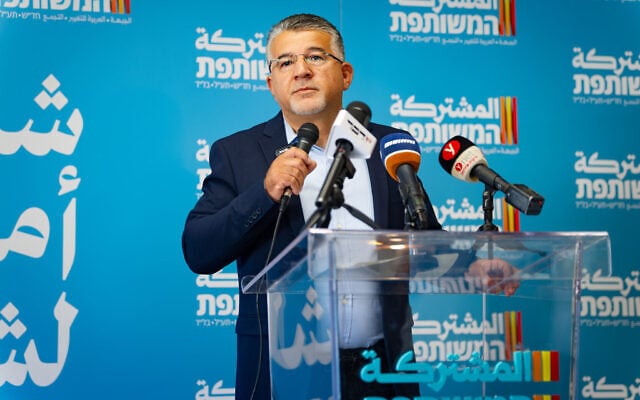
Joint List chairman Yousef Jabareen attends a press conference presenting the party’s work plan for the next Knesset in Haifa, northern Israel, ahead of the national election, October 20, 2026. (Sharon Leibel/Flash90)
The Arab-majority Joint List party and its leader Yousef Jabareen accuse Prime Minister Benjamin Netanyahu of inciting against Arab citizens and questioning their right to influence Israeli politics.
“Netanyahu, you continue to incite against Arab citizens and question our legitimacy to vote and influence the political map,” Jabareen says. “The Arab public knows how to punish you today and send you and your blood-soaked government home.”
Netanyahu has repeatedly warned that Arab voters in the south are “racing to the ballots” and claimed that “they are trying to steal the election from us,” while urging Likud supporters to turn out. His rhetoric echoes a familiar campaign trope that casts Arab participation as a threat to the country’s Jewish character.
The Joint List says Netanyahu is also circulating AI-generated images that he presents as if they were taken at polling stations in Sakhnin and the Negev. The party says they are intended to incite against Arab voters and discourage its supporters from voting.
Contrary to the premier’s claims, Jabareen asserts that turnout in Jewish communities remains higher than in Arab communities, but calls on supporters to turn out in the remaining hours.
“We will do everything we can to send you and the Kahanists home by the end of the day,” he vows, referring to followers of slain Jewish supremacist rabbi Meir Kahane.
Long lines and slow identification processes have been reported in some Arab communities, drawing accusations of an intentional attempt to interrupt voting.
In northern Arab town of Mazra’a, voters demand safety, equality and change
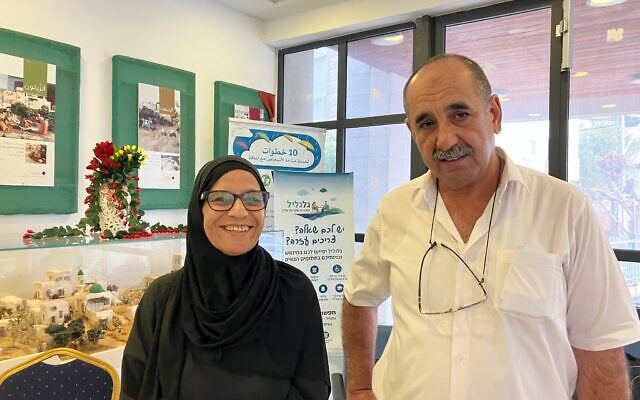
Samia Zina, left, and Mazra'a Mayor Fuad Awad at a polling station in Mazra'a on October 27, 2026. (Diana Bletter/Times of Israel)
Voter turnout is brisk in the northern Arab town of Mazra’a, where residents are heading to the polls driven by mounting concerns about discrimination.
“I never cared in the past because the Knesset felt so far away,” says Mazra’a resident Samia Zina. “But now I’m worried because there’s a higher level of racism than ever before.”
She says that Arabs in Israel “want to live in peace, just like the Jews want to live in peace.”
“We’ve all had enough of war,” she adds.
Signs for two Arab parties line the road outside one polling station: Ra’am, led by Mansour Abbas, and the Joint List, headed by Yousef Jabareen.
Mazra’a Mayor Fuad Awad echoes what he calls an “urgent” call for a political shift.
“We have to change the government,” Awad says. “We need leaders who think about the Arab sector, who worry about the northern periphery and the violence inside Arab society. We need a government that stops home demolitions and ends discrimination against Arab nurses and doctors who care for patients with so much compassion.”
“The message is that unless we change things, only the extremists will be left,” Awad adds. “We have no other country.”
Yemen’s Houthis say they repelled advance by Saudi-backed forces near Bab el-Mandeb Strait
Yemen’s Iran-aligned Houthis say they have repelled an advance by forces they describe as Saudi-backed from the southern direction of the Bab el-Mandeb Strait.
The Houthis say they targeted the advancing forces with ballistic missiles and heavy weapons, causing large numbers of casualties, and that they destroyed several military vehicles, the statement says.
There is no immediate Saudi confirmation.
In Qalansawe, ‘the whole mess’ spurs some Arab voters to cast ballots for first time in their lives
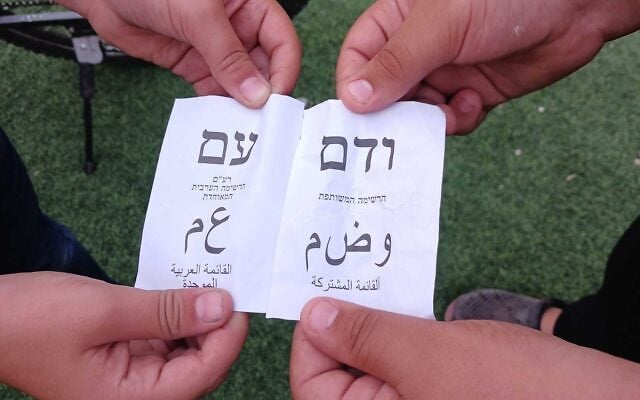
Boys hold dual Arabic- and Hebrew-language ballots of Ra'am and the Joint List outside a polling station in Qalansawe, October 27, 2026. (Noam Lehmann/Times of Israel)
Ahmad Matana, 40, just voted in a Knesset election for the first time in his life, he tells The Times of Israel outside the polling station in Qalansawe’s Ibn Rushd (Averroes) elementary school.
Matana, who owns a furniture business in the central Arab town, says he voted for the traditionalist Arab party Ra’am — which, as opposed to the more strictly anti-Zionist Joint List, is gunning to be part of the next government.
Asked why he is voting now, he says: “The whole mess — in short, we want change.”
“We want a normal government,” he says. “It makes no difference, Jew or Arab. We want to live in peace and quiet. That’s the most important.”
Several of his friends are also voting for the first time, for either Ra’am or the Joint List, he says.
Rana, 26, also voted for the first time in her life, spurred by skyrocketing crime in the Arab community.
“This time it’s important,” she says.
She voted for the Joint List, though most of her family is voting Ra’am, Rana says.
Nearby, four boys ride around on bikes outside the polling station, apparently enthused by the campaign merchandise.
They gather around a van decked out with Ra’am flags.
One of the bikes is decorated with flags of both Ra’am and the Joint List and has a sticker of The Democrats party on its side.
The Times of Israel asks to photograph the bike. The boy who rides it says yes, but first tears off the Democrats sticker.
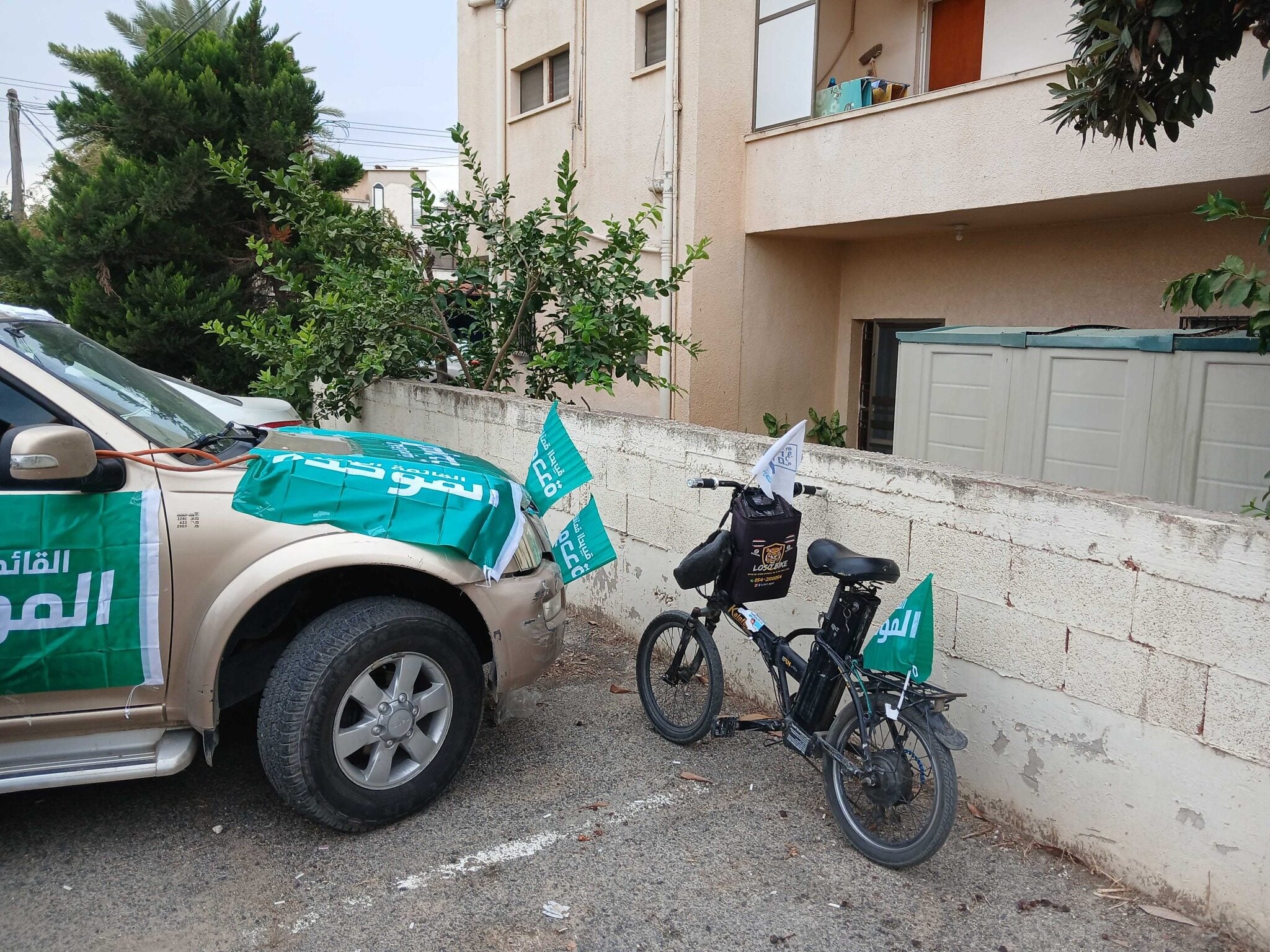
The sight of a Jewish man taking notes outside an Arab polling station causes some concern.
Qalanaswe’s Deputy Mayor Afif Jayousi, a Ra’am member, is at first inquisitive but then pleased to learn the man taking notes is a reporter.
“You’re welcome, as a journalist, to convey our feelings in the Arab community,” he says.
He urges Arab voters to vote for Ra’am, and, failing that, the Joint List.
“For four years we’ve suffered a lot under this government,” he says. “It was far too racist.”
Shekel gains 1.2% against US dollar, hitting three-week high, amid record voter turnout
The shekel gains, hitting a three-week high against the US dollar amid record voter turnout as Israelis continue to cast their ballots in the national election.
The shekel appreciates more than 1.2% and is trading at NIS 3.0419 per dollar. It marks the local currency’s strongest value since October 6.
“With high voter turnout, markets and, specifically, the foreign exchange market, are increasingly pricing in a positive outcome of the election, which will be good for the economy and also be very good for fiscal policy,” Leader Capital Markets chief economist Jonathan Katz tells The Times of Israel. “A positive election outcome would yield a solid, stable coalition, one able to consolidate and implement measures that improve Israel’s fiscal position and broader economic policies.”
Turnout at 55.7% as of 4 p.m., up 8 percentage points from same time in 2022 and highest ever recorded
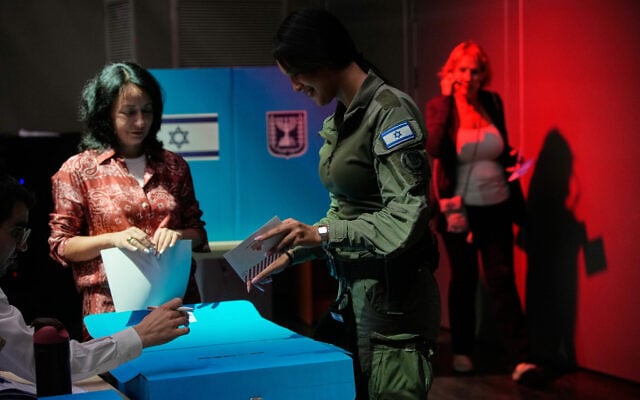
A Border Police officer casts her ballot at a school serving as a polling station during the Knesset election in Jerusalem, October 27, 2026. (AP Photo/Ohad Zwigenberg)
Voter turnout stood at 55.7% as of 4 p.m., according to the Central Elections Committee, up from 47.5% at the same time in the 2022 election.
It is the highest turnout ever recorded at this hour. Hourly figures have been measured since 1973.
Dean Livne, acting director general of the Central Elections Committee, says that more than 4 million voters have cast their ballots so far.
He says the large city with the highest voter turnout as of 4 p.m. is Modiin, with 60.7%, followed by Tel Aviv with 50.5%, Jerusalem with 47.7%, and Haifa with 46.3%.
Heavy rains close highways, hiking trails in south; effect on voter turnout unclear
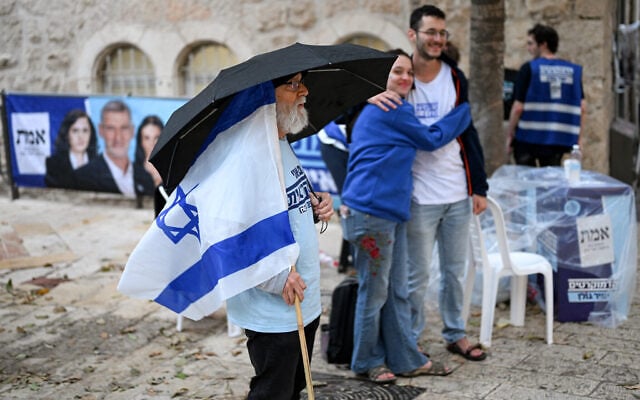
A volunteer stands under an umbrella in the rain outside a polling station in Jerusalem on October 27, 2026, on election day. (Jewel SAMAD/AFP)
Heavy rains pour down on southern Israel, cutting off the main entrance to the southernmost city of Eilat, amid a national election that has seen record-high turnout so far.
Rain also falls in the center of the country, with thunderstorms hitting Jerusalem in the late afternoon.
רחבת הכותל מתרוקנת מאנשים בעקבות גשם כבד שהחל כעת pic.twitter.com/NQ2sC4WnMF
— משה ויסברג (@moshe_nayes) October 27, 2026
Downpour on the Negev and Arava deserts, and eastward to the Judean Foothills and Dead Sea, prompts the closure of Route 90, which leads to Eilat. Traffic from the city is open only to Ramon International Airport, police say.
At one measuring station near Eilat, the Israel Meteorological Service reports 17 millimeters (0.7 inches) over three hours. The rains are expected to get stronger and to continue into the night.
State agencies warn that driving or hiking during the rainfall is dangerous, as flash floods have proved fatal in the past. The Israel Police orders the closure of all hiking sites from Beersheba to Eilat, and calls on the public to avoid any walking trails or streams.
It is not immediately clear how the weather might disrupt voter turnout, which is currently at the highest for this hour ever recorded.
Ra’am chief Abbas accuses Netanyahu of ‘lying, inciting’ with election fraud claims
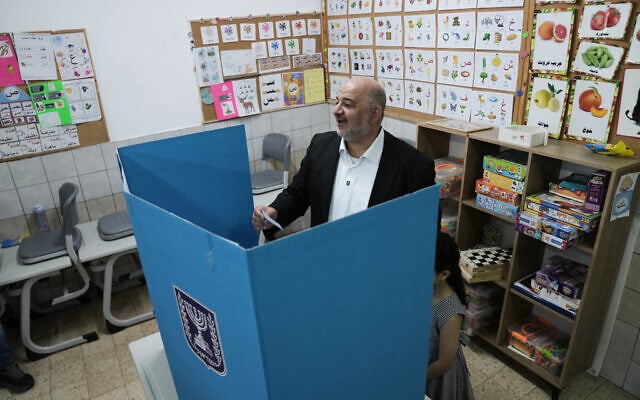
Ra'am party leader Mansour Abbas casts his ballot alongside his daughter during Israel’s general election at a polling station in Maghar, October 27, 2026. (AP Photo/Mahmoud Illean)
The leader of the Arab Ra’am party accuses Prime Minister Benjamin Netanyahu of incitement through his allegations of election fraud.
“Benjamin Netanyahu is lying and inciting against Ra’am, using it as a scare tactic to mobilize right-wing voters and drive them to the polls,” the party’s leader Mansour Abbas says in a video message.
Times of Israel staff contributed to this report.
The towns and cities with the highest current turnout
While overall voter turnout across the country stands at 55.7% as of 4 p.m., some towns have recorded much higher rates, according to data from the Central Elections Committee.
Topping the list is the town of Timorim, near Kiryat Malachi in central Israel, where a whopping 91.6% of eligible voters have voted. In all, 553 votes were cast in Timorim.
Many other small towns have similarly high turnout rates, including the West Bank settlement of Asael at 82.3%, or 135 votes; the settlement of Beit Hogla at 79.6%, or 148 votes; the southern town of Mlilot at 79.4%, or 250 votes; Shlomit in the south at 78.8%, or 171 votes; Odem in the Golan Heights at 76.8%, or 129 votes; the southern Bedouin village of Kukhleh at 76.6%, or 226 votes; the southern town of Shavei Darom at 76.1%, or 223 votes; the northern coastal town of HaBonim at 75.6%, or 301 votes; and Kibbutz Gan Shlomo in central Israel at 74.1%, or 335 votes.
Among larger cities, outliers include Modiin with 60.7%, or 48,219 votes; Rosh Haayin at 60.3%, or 32,225 votes; and the Bedouin city of Rahat at 60.6%, or 25,923 votes.
Likud, Shas submit request to extend voting hours
The ruling Likud party says it has submitted a petition to the Central Election Committee to extend the legal voting hours, which go until 10 p.m. at most polling stations.
The party does not say the reason for its request, but it could be a sign that it feels that coalition voters are not voting in the numbers necessary to win the election.
The ultra-Orthodox Shas party joins the petition, citing the high voter turnout: “The parties are trying to prevent a situation in which citizens waiting in line won’t be able to vote.”
Earlier today, Dean Livne, the acting director general of the Central Elections Committee, said polling stations would remain open after 10 p.m. if people were still waiting in line to vote.
Flavio Bolsonaro has passports canceled after missing deadline to turn them in to Brazil police

Opposition presidential candidate Sen. Flavio Bolsonaro arrives at his election night event after the presidential runoff in Brasilia, Brazil, October 25, 2026. (AP/Eraldo Peres)
Brazilian Senator Flavio Bolsonaro has missed a Supreme Court deadline to turn in his passports to the country’s federal police, two sources familiar with the matter tell Reuters, adding the documents have now been canceled.
The senator, who was defeated on Sunday by President Luiz Inacio Lula da Silva in a runoff vote, revealed yesterday that police had requested that he turn in his passports following a ruling from Supreme Court Justice Alexandre de Moraes.
The eldest son of former far-right President Jair Bolsonaro is under investigation in a money-laundering probe. He denies wrongdoing. His whereabouts are currently unknown.
Trump says he’ll respect US midterm results ‘if they’re honest’

US President Donald Trump speaks to media before boarding Air Force One, October 27, 2026, at Joint Base Andrews, Maryland. (AP Photo/Alex Brandon)
US President Donald Trump says he will respect the results of next week’s US midterm elections “if they’re honest elections,” in a fresh hint at baseless claims of mass voter fraud.
Speaking as he headed to Texas to campaign, Trump adds that he will work with Democrats if Republicans lose control of Congress, but warns that as president he has a “strong” veto on legislation.
Eisenkot’s Yashar party opposes Likud bid to extend voting hours
Gadi Eisenkot’s Yashar party strongly opposes Likud’s request to extend voting hours, saying “no unusual incident has occurred that would justify approving the request.”
The party says the bid is intended to “lay the groundwork for claims against the integrity of the election, following the lies Netanyahu has been spreading since this morning.”
Prime Minister Benjamin Netanyahu’s Likud has petitioned the Central Election Committee to extend voting beyond 10 p.m. at most polling stations. Shas and Otzma Yehudit have also joined the petition. No reason has been given, but the request follows repeated claims by the parties that turnout among their supporters is too low.
Veteran singer Ofer Levi said interrogated over incitement to kill leftists in video he claims is AI fake

Israeli singer Ofer Levi. (Yossi Zeliger/Flash90)
Veteran Mizrahi singer Ofer Levi, an outspoken supporter of Prime Minister Benjamin Netanyahu, was reportedly interrogated by police today over a video on social media of the artist saying “it’s a duty to put to death” left-wing voters.
The video also showed Levi, 62, saying that “even if we don’t win, we’ll win, because we’ll take the law into our own hands.”
Levi, a Holon resident, claimed on social media after the video was published that it was fake and “edited with an AI tool.”
However, according to Hebrew media, Levi admitted in his interrogation that the video was genuine.
Without naming Levi, police say in a statement that they interrogated a 62-year-old man from Holon on suspicion of inciting violence against “voters of a political party” in a video published on social media.
The suspect was released under restrictive conditions, police say.
Voter turnout among IDF soldiers at 68% as of 5 p.m., compared to 65% in 2022
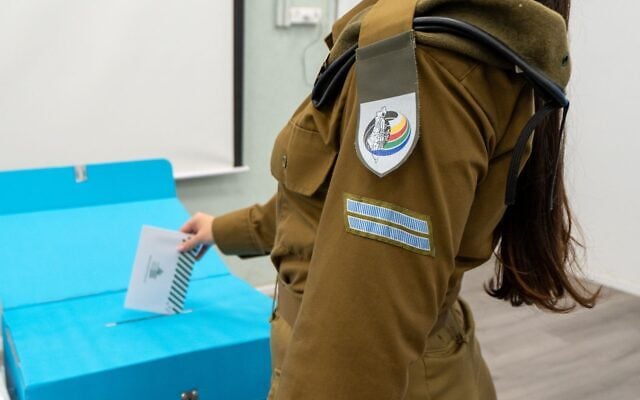
An IDF soldier votes in Israel's national election at a General Staff Supply Center base, October 27, 2026. (Israel Defense Forces)
Voter turnout among IDF soldiers stands at 68% as of 5 p.m., according to the military.
In the last election, in 2022, it was 65% at this hour.
The IDF began voting in the Knesset election a week ago, with 850 polling stations deployed at military bases across the country and beyond Israel’s borders, including at army posts in the Gaza Strip, Lebanon and Syria.
Winter’s People of Israel party joins Likud petition to extend voting hours

People of Israel party chairman Ofer Winter casts his vote at a polling station in Netofa, northern Israel, during the Knesset election, October 27, 2026. (Ayal Margolin/Flash90)
Ofer Winter’s People of Israel party says it is joining Likud’s request to the Central Elections Committee to extend voting hours. The party says it is submitting a formal notice to the committee.
Winter says party representatives have reported “unusual congestion” at polling stations identified as having high potential support.
“This could prevent the party’s supporters from exercising their right to vote,” he says, adding that the extension is needed to prevent the formation of an “Abbas-Golan government.”
Likud and right-wing allies scramble to mobilize voters amid apparent alarm over turnout
Parties in the current right-wing coalition are scrambling to mobilize voters in the final hours of election day, launching door-to-door campaigns and convening emergency meetings amid apparent alarm over alleged high voter turnout in Arab communities and left-wing strongholds.
Prime Minister Benjamin Netanyahu and Finance Minister Bezalel Smotrich have spoken to coordinate efforts to get right-wing voters to the polls ahead of their closure, according to a statement from Smotrich’s Religious Zionism party.
The two are also expected to convene dozens of local authority heads for an emergency meeting, after Smotrich cut short his planned tour of polling stations to return to party headquarters for urgent consultations.
Religious Zionism warns that high turnout could significantly reduce the chances of smaller right-wing parties crossing the electoral threshold, urging voters to instead back parties certain to enter the Knesset.
Meanwhile, National Security Minister Itamar Ben Gvir of Otzma Yehudit is going door to door in Bat Yam, encouraging residents to vote and strengthen the pro-Netanyahu bloc.
Hundreds of volunteers from the West Bank are also canvassing homes in Lod as part of an initiative to boost turnout, Netanyahu’s Likud party says, with Foreign Minister Gideon Sa’ar warning that “this day will determine the existence of the Jewish state.”
הלכנו להעיר את הבת-ימים בבתים. צאו להצביע! pic.twitter.com/jV0Ap2B7Ug
— איתמר בן גביר (@itamarbengvir) October 27, 2026
Voter turnout at 66.7% as of 6 p.m., keeping up all-time record numbers
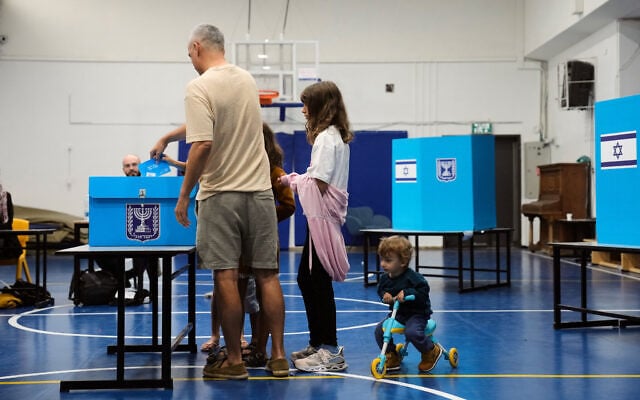
Voters cast their ballots at a polling station during Israel’s general election in Jerusalem, October 27, 2026. (AP Photo/Ohad Zwigenberg)
Voter turnout stood at 66.7% as of 6 p.m., according to the Central Elections Committee, up from 57.7% at the same time in the 2022 election.
It is the highest turnout at this hour in recorded history.
Dean Livne, acting director general of the Central Elections Committee, says that more than 4.8 million voters have cast their ballots so far.
He notes towns where turnout has been low so far, including the Druze town of Majdal Shams in the Golan Heights, where just 26.3% of eligible voters cast their vote, and the nearby Alawite town of Ghajar, where 28.6% voted.
Livne also highlights towns with exceptionally high turnout as of 6 p.m., including Yuval in the Galilee with 91.5%, the settlement of Beit Hogla with 88.2%, and Hazon in northern Israel at 87%.
Turning to the absentee ballots from soldiers, prisoners, medical personnel, those with medical conditions, and Israeli representatives in missions abroad, Livne says that there could be delays due to the high turnout.
“Tomorrow we will begin [counting] the double envelopes. It is important to say already now that with such a high turnout, it may be that the number of double envelopes is higher than we anticipated,” he says.
“Therefore, the counting of the external envelopes may not end by Thursday night, and may extend until Friday morning. We will count them all,” Livne adds.
Flavio Bolsonaro leaves Brazil for US after election defeat, source and media say
Brazilian Senator Flavio Bolsonaro has left the country for the United States after his election runoff defeat, an ally of the senator tells Reuters, confirming a previous media report.
Voters in southern Israel’s Arava say they can’t reach polls due to flooding, road closures
Residents of the Arava region in southern Israel report being unable to reach their polling stations due to flooding caused by stormy weather.
The reports in Hebrew media come after heavy rain in the Arava desert and across much of southern Israel prompted the closure of Route 90 in both directions.
The flooding has prompted concern from residents of small towns, where voting ends at 8 p.m. rather than 10 p.m., that the roads will not reopen before polls close.
One resident of the Arava region tells Ynet that the Central Elections Committee has yet to respond to these concerns.
Former MK Hanna Swaid says anger toward Netanyahu driving high Arab turnout
Then-MK Hanna Swaid seen during a Finance Committee meeting in the Israeli parliament on November 17, 2014. (Miriam Alster/Flash90)
Hanna Swaid, an Arab Israeli Christian from the Galilee and former Knesset member, says four years of simmering anger toward Netanyahu is pushing turnout to record levels among both Arab and Jewish citizens of Israel.
Arab citizens make up slightly more than one-fifth of Israel’s population, but their parties have never won proportional representation in the Knesset. Even if they don’t win one-fifth of seats, picking up several could be decisive in a tight race.
Questions about Arab voter turnout have long been both an important factor in election results and a political weapon to scare and mobilize right-wing voters, Swaid says.
“Palestinian citizens want to change things and kick out the extremist ministers,” he says, referring to National Security Minister Itamar Ben Gvir and Finance Minister Bezalel Smotrich. “The only way to do that in a democratic state — as far as you can still call Israel that — is elections.”
His assessment of the situation comes as right-wing politicians, including Prime Minister Benjamin Netanyahu, have tried to galvanize their voter bases by warning of high turnout in primarily Arab localities.
Report: Two Palestinians suffer injuries in settler attack
Palestinian media outlets report that two Palestinians have been injured in a settler attack in the South Hebron Hills, in the southern West Bank.
According to the reports, Yusuf Makhamra and Issa Awad, both residents of the area, were injured while traveling near Khirbet Fakhit. Footage shows Makhamra bleeding from his face.
No further details about the incident are currently available.
Separately, Palestinian media outlets report that three vehicles were set on fire in the early morning hours in Umm Safa, near Ramallah. No injuries have been reported.
https://x.com/MatanGolanPhoto/status/2115130171229651282
مليشيات المستوطنين تهاجم قرية أم صفا شمال غرب رام الله وتحرق عدة مركبات وتخط شعارات معادية، فجر اليوم. pic.twitter.com/1vXstsfyyI
— شبكة قدس الإخبارية (@qudsn) October 27, 2026
Opposition leaders ramp up effort to mobilize their voters before polls close
Opposition leaders are issuing urgent appeals to voters in the final hours of election day, scrambling to mobilize supporters amid fierce competition with Prime Minister Benjamin Netanyahu’s bloc and an intensifying battle for votes within the anti-Netanyahu camp.
Yashar chairman Gadi Eisenkot warns that the race between his party and Netanyahu’s Likud is extremely close, alleging that Likud is in the lead. He urges supporters to vote and persuade friends and family members to do the same.
“Yashar must be significantly larger than Likud,” Eisenkot says in a video message, arguing — without basis — that his party needs to overtake Likud in order to form the next government.
Meanwhile, B’Yachad chairman Naftali Bennett appeals directly to English-speaking Israelis in an English-language audio recording, invoking his own family’s immigration to Israel.
“English speakers across Israel, we need you right now to vote B’Yachad. This election will come down to turnout,” Bennett says. “Just like you, my mom and dad made Aliyah out of Tzionut [Zionism].”
“We don’t want to wake up tomorrow wishing we would have done more,” he adds.
The Democrats chairman Yair Golan, meanwhile, warns that his party is losing supporters to Eisenkot and Bennett, declaring an electoral “emergency.”
“We are losing votes. Our voters are switching to Gadi and Bennett. This can’t happen,” Golan says in a video message, stressing that the Democrats are “the only ones who will definitely not sit with Netanyahu.”
The Democrats are also deploying dozens of vehicles equipped with loudspeakers across Tel Aviv and other left-wing strongholds in an effort to boost turnout, warning that Eisenkot’s campaign to become the largest party is drawing votes away from them and could undermine efforts to replace Netanyahu’s government.
שלוש וחצי שעות לסגירת הקלפיות. המאבק ביני לבין נתניהו צמוד מאוד.
כדי לנצח היום בלילה ולהביא לשינוי, ריפוי ותקווה לישראל, חייב לצאת להצביע, לשכנע חברים, בני משפחה, להצביע ישר!
ישר! חייבת להיות גדולה מהליכוד בפער. ולכן, תצביעו ׳דרך׳, זו הדרך להשפיע על העתיד של כולנו. pic.twitter.com/lhzWBPa9Nz
— Gadi Eisenkot – גדי איזנקוט (@gadi_eisenkot) October 27, 2026
אנחנו מאבדים קולות לגדי ובנט.
תחזרו להצביע אמת. pic.twitter.com/M0b4E9cQn4— Yair Golan – יאיר גולן (@YairGolan1) October 27, 2026
Central Elections Committee set to discuss Likud request to extend voting
The Central Elections Committee (CEC) is set soon to begin deliberating on requests by Prime Minister Benjamin Netanyahu’s Likud and other coalition parties to extend voting at polling stations around the country, according to its acting director general Dean Livne.
The presidency of the CEC — which includes chairman Deputy Supreme Court President Noam Sohlberg and representatives from two coalition and two opposition parties — is empowered to extend voting hours at polling stations if special circumstances justify such a step.
The presidency can extend voting by up to 24 hours after the polling stations are originally scheduled to close, meaning up until 10 p.m. on Wednesday.
The law is usually implemented only for specific polling stations, however, and not a blanket extension across the entire country unless there is a major security or other situation.
It is doubtful whether special circumstances exist to justify extending voting. Likud’s petition to extend voting did not provide a reason, but high voter turnout and rain, as has happened today, would most likely not be grounds to extend voting.
Likud filed its request more than four hours before polling stations were due to close, while the CEC has already determined that those in line at 10 o’clock p.m. will be guaranteed the right to cast their ballot.
Egypt says working for return of ‘psychologically unstable’ citizen who crossed into Israel overnight
The Egyptian Foreign Ministry says it is working on taking necessary measures for the return of a citizen detained after crossing the border into Israel overnight.
In a statement, it says the individual in question has been “missing” since July and is “psychologically unstable.”
The IDF said earlier that an Egyptian national was detained by troops after crossing the border fence and entering the country.
He was spotted by soldiers monitoring surveillance cameras crossing the Egyptian border near the Israeli town of Nitzana.
Incidents of people illegally crossing the Egyptian border into Israel have been relatively rare in recent years.
New York governor: My job will be ‘a lot easier’ if Netanyahu loses
New York Governor Kathy Hochul debates with Republican challenger Bruce Blakeman during the only scheduled debate ahead of the November New York gubernatorial election, on October 13, 2026, in New York. (Anna Connors/The New York Times via AP, Pool)
New York Governor Kathy Hochul says her job will be “a lot easier” if Prime Minister Benjamin Netanyahu loses the Knesset election.
Hochul tells the Politico news outlet in an interview that she represents the largest Jewish population outside Israel and “I know they’re suffering.”
She says she went to Israel after the October 7, 2023, Hamas onslaught and “saw a lot of pain there,” but also cautioned the government “not to overreach.”
“The world is with you when it comes to the brutal assault by a terrorist organization known as Hamas on innocent Israeli people. An overreach could change that dynamic, and that’s what’s happened,” she says.
“We have to have leadership there that understands the security of Israel is paramount — critically important to me, but also the world — but to have a safe Palestinian state as well,” Hochul says.
“I believe we have to get people of goodwill who can make this happen, and as long as Netanyahu is sitting there, that is not in his interest to do that. It’s just not, and it won’t happen,” she says.
Hochul, a Democrat, says she believes a Jewish person could win the party’s US presidential nomination in 2028, but that Netanyahu could complicate a Jewish candidacy.
“That’s going to be still a lightning rod,” she says. “Who knows what he’s going to do next for self-preservation.”
Hochul is a centrist who is generally supportive of Israel and is running for reelection against the Jewish Republican Bruce Blakeman.
Hochul has also allied with New York City’s anti-Zionist mayor, Zohran Mamdani, during the campaign.
Egyptian man who crossed into Israel overnight was nabbed 2 km from border fence — IDF probe
The Israeli military says the Egyptian national who infiltrated Israeli territory overnight was apprehended by troops some two kilometers from the border fence.
An initial military probe has found that the man was identified crossing the border fence by soldiers monitoring surveillance cameras at around 1:45 a.m.
The soldiers “maintained continuous surveillance” of the suspect until the incident ended, the military says.
Troops were dispatched to the scene and apprehended him, some two kilometers from the fence, “in an area far from communities and IDF bases,” according to the army.
He was then handed over to the Shin Bet security agency for questioning.
The Egyptian Foreign Ministry claims the man has been “missing” since July and is “psychologically unstable.”
Incidents of people illegally crossing the Egyptian border into Israel have been relatively rare in recent years.
Netanyahu expected to demand mandate to form government if Likud is largest party, even if Eisenkot’s bloc is larger — report
Prime Minister Benjamin Netanyahu is expected to declare a decisive victory if his Likud party wins the highest number of seats tonight, even if the Eisenkot-led bloc has more seats overall, Channel 12 reports.
Accordingly, the report says the premier’s circle is already preparing the text of an announcement that he will deliver, declaring that he, not Eisenkot, should be entrusted with forming a coalition.
Eisenkot is expected to oppose this move, the report says, arguing that more people will recommend him as prime minister over Netanyahu, as he has the bigger bloc, even if he doesn’t have the largest party.
As such, sources tell Channel 12 that if Eisenkot’s bloc is larger, he will declare that he should be given the mandate to form a government, not Netanyahu.
The mandate to form a government is granted by President Isaac Herzog at his discretion.
He is not required to task the head of the largest party, or even the largest bloc, with forming a government, but rather, after hearing the recommendations of the parties that have won seats, he is to hand the mandate to whoever he believes has the best prospect of building a governing coalition.
Elections committee rejects Likud’s request to extend voting hours
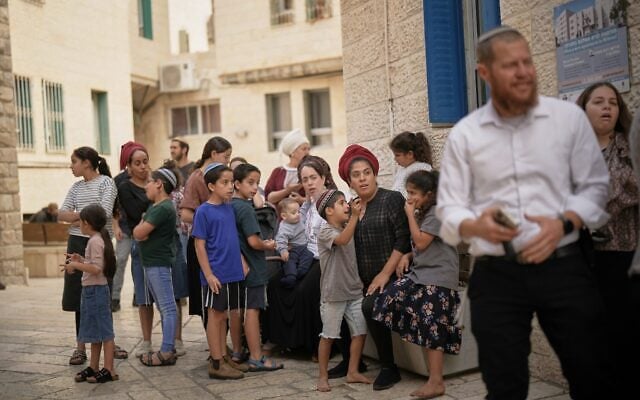
Israeli settlers gather with their children outside a polling station during Israel’s general election in Hebron in the West Bank, October 27, 2026. (AP Photo/Leo Correa)
The Central Elections Committee rejects an appeal by Prime Minister Benjamin Netanyahu’s Likud and allied parties to extend voting hours past 10 p.m.
The committee says that after discussing the request, “it was ruled that, as things stand, there is no justification for extending the voting hours.”
“The high national turnout figures in all populations testify to the public’s high involvement in the democratic process, and in these circumstances no need was found to extend the voting hours,” it adds.
The committee does say that voting in the Jewish settlement in the West Bank’s Hebron will be extended from the normal 8 p.m. to 10 p.m. due to a power outage today. (By law, polling stations with fewer than 350 eligible voters normally close at 8 p.m.)
It stresses that any voter who arrives at a polling station by 10 p.m. will be able to vote even if there is a long line.
Key Update
Yisrael Beytenu says activists attacked by Ben Gvir supporters in Netanya
Avigdor Liberman’s Yisrael Beytenu party says its activists were attacked in Netanya by individuals wearing shirts bearing the name of far-right National Security Minister Itamar Ben Gvir’s Otzma Yehudit party.
“They destroyed the party’s campaign stand, scattered its campaign materials and replaced them with Otzma Yehudit flyers,” the party says in a statement, adding that the assailants fled the scene.
“We strongly condemn the violence and demand that police identify the attackers and bring them to justice,” the party says, adding that the activists intend to file a police complaint.
אלימות בנתניה: פעילי ישראל ביתנו הותקפו באכזריות ועמדת המפלגה נהרסה
פעילים של עוצמה יהודית, שלבשו חולצות של בן גביר, תקפו אותם, הרסו את עמדת המפלגה, העיפו את חומרי ההסברה והניחו במקומם פליירים של עוצמה יהודית. לאחר התקיפה נמלטו התוקפים מהמקום.
הפעילים יגישו תלונה במשטרה. אנו… pic.twitter.com/oW2YhP7EOD
— ישראל ביתנו (@Beytenu) October 27, 2026
Polls close in jails with 88.7% vote rate, prison service says, up from 79% in 2022
Polls closed at 8 p.m. in prisons across Israel with a voting rate of 88.7%, the Israel Prison Service says in a statement, up from 79% in 2022.
Judges and other officials visited prisons over Election Day to observe the process, the IPS says.
Election committee says ballot slips with minor flaws will still be counted
Voting slips at a polling station in Jerusalem during the general election, October 27, 2026. (Rachel Alroey/FLASH90)
After many complaints throughout the day by mainly opposition but also coalition parties about ballot slips that were ripped or defaced in subtle ways, the Central Elections Committee says that flawed ballot slips won’t automatically be disqualified.
The committee says slips should be counted “as long as the voter’s selection can clearly be identified.”
It says small holes or minor dirtiness or scrawling on the slip that clearly wasn’t done by the voter shouldn’t disqualify a ballot slip, as well as printing flaws and certain differences between the ballot slip and the approved slip, as long as the chosen party can be clearly identified.
However, slips in which the voter can be identified won’t be counted.
Turnout at 74.3% as of 8 p.m., already surpassing total of 2022 election

Voters enter a polling station to cast their ballots during the Knesset election in Tel Aviv, October 27, 2026. (AP Photo/David Goldman)
Voter turnout stood at 74.3% as of 8 p.m. — or more than 5.4 million Israelis — according to the Central Elections Committee, up from 66.3% at the same time in the 2022 election.
It is the highest turnout at this hour since 1988. Previous figures earlier today had represented an all-time record since hourly turnout tracking began in 1973.
‘The Pitt’ star Noah Wyle named People magazine’s ‘sexiest man alive’

Noah Wyle poses in the press room with the awards for outstanding lead actor in a drama series for “The Pitt” and outstanding drama series for “The Pitt” during the 78th Emmy Awards on September 14, 2026, at the JW Marriott in Los Angeles. (Richard Shotwell/Invision/AP)
Actor Noah Wyle, the Emmy-winning star of the TV medical drama “The Pitt,” has been named this year’s “sexiest man alive” by People magazine.
The 55-year-old actor, who is of Jewish descent, says it “sounded like a prank” when he heard the news, adding: “Not in a million years did I think that this would be an honor bestowed on me.”
“I hope this changes everything. I hope it’s just wine and roses, milk and honey from here on out,” he tells People magazine with a laugh. “No, I don’t, but I am going to take a lot of ribbing from friends and family for sure.”
Wyle has won two Emmys for best actor in drama for his portrayal of the Jewish Dr. Michael “Robby” Robinavitch in HBO’s “The Pitt,” the story of life in a Pittsburgh trauma center. He also starred as Dr. John Carter in the long-running medical drama “ER,” which debuted in 1994. His “ER” co-star George Clooney has received People’s honor twice.
Other actors who have received the title from People magazine include Michael B. Jordan, Idris Elba, John Krasinski, and Paul Rudd.
Exit polls set to be aired as voting draws to a close
Election day nears its money time as Israel’s television stations are set to air a set of exit polls right as voting ends at 10 p.m., providing an estimate of the results.
The exit polls are likely to be updated throughout the night as more data comes in.
Meanwhile, the Central Elections Committee will immediately start counting the actual results and will provide official tallies throughout the night and tomorrow, with the actual results often differing from exit poll projections.
Some cities record almost 80% turnout as of 8 p.m.; one small town reaches 97.9%
While overall voter turnout across the country stands at 74.3% as of 8 p.m., some towns have recorded much higher rates, according to data from the Central Elections Committee.
Topping the list is the central coastal town of Bat Hen, where a whopping 97.9% of eligible voters have voted. In all, 423 votes were cast in Bat Hen.
Many other small towns have similarly high turnout rates.
Among larger cities, outliers include Rosh Haayin at 79% turnout, or 42,235 votes; the Bedouin city of Rahat at 79.8%, or 34,707 votes; and Modiin Illit at 77.3%, or 30,430 votes.
Tel Aviv is sitting at 63.6% turnout as of 8 p.m., or 301,639 votes, followed by Jerusalem at 62%, or 282,870 votes; and Haifa at 59.8%, or 160,146 votes.
Channel 12 exit poll shows no clear victor: Netanyahu’s Likud is largest party but his opponents have bigger bloc
Prime Minister Benjamin Netanyahu’s Likud party has won the most votes in Tuesday’s election, but neither of Israel’s two political camps has a clear path to forming a government, Channel 12’s exit poll shows.
The exit poll shows that the bloc of Jewish-led parties opposing Netanyahu is projected to win a total of 52 seats, compared to 50 seats for the parties supporting the premier. Neither is close to a 61-seat majority in the 120-seat Knesset. Arab-led parties, which also oppose Netanyahu, are expected to win a total of 18 seats, a record number for that sector.
Likud will win 24 Knesset seats, according to the exit poll, while the centrist opposition Yashar party, led by Gadi Eisenkot, will win 22 seats.
The lack of a clear victor is in line with weeks of surveys that predicted an inconclusive election. It indicates that the coming days and weeks will see parties and their leaders negotiate with each other in an attempt to cobble together enough support to form a government, possibly with the support of the Arab-led parties, which have generally not joined governing coalitions.
Both Netanyahu and Eisenkot may declare victory and appeal to President Isaac Herzog to give them the first shot at forming a government, given that Netanyahu leads the largest party and Eisenkot leads the biggest bloc.
But it also leaves open the possibility that neither Netanyahu nor his opponents will be able to assemble a coalition. In that case, Israel may hold a repeat election, with Netanyahu remaining as caretaker prime minister. That would be a repeat of 2019 to 2022, when the country held five rounds of voting.
The exit poll comes as the Central Elections Committee has begun counting votes. The committee will provide official tallies throughout the night, and the actual results often differ from exit poll projections.
In third place, according to the exit poll, is the opposition B’Yachad party, led by former prime minister Naftali Bennett, with 12 seats, then the Arab-led Joint List party with 11 seats.
Two small parties, the nonaligned Reservists and right-wing People of Israel, are projected to fall short of the minimum 3.25 percent of votes needed to enter the Knesset, according to Channel 12.
Channel 13 exit poll: Eisenkot-led bloc in lead, Likud largest party, but neither camp gets majority amid record Arab showing

Prime Minister Benjamin Netanyahu, center, and his wife, Sara Netanyahu, try to mobilize supporters in Beit Shemesh in the final hours of voting in the Knesset election, October 27, 2026. (Yaakov Lederman/Flash90)
Prime Minister Benjamin Netanyahu’s Likud party has won the most votes in Tuesday’s election, but the bloc of parties opposed to him and led by Gadi Eisenkot finishes ahead of his bloc, according to Channel 13’s exit poll. However, neither camp has a clear path to forming a government amid a record showing for Israel’s Arab-led parties, according to the projection.
Likud’s projected lead after polls closed at 10 p.m. defies weeks of surveys that mostly showed the premier’s party trailing. Likud will win 25 Knesset seats, according to the exit poll, while Eisenkot’s centrist opposition Yashar party will get 23.
Overall, the anti-Netanyahu bloc is projected to win 53 seats, while the Netanyahu-led right-wing religious bloc is projected to win 50. Both are expected to fall well short of a 61-seat majority.
Arab-led parties, which also oppose Netanyahu, are expected to win a record total of 17 seats.
The lack of a clear victor is in line with months of surveys that predicted an inconclusive election. It indicates that the coming days and weeks will see parties and their leaders negotiate with each other in an attempt to cobble together enough support to form a government, possibly with the support of Arab-led parties that have generally not joined governing coalitions.
But it also leaves open the possibility that neither Netanyahu nor his opponents will be able to assemble a coalition. In that case, Israel may hold a repeat election, with Netanyahu remaining as caretaker prime minister. That would be a repeat of 2019 to 2022, when the country held five rounds of voting.
Exit polls are often updated throughout the night as new data comes in.
Meanwhile, the Central Elections Committee has begun counting votes. The committee will provide official tallies throughout the night, and the actual results often differ from exit poll projections.
In third place, according to the exit poll, is the opposition B’Yachad party, led by former prime minister Naftali Bennett, with 14 seats, then the Arab-led Joint List with 10 seats.
Two small parties, the nonaligned Reservists and right-wing People of Israel, are projected to fall short of the minimum 3.25% of votes needed to enter the Knesset, according to Channel 13.
Kan exit poll shows no clear victor: Netanyahu’s Likud is largest party but opponents have larger bloc
Prime Minister Benjamin Netanyahu’s Likud party has won the highest share of votes in Tuesday’s election, but neither of Israel’s two political camps has a clear path to forming a government, the Kan public broadcaster’s exit poll shows.
Likud’s projected lead after polls closed at 10 p.m. defies months of polls that showed the party trailing Gadi Eisenkot’s Yashar.
Now, however, Kan projects Likud winning 25 seats out of a possible 120, compared to 21 for Yashar.
Overall, however, the anti-Netanyahu bloc led by Eisenkot is projected to win more seats, with 53 out of a possible 120, compared with 50 for the Netanyahu-led bloc.
Arab-led parties, which are opposed to Netanyahu but are not part of the Zionist anti-Netanyahu bloc, are projected to win 17 seats.
As such, the poll shows both blocs falling short of the 61-seat majority necessary to form a government, leaving no clear path to victory for Netanyahu or for Eisenkot.
While Likud’s victory over Yashar is an upset after months of polls showing the results swinging the other way, the lack of any clear victor was expected.
As such, both blocs will now get to work trying to cobble together a coalition — with Netanyahu expected to be given first shot at it by dint of having the largest party — but it is possible that neither side will succeed and Israelis will have to return to the polls in just a few months. This scenario would be reminiscent of the political crisis of 2019-2022, with its five rounds of elections.
In third place, Naftali Bennett’s B’Yachad is projected to win 14 seats.
The Arab-led Joint List and the left-wing Democrats are projected to win 10 seats each, while Avigdor Liberman’s Yisrael Beytenu wins a projected eight seats.
The far-right Otzma Yehudit and the Islamist Ra’am are projected to win seven seats each.
Rounding out the projected results are the ultra-Orthodox parties Shas and United Torah Judaism and Bezalel Smotrich’s Religious Zionism, all with six seats.
Meanwhile, two smaller parties that had been hovering around the electoral threshold for months — Yoaz Hendel’s Reservists-Economic party and Ofer Winter’s People of Israel — are both projected to fall below the 3.25% threshold and miss out on entering the Knesset.
The exit poll is to be updated every 30 minutes throughout the night as more data comes in.
Cheers at Yashar party headquarters as exit polls give opposition bloc the edge, though not a majority

Activists celebrate at the Yashar party headquarters in Tel Aviv as exit polls show the opposition bloc winning more seats than Prime Minister Benjamin Netanyahu's bloc, on October 27, 2026. (Matan Siegel/Times of Israel)
As Hebrew media begin publishing exit polls, supporters of Gadi Eisenkot’s centrist Yashar cheer at the party’s headquarters in Tel Aviv as projections show the opposition bloc winning more seats than Prime Minister Benjamin Netanyahu’s bloc.
The polls show Netanyahu’s Likud as the largest individual party, but neither bloc appears to have secured a Knesset majority or a clear path to forming a government.
Supporters wave Israeli and party flags and chant, “Bibi, go home” and “Who’s coming? The next prime minister!”
Subdued mood at B’Yachad HQ as exit polls show party trailing Eisenkot’s Yashar

A subdued atmosphere at Naftali Bennett's B'Yachad party headquarters in Tel Aviv on election night after exit polls are aired, October 27, 2026. (Nava Freiberg/Times of Israel)
A relatively subdued atmosphere overtakes Naftali Bennett’s B’Yachad party headquarters in Tel Aviv, as exit polls project the former prime minister’s party at 12-14 seats.
A modest crowd of a few dozen supporters, many of them young adults, gathers to watch the projections, with little celebration as the results come in. One woman can be seen crying while gazing at the estimations.
The exit polls project B’Yachad as falling well behind Gadi Eisenkot’s Yashar — meaning the latter is highly likely to be the opposition bloc’s candidate for prime minister — even as the broader opposition bloc edges ahead of Prime Minister Benjamin Netanyahu’s bloc, without securing a majority and with any path to a coalition unclear.
Party leaders Bennett and Yair Lapid are expected to arrive shortly.
No surprise at People of Israel HQ as Winter’s party fails to cross threshold

The People of Israel post-election party in Tel Aviv after exit polls showed the slate failing to cross the election threshold, October 27, 2026 (Zev Stub/Times of Israel)
News that Ofer Winter’s People of Israel party has failed to pass the electoral threshold does not seem to surprise anyone at his party’s election night gathering in Tel Aviv.
Attendees at the gathering barely react as all major exit polls, which began airing on television at 10 p.m., show zero seats for the party.
Winter and other party figures are expected to arrive and address the crowd in about an hour.
“We fought to the very end, despite a violent, despicable, and ugly campaign waged by Bibi and his associates,” a senior figure in the party says. “We have a solid base of voters — over 100,000 — despite everything thrown our way.”
Exit polls show no clear victor, or path to government, as Arab parties get historic vote

Yashar party supporters watch the exit poll results following the closing of polling stations, at the Yashar election headquarters in Tel Aviv, October 27, 2026. (Miriam Alster/Flash90)
The three main exit polls from today’s election show no clear winner, and no way for either supporters or opponents of Prime Minister Benjamin Netanyahu to form a government.
Netanyahu’s frantic campaign ahead of election day appears to have increased his Likud party’s vote total and has succeeded in once again making it the largest party in the Knesset.
But those gains appear to be at the expense of his partners, as each of the three polls shows that the bloc of Jewish-led parties opposing Netanyahu outnumbers those that back him. Channels 11, 12 and 13 all projected that Netanyahu’s supporters would win 50 seats in the 120-seat Knesset, as opposed to 52 or 53 seats for his opponents.
Netanyahu’s Likud party is projected to win 24 or 25 seats — down from its current 32, but ahead of the 21 to 23 projected for his chief rival, Gadi Eisenkot’s Yashar party.
Polls for months have largely shown neither side achieving a majority of 61 seats in the 120-seat Knesset. Perhaps the biggest surprise of the night is the record share of the vote won by Arab parties — projected to be worth 17 or 18 seats.
Arab parties, despite representing about a fifth of the electorate, have never won that many seats. They currently hold just 10 seats in the Knesset.
The Arab-led parties also oppose giving Netanyahu another term, meaning that there’s a clear majority of 70 seats in the Knesset opposed to the premier. But some Jewish-led opposition parties have ruled out joining in a coalition with Arab parties, so if they keep that promise, the path to a coalition may be foreclosed.
As it stands, neither side has a clear claim to victory or a clear way to form a coalition. Netanyahu may declare victory by virtue of having the biggest party, but it’s hard to see how he will convince 11 opposition lawmakers to join his side.
The opposition bloc, if it eschews any collaboration with Arab parties, would also not be able to form a government.
Both will almost certainly appeal to President Isaac Herzog for the first chance to form a government. It will be up to him to decide how to proceed.
But it also leaves open the possibility that neither Netanyahu nor his opponents will be able to assemble a coalition. In that case, Israel may hold a repeat election, with Netanyahu remaining as caretaker prime minister.
That would be a repeat of 2019 to 2022, when the country held five rounds of voting, with Netanyahu in office for the first two years of that period.
There were three other exit polls, two of them from pro-government channels, that showed a more favorable result for Netanyahu. The staunchly pro-Netanyahu Channel 14 showed his bloc winning 60 seats, just short of a majority, with the opposition bloc at just 43 and Arab parties with 17. And the pro-Netanyahu i24 News showed Netanyahu’s bloc with 55, the opposition with 49 and Arab parties with 16.
Channel 16, a new network, showed Netanyahu’s bloc with 53, the opposition with 51 and the Arab parties with 16.
The exit polls come as the Central Elections Committee has begun counting votes. The committee will provide official tallies throughout the night, and the actual results often differ from exit poll projections.
Once all votes are counted, the picture of the blocs will become clear. The election saw unusually high turnout, as the vast majority of Israel’s eligible voters cast ballots.
But as things stand, this election, following three years of war and a brutal campaign, has left those voters with only more uncertainty.
Democrats up to 10 seats, Liberman down to 8 in Channel 12’s updated exit poll, blocs unchanged
In its updated exit poll, Channel 12 gives the pro-Netanyahu bloc 50 seats and the anti-Netanyahu bloc 52, unchanged from its previous poll at 10:01 p.m.
The changes are: Yisrael Beytenu now gets 8 seats, down from 9, while The Democrats go up to 10 from 9.
Eisenkot vows to replace Netanyahu as exit polls give opposition bloc narrow edge

Gadi Eisenkot, leader of the Yashar party, arrives at a polling station to cast his ballot during the Knesset election in Herzliya, October 27, 2026. (AP Photo/Ariel Schalit)
Yashar chairman Gadi Eisenkot hails the initial exit polls as “a complete vote of no confidence in [Prime Minister Benjamin] Netanyahu and the October 7 government by the Zionist majority and by most Israeli citizens.”
“If these are the final results, this is a victory for Israel’s responsible Zionist majority,” he writes on X.
Eisenkot pledges to act immediately to “implement the will of the people,” replace Netanyahu’s government, and establish “a Zionist government committed to universal conscription as soon as possible.”
The exit polls project Netanyahu’s Likud as the largest party, with 24-25 seats, followed closely by Yashar with 21-23. The opposition bloc holds a narrow edge over Netanyahu’s bloc, 52-50 in most exit polls, but neither side appears to have secured a Knesset majority or a clear path to forming a government.
Hendel urges supporters not to give up after exit polls show Reservists-Economic party falling short

Yoaz Hendel, co-chairman of Reservists-Economic party, speaks at headquarters in Modiin on October 27, 2026. (Sharon Wrobel/Times of Israel)
Supporters of the Reservists-Economic party led by Yoaz Hendel and Yaron Zelekha express some disappointment as they gather at the party’s headquarters in Modiin after exit polls indicate the party failed to pass the minimum electoral threshold to enter the Knesset.
But, taking the stage after exit polls, Hendel urges patience until the votes are counted, raising hope his party will after all enter the Knesset.
“We won’t know the final results tonight and probably not till the weekend,” says Hendel. “We will not give up.”
Supporters at the party’s headquarters start chanting and clapping: “We won’t give up!”
“The results of these elections will determine whether we are able to succeed now, or only able to make it happen in the next election with better organization and preparedness,” Hendel says.
Updated Channel 13 exit poll: Arab parties gain a seat, now at 18; Zionist opposition bloc down 1, to 52
In its updated exit poll, Channel 13 boosts the Arab parties by one seat to 18 seats, at the expense of the Zionist anti-Netanyahu bloc, which goes down from 53 to 52, further harming its chances of forming a majority coalition.
More specifically, Naftali Bennett’s B’Yachad goes down from 14 to 13 seats, with the Joint List strengthening from 10 to 11.
The pro-Netanyahu bloc stays at 50 seats.
Sa’ar says left’s celebration ‘premature,’ PM mum on projections showing his bloc well short of a majority
Foreign Minister Gideon Sa’ar posts on X that “the left’s celebration is premature,” after projections by TV networks show the bloc led by Prime Minister Benjamin Netanyahu well short of a majority.
“The certainties of biased commentators are ludicrous,” writes Sa’ar, of Netanyahu’s Likud party. “One thing is reasonably clear: Likud is the biggest party in Israel.”
The foreign minister adds that “it’s always good to learn something from the past,” sharing a video of Menachem Begin — Likud’s founder, and its first to reach the premiership — encouraging patience with results on the eve of his party’s historic election win in 1977.
Netanyahu himself is not expected to arrive at Likud headquarters in Jerusalem until 1 a.m., the Ynet news site reports. He has not yet responded to the exit polls.
They show Likud as the largest party, winning 24-25 seats, ahead of Gadi Eisenkot’s Yashar, with 21-23.
However, they show the premier’s bloc reaching only 50 seats total, out of the Knesset’s 120. Eisenkot’s bloc is projected to win 52-53 seats, with the remainder going to the Arab-majority Joint List and Ra’am.
Beating polls, Ra’am chief vows to turn achievement into ‘political force,’ says Jewish candidate Segalovitz ‘made history’

Ra'am supporters wave the party's green flag as they watch exit polls at party headquarters in Sakhnin on October 27, 2026. (Noam Lehmann/Times of Israel)
The crowd at Ra’am headquarters in Sakhnin roars with joy as exit polls project seven seats for the party, outperforming forecasts in opinion polls that gave the party about five seats.
The cheers turn to jeers and gloats as the screen changes to show National Security Minister Itamar Ben Gvir’s Otzma Yehudit and Finance Minister Bezalel Smotrich’s Religious Zionism each winning six seats in Channel 13’s exit poll.
Supporters joyously wave the green Ra’am flag as the party’s thumping jingle plays in the background.
“All of us together achieved this,” party chief Mansour Abbas tells supporters.
“We’ll translate this electoral power into an influential political force,” Abbas says. “We’re here — not on the sidelines.”
Turning to Yoav Segalovitz — the Zionist former lawmaker and senior police officer who mounted an unprecedented run as no. 2 on the party’s list — Abbas adds, in Hebrew: “Brave friend, you made history.”
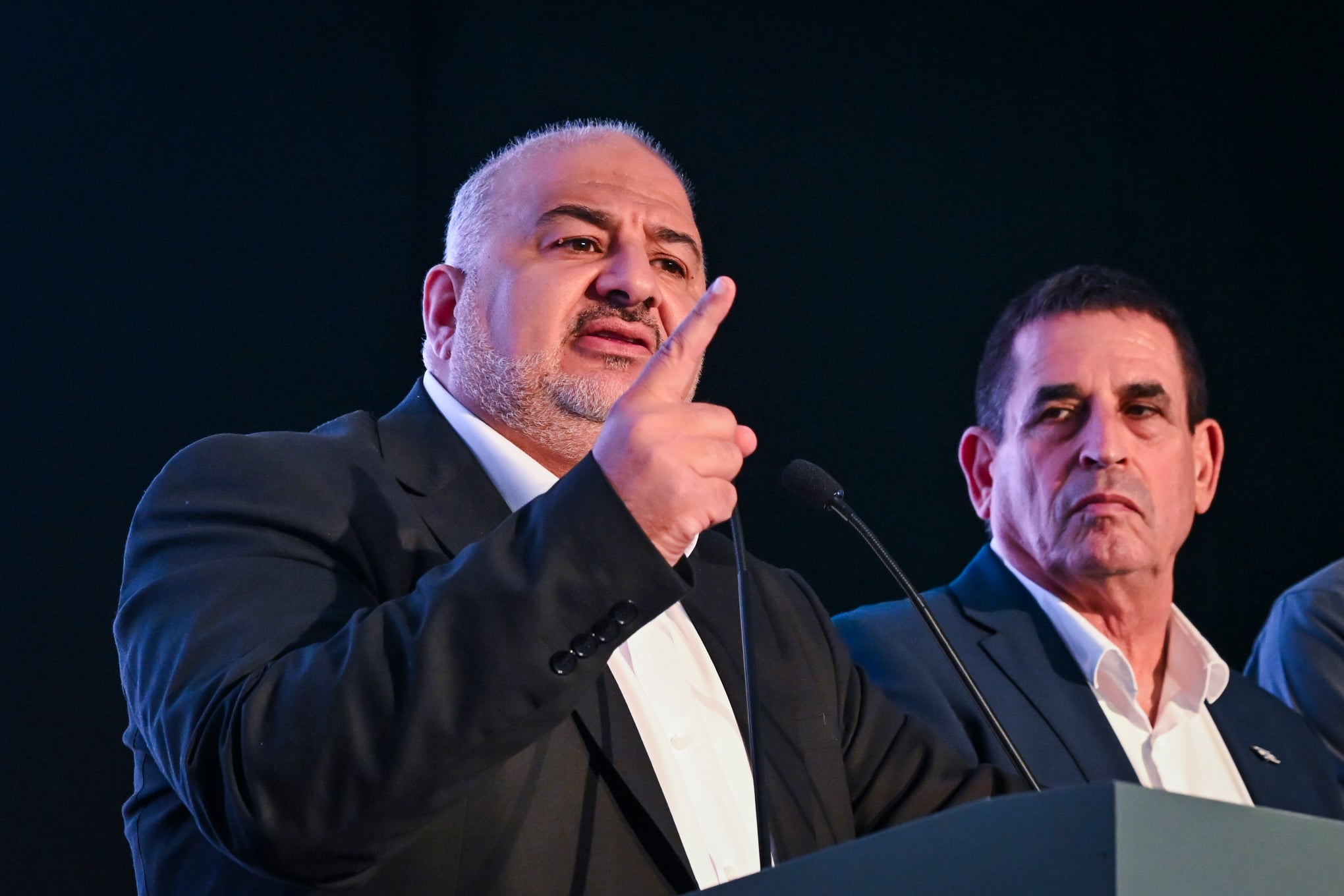
Segalovitz, speaking in Hebrew, vows to the almost entirely Arab audience: “We’ll make sure your vote will be equal and influential.”
“Arabs, Jews, Christians, Druze, Circassians — Israelis,” he says. “We won’t stay on the side, and I’m with you one hundred percent.”
Religious Zionism-Zehut politicians yet to show at post-election party as activists brood over predicted results

Supporters of Religious Zionism-Zehut mingle at the party's headquarters as they await election results, on October 27, 2026. (Jeremy Sharon/The Times of Israel)
Activists at the Religious Zionism-Zehut post-election party are mulling the initial election predictions, with the ultra-nationalist party obtaining a respectable six or seven seats in the exit polls but with the coalition bloc falling far short of a Knesset majority, according to the major television pollsters.
Religious Zionism’s cabinet ministers and MKs are nowhere to be seen at present. One candidate, fifth-placed Tzvika Mor, is hobnobbing with party activists but declining to say publicly what the exit polls mean for the faction.
Kan updates its exit poll, with all 3 main channels now projecting 52 seats for Eisenkot-led bloc, 50 for PM’s
In its updated exit poll, the Kan public broadcaster lowers Naftali Bennett’s B’Yachad from 14 to 13 seats, with the Joint List gaining from 10 to 11.
This means that Kan, Channel 12 and Channel 13 now all project the pro-Netanyahu bloc to win 50 seats, the anti-Netanyahu bloc to get 52, and the Arab parties to win a whopping 18.
Chants of ‘Go away Ben Gvir’ at Joint List HQ as jubilant party enjoys exit poll results
Footage from the Arab-led Joint List party headquarters shows supporters clapping and cheering as exit polls by major broadcasters show the party winning 10 or 11 seats, a better showing than most polls had predicted in the run-up to today’s election.
Jubilant chants of “Go away Ben Gvir” can be heard in Arabic, with party chair Yousef Jabareen and other lawmakers and soon-to-be lawmakers joining in.
Jabareen tells supporters that his party “hopes to send Bibi, Smotrich, and the bloodstained government home.”
???? "روح بن غفير".. احتفالات في مقر القائمة العربية المشتركة pic.twitter.com/LoEt0iTpPe
— موقع بكرا احلى – الحساب الثاني (@boukraaa7la2185) October 27, 2026
Near-final election turnout at 77.7%, highest since 1999
Voters cast their ballots at a polling station during Israel’s general election in Jerusalem, October 27, 2026. (AP Photo/Ohad Zwigenberg)
Voter turnout stood at 77.7% as of 10 p.m. — or 5,695,682 Israelis — according to the Central Elections Committee, up from 70.6% at the same time in the 2022 election. It is the highest turnout at this hour since 1999.
It is a near-final tally since, while polling stations closed at 10 p.m., voting continued past that hour if there were lines at the station, meaning some voters cast their ballots after that time.
Key Update
Yair Golan says he’s ready to work with allies to form government; said during campaign he’d sit with Ra’am but not PM’s bloc

Supporters celebrate at The Democrats party’s election headquarters in Tel Aviv, following the release of exit polls on election night, October 27, 2026. (Yehoshua Yosef/Flash90)
Yair Golan, head of the left-wing Democrats party, says his faction is “ready to work with all our partners” to form a government, as exit polls project neither Prime Minister Benjamin Netanyahu and his allies nor the main opposition bloc reaching a majority in the Knesset.
The post on X does not explicitly mention the Arab-led Joint List, projected to win 11 seats, or the traditionalist Arab party Ra’am, which is projected to win 7, in the 120-seat parliament.
During the campaign, Golan repeatedly said The Democrats — projected to win 9-10 seats — would be willing to partner with Ra’am, unlike some others in the Zionist opposition bloc that has shunned both the Arab parties and the ultra-Orthodox ones.
He said he would not be willing to sit with Haredi parties or any members of the current government.
Commentators have also suggested the possibility of a unity government, with some combination of parties from both blocs, or a minority government, which — though inherently shaky — is possible within the Israeli system.
“The public has spoken, it has fired the Netanyahu government,” Golan writes on X, saying this is “a historic opportunity to establish a government of change in Israel, and we don’t intend to give it up.”
The party chief commends Israelis for “fighting in the streets for four years,” presumably referring to the massive demonstrations against the government’s proposed judicial overhaul in 2023, and protests for a hostage-ceasefire deal during the subsequent war with Hamas.
“We are ready to work with all our partners, to bridge the divides and take responsibility,” he says. “Now it’s our turn to do the work.”
The Zionist opposition bloc is projected by exit polls to win 52 seats, and Netanyahu’s bloc is projected to win 50.
Ariela Karmel contributed to this report.
October Council calls for lawmakers to establish state commission of inquiry on first day of new Knesset term
The October Council, an organization of October 7 survivors, former hostages, and bereaved families critical of the government, calls for all lawmakers and lawmakers-to-be who are sympathetic to their plight to stick to their promise to establish a state commission of inquiry into the Hamas-led massacre.
“The citizens of Israel have had their say, and now it is time for the elected officials to do what is required of them,” says the group.
“We call upon all party leaders and members of Knesset who committed to the establishment of a state commission of inquiry to stand together, even before the new Knesset is sworn in — and pledge that on the first day of its term, they will work for the establishment of a state commission, without delay and unconditionally.”
The group says there is a “clear majority of 70 Knesset members” who are expected to support establishing the commission.
Three exit polls by non-mainstream networks diverge wildly, with solidly pro-Netanyahu Channel 14 projecting majority for PM’s bloc
Alongside the three mainstream TV channels’ exit polls — which all agree in projecting 52 Knesset seats for the Zionist opposition bloc, 50 for the current coalition parties, and 18 for the Arab-led parties — three other channels have released their own exit polls, all of which diverge from those projections.
The staunchly pro-government Channel 14, which has consistently been an extreme outlier during years of opinion polling in predicting an outright win for the bloc led by Prime Minister Benjamin Netanyahu, is an extreme outlier tonight as well, giving the premier and his allies a majority in a result that differs from the mainstream channels by a whopping 12 seats.
It projects 62 seats for the Netanyahu-led bloc in the 120-seat Knesset — 31 for Likud, 10 for Shas, and 7 each for United Torah Judaism, Otzma Yehudit and Religious Zionism-Zehut; only 40 for the anti-Netanyahu Zionist bloc — 20 for Yashar, 11 for B’Yachad, 9 for The Democrats while Yisrael Beytenu fails to pass the threshold; and 18 for the Arab-led parties (similar to the other exit polls) — 11 for the Joint List and 7 for Ra’am.
Meanwhile, an exit poll by i24News — a channel also seen as relatively sympathetic to the current government — predicts 55 seats for the pro-Netanyahu bloc — 27 for Likud, 8 for Shas, 7 each for Otzma Yehudit and UTJ and 6 for Religious Zionism; 49 for the Zionist opposition bloc — 20 for Yashar, 15 for B’Yachad, 9 for The Democrats and 5 for Yisrael Beytenu; and 16 for the Arab-led parties — 9 for the Joint List and 7 for Ra’am.
And an exit poll by the fledgling Channel 16 projects 53 seats for the Netanyahu-led bloc — 25 for Likud, and 7 each for Otzma Yehudit, Shas, UTJ and Religious Zionism; 51 for the anti-Netanyahu Zionist bloc — 22 for Yashar, 13 for B’Yachad, 11 for The Democrats and 6 for Yisrael Beytenu; and 16 for the Arab-majority slates — the Joint List with 11 seats and Ra’am with 5.
Liberman suggests soldiers’ votes could boost Yisrael Beytenu to 14 or 15 seats, urges Likud members to defect
Yisrael Beytenu chair Avigdor Liberman says he believes his party could win as many as 14 or 15 seats once the votes of IDF soldiers have been counted, after exit polls by major broadcasters suggest he’ll win eight seats.
The hawkish leader urges patience as he addresses his supporters at Yisrael Beytenu’s election headquarters in Tel Aviv, and jokes that he was late to his party’s event due to a doctor’s appointment to treat his “short fuse.”
“We have to hold on until we see the actual, final results,” he says, estimating that final results won’t be available until at least Friday morning and urging supporters to exercise “restraint.”
“By Friday we will have a much clearer picture,” he says, “and a much more optimistic one than what we see today.”
Turning to Likud members, Liberman urges them to launch a “rebellion” and defect from Prime Minister Benjamin Netanyahu’s camp to allow for the establishment of a “true” right-wing government.
At present, he says, the so-called “national camp” is made up of “self-serving opportunists clinging to their seats.”
Netanyahu “has no connection to the teachings of Jabotinsky, and no connection to the Revisionist movement,” Liberman says. “He is driven solely by personal and familial interests. Therefore, you within Likud must raise the banner of rebellion so that the entire national camp can be properly restored.”
Ra’am’s Abbas says figures from both political blocs have approached him amid coalition deadlock
Ra'am party head Mansour Abbas, left, and No. 2 Yoav Segalovitz speak following the release of exit poll results on election night, in Sakhnin, October 27, 2026. (Michael Giladi/Flash90)
Ra’am party chairman Mansour Abbas indicates that he is in contact with figures from both the pro- and anti-Netanyahu blocs following exit polls showing neither side has a clear path to forming a government.
“Everyone is speaking with us, not just from the ‘change bloc,'” Abbas tells Channel 12, suggesting that figures from the pro-Netanyahu bloc have also approached him.
Abbas signals his willingness to join a government led by Yashar party leader Gadi Eisenkot, but says it must first become clear that such a coalition is viable.
He acknowledges that “currently there aren’t numbers for a government,” with exit polls projecting 52 seats for the Zionist opposition parties and seven for Ra’am – two short of the 61-seat majority needed to form a coalition.
While the three main exit polls project a combined 70 seats for parties opposed to Netanyahu, several Zionist opposition parties have ruled out governing alongside Arab parties, complicating efforts to form a coalition.
Netanyahu and Likud ministers in no hurry to arrive at party’s election HQ in Jerusalem

Likud activists are seen at the party's election headquarters in Jerusalem, early October 28, 2026. (Lazar Berman/The Times of Israel)
Likud election headquarters in central Jerusalem is full of journalists and a few flag-carrying activists, but no Knesset members or ministers.
Footage of Israel’s post-October 7 wars and of meetings between Prime Minister Benjamin Netanyahu and US President Donald Trump play on a loop behind an empty dais.
Likud figure Hadar Mukhtar and pro-Netanyahu Channel 14 host Yinon Magal are speaking to groups of activists.
Party staffers say they don’t expect Netanyahu to arrive before 3 a.m., once initial vote counts are in.
Supporter Elie Pieprz says he is encouraged by the results: “With the challenges Israel faces — Iran, Gaza, expanding the Abraham Accords — the country wants a broad government headed by Netanyahu and that is what I believe will happen.”
‘A terrible mistake’: Ben Gvir warns Netanyahu against notion of unity government with Eisenkot
Otzma Yehudit chair Itamar Ben Gvir defends his far-right party’s record in a fiery speech from the Otzma Yehudit election headquarters in Modiin, and warns Prime Minister Benjamin Netanyahu against forming a unity government with Gadi Eisenkot’s Yashar, as both blocs fall short of a clear majority.
He tells supporters that he is “proud of our path and of the reforms we promised and delivered to the public,” citing death penalty legislation, the demolition of illegally constructed Bedouin homes in the Negev, and the imposition of harsh prison conditions for security prisoners as key policies his party delivered on in the last government.
He says that he has heard rumors “about a unity government with Eisenkot” — which would presumably leave Otzma Yehudit out in the cold in favor of more moderate parties — and warns that this would be “a terrible mistake.”
Winter insists his party would have passed threshold if not for ‘machine that I wish they used against Hamas’
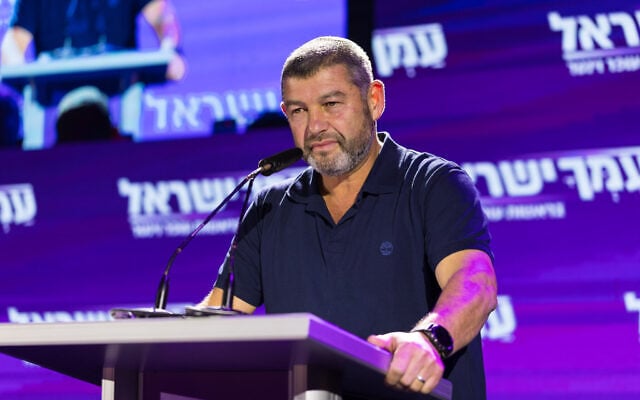
People of Israel chairman Ofer Winter speaks at his party’s election headquarters in Glilot, following the closing of polling stations and the release of exit polls, late October 27, 2026. (Liron Moldovan/Flash90)
With all exit polls predicting his People of Israel party failed to pass the minimum vote threshold to enter the next Knesset, Ofer Winter appears to blame the result on attacks from Prime Minister Benjamin Netanyahu and his allies, saying he and his right-wing faction had been “up against a machine that I wish they would have used against Hamas — we would have won.”
“People of Israel is a movement that is here to stay,” he insists.
“We are not the enemy, they got it completely confused here, but we’ll fix it,” Winter further says, while calling for a “broad government.”
Ra’am MK: Too soon to talk about red lines for next government; Palestinian state will come to be eventually
Ra’am MK Iman Khattib Yassin says “it’s still too early to talk about” the party’s red lines in talks to join the next government.
“We’ve come to serve our citizens and we’ll do that at all costs, and there’s no need to pay excessively heavy costs,” she says.
As for Arabs who aren’t citizens of Israel, she says: “They deserve their own Palestinian state.”
“It’s time to start a diplomatic process” for peace, she says. “This land can sustain all of us.”
Asked whether that would be possible in a government with avowed right-wing figures like Avigdor Liberman and Naftali Bennett, Yassin says, “it doesn’t matter how distant it is — it will be.”
Lapid claims ‘crushing defeat’ for Netanyahu bloc, as exit polls show no clear winner
Former prime minister Yair Lapid declares that Prime Minister Benjamin Netanyahu’s bloc has suffered a “crushing defeat” in the first public reaction from B’Yachad’s leadership to this evening’s exit polls.
“Don’t let anyone confuse you: the Netanyahu bloc has suffered a crushing defeat. This is a total collapse and the public has told them to go home,” Lapid says in a statement.
The exit polls project Netanyahu’s bloc falling short of a Knesset majority, though neither it nor the opposition has a clear path to forming a government.
Neither Lapid nor B’Yachad leader Naftali Bennett have arrived yet at the party’s election headquarters in Tel Aviv.
Shas HQ empty after Deri tells supporters to wait for ‘actual results’

A view of the empty Shas party election headquarters in Jerusalem, following the closing of polling stations and the release of exit poll results on Israel’s general election night, October 27, 2026. (Yossi Zamir/Flash90)
The Shas election headquarters in Jerusalem remains empty of supporters after party chair Aryeh Deri said he was waiting for “the actual results” following disappointing exit polls.
“The exit poll results show significant discrepancies, so we will have to wait for the actual results,” he says in a written statement. “Based on the data I have, Shas will achieve a very good result that will reflect the tremendous work that was carried out on the ground.”
Exit polls from major broadcasters had Shas winning 6 to 8 seats, down from the 11 it won in 2022.
In homage to Trump, Likud activists break out MIGA hats

Likud activist Ayelet Vaknin from Alfei Menashe wears her “Make Israel Great Again” hat, October 27, 2026. (Lazar Berman/The Times of Israel)
Likud activists at the party’s election HQ in Jerusalem are wearing blue and white “Make Israel Great Again” hats, an imitation of US President Donald Trump’s “Make America Great Again” caps.
Trump, who endorsed Netanyahu, features prominently at the event, with images and footage of the two leaders together.
Hailing exit poll results, Golan tells Democrats supporters that Israeli public ‘fired’ Netanyahu

Democrats chairman Yair Golan and members of his party celebrate at the party’s election headquarters in Tel Aviv, following the release of exit poll results, October 27, 2026. (Yehoshua Yosef/Flash90)
Celebrating with supporters at the Democrats election headquarters in Tel Aviv, party leader Yair Golan declares that the Israeli public “fired” Prime Minister Benjamin Netanyahu and his government, as exit polls give the opposition a lead but without a clear path to assembling a ruling coalition.
“The people gave us the duty to translate the confidence they gave us into actions — to save Israel,” Golan says. “The mandate we received from the public is an operational order to rehabilitate the country.”
Likud minister: We were instructed not to give interviews
The Likud party has told ministers not to conduct interviews, Communications Minister Shlomo Karhi tells journalists as he enters the main hall at Likud HQ in Jerusalem.
MKs Moshe Saada and Amit Halevi are also in the hall.
Pro-Netanyahu bloc rises to 51 seats in updated Channel 13 exit poll, pulling even with anti-Netanyahu bloc
In Channel 13’s updated exit poll, the pro-Netanyahu bloc gains a seat to pull even with the anti-Netanyahu bloc at 51 seats apiece, compared to 50 and 52 in its previous poll.
Prime Minister Benjamin Netanyahu’s Likud party rises from 25 to 27 seats at the expense of his rival Gadi Eisenkot’s Yashar party, which drops from 23 to 22 seats, and his ultra-Orthodox allies United Torah Judaism, which falls from seven to six seats.
Bennett vows to ‘set aside ego’ to form coalition; Lapid: ‘The State of Israel has saved itself’
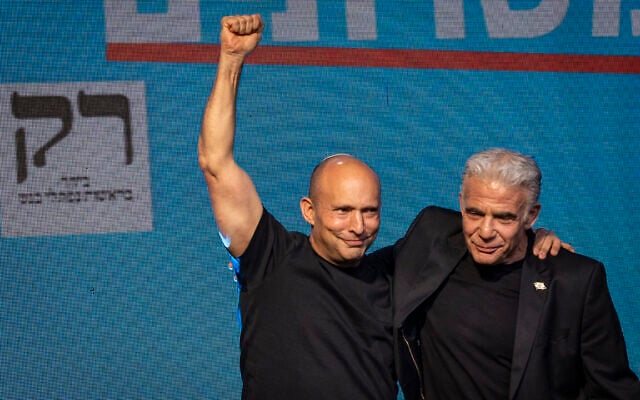
B'Yachad leaders Naftali Bennett and Yair Lapid at the party’s election headquarters in Tel Aviv, following the closing of polling stations and the release of exit poll results, October 28, 2026. (Noam Revkin Fenton/Flash90)
B’Yachad chair Naftali Bennett and his No. 2, Yair Lapid, address cheering supporters at their election headquarters in Tel Aviv in their first appearance following the 10 p.m. exit polls, which showed his party winning between 13 and 14 seats.
Bennett declares that Netanyahu has lost the election, hailing the projected decrease of his bloc from 68 to 50 seats.
“The people of Israel have stood up and spoken: Netanyahu has lost and the October 7th Government is going home!” the B’Yachad leader says in Hebrew at his party headquarters in Tel Aviv.
Bennett acknowledges that the final results could still change, but says opposition leaders are already working on efforts to form a government.
He appears to indirectly address concerns that B’Yachad won’t nominate Yashar chair Gadi Eisenkot for prime minister despite his party being the largest in the anti-Netanyahu bloc.
He says B’Yachad will do “everything” and “set aside all ego” to allow for the creation of a “government of ‘doers’ that will manage the country responsibly and serve the entire nation of Israel.”
“Now let’s get to work, we have a country to mend,” he says.
Lapid, speaking after Bennett, says “the State of Israel has saved itself today.”
“Benjamin Netanyahu and his government collapsed today; this was a total defeat,” he declares. “The people of Israel have won. We are the majority.”
He insists that the opposition has a mandate to form the next government despite exit polls showing no clear majority.
“The mission is clear: to form a Zionist government. It may not be perfect on day one, but we will strengthen it going forward. It may not be a broad coalition on day one, but we will expand it going forward.”
Smotrich dismisses opposition celebrations, vows ‘Jewish settlements will rise in Gaza’

Finance Minister Bezalel Smotrich addresses supporters at his Religious Zionism party’s election headquarters in Jerusalem, following the release of exit poll results on election night, early October 28, 2026. (Chaim Goldberg/Flash90)
Addressing supporters at his Religious Zionism party’s election HQ, Finance Minister Bezalel Smotrich dismisses the declarations from opposition leaders that the results from initial exit polls marked a defeat for the pro-Netanyahu bloc.
“We won’t let you celebrate. They are celebrating because they think they’ll succeed in reversing our settlement revolution in Judea and Samaria,” he says, using the biblical name for the West Bank. “They won’t succeed. Jewish settlements will rise in Gaza.
Charedi Public chair says party broke ‘barrier of fear’ despite falling short of threshold
Charedi Public chair Moti Leitner strikes an optimistic tone at his party’s campaign headquarters, telling supporters that the party has shattered “the barrier of fear,” despite failing to come close to the electoral threshold.
The ultra-Orthodox party offered an alternative vision to other ultra-Orthodox parties, coming out in support of military conscription and including women on its slate.
Leitner predicts that despite falling short, “tonight marks the beginning of a long road” for his vision.
“The eternal people does not fear a long road,” he says.
Segalovitz: Ra’am wants to be part of coalition, next PM will have to take Arab vote into account
Former MK Yoav Segalovitz, who mounted an unprecedented run as no. 2 in traditionalist Arab party Ra’am, says “the real result of the election” is 70-50 seats against the current government, referring to initial exit polls that are liable to shift.
“That’s the real Israeli statement,” he tells The Times of Israel.
“The prime minister-designate, and I don’t know who that will be,” will have to take that result into account, including the roughly 17 cumulative seats that exit polls awarded Arab parties, says Segalovitz.
“There’s no alternative,” he says. “You can’t say, ‘don’t come, don’t come, you can’t be a part.'”
“We want to be part of the coalition,” he says, even if leaders of the Zionist opposition “currently say out loud” that they’re unwilling to rely on Arab support.
The idea, promulgated by some of those leaders, that relying on Arab support is illegitimate after the Hamas-led onslaught of October 7, 2023, is “one of the biggest bits of nonsense there are,” Segalovitz says, noting that Arab Israeli communities also suffered in the attacks.
“My intention is to break the lines between Arabs and Jews,” he says.
“There are problems between Arabs and Jews,” but “if we only see the difficulties and don’t see a future, then we won’t do anything,” he adds.
Eisenkot urges Netanyahu to step down, calls on security chiefs to ‘serve the state and interests of Israeli citizens alone’

Yashar party leader Gadi Eisenkot waves to supporters after the release of the first exit poll results following the general election, in Tel Aviv on October 27, 2026. (AP/Ariel Schalit)
Yashar chairman Gadi Eisenkot says Israelis voted for change and against Prime Minister Benjamin Netanyahu’s continued rule, as exit polls from the main TV networks project Likud to be the largest party, but put the pro- and anti-Netanyahu blocs neck-and-neck, with the two Arab parties holding the balance. Neither bloc is projected to win a 61-seat Knesset majority.
“These are still exit poll results, and we must wait for the final count,” Eisenkot says at his party’s headquarters after polling stations close. “But it is already clear that tonight Netanyahu faces a larger and stronger Zionist, responsible majority.”
“The public voted for change. The coalition of failure has lost the people’s trust. The Israeli public voted against Netanyahu continuing as prime minister,” he says.
Eisenkot calls on Netanyahu to “accept the people’s vote of no confidence” and leave political life, adding that “with turnout this high, holding another election would be a mistake.”
“I will do everything in my power to form a Zionist government that serves all,” he says. He describes the envisioned coalition as committed to “universal military service” and “dismantling Hamas,” and says it must “respect and see all parts of society.”
Addressing officials in the security establishment and public service, Eisenkot urges them to “serve the state and the interests of Israeli citizens alone.”
“The era of evasion, failure and lies is over,” he says. “We have shown that this is not one side’s victory over another, but a victory for the entire people of Israel.”
Key Update
Energy grows at Likud HQ as ministers gather ahead of Netanyahu’s arrival

Likud ministers pose with supporters at the party's headquarters in Jerusalem on election night, October 28, 2026. (Lazar Berman/The Times of Israel)
Likud activists dance and throw Likud ballots in the air as ministers arrive at the party’s election headquarters in Jerusalem.
Energy Minister Eli Cohen shakes hands and poses for pictures as he enters the hall, as does Diaspora Affairs Minister Amichai Chikli.
Organizers say Prime Minister Benjamin Netanyahu is on his way to the election HQ and will arrive in the coming minutes.
Kan 11 updates exit poll, pro-Netanyahu bloc pulls even with opposition
In its updated exit poll, Kan 11 gives the pro-Netanyahu bloc and anti-Netanyahu bloc 51 seats each, compared with 50 and 52 in its previous poll at 11:04 p.m.
Changes: Likud 27 (from 25), The Democrats 9 (from 10), Otzma Yehudit 6 (from 7).
US costs of Iran war rise to over $47 billion, according to Pentagon estimate
The US military has spent over $47 billion so far to prosecute the war in Iran, more than 25% higher than the Defense Department’s estimate in July, according to Pentagon data reviewed by Reuters.
The bulk of the war’s operational costs included more than $29 billion to replace expended munitions and more than $6 billion to replace military equipment. The figures do not clearly include a cost estimate to repair damage to US bases sustained by Iranian missile and drone attacks.
In reversal, pro-Netanyahu bloc rises to 52 seats in updated exit poll to overtake opposition bloc
In its updated exit poll, Channel 12 gives the pro-Netanyahu bloc 52 seats and the anti-Netanyahu bloc 49, compared with 50 and 52 in its previous poll at 10:40 p.m, while the predominantly Arab Joint List and Ra’am parties hold the other 19 seats.
Changes: Yashar 21 (from 22), Likud 27 (from 24), Yisrael Beytenu 7 (from 8), Joint List 12 (from 11), Shas 7 (from 8), The Democrats 9 (from 10).
Sa’ar says right-wing bloc has ‘clear Jewish majority’ as polls shift in Netanyahu’s favor
As exit polls begin moving in favor of Prime Minister Benjamin Netanyahu and his right-wing bloc, Foreign Minister Gideon Sa’ar of Likud states they have “a clear Jewish majority.”
“And the night has just begun,” he adds in a post on X.
Netanyahu’s bloc falls back to 60 seats in updated exit poll from pro-government TV channel
Prime Minister Benjamin Netanyahu’s right-wing bloc falls from 62 seats back to 60 in the latest poll from the pro-government Channel 14, which now forecasts the hawkish opposition Yisrael Beytenu party will pass the minimum vote threshold after earlier stating it wouldn’t.
According to Channel 14, opposition Zionist parties opposed to Netanyahu have 43 seats between them, while the majority Arab parties hold the remaining 17 seats.


read more: