 Add ToI as a Preferred Source on Google
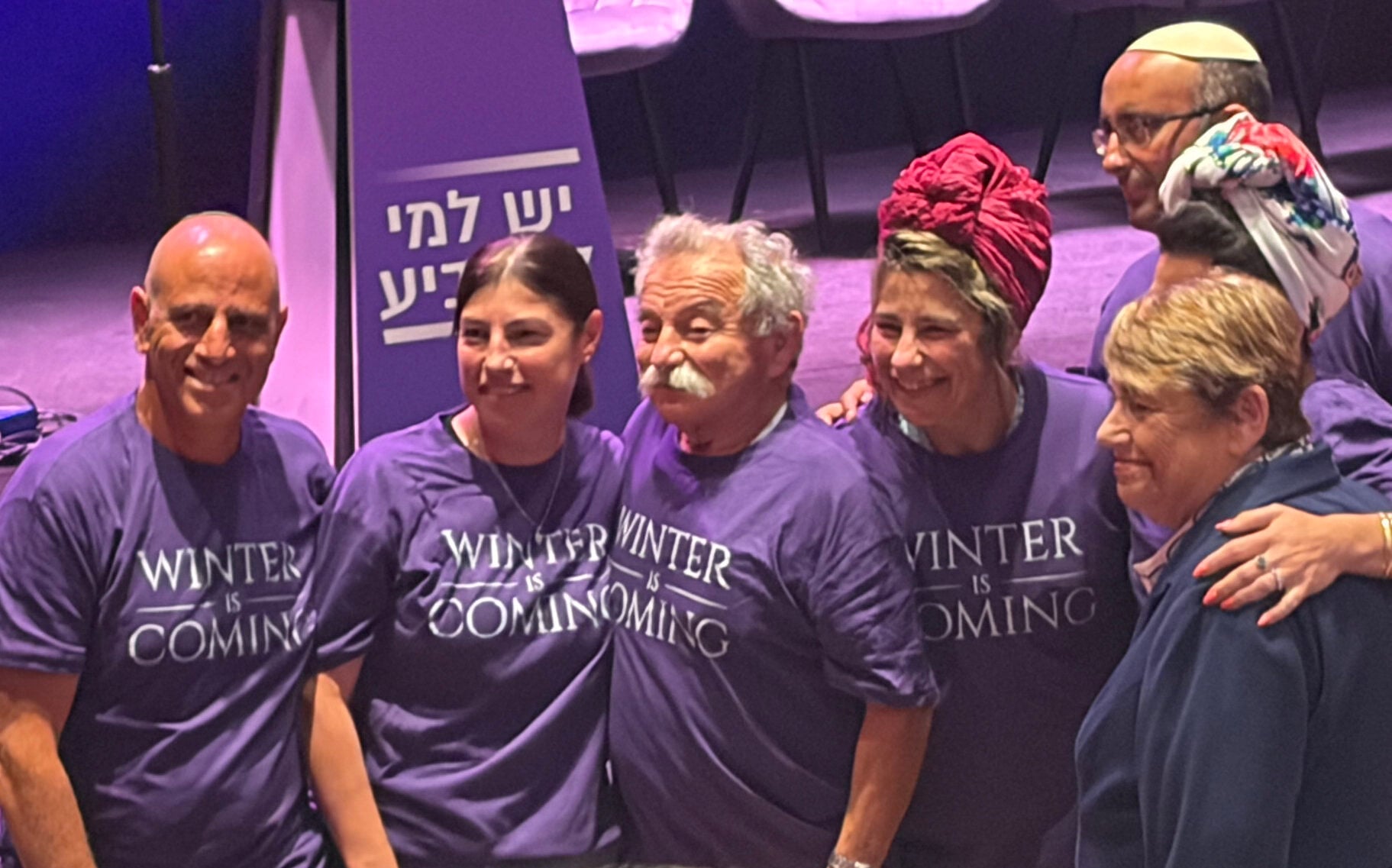
On a balmy evening in early October — three weeks before Israel’s national elections — dozens of young, English-speaking immigrants packed into downtown Tel Aviv’s ZOA House to hear Ofer Winter, the iconoclastic former IDF general whose newly founded nationalist People of Israel party has upended the race. At a table outside the event hall, attendees helped themselves to a stack of purple T-shirts emblazoned with the text “Winter is Coming.”
In the entrenched battle between Benjamin Netanyahu’s government and the left-to-right bloc of parties seeking to topple it, Winter has defied neat categorization. On the one hand, he has railed against the Palestinians and voiced support for another Netanyahu-led government. But he has conditioned that backing on policy demands incompatible with those of Netanyahu’s other allies, including a bill to draft the ultra-Orthodox.
Depending on the day, Winter has either pledged unwavering fealty to Netanyahu or hinted that he might consider his options. Fears that Winter could “give right-wing votes to the left” or burn them by not clearing Israel’s electoral threshold have made him a top target of the Likud campaign. “It is forbidden to vote for Winter,” says the narrator in one ad, using a Hebrew word, assur, less common to political parlance than to rabbinic prohibitions on pork and Sabbath desecration.
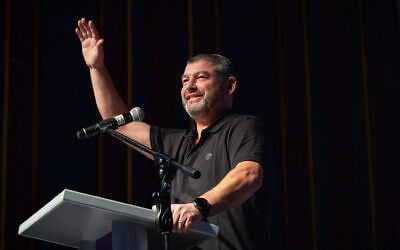
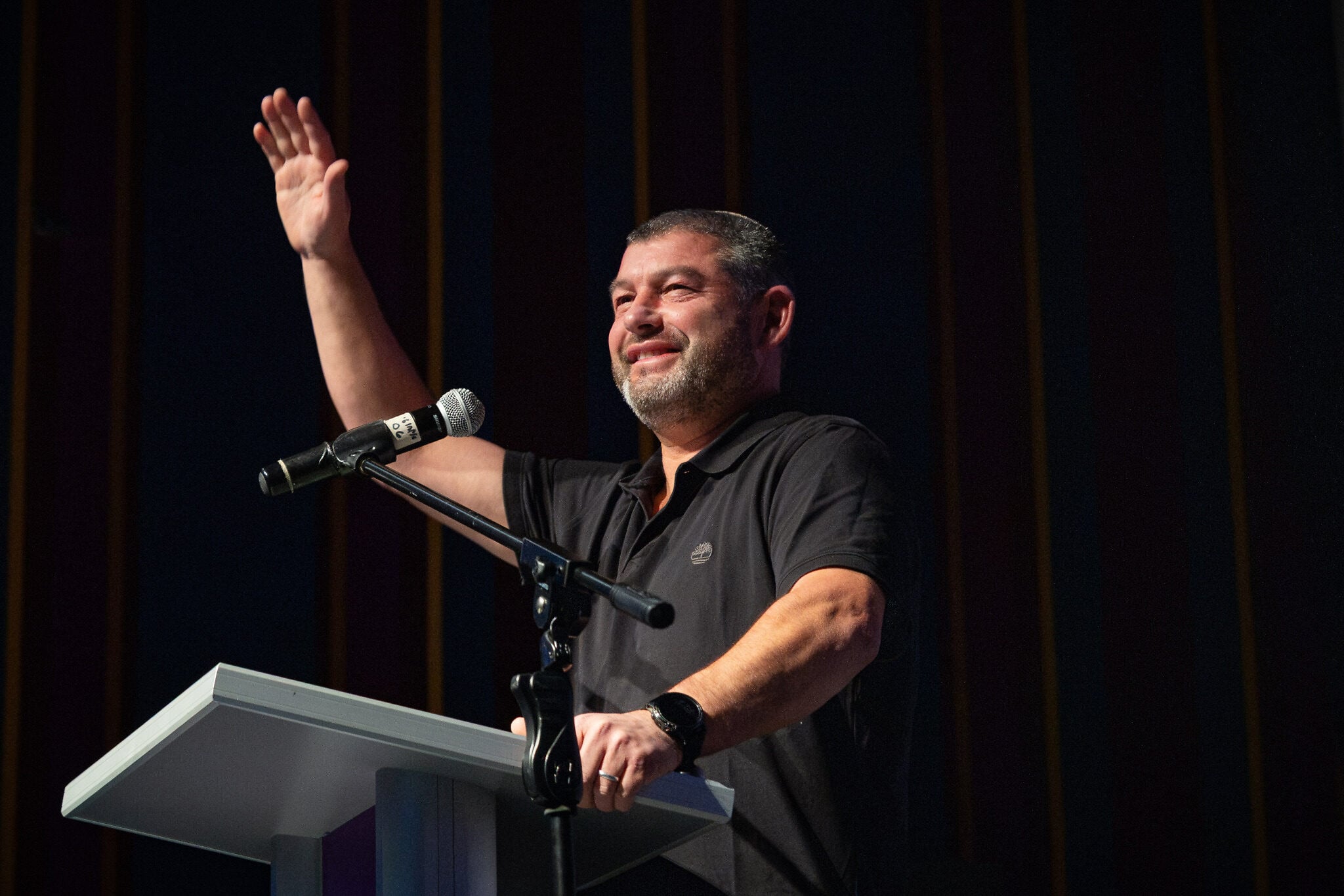
Winter, 55 and stocky, sports a full head of salt-and-pepper hair, a closely cropped beard, and an ever-present grin — a plausible office pick to play Santa Claus at the IDF Christmas party. Wearing a yarmulke and a black Polo, he made his pitch to the crowd of new Israelis.
“We are a right-wing party,” he explained in heavily accented English. “But right wing doesn’t mean being stuck in the failed policies of the past.”
As he recounted the details of his 34-year military career, he sought to underscore his non-racist bona fides in an implicit contrast with two other yarmulke-clad politicians — Itamar Ben Gvir and Betzalel Smotrich — who, for some, have rendered Israel synonymous with anti-Arab hatred.
“I served under the command of Imad Fares, a Druze commander and a brother,” Winter told the audience. “I fought with Mohammed Heib, a Bedouin officer who covered me under fire in Gaza. This experience taught me that Israel is stronger when Israelis stand together.”
The crowd dutifully clapped.
‘Israel is stronger when Israelis stand together’
But as Winter outlined the details of his political program — including his plan to facilitate “voluntary migration” from Gaza — he began to lose some of the more liberal attendees (“expulsion,” whispered one woman to her friend).
“October 7 changed everything,” said Winter, who rushed to the front lines that day in 2023 to help repel the Hamas invasion that saw some 1,200 people in southern Israel slaughtered and 251 abducted to the Gaza Strip.
October 7 has been central to Winter’s political identity. It has provided not just a campaign origin story for a man who claims no prior political ambitions, but also a cudgel that he has wielded skillfully to attack both Netanyahu’s right-wing government and the largely left-leaning security establishment he served for decades.

“I believed our enemy when they said they wanted to slaughter us,” Winter said. “But I saw the security system that didn’t take that seriously. They were arrogant. I saw the conceptzia [paradigm], which is containment and appeasement.” He repeated to the crowd yet another demand — an October 7 commission of inquiry — that is anathema to Netanyahu.
Post-speech, Winter was set to be joined on stage by two top members of his slate whose inclusion seemed designed to show the international crowd a more cosmopolitan face: #5 Fleur Hassan-Nahoum, the Gibraltar-born former deputy mayor of Jerusalem, and #2 Yoseph Haddad, a 41-year-old Christian-Arab influencer who has gained nearly a million Instagram followers for his Israel advocacy/trolling. (With a Druze former IDF commander at #12, People of Israel is the only Zionist party with two Arabs in its top 20.)
‘I believed our enemy when they said they wanted to slaughter us’
But Haddad was running late.
“We think we’re going to be joined by Yoseph Haddad,” the host announced. Haddad materialized, rushing down the central aisle and waving to the adoring crowd as they cheered even louder than they did for Winter.
“Right now, we’re sort of doing hasbara [public relations] for Israel,” Haddad crowed as he took the microphone. “Because if Israel was an apartheid state, I couldn’t actually be here right now… Certainly not second place in a right-wing political party!”
Haddad, who has long enraged many in his own Arab-Israeli community, had recently found new enemies on the right. On that October day, their attacks centered on a 2021 interview Haddad gave to Saudi Arabia’s Al Arabiya TV network in which he expressed support for a two-state solution.

Confronted with the comments by the moderator, Winter allowed that Haddad “changed his mind” and placed the interview in the context of Israel’s acceptance of Trump’s “Deal of the Century.”
“I heard what they’re trying to say Yoseph said,” Winter said.
“I thought you were going to say what Bibi said,” Haddad interjected to audience laughter.
“Listen,” Winter continued, “I don’t know if you heard me about the Palestinian-state ideology. I think this is an ideology to destroy Israel. OK? There is no Palestinian nation.”
Haddad, who claimed he was offered a high spot on Netanyahu’s Likud slate, returned fire at the ruling party.
“They want you to believe that People of Israel is not right-wing,” he said. “Because they know that, if People of Israel is strong, excuse my French, they can’t continue with the bullshit.”

Likud’s attacks on Winter, Haddad and their colleagues would intensify in the weeks following the event. Netanyahu’s obsession with People of Israel reflects the counterintuitive reality that Israeli elections often hinge less on which parties get the most Knesset seats than on which get the fewest — that is, which cross the electoral threshold and which fall short.
In early 2019, a potential Netanyahu coalition finished one seat shy of a majority, kicking off two more rounds of elections over the following year simply because Naftali Bennett’s New Right Party finished 1,454 votes short of the 3.25% required to enter the Knesset. In late 2022, Netanyahu became the threshold’s beneficiary, as near-misses by left-wing Meretz and Arab Balad paved his road back to the premiership.
With both major blocs likely to fall short of a 61-seat Knesset majority, any outcome is liable to have an impact
For weeks, People of Israel has hovered just above (or just beneath) the threshold in most polls — sitting on a razor’s edge between four and zero seats. But with both major blocs likely to fall short of a 61-seat Knesset majority, any outcome is liable to have an impact. A near-miss could tip the scales toward an opposition victory. Even a four-seat showing, meanwhile, could put Winter in the role of kingmaker (and, if he gets his wish, of defense minister). Sitting in Tel Aviv, Winter seemed to relish the suspense he had created: “We’re going to be the surprise of this election.”
Underestimated support
Twelve days after the Tel Aviv event, Winter descended upon the West Bank settlement of Efrat. A religious, heavily anglophone Jerusalem-area bedroom community of some 13,000, Efrat is not typically the sort of place that decides Israeli elections. In 2022, over 85% of Efrat residents voted for right-wing parties loyal to Benjamin Netanyahu.
But in recent years, “national-religious” Israelis like those in Efrat — who fought and died disproportionately in Israel’s post-October 7 wars — have seethed as their ultra-Orthodox brethren continue to enjoy blanket draft exemptions, among other privileges bestowed or perpetuated by a Netanyahu coalition dependent on ultra-Orthodox parties.
A September Yedioth Ahronoth survey of national-religious Israelis showed that, while more than 60% approved of the current government’s policies on security and West Bank settlement, only 32% supported its handling of the ultra-Orthodox enlistment issue. Despite their misgivings, 64% of respondents still planned to vote for Netanyahu’s Likud and other parties in his coalition, compared to just 11% who supported parties that are explicitly anti-Netanyahu. But 23% described themselves as “politically homeless.” Winter, as a lifelong member of this community, has become a convenient parking lot for these (and many other) disaffected right-wing voters.
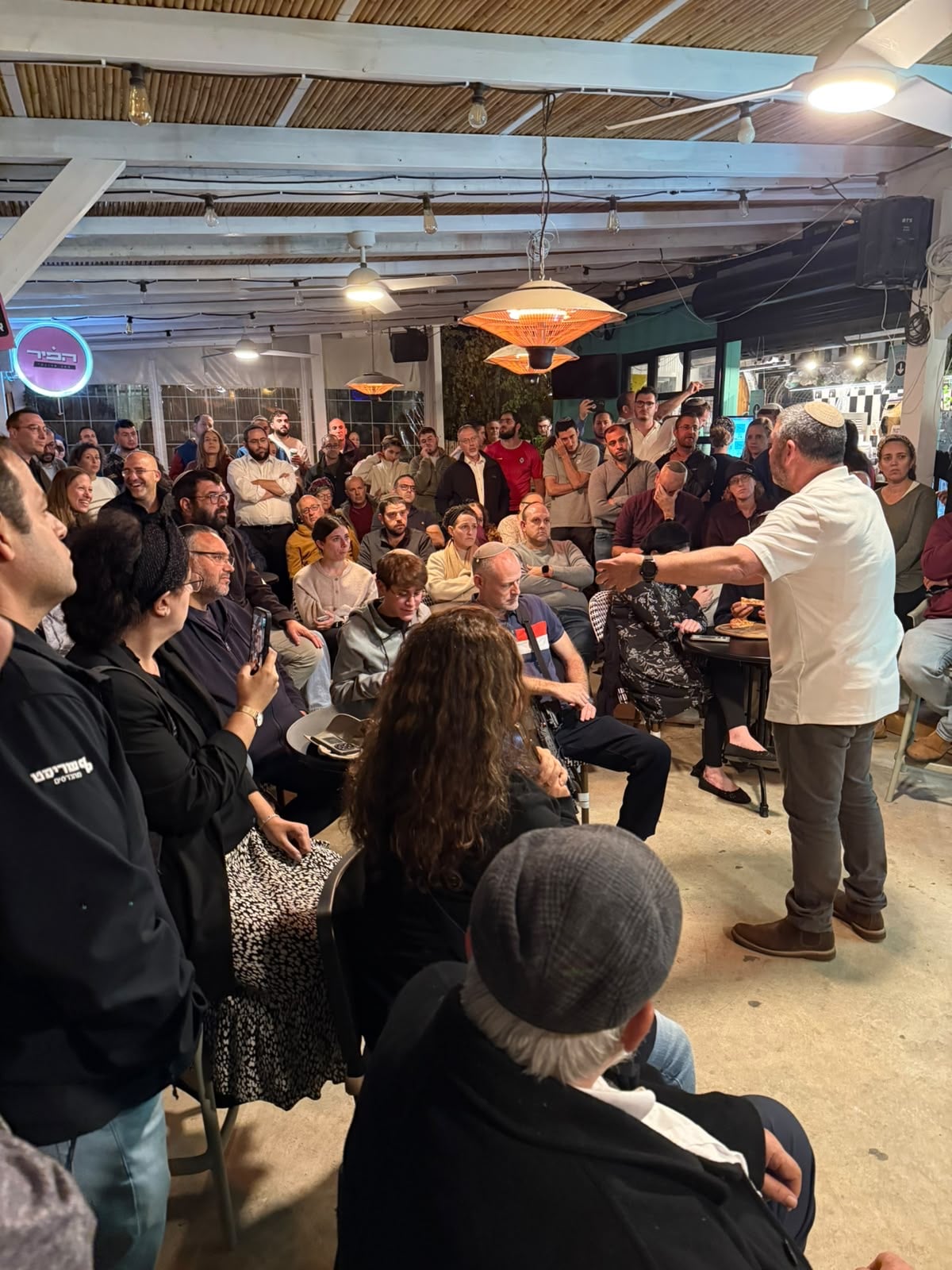
At a pizzeria, Winter made his pitch to the yarmulke-filled crowd in the political equivalent of a home game.
‘Put two-thirds of the Gaza Strip under siege, and from there begin a program of emigration’
“A few days after [October 7],” he recounted, “Netanyahu called me. He asked to consult with me because I had previously been his military secretary. And I told him, ‘Prime Minister, we are in a major crisis. But 1948 was a crisis too, and so was 1967… But those crises were turned into enormous opportunities. Why? Because in 1948 we took the Galilee and the Negev, and in 1967 we took Judea and Samaria, liberated Jerusalem, and took the Sinai and the Golan.” His recommendation to Netanyahu at the time? “Put two-thirds of the Gaza Strip under siege, and from there begin a program of emigration.”
In Winter’s telling, Netanyahu’s failure to empty Gaza of its inhabitants had yielded an indecisive outcome against Hamas. And the resulting extension of the conflict, he argued, has placed inordinate strain on reservist families — and on the country as a whole. Fumbling for a prop, he picked up his pint of beer: “This is the economy of the State of Israel. Money is coming in and there is growth, but fundamentally there is a huge hole and money is constantly leaking out.”
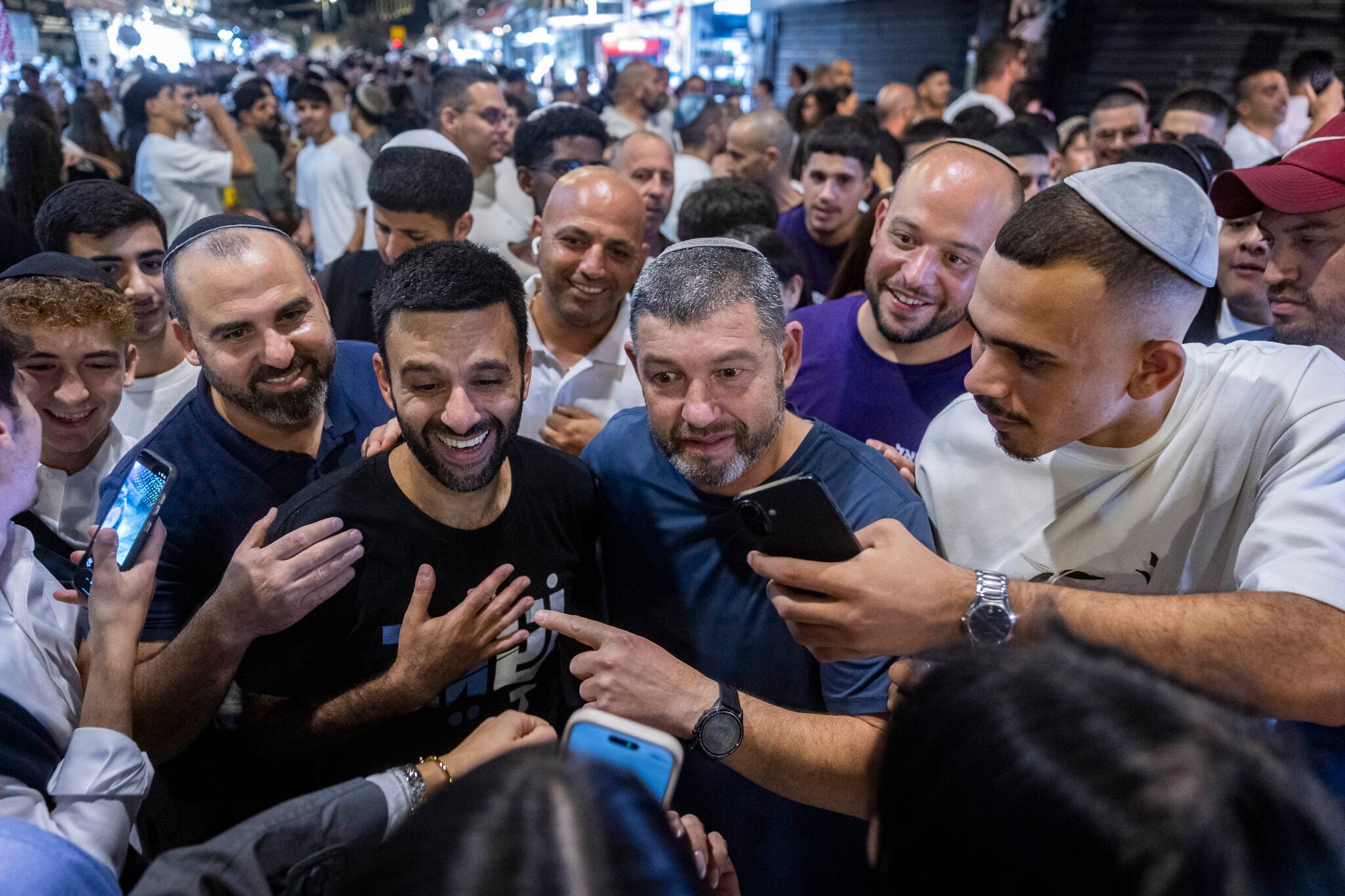
The leak, he clarified, isn’t just the money lost by reservists who leave their day jobs to serve. It is also the web of privileges enjoyed by segments of Israeli society that do not serve.
“Today, we have reverse affirmative action,” he said. “Today, an ultra-Orthodox young man can receive a 95% reduction in municipal-property tax, while my son, who is a combat soldier– or you, whoever here serves — receives at most something like 5% as a reservist. And if you’re an Arab, you can get into university under a lower admissions standard and pay nearly half the price. Our money — the state’s money — is going to people who are not contributing.”
‘Our money — the state’s money — is going to people who are not contributing’
His party’s position? Compulsory service for all Israeli citizens — whether in the military or in national service — and heavy sanctions on those who do not comply. People of Israel, Winter argued, is the home for voters who want both a hardline security policy and universal service.
Winter began his own military service in Sayeret Matkal, the same elite unit in which Netanyahu and former prime ministers Ehud Barak and Naftali Bennett also served. Over the coming decades, he would rise in the IDF ranks despite hardline views on the Palestinians that stood in contrast to the more moderate ones of most senior security establishment figures.
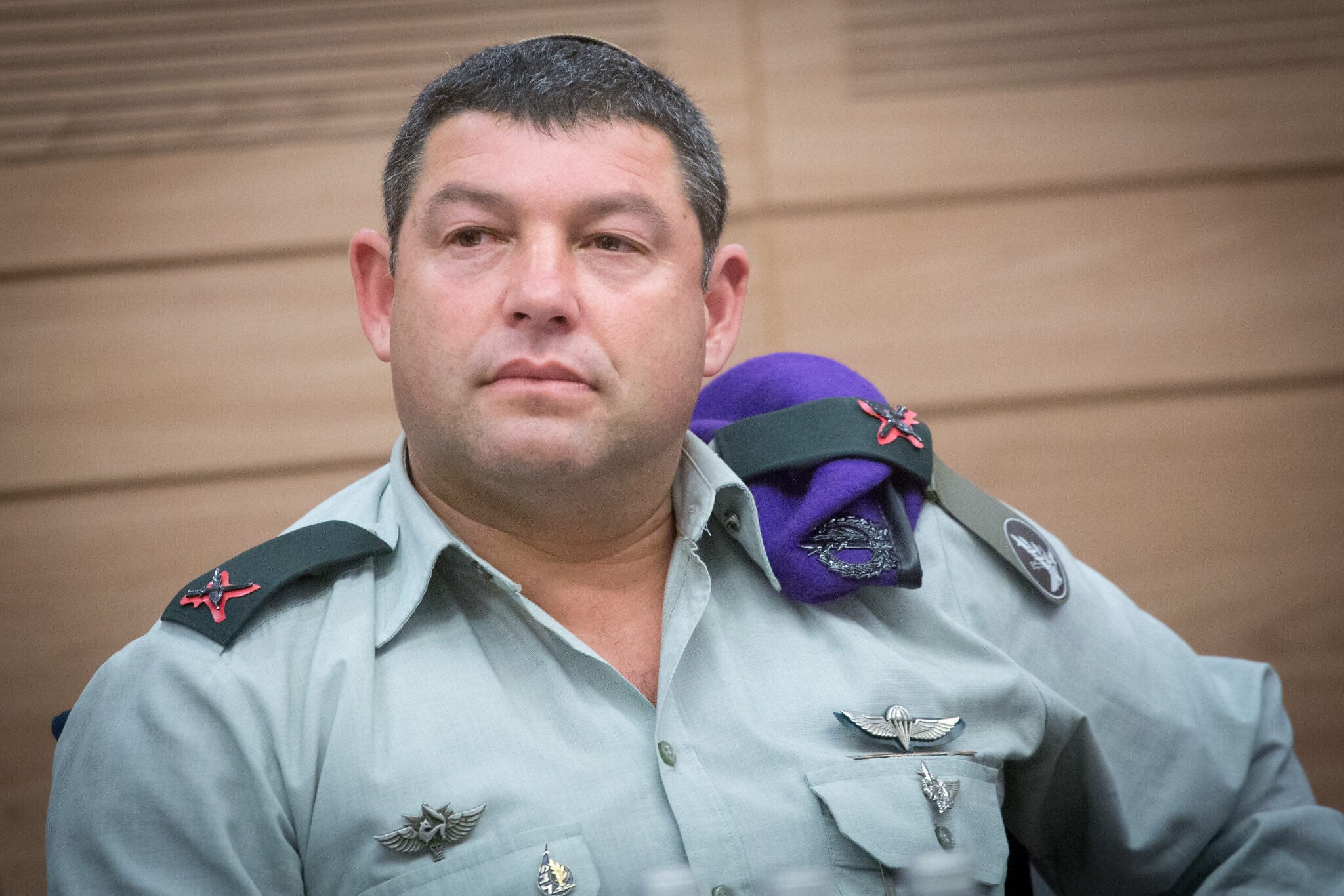
“He was considered to be a very good brigade commander,” said one such figure who requested anonymity, noting that Winter would have likely risen faster and higher had he not unnerved his superiors by mixing politics and religion with military matters.
The most public controversy involved a letter Winter penned to subordinates when commanding the Givati Brigade in the 2014 Gaza War: “History has chosen us to spearhead the fighting (against) the terrorist ‘Gazan’ enemy which abuses, blasphemes and curses the God of Israel’s (defense) forces,” he wrote.
The letter was widely cited when Winter was denied a promotion to division commander in 2017 and 2018. The IDF chief of staff who passed him over both times was none other than Gadi Eisenkot, now the leader of the centrist Yashar Party that is topping Likud in most polls. In a further historical coincidence, Winter would go on to serve as military secretary to two right-wing defense ministers, Avigdor Liberman and Naftali Bennett, who — along with former IDF deputy chief Yair Golan, leader of the left-wing Democrats — are now Eisenkot’s chief allies. While Winter frames his choice about which coalition he might join purely in terms of policy, many speculate that his personal history with these men may play a role.
At the Efrat event, queries over Winter’s coalition preferences abounded as the Q&A portion began. This being an Israeli event, there were no raised hands — first shout, first served.
A young man voiced the anxiety of many in the crowd: “Ofer, we want to give you our vote, but we don’t really believe you’ll cross the electoral threshold, and then we’re burning our votes.”

Winter shot back that, without him, there was no right-wing government. “There are enough [right-wing] people who’ve had enough of Bibi,” he said, noting that many former Netanyahu voters were now supporting Bennett, Liberman, and Eisenkot. “If I don’t exist, they’re there. No one will bring them back to the right.”
He added that, while he respects Liberman and Bennett — and sees them as worthy partners in his dream right-wing government — he would not join a government led by Eisenkot due to “an ideological chasm.”
‘There are enough [right-wing] people who’ve had enough of Bibi’
“That can’t be resolved?” a man in the front row interjected. “That can be resolved with [United Torah Judaism chief Yitzhak] Goldknopf?”
The crossfire continued as Winter was caught between those who fear another government held hostage by the ultra-Orthodox and those who fear the alternative more.
Winter abruptly announced that he had to leave — a television interview awaited — and made toward his car. But he was mobbed on the way.
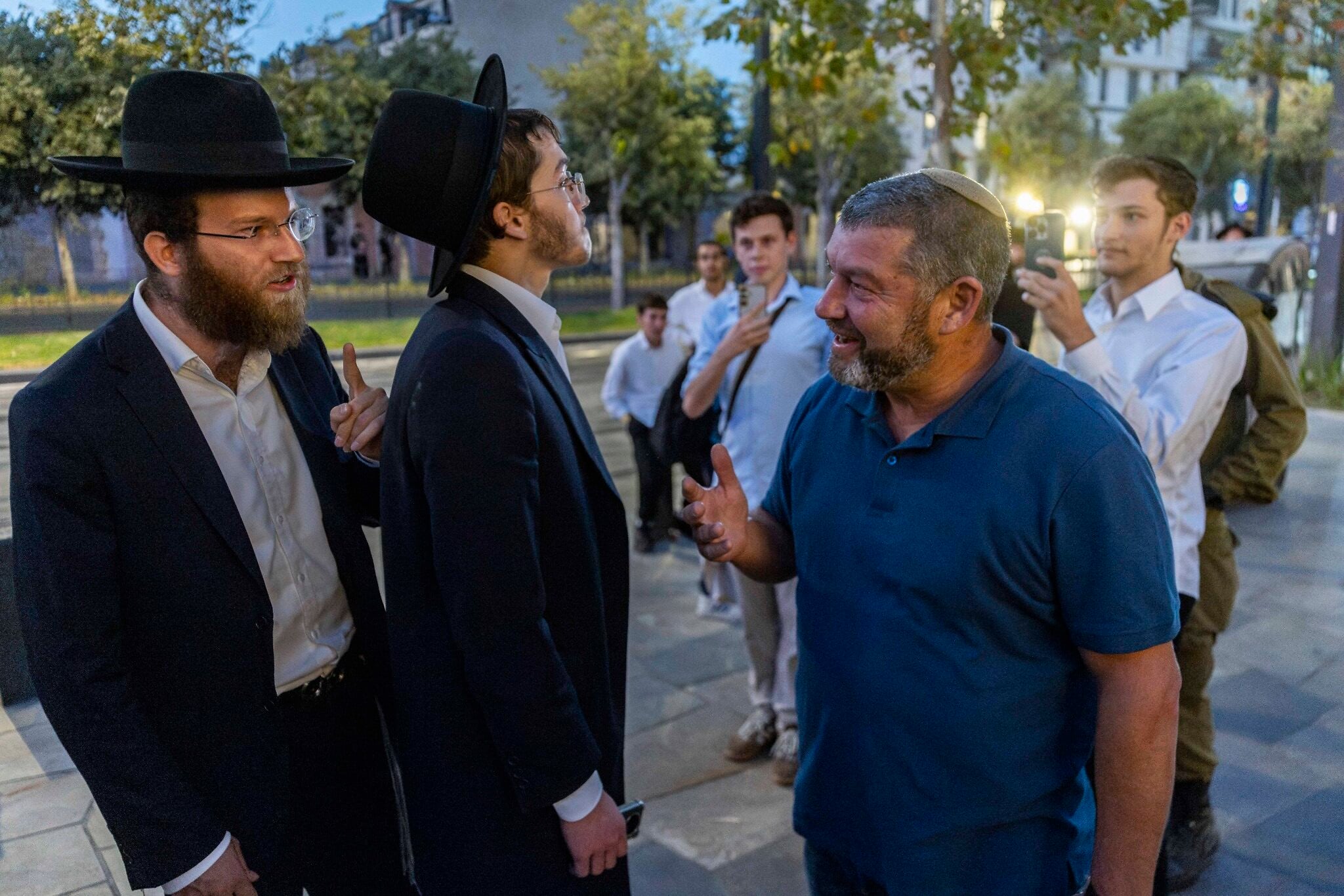
One man asked if he’ll commit to dropping out if polls before Election Day put him below the threshold. No dice: “I am running to the end.”
Another voter told Winter he was “fed up” with Netanyahu’s repeated caving to the ultra-Orthodox and noted that, even if Winter passed the electoral threshold, all polls indicated that there simply would be no Netanyahu-led right-wing government without the ultra-Orthodox parties.
“The right is the ultra-Orthodox,” the voter said.
“I understand,” Winter said. “If [Netanyahu] doesn’t give me what I want, that’s it, brother. I’m not with him. I’ll go to someone else.”
A complex equation
As Israelis prepare to vote Tuesday, the election’s outcome remains uncertain, but much of the uncertainty is tied to Winter. A brief review of the political math shows why.
In the final pre-election polls, the four parties of the Zionist opposition bloc — Eisenkot’s Yashar, Bennett’s B’Yachad, Liberman’s Yisrael Beiteinu, and Golan’s Democrats — garner anywhere from 51 to 55 seats, more than Netanyahu and his allies, but still far short of a majority.

Though not formally aligned with any bloc, a fifth party — the alliance between Yoaz Hendel’s Reservists and Yaron Zelekha’s New Economic Party — has indicated that it could join the four opposition parties in a narrow 61-seat government.
“We will make an effort to expand it,” party number-three Einat Wilf told The Times of Israel, “but this is not a red line.” But even if the alliance crosses the threshold, as it does in most polls, its four seats are unlikely to give Eisenkot a majority.
Without 61 seats, Eisenkot would need to add the Arab Ra’am party (which he has ruled out) or pursue a minority government (which Liberman vigorously opposes).
Enter Ofer Winter.
If People of Israel crosses the threshold, Winter could follow through on his promise to help Likud assemble a “broad right-wing government.” But with Netanyahu likely to be further from a majority than Eisenkot (even with four seats from Winter) and all four opposition parties refusing to join a coalition under him, this is unlikely.
‘Someone is going to have to walk back his promises, or we’re headed to deadlock’
If neither Eisenkot nor Netanyahu can form a coalition, Winter could in theory join an opposition government on condition that it is led by Liberman or Bennett (and presumably that he receives the defense ministry). But his repeated pledges not to sit in a coalition with Yair Golan also make that math unworkable unless he is joined by another right-wing party that has sworn allegiance to Netanyahu.
“Someone is going to have to walk back his promises, or we’re headed to deadlock,” said Channel 12 chief political analyst Dana Weiss. “Everyone in this race is doing their best for this round of elections but understands that there might be another round of elections.”
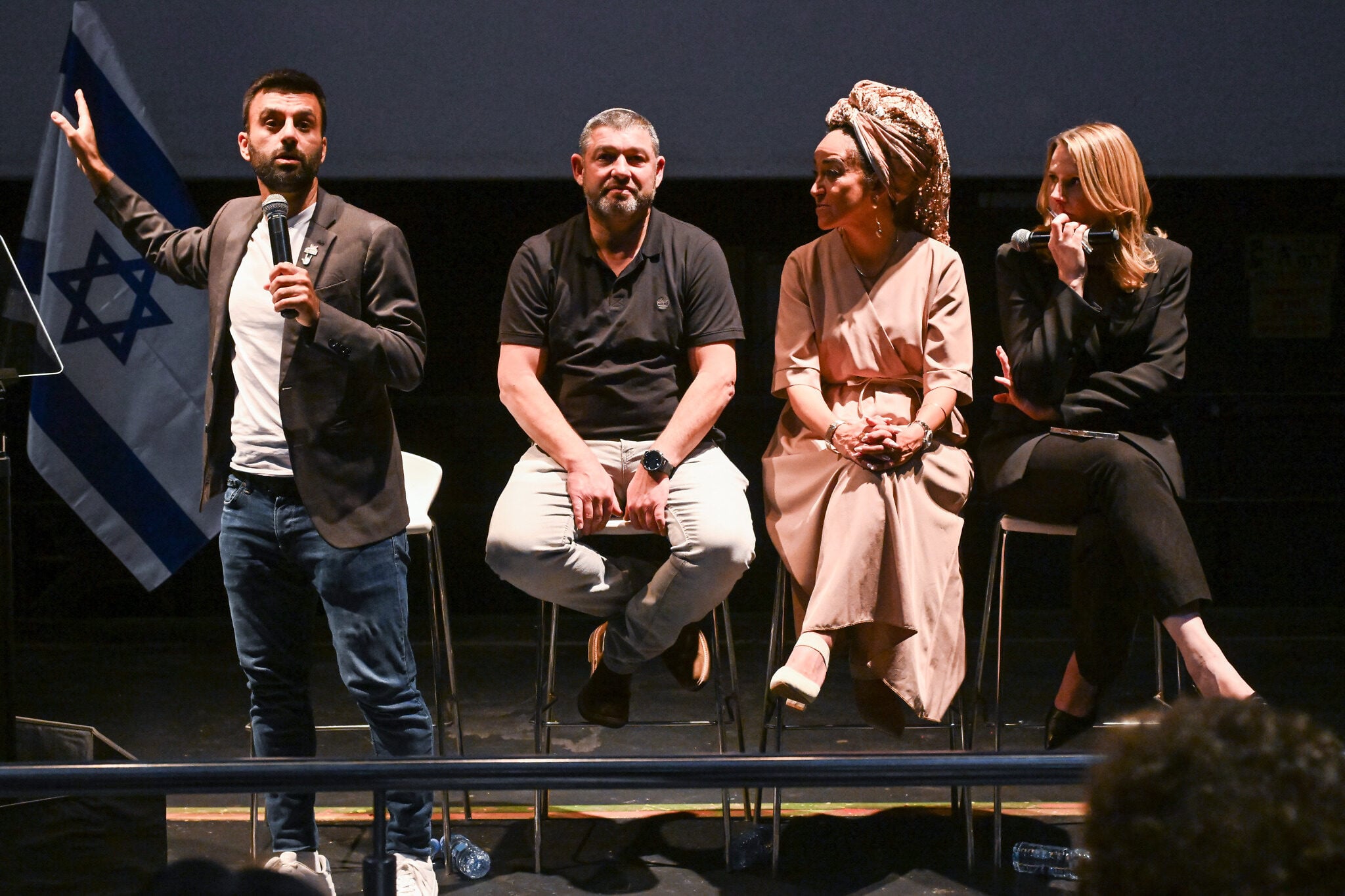
Weiss, who interviewed Winter on a recent broadcast, opined that the People of Israel chief “would be the last person to go back on his word,” noting that Winter and his wife Revital were staunch Bennett supporters who were traumatized by his 2021 decision to cross the aisle to lead a unity government.
Weiss added, however, that Netanyahu and his associates were far less certain that he wouldn’t defect to the opposition for the right price: “They understand that, if Winter passes, he will give them a hard time because he will cause problems with the Haredim with the draft law, so for them it’s much better to go ahead and spin the fact that he would sit with Liberman and Bennett.”
Winter shared his views on the two opposition party heads with The Times of Israel.
“Listen,” he said, “I think each of them made his own mistake. Liberman, who boycotted a [Netanyahu-led] government again and again and dragged us to elections. On the other hand, I believe him that he’s a man of the right.”
As for Bennett, Winter said he “made the mistake of his life and went to become prime minister with six seats and went with the Arabs. Serious.”
Asked how he felt about Netanyahu calling him “Bennett II,” Winter retorted: “I think he himself doesn’t believe what he’s saying. Meanwhile, I’m hearing right now that he’s going to go with Eisenkot. I hope that he isn’t going for a deal in Gaza now, with our entire war and [the death of] our combat soldiers having been for nothing.”
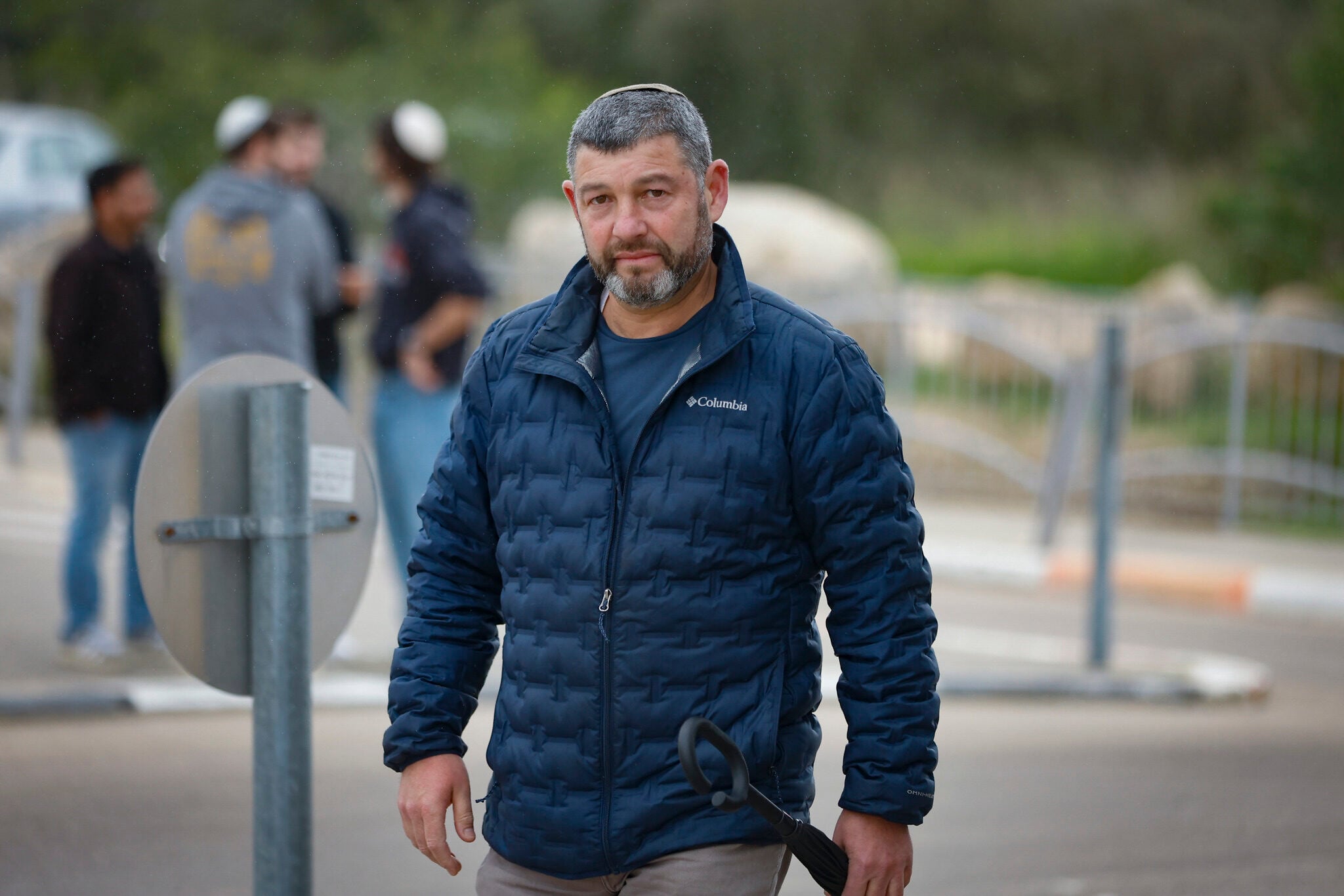
Winter reiterated his preference for a “broad right-wing government” led by Likud.
“If they can’t form a government,” he added, “I don’t know what will happen, but in any event I’d prefer not to go to another election.”
Blood, sweat and tears
Six days before the election, Winter returned to Tel Aviv for a pair of events at the homes of supporters. Two polls released earlier in the day, from Channels 12 and 13, showed People of Israel again on the cusp of the electoral threshold — just above it in one, just beneath it in the other. Netanyahu, meanwhile, had escalated his pressure campaign on Winter, meeting with his rabbi in a bid to force him out of the race. Likud would soon release an AI ad showing Winter huddled over a campfire, gleefully setting right-wing ballot slips ablaze; another had him signing a coalition deal with Mansour Abbas and other Arab party leaders.
“I knew they would smear me, but I did not know it would be so ugly and low,” Winter told a backyard crowd of mostly secular Tel Avivians seated in rows of white plastic chairs. “They said I was a political rookie. I do not deny it. I was a rookie. But in six weeks, I tell you, I have completed basic training, advanced training, and a company commanders’ course.”
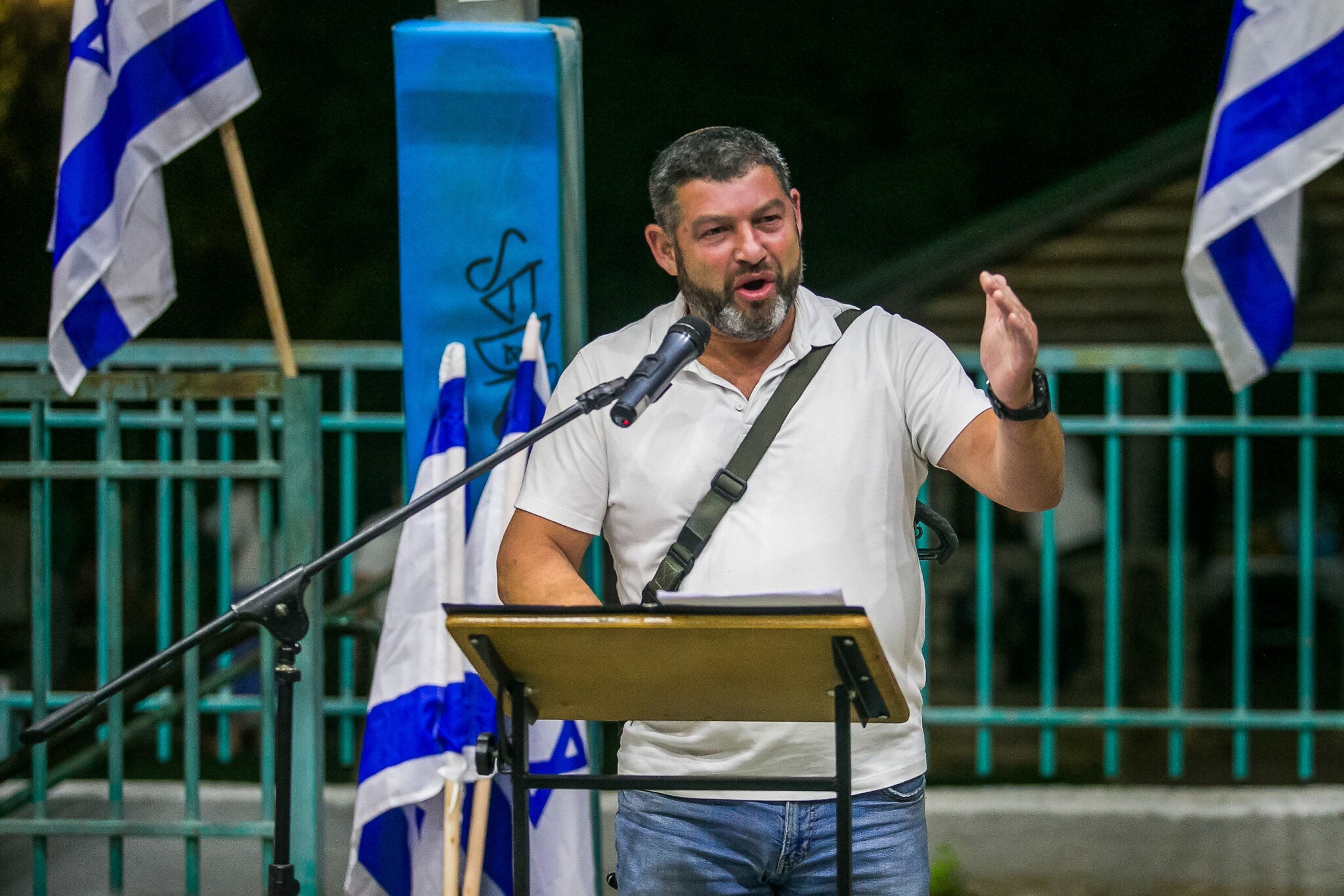
He told the crowd that he never planned to enter politics — until the October 7 invasion.
“I was home for Simhat Torah,” he recounted. “I went out, rushed to the area, and fought around Sa’ad Junction and in Kibbutz Be’eri.”
He acknowledged the widow of Kibbutz Be’eri’s security commander, Sigal Kraunik, now 11th on his party’s slate, recalling how she could not locate her husband’s body for burial in the days after the massacre: “By chance, I was there and said, ‘Wait, we brought him out.’ That is how they found him.”
Winter said he began traveling the country in the wake of October 7.
“I met — I do not know how many — about 300 gatherings, each with hundreds of people. I met thousands. The feeling was that different leadership was essential. The whole discussion was: ‘Replace them all; they should all go home.’”
Winter again returned to his desired solution for Gaza. The war, he said, “must end with emigration, without compromises.”
A bald, middle-aged gentleman sitting toward the front, arms crossed, heckled him: “Will you make one and a half million emigrate?”
“God willing,” Winter said.
“God is not with you on this,” the man replied, as the two began to talk over each other.
“What are you angry about?” Winter asked. “Fine. Many people are angry with me.”
“Netanyahu is angry with me too,” he continued. “It’s all right.”
Ben Birnbaum is the founder of the Middle East peace organization ROPES. A former New Republic correspondent, he won a National Press Club award for his reporting on the Israeli-Palestinian conflict.
The Times of Israel Community.