

Ambassador to Thailand plays down anti-Israeli protests, but urges cautionary action
Alona Fisher-Kamm says antisemitism is not part of Thai mindset, but there are cultural differences that need to be addressed to prevent tourists causing offense
 Add ToI as a Preferred Source on Google
BANGKOK, Thailand (AFP) — Thailand has long been welcoming to Israelis in a way some other countries have not — and Israel’s ambassador wants it to stay that way, after several anti-Israeli protests and disputes involving tourists.
“We have to work together to make sure that the conflict in the Middle East is not imported here to Thailand,” Ambassador Alona Fisher-Kamm told AFP in an interview on Tuesday.
“It’s still very hard for me to use the word antisemitic here in Thailand,” she said at the embassy in Bangkok.
“It’s really, really far from their mentality, from their tolerance, from what they think.”
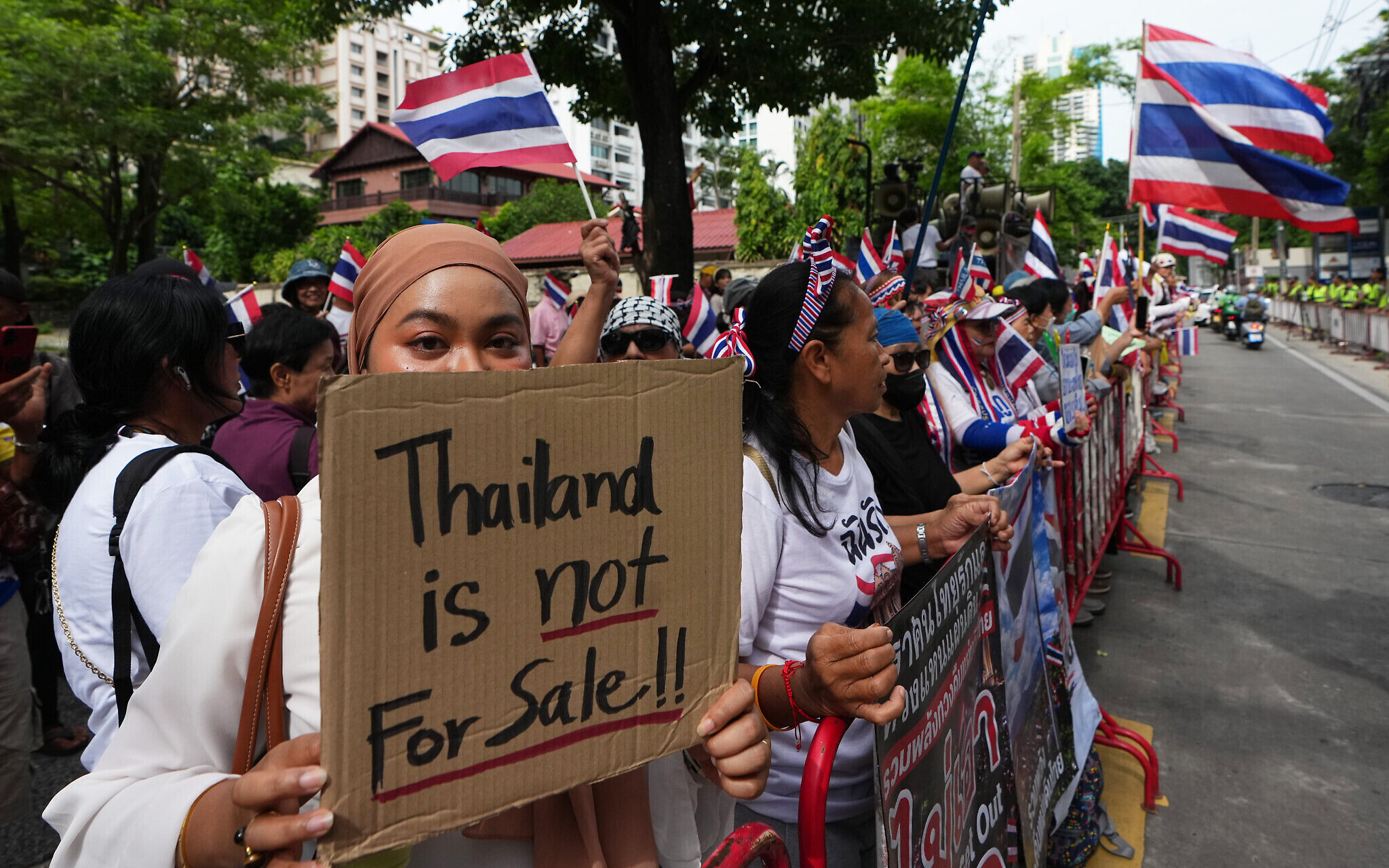
On several occasions in recent weeks, protesters have gathered outside the embassy to voice their displeasure with Israelis.
During a rally last week led by Sondhi Limthongkul, leader of the ultra-royalist “Yellow Shirt” movement, some demonstrators brandished signs reading “Jews Out” or “You Jewish folks don’t understand Thai culture, so get out.”
Protests also took place on the tourist island of Phuket, where a dinner organized to celebrate Rosh Hashanah, the Jewish New Year, was canceled at the last minute due to fears of violence.
Rabbi Yehuda Kaploun, a special envoy on antisemitism for the US State Department, said on X he was “deeply concerned by rising anti-Semitic rhetoric in Thailand.”
‘Culture gap’
The protesters have been primarily focused on alleged instances of rude or inconsiderate behavior by Israeli tourists, who are accused of failing to respect local customs.
“I believe that there is a kind of culture gap between Israelis and Thais,” acknowledged Fisher-Kamm, noting some “cases of disrespect” and “misbehavior.”
On the island of Koh Samui, a Frenchman and his Thai wife made headlines after banning Israeli tourists from their zoo, blaming poor behavior.
The government last week ordered the Frenchman’s deportation, citing a range of issues, including that his actions risked stirring religious division.
Israelis have also been accused — alongside many other countries’ nationals — of using Thai proxies to circumvent restrictions on foreigners owning land and businesses.

Several cases have recently been highlighted by Thai media, including an allegedly illegal school on the island of Koh Phangan — nicknamed “Little Tel Aviv” for the number of Israelis living there — and a Jewish cemetery where bodies were allegedly buried after its license expired.
The ambassador played down the incidents, arguing there was a “phenomenon to amplify or to take these incidents out of proportion.”
“There is a kind of campaign in the social media that is trying to separate between Israelis and Thais,” she added.
Nonetheless, Fisher-Kamm met last week with Thailand’s foreign minister, Sihasak Phuangketkeow, to discuss the situation and, as she put it, “to see what can be done to minimize this.”
Rules of conduct
The Israeli embassy has produced Hebrew-language brochures outlining rules of conduct for visitors, which are being shared on social media, via airlines and travel agencies.
Tourism is vital to the economy of Thailand, a country known for its beaches, culture and food.
But Sihasak said after last week’s meeting that “our welcome does not mean tourists — no matter what nationality they are — can do anything they want in Thailand.”
The minister added: “If we do not do anything to this matter, it will affect the relations between two countries.”
He noted that a bilateral agreement allows tens of thousands of Thais to work in Israel, particularly in the agricultural sector.

Last year, more than 420,000 Israelis visited Thailand, a destination particularly popular with young people after they complete their mandatory military service.
“It’s a beautiful country. The people are tolerant, they are nice, they are smart, they are welcoming,” said Fisher-Kamm.
“It’s not a secret that Europe might not be as appealing as it was for Israeli tourists these days.
“They are trying to be as far as possible from the conflict.”










The Times of Israel Community.