

As Iran and Houthis tighten the screws on Saudi Arabia, a potential role emerges for Israel
Saudi leader’s old and new military alliances are offering little protection, and his previous engagement with Tehran didn’t help either; blocked in Hormuz and Red Sea, Riyadh needs new security partners

 Add ToI as a Preferred Source on Google
Lazar Berman is The Times of Israel's diplomatic reporter
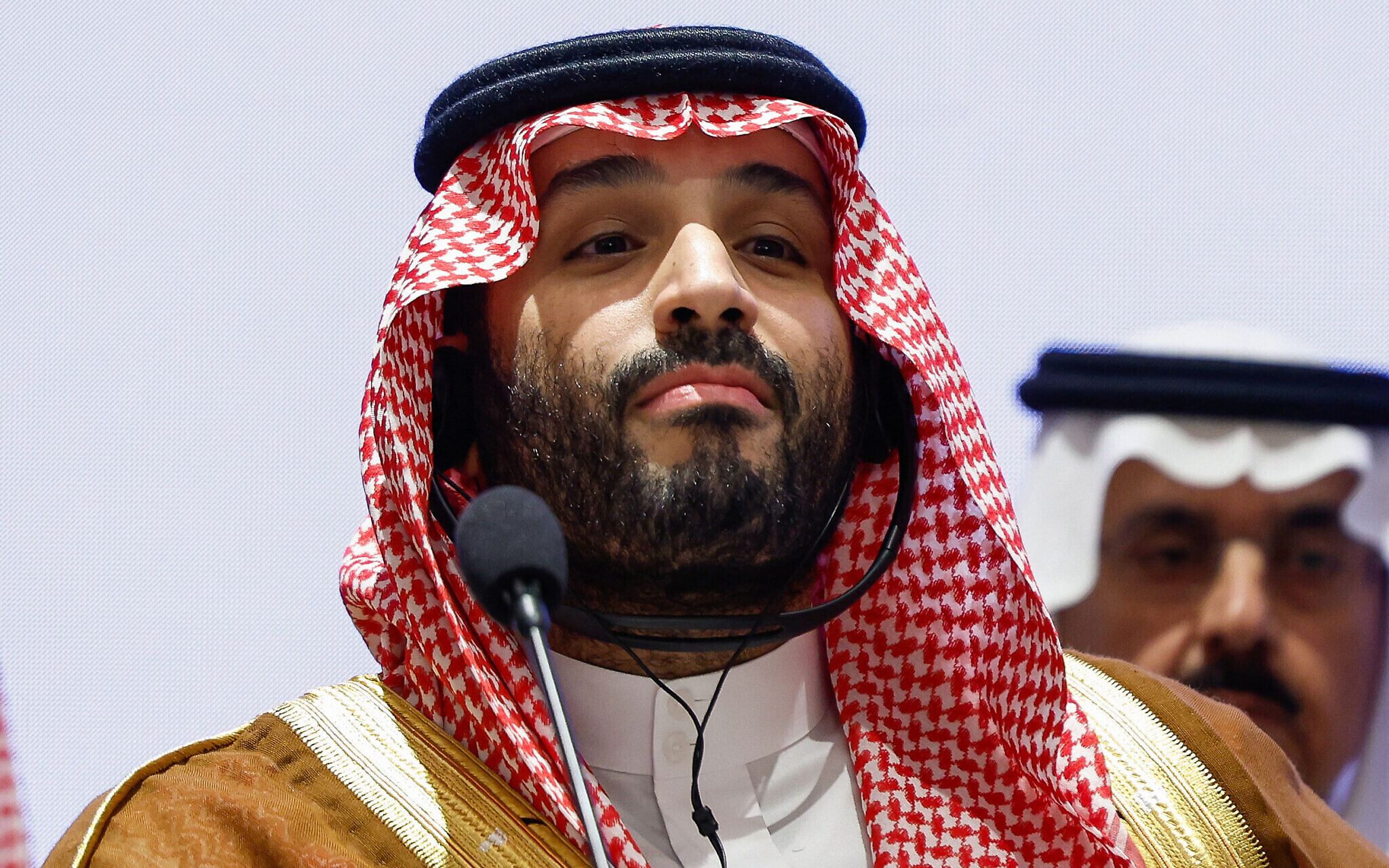
Sirens blared in Mecca on Tuesday as the Houthis fired a drone from Yemen toward Islam’s holiest city, at least according to the Saudis.
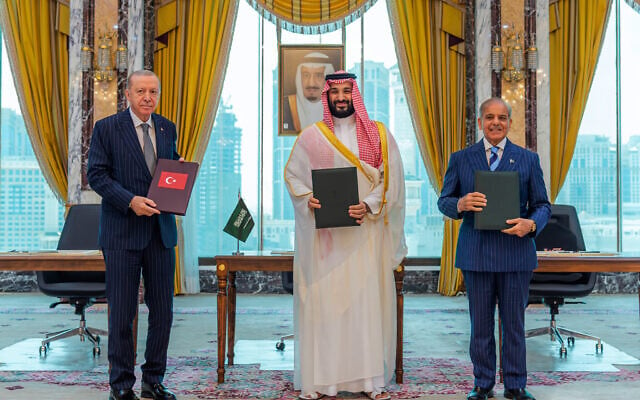
Only a month before, Saudi Crown Prince Mohammed Bin Salman hosted the leaders of Turkey and Pakistan to sign a joint defense agreement with great fanfare in the same city.
The Houthi strikes on Saudi Arabia were the first test of that pact, the Mecca Agreement, and it doesn’t seem to have translated to improved security for the Gulf kingdom. Its cities, ships, and infrastructure are coming under daily attack, and Turkey and Pakistan have not mobilized to defend their beleaguered ally — despite Saudi Arabia hosting at least 8,000 Pakistani troops.
Officials from Turkey and Pakistan told The Associated Press they have not received a Saudi request for support in response to the Houthis’ escalation. If they are telling the truth, and the new alliance doesn’t warrant even a request for assistance in the moment of truth, the crown prince is already admitting that it doesn’t actually make his kingdom any safer.
The manifest worthlessness of the Mecca pact is only one element of an increasingly dire situation for Saudi Arabia.
The emerging reality — Iran’s allies firing on the kingdom across multiple borders while closing crucial shipping lanes — “puts the Saudis in serious danger,” said Yoel Guzansky, senior fellow at the Institute for National Security Studies. “This is their biggest challenge since 1990, when Saddam Hussein invaded Kuwait and threatened Saudi oilfields.”
“It’s a catastrophe.”
Failed approaches
Bin Salman, widely referred to as MBS, dreams of transforming the kingdom from one based on massive oil reserves to a modern financial capital and tourist destination.
That goal has proven harder to achieve than he expected.
MBS’s megaprojects are looking like colossal wastes of money. His flagship futuristic city NEOM is foundering, and he is facing difficulties in positioning Saudi Arabia as an AI powerhouse.

To transform the Saudi economy, MBS needed to ensure that his kingdom was secure from his archenemy Iran and its axis.
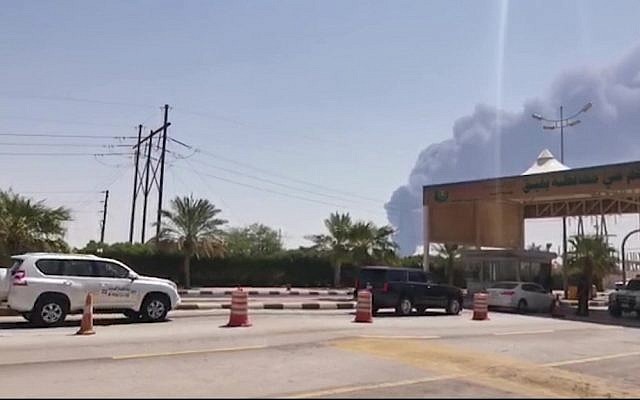
Initially, he saw the over 70 years of defense agreements and weapons deals with the US as evidence that Washington would come to Saudi Arabia’s aid if the Islamic Republic attacked. But when Iran and the Houthis struck Saudi Arabia’s Abqaiq oil refinery in 2019 — cutting the kingdom’s production in half — and Trump decided not to respond militarily, MBS realized he couldn’t rely on a US shield.
Instead, he pursued diplomatic engagement with Tehran, hoping to avoid being targeted in a future war between the US and Iran.
“They have long since stopped speaking in the language of defeating Iran, but rather activating it, appeasing it, dealing with it, reaching agreements with it,” said Michal Yaari, Gulf expert at Ben-Gurion University of the Negev.
But that didn’t work either. After the US and Israel attacked Iran earlier this year, Tehran put its plan for such a scenario into action — targeting Arab countries, including Saudi Arabia, across the region, raising the cost for everyone to pressure Washington into halting the campaign.
While Iran’s strategy has achieved the results it was designed to, the Islamic Republic’s new leaders now see an opportunity to cement their control over the Strait of Hormuz and the region’s economy, and they aren’t showing any signs of backing down.
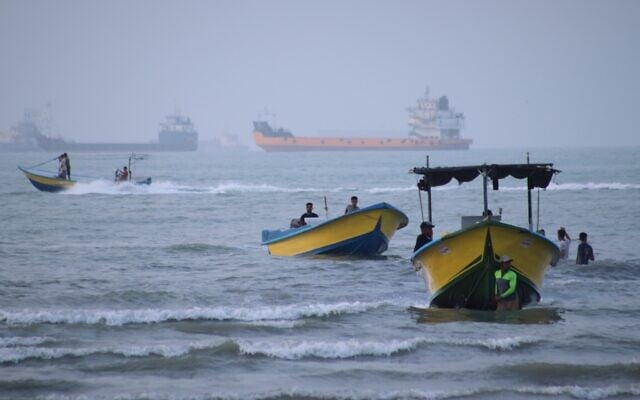
Iranian threats to Hormuz have already harmed the Saudi economy, making it far more difficult to export oil, which still makes up about 40 percent of Riyadh’s GDP and 60% of its revenues.
In response, Riyadh leaned on its East-West Pipeline to funnel oil away from the Persian Gulf and toward the Red Sea, where it could then ship it out to buyers. It diverted more than 70% of its normal daily crude exports to the Red Sea port of Yanbu.
But the Houthis are working to shut off that option as well. The capture of the Red Sea port of Mokha in Yemen and a strategic island by the Houthi rebels last week gave them further control over the Bab el-Mandeb Strait leading out of the Red Sea.
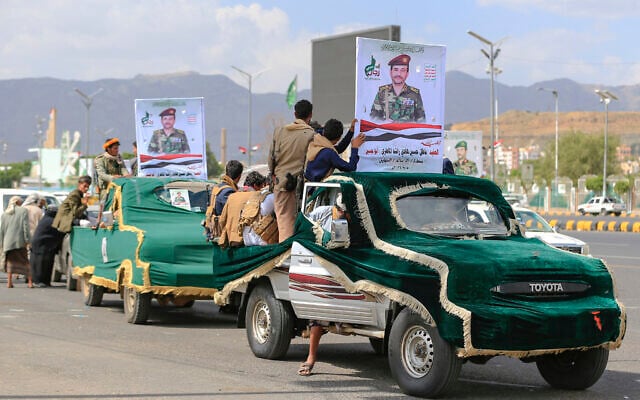
Even worse for the Saudis, the 1,200-kilometer pipeline itself came under attack last Friday, not from the Houthis, but from Iran-backed Shiite militias in Iraq, according to the Saudi Foreign Ministry. The key pipeline, which can carry up to 7 million barrels a day, will be out of service for weeks.
MBS tried to enlist foreign help. With Turkey and Pakistan either sitting on the sidelines or seen as irrelevant dealing with to actual threats, he reportedly called US President Trump twice to ask him to launch strikes against the Houthis.
Trump denied his request.
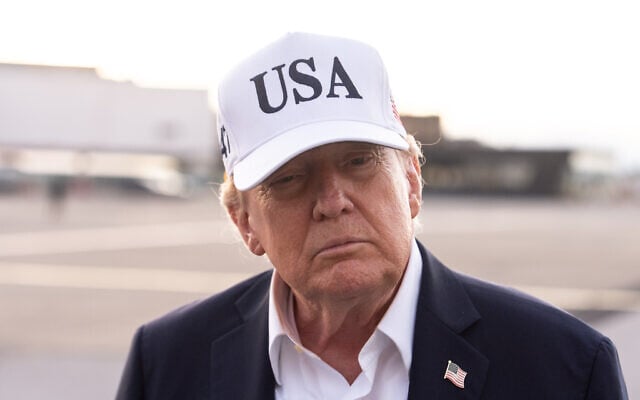
On top of that, both Trump and Vice President JD Vance announced that the White House was actually talking to the Houthis directly.
And Trump seemed to downplay the gravity of Houthi attacks on Saudi ships: “They would much prefer not having us involved, and they’re letting most ships go through. There’s just one country that they’re not too happy with, and we’ll get that straightened out.”
A senior Trump administration official told The Washington Post that Washington is “focused on protecting core national security interests,” including freedom of navigation in the Red Sea, while also “empowering our regional partners to take the lead in managing and resolving regional security challenges.”
The official added, not especially helpfully, that the White House is in “continuous dialogue” with Riyadh and the internationally recognized Yemeni government “regarding regional stability.”
Saudi Arabia is also showing the limitations of its own well-funded military. It spends about twice as much on defense as Israel, and doesn’t have anything in the way of military achievements to point to as it tries to stop Houthi fighters in flip-flops riding Toyotas and dusty motorcycles from taking and holding large swaths of strategically important territory from the Yemeni government it props up.
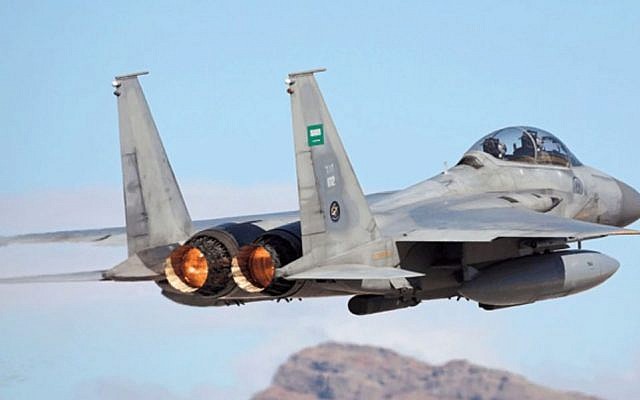
“It’s a military defeat,” said Guzansky, “and a great humiliation for the Saudis.”
Meanwhile, Iran understands that Houthi successes only improve its bargaining position, increasing the economic pain around the world that Tehran says can only be relieved by capitulating to Iranian demands on Hormuz.
“That leaves Riyadh unable to separate Yemen from its broader confrontation with Iran and leaning harder on Washington,” said Ari Cicurel, associate director of foreign policy at the Jewish Institute for National Security Affairs.
The Saudis are facing the realization that “all their basic assumptions are actually not valid, but there is no alternative reality that is better,” said Yaari.
Quiet opportunity for Israel
With Saudi Arabia caught in a bind that is only growing tighter — and its treaty allies and superpower backer staying out of the fray — there is an opening for Israel to show the benefits of cooperation with the Jewish state.
The interests of the two countries overlap entirely here. They both see the Islamic Republic as their bitter enemy, and both have had their ships and territory targeted by the Houthis.
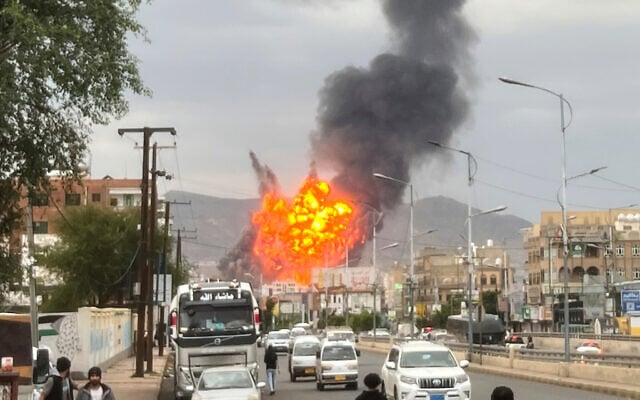
There is already some cooperation. US Central Command has reportedly been overseeing contacts between the two countries and hosted their military chiefs last week along with those of other regional allies.
That doesn’t mean Israel will send its air force back to Yemen to bomb Houthi positions. Doing so would not end the threat, but would expose the Saudi regime to accusations of being Zionist collaborators and embarrass the kingdom by highlighting its fecklessness and reliance on the Jewish state.
Instead, there is ample opportunity for Israel to quietly share intelligence and defensive technologies with Riyadh.
There’s no question that Israel’s intelligence has penetrated the Houthi organization. In August 2025, Israeli jets struck a meeting of the Houthi leadership, killing its prime minister and other cabinet members.
Israeli assistance won’t be enough in the short term to get the Saudis to agree to normalization with the Jewish state, as Riyadh continues to condition such a deal on Jerusalem allowing for the establishment of an irreversible pathway to a future Palestinian state.
But such help would emphasize that Israel has much to offer in Saudi Arabia’s increasingly dire struggle against the Iranian axis, especially while Riyadh’s formal allies continue to let it down.






The Times of Israel Community.