

As Iran chokes off Hormuz, Gulf turns its back on strait to look at new energy routes
New pipelines are being created and old ones are being restored to transport oil and gas to the Red Sea and Mediterranean. But Tehran won’t let that happen without a fight

 Add ToI as a Preferred Source on Google
Lazar Berman is The Times of Israel's diplomatic reporter
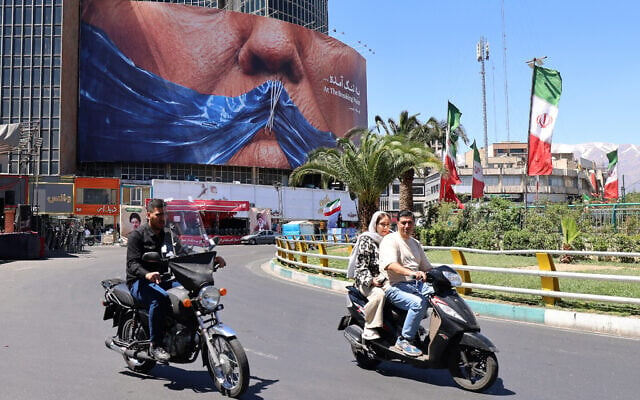
Though US, Israeli, and European diplomatic efforts have focused for years on limiting Iran’s nuclear program, the Strait of Hormuz has lately become the center of gravity of the on-again, off-again war between the US and Iran.
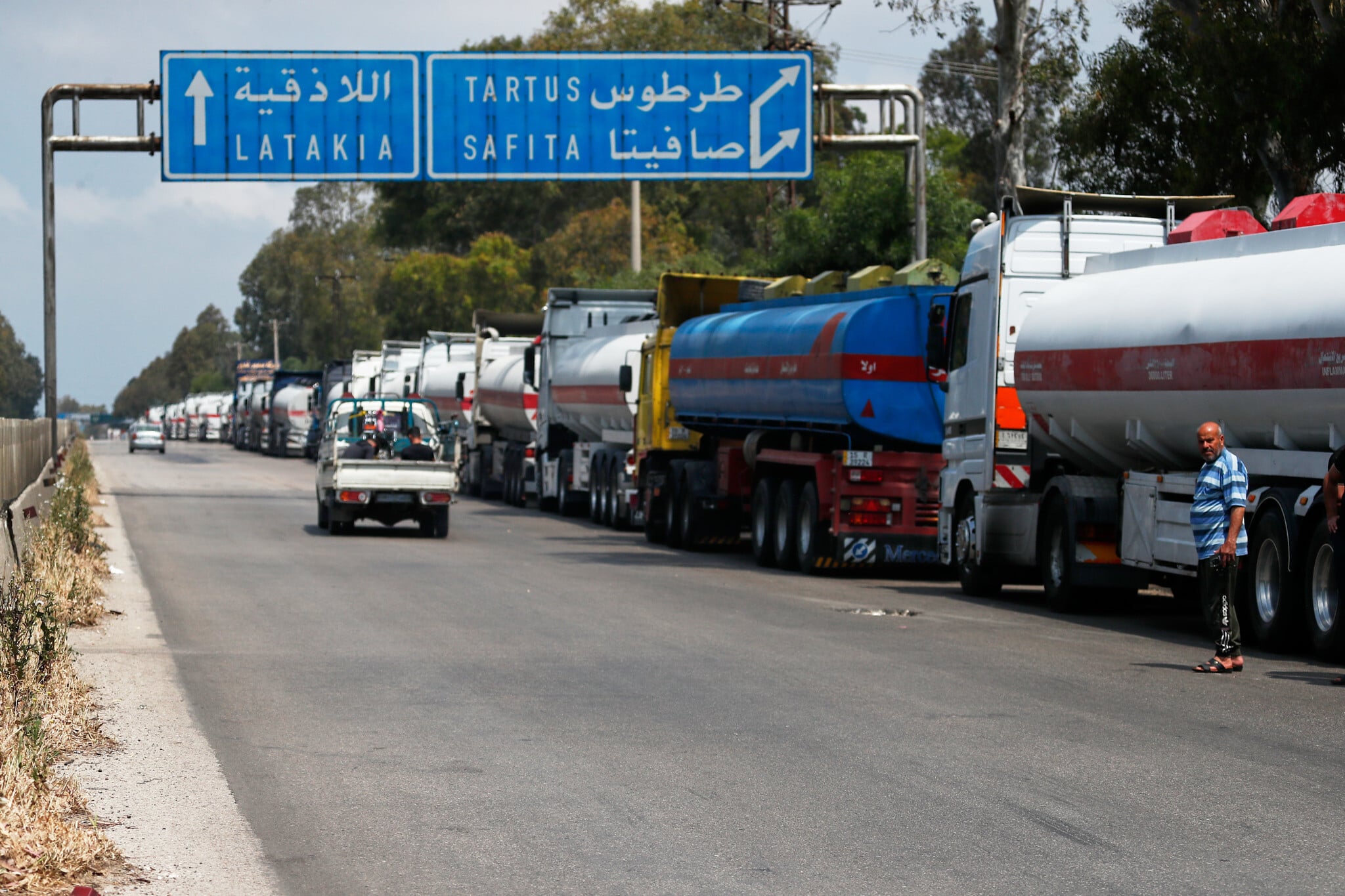
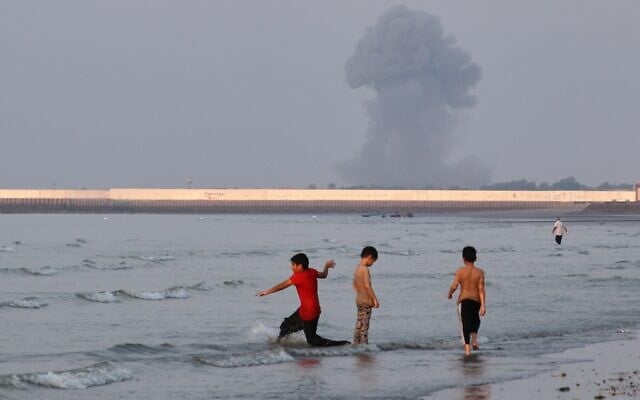
Early in the US-Israeli campaign against Iran, Tehran closed the strait, choking off about a fifth of global oil supplies. The move has driven up energy prices around the world, including in the United States.
With midterm elections approaching and fearing that voters will abandon Trump’s Republican party at the ballot box if prices for fuel and other goods remain high, the US president has made Hormuz a priority, trying to pry it open with diplomacy, threats and periodic military strikes.
For Iran, which has proven itself able to withstand all three while keeping the strait bottled up, Hormuz appears to be the perfect lever, letting it put pressure on Trump to extract valuable concessions and possibly turning the waterway into a regime-sustaining revenue stream.
That is certainly the case in the short term, but Iran’s domination of Hormuz has also triggered a process that will sap the maritime passage of its importance to world trade, turning it from an asset for the regime into a liability.
Recognizing the need for alternative routes that don’t run the risk of being blocked by Iran, the region’s oil and gas producers that depend on the Strait of Hormuz are already hard at work developing infrastructure that will allow them to bypass the chokepoint.
The result might not only deprive Iran of the ability to shackle global energy supplies, but could also help transform oil-poor Israel into an important player in one of the world’s most important markets.
A rush to the west
Though most Middle Eastern oil and gas heads eastward to Asia, Gulf countries are focusing on first moving oil westward and away from Iran.
And they are moving fast.
According to a Goldman Sachs analysis, more than 45 percent of Persian Gulf oil exports will be insulated from threats to the Strait of Hormuz by the end of next year. That number is expected to rise above 60% by the end of 2028.
The United Arab Emirates is at the center of that effort.
A close Israeli ally that was hit by Iran more than any other country during the 2026 war, the UAE was one of the top producers in OPEC before it exited the oil cartel in May, saying it wanted to increase exports.
Crude oil pipelines bypassing Hormuz.
AFP Infographic with map showing existing and planned pipelines that provide long-term export routes for crude oil, bypassing the Strait of Hormuz pic.twitter.com/00yQlcbbCt
— AFP News Agency (@AFP) August 3, 2026
To get all of that oil to world markets, Abu Dhabi said in May that it would accelerate construction of a new oil pipeline to double its export capacity through Fujairah by 2027.
Unlike its other ports, Fujairah sits entirely on the Gulf of Oman, not the Persian Gulf, and ships traveling to and from its ports don’t need to enter the Strait of Hormuz at all.
The new conduit will expand the capacity of the Abu Dhabi Crude Oil Pipeline, which can carry up to 1.8 million barrels per day from its inland Habshan oil field to Fujairah.
The Abu Dhabi National Oil Company has also announced a bid process for a liquefied natural gas facility in Fujairah.
“Abu Dhabi is accelerating work on a second pipeline to Fujairah which will connect with the emirate’s offshore fields, as the existing pipeline, which opened in 2012, is linked to the onshore fields only,” explained Kristian Coates Ulrichsen of Rice University’s Baker Institute.
Currently, ships exporting Emirati gas must travel from its sole terminal at Das Island, which is inside the Persian Gulf.
The UAE was already working on expanding its liquefaction and export capacity, Ulrichsen pointed out, but in 2023 had opted to locate a new facility at Ruwais, on its Persian Gulf coast, rather than in Fujairah, to better complement existing facilities there.
The Saudis, under attack from Iran and increasingly from its Houthis allies in Yemen, are responding to the Hormuz closures by expanding their East-West Pipeline to the Red Sea.
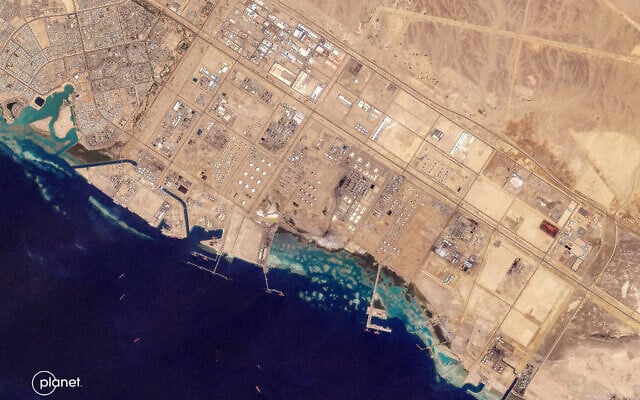
Riyadh has diverted more than 70% of its normal daily crude exports to the Red Sea port of Yanbu, helping to keep down global oil prices. However, the pipeline and terminals at Yanbu have limited capacity, are vulnerable to attack, and exports out of the Red Sea via the Bab el-Mandeb Strait, the fastest way to travel to the east, are being blocked by the Houthis.
The US is trying to help Iraq shift its oil exports away from the Persian Gulf and toward the Mediterranean as well.
In July, the State Department said it was backing efforts by Iraq and Syria to revive the Kirkuk-Baniyas pipeline, which has been mostly out of service since suffering damage during the 2003 US-led invasion of Iraq. Washington helped broker the agreement and is encouraging US companies like Chevron to play a leading role.

There are implications for other Gulf countries as well.
Oman, which borders Saudi Arabia and the UAE and opens onto the Arabian Sea, “becomes increasingly valuable as an alternative export platform,” said Karen Young of the Middle East Institute.
However, Kuwait and Qatar, with their entire coasts inside the Persian Gulf, “remain among the most exposed producers because of their continued dependence on Gulf shipping lanes,” Young said.
Israel at the hub
The shift away from Hormuz could position Israel as a key hub in the emerging energy map.
Some plans envision pipelines reaching Mediterranean ports in Syria or even in Turkey, which would add many hundreds of miles to any project.
Syria remains unstable, and the government only controls parts of the country.
“The Saudis, Turks, President Trump and his envoy Tom Barrack may favor Syrian strongman [President Ahmad al-] Sharaa, but who knows if he’ll still be leader over that fractured country by the time a pipeline is built,” cautioned Michael Makovsky, president and CEO of the Jewish Institute for National Security of America.
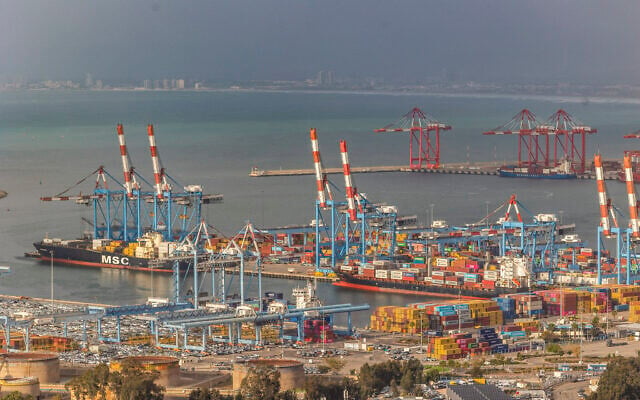
The 2023 India-Middle East-Europe Economic Corridor, or IMEC, plan, on the other hand, sees Haifa as a main port.
“Israel is the most stable country in the region, best able to protect its pipelines and ports, and most likely to respect commercial contracts,” said Makovsky.
“The Saudis in particular appear to be looking at Syria as a potential gateway to the Mediterranean,” said Ulrichsen. “There may be opportunities for the UAE and Israel to deepen connections but if Saudi Arabia is not on board, due both to tensions over normalization with Israel and geopolitical issues with the UAE, the lack of a direct land-based corridor access may prove difficult to surmount.”
Encouragingly, Israel recognizes the strategic potential emerging in the wake of Iran’s threats to Hormuz.

“The IMEC infrastructure corridor, first proposed several years ago, has taken on renewed strategic importance,” said Energy Minister Eli Cohen’s office after he spoke with his Greek counterpart on Wednesday. “The Gulf states and Israel are connected by a continuous land corridor, making the construction of infrastructure linking them to Europe through Israel relatively straightforward.”
“Iran’s primary strategic asset in the recent war — the Strait of Hormuz — could become largely irrelevant within a few years, with Israel emerging as a major beneficiary,” said Cohen’s office.
Meanwhile, there is precedent for Israel to play a part in alternatives when trade routes are blocked. When Houthis hampered shipping through the Suez Canal in 2024, freight and logistics firms switched to alternative overland routes, trucking goods from the Far East to the Mediterranean via the UAE, Saudi Arabia, Jordan and Israel.
Iranian threat won’t disappear
Despite the potential to weaken Iran and deepen Israel’s ties to Arab countries, many obstacles remain.
Turkey is actively trying to sideline Israel in any regional infrastructure network.
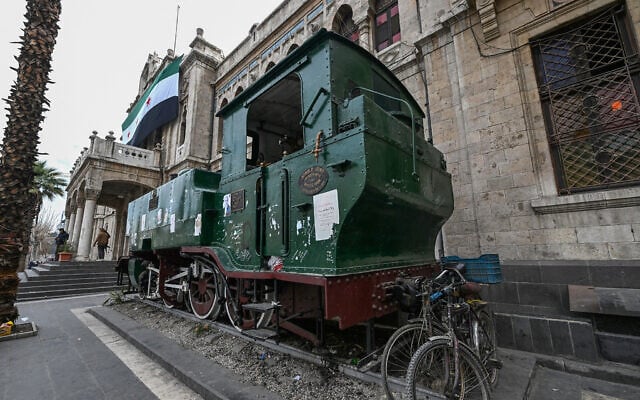
In June, Turkey and Saudi Arabia signed landmark agreements for a new rail line connecting the countries via Syria and Jordan, aiming to extend it in the future to Oman to serve as an overland trade route, bypassing the Strait of Hormuz, the Suez Canal and the Bab el-Mandeb Strait.
Ankara boasted that the project, which would revive and expand the Ottomans’ short-lived Hejaz railway from over a century ago, would reduce Israel’s regional influence. Various commentators say the development will sideline the Jewish state’s attempts to set up railway trade routes from East Asia to Europe passing through the country.
The Kirkuk-Baniyas pipeline, meanwhile, will take years to build.
Saudi Arabia’s shift to the Red Sea is being hamstrung by Yemen’s Houthis, who are part of Iran’s regional proxy network. On July 20, the Houthis declared a maritime blockade against Saudi Arabia, and on Wednesday, the rebels claimed to have attacked yet another Saudi oil tanker off Yanbu.
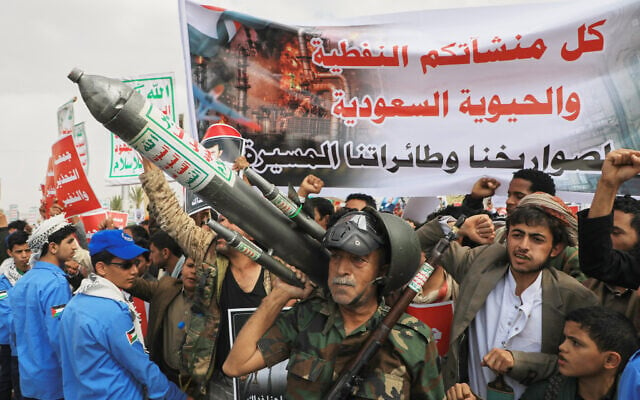
Saudi tankers seem to be choosing to sail around the entire African continent rather than risk transiting the Bab el-Mandeb Strait, which skirts Yemen, to reach the Arabian Sea and beyond.
And Iran isn’t likely to sit idly by as Middle Eastern gas and oil flows away from the chokepoints it can control.
“The Iranian leadership is bent on pursuing a vision of regional order based upon coercion and submission and this is likely to continue,” said Ulrichsen.
Pipelines, terminals and other energy facilities are notoriously vulnerable to sabotage or armed attack, and may be targeted by Iran or its various regional proxies.
“Any new pipeline is vulnerable just as the old ones have been,” Young said. “Iran will likely target routes and infrastructure as they have done in the past.”
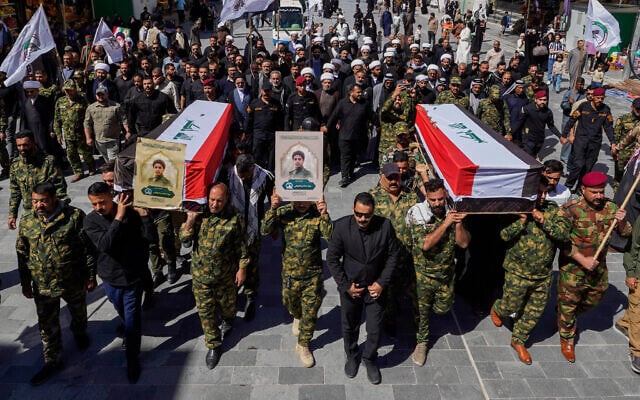
Facilities in Iraq and Syria are especially at risk, with government control in those countries patchy.
Jordan, and especially Israel, though, are harder targets for Iran and its proxies, which could give them a long-sought foothold in the lucrative oil trade.
“It certainly best serves US interests for pipelines to go through our close allies Jordan and Israel,” Makovsky noted, “augmenting those countries’ financial and strategic positions.”






The Times of Israel Community.