

Netanyahu could have his sought-for unity government… if he would step aside
Blind to the irony, the incumbent abuses the opening of the new Knesset to incite against his Zionist rivals and their potential Arab partners, while imperiously demanding Israeli unity

 Add ToI as a Preferred Source on Google
David Horovitz is the founding editor of The Times of Israel. He is the author of "Still Life with Bombers" (2004) and "A Little Too Close to God" (2000), and co-author of "Shalom Friend: The Life and Legacy of Yitzhak Rabin" (1996). He previously edited The Jerusalem Post (2004-2011) and The Jerusalem Report (1998-2004).
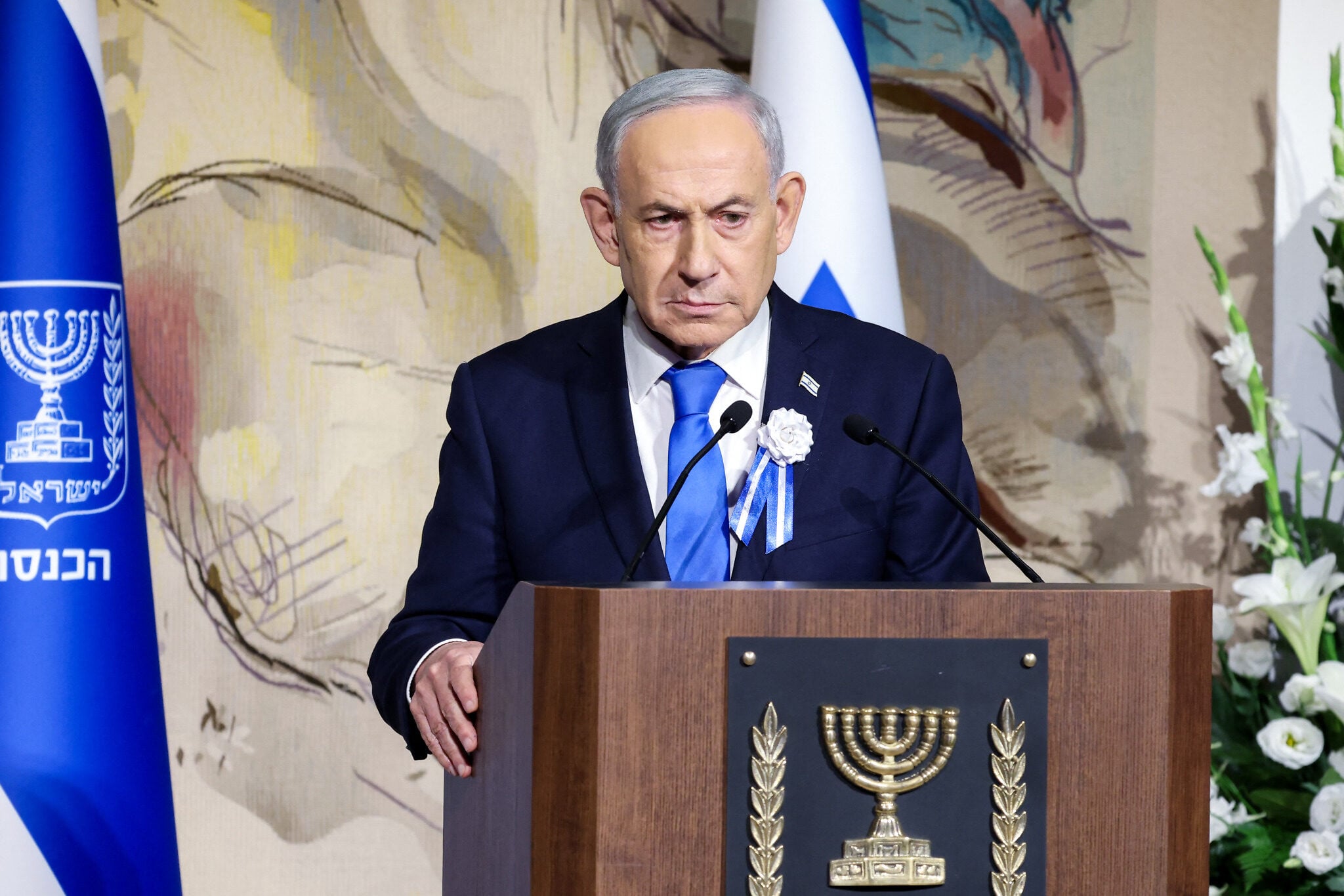
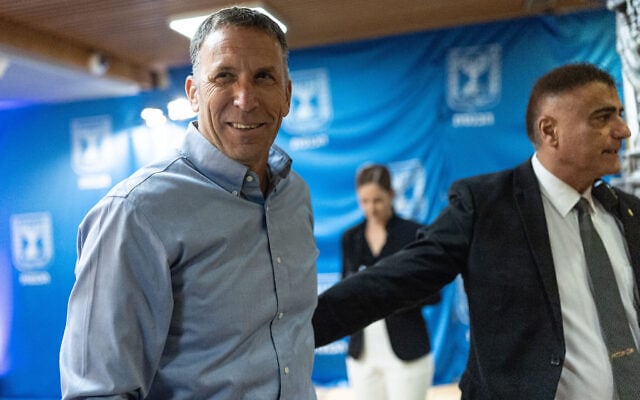
The parliamentary event that takes place after the swearing-in of new Knesset members is meant to be convivial and somewhat informal — a little music; a brief speech from the speaker of the Knesset followed by his “L’Chaim” toast to the new parliament, the people and the State of Israel; remarks by the prime minister; more music; and group photos with the leaders of the newly elected parties.
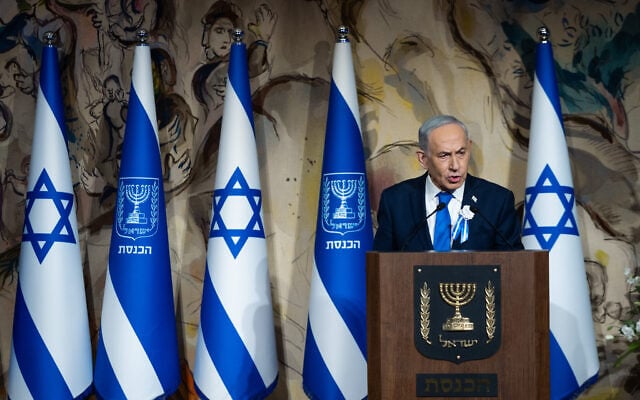
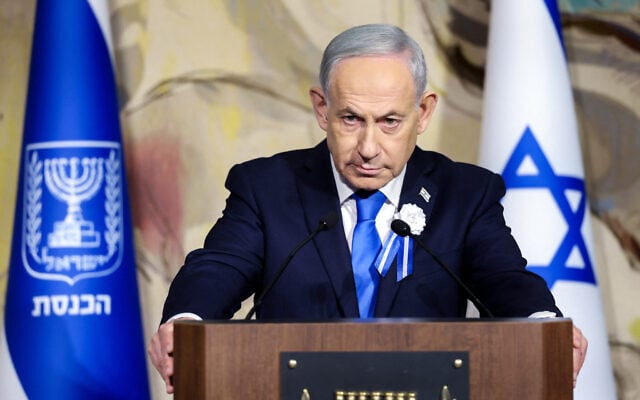
Prime Minister Benjamin Netanyahu bulldozed that norm on Tuesday. He used his address to urge national unity, but there was nothing warm or harmonious about his call. Rather, he unleashed a vicious assault on his Zionist political adversaries, characteristically tarring them all as the reviled “left” and accusing them of putting Israel in existential danger by refusing to help him restore his lost Knesset majority in a new version of his outgoing coalition.
He reserved even more of his fury, however, for the two Arab parties on whom the Gadi Eisenkot-led opposition might seek to rely in building a new government, Ra’am and the Joint List, describing MKs from those two parties as “terror supporters” and “haters of Israel.”
A spokesman issued a text of Netanyahu’s remarks, but he expanded on that pre-prepared transcript, adding fresh bile as he went along, characterizing Arabs MKs as “people who visit our hospitals — to visit not our hero soldiers, but instead the despicable Nukhba terrorists” and “people who decided to dedicate their recent achievements at the ballot box to the Hamas murderers.”
Having fumed against the unprecedentedly high turnout of Arab Israelis starting on the morning of election day itself, and while continuing to allege in his speech that the results were skewed by “the involvement of foreign actors with massive funds,” he made a pretense in his address of not branding the entire Arab electorate as terror-supporting would-be destroyers of Israel. It was only the representatives of the two parties for whom Arab Israelis voted overwhelmingly that he was denouncing: “I am not talking about Arabs. Arabs vote Likud, vote for all the parties,” he allowed. “I am talking about people whose ideology is hatred of Israel and the destruction of the Jewish state.”
Netanyahu’s attacks on both parties and their members, complete with quotations designed to showcase their perfidy, were manifestly self-serving. He would have had more credibility had he not assiduously wooed Ra’am in 2019 and 2021, after many of the incendiary Ra’am utterances he cited had been made. According to Abbas, indeed, people in Netanyahu’s circle have been in touch with him again since last month’s election. “When it’s in his interest, Arab citizens become legitimate and he becomes ‘Abu Yair,'” Abbas observed later Tuesday.

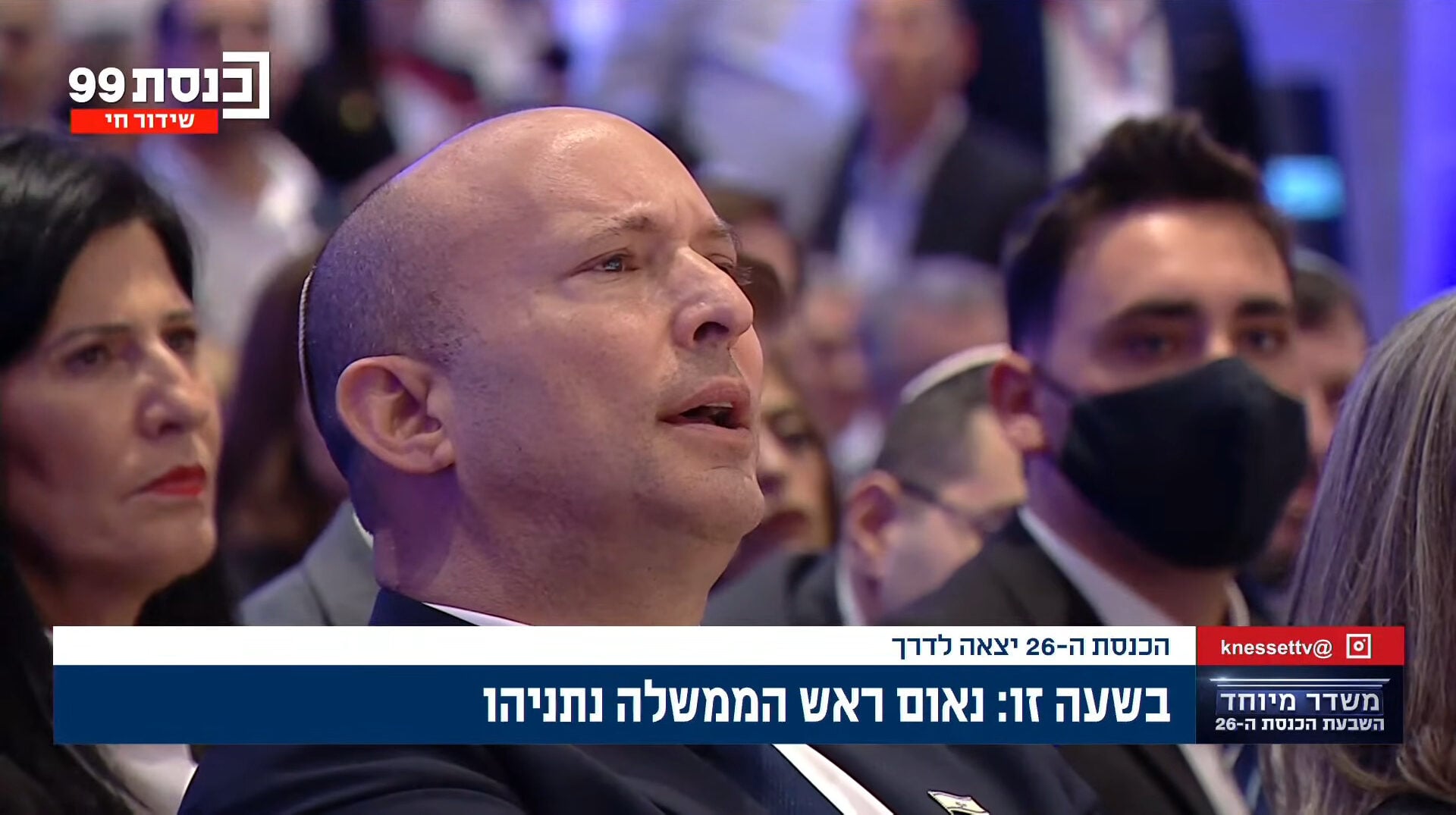
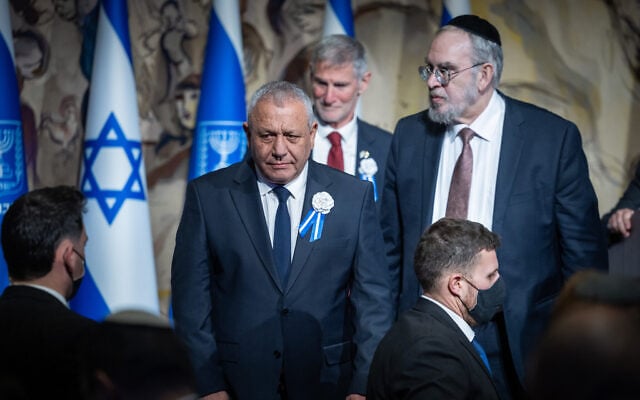
Evidently paralyzed by the good-natured traditions that had previously prevailed at this post-swearing-in event in the airy Chagall State Hall, a high-ceilinged reception area dominated by three large Marc Chagall tapestries, the dignitaries, including the Knesset members and their guests, sat largely mute, apparently dumbfounded, during much of the prime minister’s 21-minute address. Democrats leader Yair Golan walked out fairly early on; B’Yachad leader Naftali Bennett heckled twice toward the end. Democrats MK Gilad Kariv arrived after Netanyahu had ended, to shout at him.
Ironically, the thrust of Netanyahu’s mind-blowingly divisive speech was a demand for a “national unity government” (the italics are mine) — a call he started issuing only on Saturday night, when President Isaac Herzog formally confirmed that he would be tasking Eisenkot, who was recommended as prime minister by 67 of the 120 incoming MKs, with trying to form a government. Hours after the polls closed on October 27, by contrast, Netanyahu had promised to build “a strong, national, right-wing coalition.”
Leaving the dismal event, former prime minister Bennett (incidentally, a firm right-winger who seeks to annex some 60 percent of the West Bank), observed sadly and simply, “That is not how you build unity.”
Eisenkot’s earnest conditions
The issue of an Israeli government including or reliant upon one or both of the Arab parties is extremely complex.
Arab voters are equal citizens in the Israeli democracy we are rightly proud of, and whose pillars are under concerted attack by Netanyahu and his allies.
Mansour Abbas’s Ra’am party has sat in government before — in 2021-22 — in a coalition led by Bennett and Yair Lapid.
But the Joint List has never done so, and its platform for this election underlines its core opposition to the existence of Israel as a Jewish state, stating that the party “constitutes a genuine democratic alternative to the racist Zionist consensus.” The platform also accuses Israel of genocide.
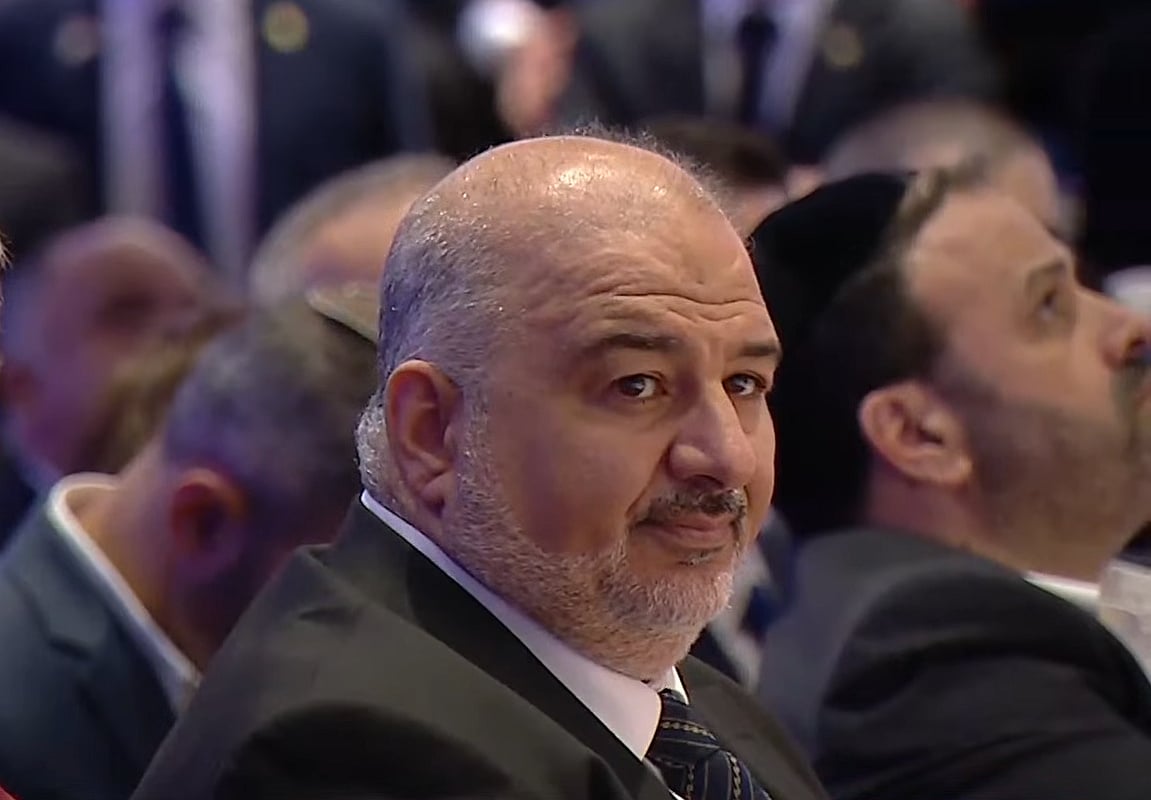
Abbas stayed in the plenum and stood for the national anthem after the swearing-in ceremony, while other Ra’am MKs left the chamber. His slate includes a Jewish, Zionist legislator.
The Joint List’s MKs all walked out for Hatikvah. Their slate includes a self-declared anti-Zionist Jew, and one of its leaders withdrew from the slate last month when facing disqualification for allegedly backing Hamas’s armed struggle in an article published the day after the October 7, 2023 assault.
With all the concerns about their elected representatives, disenfranchising a fifth of the electorate is profoundly undemocratic — the more so when Israel would grind to a halt were it not for its hardworking Arab minority’s participation in the labor force: Construction would slow significantly without them. Public transportation would come under still further strain. Healthcare would just collapse: more than a quarter of doctors and nurses, over a third of dentists, and half of our pharmacists are Arabs.
Hence, Eisenkot’s approach is to be applauded. Earnest and mature, it seeks to open the path to partnership, provided that partnership is not a short-term expedient designed to abuse our democracy in order to hasten Israel’s demise.
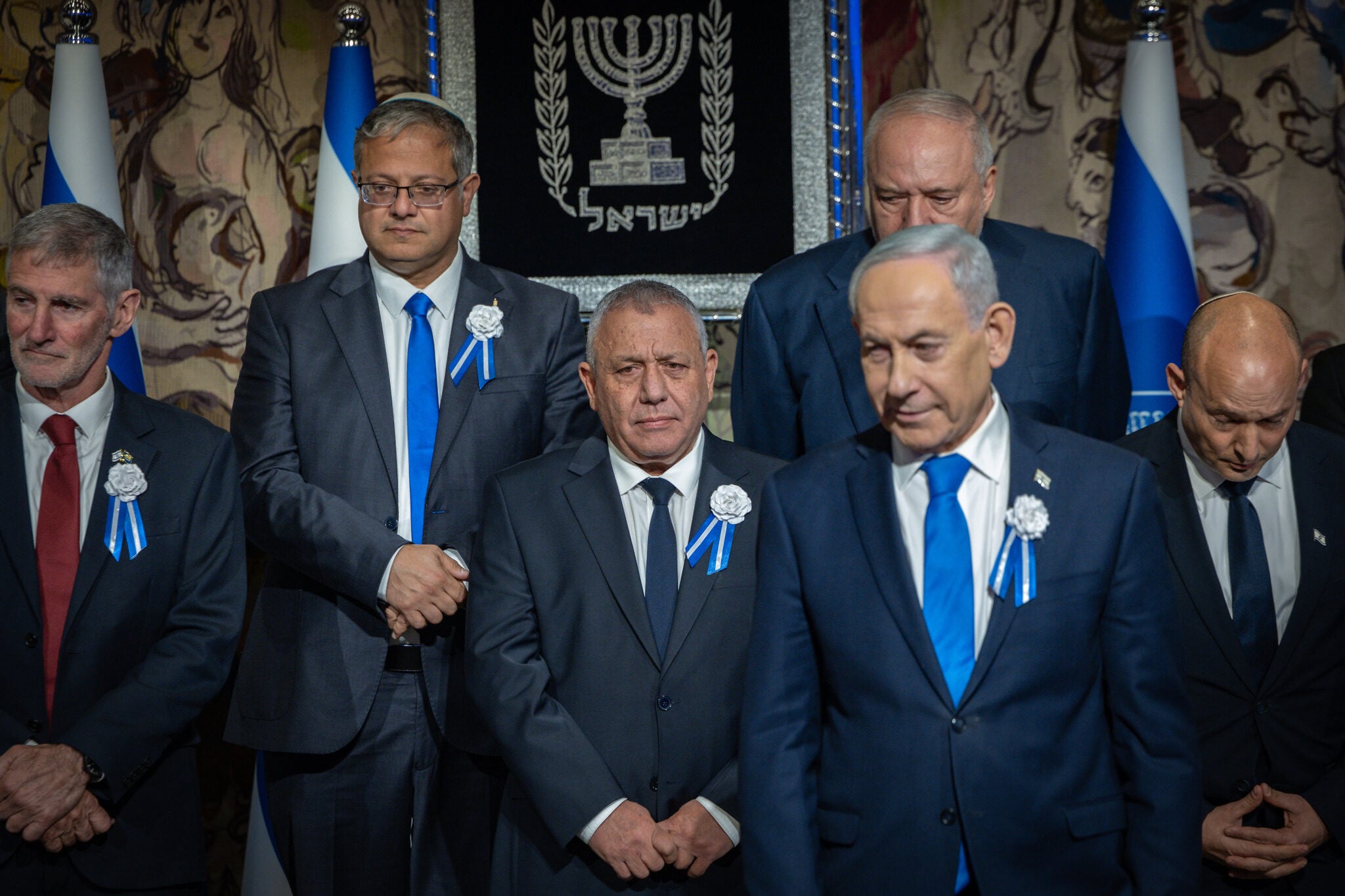
Eisenkot has set out four principles — conditions, really — for potential coalition partners, seeking to distinguish between allies and insurrectionists: that they commit to Israel as a Jewish, democratic, liberal and egalitarian state, accept the values of the Declaration of Independence, support mandatory military, national or civilian service for all, and recognize Hamas as a terror group and commit to the destruction of its military and governance capabilities. Abbas’s Ra’am party may be close to meeting those conditions; the Joint List will not do so.
Strikingly, of course, the ultra-Orthodox parties do not meet all his terms, either. And yet, driven by Yisrael Beytenu leader Avigdor Liberman, it is the ultra-Orthodox parties that the Eisenkot bloc is desperately wooing, with a readiness to compromise on the requirement for young ultra-Orthodox males to serve in the IDF. It might be noted, understatedly, that Israel would not grind to a halt without the ultra-Orthodox community’s participation in the workforce.
The numbers still don’t add up
Liberman’s decision on Friday to end his longtime veto on a coalition partnership with the two ultra-Orthodox parties, and his openness to “painful compromises” on the issue of the Haredi draft, followed the decision of one of the two, United Torah Judaism, not to recommend Netanyahu or anybody else for prime minister during last week’s consultations with President Herzog.
But Liberman’s stance, as further elaborated on Tuesday, makes little sense, because his numbers do not add up.
He is adamant that Netanyahu must be removed from power “once and for all.” He argues that a minority government would not achieve this — would, in fact, quickly collapse, triggering a fresh election in which Netanyahu would come back stronger. He adamantly opposes any reliance on the Arab parties.
But the Eisenkot bloc won only 48 seats. United Torah Judaism, which is most unlikely to actually join an Eisenkot-led government, would only add seven if it did — for 55 seats. Still no majority in the 120-member Knesset.
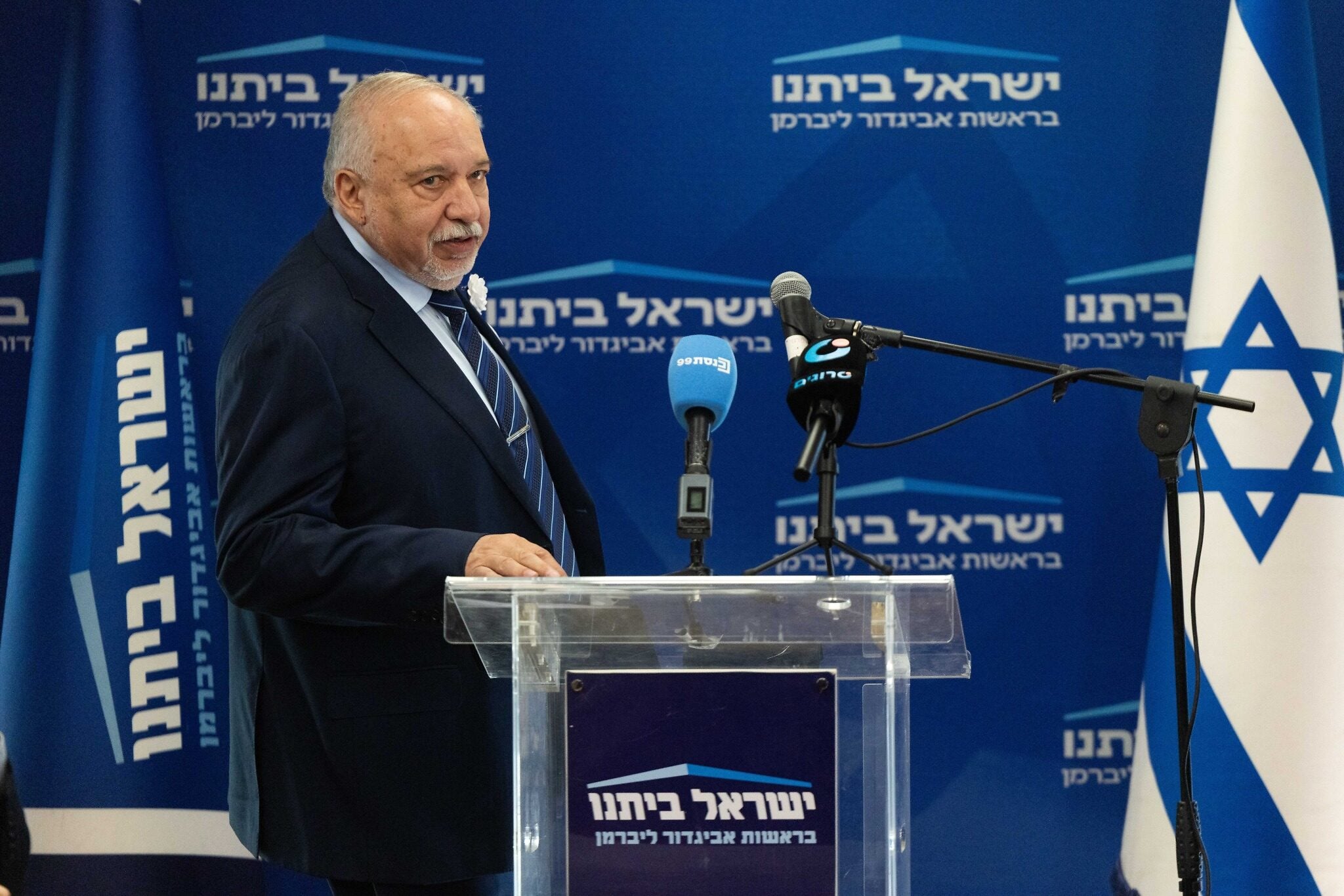
Liberman’s stated confidence that a 61-strong coalition can be mustered “within a very reasonable time” thus presumably rests either on the second ultra-Orthodox party, the six-seat Shas, also breaking free of Netanyahu’s embrace, or on a partnership with Bezalel Smotrich’s Religious Zionism (six seats), or on a major rebellion within Likud, with a third or more of Netanyahu’s party defecting (the law no longer permits individual defections). The likelihood of any of those scenarios coming to fruition is, as they say, slim to none, and slim’s not taking Eisenkot’s calls.
There is, of course, a relatively straightforward path to a genuine “national unity government”: a mainstream unity government dominated by the two largest parties, Likud and Yashar.
It necessitates just one compromise. The leader of Likud — the incumbent prime minister, the man with whom the buck should have stopped for the failure to prevent Hamas’s October 7, 2023, invasion and massacre, the man who has for three years prevented the essential state commission of inquiry into the catastrophe, who has indulged ultra-Orthodox non-service at the hour of the IDF’s greatest need, who stirs hatred within Israel against any and all who oppose him, who is attempting to destroy Israel’s independent judiciary, who has presided over the radical deterioration of Israel’s education system, who has failed to destroy Hamas in Gaza, who encouraged a strategically flawed assault on the would-be Israel-destroying regime in Iran and is now pressing US President Donald Trump to return to battle with no better strategy, who has indulged spiraling Jewish terrorism and violence against Palestinians in the West Bank, alienating Israel’s dwindling global support and triggering imminent settlement sanctions that will batter the entire economy — must finally step aside.
But that single, belated personal compromise, from a leader who, at 77, is nearing the end of his political career, is of course one too many. It is simply out of the question for the man who stood in the Chagall State Hall on Tuesday afternoon and castigated his rivals for daring to resist his peremptory insistence on a debased version of “unity.”
How much lower will he go next?
—
This Editor’s Note was sent out earlier Wednesday in ToI’s weekly update email to members of the Times of Israel Community. To receive these Editor’s Notes as they’re released, join the ToI Community here.


The Times of Israel Community.