

Six injured in settler attack on civil rights activists in West Bank, group says
Video footage shows settler extremists throwing rocks and clubbing olive harvest volunteers; IDF disperses assailants; 2 activists taken to hospital for head wounds
 Add ToI as a Preferred Source on Google
Jeremy Sharon is The Times of Israel’s legal affairs and settlements reporter
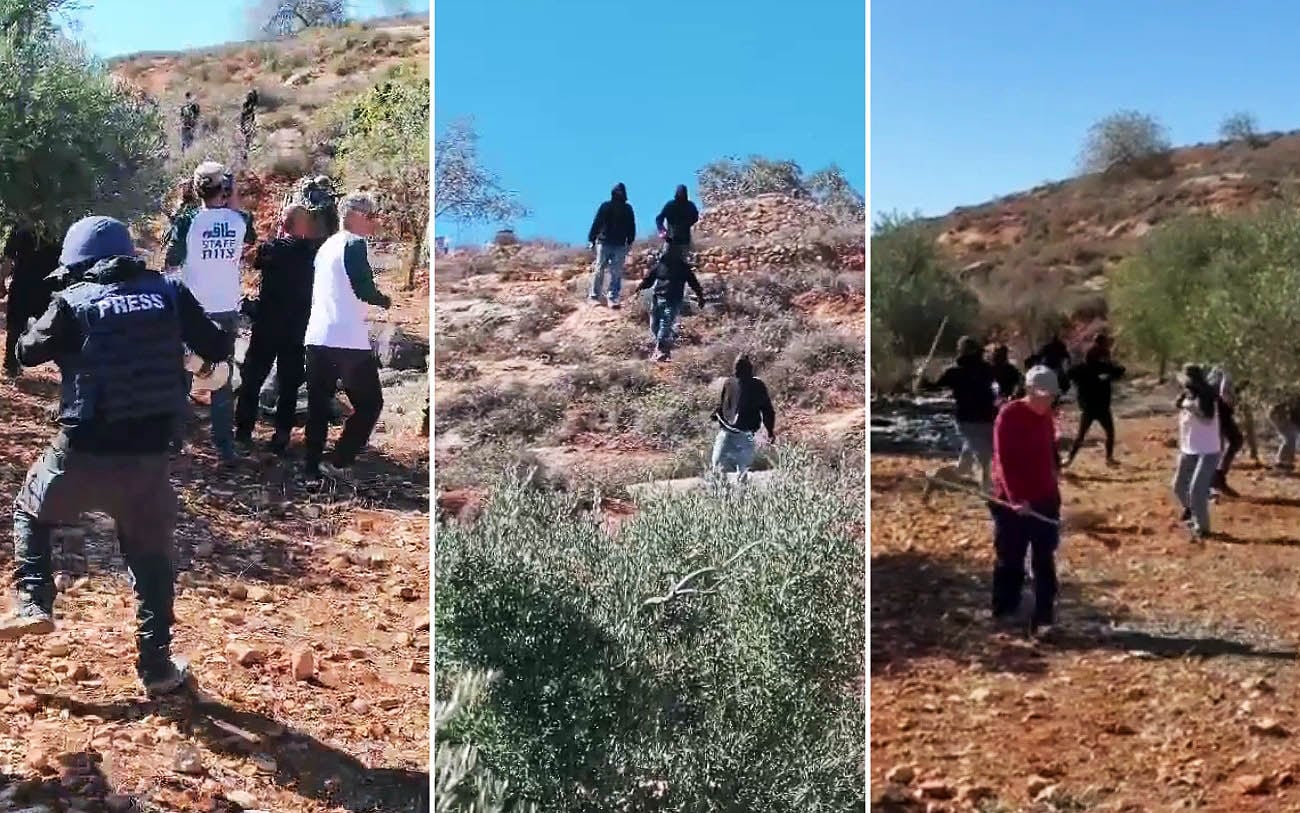
The Rabbis for Human Rights organization said Tuesday morning that six people were injured by extremist settlers who attacked volunteers with clubs and rocks during agricultural activities organized by the group outside the Palestinian village of Qusra in the northern West Bank.
Police said they launched an investigation into the “incident of friction.”
The wounded included a member of the press, Rabbis for Human Rights said, adding the wounded were treated by the Red Crescent and that two of them sustained head injuries and were taken to a hospital.
WAFA, the Palestinian Authority’s official news agency, identified the wounded member of the press as European Pressphoto Agency photojournalist Alaa Badarneh.
Video footage from the incident showed masked assailants throwing stones at the activists, bludgeoning others with clubs, and stealing olives that were harvested.
According to Rabbis for Human Rights, four of its activists who were helping Palestinian olive growers with the olive harvest were among the injured, along with the journalist and a Palestinian resident of Qusra.
Ezra Brownstein, one of the Rabbis for Human Rights staff members present, said the activists harvested olives for an hour and a half before the attack began.
The volunteers saw a group of extremists gathering on the hill above them and called the police, Brownstein said.
Video footage taken by activists with the Rabbis for Human Rights group shows extremist settlers attacking activists, Palestinian olive growers and laborers with rocks and clubs, outside the West Bank village of Qusra, Nov. 10, 2026 (Courtesy Rabbis for Human Rights)
It was after an IDF force arrived at the scene that some 20 settler extremists actually launched their attack, throwing stones at the volunteer workers and beating them with clubs.
At one stage a group of settlers managed to steal several tarpaulins containing the harvested olives and made their way up a nearby hill toward the nearby illegal settlement outpost from where it is believed they arrived.
Brownstein said the group asked the IDF soldiers to prevent the theft and the force retrieved the tarpaulins, although the olives had been scattered over the ground.
Brownstein said the soldiers fired tear gas at the assailants and successfully dispersed them. The extremists then regrouped and attacked from a different direction, he said, but they were again driven off by IDF forces with tear gas.
The volunteers left the olive grove where they had been working and began treating the wounded who were not sent to hospital, but when extremist settlers again gathered in the vicinity the group fled into Qusra itself, Brownstein added.
“I brought a helmet today, and we’ve been distributing helmets to volunteers. The fact that I don’t feel secure without a helmet to pick olives is absurd, but that’s the reality of the situation,” said Brownstein.
“To do what is supposed to be a peaceful day of community, harvesting olives, enjoying the fruits of the labor of generations, and the fact we have to harvest as many olives as possible before settlers attack is nuts and is untenable,” he added.
The army in response noted that an IDF force had been dispatched to the area to deal with the incident but did not make any further comment.
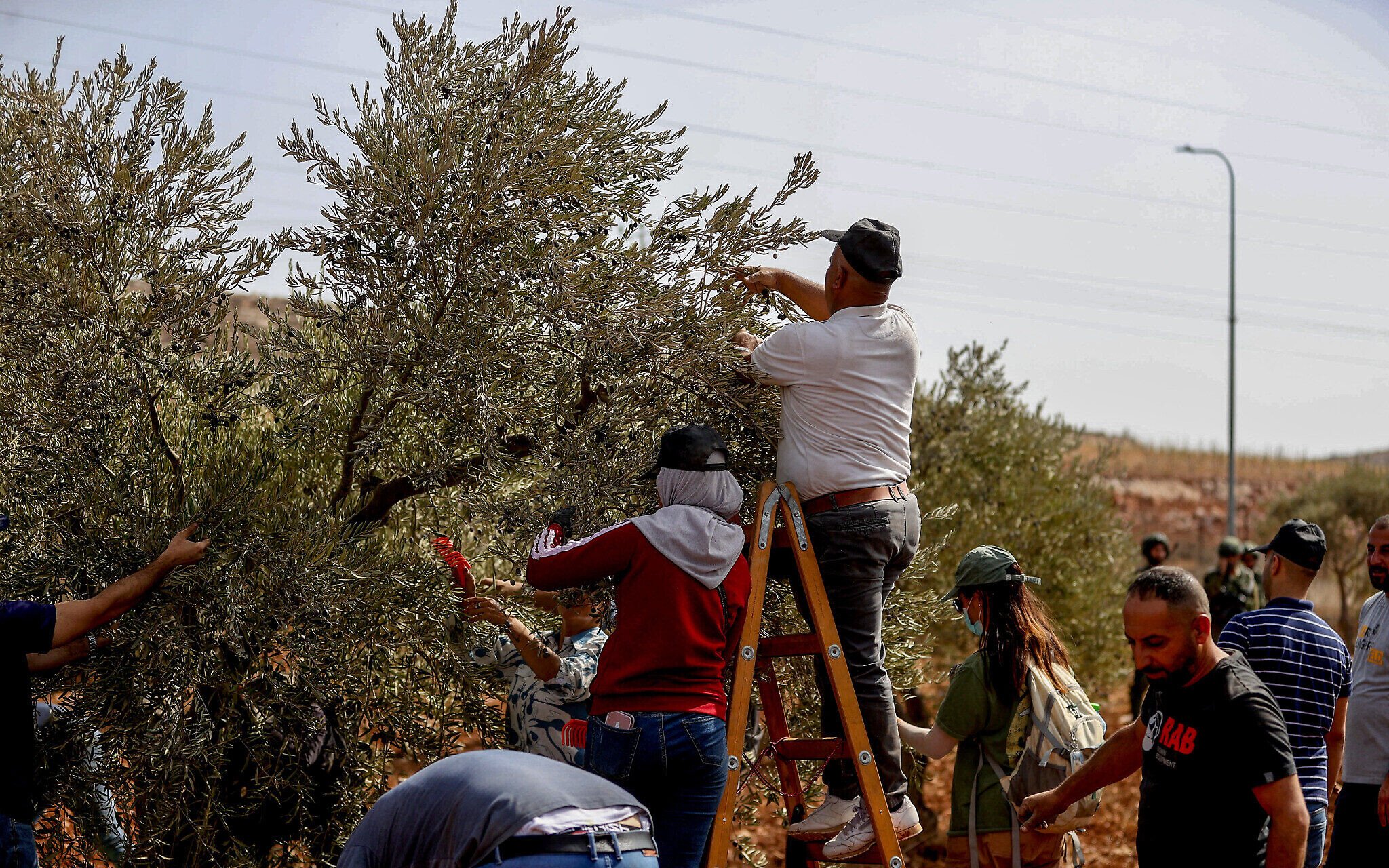
According to the Yesh Din organization, which tracks settler violence, there were 436 incidents of settler attacks directly connected to the olive harvest between September 27 and November 4, and 937 settler attacks overall in the same period.
The rampant violence has prompted international sanctions against Israel, and condemnations from public figures both inside Israel and abroad.
Last month, President Isaac Herzog wrote to Prime Minister Benjamin Netanyahu that extremist settler violence was “a moral disgrace” and called for greater efforts to crack down on the phenomenon.
Noam Lehmann contributed to this report.





The Times of Israel Community.