

Ra’am chair Abbas says Netanyahu once told him ‘Sinwar and I understand each other’
Abbas reveals 2021 conversation during talks on his Arab-majority party joining government, confirms premier’s associate has recently been in contact
 Add ToI as a Preferred Source on Google
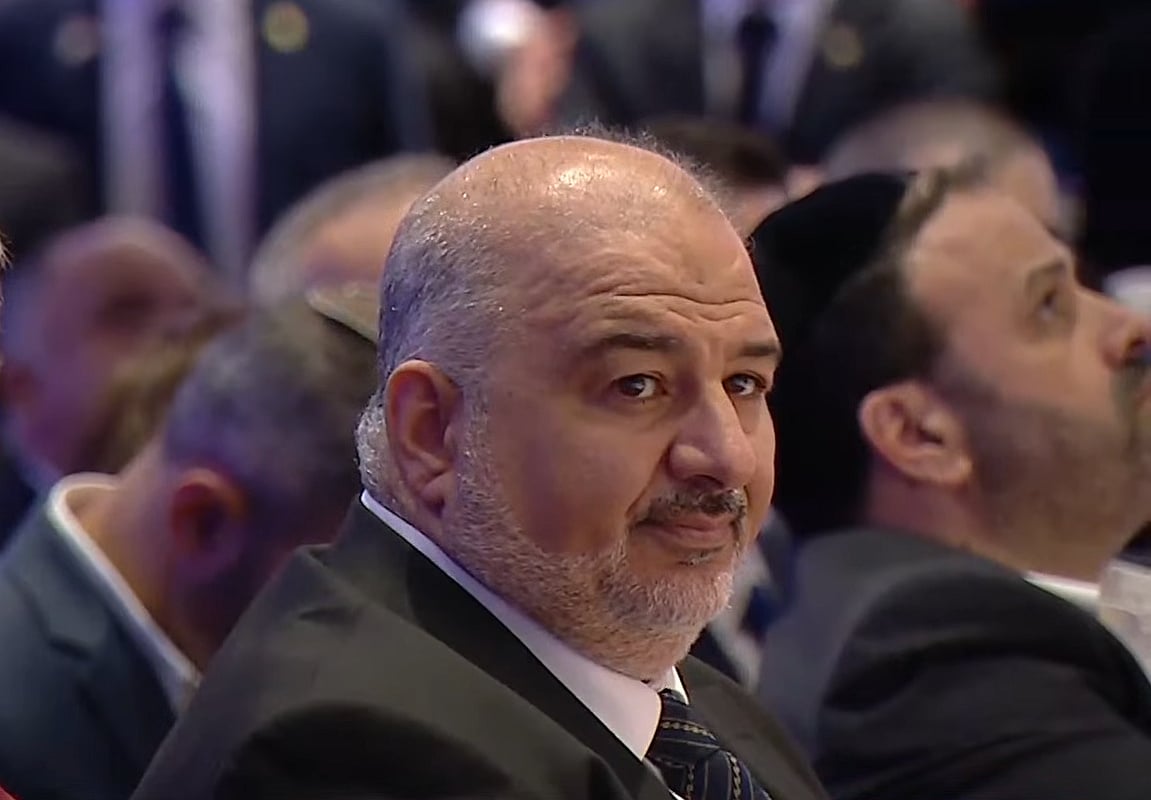
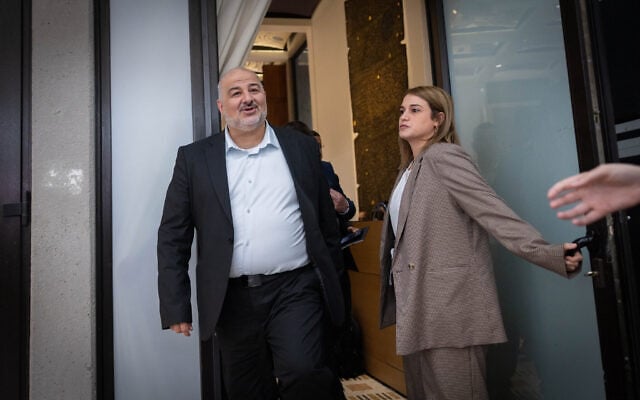
Ra’am chair MK Mansour Abbas said in an interview with Channel 12 on Tuesday that Prime Minister Benjamin Netanyahu once confided in him that he and then-Hamas leader Yahya Sinwar “understand each other.”
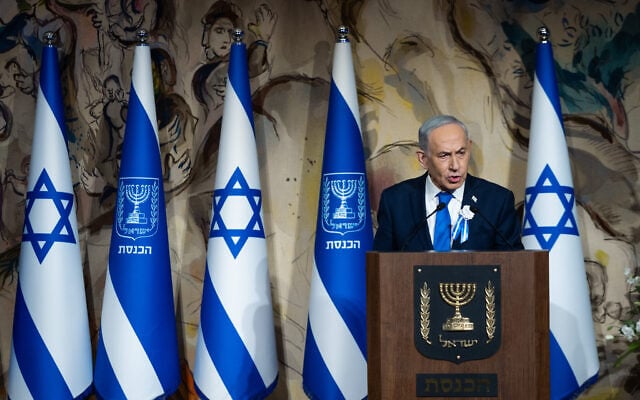
Abbas made the revelation after Netanyahu denounced the Knesset’s two Arab-led parties as unsuitable partners for a government and accused their members of seeking Israel’s destruction and supporting terrorism, as he spoke during the official opening of the new parliament following the October 27 election.
In a statement Wednesday, Netanyahu’s Likud party said Abbas’s claim was “a complete lie,” adding, “Nothing of the sort ever happened.”
According to Abbas, Netanyahu made the cryptic remark during 2021 negotiations with the Ra’am chair about his party possibly joining a Netanyahu-led government, which he said were held at the Prime Minister’s Residence in Jerusalem.
The negotiations, which ultimately failed, took place during the 11-day Operation Guardian of the Walls conflict with Hamas. Ra’am instead joined a government helmed by Naftali Bennett.
Abbas said Netanyahu told him at the time about a message he received from Sinwar in 2018 urging him to take a “calculated risk” as negotiations for a long-term ceasefire between Israel and the Gaza terror group intensified.

Sinwar appeared to be referring to a brewing agreement that would see Israel allow in Qatari aid on a regular basis to pay civil servants in the Hamas government in Gaza as well as needy families.
Israel allowed millions of dollars in Qatari cash to flow through its crossings into Gaza on a monthly basis starting in 2018, in order to maintain a fragile ceasefire with Hamas. As of early 2021, some $30 million in cash was being delivered in suitcases to Gaza each month through an Israeli-controlled crossing.
The Qatari aid, as well as Israel’s decision to allow it into the Strip in such a manner, was highly controversial, and Israeli officials rarely admitted to the policy when speaking publicly. But it was also largely supported by the defense establishment, which viewed it as essential for buying Israel long periods of quiet.
“He put his trust in Yahya Sinwar, went to sleep at night, and abandoned the security of the citizens of Israel,” Abbas told Channel 12, adding that the revelation of the message from Sinwar to Netanyahu had “shocked him.”
The IDF killed the Hamas leader in 2024, during the war triggered by Hamas’s October 7, 2023, invasion of southern Israel.
עמית סגל בהלם כשמנסור עבאס חושף עוד סיפור pic.twitter.com/bRguKTbU2m
— Roi (@Roi_) November 10, 2026
“I have tried to understand what he was telling me, that he and Yahya Sinwar understand each other,” Abbas continued, saying that he was waiting for a state commission of inquiry into the October 7, 2023, Hamas-led massacre so that he could testify about that conversation.
Netanyahu has refused to establish a state commission of inquiry into the failures that enabled the Hamas attack. His critics accuse him of maintaining erroneously that the terror group was deterred from launching a major assault.
Turning to the present day, Abbas told the television network that he wasn’t offended but rather “astounded” by Netanyahu’s remarks during the ceremony for the swearing-in of the 26th Knesset earlier, when the premier claimed that Ra’am and the Joint List were working for the “destruction” of Israel.
“I was astounded that the prime minister would exploit a state occasion to lie, to incite and to spread blood libel about the Arab parties,” Abbas said. “We are law-abiding citizens of Israel.”
“We don’t want to establish an Islamist state or an Arab state,” he reiterated. “This is where the State of Israel was established; we define ourselves within the State of Israel as citizens.
“We stand for peace and for ending the conflict with a two-state solution… We condemn terrorism, and we are also victims of terrorism.”
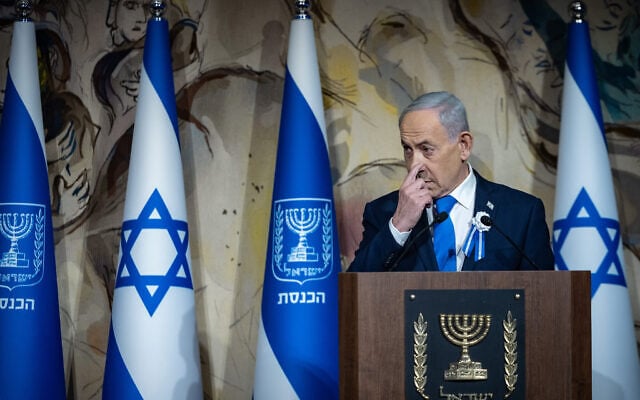
The prime minister “took advantage of his state position to incite against the Arab public and its representatives,” said Abbas. Netanyahu “continues the campaign of incitement and blood libels against me, against Ra’am, against the Arab public. It was a dangerous speech, endangering my life and the life of my family.”
Responding to Likud’s denial of Netanyahu’s alleged remarks on Sinwar, Abbas told the Kan public broadcaster on Wednesday: “I am willing to take a polygraph and he can take a polygraph, [to see] who is telling the truth. There were other people in the room.”
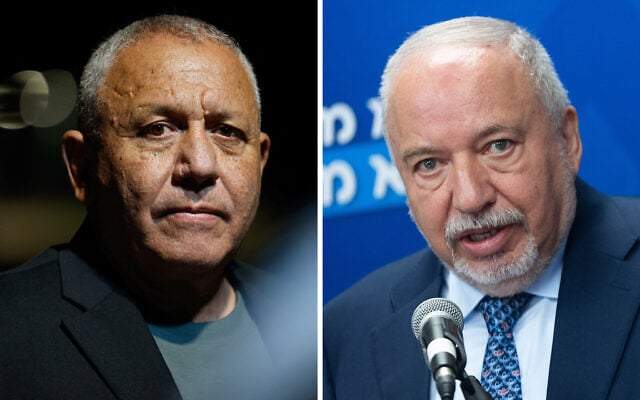
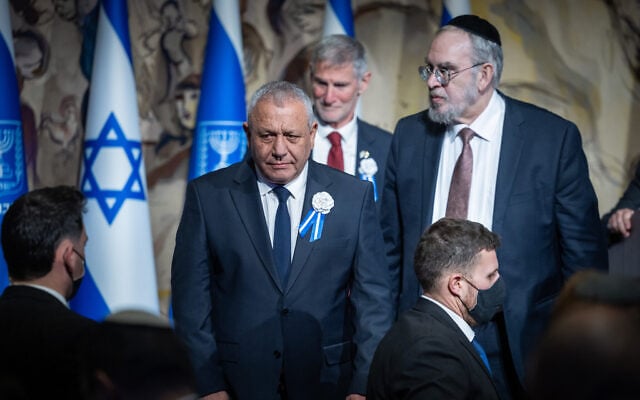
Having lost his parliamentary majority in last month’s elections, and since President Isaac Herzog on Sunday handed his rival Gadi Eisenkot the mandate to form a government, Netanyahu has continued a campaign he pursued throughout the election campaign to delegitimize the Arab parties and portray them as supporters of terrorism, in an apparent effort to undermine Eisenkot’s ability to form a government with their backing.
However, Abbas told Kan despite the public attacks by Netanyahu, a confidant of the premier recently reached out to him to gauge his position on joining an Eisenkot-led coalition and legislation that could prevent the prime minister from returning to office.
Abbas said that Natan Eshel sent him a message on behalf of the premier.
“He was interested in our position regarding a law banning criminal defendants from serving as premier, and whether we will join a coalition to replace Netanyahu’s government,” Abbas said.
Netanyahu is currently on trial in three graft cases. He denies any wrongdoing and has labeled the trial a witch hunt against him.
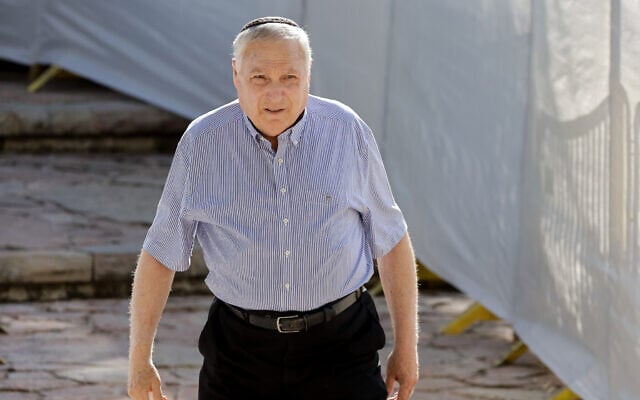
“When he has an agenda, Arab citizens become legitimate, and he becomes ‘Abu Yair’ (father of Yair), and also Mansour Abbas becomes a suitable partner in his eyes,” Abbas said, referring to an Arabic moniker that Netanyahu claims he was given several years ago, showing his ostensible popularity among Arab Israelis.
Regarding contacts with the Eisenkot bloc about joining a coalition, Abbas said that “as far as we are concerned, we have always been careful to do everything in order to help establish a suitable government that can replace the current government.”
He said Ra’am’s aim is to provide solutions to the problems in Arab society, beginning with rampant violent crime.
On Monday, Channel 12 reported that Eshel had repeatedly contacted Abbas before, during, and after the election, urging him not to back Eisenkot.


The Times of Israel Community.