

3 years after Bedouin hero saved 30 people on Oct. 7, Israel demolished his family’s homes
Youssef Ziadna, whose cousins were kidnapped during massacre, initially hoped efforts by community would help change status, but laments: ‘In the end, you’re still an Arab’
 Add ToI as a Preferred Source on Google
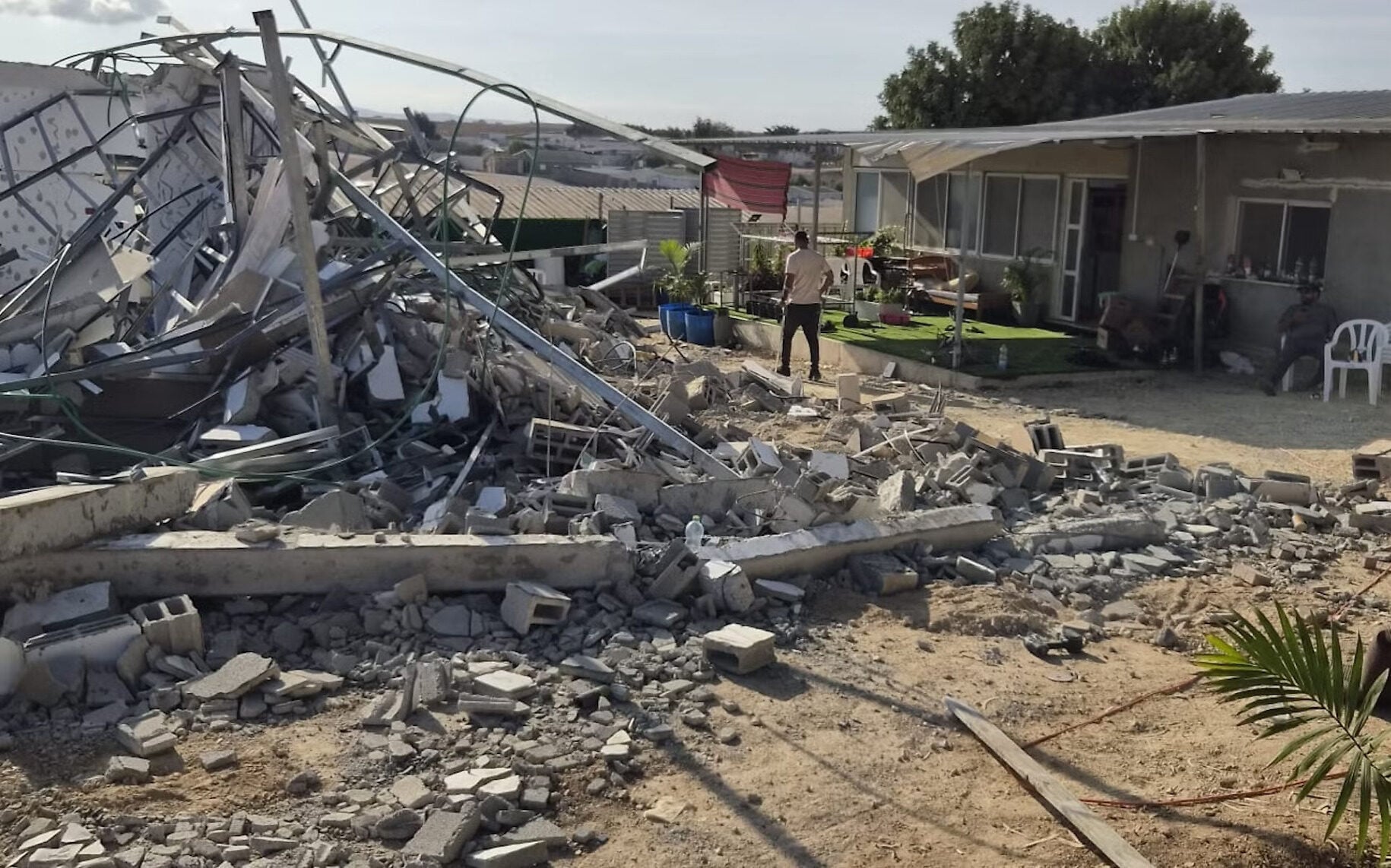
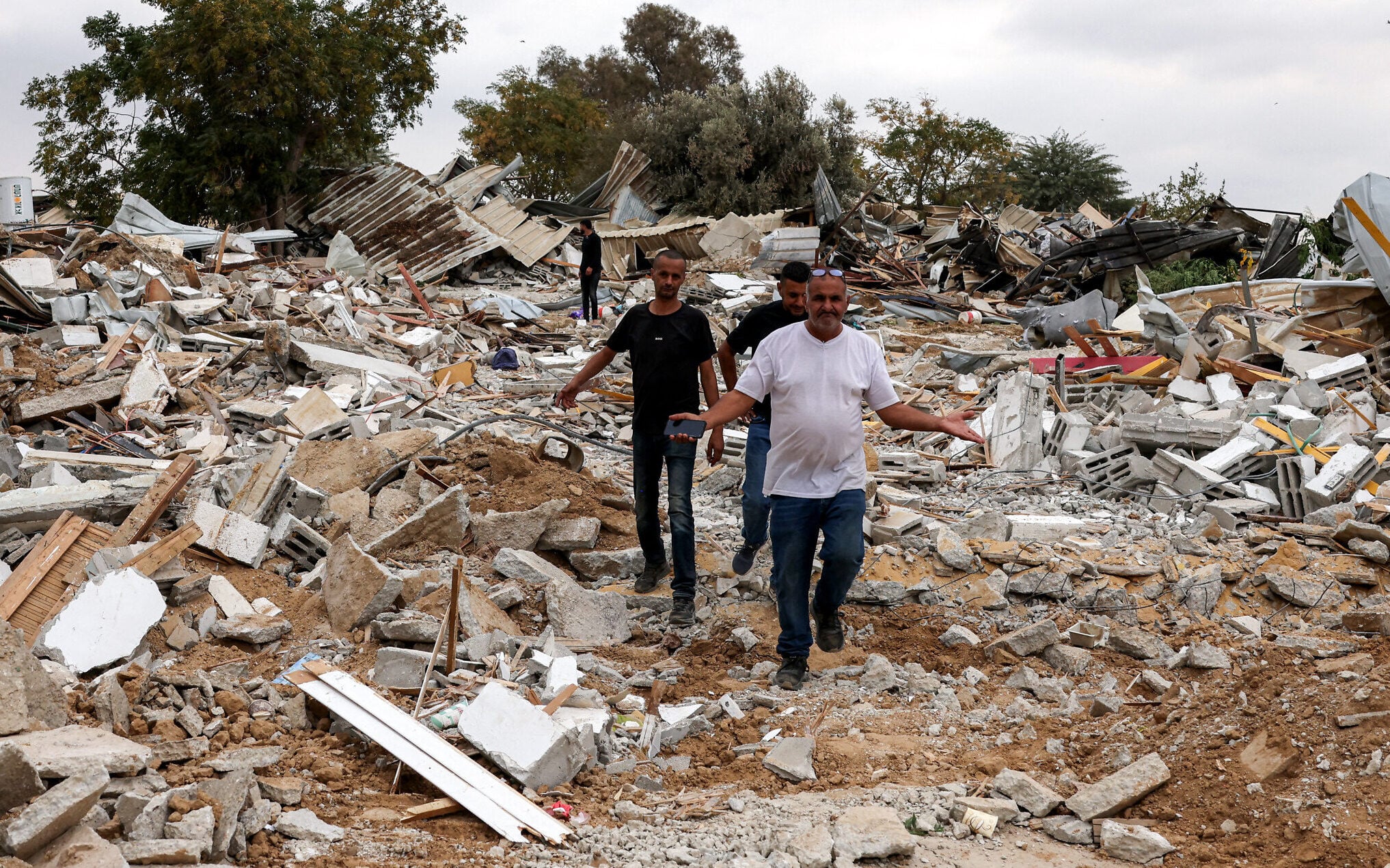
JTA — Three years after Youssef Ziadna risked his life to rescue 30 Israelis from the Hamas massacre at the Nova music festival, Israeli authorities have demolished the homes of members of the Bedouin driver’s family in the unrecognized village of al-Ziadna.
Dozens more buildings in their village, which has about 5,000 residents and is located near the southern Bedouin city of Rahat, face demolition orders.
Israel has celebrated Ziadna as a national hero. He was awarded Israel’s highest civilian honor for bravery by President Isaac Herzog, and selected to light a torch at Israel’s 2024 Independence Day ceremony. But he said the government’s crackdown on illegal construction made that recognition feel hollow.
“After everything we did on October 7, running around and risking our lives, doing whatever we could, none of it has any meaning,” he told the Jewish Telegraphic Agency. “In the end, you’re still an Arab.”
The plight of Ziadna highlights long-simmering tensions over Bedouin housing in the Negev.
An estimated 90,000 Bedouins live in dozens of unrecognized villages across the Negev, many without reliable running water, electricity, paved roads, or sewage systems, while their homes remain vulnerable to demolition because they are deemed by the state to be illegal.

Many of them predate the creation of Israel in 1948 and were never granted official recognition; more recent construction has also taken place without planning approval, sometimes on land designated for other uses.
A bureaucratic maze of Israeli agencies and decades of disputes over land ownership have inhibited a solution that would allow for their legalization, a necessary step for authorized construction. In recent years, the problem has been exacerbated by government figures with a history of anti-Arab animus. Israeli courts have previously upheld demolition orders against individual buildings in al-Ziadna, including while efforts to legalize the community were underway.
The demolitions affected branches of Ziadna’s family that suffered devastating losses following the Oct. 7 attack. His cousin, also named Youssef al-Ziadna, was abducted to Gaza with three of his children. Two were released after 55 days, but the father and another son, Hamza, were killed in captivity. The late hostage’s brother and sister have since had homes and other structures demolished.
On Sunday, authorities posted eviction notices on five more homes in al-Ziadna, including that of Aatef al-Ziadna, whose son Abed al-Rahman was murdered by Hamas at Zikim beach on October 7. Youssef Ziadna said the family had previously appealed to Herzog’s office over an earlier demolition order, which was subsequently canceled.
The president’s office confirmed receiving requests from the family concerning demolition orders and described the Ziadnas as “a bereaved family who suffered grievous losses on October 7 and thereafter,” and further highlighted Youssef Ziadna’s contribution, noting that Herzog had recognized his “life-saving actions” that day.
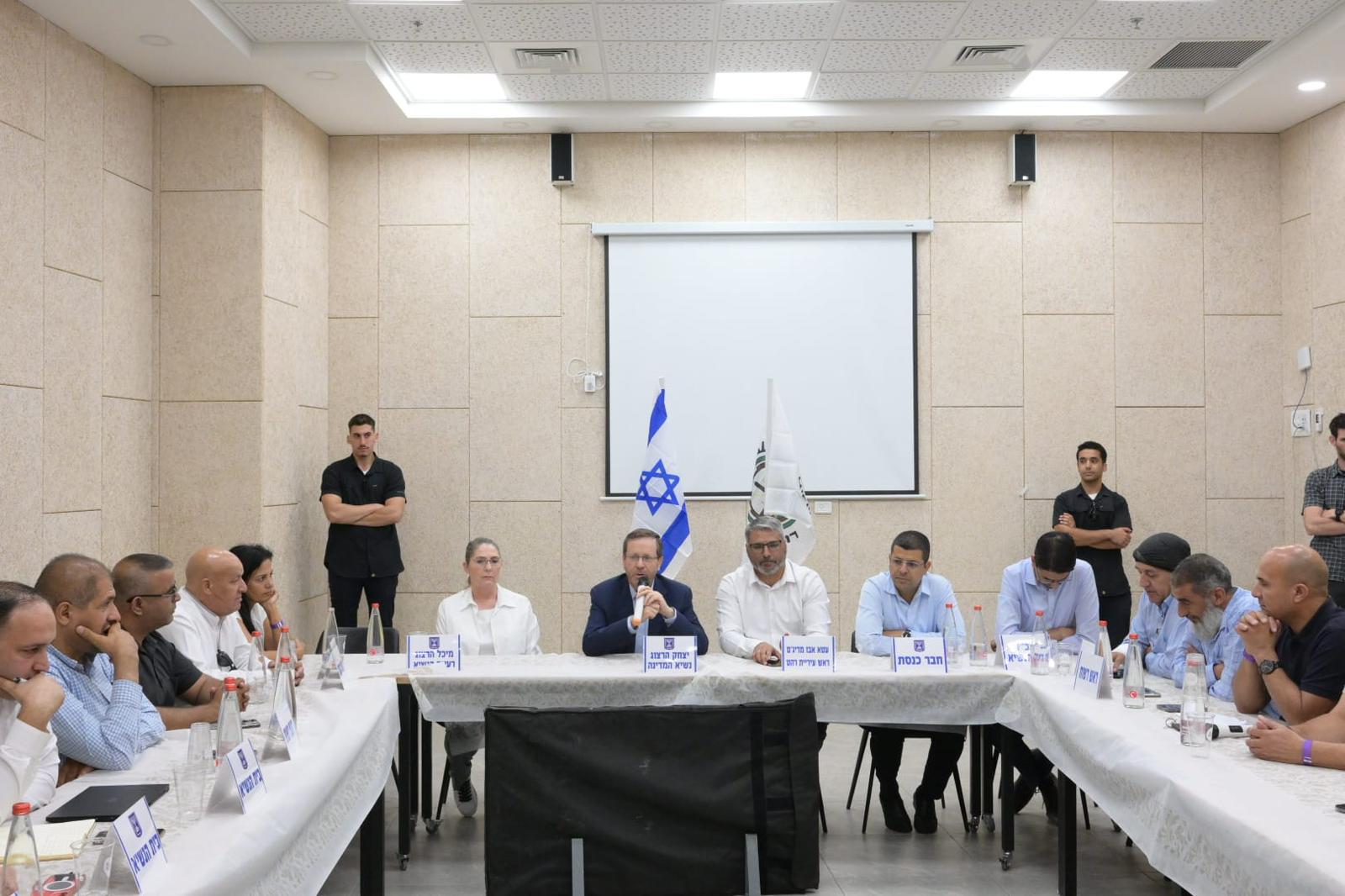
The president “has maintained contact and supported the family throughout this difficult time,” his spokesperson told JTA, adding that he and his office “have sought to assist the family within the limits of the law on this matter.”
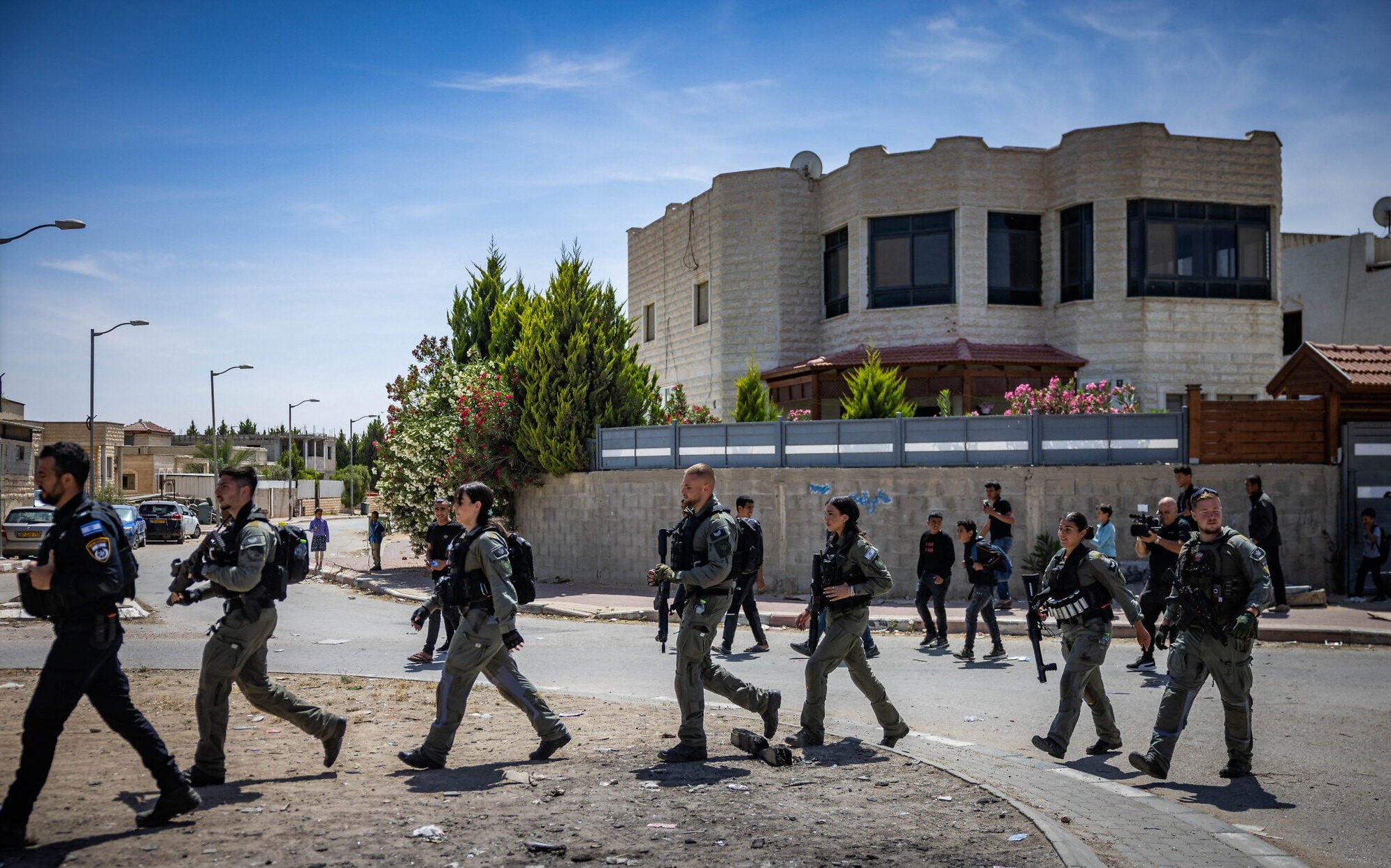
The eviction notice, a copy of which JTA obtained, gives the occupants 30 days to vacate. Ziadna said even those deadlines were not always respected. In one case, he said, officers from the Yoav Unit, a special police force involved in land enforcement in the Negev, arrived just a week after a notice was posted and demolished a relative’s home.
Anger over home demolitions helped drive a surge in voter turnout in the October 27 parliamentary election, with participation in Rahat soaring from 60 percent in 2022 to 85%, part of a dramatic increase in Arab voting across Israel. Ra’am, the Arab party led by Mansour Abbas, won approximately 85% of the city’s votes. That support helped the party secure eight Knesset seats.
“We are desperate. Everyone I know is going to vote,” Ziadna said on the eve of the election.
Rahat Mayor Talal al-Krenawi also attributed the high turnout to anger over demolitions.
“People who previously didn’t vote went to the ballot box to change the government’s policy,” he told JTA, expressing hope that the next government would be “one that listens, consults and coordinates” with Bedouin communities.
In October, demolition crews arrived in the al-Ziadna neighborhood, north of Rahat, where around 65 homes and other structures faced demolition orders. Ziadna’s cousin tore down a house built for his son, who had married just two weeks earlier. Other relatives, including his brother and nephew, have received demolition orders. One displaced family has been sleeping together in a single room at another relative’s house, he said.
Ziadna, who is a father of seven, dismantled a warehouse on his property after receiving a demolition order rather than face the fines of having the authorities demolish it. His home is not currently under an order, but he said that offered little comfort in a community where extended families live alongside one another.

“What’s the difference between my house, my brother’s house, or my nephew’s house?” he said. “For us, it’s the same home. We’re Bedouin; we live together.”
The demolitions in al-Ziadna are part of a wider enforcement campaign that has intensified across the Negev under Prime Minister Benjamin Netanyahu’s government, championed by outgoing National Security Minister Itamar Ben Gvir.
Told that Bedouin families whose homes had been demolished were sleeping in a school, Ben Gvir declared: “They should prepare many more schools across the Negev, because I’m going to demolish more and more and more.”
Between 2023 and 2025, some 14,280 unauthorized structures were demolished in the Negev, an 81% increase over the previous three-year period, according to figures presented to the Knesset by Ben Gvir’s ministry.
Al-Krenawi, Rahat’s mayor, slammed the government for embarking on a demolition blitz across the Negev, leaving families “with no roof over their heads and with no solutions.”
The al-Ziadna neighborhood was included in a government-approved plan in 2021 to incorporate it into Rahat and provide for approximately 1,900 housing units, as well as public buildings, roads, commercial areas and livestock facilities.
Yet the Bedouin Settlement Authority, the government body responsible for regularizing Bedouin communities in the Negev, told JTA that not a single residential plot has been allocated under the plan.
According to a spokesperson, implementation of the plan was delayed “partly because residents of the neighborhood have prevented it from being carried out.” The spokesperson cited interference with surveyors, soil drilling, and archaeological work but did not provide details of specific incidents or identify those responsible.
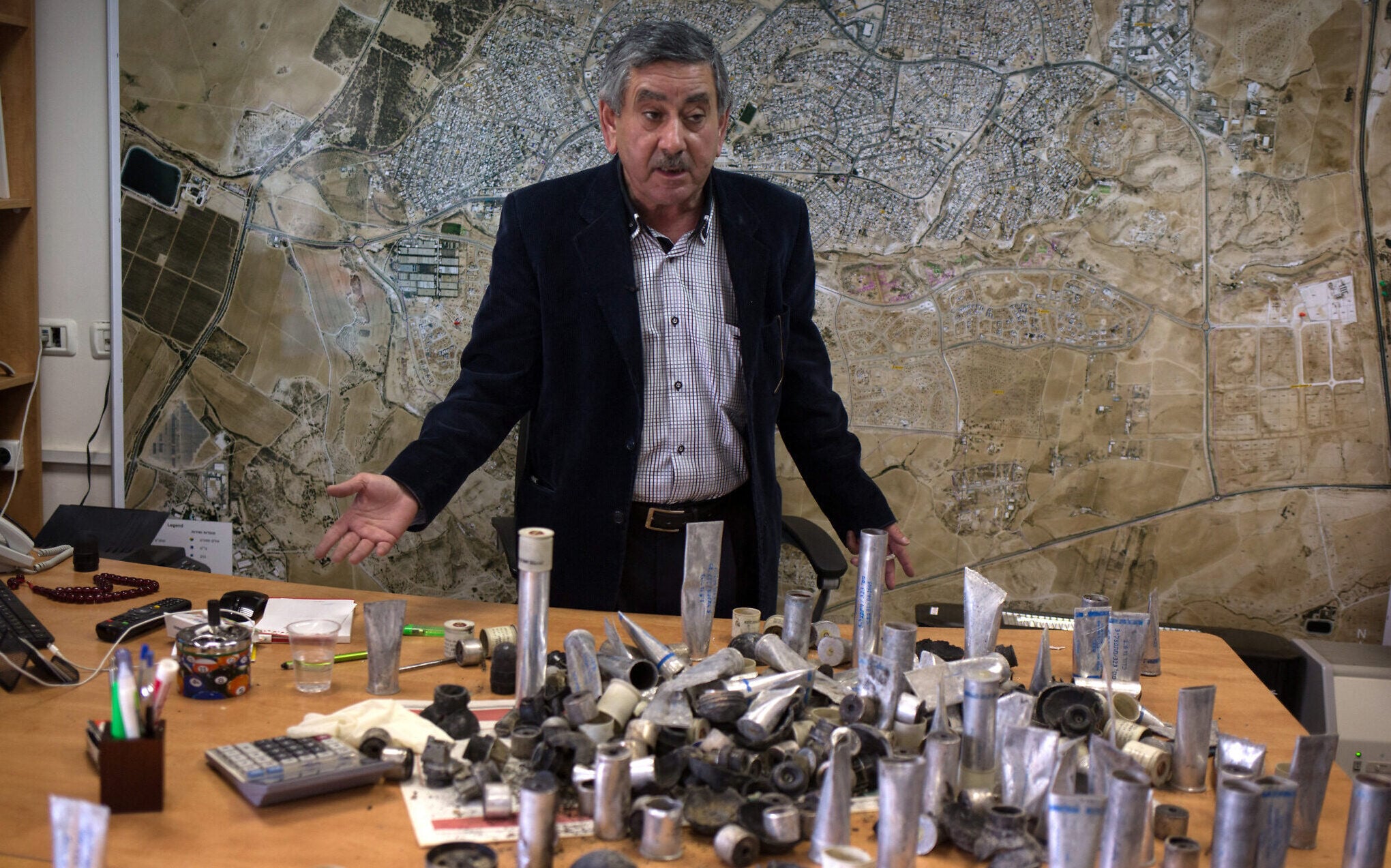
Al-Krenawi said agreements had been signed to develop al-Ziadna, which was already within the city’s planning boundaries, but that “unresolved land ownership claims” were holding up the allocation of plots. He said he was unaware of any obstruction of planning work but added that the municipality was not involved in that process, which was handled by the Bedouin Settlement Authority.
Michael Oren, a former Israeli ambassador to the US and former Knesset member who has advocated greater integration of Bedouin citizens, criticized the state’s failure to enforce its laws in the Negev, which covers roughly 60% of Israel’s territory.
“They’re either under Israeli law, or they’re not under Israeli law,” he told JTA, criticizing the “lack of application of laws against polygamy, illegal building, tax evasion” in Bedouin communities.
Oren said he supported reaching agreements to legalize unauthorized construction, but argued that Bedouin residents should pay for the land allocated to them, just as Jewish Israelis are required to do. “Why should they charge Jewish residents and Bedouin get it for free?” he said.
But he also acknowledged Bedouin contributions to the military and blamed successive governments for failing to provide adequate economic and educational opportunities, calling the state of education “appalling.”
“Everything that’s happened down there is entirely our fault,” he said.
Haggai Reznik, head of the Rifman Institute for the Development of the Negev and a former Housing Ministry director-general, issued dire warnings about the region’s security, saying in a television interview that “the next October 7 will come from the Negev.”
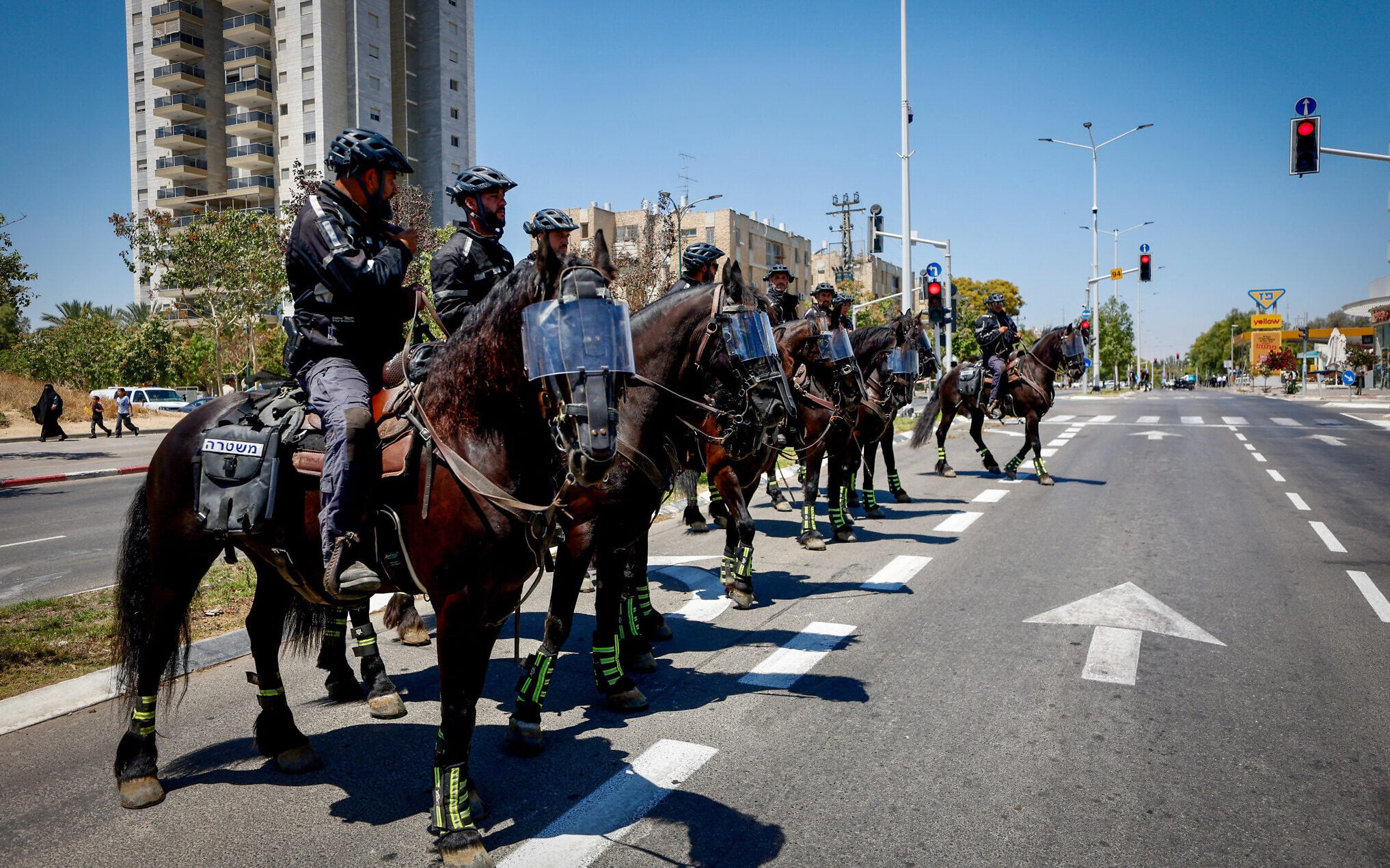
Reznik pointed to widespread illegal weapons, weak law enforcement and the failure to regularize Bedouin communities, or bring them into the formal planning system, warning that without a national emergency plan, the Negev could become “a Palestinian state whose capital is Beersheba.”
The Regional Council for Unrecognized Villages in the Negev (RCUV), a Bedouin advocacy group, condemned Reznik for spreading a “blood libel,” arguing that crime and the proliferation of illegal weapons were consequences of longstanding neglect, dispossession and other policies that had pushed Bedouin communities into deep poverty.
Reznik’s remarks came as the Shin Bet security agency said it had arrested 72 residents of the Negev and southern Israel since the beginning of 2026 on suspicion of security-related offenses, with roughly 50 indicted.
Around the same time as the demolitions in al-Ziadna, authorities demolished around 80 homes and a mosque in the nearby Abu Wadi community of al-Dahiya, leaving 380 people homeless, according to al-Krenawi, who told JTA that the displaced families were now living in tents.
The Bedouin Settlement Authority said residents had rejected alternative housing. Residents countered that the proposed site was not ready for construction and negotiations over another location were still underway.
RCUV, the Bedouin advocacy group, estimated that demolitions had caused NIS 290 million ($91 million) in cumulative losses to families whose homes were destroyed, including legal fees, demolition costs, alternative accommodation and related expenses.
Marwan Abu Frieh, a Rahat resident and lawyer with the legal rights group Adalah, who has spent nearly 15 years accompanying families through eviction and demolition proceedings, said government housing plans frequently fail to account for Bedouin communities’ traditional way of life, requiring families accustomed to living on agricultural land to move to densely built urban neighborhoods.
“They’re not offering solutions suited to Bedouin society, to traditional or agricultural life,” he told JTA. “They’re offering modern solutions because they want us to become modern.”
Ziadna echoed that concern, saying there was “no way” his family would abandon its rural way of life for apartment blocks.
Most members of the extended family work in agriculture on nearby kibbutzim. Former Rahat mayor Atta Abu Madegham described the Ziadnas as a noble family with “zero unemployment,” according to a report published soon after October 7 in Makor Rishon.
In August, the Supreme Court rejected a bid to delay the eviction of some 500 residents of Ras Jrabah, near Dimona. An earlier ruling had found that suitable alternatives had been offered and refused, but Adalah, which represents the residents, rejected that finding, saying that none of the options was viable. Even suggestions of temporary housing or rental assistance left basic questions unanswered: where families would live, under what conditions, and for how long. Abu Frieh described the ruling as “very simple and very extreme.”
“They were saying that there is no connection between providing an alternative housing solution and carrying out an eviction. This is unprecedented,” he said.
He emphasized the difficulty of transforming an established community, where homes have stood for decades, into a formally planned neighborhood. Recognition, he said, is only the first stage. Completing the planning and infrastructure work can take many years, particularly when the community is already inhabited.
“You can’t demolish people’s homes when they have nowhere else to go and the regularization process hasn’t been completed,” he said.
The Bedouin Settlement Authority confirmed that the buildings facing demolition in the al-Ziadna neighborhood are within the boundaries of the approved 2021 plan, but described them as “new and illegal construction.”
Although the Bedouin Settlement Authority said demolitions were handled by separate enforcement agencies, al-Krenawi said those agencies operated only in coordination with it. JTA contacted the National Land Enforcement Authority, which identified the Israel Land Authority as responsible for the October operation. That authority, in turn, referred JTA back to the Bedouin Settlement Authority.
“The sooner residents take steps to advance regularization, the less need there will be for enforcement action and carrying out demolition orders,” the spokesperson said.
Ziadna objected to his family being treated as trespassers on land they had occupied for generations. “We’ve been here since the British ruled, before Israel was established. We never moved.
“They call us invaders. Fine, come and sit with us. Talk to us,” he said. “Give us infrastructure, water, electricity. Give us a way to live like human beings. We’re citizens of this country.”
Abu Frieh criticized the Bedouin Settlement Authority’s origins, saying it was created to address what successive governments regarded as the “Bedouin problem,” rather than involving Bedouin communities in decisions about their own future.
“This authority controls every aspect of Bedouin life,” he said, describing its approach as “unilateral” and noting that all government funding for Bedouin communities must pass through it.
Established by the government in 2007, the Bedouin Settlement Authority replaced an earlier body founded in 1986. It has since operated under seven government ministries, with a May 2026 State Comptroller report finding that the repeated transfers had significantly disrupted its operations. Bedouin representation in the authority is also almost non-existent. The authority told JTA that it now employs more than 80 people, only one of whom is Bedouin.
“We’re not refusing a solution,” Abu Frieh said. “We’re just not part of the process.”
Ziadna, now 50, said his health has deteriorated sharply since JTA first interviewed him in October 2023. He has lost substantial weight, has been unable to work for seven months and receives just NIS 1,800 ($570) a month in disability benefits for post-traumatic stress and other health problems.

“I look like an 80-year-old man,” he said.
When JTA interviewed him just days after the Hamas massacre, Ziadna had expressed hope that his actions might change the relationship between Bedouin citizens and the state.
Three years later, when asked whether those hopes had materialized, his answer was brief.
“The opposite happened.”









The Times of Israel Community.