

 From the Liveblog of
Sunday, September 27, 2026
From the Liveblog of
Sunday, September 27, 2026
Families of Oct. 7 victims host ‘Sukkah of the Failure’ at Hostages Square, showcasing leaders’ failures ahead of attack
 Add ToI as a Preferred Source on Google
Jessica Steinberg, The Times of Israel's culture and lifestyles editor, covers the Sabra scene from south to north and back to the center
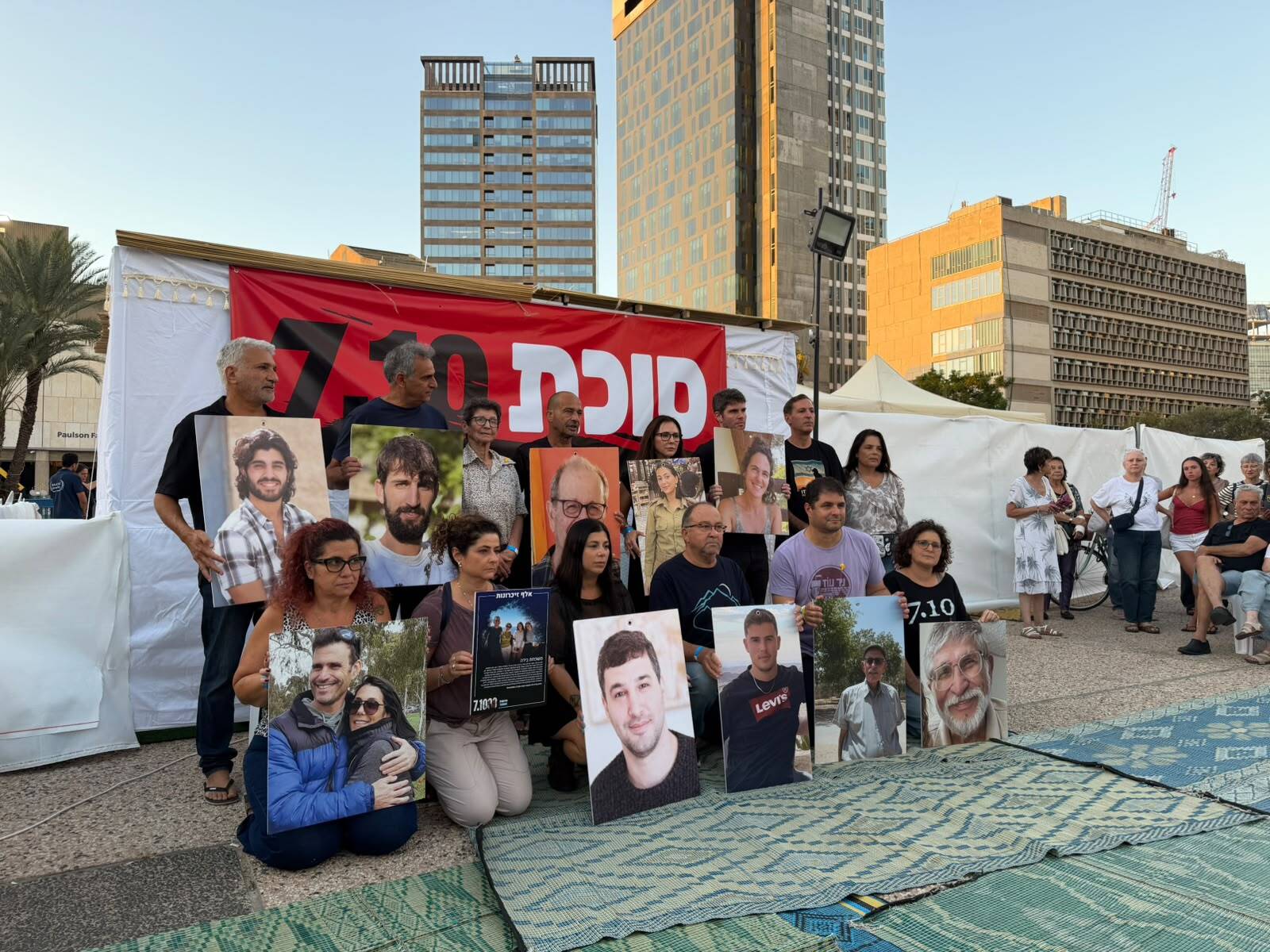
A group of families whose loved ones were taken hostage or killed in the October 7, 2023, attack or were murdered in captivity gather at Tel Aviv’s Hostages Square during the intermediate days of the Sukkot holiday to establish what they call the “Sukkah of the Failure” — their struggle to present the truth of what happened in the weeks preceding October 7.
Speaking from a sukkah, a temporary shelter set up in the square where protests had held during the two-year struggle for the hostages’ release, the families present a document outlining the decisions of the political echelon that they say led the country to October 7, in response to recent reports published in The New York Times and The Atlantic alleging that several warnings about Hamas’s plans were conveyed to the Prime Minister Benjamin Netanyahu and other officials by Middle East leaders.
The families will gather at Hostages Square for the next two nights, Monday and Tuesday, to speak to the public about what happened in the political and security establishments prior to October 7.
Einav Zangauker, mother of captivity survivor Matan Zangauker, says that the conspiracy of silence is being broken.
“We will not allow history to be rewritten,” says Zangauker. “Anyone who had their hand on the wheel on October 7 must go home. Everyone. Without exception.”
Gil Dickmann, whose cousin, Carmel Gat, kidnapped and murdered in captivity, says the October 7 families will no longer be silent.
“We don’t know everything,” says Dickmann, adding that what appears in the file leaves no doubt that everyone who was in the security or political establishment at the time must be removed from public life for good.
“The price of the abandonment [by the leaders] is 2,000 graves of good Israelis who should have been with us,” says Dickmann. “It is a price that the State of Israel should not have had to pay, and it is the role of the citizens to make sure that we will never again be required to pay the price of abandonment.”
Former IDF chief of staff Gadi Eisenkot, the main rival to Prime Minister Benjamin Netanyahu in next month’s election, arrives at the tent, where he embraces bereaved father Ruby Chen and former hostage Yocheved Lifshitz, whose husband, Oded Lifshitz, was taken hostage and killed in captivity.
Regarding warnings of a Hamas attack that Prime Minister Benjamin Netanyahu received before October 7, Eisenkot says: “I know the information that was passed to Netanyahu in the first half of September. On the 15th of the month, he got a specific warning from the Shin Bet. He decided not to take action. This must be conveyed to a state commission of inquiry, which will ask why he breached the trust [that was placed in him as prime minister].”




The Times of Israel Community.