

In Egypt’s Sinai, a Gazan refugee builds a school for children displaced by war
El-Arish school provides free education to nearly 400 Palestinian students, aiming to offer a Palestinian curriculum and a sense of normalcy away from home
 Add ToI as a Preferred Source on Google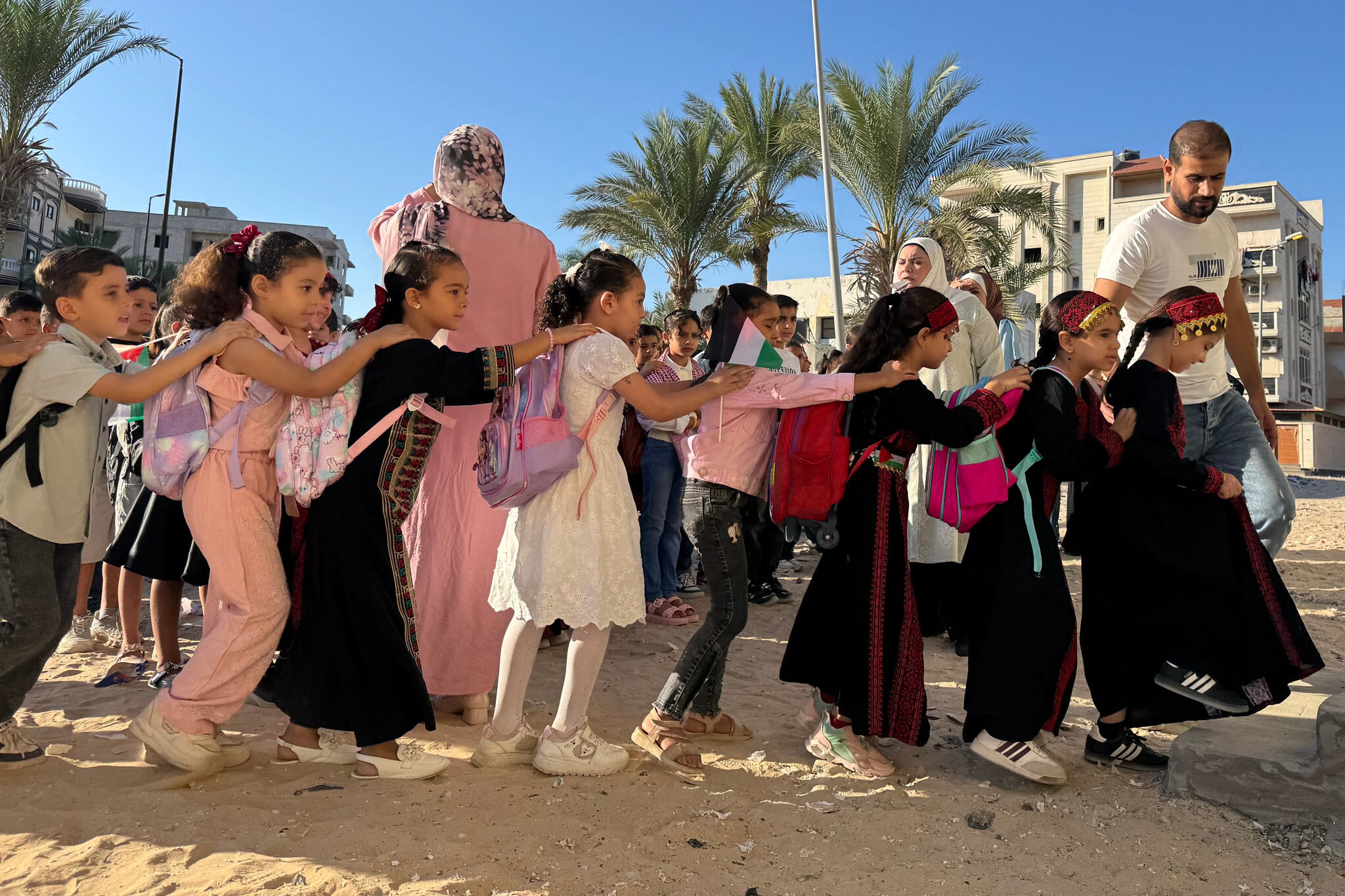
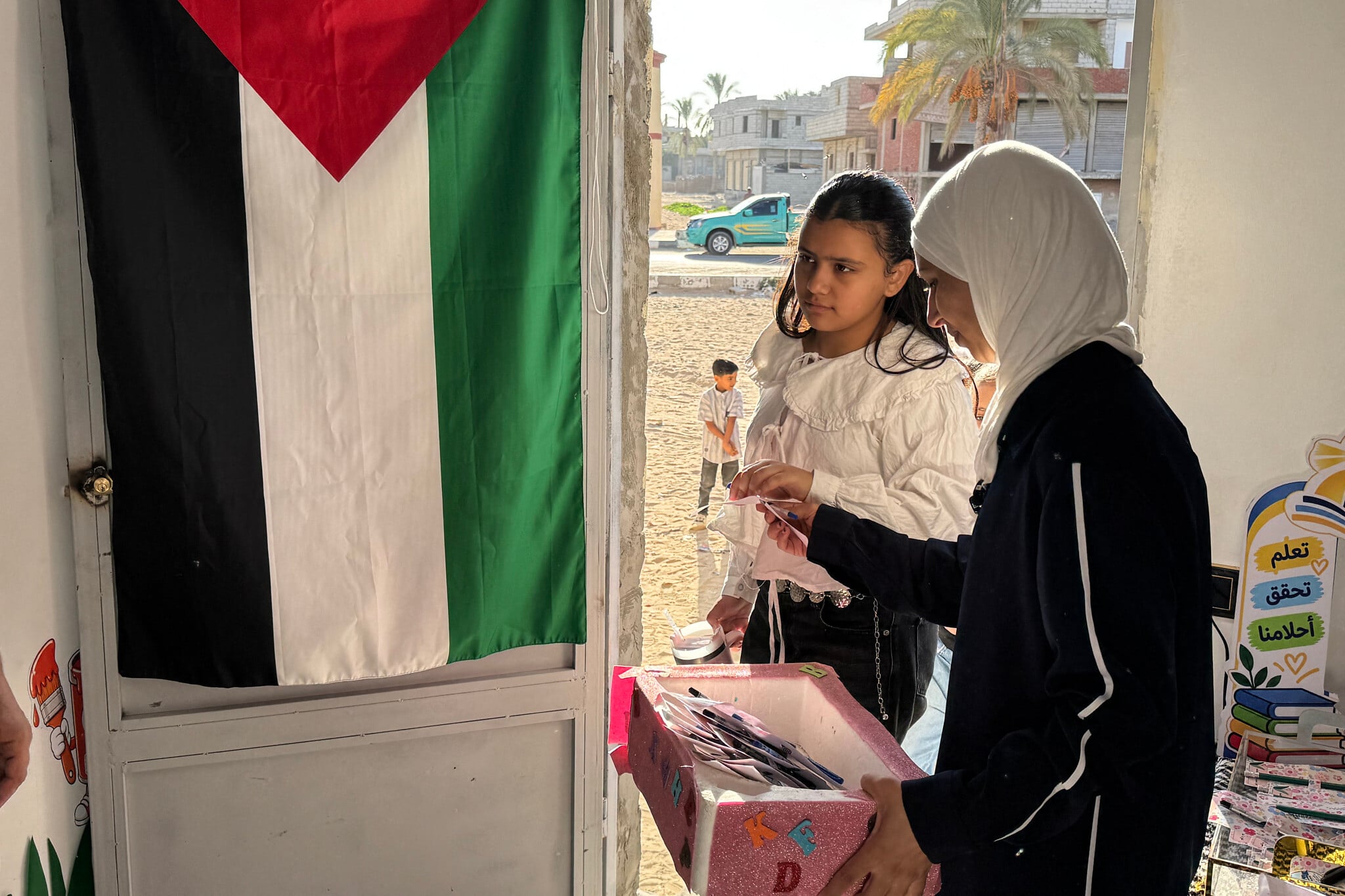
EL-ARISH, Egypt — In Egypt’s North Sinai, Palestinian teacher Hadeel Zourob watches dozens of displaced Gazan children file into the region’s only Palestinian school, a place she built after war drove them from their homes.
The students are among hundreds of Palestinian children uprooted by the Israel-Hamas war who now live in El-Arish, a coastal city of dusty streets and low-rise apartments located 27 miles (44 kilometers) from the Gaza border.
“They fled to Egypt and found themselves here without schools or education,” Zourob, herself displaced by the war in Gaza, told AFP.
“So I decided to establish an educational center for them.”
Zourob, in her thirties, fled Gaza with her family six months after the war began with Hamas’s October 7, 2023, onslaught on southern Israel, in which terrorists killed some 1,200 people and took 251 hostages, and the ensuing Israeli offensive in Gaza.
They settled in El-Arish, a hub for aid convoys and medical evacuations from Gaza, where relatives helped them start over.
Like many families in the region bordering Gaza, the Zourobs have relatives on both sides of the frontier.
Together with other displaced Palestinian teachers, Zourob began offering lessons to a small group of children in a rented building.
The initiative has since grown into a free school serving nearly 400 students aged six to 18, up from around 150 in its first year.
As enrollment expanded, rent and school supplies were covered with support from the Misr El Kheir Foundation, one of Egypt’s largest charities, Zourob said.
Today, the center is the only Palestinian school in North Sinai, a remote and economically marginalized region where years of security operations against Islamist terrorists after Egypt’s 2011 uprising have taken place.
‘Difficult and tragic’
In the school’s courtyard, children wearing black-and-white keffiyeh scarves and brightly embroidered Palestinian dresses stand shoulder to shoulder, waving Palestinian flags and reciting the morning assembly before scattering to their classrooms.
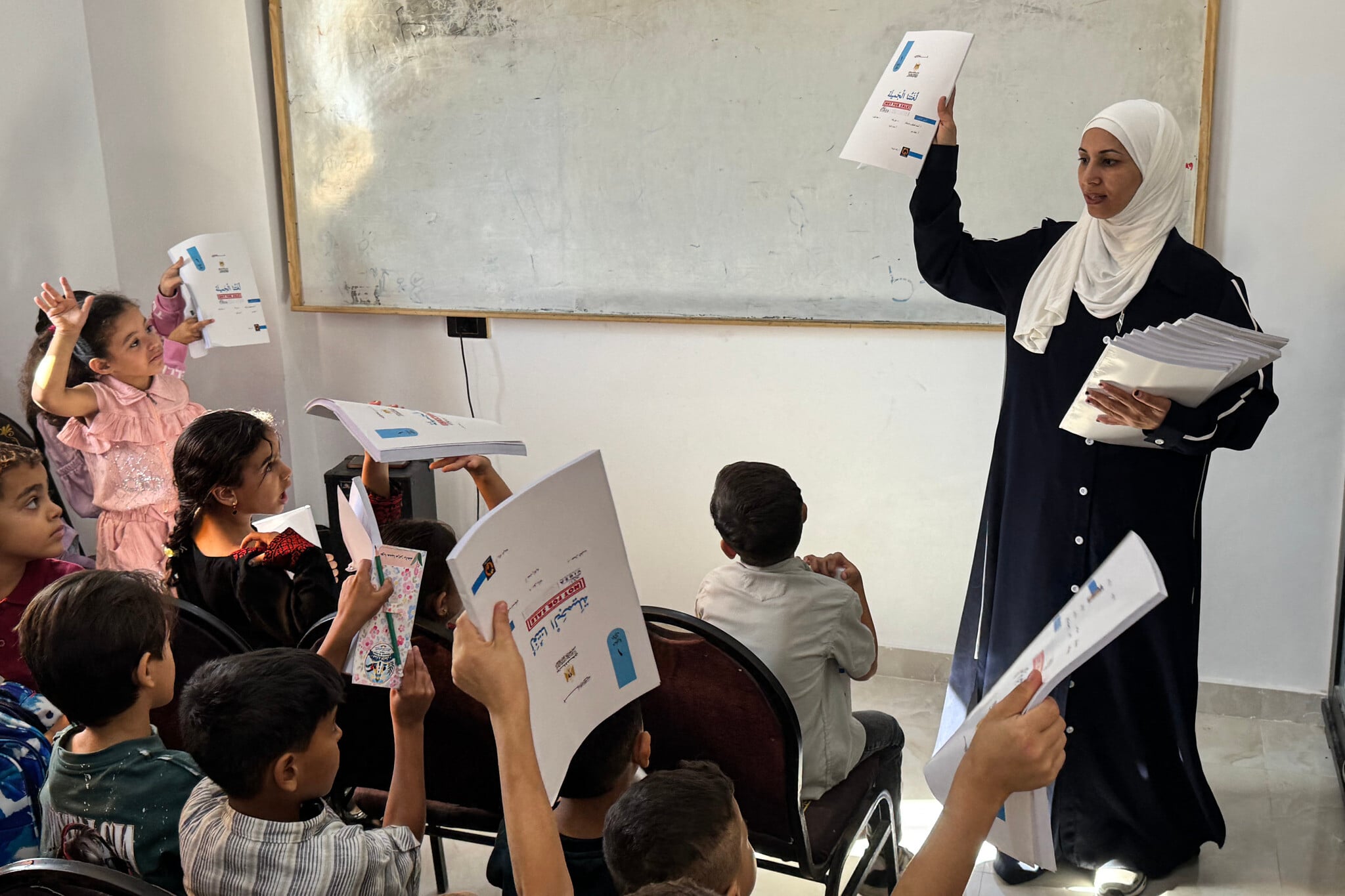
Inside, teachers hand out pens and textbooks based on the Palestinian curriculum, many brought from Gaza.
Some students eagerly leaf through their new books while others settle behind desks for lessons and pupils puzzle over math exercises scrawled across whiteboards.
Down the corridor, children sketch bright houses, flowers and seaside scenes with colored pencils.
The building soon fills with singing, clapping and laughter, sounds that briefly drown out memories of a war many escaped only months ago.
Some children at the school arrived in El-Arish seeking treatment for war injuries, while others fled the conflict with their families.
Most now live in free temporary accommodation provided by the Egyptian authorities, while others continue to undergo rehabilitation and post-surgery care.
“We hope they can achieve their dreams despite the difficult and tragic conditions we are living through outside Gaza,” Palestinian mother Ons Shehta told AFP.
Outside the school, battered minibuses rumble along poorly paved roads as parents wait to collect their children from class.
According to the UN children’s agency UNICEF, more than 14,000 Palestinian school-age children have been displaced to Egypt since the war began.
Lost generation
Many families arriving in Egypt struggle to access online education because of the cost of internet access and electronic devices, combined with rising living costs and uncertainty over their legal status in Egypt.
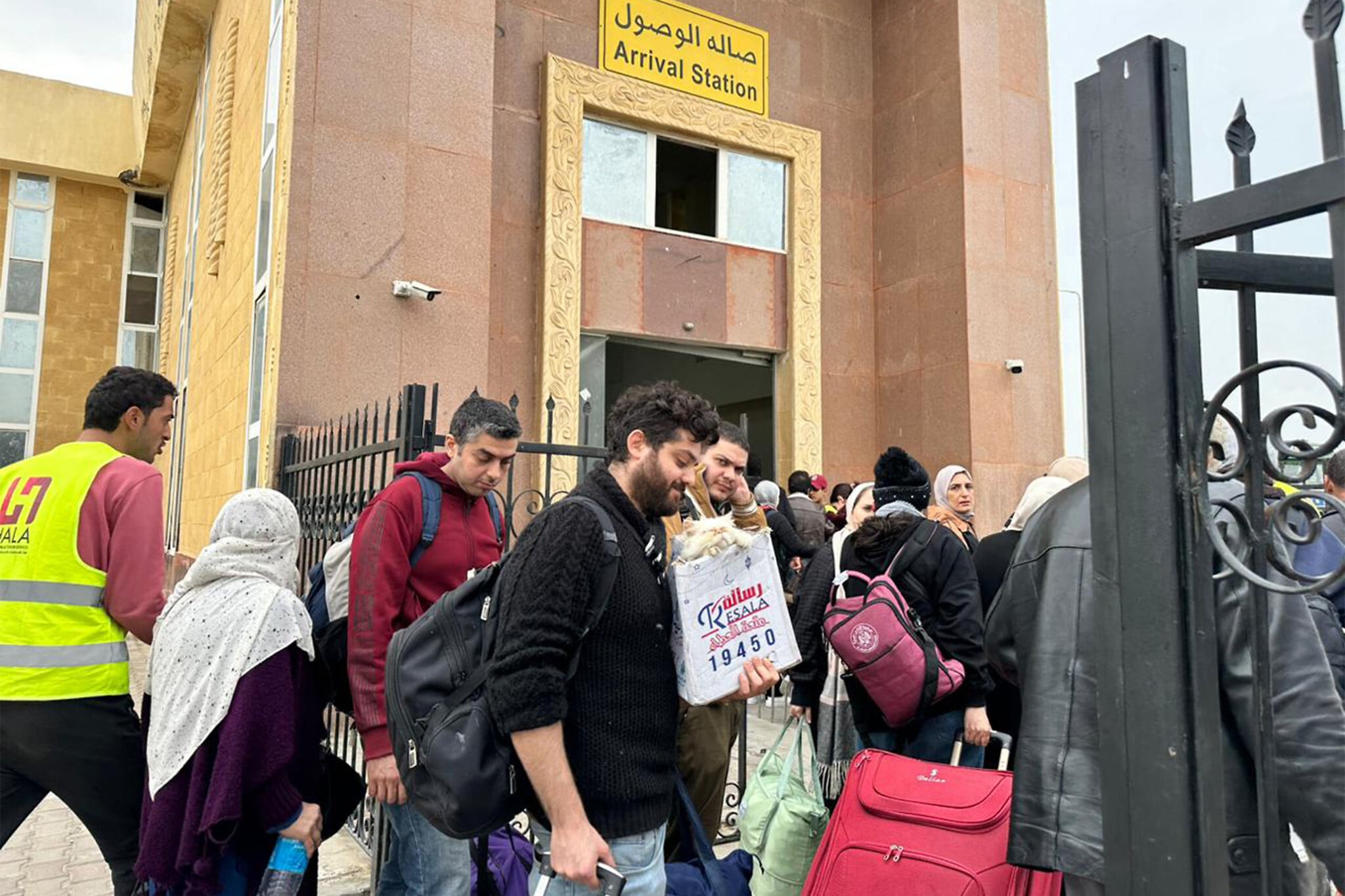
Human Rights Watch says many refugee and asylum-seeking families in Egypt encounter “barriers” to education, including residency requirements, registration hurdles and limited access to free public schooling.
And back in Gaza, after nearly three years of conflict, the education system has been left in ruins, with UN agencies estimating that around 98 percent of schools are damaged or destroyed.
Most of the territory’s roughly 658,000 school-age children have had little or no access to regular classroom learning for more than two academic years, prompting repeated warnings from aid agencies and the UN of a “lost generation.”
Only last month, thousands of children returned to classrooms in Gaza for the first time since the war began.
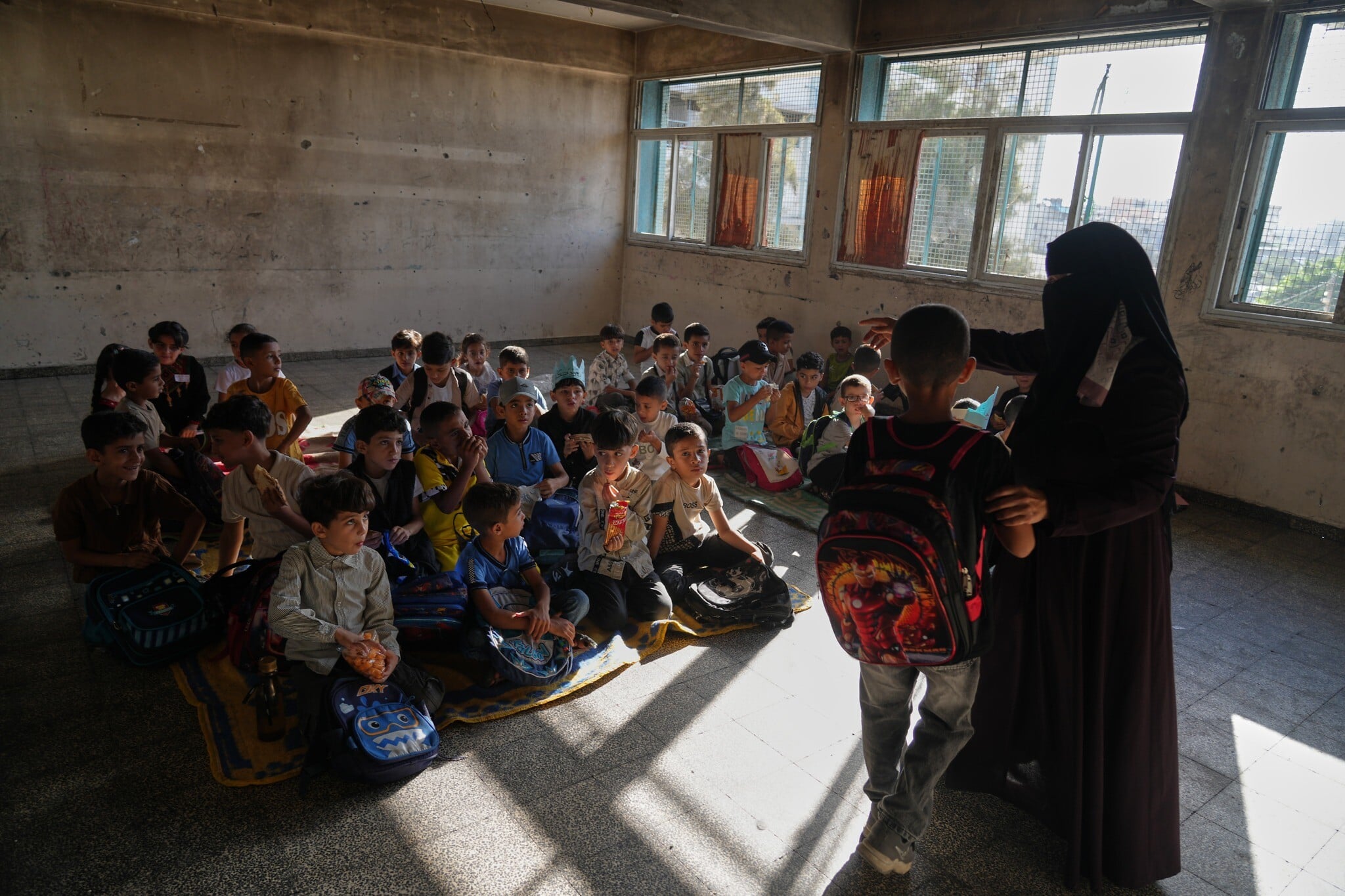
So the mission of Zourob’s school is not only to teach lessons but to help children heal from the psychological toll of war and displacement while preserving a sense of belonging, according to teacher Hamied Abu Daher.
“We are working together as a team to make up for what the students missed and immerse them in the school environment,” he told AFP.
“When they eventually return to Gaza, the school atmosphere won’t feel strange to them. They will still have that experience and spirit of school life.”
The Times of Israel contributed to this report.





The Times of Israel Community.