

Eisenkot: I’ll form emergency government if efforts to establish ‘broad’ coalition fail
Yashar chief indicates he will seek minority coalition if all else fails; Netanyahu repeats call for unity coalition, claiming ‘Israel’s fate is at stake’
 Add ToI as a Preferred Source on Google
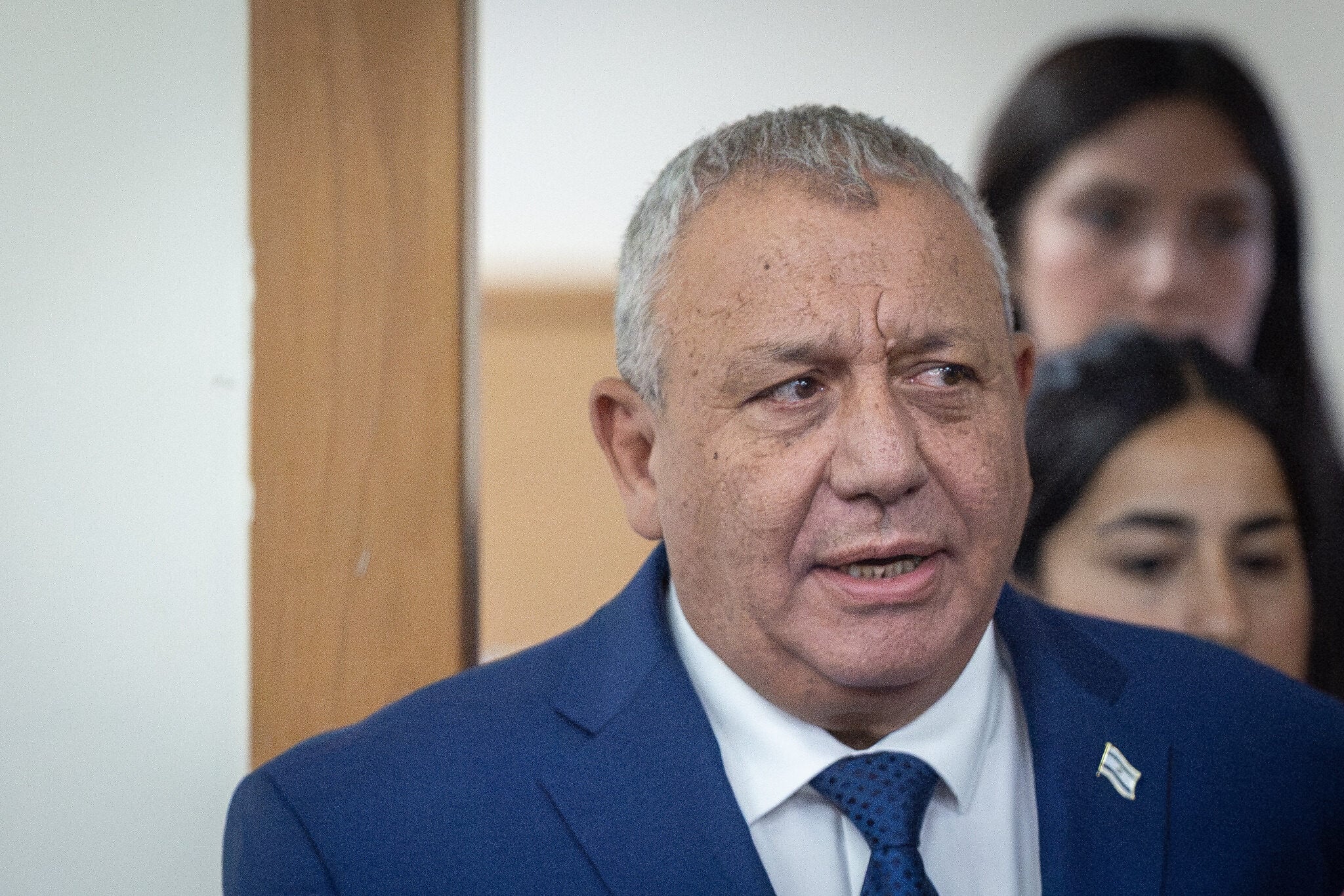
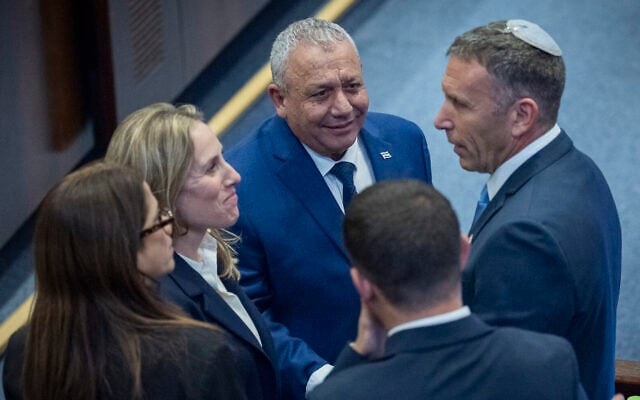
Yashar party head Gadi Eisenkot indicated on Friday that he would move to establish a minority government — one that would likely rely on the support of the Knesset’s two Arab parties — if his efforts to form a majority coalition do not succeed.
In a lengthy social media post updating the public on his efforts to form a government, Eisenkot spoke of the paths available to him, noting the possibility of a coalition with ultra-Orthodox parties and a unity government with Prime Minister Benjamin Netanyahu’s Likud party.
However, he said: “Should the sincere efforts I am leading to form a broad government fail to bear fruit, I intend to establish a national emergency government — one that I will strive to expand, either before or after it is sworn in.”
His post appeared to confirm reports from a day prior that the former IDF chief planned to put a new government to a Knesset vote before his initial mandate to form one expires on December 6, even if it means presenting a minority government that relies on Arab parties’ support or abstention.
Eisenkot mostly avoided mentioning the Arab parties in his post. Netanyahu has campaigned relentlessly to brand the Ra’am and Joint List lawmakers entirely as “terror supporters” who pose a national security threat to Israel.
Eisenkot has said the foundation of any government he forms would include the four Jewish-led anti-Netanyahu parties — Yashar, B’Yachad, The Democrats and Yisrael Beytenu — but the latter party’s chairman Avigdor Liberman has pledged to vote against a minority government reliant on the Arab parties.
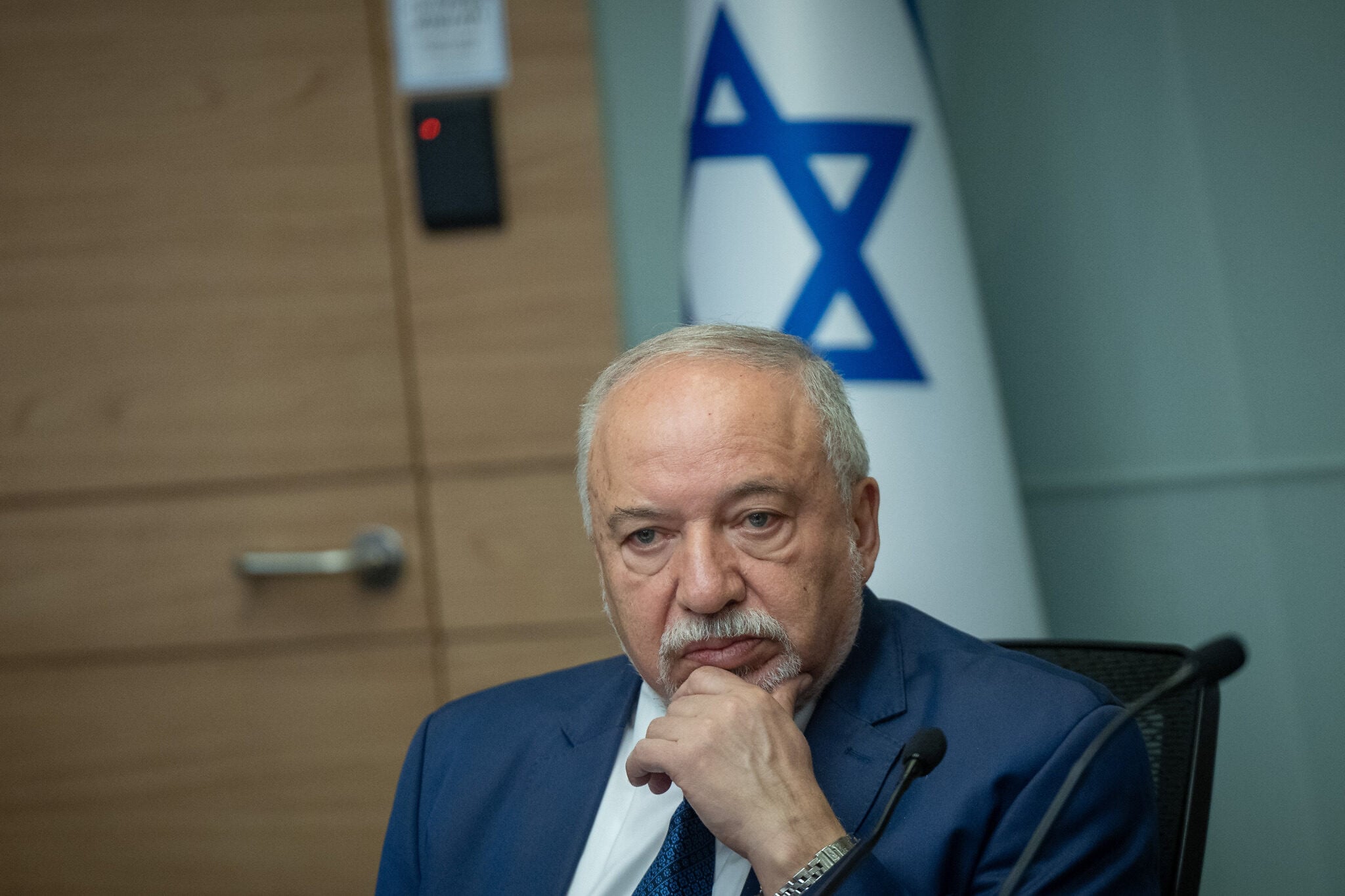
The Yashar chairman indicated that he was prepared to test that pledge.
“Every member of Knesset will be compelled to follow their conscience and decide: shall a new government be formed or are they prepared to drag the State of Israel and its citizens into yet another round of elections, with Netanyahu remaining as a transitional prime minister?” he wrote.
Underlining the challenge Eisenkot faces, new Yisrael Beytenu MK Sharon Sharabi wrote in an X post on Friday, “I stand by my promise and will continue to uphold it: I will not be part of a coalition that relies on supporters of terrorism, whether from within or from outside. Some principles are non-negotiable, and some values cannot be compromised.”
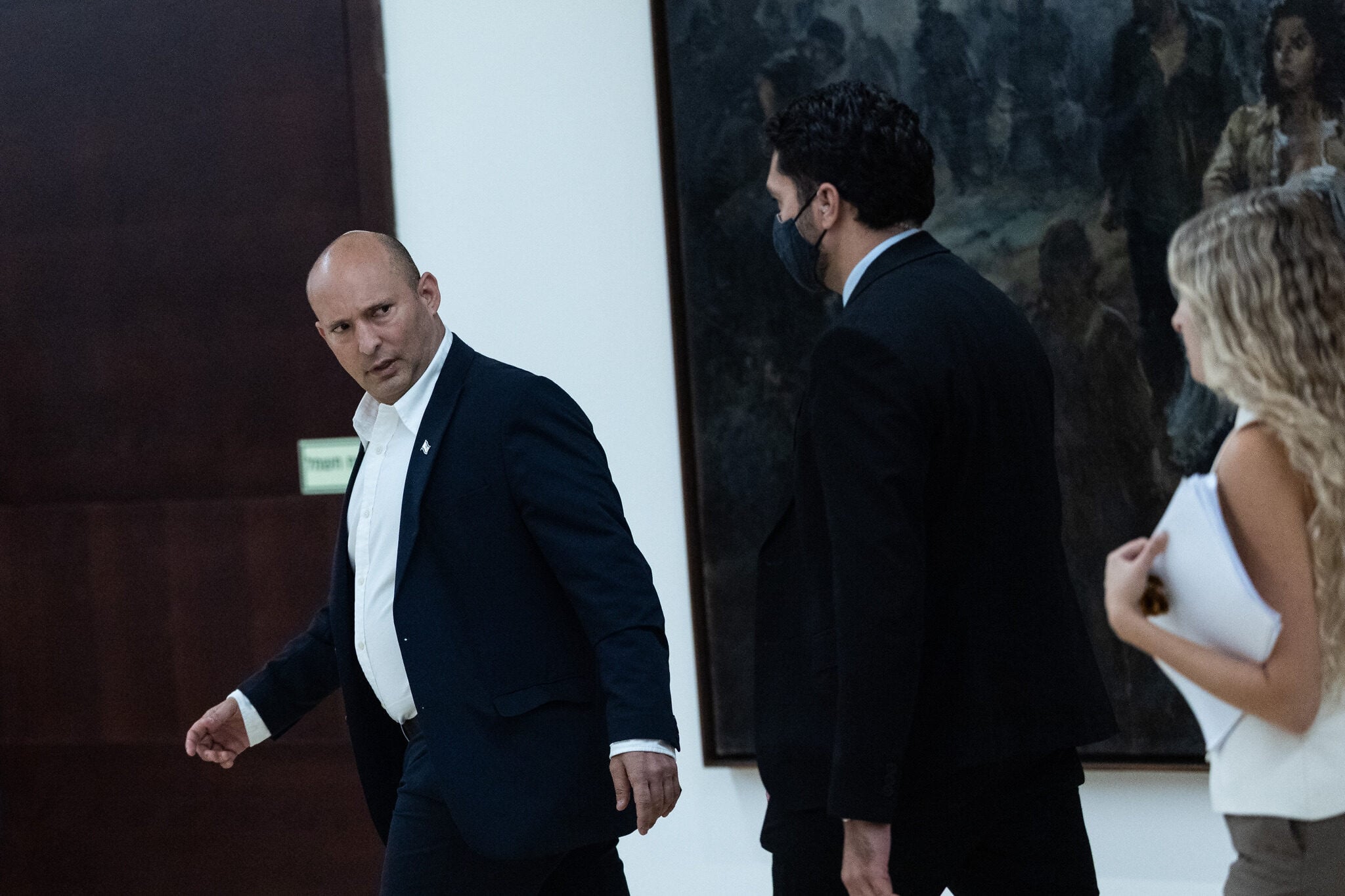
B’Yachad party head MK Naftali Bennett has not publicly said he would vote against an Arab-backed minority government, but has told Eisenkot he would not support one “at this stage,” according to Channel 13 on Thursday night, preferring a unity government with Netanyahu. The right-wing former prime minister’s B’Yachad party controls 12 seats, but he has indicated he would not join a Netanyahu government without his bloc allies, and wants Eisenkot to lead any unity government, or be first in a rotation agreement.
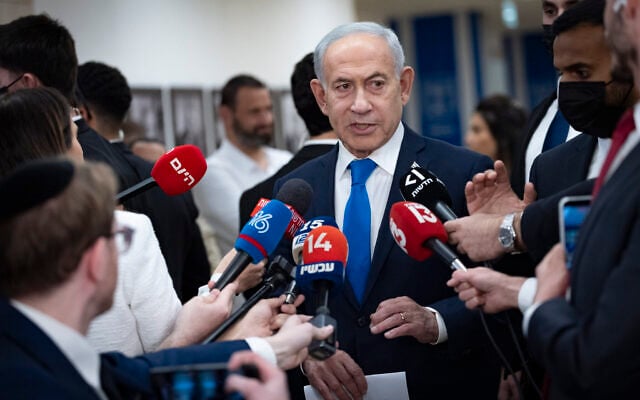
Meanwhile, Netanyahu on Friday repeated his call for a unity government, warning that the country was standing at a “historic crossroads.”
Netanyahu noted that he’d held briefings in the past few days with Eisenkot, Liberman and Bennett “on the challenging security situation we are facing.”
“We are standing at a historic crossroads. There is no spin here and no exaggeration. They have been presented with all the relevant information, and what is needed now is responsibility. Responsibility means unity,” Netanyahu said.
Netanyahu asserted that it was “astonishing” to contemplate the formation of a “narrow government… relying on the votes of supporters of terrorism who advocate the destruction of the Jewish state.”
“This is incomprehensible. I say this in the clearest possible terms: this must stop immediately,” said Netanyahu, who himself led negotiations with Ra’am in 2021 in an attempt to form a government with the party. “Israel’s fate is at stake.”
The Eisenkot-led Zionist bloc won 48 of the Knesset’s 120 seats in the October 27 election, while the Arab parties won 19 and Prime Minister Benjamin Netanyahu’s governing coalition won 53, losing its parliamentary majority.
Eisenkot: ‘I do not intend to hesitate’
In explaining his determination to quickly form a government, Eisenkot suggested Netanyahu was trying to exploit tensions with Iran for political purposes.
Netanyahu has intensified his public demands for a unity government under his control, again claiming that Iran poses an imminent threat to Israel that would not be addressed if a minority government reliant on the Arab parties is formed.
“The fact that operational interests and schedules are being conflated with political interests and agendas — and that this has become completely normalized — is unacceptable,” Eisenkot said.
Eisenkot lamented tactics he said the Netanyahu-led camp has used to prevent his bloc from forming a government, saying they have included “desecrating the memory of the fallen” by targeting bereaved family members.
“Sending hateful messages to bereaved families or making remarks such as ‘Your son would be ashamed of you,’ crosses the boundaries of what is decent, humane and respectful,” he said, calling on Netanyahu to speak out against such rhetoric.
Eisenkot argued that his bloc was operating in an unprecedented environment “in which the outgoing prime minister is acting in ways we have never encountered before. This is not fear-mongering. It is a description of reality, and it demands a great deal of caution and responsibility from us.”
Eisenkot blasted Netanyahu’s rhetoric against the Arab parties, warning that “the path from a violent campaign of delegitimization against 21 percent of the population —labeling them ‘supporters of terrorism’ — to actual, physical violence could prove to be very short. The writing is on the wall.”
Indeed, within hours of each other this week, a mosque was torched and a Jewish driver rammed into Arab Israelis in northern Israel, with Arab community leaders blaming Netanyahu’s rhetoric against their political representatives.
At the same time, Eisenkot insisted that serious dialogue was ongoing with the Haredi parties to bring them on board while also finding solutions to address the IDF’s manpower problem that has been exacerbated by the ultra-Orthodox lawmakers’ demands for blanket exemptions from military service for their community members.
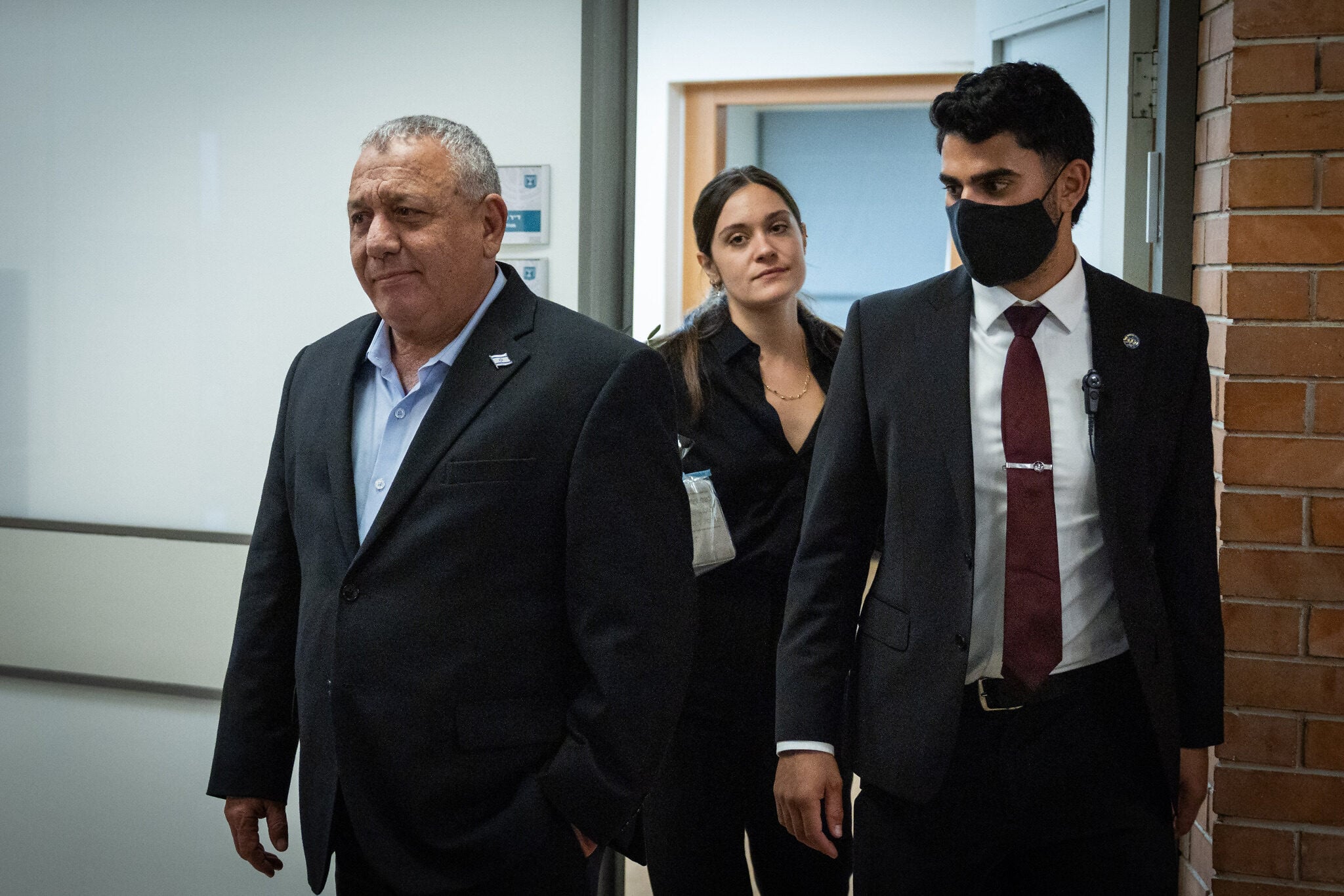
Eisenkot said this was “not a matter of ‘squaring a circle’ or ‘lowering the flag’ on the issue of military service. Rather, it involves formulating a framework based on the principles” of his plan to ensure all Israelis serve.
“As for the negotiations with Likud, we are making sincere and genuine efforts. However, regrettably, there remains a significant gap between their rhetoric and their actual conduct, and their practical willingness to act,” Eisenkot said. “Nevertheless, I intend to give this track another chance. We must try to persuade the members of the Likud to rise to the magnitude of the moment.
“I intend to continue striving for a breakthrough on each of the tracks available to us for forming a coalition — one that is as broad as possible. However, all parties must understand that I have no intention of stalling or wasting time. They need to understand that at the right moment, I will present a new and capable government under my leadership to the Knesset for approval,” Eisenkot stated.
“What hangs in the balance is the future of Israel… I do not intend to hesitate, nor will I miss the gravity of this moment. I give you my word,” he added.
Stav Levaton contributed to this report.




The Times of Israel Community.