 Add ToI as a Preferred Source on Google
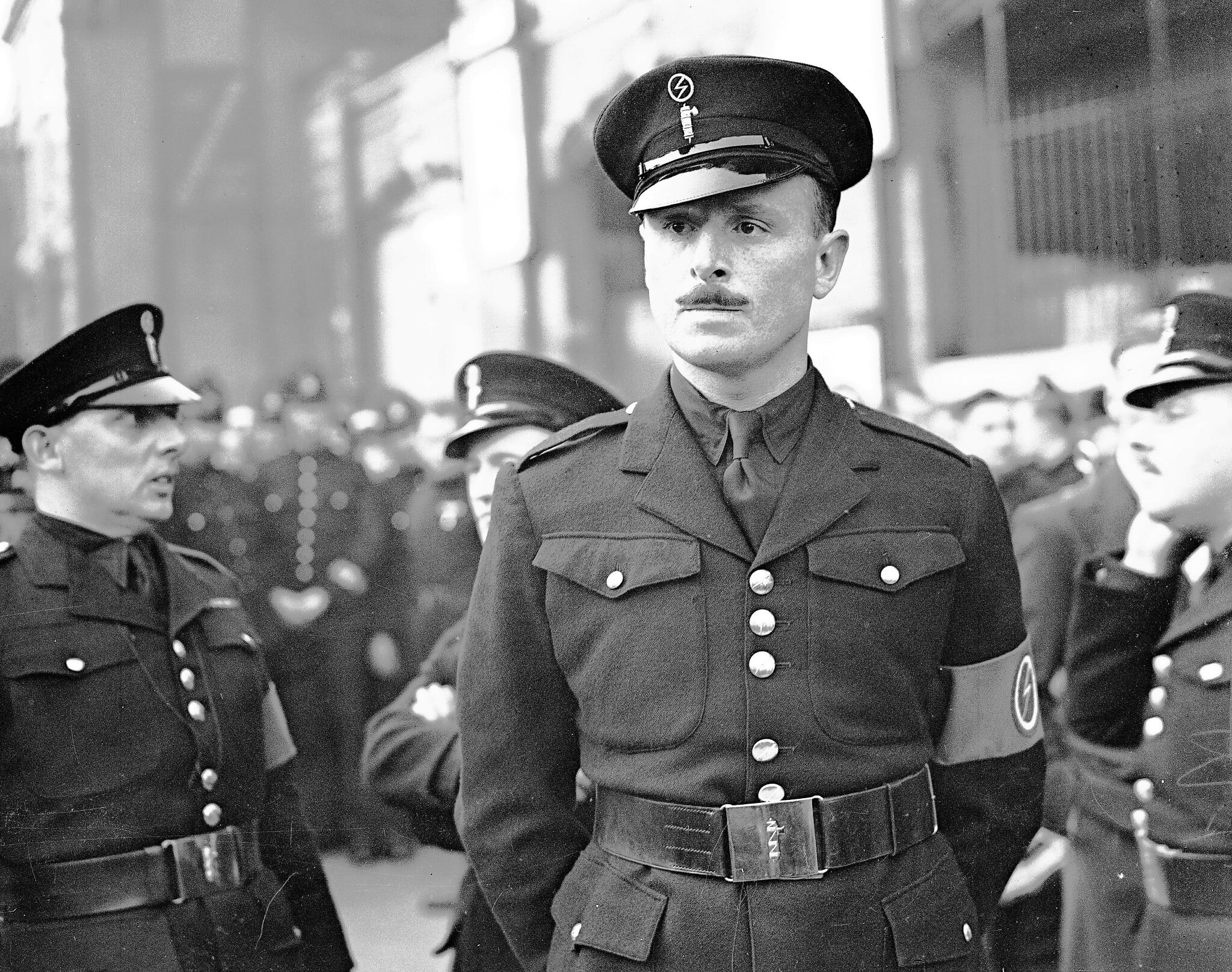
LONDON — It was the moment when British fascism was stopped in its tracks — quite literally.
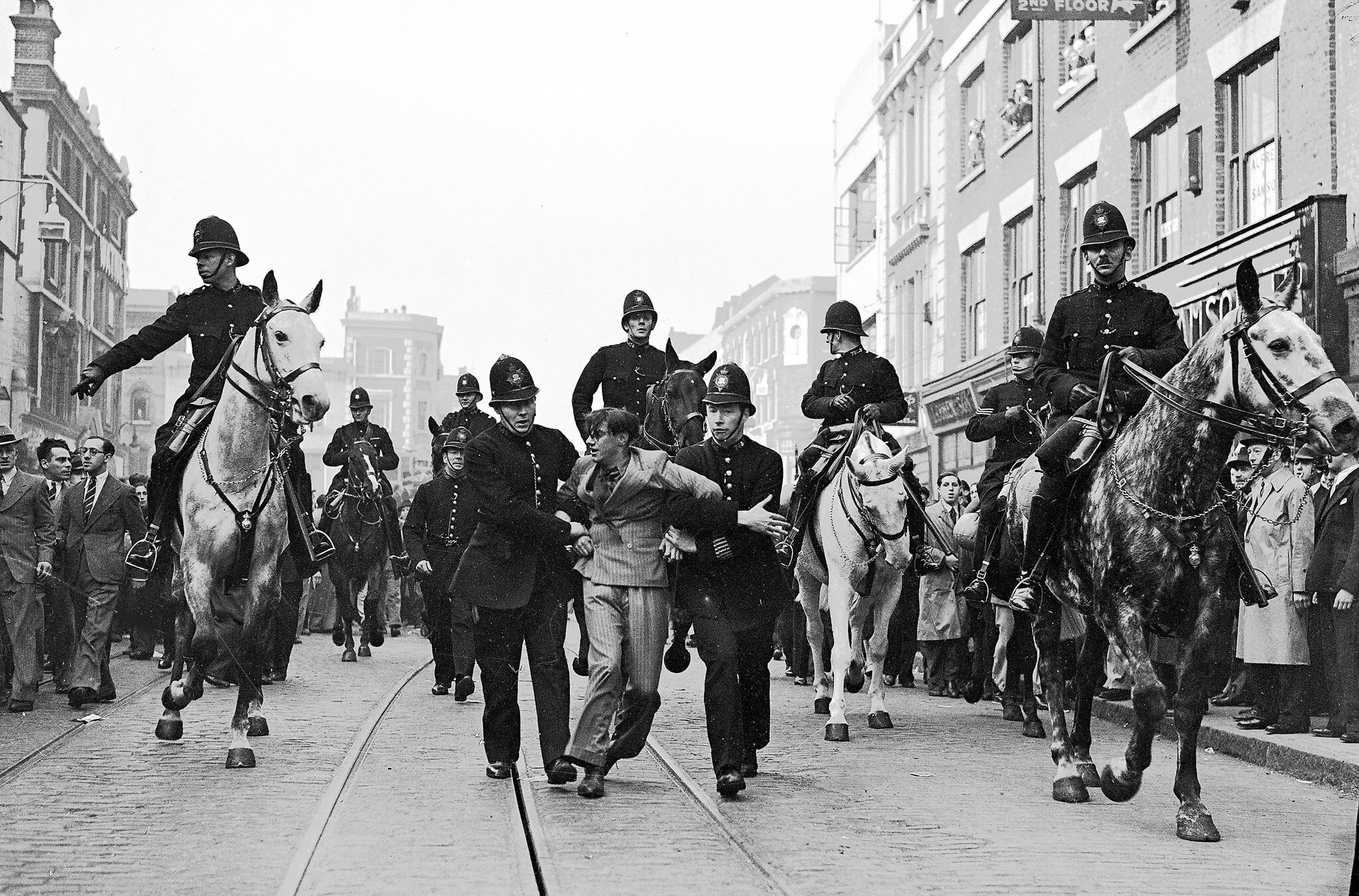
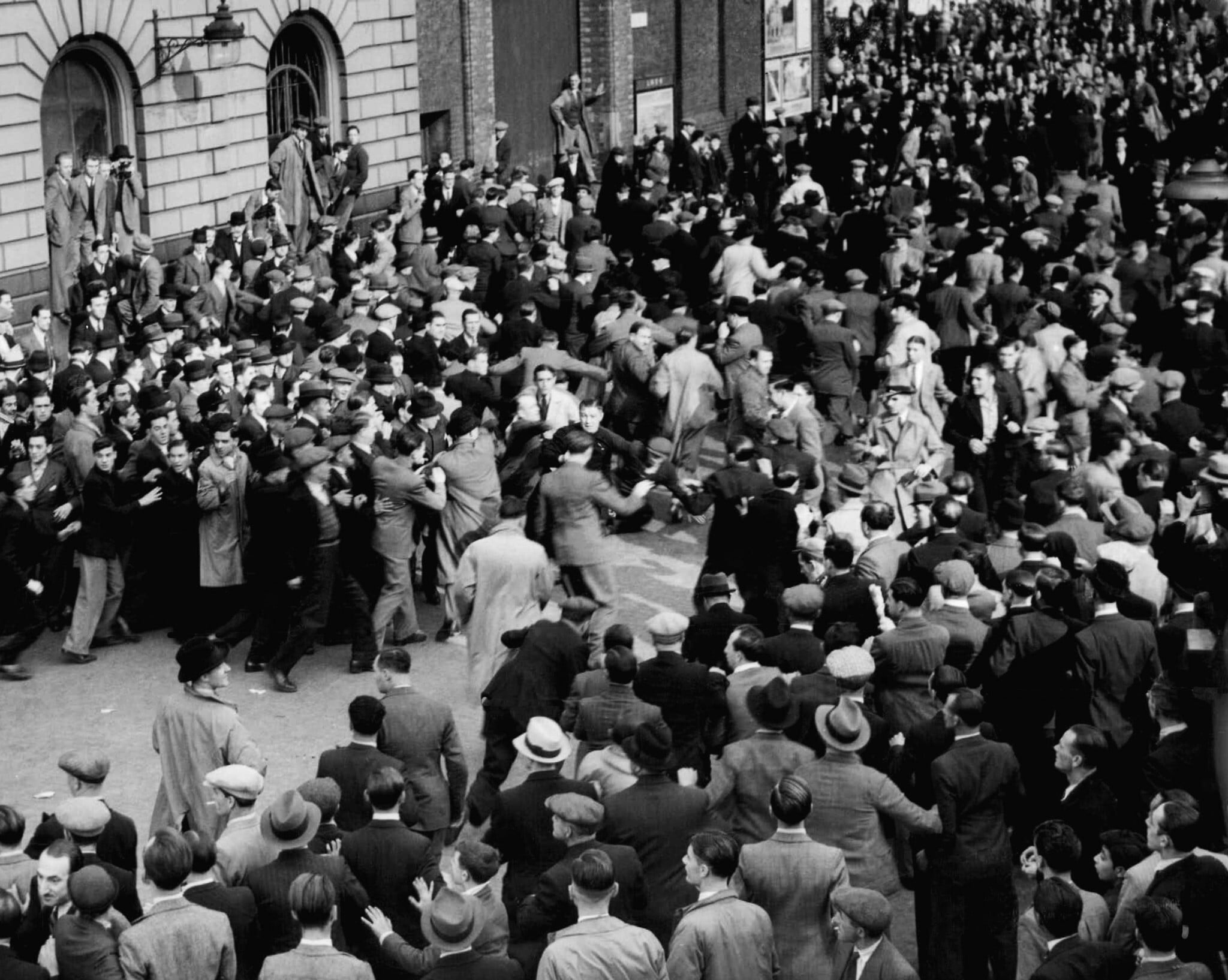
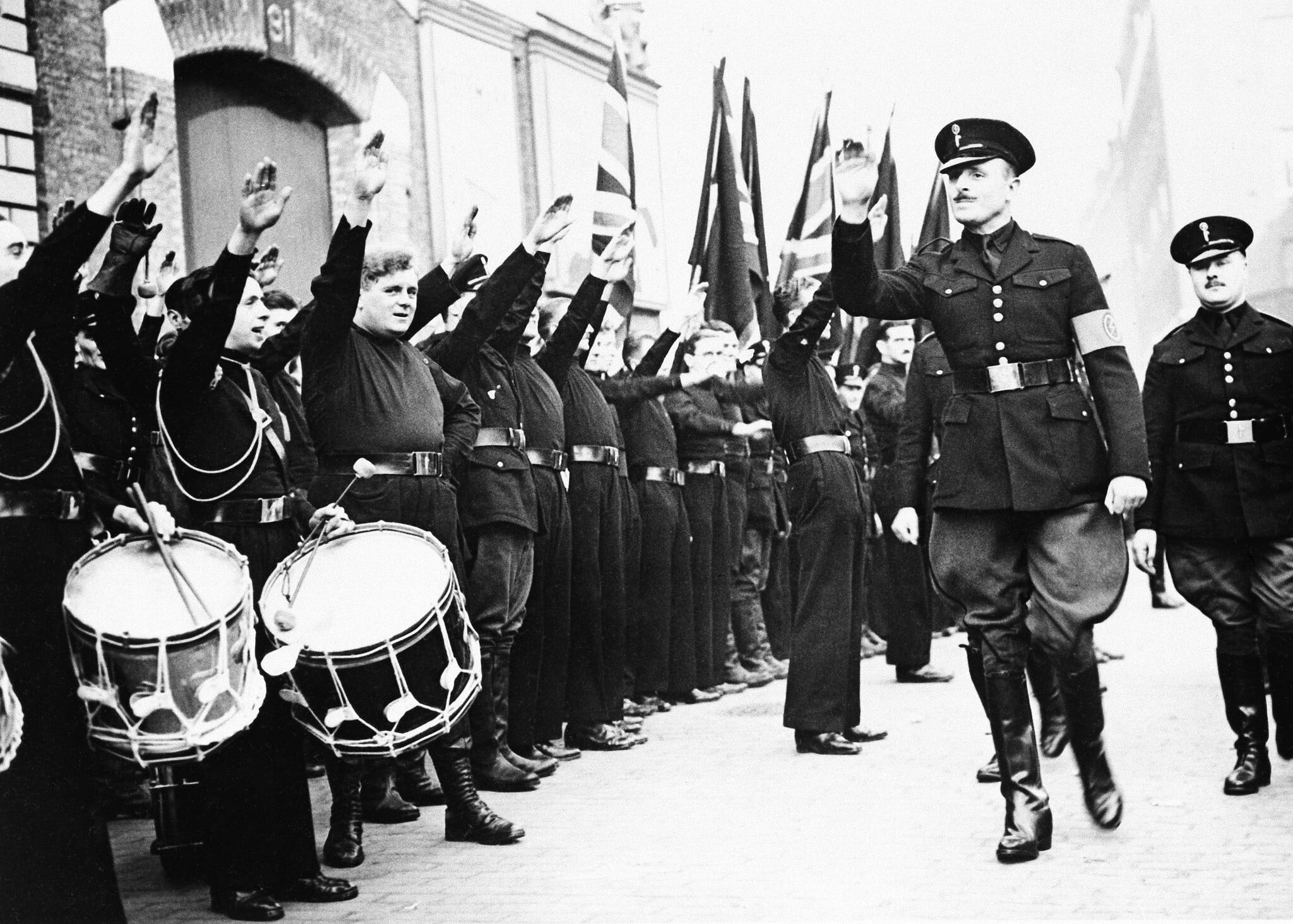
On October 4, 1936, between 100,000 and 300,000 people — Jews, Irish dockers, trade unionists, socialists and communists — gathered in London’s East End, determined to prevent Sir Oswald Mosley’s British Union of Fascists from marching through the city’s main Jewish neighborhood.
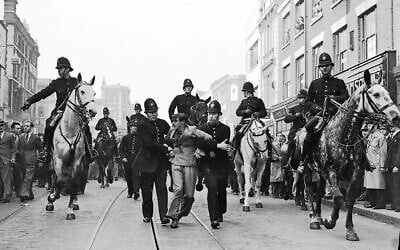
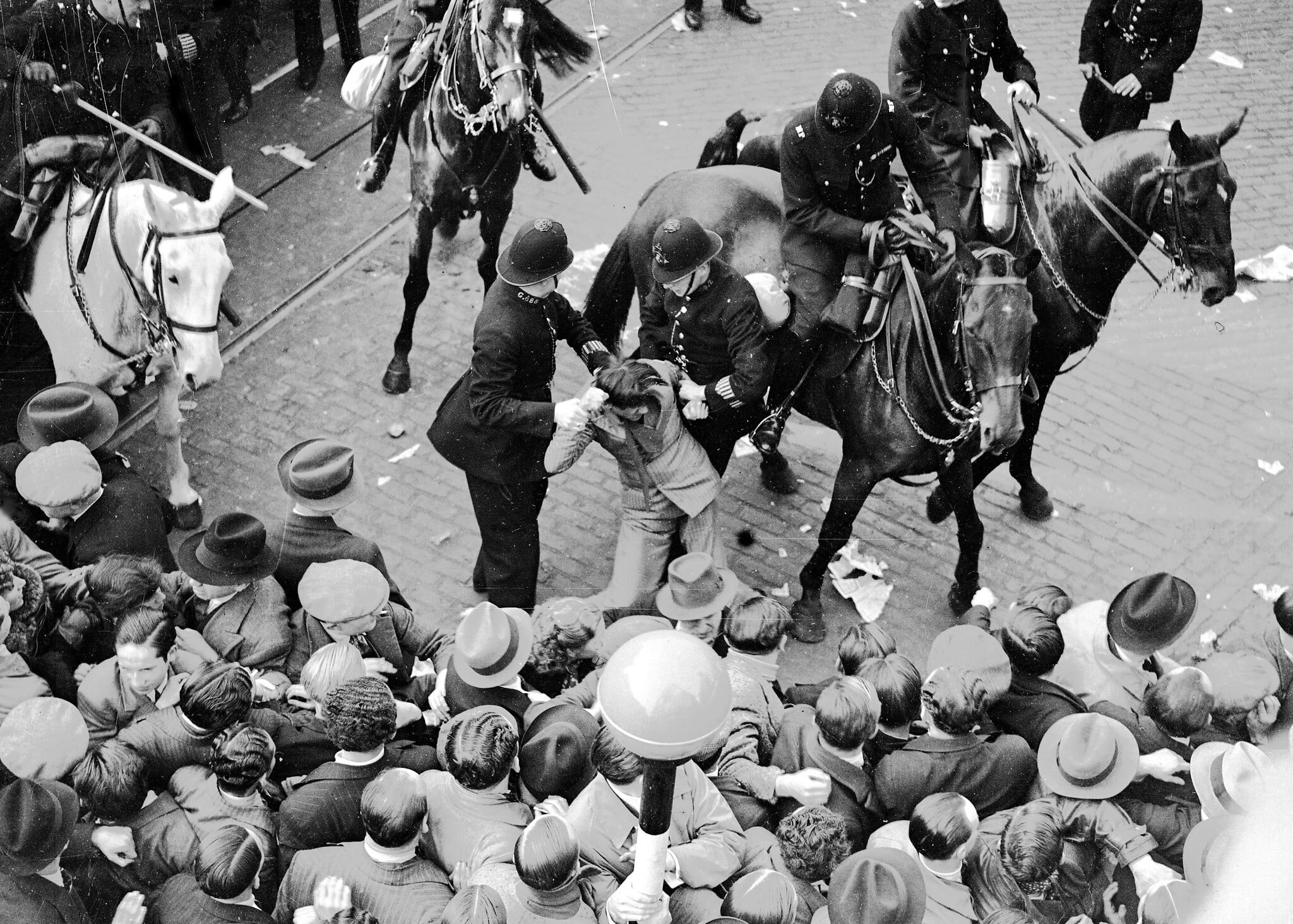
Barricades, including a bus and a tram, were used to block Cable Street. Improvised weaponry — sticks, rocks, chair legs, garbage, rotten vegetables and the contents of chamber pots — were readied, and children were deployed to roll marbles under the hooves of the police horses.
Despite baton charges and strenuous attempts by the police to clear the streets, Mosley was eventually forced to accept the inevitable and order his 5,000 Blackshirts into a humiliating retreat. Police escorted them back toward central London.
Ninety years on, the legend of “The Battle of Cable Street,” as it came to be known, endures.
But the debate over its meaning is now wracked with controversy and contention, with allegations that the central role of Jews has been “systematically erased” amid the rise of left-wing antisemitism.
This week, the anniversary is being honored and celebrated by the Jewish community, trade unions and anti-fascist activists.
The Board of Deputies of British Jews is staging “Cable Street 90: A Festival of Jewish Culture, History and Solidarity in East London,” which features music concerts, talks, and walking and black cab tours of the East End.
The TUC, the confederation of Britain’s unions, is hosting a conference and reception at Congress House, its central London headquarters, to “explore the historical significance of Cable Street and discuss how the lessons learned from that landmark event remain relevant in challenging the far right today.”
Locally, “Together on Cable Street,” an alliance of local organizations, faith groups and unions, is holding a series of cultural events and discussions to commemorate the anniversary.
And before it went into recess in mid-September, the House of Commons held a dedicated debate in which Communities minister Florence Eshalomi labelled the Battle of Cable Street a “defining moment in the history of the city” and praised the central role of the Jewish community.
‘It was Jewish communities that Mosley was targeting, and it was Jewish communities who led the response’
“October 4, 1936, was not just a significant moment in London’s history; it was pivotal in the history of British Jews. It was Jewish communities that Mosley was targeting, and it was Jewish communities who led the response and built the barricades against the fascists, made with anything they could find from nearby streets and builders’ yards,” Eshalomi told MPs. “In the many years since, the Jewish community has been at the heart of London’s culture, identity and great achievements.”
But, as Eshalomi acknowledged, this year’s commemorations come against the grim backdrop of a steep rise in the number of antisemitic incidents in the UK in the wake of the October 7, 2023, attacks and the consequent conflict in Gaza. The latest figures released by the Community Security Trust, which monitors antisemitism and helps protect Jewish institutions and venues, showed 1,926 antisemitic incidents across the UK in the first half of 2026, the second-highest total ever reported to CST in the first six months of any year.
That backdrop, experts suggest, has heightened interest around the events which unfolded in the East End nine decades ago.
“The Jewish community has become more interested in commemorating Cable Street in recent years, probably as a response to rising antisemitism, both during the Corbyn period and more acutely since the October 7 attacks,” says Dave Rich, director of policy at the CST, referencing the hard-left former leader of the Labour Party, Jeremy Corbyn. “It reflects a rediscovery of the activist tradition of Jewish self-defense, with Cable Street as the foundational moment in that history.”
As the Labour Party was rocked by allegations of antisemitism under his leadership, Corbyn frequently raised his personal connection to events in the East End eight decades ago to deflect criticism.
In 2016, the then Labour leader delivered an uncharacteristically personal and emotional speech at the main commemorative event marking the 80th anniversary of Cable Street. Speaking of the “deep personal significance” the confrontation held for him, Corbyn declared: “One woman stood there along with many others and she told me all about it. That woman was my mother. She stood here with so many others because she wanted to live in a world, as we all do, that is free from xenophobia and free from hate. Those that stood here in 1936 did an enormous service.”
Corbyn’s critics, however, accused him of wrapping himself “in the flag of Cable Street” and attempting to use his mother’s presence as “moral armor.”
‘In 1936, all of officialdom said to the people of the East End: ‘Shut up, do nothing about it and let them march’
In his own remarks during the parliamentary debate on Cable Street last month, Corbyn chose not to reference the Jewish community at all.
“We should remember that in 1936 all of officialdom said to the people of the East End: ‘Shut up, do nothing about it and let them march,’” Corbyn, now leader of the far-left Your Party, told the House. “The people refused to let them march – it was the biggest defeat that Mosley and the fascists ever had in Britain – and we should thank them for their bravery.”
Corbyn is not unique in opting to ignore both the pivotal role of the Jewish community and the issue of antisemitism, which was the hallmark of Mosley’s politics.
In January, the BBC faced criticism after a news item on BBC London focusing on a new musical about Cable Street failed to reference Jews, speaking vaguely instead about a “community under siege during some turbulent and violent days in London’s recent past” and the role of “the Irish and dockers”.
Days later, the BBC was forced to apologize after some of its reports on Holocaust Memorial Day failed to reference the murder of Jews. The dual controversies led former US antisemitism envoy Professor Deborah Lipstadt to post on social media: “This is not a mistake but a pattern that the BBC is perfecting @BBCNews Make Jews invisible: Holocaust w/out Jews, Mosley Blackshirt attacks w/out Jews”
‘We are bringing together trade unionists, historians, musicians, artists and authors to make this a celebration of working-class pride’
Unite, Britain’s biggest trade union, provoked a similar row in June when it reportedly planned to hold an event marking the Cable Street anniversary on Shabbat and published a webpage which failed to mention the Jewish community. The page stated that the BUF was defeated by a “strong, organized working class who knew that the politics of hate and division offers no solutions. We are bringing together trade unionists, historians, musicians, artists and authors to make this a celebration of working-class pride.”
The union later edited its website to mention the role of Jews and the event was rearranged so as not to fall on a Saturday.
For its part, the Jewish community is aghast at its erasure from the legendary saga.
“Cable Street used to be a point of pride for British Jews,” argues Alex Hearn, co-director of Labour Against Antisemitism. “We were stronger together, and the left were our natural allies. Like Holocaust Memorial Day, in recent times the Battle of Cable Street has been reimagined to systematically erase Jews. At best, we are the support act in someone else’s savior story.”
‘We should be claiming Cable Street loudly, every October, as a Jewish story’
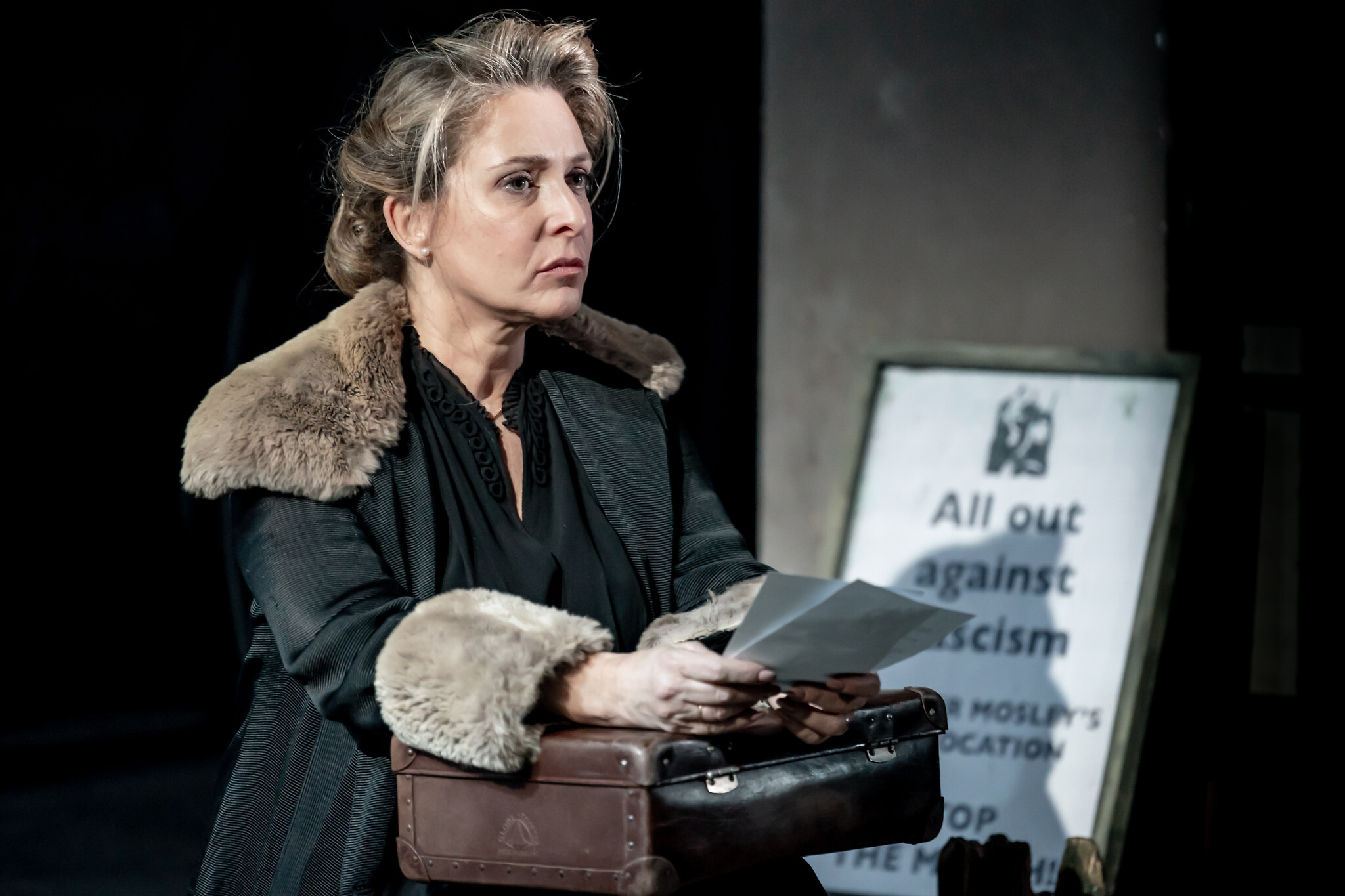
That, believes Hearn, is why Jewish actor Tracy-Ann Oberman’s acclaimed “The Merchant of Venice 1936” is “so welcome.” The production, which has had multiple runs in the UK, transports William Shakespeare’s play from 16th-century Venice to 1930s London and, in the process, puts Jews once again at the center of the Cable Street story.
“The Merchant of Venice 1936,” believes Hearn, should serve as a model for how Jews remember Cable Street.
“Nobody hands you your own history back,” he suggests. “We should be claiming Cable Street loudly, every October, as a Jewish story with allies in it, rather than waiting to see whether we get a mention. Anti-fascism that requires Jews to be absent from the story is not anti-fascism.”
But it isn’t just revisionist histories of Cable Street which erase their presence that some Jews fear.
Hearn notes that, at a rally against the far-right in the East End last October, speakers invoked the memory of the battle while masked young men, themselves dressed in black, shouted “Zionist scum off our streets” and “we don’t want no Zionists here.” Hearn, who had relatives at Cable Street, labels the event “a grotesque charade.”
‘There were a lot of people who were simultaneously Jewish, Communist and Zionist in their outlook’
Tensions over how to mark Cable Street reflect the growing schism between British Jews and the British left of which many were once stalwart supporters.
“Cable Street reflected a period when Jews, Communists and Zionists stood together to confront fascist antisemitism. This was not seen as contradictory at the time: Indeed, there were a lot of people who were simultaneously Jewish, Communist and Zionist in their outlook,” believes Rich, author of the newly published book “From Be’eri to Bondi: Global Antisemitism after October 7.”

“Comparing this to the situation today only highlights how much has changed,” he continues. “Now the far left shows little interest in protecting Jews from the murderous antisemitism we saw in Manchester and Golders Green over the past year. Instead, socialists and Islamists come together on marches replete with antisemitic slurs, fuelled by vicious contempt for Zionism.”
Moreover, as Rich suggests, while Cable Street saw Jewish protestors clashing with the police, today “police commit increasing resources to protecting British Jews from the violent hatred this extremist politics generates.”
The anger and disquiet felt by many British Jews at the manner in which antisemitism has risen in the UK – and the belief that much of the left is unwilling to confront it – has also provoked tough-minded thinking about the community’s response.
Claudia Mendoza, chief executive of the Jewish Leadership Council, believes “the enduring message of Cable Street is that the Jewish community must be strong enough to stand up for itself.”
‘In 1936 Jews organized, and others came to stand with us. We build our own defenses’
“Ninety years ago, British Jews stood with others to stop fascists marching through the Jewish East End,” she argues. “Today, many of the marches marred by antisemitic chants, placards and conduct are organized by an unholy alliance of extremists, with the far left playing a prominent role.”
“The lesson was never that the left would defend us,” agrees Hearn. “In 1936 Jews organized, and others came to stand with us. We build our own defenses, and we judge allies by whether they turn up, not by what they call themselves. We have watched as our historical allies disappeared or even joined the other side, attacking us and joining hostile marches in our areas.”
The distance between the coalitions forged at Cable Street and today’s political landscape is instructive, believes Rich.
“Political alliances may be useful but are never permanent and can shift quickly if conditions change,” he argues. “Ultimately, Jews always need to retain the ability to stand up for their own interests and their own safety.”
Other academic experts stress the continuing importance of Cable Street in challenging the threat posed by the far-right. They note both the rise of the populist right-wing Reform UK party and the anti-migrant protests led by far-right agitators which Britain has witnessed over the past two years.
‘Ultimately, Jews always need to retain the ability to stand up for their own interests and their own safety’
Professor Nadia Valman of Queen Mary University of London believes that demographic and socioeconomic change among British Jews in the years after 1945 meant that Cable Street “did not loom large in British-Jewish communal memory.”
“The working-class world to which Cable Street belonged was part of the past that Jews put behind them when the majority moved away from the East End in the postwar decades,” she notes.
At the turn of the century, agrees Professor Tony Kushner of the University of Southampton, “the memory was largely the preserve of the left wing and radical Jews and the anti-fascist movement in general.”
Nonetheless, the small numbers of Jews who remained in the East End continued the tradition of anti-fascist protest when far-right groups threatened Bengali immigrants in East London at various moments during the 1970s, 1980s and 1990s.
“For them,” Valman argues, “the lesson of the Battle of Cable Street was the importance of solidarity, as this solidarity had been shown towards Jews by other East Enders in 1936.”
That lesson is being learned again by a new generation of anti-fascist activists, in which Jews continue to play leading roles.
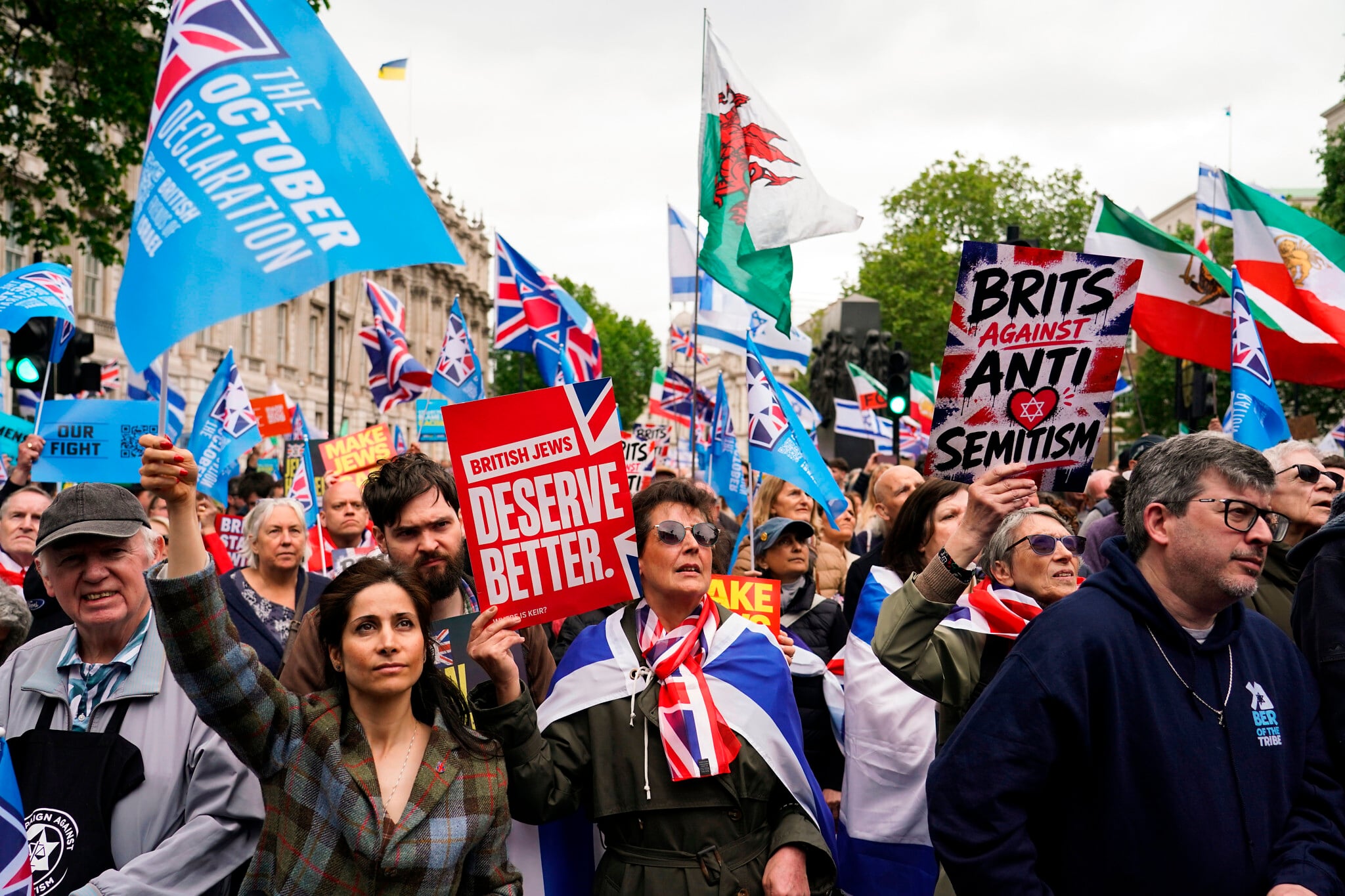
As Kushner argues, the “broad-based pro-refugee alliance” that has grown in response to anti-migrant demonstrations in the UK has adopted the rallying cry “Every street is Cable Street.”
In the summer of 2024, Valman notes, many Jews participated in the large protests against far-right activists who were threatening hotels that housed asylum seekers in several British cities.
“That summer, the Battle of Cable Street was often invoked as an inspiration for communities to come together across differences of religion or culture to insist that their neighbourhoods were welcoming to newcomers,” she says. “For younger Jews today, this lesson of solidarity connects them to the generation of their grandparents.”
Kushner says he personally draws inspiration from Cable Street and its message of solidarity in his own campaigning against the far-right.
“I still hope that there is respect that, despite all the mythology, there was interaction of Jews and non-Jews in repelling the fascists and that at the heart of this was organisation from the left,” he argues. “That was complicated at the time and remains so today.”
But, Kushner concludes, “When I take part in defending asylum seekers in Southampton, I take pride that the memory of Cable Street is used to show a different way forward from the vile racism perpetuated by the various far-right groupings, ones which Reform UK and the mainstream right have hardly distanced themselves from. Then, as now, they see the problems as migrant origin groups and not racism itself.”

The Times of Israel Community.