

Peoples of Israel: Joel Haber, the cholent maven
On this week’s installment, we meet a man who brings Jewish history to life through food
 Add ToI as a Preferred Source on Google
Sarah Tuttle-Singer, The Times of Israel social media editor, is an LA expat (reluctantly) growing roots in Israel. She’s also a contributing editor at Kveller.com. Dangerous when bored.
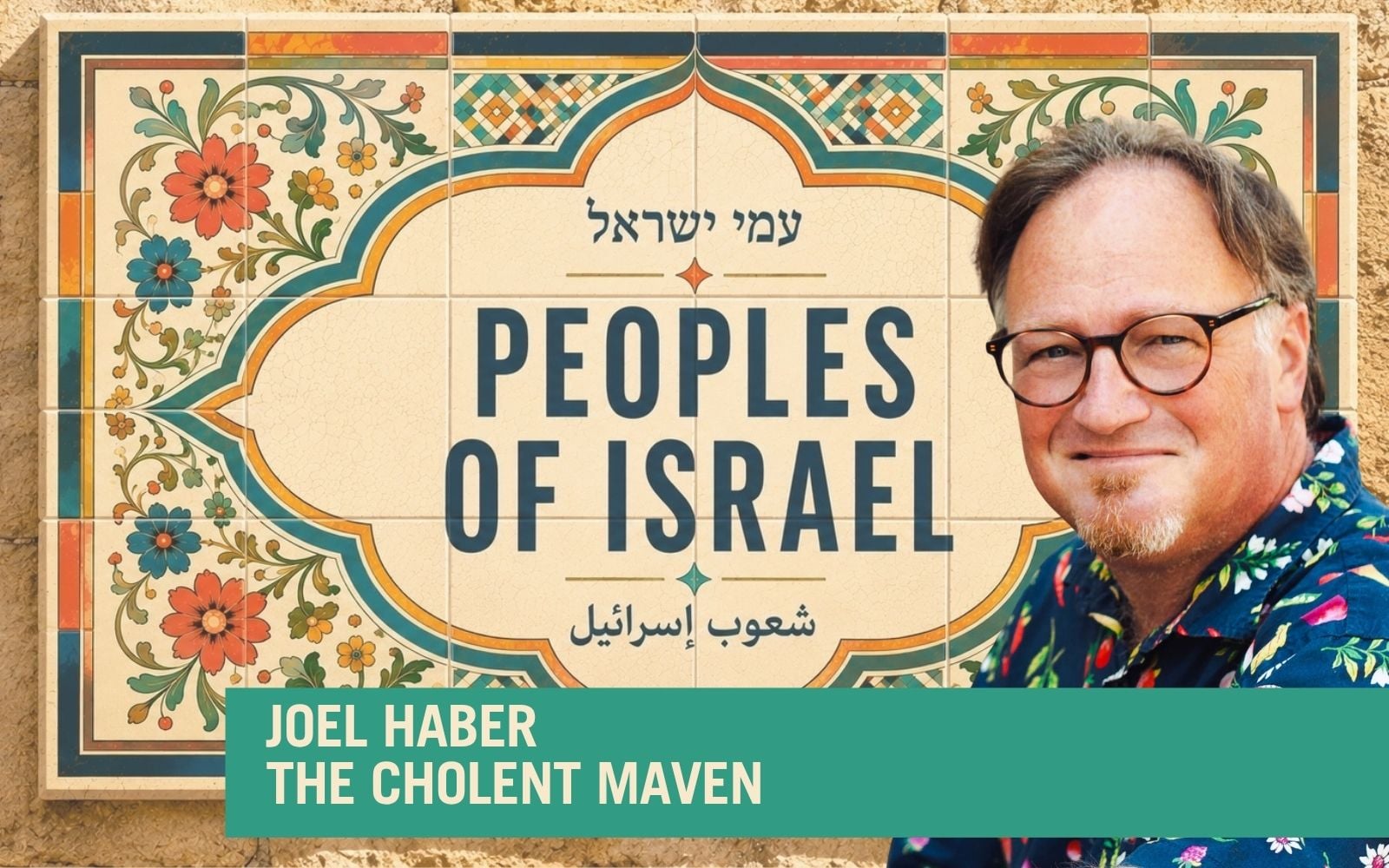
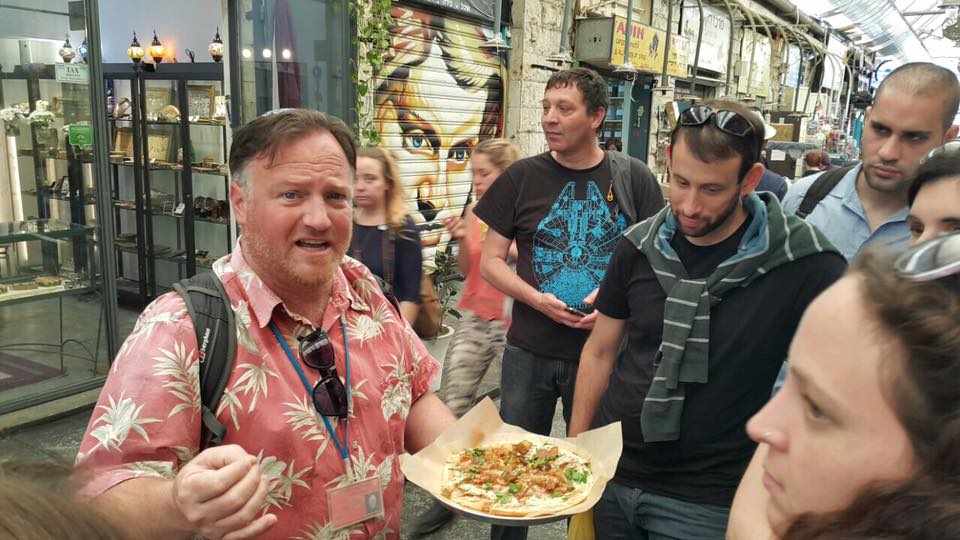
If you’ve ever spotted a tour guide somewhere in Jerusalem’s Mahane Yehuda market wearing a wildly colorful Hawaiian shirt, surrounded by a group of people hanging on his every word, with a plate of something delicious being passed around, there’s a decent chance you’ve already seen Joel Haber.
He is hard to miss.
His friends and followers in Israel and around the world call him “Fun Joel.”
That tracks: He’s charismatic, curious, deeply knowledgeable and, yes, genuinely fun — the kind of guide who can make history feel less like something trapped in a textbook and more like a story unfolding right where you’re standing.
“My first trip to Israel was when I was 14,” Haber says, “and I loved it from then on, but my gap year in 1989-90 was the formative moment. From that point on, I knew I wanted to live here eventually; I just didn’t know when that would be.”
He almost stayed and joined the army. His parents persuaded him that Israel could wait.
But something had already shifted inside him.
“My favorite thing then was feeling how I was surrounded by Jews everywhere,” Haber says. “If I walked into a bar or restaurant in New York, it was just me and a bunch of other people. But when I did that in Israel, I already had something in common with almost everyone else there.”
Eventually, Haber made Israel home.
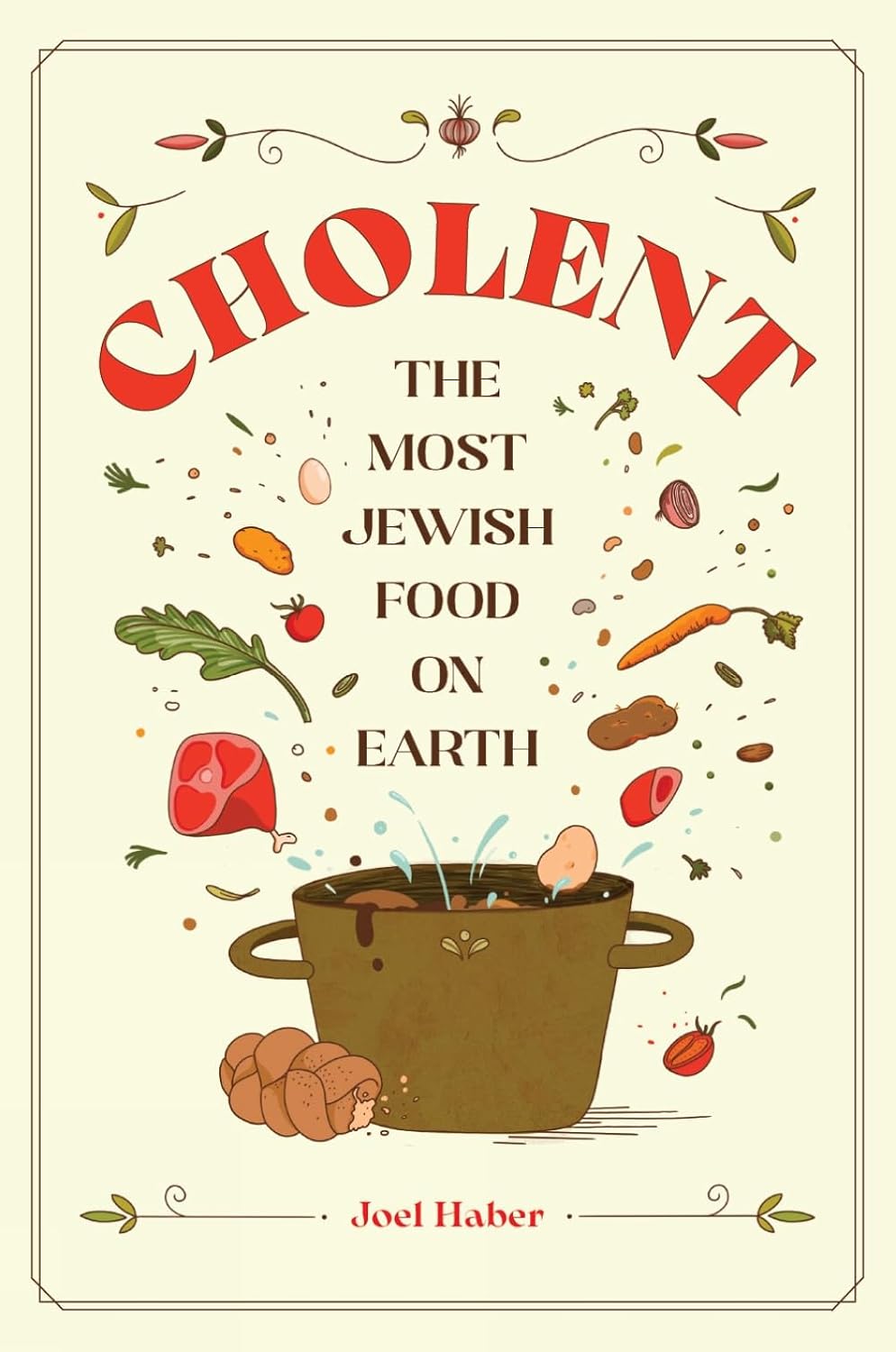
Today, he is a tour guide, writer, food scholar, and the author of “Cholent: The Most Jewish Food on Earth,” exploring Jewish history through something at once spectacularly ordinary and deeply revealing: what people eat.
Especially on Shabbat.

Haber believes that if you want to understand the Jewish people and their story — migrations and exiles, adaptations and peculiarities — you can start by looking inside a pot that has been simmering since Friday afternoon.
“I believe that the Shabbat stew is truly the most Jewish food on Earth,” he says.
Not specifically cholent, he stresses, although that is the name most familiar to Jews of Eastern European origin.
Across the Jewish world there is cholent and hamin, dafina and osavo, khalebibi and many more: dishes with different names, different ingredients, different colors and flavors, all built around the same basic idea.
Prepare a stew before Shabbat. Leave it to cook slowly. Eat it nice and hot the following day without violating the prohibition against cooking on Shabbat.
But to Haber, what makes the dish so profoundly Jewish goes beyond religious law.
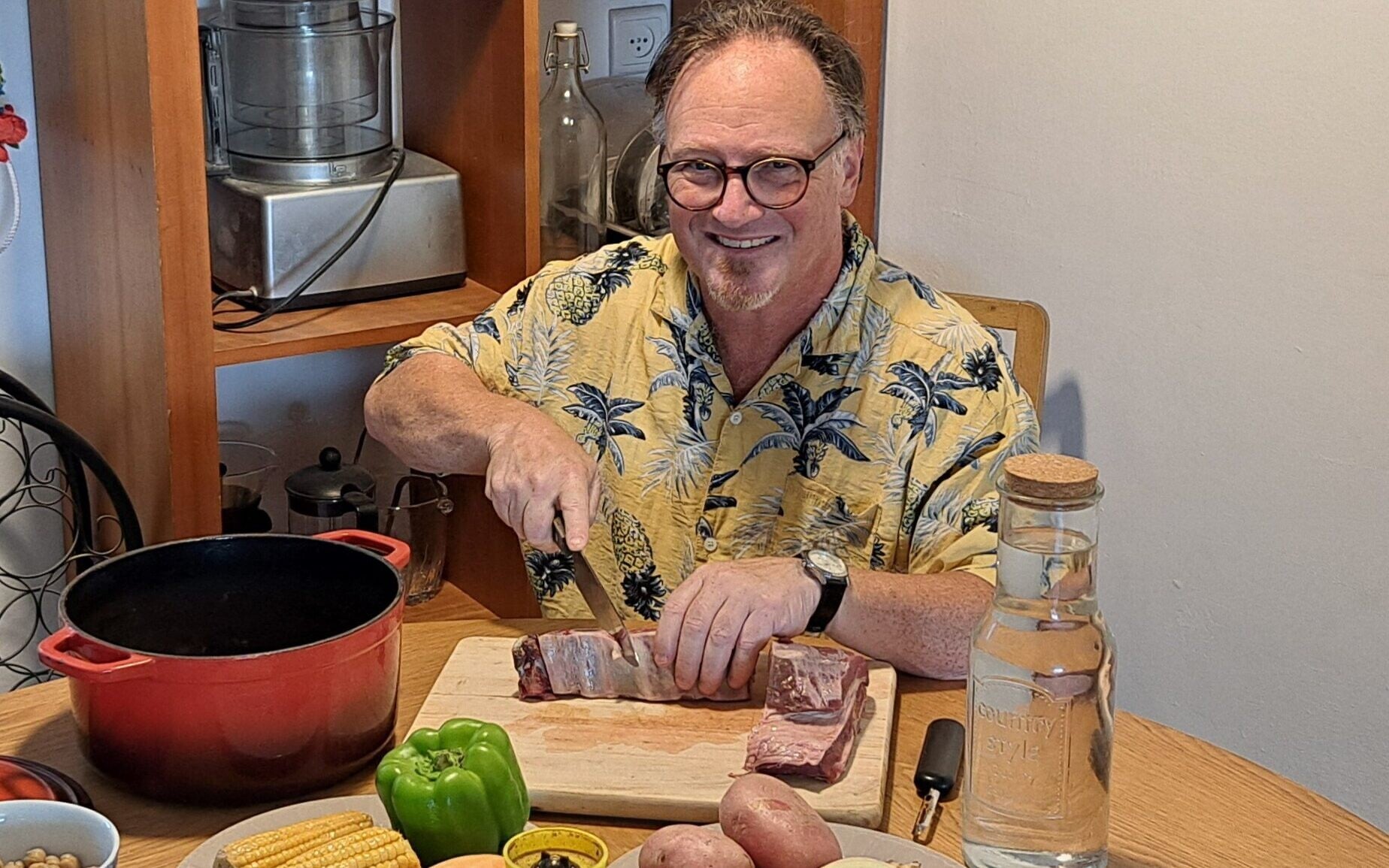
“They have different names, include different ingredients, and look and taste unique,” he says. “Just like the Jewish people. We look different, wear different clothes, speak in different languages with unique accents, and yet we remain unified as a single people with more that binds us together than divides us.”
And those differences tell a story.
Haber traces the various Shabbat stews back to harisa, a dish of wheat and lamb cooked and pounded into a porridge. As Jews migrated, the dish migrated with them.
“As we migrated around the world, this dish traveled with us, and we swapped ingredients in and out based on what was available or popular in each place,” Haber says.
When olive oil, common in Spain, became difficult to obtain in France, Jews began cooking with schmaltz instead.
One dish adapted again and again until it became a family of dishes, each reflecting the place where a particular Jewish community had landed.
“This kaleidoscopic dish reflects Jewish Diasporic life,” he says.
Follow the stew, and you can begin to follow the Jews.
There are similarities among versions that traveled along the routes of Sephardi Jews after the expulsion from Spain. Other connections emerge among the Shabbat stews of Poland, Hungary and Germany.
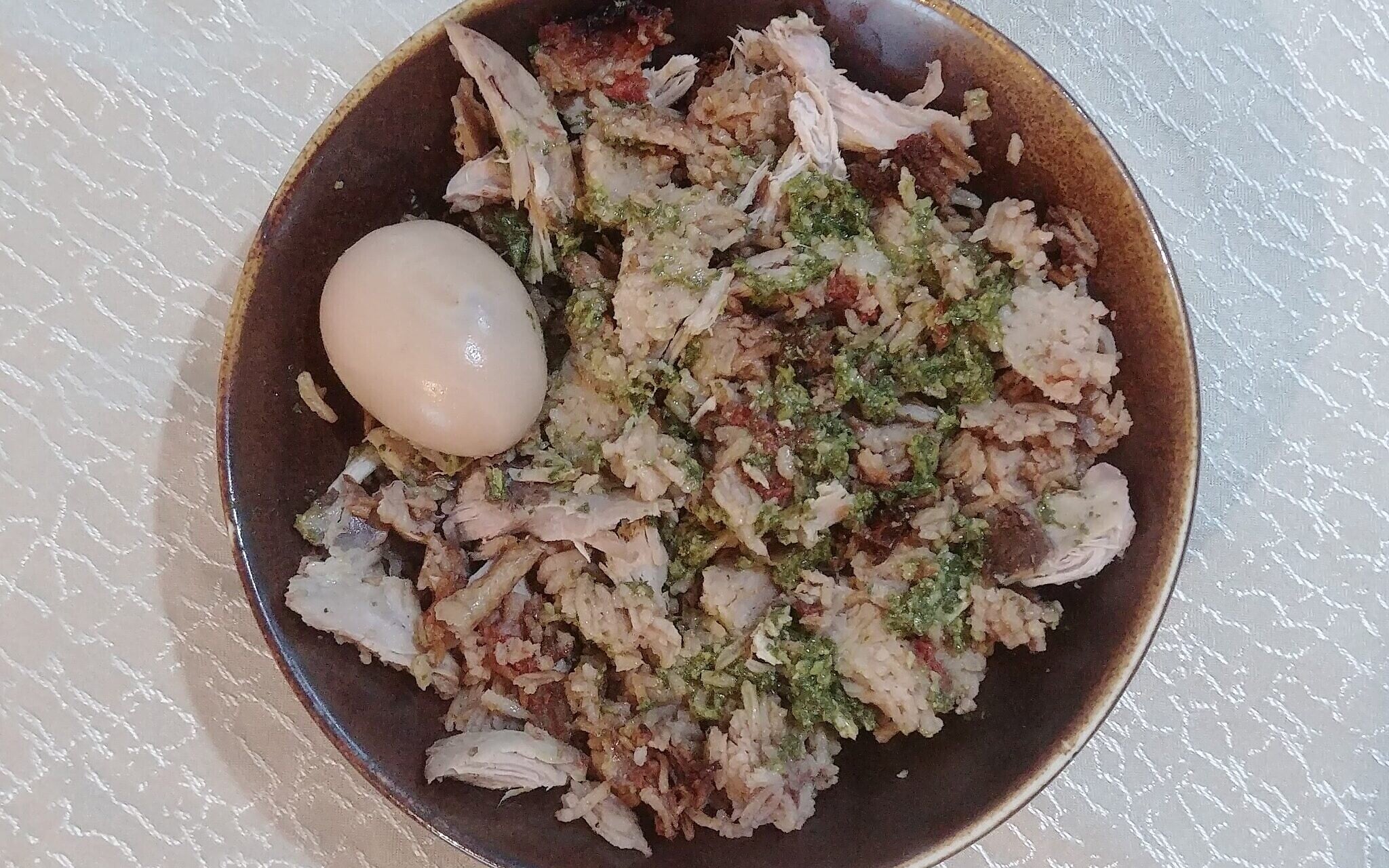
There are also striking absences. Haber was surprised to discover Jewish communities where a Shabbat stew never became part of the culinary tradition, including the Bene Israel of India and Beta Israel of Ethiopia.
Their absence from the cholent family tells a story, too: communities separated from much of the Jewish world for centuries developed along different paths.
For Haber, this enormous diversity was one of the revelations of actually living in Israel.
“When I moved here, I met Jews from places that I didn’t even know Jews existed,” he says.
It is also why he describes Jews as “the most globalized nation on Earth.”
For thousands of years, Jewish communities lived scattered across continents, carrying traditions from one place to another while absorbing pieces of the cultures around them.
And then many of those communities came to Israel.
They brought their languages.
They brought their customs.
And, inevitably, they brought lunch.
In Israel, Haber says, something particularly interesting begins happening inside the Shabbat pot.
Elsewhere, cooks might rebel against tradition by adding something completely new. In the United States, that might mean hot dogs or even cola.
Israel has its own particular form of cholent irreverence: Jews steal from other Jews.
A Yemenite jachnun can find its way into Bukharan osavo. An Eastern European cholent might acquire the separate bag of wheat more commonly associated with Moroccan dafina.
The boundaries begin to blur.
“This not only reflects exposure to different Jewish cultures,” Haber says, “but the very popular marriages between Jews from different lands.”
In other words, the pots are doing what the people are doing.
They’re meeting, mixing, borrowing and becoming something new without entirely becoming something different.
And if Haber wanted to show someone this process happening in real time, he knows exactly where he would take them: Jerusalem’s Mahane Yehuda market.
“If you want to talk to God, go to the Western Wall,” he says. “If you want to see God, go to Shuk Mahane Yehuda.”
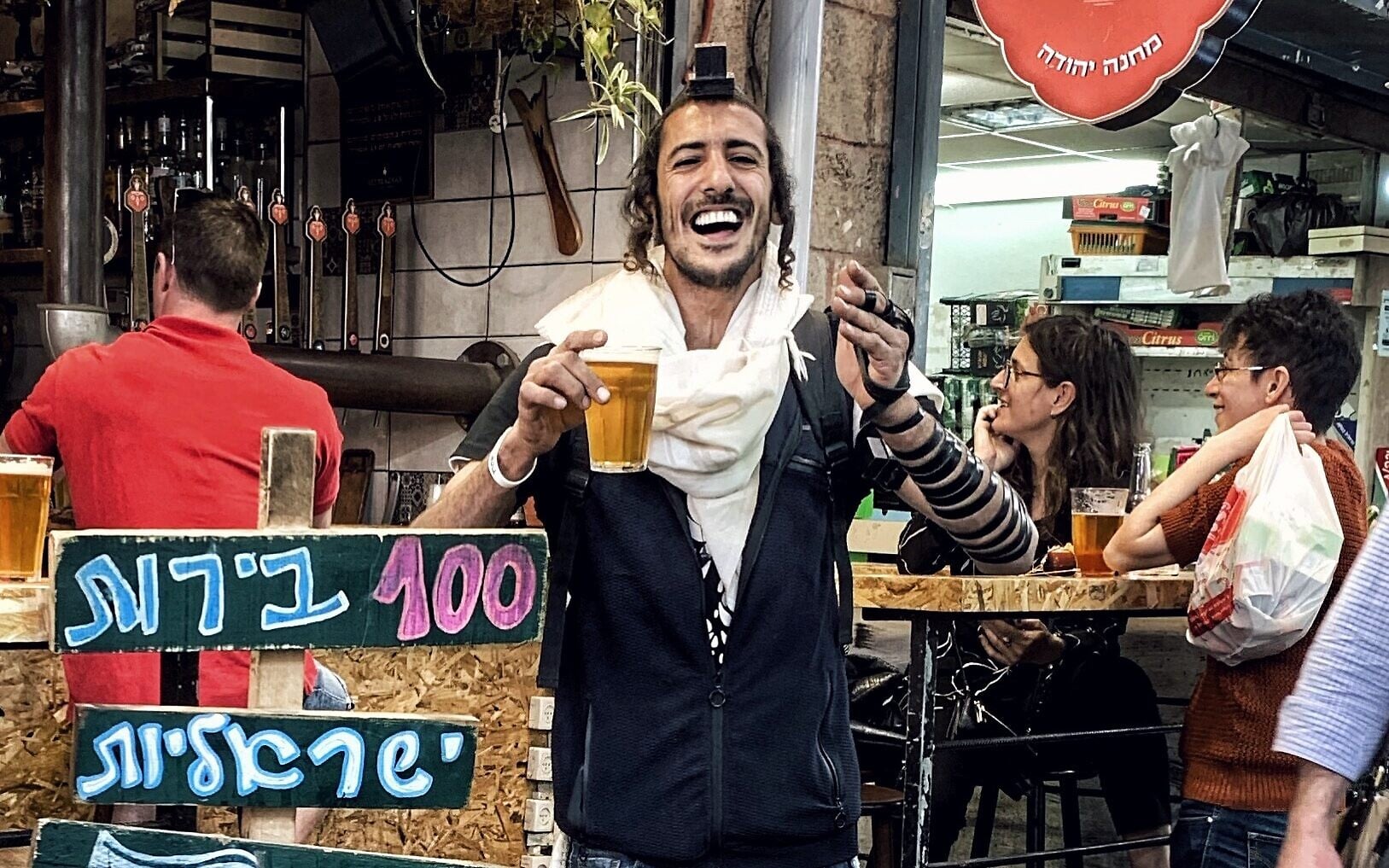
Walk through the shuk with Haber, and Jewish geography becomes edible.
“Inside of the shuk, and the area immediately around it, I can show you foods that have come from between 20 and 30 countries of origin,” he says. “And that is because Jews have moved here from all over, and we brought our foods with us.”
Which brings us back to that simmering pot.
Haber’s new book is ostensibly about cholent.
But ask him what it is really about, and the answer is much bigger.
“Obviously, it is a book about food,” he says. “But really it is about so much more than food.”
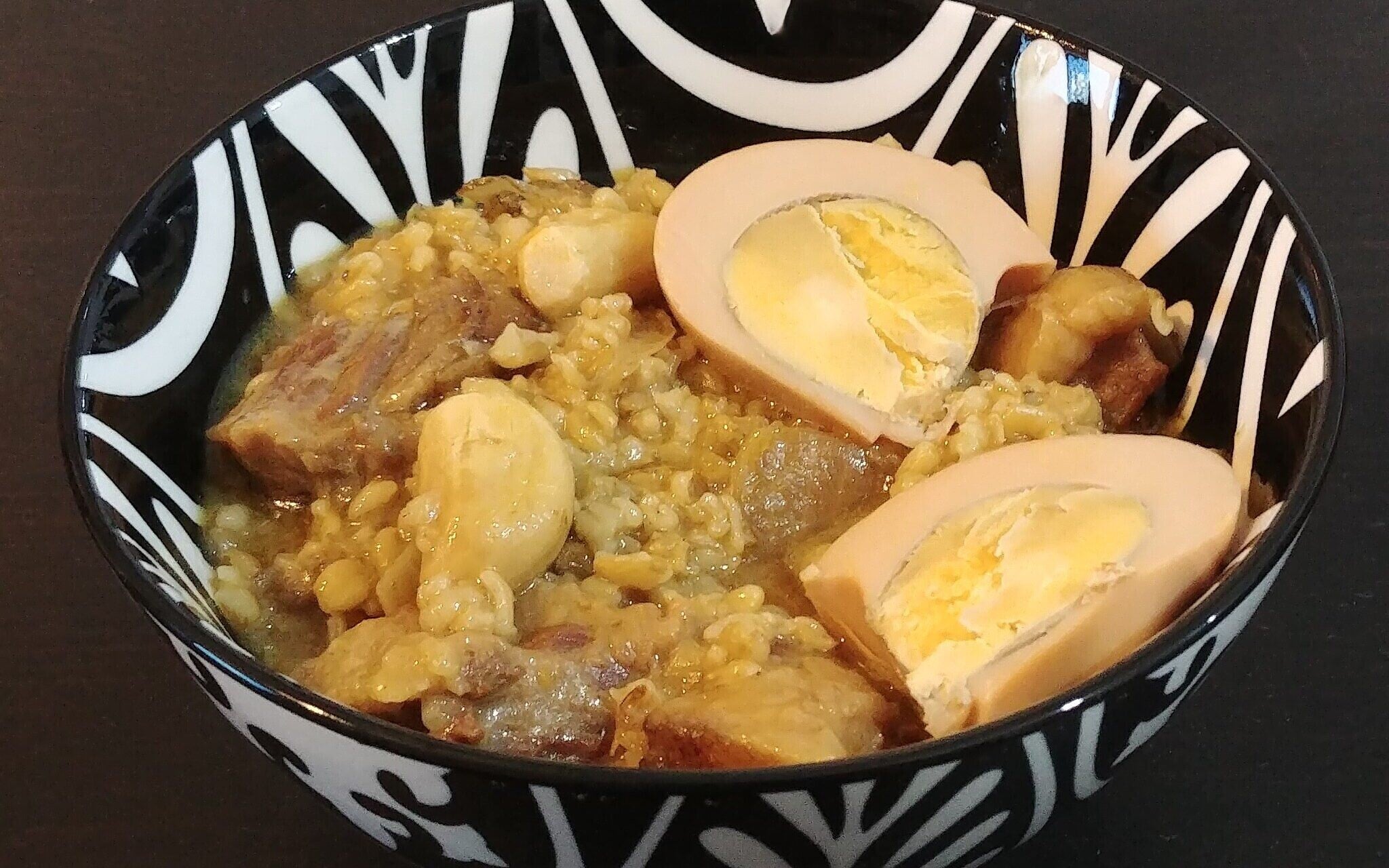
It is about a people who scattered across the world and lived for generations among other peoples, speaking different languages, wearing different clothes, eating different ingredients and developing profoundly different traditions.
And yet, somehow, Friday afternoon came around and Jews in community after community put a pot on to cook.
“There truly is no other people on Earth like us,” Haber says. “The way that we’ve spread everywhere, survived for thousands of years in dispersion, and now are returning to our ancestral homeland — while also continuing to maintain life in many of those lands worldwide — is an incredible story.”
“And this one dish reflects all of that.”










The Times of Israel Community.