

Turkey says nine Israelis arrested amid crackdown on major investment fraud network
Authorities say network led by Israelis and others used multilingual call centers, fake profit reports and overseas crypto wallets to defraud victims worldwide; over 200 arrested
 Add ToI as a Preferred Source on Google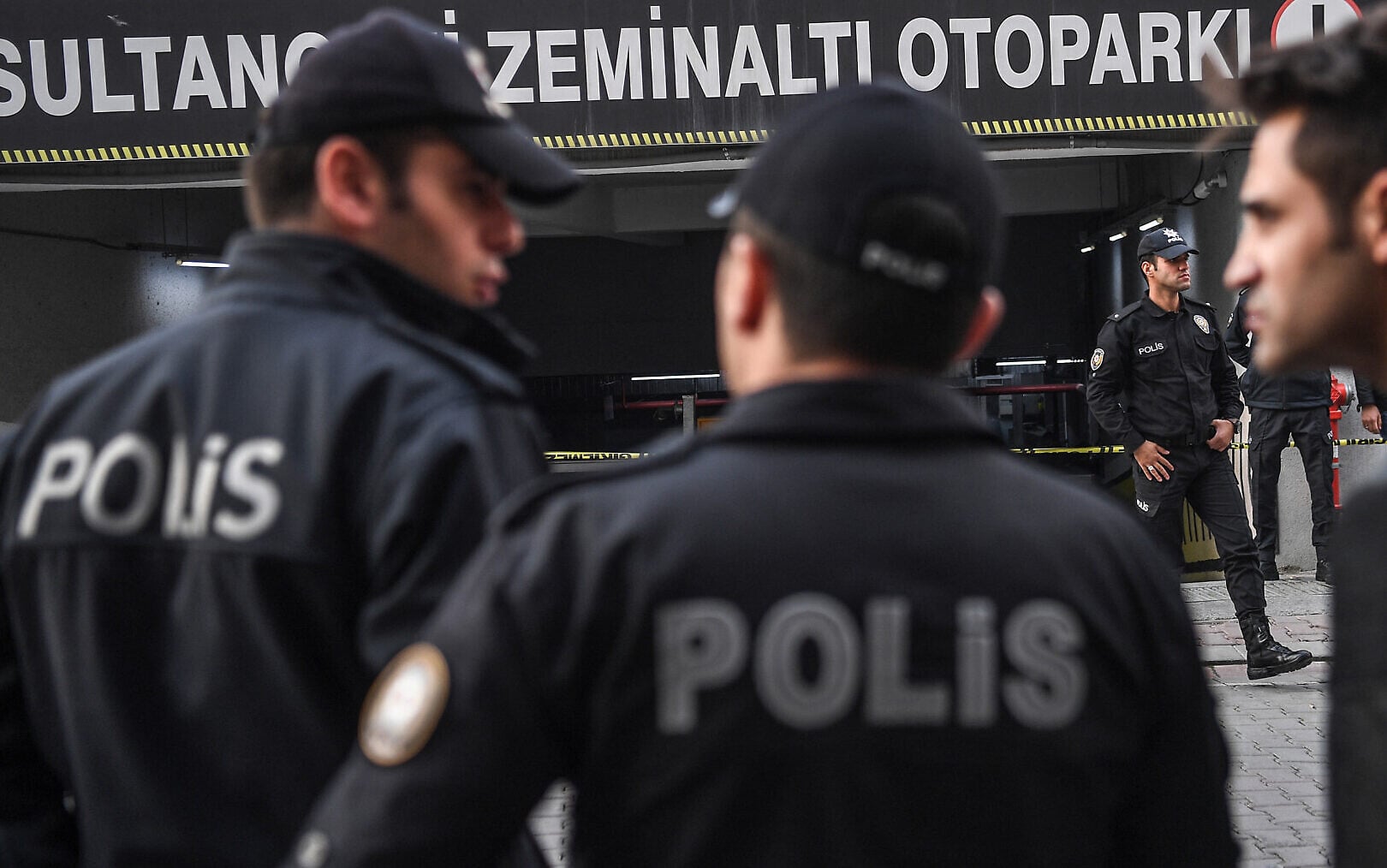
Nine Israelis have been arrested in Turkey, local media reported Saturday, as authorities said they’d broken up an Israel-linked international investment fraud network accused of stealing some $3 billion from victims across Europe, Asia and Africa.
The investigation targeted 42 call centers operated by 28 companies and involving 239 suspects, Turkish Justice Minister Akin Gurlek wrote in a post on X.
Raids were carried out in Istanbul and the southwestern province of Mugla in coordination with Turkey’s National Intelligence Organization, police and Interpol, he added.
Gurlek said simultaneous raids were launched at 286 locations in Istanbul and Mugla beginning at 5 a.m.
The Israeli Foreign Ministry said that it was informed of the arrests on Friday, and that it was “working to ensure that the rights of the Israeli citizens are protected.”
According to Israel’s Channel 12, the Israelis detained in the operation worked at call centers.
Gurlek said investigators had determined that people with links to Israel predominated among the owners and ultimate beneficiaries of the companies under investigation.
Middle East Eye reported that Turkish authorities identified one of the alleged masterminds as an Israeli citizen who also held a Portuguese passport.
Gurlek said analyses by Turkey’s Financial Crimes Investigation Board (MASAK), findings from intelligence and police units, and hundreds of victim complaints obtained through Interpol had uncovered “an organized fraud structure targeting different countries.”
İSRAİL BAĞLANTILI ULUSLARARASI DOLANDIRICILIK ŞEBEKESİNE BÜYÜK DARBE VURDUK!
Cumhurbaşkanımız Sayın @RTErdogan'ın liderliğinde, teknolojiyi ve finans sistemini suçun aracı hâline getiren ulusal ve uluslararası suç yapılanmalarıyla mücadelemizi kararlılıkla sürdürüyoruz. Suçtan…
— Akın Gürlek (@abakingurlek) September 18, 2026
Turkish officials told Middle East Eye that the operation was connected to an international criminal network they referred to as “Scam Empire,” which has operated in multiple countries for years and was recently investigated by the Organized Crime and Corruption Reporting Project.
How the alleged scheme worked
According to Gurlek, the network attracted victims through online and social-media advertisements offering supposedly lucrative forex and cryptocurrency investments, then assigned multilingual customer-service representatives to communicate with them.
Once victims began investing, platforms controlled by the alleged operators displayed fictitious profits in an effort to persuade them to deposit additional funds, Gurlek added.
Gurlek said that when clients attempted to withdraw their money, they were asked to make further payments under pretexts such as an “account freeze” or “tax.” The money deposited by victims was then allegedly transferred to overseas bank accounts and cryptocurrency wallets.
Middle East Eye reported that individual victims lost anywhere from $10,000 to hundreds of thousands of dollars. The alleged operation targeted people across Europe, the Far East and Africa.
False identities, polygraphs and a ban on Hebrew
Turkish officials with knowledge of the investigation told Middle East Eye that some Israel-based networks had moved their operations to Turkey in an effort to avoid detection, apparently seeking to take advantage of worsening relations between Ankara and Jerusalem.
According to the officials who spoke to Middle East Eye, operators used shell companies that functioned as call centers and hired workers who spoke languages including French, Spanish, Japanese and Hindi.

Staff were assigned roles such as “conversion agents” and “retention agents,” the officials said.
One Turkish official told Middle East Eye that new recruits underwent a week of training during which they were assigned aliases and instructed to develop fabricated personal histories designed to gain victims’ trust. Some employees were allegedly told to claim credentials such as having graduated from Oxford University.
The official told Middle East Eye that recruits were subjected to polygraph tests before starting, in order to ensure they didn’t have any ties to law enforcement.
“Speaking Hebrew inside the office is prohibited,” the official told Middle East Eye, while “callers present themselves as representatives of investment platforms whose names are frequently changed by the Israeli organizers.”
He added: “One of the strictest rules reportedly enforced within the network is that Israeli citizens must not be targeted.”
Channel 12 reported an additional restriction, saying the organization deliberately avoided targeting both Israeli and American citizens. Instead it sought victims in countries including Malaysia, the United Arab Emirates, Russia, Singapore, Britain, Canada, Australia, Ireland, China, Switzerland, Belgium, Sweden and South Korea.
Previous investigations into similar networks
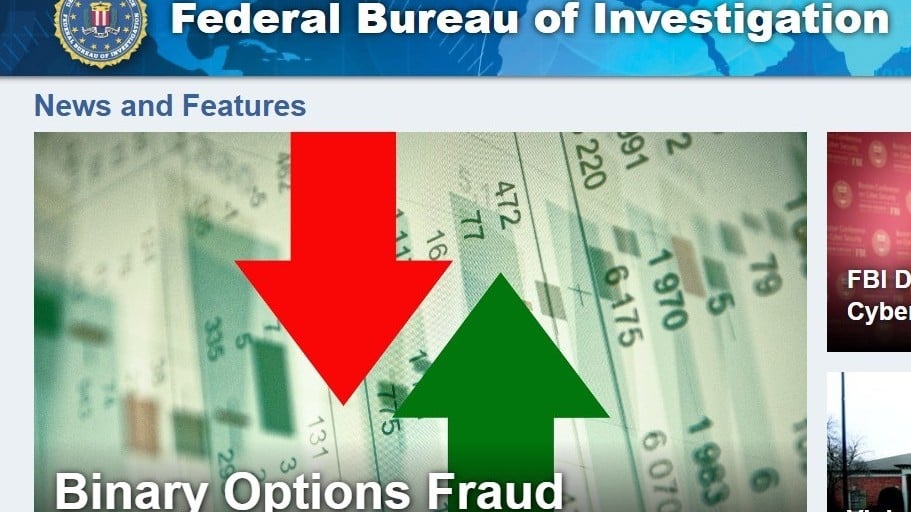
Many such fraudsters operated out of Israel before Israel banned the entire binary options industry with a Knesset law passed in October 2017, largely as a result of reporting by The Times of Israel.
The industry, which employed thousands of Israelis, was estimated to have stolen billions of dollars from victims worldwide over a period of 10 years with little to no interference from law enforcement. Many former binary options operatives have pivoted to other financial products, including initial coin offerings or ICOs. Others moved their operations to other countries, like Cyprus or Turkey.
A binary option is an option contract whose payoff depends on the price of another asset, like gold, wheat, or Apple stocks. If the holders of the options guess correctly about the direction that the price has moved at the time of expiry, they earn a predetermined amount of money, and, if not, they lose the money “invested” in a particular trade.
In the case of the Israeli binary options industry, however, companies offering these contracts were largely fraudulent. They would dupe victims worldwide into believing that they were successfully investing and earning money, including by manipulating skewed trading platforms installed on investors’ computers, encouraging them to deposit more and more into their accounts, until the company eventually cut off contact with the investor and disappeared with all or most of their money.
Some operators subsequently moved their activities overseas or shifted to other forms of online investment fraud. In 2020, a consortium of more than 20 news organizations, including The Times of Israel, documented an Israeli-run call center in Kyiv whose employees allegedly persuaded ordinary investors to put money into cryptocurrency and stocks before some or all of their funds disappeared.
Gurlek said Turkish authorities would continue pursuing international organizations that use technology and the financial system to carry out fraud.
“Our fight against organized structures that target people’s labor and savings with fake investment promises and turn technology and the international financial system into instruments of crime will continue without compromise,” he said.
The investigation remains ongoing.








The Times of Israel Community.