

Poll: Most US Jewish voters deeply concerned Netanyahu has fueled antisemitism
Survey shows that despite criticism of premier, 86% identify as pro-Israel, though majorities back aid cuts and remain divided over AIPAC’s role in primaries; most US Jews plan to vote Democrat
 Add ToI as a Preferred Source on Google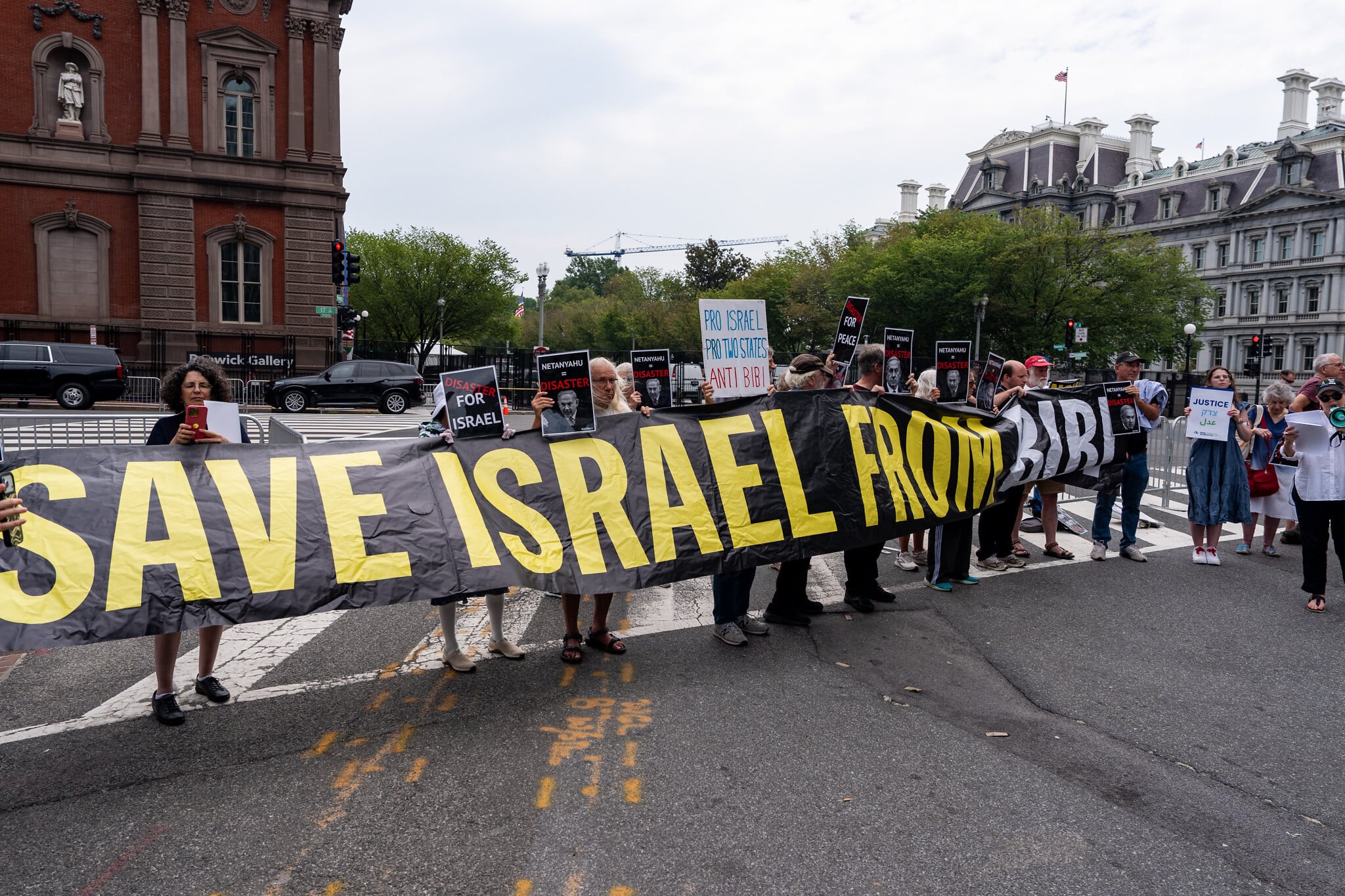
A majority of American Jewish voters say they are deeply concerned that Israel’s actions under Prime Minister Benjamin Netanyahu have contributed to rising antisemitism and anti-Israel sentiment in the United States, even as an overwhelming majority continue to identify as pro-Israel, according to a new poll released this week.
The survey, conducted by the Mellman Group for the Jewish Electorate Institute and published Thursday, found that 56 percent of respondents had a “great deal” of concern that “Israel’s actions under Netanyahu have increased antisemitism and anti-Israel sentiment in the US”
The view varied sharply by political affiliation, with 65% of Jewish Democrats expressing a high level of concern, compared with 46% of independents and 34% of Republicans.
At the same time, 86% of those surveyed described themselves as pro-Israel. Nearly two-thirds, 65%, said they were pro-Israel while critical of some or many Israeli government policies. Seventy-one percent viewed Israel favorably, compared with 25% who viewed it unfavorably.
Netanyahu himself was significantly less popular among respondents: 61% viewed the premier unfavorably and 34% favorably. Sixty percent said they wanted to see him replaced in Israel’s upcoming election, while only 16% wanted him reelected.

Divisions over US military aid
The new survey also found significant support for reducing US military assistance to Israel. Fifty-two percent favored either cutting or ending the aid, including 36% who supported reducing it and 17% who favored eliminating the $3.3 billion in military assistance. Forty percent wanted funding maintained at its current level.
Here too, party identification produced a gap. Sixty-three percent of Jewish Democrats supported reducing or eliminating the assistance, while 67% of Republicans and 65% of independents favored maintaining current levels.
Forty percent said they were worried that Congress could end support for defensive weapons like the missile defense systems, while 36% worried about the elimination of offensive weapons.
Those findings come after a separate J Street-commissioned survey published in March found that 31% of American Jews supported providing Israel with aid without conditions, while 44% favored making assistance contingent on compliance with US law and 26% backed ending financial and military assistance. The polls used different wording and were commissioned by different organizations, limiting direct comparisons.
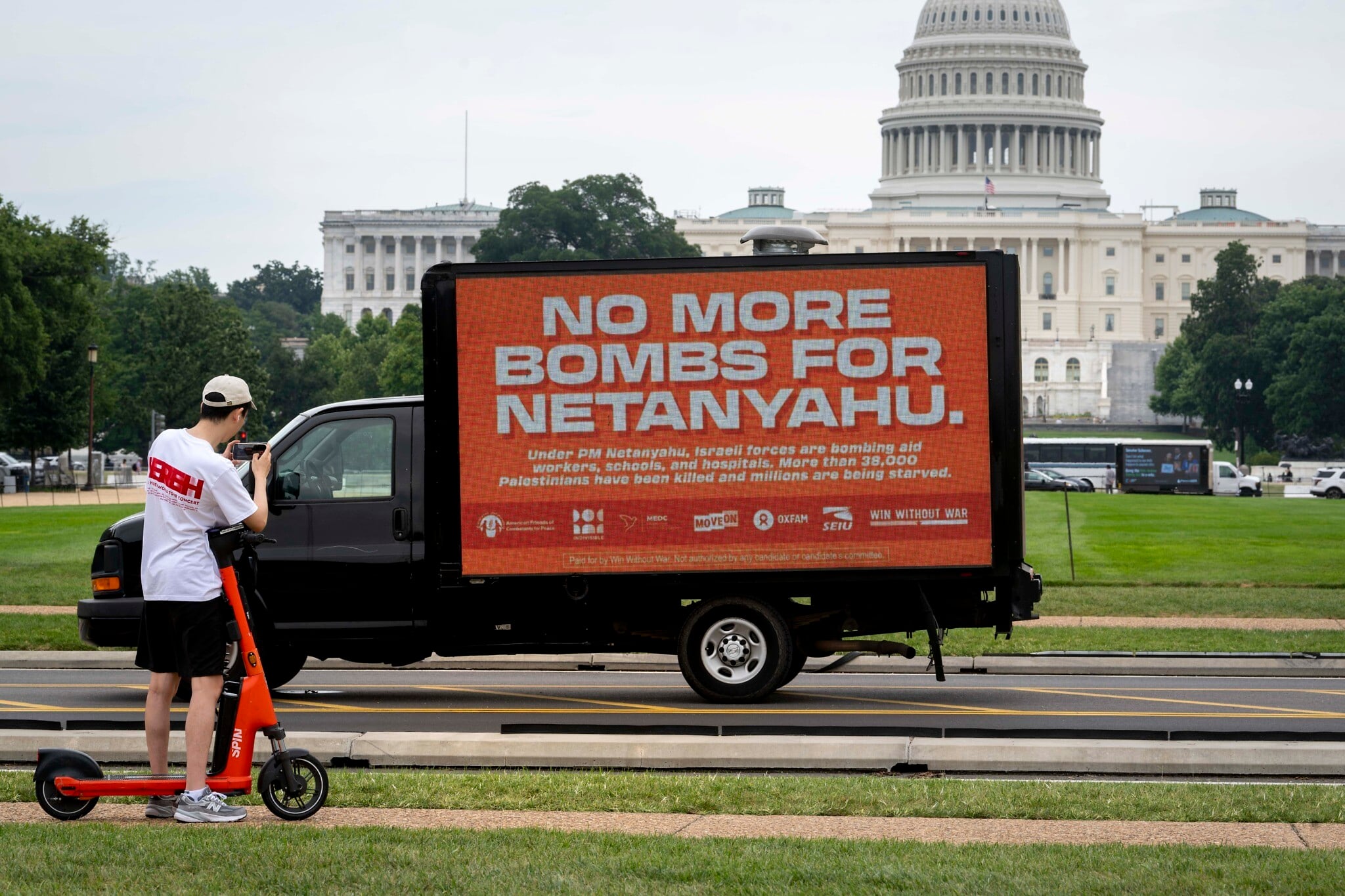
Despite the support for reductions in the new poll, respondents were considerably less enthusiastic about lawmakers actually voting to cut aid. Forty-seven percent said they would be less likely to support a member of Congress who voted for cuts, while 21% said such a vote would make them more likely to offer their support.
Mixed views of AIPAC and primary spending
The survey also pointed to divisions over the role of pro-Israel lobbying groups in US elections.
Fifty-one percent said they had heard at least something about pro-Israel involvement in this year’s primary races, up from 38% in March. Thirty-nine percent supported such activity, while 35% opposed it and 26% were unsure.
Views of the American Israel Public Affairs Committee, the prominent pro-Israel lobbying group known as AIPAC, were similarly mixed: 42% viewed the organization favorably and 35% unfavorably, with 24% unsure.
Republican respondents were strongly favorable toward AIPAC, at 71%, compared with 55% of independents. Among Jewish Democrats, 31% viewed the organization favorably and 44% unfavorably.
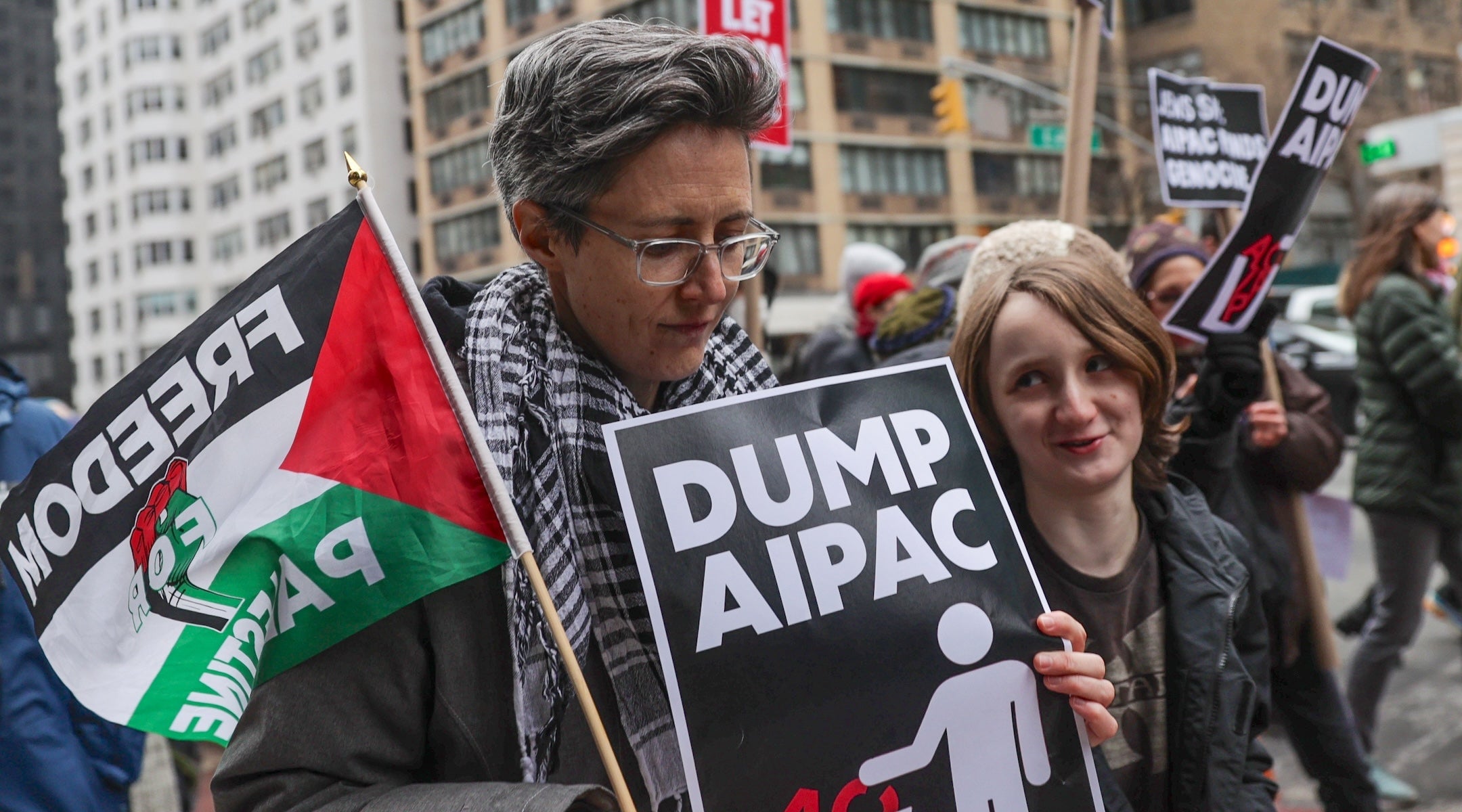
AIPAC and pro-Israel political spending have featured prominently in Democratic primary battles this year. The issue was particularly visible during New York’s June primaries, where Israel policy and AIPAC’s role became major points of contention in contests involving candidates aligned with anti-Zionist New York City Mayor Zohran Mamdani and their pro-Israel opponents.
“While American Jews are generally together on being pro-Israel even if critical of the government, there are divisions on what should be done in the US on aid and elections,” Michael Bloomfield Managing Director of The Mellman Group, which conducted the survey, said in a statement on the findings.
Democrats retain commanding lead among Jewish voters
Even with those tensions, Jewish voters remained overwhelmingly aligned with the Democratic Party ahead of November’s midterm elections. On a generic congressional ballot, Democrats led Republicans 71% to 23%, virtually unchanged from JEI’s March survey.
But respondents expressed concern about antisemitism in both parties. Fifty-seven percent said they believed antisemitism was increasing within the Democratic Party, while 60% said the same of the Republican Party.
Among Jewish Democrats, 35% said the rise of anti-Israel candidates made it harder for them personally to identify as Democrats. Fifty-one percent of Jewish voters overall said they did not believe the description “pro-Israel” applied to the Democratic Party.

The poll surveyed 800 Jewish registered voters nationwide using an online panel between August 25 and September 3. It had a margin of error of plus or minus 3.5 percentage points at the 95% confidence level, with larger margins of error for subgroups.









The Times of Israel Community.