

How Netanyahu’s plans to reshape the courts could affect Israel’s democracy
With prime minister seeking another term on Oct. 27, his plans to overhaul judiciary are back and are more far-reaching than they were in 2023
 Add ToI as a Preferred Source on Google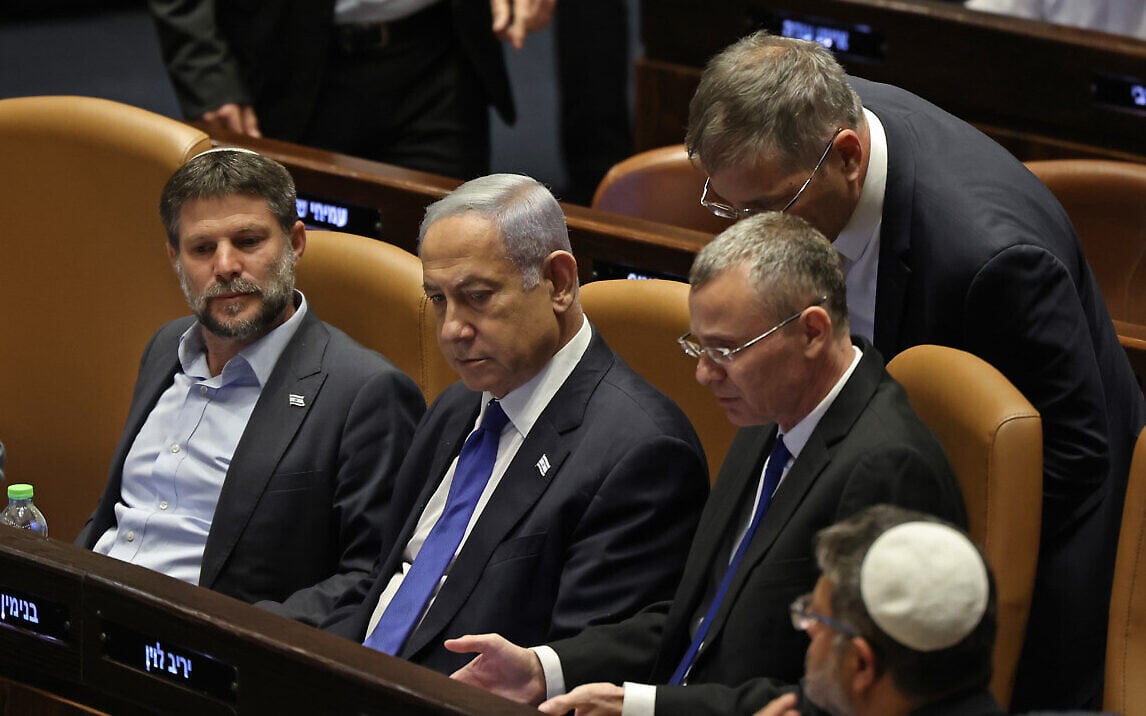
JTA — Throughout 2023, Prime Minister Benjamin Netanyahu’s plans for a far-reaching judicial overhaul convulsed Israel and reverberated throughout the Diaspora, with liberal American Jewish leaders joining Israeli opponents of the plan in mass protests. Critics of the reforms in Israel and abroad perceived a threat to democratic norms. Proponents saw them as necessary to correct a judicial system that served as its own master, and it felt was out of step with popular sentiment.
Then came October 7. After Hamas led a rampage of mass killings and abductions inside Israel, Netanyahu cobbled together a unity government and shelved the reform plans. American Jewish organizations unified around support for Israel after the worst mass killing of Jews since the Holocaust. The judicial reforms were largely forgotten.
As more time passed, Netanyahu’s government did eventually manage to push through some parts of the reform agenda. But the biggest changes were blocked or passed into law with the stipulation that they would only take effect after the next election. With Netanyahu seeking another term in office on Oct. 27, his plans to overhaul the judiciary are back – and more far-reaching than they were in 2023.
This election’s impact on the court will likely be even greater given that a massive two-thirds of the court’s seats could be vacated over the next government’s full term. That would give the incoming leader power to shape the court in ways beyond the judicial reform package, which has needed Knesset support.
Both sides agree that the reforms would open the door to various pieces of legislation favored by the Netanyahu government, from regulating the media to strengthening the power of the Orthodox religious establishment. Depending on one’s view, the reforms could also weaken the country’s legal and institutional checks on government powers or curb judicial interference in the democratic process.
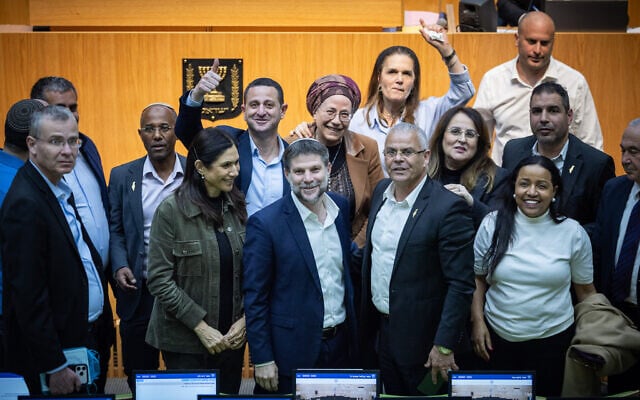
The ultra-nationalist Religious Zionist Party, a senior partner in Netanyahu’s coalition, calls the enhanced plan “Law and Justice 2.” It would include an effort to limit the Supreme Court’s ability to strike down legislation.

The new plan also calls for restricting who can petition the Supreme Court, potentially limiting the court’s ability to hear certain legal challenges, as well as changes to procedural rules governing its work. This petition process is one of the avenues employed by those who oppose the Netanyahu government’s positions on a wide range of issues.
“We are at a fateful crossroads for the State of Israel,” Bezalel Smotrich, the party’s leader and currently Israel’s finance minister, said Tuesday when presenting the plan. He added that the judicial appointments made during the next term “will shape the State of Israel for years to come.” The new plan, he said, represents “a change in the rules of the game.”
MK Simcha Rothman, a member of Smotrich’s party who has chaired the Knesset’s Constitution, Law and Justice Committee during the current term, said the new version of the plan would “return Israeli democracy to its proper course.”
He and other proponents argue that the existing system undercuts majority rule when the court, citing constitutional norms, limits or nullifies legislation passed by the Knesset. They believe the judicial reform would bolster Israeli democracy, particularly by strengthening the power of the legislature so that it would no longer be subservient to the will of the court.
The opposition, however, is also back. MK Efrat Rayten of The Democrats charged that another four years of a Netanyahu-led government would be a “catastrophe” that would fundamentally transform Israel. “It would no longer be a substantive liberal democracy,” she said. “It would be an authoritarian regime.”
Supreme Court retirements expected
Then there’s the makeup of the high court itself. Netanyahu wants to reshape Israel’s 15-member Supreme Court, which has served as a foundation of the country’s democratic system of checks and balances, including on the judicial overhaul itself.
During the last government, four Supreme Court justices retired after reaching the mandatory retirement age of 70, leaving their positions vacant and the country with a court of 11 jurists. An additional six are expected to hit retirement age during the next three years.

In early August, the Kan public broadcaster published recordings of Deputy Prime Minister and Minister of Justice Yariv Levin, the driving force behind Israel’s judicial overhaul, telling Likud operatives, “We’ll wait for the next term, when two-thirds of the Supreme Court justices’ seats become vacant. I told them (the Supreme Court justices): I won’t need to carry out a reform. You’ll simply go extinct.”
Levin added that the justices will have no choice but to accept “a series of appointments that will fundamentally transform the court.”
The stakes were made clear Tuesday when Smotrich posted an AI-generated video on X just after announcing plans to revive the judicial reform: It showed Supreme Court President Isaac Amit being dragged away by police officers.
The video drew sharp criticism from the opposition. MK Merav Ben Ari of the opposition Yesh Atid party responded, “You have nothing to offer but violence, incitement, division and disgust.”
Opponents of Netanyahu’s plans – which coalesced in a grassroots movement that held weekly protests under the slogan of “Demokratia!” (Democracy!) – believe the prime minister’s overhaul of the country’s legal system would turn the country toward autocracy, akin to the changes that occurred in Hungary under the 16-year rule of Viktor Orbán that ended in May.
Israel does not have a single, formal written constitution but instead relies on a set of Basic Laws that serve as the foundation of its constitutional system that the court relies on in making rulings.
The court’s challenges to Netanyahu’s judicial reform plan have set the stage for a showdown between the legislature and the court, which would be akin to a constitutional crisis. The outgoing government has already attempted to shrug off Supreme Court rulings.
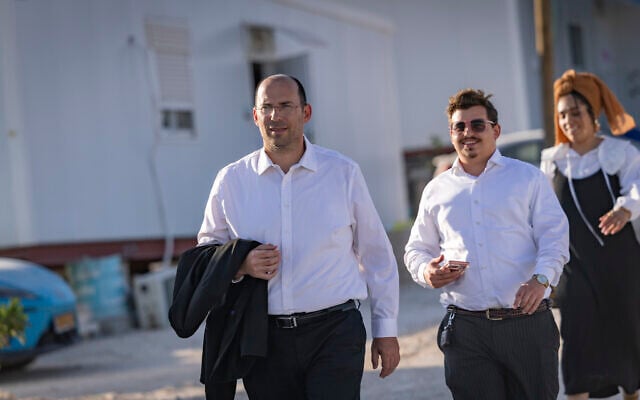
Rothman, who was also one of the architects of the government’s judicial overhaul, told JTA last month that he plans to continue to pursue dramatic changes to Israel’s Supreme Court if he is part of the next ruling coalition.
“The most significant reform of the Supreme Court will be a reform of appointments,” said Rothman, who has indicated he would like to serve as justice minister in the next government. He described appointing 10 new justices under the new system he helped design as “a major achievement — one worth investing in.”
Changing the appointment process
Under the previous system, the professional members of the Judicial Selection Committee — the Supreme Court justices and representatives of the Bar Association — effectively had veto power over the committee’s appointments to the Supreme Court.
Right-wing politicians have long argued that these professional representatives do not reflect the views of most Israelis. Levin has also said that an overwhelming majority of Supreme Court justices hold left-wing views.
Under the new system that has been approved by the Knesset but will take effect only with the swearing-in of the next government, they would lose that veto power. Instead, appointments would be made through an agreement between the coalition and opposition. In the event of a deadlock, the new mechanism allows the coalition to appoint one justice and the opposition to appoint another. In the US system, in contrast, all appointment decisions are made by the ruling party, with the opposition only allowed to veto choices when it has a majority of Senate support.
The Israeli opposition has already pledged to roll back many of the laws enacted by Netanyahu’s government if it wins the elections. Rayten called the new judicial appointment mechanism “terrible” and said it would “distort the court and turn it into an explicitly political institution. That would be a catastrophe for citizens.”
Anat Thon-Ashkenazy, director of the Center for Democratic Values and Institutions at the Israel Democracy Institute, said the new law would “dramatically change” Israel’s courts and set them on a path toward “politicization.” Once the balance is changed, she said, “there are no longer other safeguards, such as a comprehensive constitution, that can provide protection.”
The Netanyahu-led coalition, if reelected, is planning to push forward with additional changes to the Supreme Court. “The personnel changes need to come together with legislative changes,” he said.
“The protection of human rights is much stronger in the Knesset than in the courts,” said Rothman. “We are in a situation where the court does whatever it wants, and we need to create mechanisms that require it to protect human rights.”
Rayten argues that the broader judicial overhaul would give the government “unlimited power” over the legal system. “It is very frightening,” she said. Passage of the proposed limits on the Supreme Court’s power to strike down legislation, she warned, could leave the Knesset without an effective check on its power. “It would mean that the Israeli parliament would have no brake on its power and could pass whatever law it wants,” she said.
Effects on religious and media freedom
The absence of a check on the power of the Knesset could also allow Netanyahu’s coalition to pursue far-reaching changes in other areas of Israeli democracy.
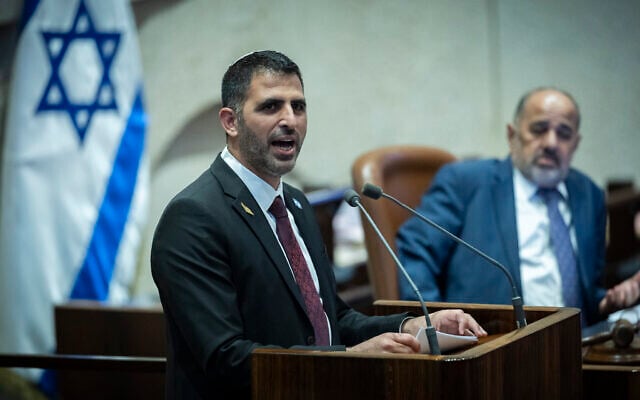
Communications Minister Shlomo Karhi of the Likud is advancing measures that critics say could discourage the media from criticizing the government, while providing financial benefits and greater support to media outlets seen as close to the government. On religious issues, the government has sought to strengthen the Orthodox-controlled rabbinical court system, introduce gender segregation at universities and advance a range of other measures whose stated aim is to reinforce Israel’s Jewish identity.
The changes to Israel’s judicial system that the current government sought to introduce, particularly in the context of affecting matters of pluralism in Israel, drew American Jewish opposition during the 2023 protests.
“With only 61 votes the Knesset could override the rights of millions such as the LGBTQ community, women, Palestinian Citizens of Israel and Reform and Conservative Jews,” Rabbi Rick Jacobs, the president of the Union for Reform Judaism, warned in a speech at a mass protest in Tel Aviv in February of 2023.
Public trust in Israel’s Supreme Court has declined in recent years, according to polling by the Israel Democracy Institute, but it remains higher than trust in either the Knesset or the government.
Rayten stressed that the coalition had failed to enact “almost any law” that could not be reversed if the change-led bloc wins the election. Still, she said, the government’s “aggressive and sweeping attack” on the judiciary may have had an effect beyond the legislation itself, potentially deterring the Supreme Court from confronting the government.
Should Netanyahu secure another term in office, Thon-Ashkenazy assessed, his government could bring about a far more significant transformation. “The next term will significantly reshape the Supreme Court,” she said.







The Times of Israel Community.