

‘Old politics’: Eisenkot accuses Bennett, Liberman of damaging opposition’s chances
Yisrael Beytenu hits back after Yashar chief scolds leaders for refusing to say they’ll support head of largest party for PM; Golan to allies: ‘We’ll all support same candidate’
 Add ToI as a Preferred Source on Google
Ariela Karmel is a political correspondent at The Times of Israel. She previously reported for Calcalist and Haaretz. She holds an MA in Middle Eastern and African History from Tel Aviv University and a BA in Political Science from the University of British Columbia.
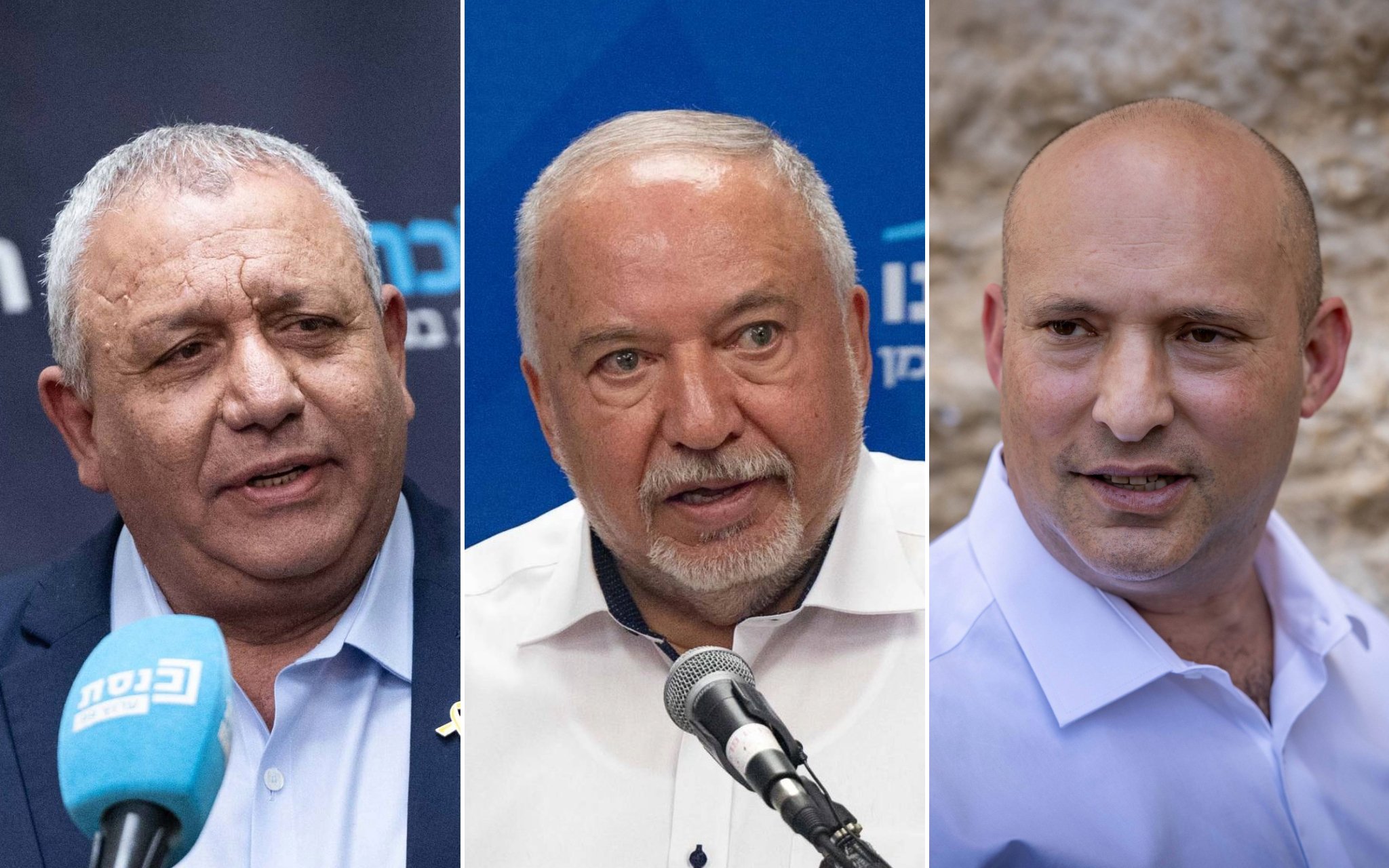
Yashar party leader Gadi Eisenkot on Thursday sharply criticized fellow opposition party leaders Naftali Bennett and Avigdor Liberman, accusing them of engaging in “old politics” and harming the bloc’s chances of winning the October 27.
Speaking to Kan’s Reshet Bet radio, Eisenkot said Bennett and Liberman were making a mistake by refusing to commit to principles for choosing who would lead a prospective government formed by the four main Zionist opposition parties.
“They are hurting the chances of winning,” Eisenkot said.
Yashar is currently the clear frontrunner within the bloc, consistently polling as its largest party and significantly ahead of both Bennett’s B’Yachad and Liberman’s Yisrael Beytenu. Eisenkot has argued that the leader of the largest party in the bloc should be its candidate for prime minister, while Bennett and Liberman have not committed to backing the largest party’s leader.
“Anyone counting on becoming prime minister with eight seats doesn’t understand what has happened in the State of Israel,” Eisenkot said, in an apparent jab at both. Bennett became prime minister in 2021 despite his party winning just six seats in that year’s election. Liberman has been polling at around 7-9 seats.
“This old politics of ‘we’ll pull tricks and decide who will be prime minister’ — that’s something that can’t be accepted,” he added.
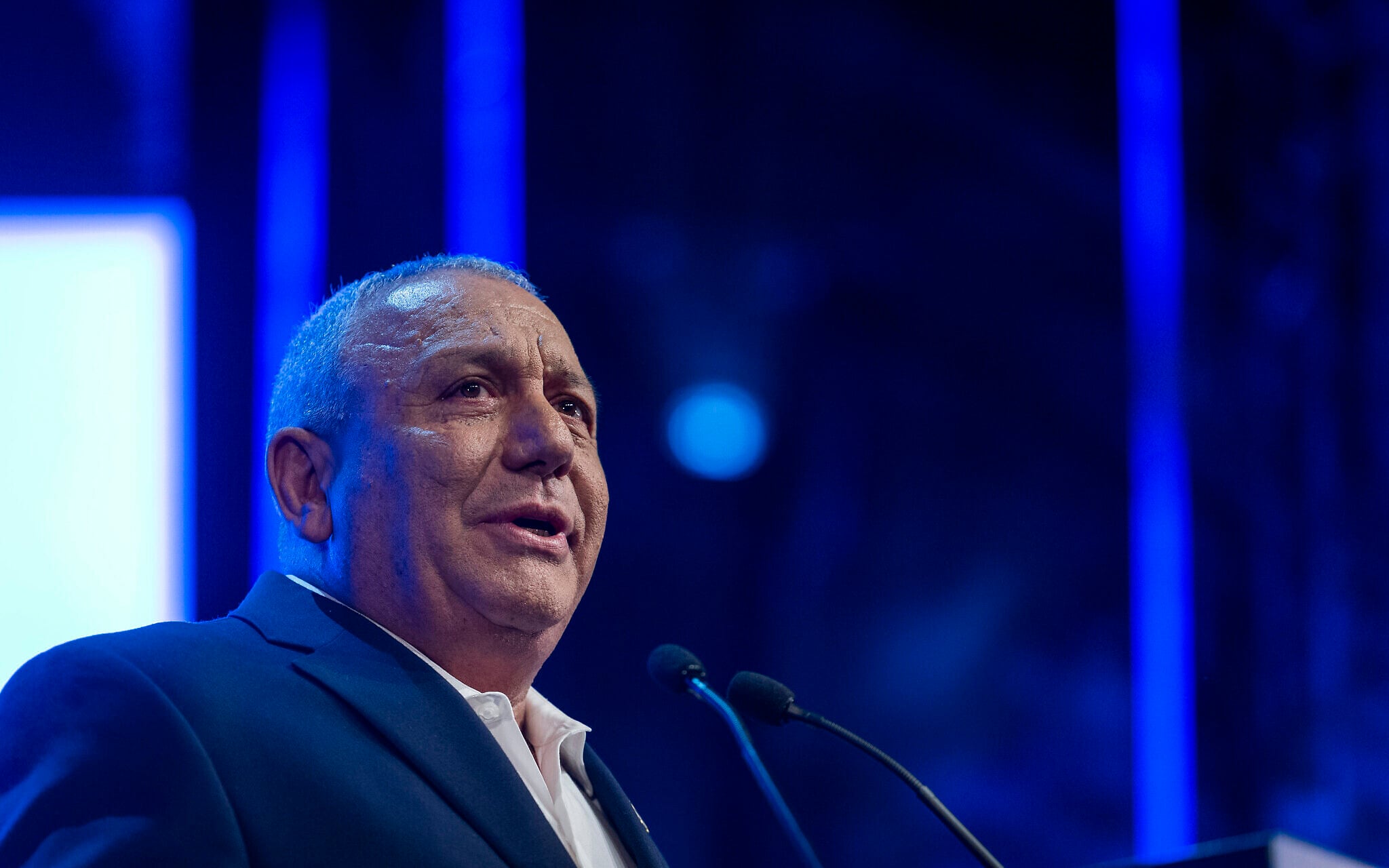
Yisrael Beytenu hit back, saying that “Avigdor Liberman has no ego, and he has experience,” and reiterating that its priority was maximizing the number of seats won by the bloc as a whole.
The party said it was committed to forming a government without Prime Minister Benjamin Netanyahu, Arab parties or Haredi parties. It challenged Eisenkot to clarify his own prospective coalition partners: “Gadi Eisenkot would do well to make clear to the public who his partners will be the day after the election.”
Eisenkot has made overtures toward the Haredi Shas party and his No. 2, Yoram Cohen, said earlier this week that the party could sit with Likud without Netanyahu, as well as with Bezalel Smotrich’s Religious Zionism.
Democrats leader Yair Golan urged the other opposition leaders to end the infighting. “You know that we will all recommend the same candidate for prime minister,” he wrote on X, quipping: “I’ve already stepped aside; now it’s your turn.”

Eisenkot also took aim Thursday at People of Israel party leader Ofer Winter, who has said he would join a government led by Netanyahu, but has also campaigned on the need for a new government and opposed exemptions from military service for Haredim.
In several interviews, Eisenkot said that after October 7, Winter – who has presented himself as more hawkish than Eisenkot – warned political and military leaders of the potential for massive Israeli casualties in a ground offensive in Gaza, as Eisenkot was pushing for the IDF to go in.
The Yashar chief told Kan that after joining the wartime cabinet following the Hamas attack, he was told that Winter and retired general Yitzhak Brik were warning Netanyahu that a Gaza ground operation could result in thousands of Israeli deaths.
Eisenkot told Ynet that a senior commander had also informed him at the time that Winter was going to IDF brigade commanders and “frightening them” with predictions of hundreds or thousands of casualties. He said that he, by contrast, told Netanyahu at the time: “I trust the IDF’s soldiers. Nothing can stand against an IDF brigade combat team. If we don’t maneuver [in Gaza] and conquer it, we have no future in this region.”
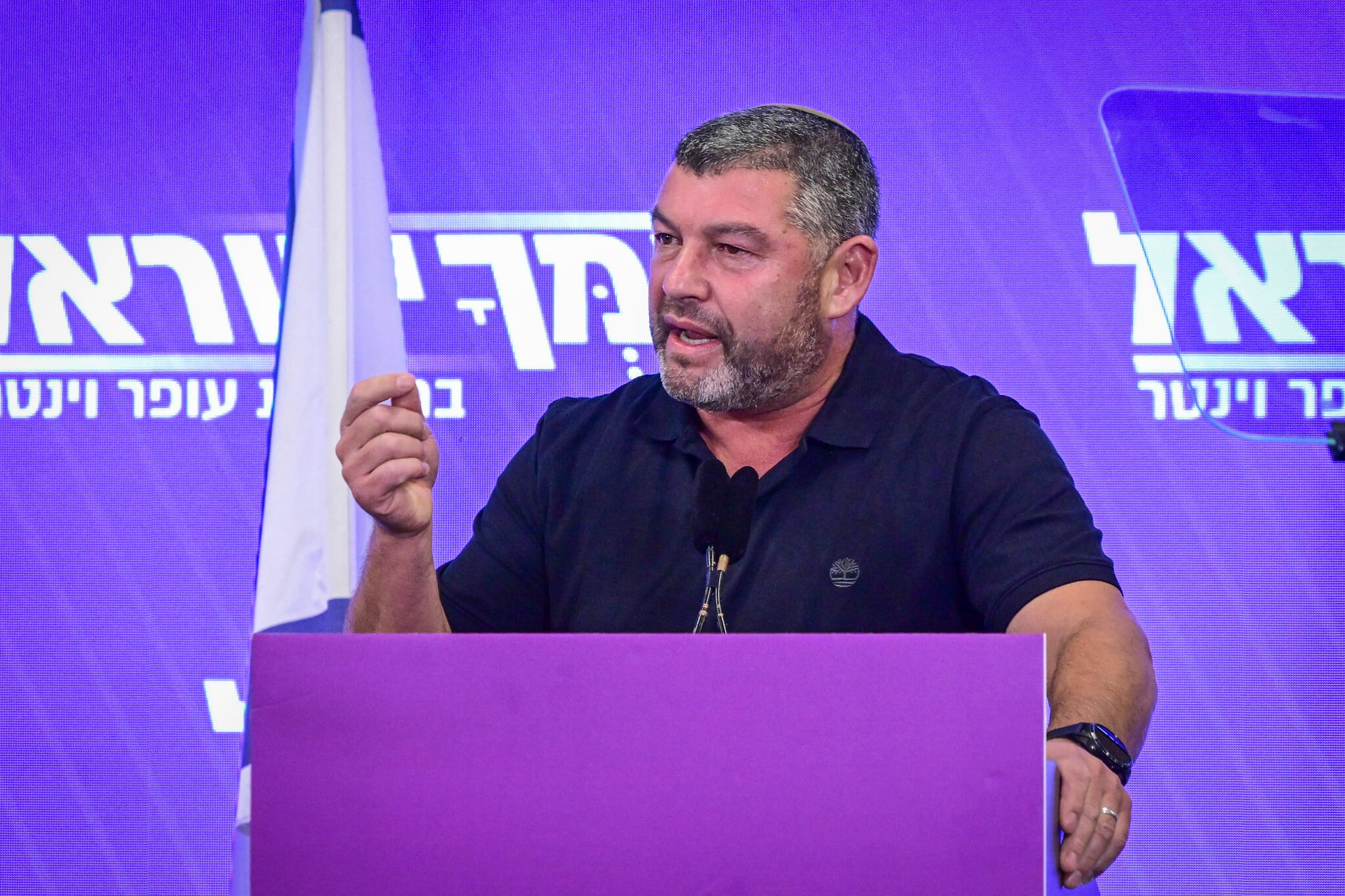
The Yashar head, a former chief of staff of the IDF, also rejected claims that he had blocked Winter’s advancement in the military, noting that he promoted him to the rank of brigadier general. Eisenkot said that after Winter became then-defense minister Avigdor Liberman’s military secretary, and Liberman resigned, he proposed Winter as one of the candidates to serve as the premier’s military secretary, but Netanyahu declined, telling him to “keep Winter in Tel Aviv.”
Eisenkot said he saw “a great many contradictions” in Winter’s positions.
“Which bloc does he belong to? The draft-dodging bloc? He is going with those who are running away from responsibility and don’t want a commission of inquiry, while he is in close contact with Liberman,” Eisenkot said, adding that he finds it “difficult to understand the path [Winter] has chosen.”

People of Israel hit back in a statement, saying that “the General Staff that Gadi Eisenkot built up as IDF chief of staff is the one that led the IDF on October 7, with a disastrous conception of the enemy and a fundamentally mistaken approach to protecting IDF soldiers.”
The statement added that Winter “pushed with all his might not to carry out raid after raid, but rather to push the Gazan population southward and impose a smart siege, so that the IDF could bring its full force to bear, protect our soldiers and achieve a complete victory.”
“After more than 1,000 days of war, it is absolutely clear that Winter was right and Gadi was wrong,” it continued.
The sniping Thursday came on the heels of a Channel 13 poll showing that Netanyahu and his allies would make up the largest bloc if the election were held today, in a break from polling that has consistently shown the anti-Netanyahu bloc outpacing the current coalition. No poll has yet shown either side reaching a clear majority, on the assumption that Arab parties would not join any government.









The Times of Israel Community.