

In turnaround, TV poll shows Netanyahu’s bloc slightly ahead of opposition
Coalition wins 54 seats in survey, opposition Zionist bloc just 52, but neither side has clear path to coalition; Herzog says he’ll do everything he can to prevent a second round of voting
 Add ToI as a Preferred Source on Google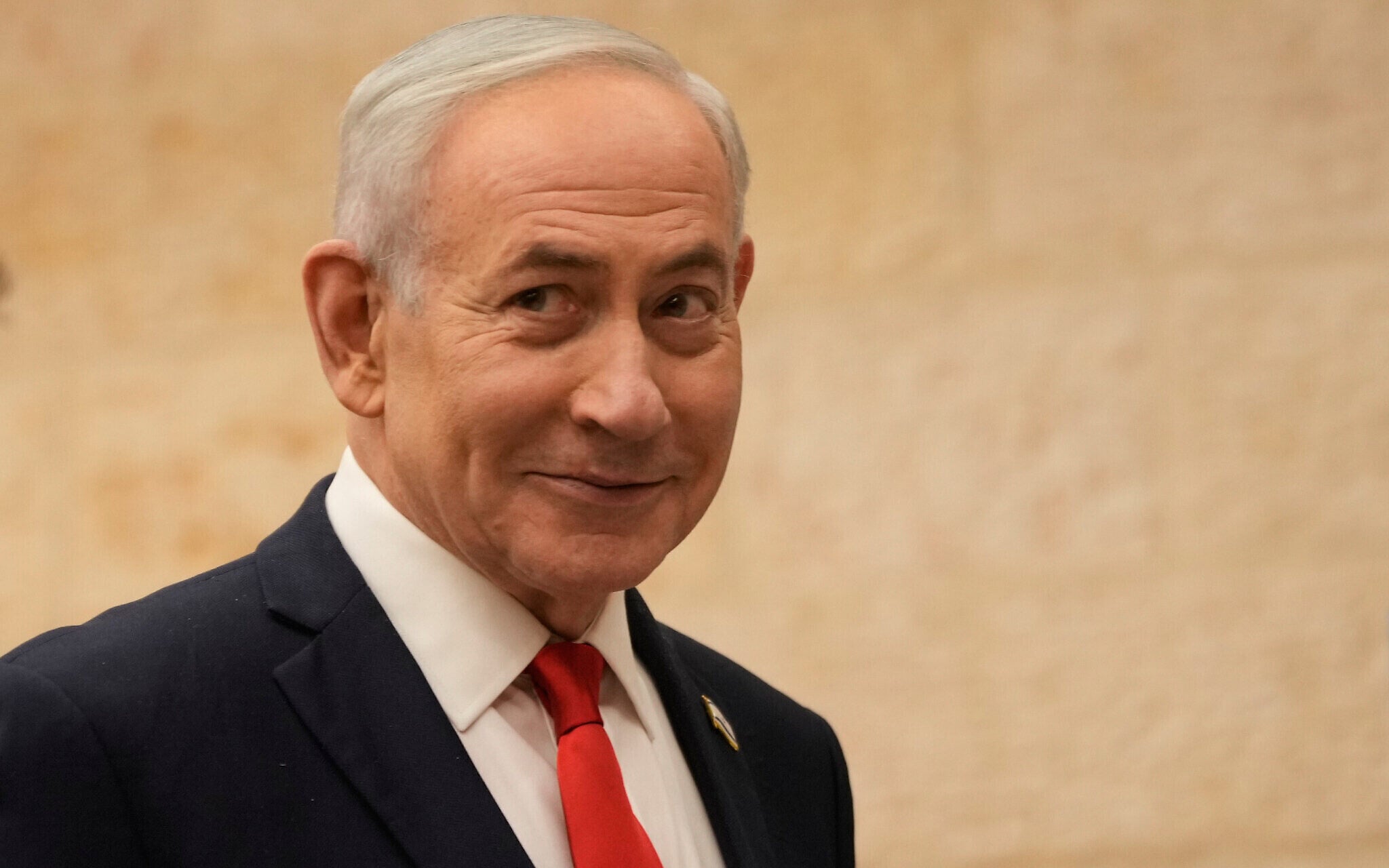
In a turnaround, a new poll projects that parties supporting Prime Minister Benjamin Netanyahu would make up the largest bloc in the Knesset if elections were held today.
The Channel 13 survey was the first among the major news networks to indicate a result of this sort since the start of the election campaign.
At the same time, Netanyahu did not have a clear path to a Knesset majority even in the latest poll.
According to the survey of 886 respondents, with a margin of error of ±3.3%, the presumed pro-Netanyahu bloc would win 54 seats, compared with the opposition bloc’s 52, and the Arab parties would clinch 14.
Though Netanyahu’s bloc appeared to be strengthening, his own party was not, with Likud winning only 18 seats compared to 22 for Gadi Eisenkot’s Yashar.
Last week’s poll on Channel 13 showed the blocs tied at 53 seats each, while other polls have previously shown the opposition bloc in the lead. No poll has yet shown either side reaching a clear majority, on the assumption that Arab parties would not join any government.
Among the other parties, the third largest in the recent poll was B’Yachad, the joint slate led by former prime minister Naftali Bennett and Opposition Leader Yair Lapid, which scored 12 seats, down one from the previous poll. The Democrats were next with 10 seats, followed by Religious Zionism with 8. The latter party, led by far-right Finance Minister Bezalel Smotrich, has seen its numbers jump from hovering around the threshold for entry into the Knesset, after it formed a technical bloc with Zehut party leader Moshe Feiglin.
Also predicted to win 8 seats were Otzma Yehudit, Yisrael Beytenu, and the Joint Arab List.
The two ultra-Orthodox parties, United Torah Judaism and Shas, were both given 7 seats in the poll.
Rising up the rankings was new party People of Israel, led by Ofer Winter, which scored 6 seats in the poll. Winter has said he would recommend Netanyahu as prime minister. After elections, leaders of all the parties that won seats are asked choose the one they think could lead the government.
Arab party Ra’am also polled at 6 seats.
The nonaligned Reservists party, led by Yoaz Hendel, as well as Benny Gantz’s Blue and White, both polled below the threshold for entry into the Knesset.
Likud’s poll result of 18 marked the lowest ever for the ruling party in a Channel 13 poll. Last week the channel gave Likud 19 seats and Yashar 22 seats.
Channel 13 also asked respondents who they think is best suited to be prime minister. Eisenkot was the favorite with 45% support, while 36% chose Netanyahu. Another 19% of respondents said they don’t know.
While horse-race polls are an almost daily occurrence in Israel in the months leading up to elections and are not seen as overly reliable, when taken together the surveys can often serve as a general gauge of the political climate and where the vote may be headed.
Herzog determined to see a stable government
President Isaac Herzog said Wednesday he would do everything he can to prevent a second round of elections if the results are inconclusive.
In a round of media interviews, Herzog stressed that what the country needs is a stable government.
“I will do everything in my power to prevent another election and ensure that a stable government is formed,” he told Channel 12.
“It doesn’t need to go to another round of elections,” he told Channel 13.
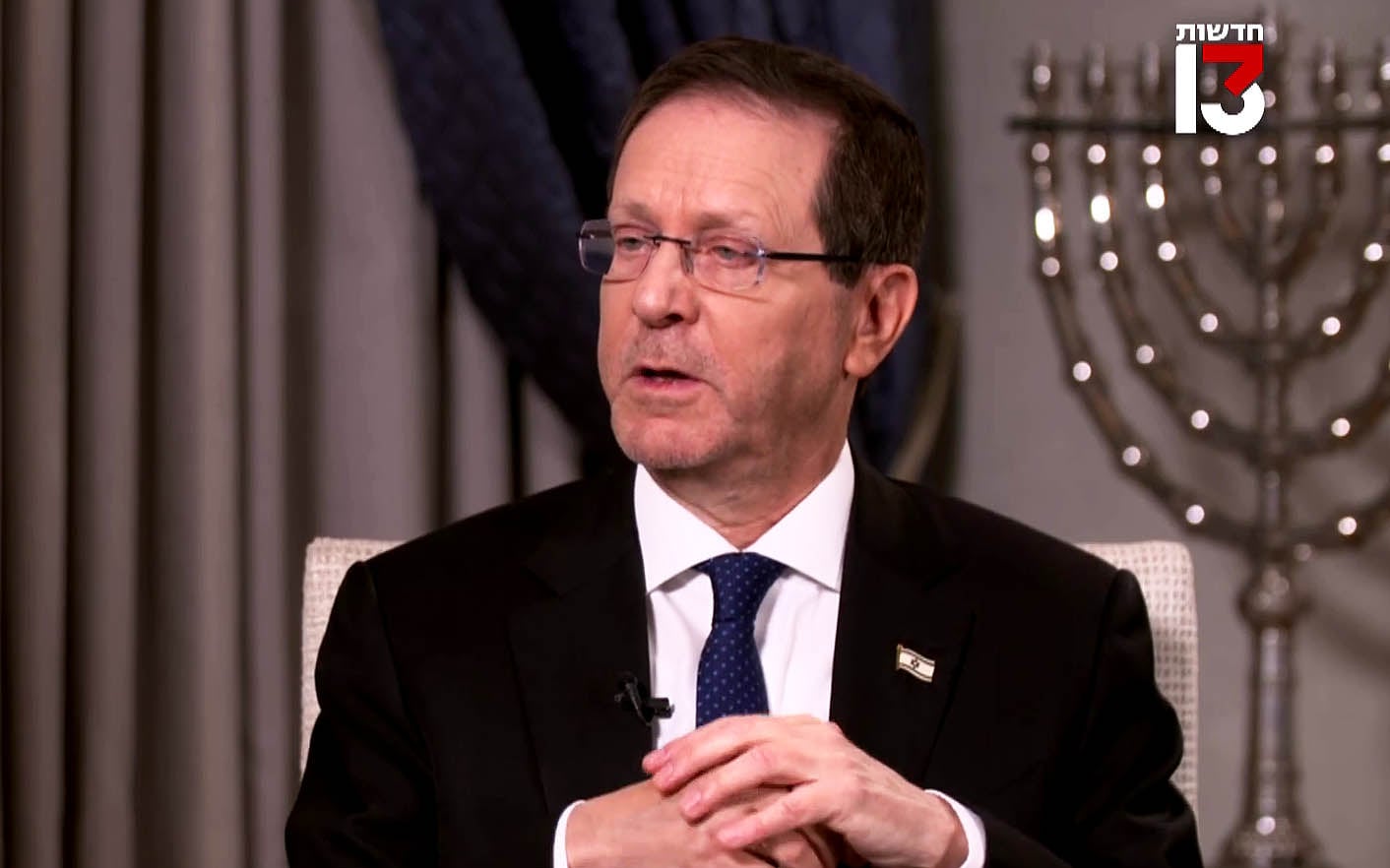
Herzog said the previous burst of five elections within four years from 2019 to 2022, mostly caused by inconclusive results, meant that when a government was eventually formed in 2023, “We were all splintered. It greatly affected us when the October 7 disaster hit us,” he added, referring to the 2023 invasion of southern Israel led by the Hamas terror group.
“One thing is clear to me, if we have a draw, I will try to be involved as much as is possible to get out of the difficulty,” he told Channel 13, and noted that previous presidents had acted similarly. “Of course, everything needs to be done in a measured and responsible way.”
The president would not be drawn to say whether he is prepared to grant Netanyahu a pardon in his corruption trial, as the prime minister has requested, insisting that a plea bargain is the best way forward.
Herzog noted that months ago he suggested negotiations to reach a deal, under the auspices of the President’s Residence, which the prosecution eventually agreed to. So far there has been no response from the prime minister, “but I am leaving the door open,” he said.
Netanyahu is on trial in three corruption cases. He faces charges of fraud and breach of trust in Case 1000 and Case 2000, and charges of bribery, as well as fraud and breach of trust in Case 4000. The trial, which began in 2020, has divided the country along political lines.
The prime minister formally requested a pardon in November, arguing that the trial was tearing the country apart and distracting him from his duties. But he did not admit guilt, raising the question of whether he could receive a pardon while his trial was still ongoing.
When asked about a possible pardon, Herzog said, “I have unlimited authority in relation to everything to do with the world of pardons. You need to know how to use that authority.”
“The president has unlimited authority to make a decision — while taking into account the principle of equality before the law and the circumstances,” he added.
Speaking to Channel 12, Herzog said, “I have no intention of discussing the matter one way or the other, in any shape or form. I certainly think that the case needs to end with a plea bargain, and as for the [pardon] request, I’m not making a decision yet.”
The Pardons Department of the Justice Ministry has recommended not to pardon the premier, saying his application did not meet the requirements.
Herzog noted that US President Donald Trump, who had publicly pressed him to grant a pardon, has not contacted him about the subject for several months.
Eisenkot ‘charter’ to prevent defection
Meanwhile, Channel 12 reported Wednesday that Yashar leader Eisenkot has said his party will put together a charter and ethical code that requires anyone who doesn’t identify with it to resign from the Knesset and give up their seat to another party member.
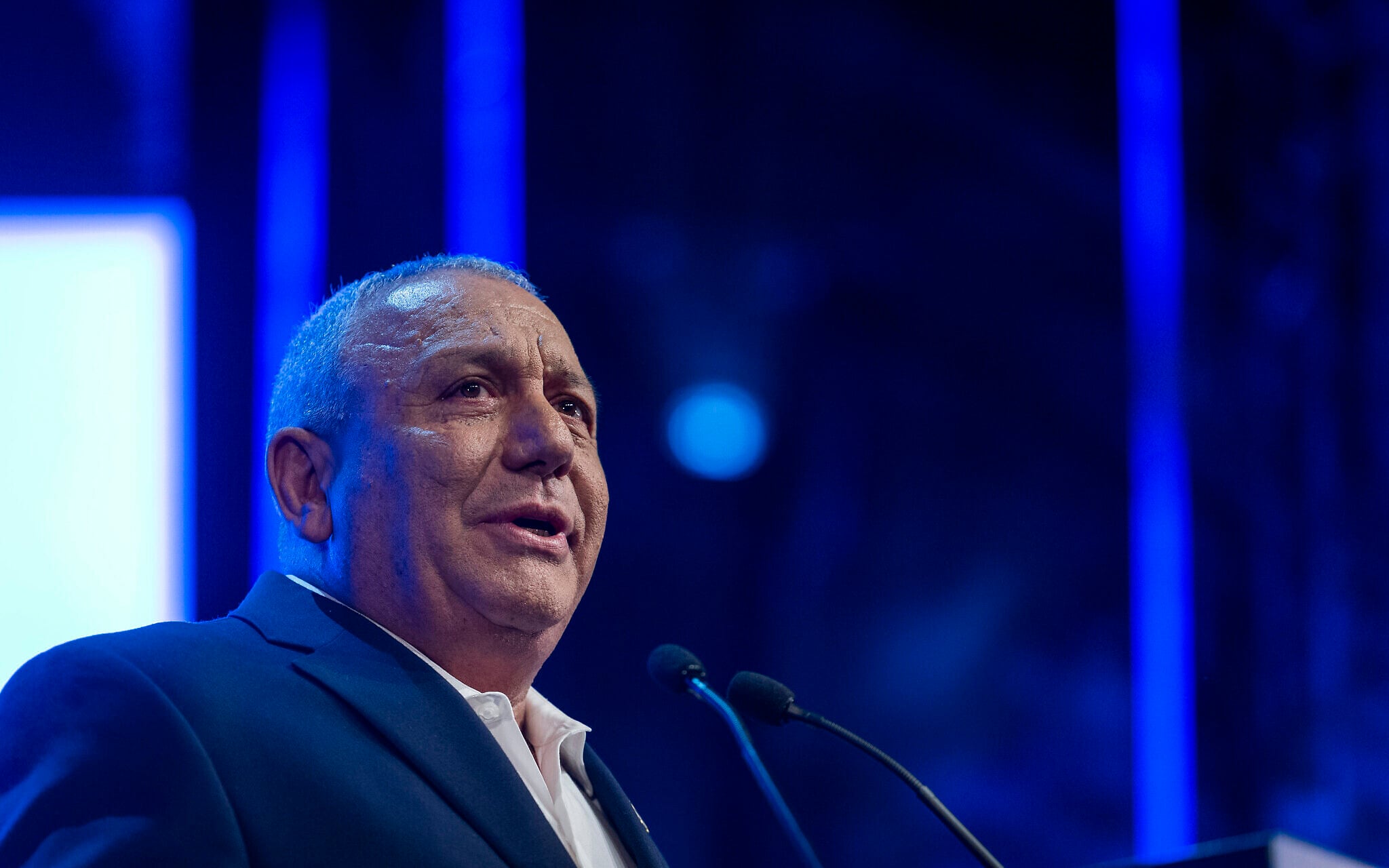
The network published a clip, apparently taken during a campaign event, in which Eisenkot was seen making the remarks. Channel 12 did not say when or where it happened.
“There will be no Silman and Chikli activity,” he said, referring to Idit Silman and Amichai Chikli, two lawmakers who bolted Naftali Bennett’s party in the previous parliament but held on to their Knesset seats. “Their actions were despicable in my opinion, something that should be condemned in Israeli politics,” he said. “You decided to resign — give up your seat.”
Eisenkot said that while he realizes there are bound to be differences of opinion on certain topics, he expects party members to behave the way he did himself when he resigned from the Knesset last year.
Eisenkot entered the Knesset by joining a coalition led by Benny Gantz’s Blue and White in the 2022 elections. Last July he resigned from the Knesset when he broke with Gantz, handing his seat to Eitan Ginzburg.
“We will make a manifesto in Yashar, to set an example to other parties as well, and we will write an ethical code for Yashar,” Eisenkot said.
At the same time, he said he was convinced that within the ranks of his party there would be no behavior similar to that of Silman and Chikli.







The Times of Israel Community.