

Argentine judge charges 7 Iranians, 1 Lebanese over 1994 AMIA Jewish center bombing
Iranian defendants held high-ranking government positions, while Lebanese suspect was Hezbollah member; the charges, made in absentia, may lead to trial over attack that killed 85
 Add ToI as a Preferred Source on Google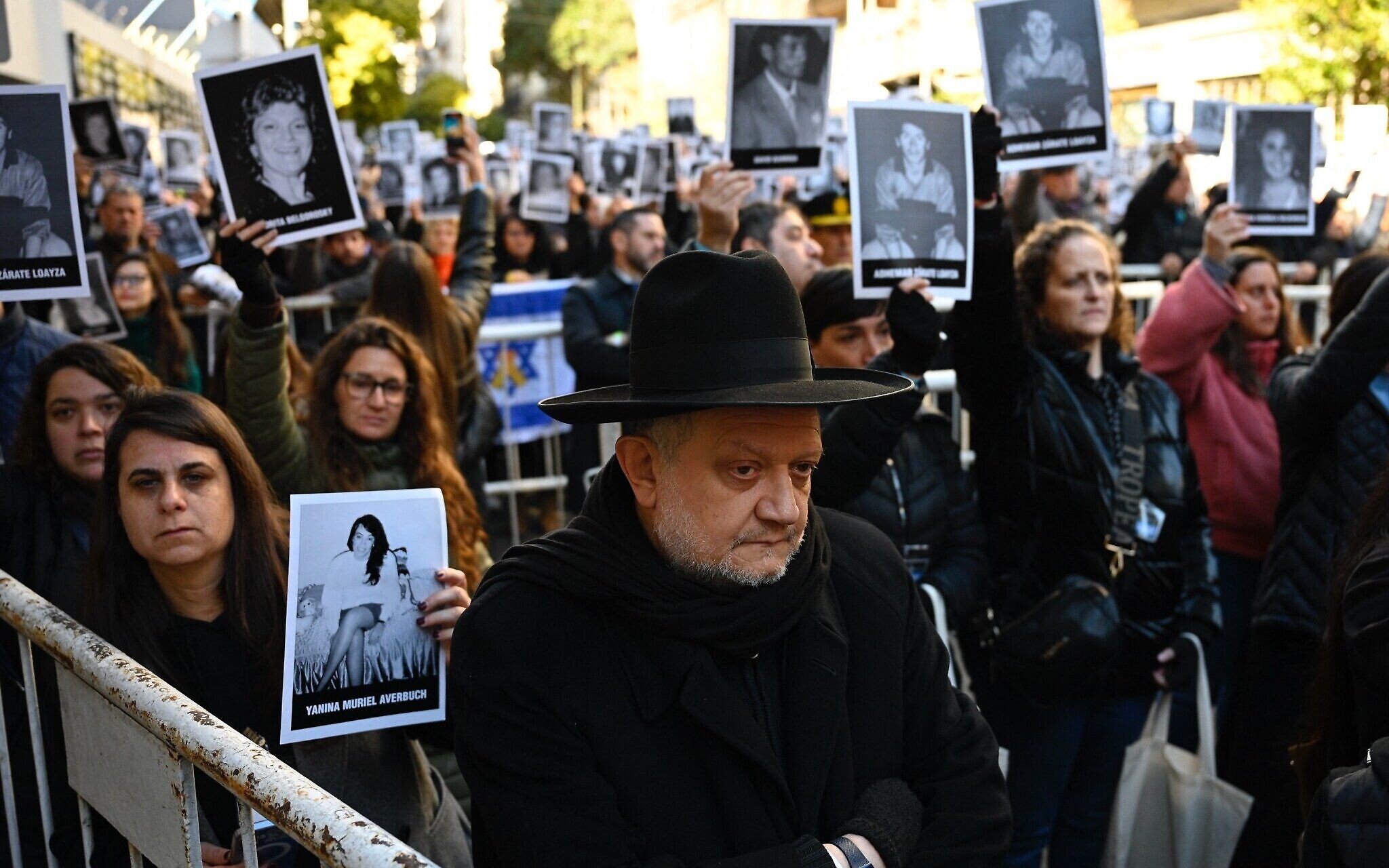
An Argentine judge on Monday formally charged seven Iranians and a Lebanese citizen over their alleged involvement in the 1994 bombing of the AMIA Jewish community center in Buenos Aires.
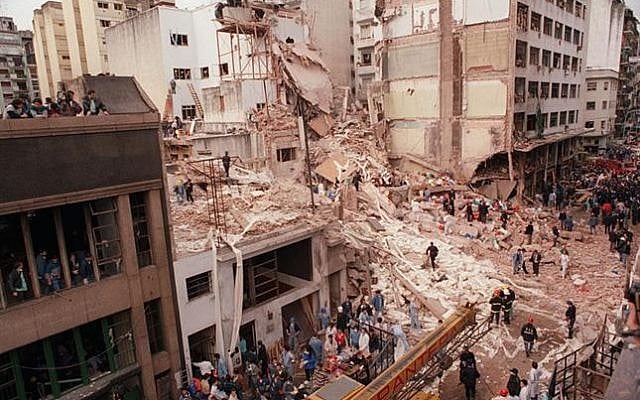
The decision marks the latest step toward a possible trial in absentia over the attack at the Argentine Israelite Mutual Association, which killed 85 people and injured more than 300. It caused devastation in Latin America’s biggest Jewish community and was the deadliest antisemitic attack outside Israel since the Holocaust, but no one has ever been arrested for it.
Argentina, the United States and Israel have long suspected the Lebanese terror group Hezbollah of carrying out the attack at the request of its patron, Iran. An Argentine court ruled in 2024 that Iran and Hezbollah were responsible, and, in a move backed by President Javier Milei’s right-wing administration, Argentine courts authorized the possibility of a trial in absentia last year.
In June, ahead of Monday’s charges, Argentine Judge Daniel Rafecas ruled that the Iranian and Lebanese suspects could be tried in absentia. The seven Iranian defendants held high-ranking positions in Iran when the attack occurred. The Lebanese national was a member of Hezbollah. Two other defendants were removed from the case due to lack of evidence.
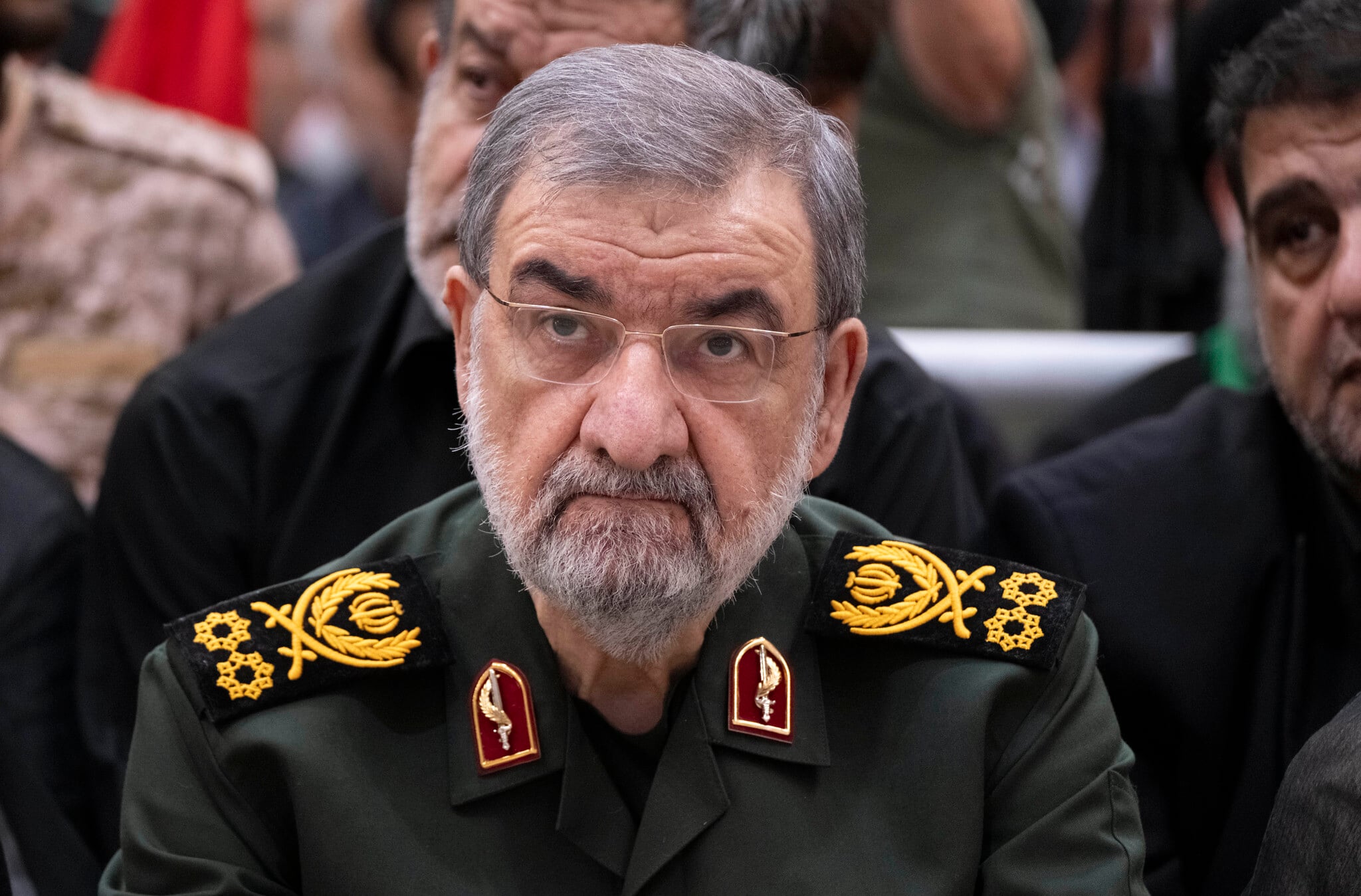
According to Argentine media reports, the individuals who have been charged are: Ali Fallahijan, a former intelligence minister; Ali Akbar Velayati, then foreign minister; Mohsen Rezaei, the former commander in chief of Iran’s Islamic Revolutionary Guard Corps; Ahmad Vahidi, then head of the Quds Force; Hadi Soleimanpour, then Iran’s ambassador to Argentina; Mohsen Rabbani, then cultural adviser at the Iranian embassy; and Ahmad Reza Asghari, an intelligence agent. The Lebanese citizen charged is Salman Raouf Salman.
Rezaei was named last month as the head of Iran’s highest national security body, the Supreme National Security Council.
Most of these names were also published on a list of the INTERPOL General Assembly in 2007. Argentina requested they be added to the international wanted-person alert system.
“The decision to carry out the attack was made in August 1993 by the highest echelons of the Iranian regime and entrusted to Hezbollah,” Rafecas wrote in a statement.
Argentine President Javier Milei, a staunch ally of Israel, celebrated the decision on social media.
“Morality as state policy,” he wrote on X.
While a trial is now a real possibility, the charged individuals may appeal the indictment.
“There’s still a whole process to go through,” Rafecas told AFP, noting other necessary procedural steps before a trial could happen.
Two years before the attack on the AMIA center, a bomb at the Israeli embassy in Buenos Aires claimed 29 lives.
Monday’s ruling suggested that the two incidents could be related. It sought the Argentine Supreme Court’s opinion on potentially linking the two cases given Hezbollah’s alleged involvement in both.
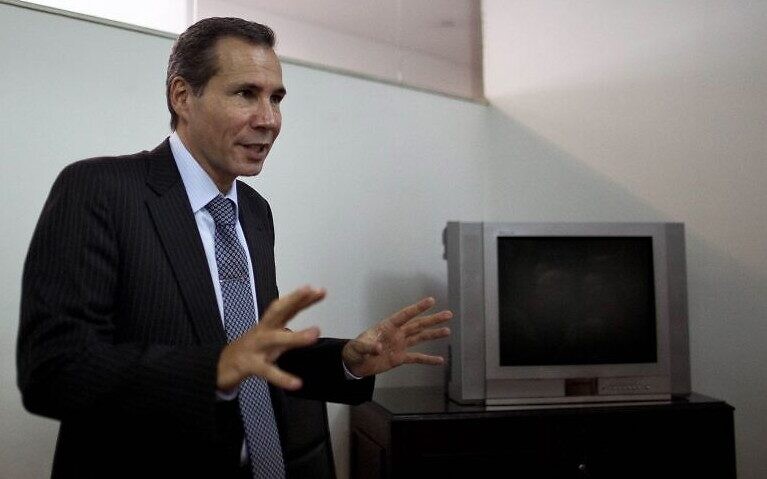
The bombings have roiled the Argentine political and judicial systems for decades, along with claims that the Argentine government covered up Iran’s role in the attacks. In 2004, special prosecutor Alberto Nisman was appointed by Argentina to investigate the AMIA bombing. But he was found dead in 2015, hours before he was scheduled to present allegations that Argentina’s then-president Cristina Fernandez de Kirchner, along with other senior officials, had participated in a cover-up.
Initially, his death was deemed a suicide but Argentina has subsequently acknowledged it was a homicide.
In addition, former Argentine president Carlos Menem, who was in office at the time of both attacks, was tried for covering up the AMIA bombing. But he was ultimately acquitted and died in 2021.
Argentina’s former intelligence chief, Hugo Anzorreguy, was sentenced to four and a half years in jail for his role in obstructing the probe.
Anzorreguy was among some one dozen defendants who faced a slew of corruption and obstruction of justice charges in the case, including the former judge who led the investigation into the attack, Juan Jose Galeano. In 2019, he was jailed for six years for concealment and violation of evidence.
In 2024, prosecutors requested an arrest warrant in connection with the bombing for former Iranian supreme leader Ayatollah Ali Khamenei. Khamenei, who was in power at the time of the attack, was killed in February by an Israeli strike at the beginning of the Iran war.
Times of Israel staff and JTA contributed to this report.



The Times of Israel Community.