

As Israel steps up hamlet demolitions, owner of razed home insists he’s staying put
After Civil Administration tears down dozens of structures in West Bank’s Jinba, Nabil Jabarin says his family is sleeping outdoors, but will rebuild if ‘better’ government takes power
 Add ToI as a Preferred Source on Google
Jeremy Sharon is The Times of Israel’s legal affairs and settlements reporter
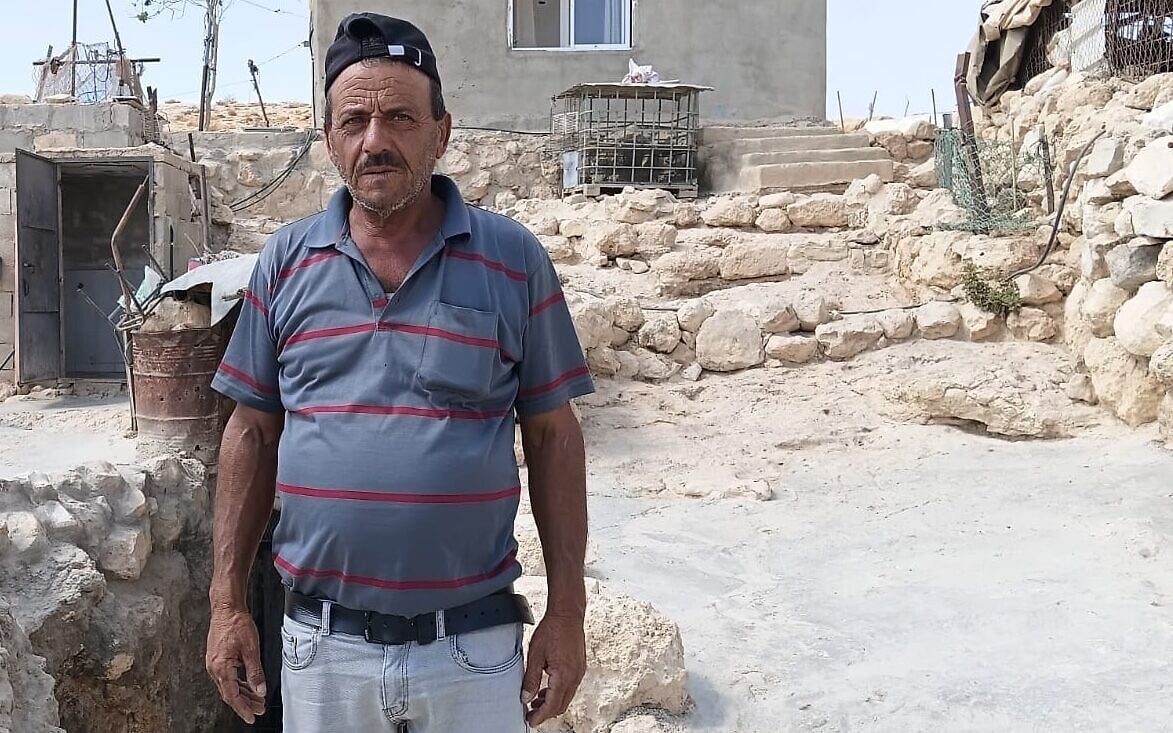
A day after his dwelling was razed by the military, along with those of his sons and over a dozen neighbors, Nabil Jabarin insisted that they would not leave their homes, even if they no longer had a roof over their heads.
Speaking by phone from Jinba, a small hamlet in the Masafer Yatta region of the southern West Bank that saw large-scale demolitions this week, Jabarin, 52, insisted that he would not leave, saying his family had lived in the village for generations and that they had no other place to go.
“They should look us in the eyes, look our children in the eyes, we have no other place to go to but here,” Jabarin said of those responsible for the demolitions.
On Wednesday, the Civil Administration, a Defense Ministry body in charge of enforcement against illegal structures in the West Bank, demolished 24 residential buildings in Jinba. Left homeless were some 180 people, including around 85 children, according to the B’Tselem human rights organization.
The administration also destroyed 15 agricultural buildings, 16 solar panels, 14 water tanks, and arrested one of the hamlet’s residents, the group said. According to Jabarin, some 40 structures remain standing.
The Civil Administration confirmed the demolitions in Jinba, saying that “enforcement was carried out against illegal building components” in the region.
Jinba, along with seven other hamlets in the area, lies inside a military firing zone and has long faced the prospect of demolition, but the residents insist that their dwelling existed long before the army delineated the area as off limits in the 1980s.
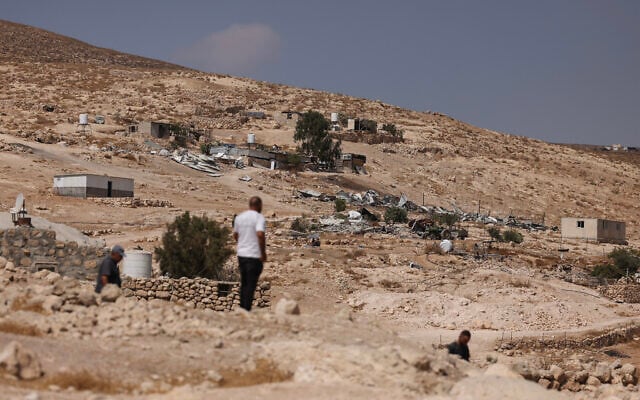
Jabarin’s ramshackle home was among those razed on Wednesday, along with those of his 30-year-old son, a father of six, and another son, 25, who has four children.
Jabarin told The Times of Israel that the families slept outside Wednesday night because of the demolitions, but that they hoped to organize tents to sleep in for Thursday night.
“All our lives are in Jinba, my father and grandfather were born in Jinba and died here, we have no other place to go,” he said.
For now, he is not planning on rebuilding his home, fearing that it will just be torn down again. But he expressed hope that a new “better” government would take office after the upcoming October elections in Israel, which might allow them to rebuild.
The demolitions have been spearheaded by Finance Minister Bezalel Smotrich, who controls the Civil Administration via a junior ministerial role in the Defense Ministry.

A spokesperson for Smotrich said that the demolitions in Masafer Yatta were part of the deliberate policy of increasing enforcement against illegal Palestinian construction that the minister outlined in August.
Last month, Smotrich said that demolitions against illegal Palestinian construction were being stepped up to thwart “the establishment of a Palestinian state by taking control of state land and massive, systematic construction in Area C [of the West Bank.”
Wednesday’s demolitions were the latest in a rash of enforcement operations against hamlets in the Masafer Yatta region this month.
On September 2, the Civil Administration demolished the entire hamlet of Khirbet a-Taban, several kilometers east of Jinba, which had been home to 12 families, numbering some 70 people.
And on September 8, the Civil Administration demolished five homes belonging to four families numbering 32 people in Khirbet al-Fakhit, less than two kilometers from Khirbet a-Taban, as well as sheep pens, external toilets, water tanks, solar panels, water cisterns and chicken coops.
Jabarin said that when the Civil Administration forces came to Jinba on Wednesday, they gave the residents just 10 minutes to remove their belongings before demolishing their homes, saying that they managed to remove only a few items before the demolition work began.
Security forces, Civil Administration, demolishing buildings in Palestinian hamlet of Jinba in South Hebron Hills/Masafer Yatta region right now. 19 buildings demolished so far according to B'Tselem… pic.twitter.com/jq4VAjmgJD
— Jeremy Sharon (@jeremysharon) September 23, 2026
A Civil Administration spokesperson did not respond to the claim about Jabarin having only 10 minutes to pack.
Jinba is one of eight hamlets in the region with demolition orders against them since 2022, when the High Court ruled that residents of Masafer Yatta had not successfully proved they had lived in the villages as permanent residents before the establishment of the firing zone, following a decades long legal battle.
Like many Bedouin, residents of hamlets in the firing zone lack formal deeds to the land on which their homes sit recognized by Jerusalem, allowing Israel to designate it as unowned state land.
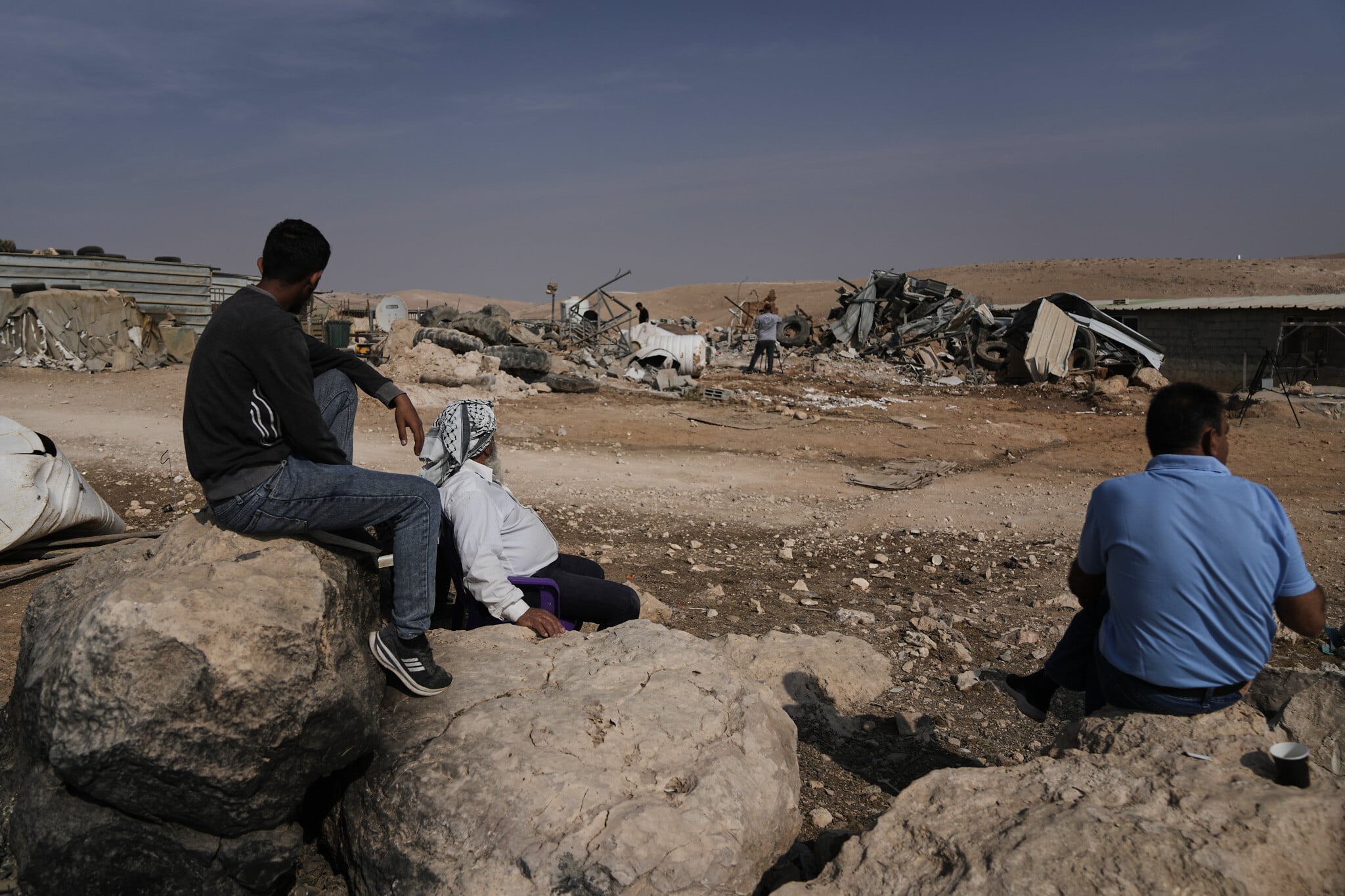
Jabarin and others say they have Ottoman records proving their ownership, but Israel only accepts British Mandate and Jordanian records for land registration purposes.
“They say it is firing zone, but we are here from before the state, they established the firing zone over the village, but we are here since Ottoman times, for 270 years,” Jabarin maintained.
He added that he faces daily harassment from residents of nearby settler outposts who have prevented him from taking his sheep to pasture and from watering them, even from wells he says belong to him and were dug by his father.
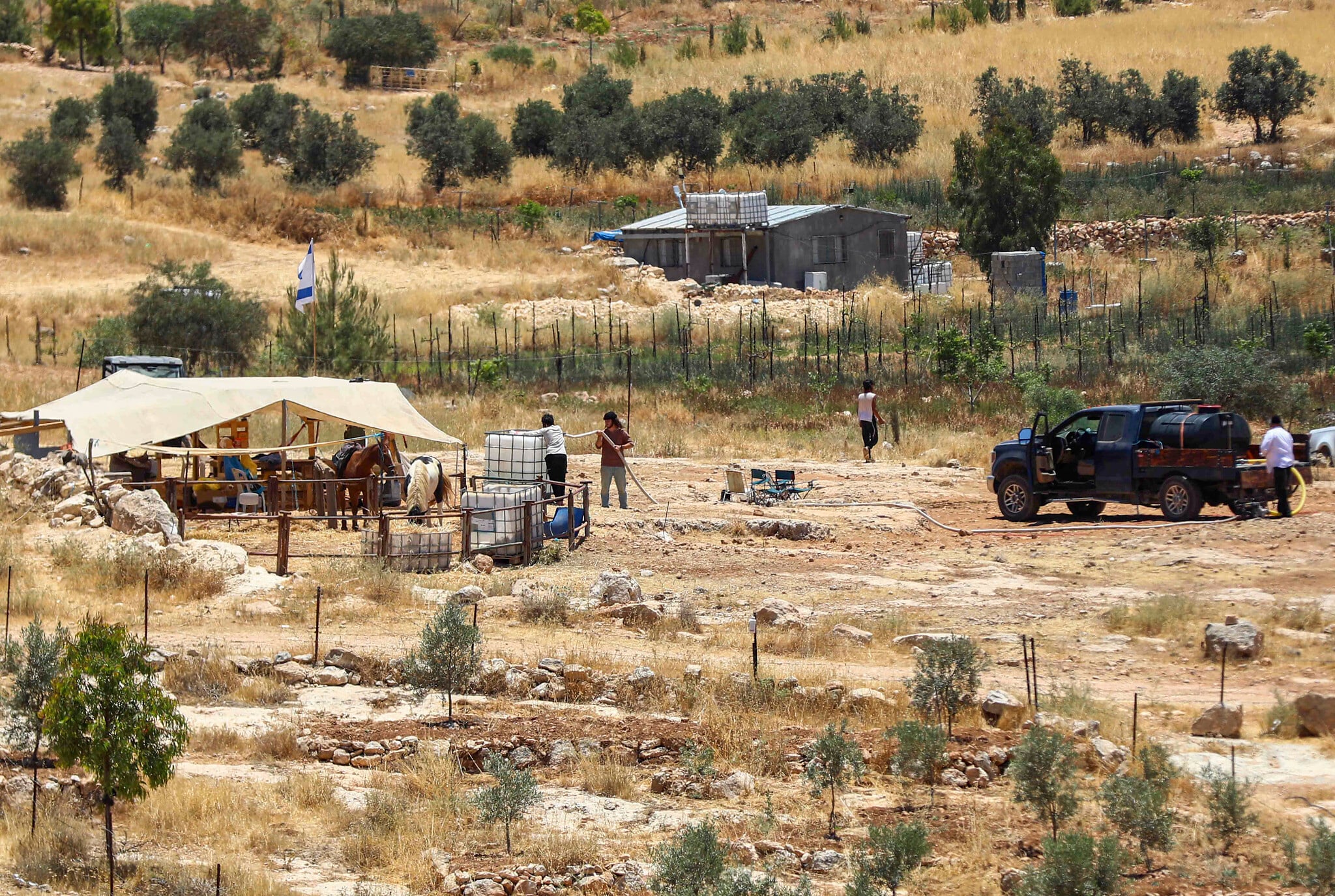
Aside from pushing the demolitions, Smotrich has also been the architect of the current government’s policy establishing 103 new West Bank settlements, allowing over 200 illegal settlements outposts to be constructed, and approving record numbers of housing units for construction in existing settlements.
Smotrich has repeatedly said that this massive settlement development is designed to de facto annex the West Bank and “kill” the possibility of the establishment of a Palestinian state.
According to the Bimkom civil rights organization, demolition orders against Palestinian construction were almost always carried out last year, compared to demolition orders against illegal settlement construction, which were carried out just 20% of the time.










The Times of Israel Community.