

In fiery UN speech, Netanyahu blasts Iran, Qatar, Turkey, slams Gaza genocide accusation
PM calls genocide allegation ‘lie of the century,’ defends IDF’s morality, underplays settler violence; many envoys walk out before he starts; he doesn’t mention Saudis or Abraham Accords
 Add ToI as a Preferred Source on Google
Lazar Berman is The Times of Israel's diplomatic reporter
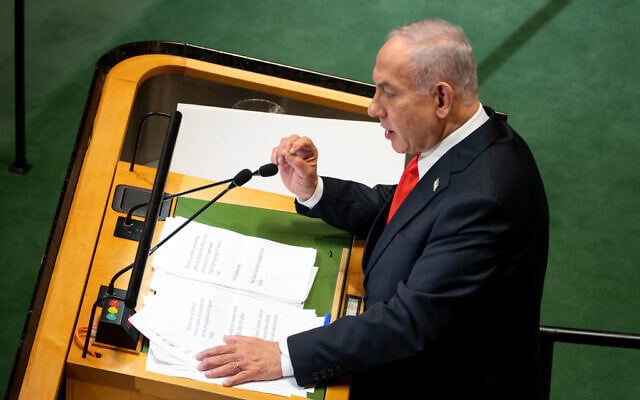
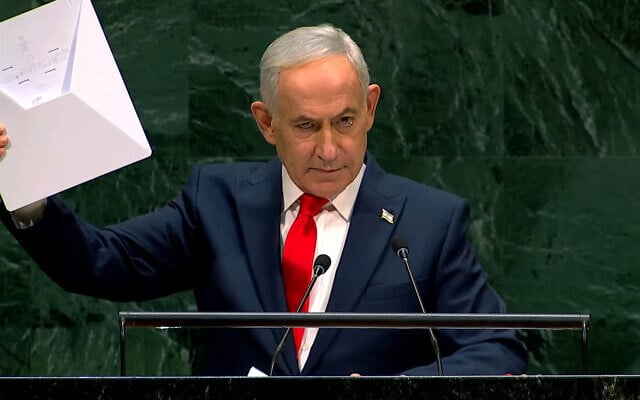
UNITED NATIONS — Prime Minister Benjamin Netanyahu hit many of his favorite themes in a combative speech at the United Nations General Assembly in New York on Thursday, including the threat Iran poses to the world and the Jewish people’s determination to stand up to antisemitism and attempts to annihilate them.
He also surprised many observers by mentioning US President Donald Trump only once, and failing to offer new evidence on Iran’s nuclear and ballistic missile program — despite Israeli officials saying he would do so.
Two other Middle Eastern countries were singled out by Netanyahu for “spreading lies” and backing Hamas — Qatar and Turkey.
Qatar, said Netanyahu, has for years been spending billions on US universities and the Al Jazeera outlet to “brainwash young minds to hate Israel, hate America, hate the West.”
Doha was a key mediator in hostage talks with Hamas, and top Netanyahu aides are under investigation for allegedly taking money from Qatar to spread sympathetic messages in Israeli media.
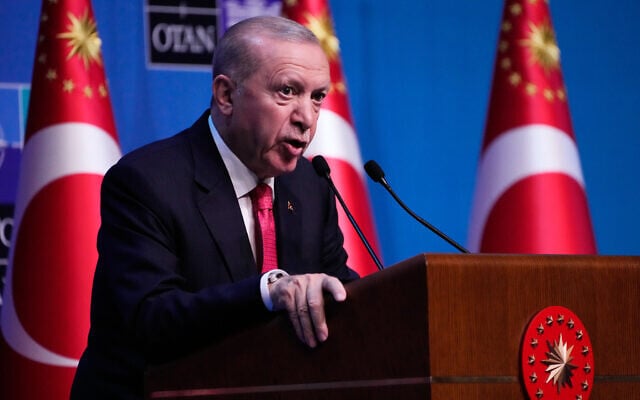
Netanyahu laid into Turkish President Recep Tayyip Erdogan, a leading critic of Israel on the world stage. Erdogan, said Netanyahu, is a “tyrant” who has killed thousands of Kurds, illegally occupies northern Cyprus, threatens Greece, and jails journalists.
“He calls for Israel’s destruction every day. He says he will be the ruler of Jerusalem,” Netanyahu continued. “No, sir, you won’t. It is our city.”
Netanyahu’s speech came slightly more than a month before general elections in Israel, where polls show that neither his coalition nor the opposition is likely to reach the 61 votes needed to form a government.
The UN address was one of Netanyahu’s last opportunities to make headlines in Israel and abroad, and portray himself as a statesman who is best suited to defend Israel and the Jewish people on the world stage despite failing to prevent Hamas’s October 7, 2023, onslaught.
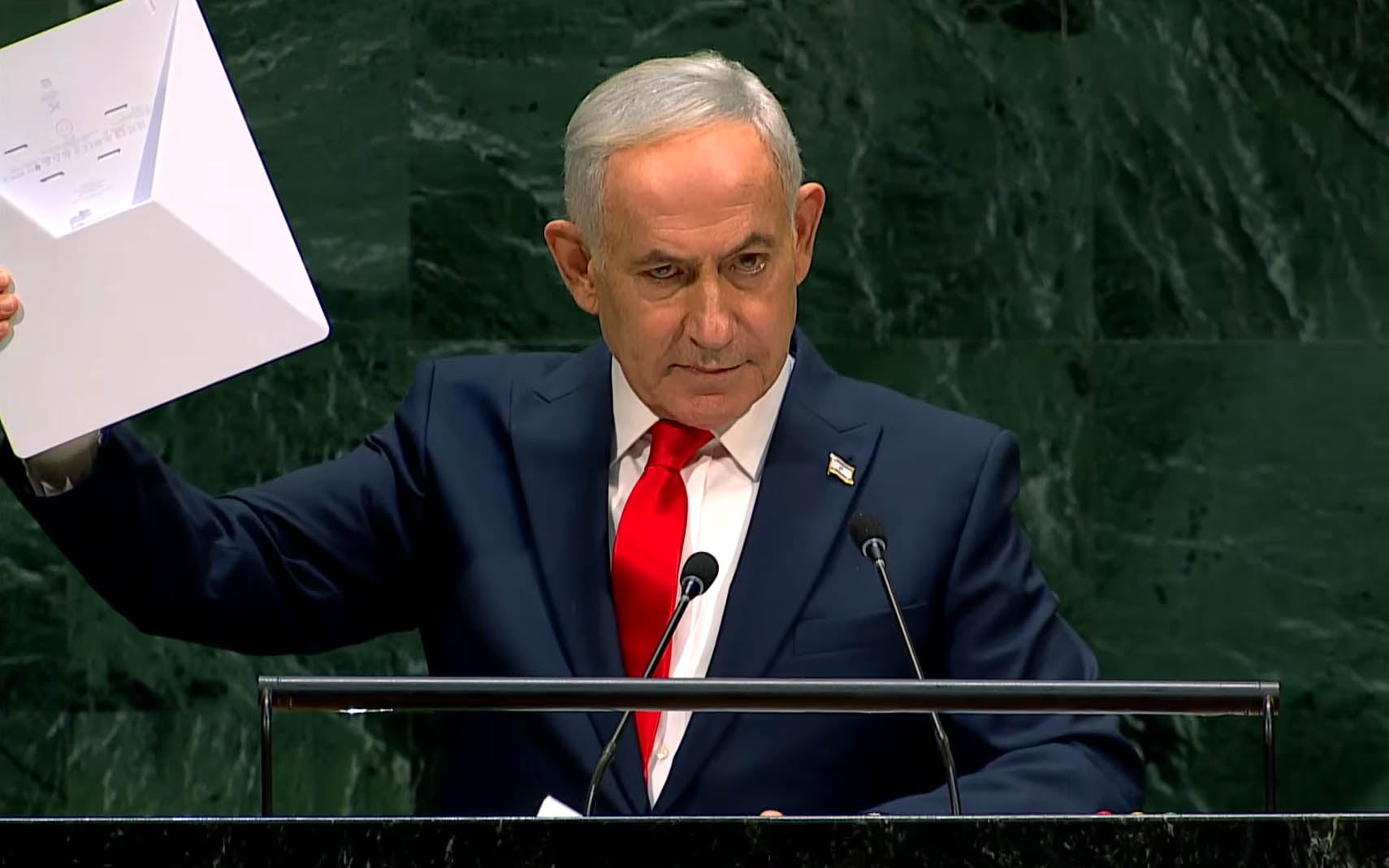
Netanyahu offered a call for unity among Israelis, saying they are “one nation fighting for one future.”
“Do we have our differences?” he asked. “Of course we do. Who doesn’t?”
“But in the critical moments, those moments that shape our destiny, we stand together, because what unites us is so much stronger: our history, our values, our courage,” Netanyahu insisted.
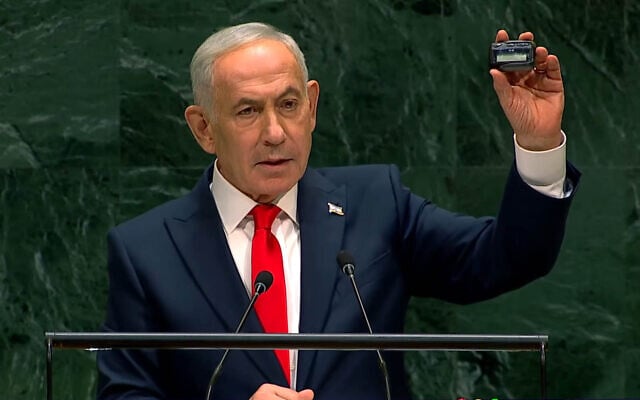
As he has done in past speeches, Netanyahu used props for dramatic effect. He held up a pager while reminding Hezbollah of the deadly September 2024 beeper and walkie-talkie attacks that killed and injured thousands of Hezbollah fighters and some Lebanese civilians.
Netanyahu also held up a Starlink internet terminal aloft.
He said that the Elon Musk-owned system allows Iran’s people to exercise freedom of thought and speech, and told the General Assembly president that he would leave the device for the Iranian delegation, so that when they “inevitably defect,” they can tell their story on social media.
“The power of the people will overcome the people in power,” Netanyahu said about Iran’s future, saying “the murderous regime will be toppled by its lies, by its corruption, by its cruelty.”
Notably, Netanyahu did not mention Saudi Arabia or the expansion of the Abraham Accords, a common theme in recent speeches.
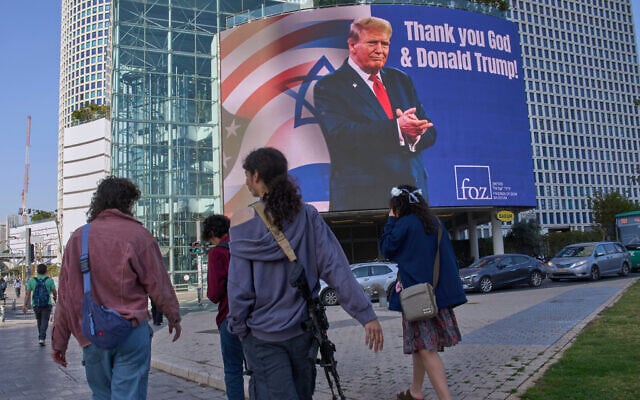
He did laud US President Donald Trump for “bold leadership” and his partnership in the “battle against the barbarians.”
“He boldly confronted an enormous danger to America, Israel and the world,” said Netanyahu.
Referring to the 2025 and 2026 US-Israeli campaigns against Iran, Netanyahu said that “Israel and America acted together not only to protect ourselves, but to save civilization.”
Mamdani an ‘antisemite’
As expected, most delegations from Arab and Muslims countries staged a walk-out as Netanyahu took to the podium after Colombia’s president. The United Arab Emirates, one of Israel’s closest Arab allies, remained in the room.
At the opening of his address, Netanyahu called those walking out “moral cowards” as invited guests in the gallery gave the prime minister a standing ovation and booed the diplomats heading to the exits.
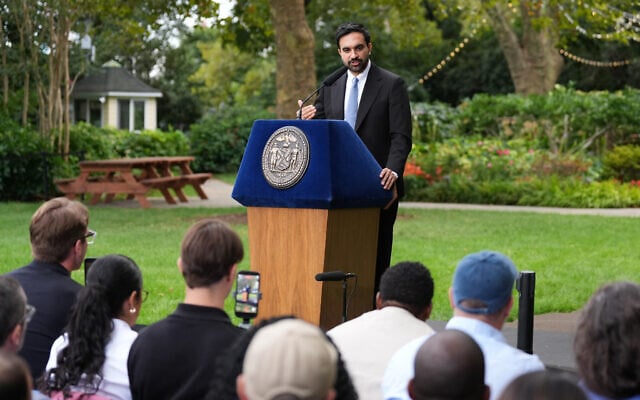
In a video the day before his speech, Netanyahu had promised to “tell the truth” about New York Mayor Zohran Mamdani, a staunch opponent of Israel, and the premier dedicated several passages to someone who has emerged as a useful foil ahead of the Knesset election.
“Mr. Mamdani, you tried to stop me from coming here, you tried to silence me,” he said at the podium. “You can’t silence me. You can’t silence the truth.”
Mamdani has called for Netanyahu’s arrest on war crimes charges at the International Criminal Court, and has called him a “war criminal.” Netanyahu denies the charges.
Netanyahu said that Jews no longer feel safe in New York City, which has the world’s largest Jewish population. “This isn’t the city we remember. It changed so quickly,” said Netanyahu.
He called Mamdani a supporter of Hamas — something the Gracie Mansion firmly denies — and claimed that the mayor invited into his home a journalist who refused to release footage of “Hamas terrorists beating and torturing Israeli hostages.” He also panned Mamdani’s wife for liking posts that celebrated the October 7 Hamas attacks.
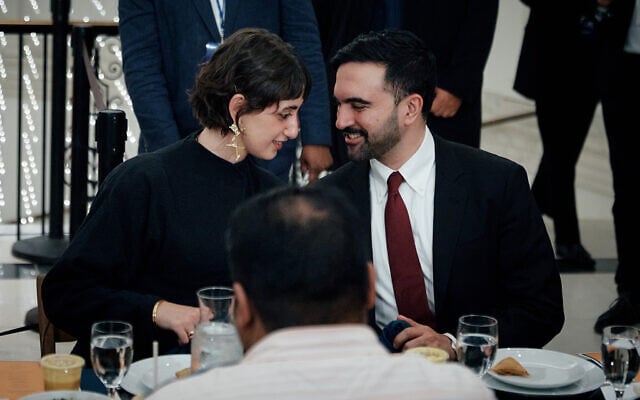
Netanyahu called Mamdani antisemitic, and said that in his city Jews are stabbed and targeted simply for being Jews.
“The days when Jews were defenseless victims marched to the slaughter, those days are over,” he declared. “Today we have a state. Today we have an army.”
‘Greatest lie of the century’
Turning to the war in the Gaza Strip, Netanyahu pushed back aggressively against the charge of genocide. “Israel didn’t commit genocide. Israel prevented genocide,” said Netanyahu, arguing that Mamdani’s “Hamas buddies” would have killed every last Jew if they could have.
Netanyahu called the genocide accusation “the greatest lie of the century,” and pointed to the vaccinations and food Israel has let into Gaza.
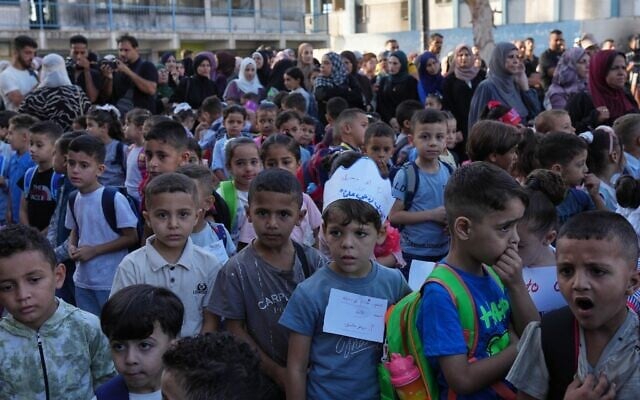
“We’ve taken innumerable steps to protect the civilian population,” he said. Israel let food into Gaza for most of the war but blocked the entry of aid for more than two months, leading to reports of widespread hunger. Aid groups continue to say more supplies should be let in.
“I salute the courage of the people of Israel. I salute the courage of our brave soldiers, Jews, Muslims, Christians, Druze. The most moral army in the world, the IDF,” Netanyahu said.
“Shame on you,” he said to those who charge Israel with genocide.
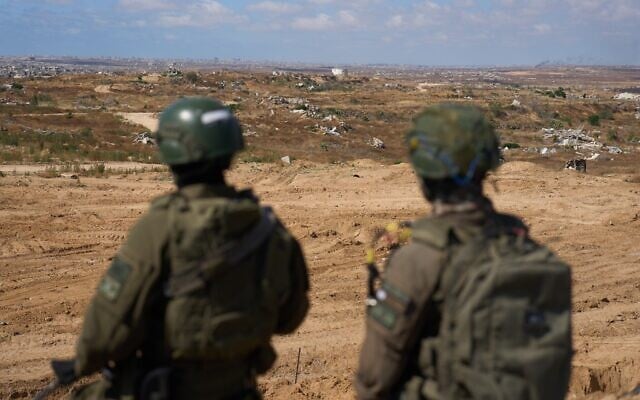
Netanyahu also addressed leaders in Western Europe, who increasingly say they will advance economic sanctions against West Bank settlements and voice harsh criticism of Israel’s conduct in the West Bank and Gaza.
Those leaders, he charged, are “afraid to defend freedom.”
The choice for Europe, he said, lies between “the brotherhood of democracies, or the Muslim Brotherhood.”
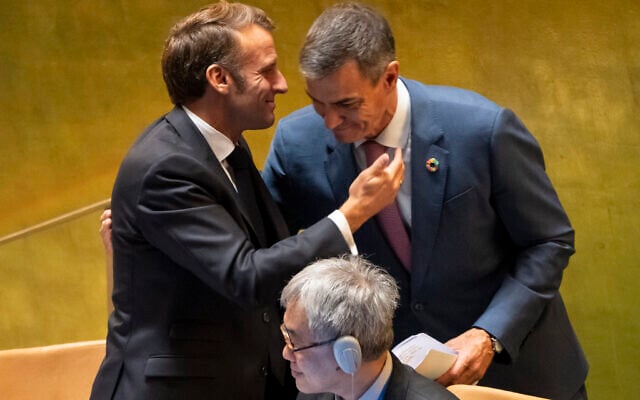
Israel “does not wait for others to wake up from their moral slumber,” he said, pointing to Israel’s innovations that he says help all of humanity.
Netanyahu asked of anti-Israel protesters, including those outside the building, where they were when Iranian tyrants butchered tens of thousands of their own people at anti-government protests at the beginning of the year.
He called them “phony human rights protesters,” stressing that they also don’t stand up when Christian minorities are forced to flee across the Middle East, and did not do so when Bethlehem’s Christian population plummeted when the Palestinian Authority assumed control of the city in the 1990s.
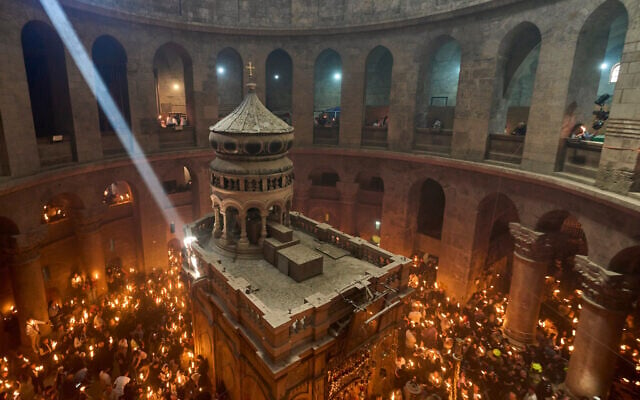
In Israel, he said, the Christian population is growing and thriving.
Israel has come under intense criticism in recent years over harassment and physical attacks against Christian clergy in Jerusalem’s Old City, and over incidents like the smashing of a statue of Mary by an IDF soldier in a Christian village in Lebanon.
Downplaying West Bank violence
Netanyahu lamented the international media focus on a “handful of juvenile delinquents, about 150 in number, who throw stones, who chop down olive trees, occasionally they light some fires,” responsible for settler violence in the West Bank.
He insisted that settler violence only leads to 2 or 3 casualties a year, while Palestinian terrorists try to carry out thousands of attacks.
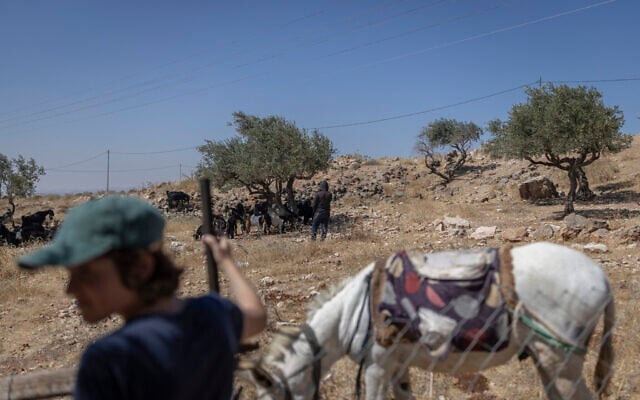
Settler violence and harassment have surged in recent months, with near-daily incidents. Arrests and convictions are rare, and critics accuse the government of condoning or even encouraging it.
At the same time, Netanyahu said he “won’t stand for vigilantism” and that he set the Shin Bet intelligence agency on them.
Turning to French President Emmanuel Macron, who claimed this week that Hamas “never operated” in the West Bank, he stressed that a French citizen, Netanel Shukrun, was killed on Sunday before hours before Yom Kippur in the territory.
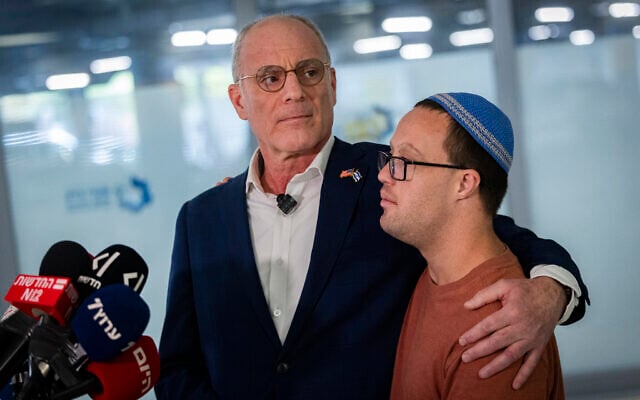
He then addressed the ramming attack that seriously hurt IDF reservist Neria Leiter, son of Israel’s envoy to Washington, on Wednesday: “He’s fighting for his life now in a Jerusalem hospital.”
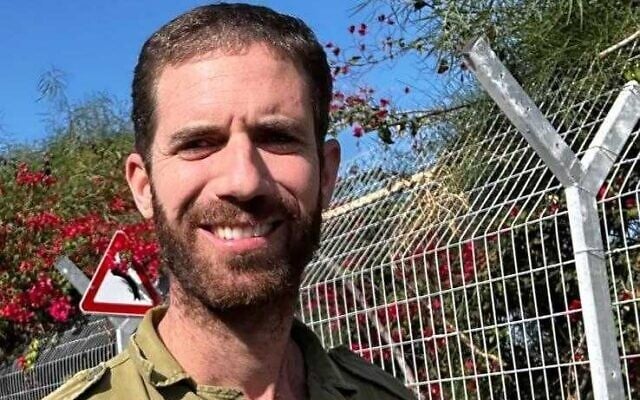
He spoke about the soldier’s father, Ambassador Yechiel Leiter, whose pain Netanyahu says is “immeasurable.”
“Despite the pain, despite the agony, we do not give in,” he said.
‘No other country’
Netanyahu cited a recent post by Neria: “We have no other country. And it’s a privilege to defend it.”
“Your sacrifice will not be in vain. We will continue to fight, and we will continue to win because we have no other choice,” he promised.
Netanyahu concluded his speech by noting that the Jewish people’s story goes back over 3,000 years. “We speak the same language today that we spoke then. We live in the same land in which our ancestors lived then.”
“Our values have inspired humanity for millennia,” he continued: “The belief in one god. The sanctity of life. The rule of law. Our eternal quest for peace. Our eternal quest for justice. It is these sacred values that propelled us throughout the ages. It is these values that helped us beat the odds of history.”
“Over the centuries, the tyrannies that tried to destroy us failed time and again,” he concluded, “and God willing, they will continue to fail. If we muster our courage, if we steel our resolve, we will continue to win.”


The Times of Israel Community.