

Eisenkot does not have this election sewn up. So why is he barely campaigning?
More than half the electorate wants Netanyahu gone. Yet the foremost candidate to replace him is ceding the spotlight and the agenda

 Add ToI as a Preferred Source on Google
David Horovitz is the founding editor of The Times of Israel. He is the author of "Still Life with Bombers" (2004) and "A Little Too Close to God" (2000), and co-author of "Shalom Friend: The Life and Legacy of Yitzhak Rabin" (1996). He previously edited The Jerusalem Post (2004-2011) and The Jerusalem Report (1998-2004).

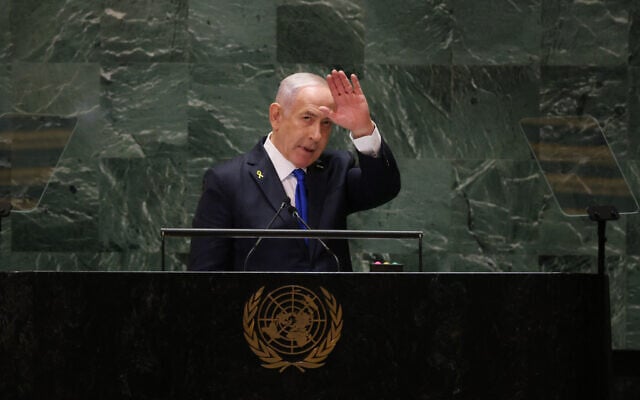
On Thursday evening, Israel time, Benjamin Netanyahu is set to address the United Nations General Assembly. He could well face a large choreographed walkout by Israel’s vast array of international detractors, and won’t be remotely fazed. He’s stood at the podium at least a dozen times before, and relishes such moments.
Innumerable TV stations worldwide will screen parts or all of his address live. But most importantly for Netanyahu, barely a month before elections, all of Israel’s main TV stations will do so, and will continue to run highlights from the speech, and dissect it, through the weekend.
Netanyahu’s annual prime ministerial appearances at the UN, and the vast coverage they routinely engender, abroad and especially at home, are merely Thursday’s example of how hard it can be to unseat an incumbent leader. The nature of the role automatically places the prime minister front and center in the life of the nation, an essential presence at every national event, his every utterance potentially significant and thus newsworthy, his capacity to set the national agenda unparalleled.
On Thursday evening, Israel time, when Netanyahu will be addressing the UN, a watching world and the Israeli electorate, his main rival, Gadi Eisenkot, as far as is known at the time of writing, does not have any major events planned.
The very vulnerable incumbent
In perennially embattled Israel, prime ministerial longevity is also an immense asset. With enemies all around, it’s a particularly difficult battle to unseat a familiar leader in favor of one who has never been tried in the hottest of seats.
And Netanyahu is a uniquely familiar prime minister. He’s held the post for almost 19 years in total — by far the longest in our history — and for 16 of the past 17 and a half. For almost a generation of Israelis, the name “Benjamin Netanyahu” and the title “prime minister” have become nearly synonymous.
And yet, even Netanyahu proved beatable, losing power for 18 months in 2021-2022. And that, of course, was before October 7, 2023.

Familiarity can breed trust and dependence, and Netanyahu had largely achieved that… until his catastrophic failure to prevent the Hamas invasion and massacre. Defeating him in the wake of that failure constitutes an entirely achievable proposition.
Every poll shows anti-Netanyahu parties, notably including the two mainly Arab slates, headed for a clear Knesset majority, indicating that more than half of the electorate, with its 17% Arab component, wants him gone. That does not amount to a viable, broadly consensual, non-Netanyahu coalition, but the prime minister has never been more vulnerable.
Netanyahu failed in his prime obligation to his nation on October 7, 2023. He failed to keep Israel and its people safe.
There is growing evidence that, shortly before October 7, he ignored at least two sets of direct, specific and credible warnings that Yahya Sinwar’s Hamas was about to invade — conveyed via Egypt and the United Arab Emirates. He and his security chiefs — all of whom have long since gone home — protractedly and resolutely discounted overwhelming evidence, including Hamas’s own war plans, that a massive attack was being prepared. He and those security chiefs presided over an insistently blinkered and frankly unfathomable assessment that Hamas was deterred. He personally encouraged the flow of millions of dollars of Qatari money into Hamas-ruled Gaza, arguing that it was vital in order to prevent a humanitarian crisis in the Strip — money that both directly funded and freed up resources for Hamas’s war machine
Since that blackest day, he has steadfastly ducked responsibility for the failure, refused to resign, and prevented a state commission of inquiry into what went so horrifically wrong, while his loyalists, wife included, trade in foul conspiracy theories about betrayal.
He has subsequently overseen tactically effective but strategically unsuccessful wars against Hamas, Hezbollah and Iran (whose regime retains power and a stockpile of highly enriched uranium for its nuclear weapons program). He has balked at US President Donald Trump’s step-by-step plan for weakening, marginalizing and disarming Hamas, which, three years on, is again plotting to kidnap Israeli soldiers and civilians, according to Netanyahu’s own defense minister.
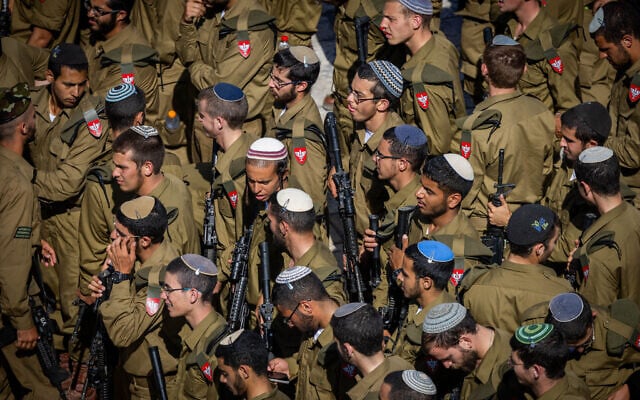
He has kowtowed to his ultra-Orthodox coalition partners in exempting almost all ultra-Orthodox males from military or any national service.
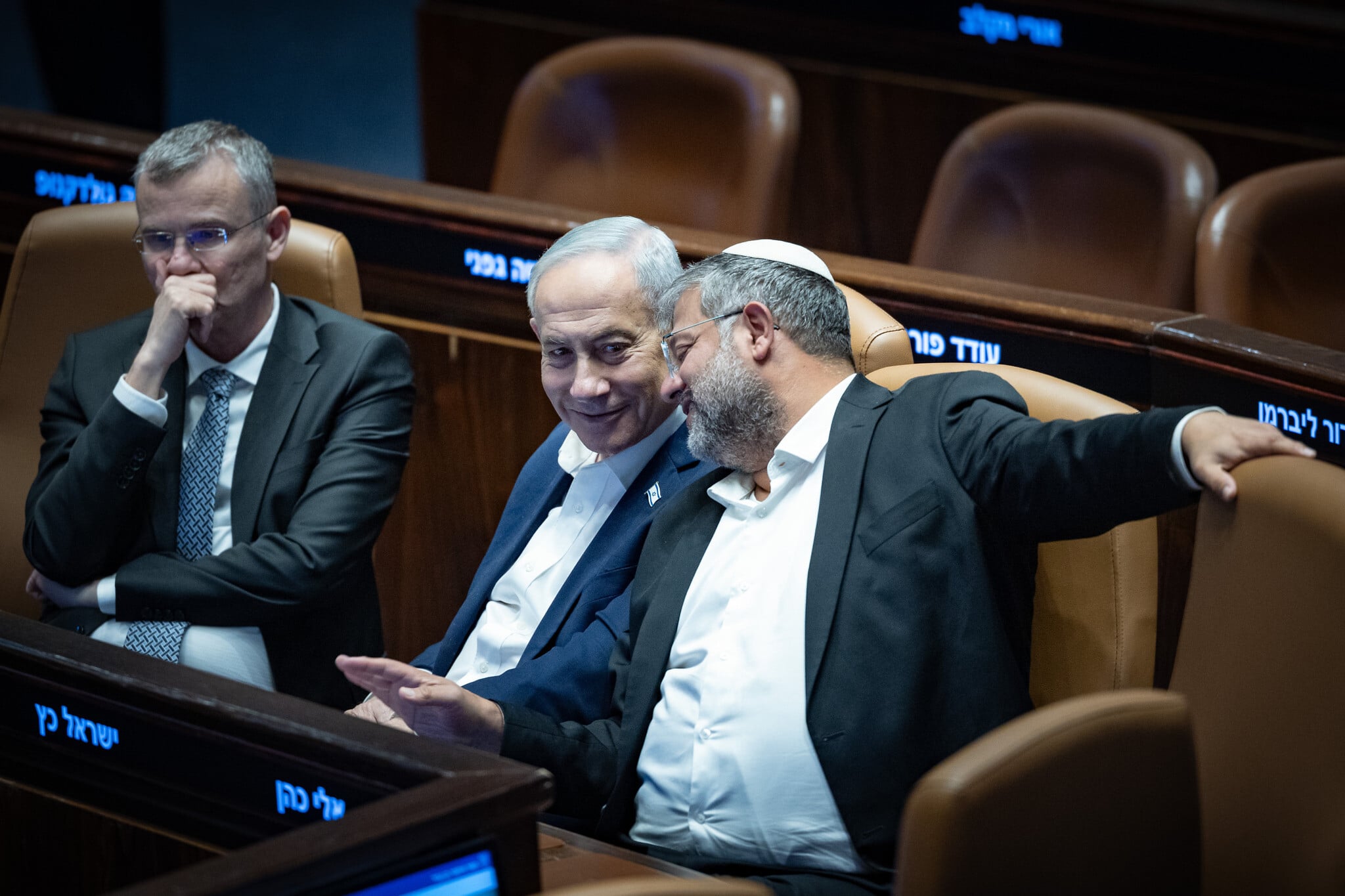
He placed extremists who have exacerbated Israel’s pariah status at the heart of his government. He gave one of them, Itamar Ben Gvir, control of the police, now an increasingly politicized and corrupted organization, and an incompetent one in everything from fighting mass gangland murders in the Arab community to mass fatalities on the roads. And he gave another, Bezalel Smotrich, a ministerial post in the Defense Ministry, with responsibilities over the settlement enterprise — a movement blackened by the near-daily assaults by violent extremists on West Bank Palestinian civilians that the settler leadership tacitly condones through its silence and the IDF has proven incapable of thwarting.
He has presided over the gradual collapse of the education system, with Israel rooted near the bottom of the OECD comparative tables, and that’s without taking into account male ultra-Orthodox pupils, who are so ill-educated they cannot even take the comparative international tests. The health system is under enormous strain; so too national welfare services.
He sought, and largely failed, to subjugate the judiciary, but intends to succeed if reelected — concentrating all power in the hands of the political leadership, with no protection against abuse, essentially turning Israel into a political tyranny.
Statistics and anecdotal evidence indicate that many of Israel’s best and brightest are leaving — for better opportunities abroad; exhausted by the unprecedented strain of reserve service; unwilling to keep paying high taxes that partly subsidize the non-working, non-serving Haredim; fearful for where Israel is headed in terms of endless wars and a gradual shift toward theocracy and autocracy.
A candidate to heal the country
Gadi Eisenkot exudes, if not exactly charisma, then a sense of capability and dependability.
His is a relatively fresh political face, though he has some ministerial experience.
He rose through the ranks in the Israeli military meritocracy, all the way to IDF chief of staff.
He is the child of Moroccan immigrant parents, which spreads his appeal into the Sephardic community that makes up a substantial part of Netanyahu’s political base. He has said his mother voted for Shas, the Sephardic ultra-Orthodox party, for 30 years.
He would draft the ultra-Orthodox. He would not destroy Israel’s independent judiciary.
He’s hard to pin on the political spectrum. He’s empathetic to the settlement enterprise; he would, if needed and possible, likely form a minority coalition sworn into office on votes from Arab legislators.
He is a bereaved father, and uncle, from the Gaza war.
Nobody doubts his desire to try to heal this riven country.

That all helps make him a potent candidate to unseat Netanyahu. And his Yashar party has generally been scoring a little ahead of Netanyahu’s Likud.
But curiously, of late, Eisenkot seems barely to have been campaigning.
He’s allowed Netanyahu, who sought to partner with Mansour Abbas’s Ra’am party after the 2021 elections, to depict the notion of any reliance on Arab votes as virtually treasonable.
He’s issued statements and videos denouncing Netanyahu’s efforts to deflect blame for October 7, but seems to be keeping major interviews to a minimum — apparently seeking to minimize the risk of a political mistake.
His party’s launch event was serious, disciplined… and not particularly attention-grabbing. The Yashar slate he presented that night was also rather underwhelming. He’s held numerous small and medium-sized gatherings and events, but not large-scale rallies; maybe those are planned for the final month.
At 65, Eisenkot is no spring chicken, but he’s over 10 years younger than Netanyahu, who would be 81 at the end of another full term and is not in the best of health. You wouldn’t know it to look at their current campaign energy levels.
Overall, to date, Eisenkot’s is a defensive campaign, suited not to a candidate determinedly winning over new supporters and maximizing public enthusiasm behind him, but to one who has the election in the bag. Yet Eisenkot surely knows that he doesn’t.
First, you have to win
In some of the many democracies without prime ministerial term limits, leaders go because their own party concludes their time has passed. That was the case in Britain, for instance, with both Margaret Thatcher and Tony Blair.
This hasn’t happened and won’t happen with Netanyahu, who shrugged off a mini-revolt in Likud after October 7, and has defanged, sidelined, booted and/or humiliated all internal opponents through the decades. (Step forward Silvan Shalom, Yoav Gallant, Gideon Sa’ar, Nir Barkat, Yuli Edelstein, Gilad Erdan…)
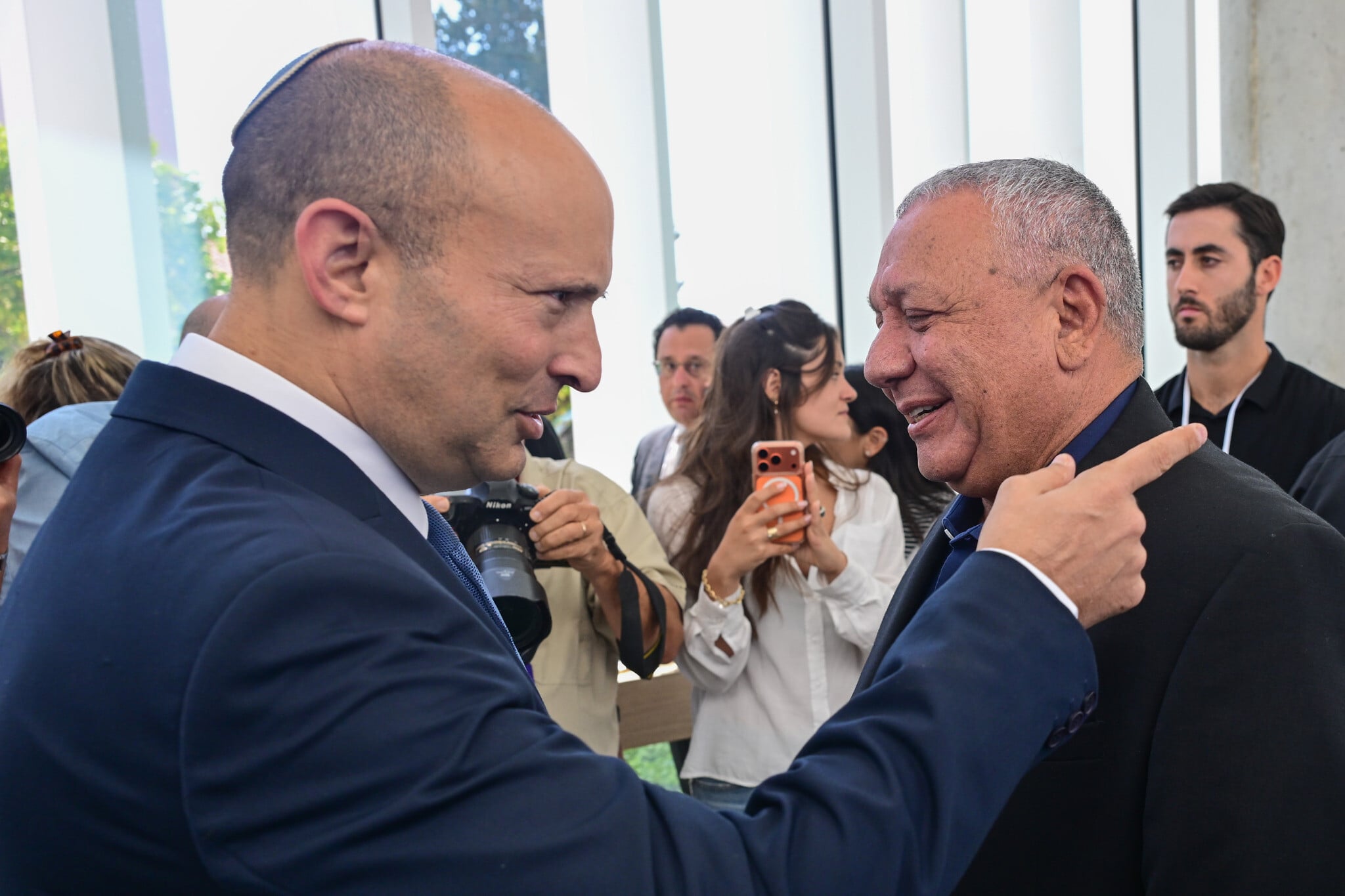
In some cases, and it’s always an election factor in multi-party Israel, a change in leadership is helped by consolidation among opposition rivals. Eisenkot has plainly been hamstrung by the disinclination of B’Yachad leader Naftali Bennett and Yisrael Beytenu head Avigdor Liberman to preemptively acknowledge him as the anti-Netanyahu Zionist bloc’s candidate for prime minister, for what may well be considered legitimate tactical reasons.
Crucial, too, is high turnout for the opposition camp — which soared by over 9 points to 79% in Hungary this year — which again highlights the need for potent, compelling campaigning, galvanizing voters. (It also underlines the importance of the Arab sector, whose mood and consequent determination to vote on election day — potentially ranging from enthusiasm for change to bitter disconnection — could be crucial in determining the result.)
Eisenkot is understood to be unusually well-prepared for his first days in anticipated office, with clear-cut policies and expert teams in place to implement them. (So, too, for that matter, is Bennett, who has not given up on the dream of a prime ministerial return.)
The thing is, you need to go out and win the election first.
—
This Editor’s Note was sent out earlier Wednesday in ToI’s weekly update email to members of the Times of Israel Community. To receive these Editor’s Notes as they’re released, join the ToI Community here.






The Times of Israel Community.