

Iran threatens neighbors’ airports if they cooperate with US flight sanctions
Georgia, Azerbaijan halt Iranian flights as US sanctions take effect; China calls measures ‘illegal,’ while some Turkey routes remain open
 Add ToI as a Preferred Source on Google
Iran threatened neighboring countries on Wednesday with action against their airports if they cooperate with the United States in preventing Iranian flights from operating, as new US sanctions forced the cancellation of some international routes.
“If a country cooperates with or embarks on adventures with the United States, its airports will no longer be able to operate flights,” Mohsen Rezaei, secretary of Iran’s Supreme National Security Council, said in an interview with state television.
The warning came after US Treasury Secretary Scott Bessent said Monday that all Iranian airlines would effectively be forced to stop operating from September 23 under the threat of secondary sanctions against companies providing aviation services, as Washington moved ahead with what he had earlier dubbed an “economic D-Day” for Iran.
Iranian airlines were forced to cancel some international flights Wednesday after Washington tightened sanctions on the country’s aviation industry in a new effort to cripple its economy.
Georgia and Azerbaijan officially confirmed suspending Iranian flights, while a travel agent in Tehran told AFP that flights to Baghdad, Muscat and Qatar had also been halted. Routes to other destinations, including China, remained available.
Iran’s aviation sector has already faced US sanctions for years, however, and it remained unclear how many countries would comply with the latest American measures.
WATCH: Mohsen Rezaei, secretary of Iran's Supreme National Security Council, tells state TV that if neighbouring countries cooperate with the US by stopping Iranian flights, Iran will ensure their airports cannot function. https://t.co/bGyL05KyH9 pic.twitter.com/Dx5WYZlxZQ
— Arab News (@arabnews) September 23, 2026
Despite the sanctions taking effect Wednesday, a Mahan Air flight from Tehran landed in the southern Chinese city of Guangzhou, according to tracking data from FlightRadar24.
China said Tuesday that it opposed the US sanctions, calling them illegal. A flight to Shanghai was also scheduled to depart Tehran on Wednesday, according to the Iranian capital’s international airport.
Some flights to Istanbul also remained scheduled, although others had been canceled, the Tehran travel agent told AFP.
“The situation is unstable and we are no longer selling tickets for the time being for fear of cancellations,” said the agent, who requested anonymity.
A Mahan Air flight from Kabul was also expected to arrive in Tehran. According to the website of Tehran’s international airport, connections to Turkey and Armenia remained possible using smaller Iranian carriers, including Varesh Airlines.
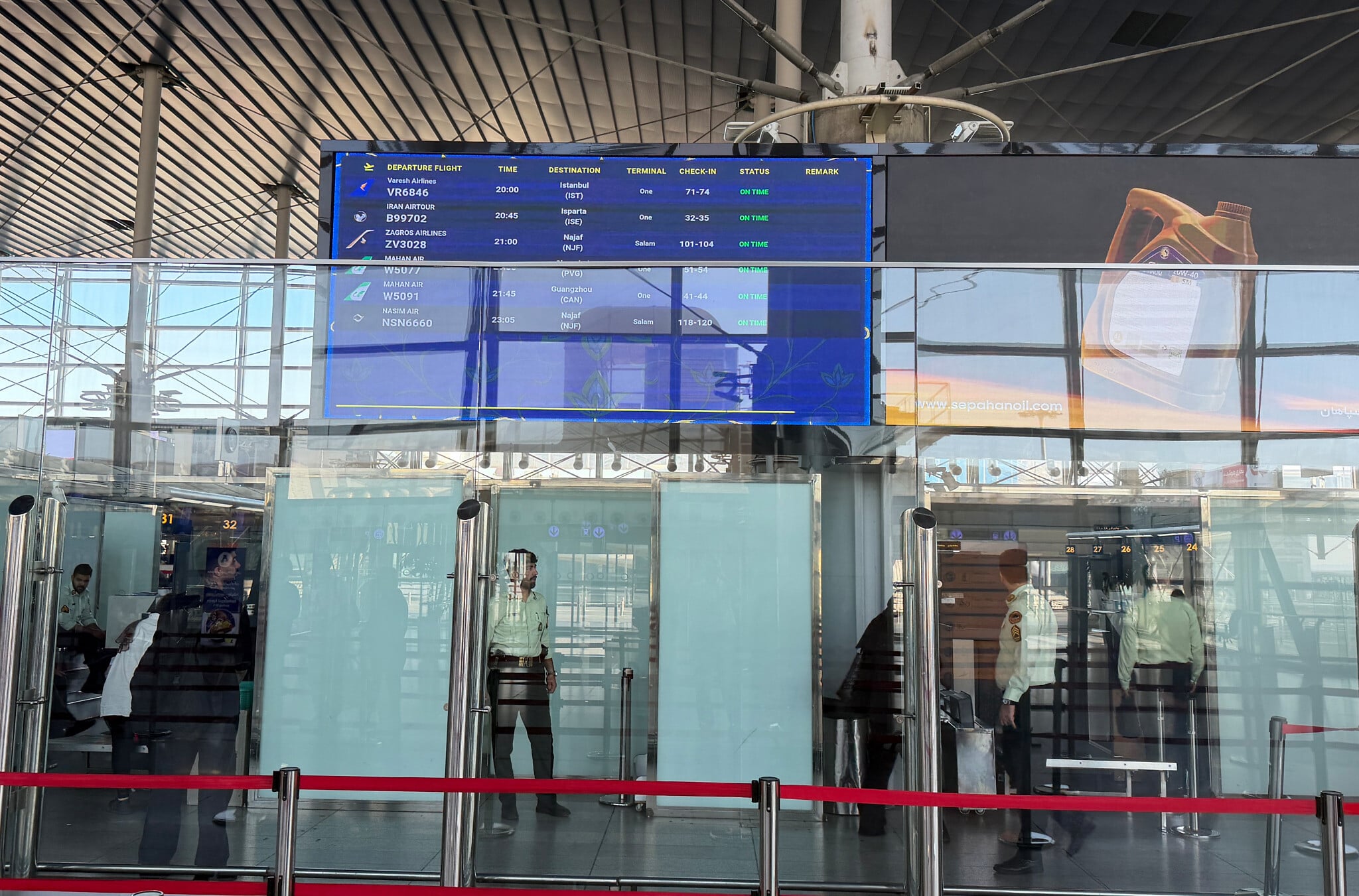
Flights to Najaf in Iraq and Dubai in the United Arab Emirates were also still scheduled.
Bessent vowed Monday to “shut down” Iranian carriers, warning that anyone continuing to do business with them “will be knocked out of the dollar system.”
Pilgrimage routes face uncertainty
Iranian media also reported cancellations, with the Tasnim news agency citing an Iranian civil aviation spokesman Tuesday as saying airports in Baghdad and Muscat “will no longer accept” Iranian flights.
Tasnim said that “other international flights, including Istanbul, will operate as scheduled.”
Iranian aviation authorities were also in talks over potentially rerouting flights bound for Baghdad to Najaf, a major destination for Iranian pilgrims, according to the agency.
By Wednesday, however, Tasnim reported that its correspondent in Najaf said Iranian flights to the city were operating normally. It quoted an airport source saying no directive had been received from the Iraqi authorities ordering a halt to the flights.
While the Iraqi government has not announced plans to enforce the ban, several sources, including a senior government official, told AFP that Baghdad would comply with the US measures.
The prospect of a suspension of flights between the two countries has sparked concerns among some Iraqi travel agents, with one in Najaf, Haidar Shamaa, saying “most travel companies in the city depend on booking flights” to Iranian airports.
Several travel agencies said panicked clients were calling for updates and were considering switching to land routes, which would mean much longer journeys.







The Times of Israel Community.