

Irish PM slams ‘unacceptable’ remarks from Israel’s soccer federation amid spat
Micheal Martin says comments should be ‘withdrawn’ after Israeli body accused Ireland’s coach of ‘stupidity and ignorance’ for saying his team was ‘playing against genocide’
 Add ToI as a Preferred Source on Google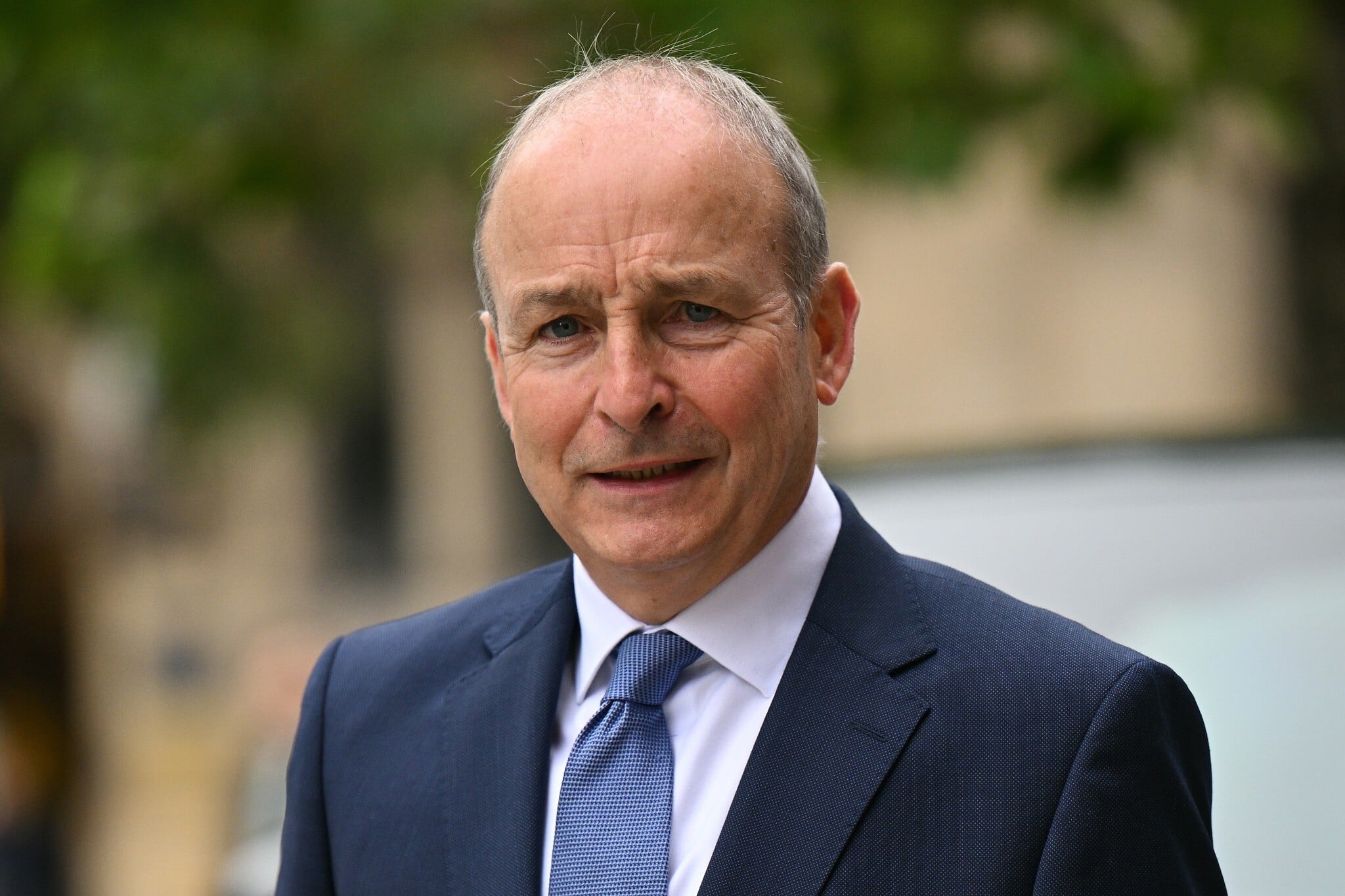
DUBLIN — Irish Prime Minister Micheal Martin backed his country’s top soccer manager on Tuesday after Israel’s federation accused him of “stupidity, ignorance and hypocrisy” over the coach’s recent comments about the war in Gaza.
Martin said the Israel Football Association’s remarks about Republic of Ireland manager Heimir Hallgrimsson were “unacceptable.”
“I think those are unacceptable remarks. They should be withdrawn,” Martin told reporters in New York, where he is attending the UN General Assembly. “Israel can’t keep denying what the world knows, and what the world understands.”
Hallgrimsson sparked the spat after saying ahead of two upcoming Nations League fixtures against Israel: “We’re not playing with genocide, we’re playing against genocide. We’re playing against Israel, we’re not playing with Israel.”
The Israel Football Association responded on Monday, accusing the Icelandic coach of “stupidity, ignorance and hypocrisy.”
“We have contributed to the world and humanity in countless fields, earning an impressive number of Nobel Prizes along the way,” the statement from Israel’s soccer federation read. “Unfortunately, we have not yet found a cure for stupidity, ignorance and hypocrisy displayed by Ireland’s national team coach. We’re not playing with ignorance, hypocrisy and stupidity, we’re playing against the coach who embodies them.”
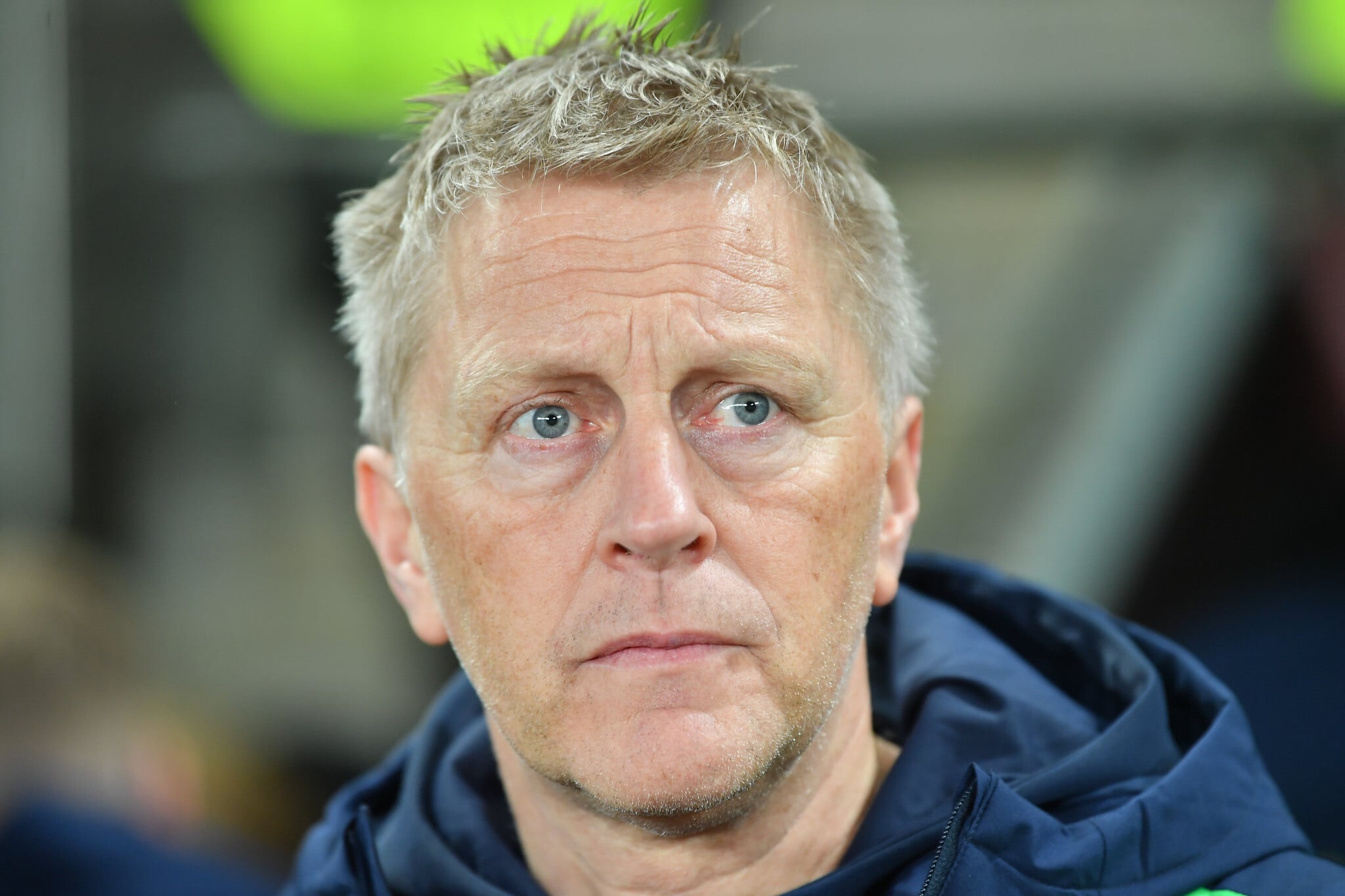
Martin said Hallgrimsson’s comments reflected concerns about the scale of death and destruction in Gaza, also citing remarks by UN Secretary-General Antonio Guterres.
On Wednesday, Hallgrimsson said at a press conference that he was thankful for Martin’s expression of support.
“What I said at the last press meeting has taken the attention away from maybe what’s most important, we are playing an important game against Kosovo” on Thursday, Hallgrimsson said in response to a question from a reporter.
“Maybe, from a leadership point of view, not clever for me to take the attention like this. But to answer the question, we are thankful for all the support we get. It’s a tricky time for us,” he said.
The dispute comes amid mounting controversy in Ireland over the upcoming fixtures, scheduled for September 27 and October 4.
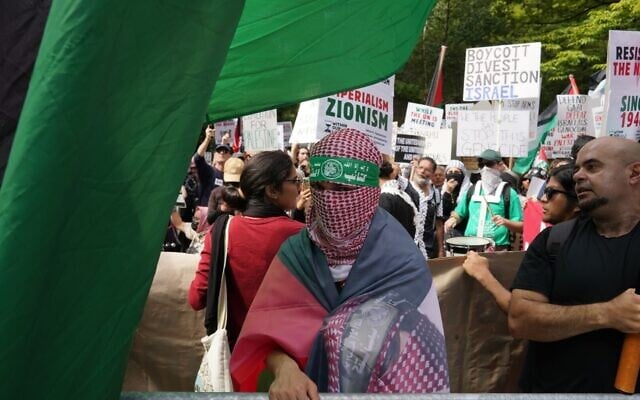
More than 160 Irish sportspeople signed an open letter calling on the national team to boycott the matches, while protesters gathered outside the team’s Dublin hotel on Monday. Further protests are planned around the country in the run-up to the games.

At the press conference Wednesday, team captain Dara O’Shea was asked if the players have any action planned for the Israel matches.
“We will come together on Friday and discuss it as a group,” O’Shea said.
“I don’t think we would be doing our job properly if we didn’t put our focus into the game [against Kosovo],” he added. “It’s something that can’t be brushed over. The decision we come to as players will be taken as one.”
The Football Association of Ireland (FAI) passed a motion last November requesting that European football governing body UEFA suspend Israel from international competition, but received no support from European football chiefs.
The FAI has said it has little choice but to fulfill the fixtures or risk sporting and financial sanctions.
Ireland’s designated home match on October 4 was moved from Dublin’s Aviva Stadium to Backa Topola, Serbia, following concerns over disruption and security.

The September 27 match, officially Israel’s home fixture, will also be played at a neutral venue, in Debrecen, Hungary.
Israel strongly rejects allegations that its conduct in Gaza amounts to genocide. It launched its war against Hamas in Gaza following the Hamas-led massacre of October 7, and says it seeks to avoid civilian casualties while battling a terror group that embeds itself among the civilian population.
Ireland has long been a strong supporter of the Palestinian cause, with sympathy for Palestinians often linked to the country’s own history of British rule. Dublin formally recognized a Palestinian state in 2024 alongside Spain and Norway, and has repeatedly criticized Israel’s conduct of the war against Hamas in Gaza.



The Times of Israel Community.