

Norway says sanctioning settlements ‘the right thing to do,’ despite potential Israeli retaliation
Israeli reprisals to previous measures have impaired Oslo’s ability to aid Palestinians; Norwegian FM says latest step shows that ‘the world that helped establish Israel now wants to see this [West Bank] problem solved’

 Add ToI as a Preferred Source on Google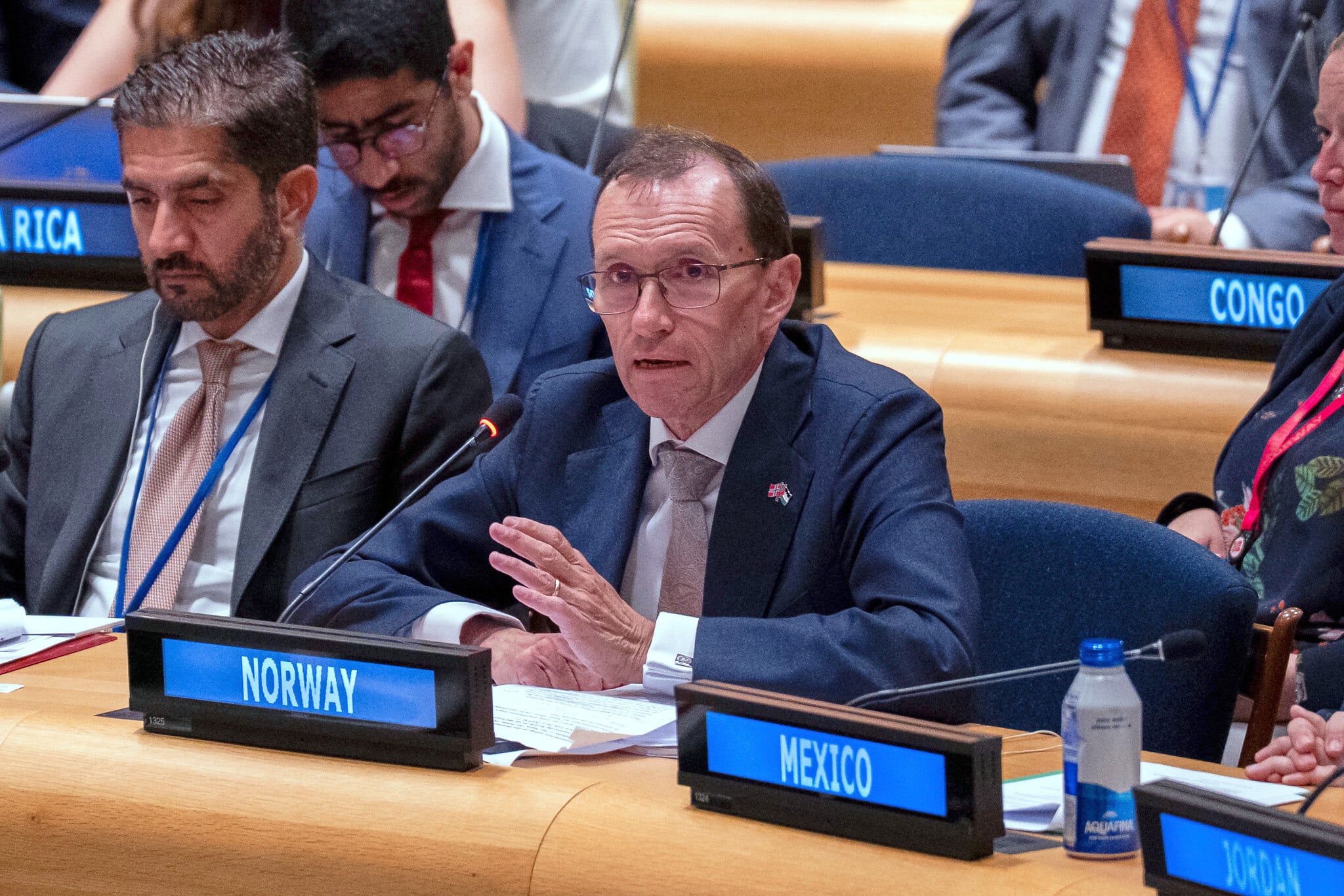
UNITED NATIONS — It has been over two years since Norway closed its diplomatic mission to the Palestinian Authority in the West Bank city of al-Ram, severing Oslo’s main conduit to Palestinians on the ground.
Norway was forced to shutter the mission in August 2024 after Israel expelled its diplomats working there.
Days earlier, Norway submitted an amicus brief to the International Criminal Court in defense of a war crimes case against Israel. Three months before that, it joined Spain and Ireland in recognizing Palestinian statehood.
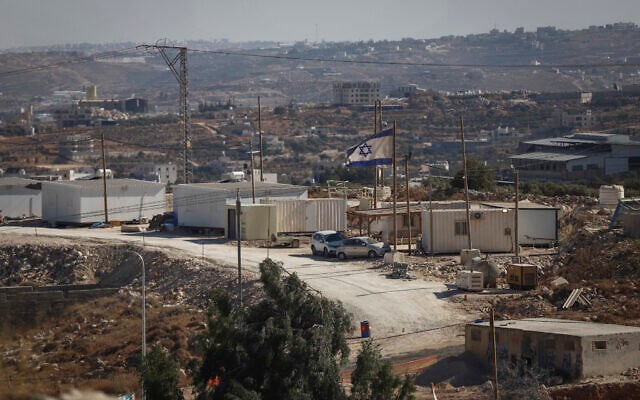
Now, Norway has joined the United Kingdom and 10 other Western countries in advancing sanctions against Israeli settlements, potentially exposing Oslo to additional punitive measures by Jerusalem that could further limit its ability to help Palestinians on the ground.
But Norwegian Foreign Minister Espen Barth Eide argued that the move was worth such a risk.
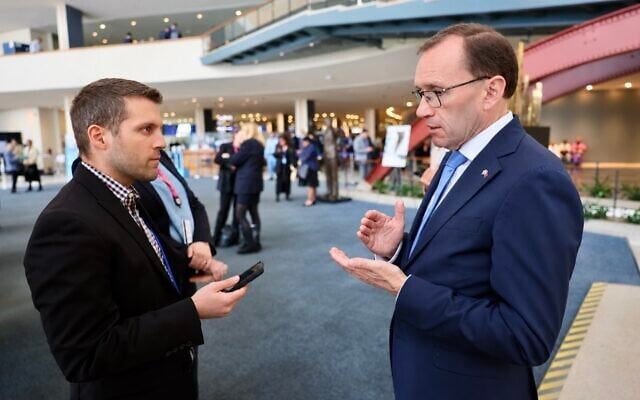
“You’re always trying to balance different interests, but at this point, it’s the right thing to do,” Eide said in an interview Tuesday with The Times of Israel on the sidelines of the UN General Assembly.
He explained that the legislation being advanced by Norway’s parliament to outlaw trade with Israeli settlements will not target Israel proper, which Oslo has no interest in boycotting.
“Our trade with Israel must be within the 1967 borders, and we wanted to do something that would go beyond words in demonstrating that the behavior in the settlements is unacceptable,” he argued, referring to Israeli communities in the West Bank that have expanded in record numbers under the current government, significantly limiting the territory left for a potential Palestinian state.
“The fact that we are [issuing these sanctions] with many others will hopefully send a signal to Israel that… its behavior toward the Palestinians is unacceptable,” Eide said, highlighting the humanitarian crisis in Gaza, rising settler violence in the West Bank, and Israel’s withholding of funds that belong to the Palestinian Authority.
In early 2024, Israel agreed to release Palestinian tax revenues, as long as Norway temporarily held on to the portion earmarked for the Hamas-controlled Gaza Strip. But Jerusalem ended that arrangement after Norway recognized a Palestinian state, and the continued Israeli withholding of those funds has brought the PA to the brink of collapse.
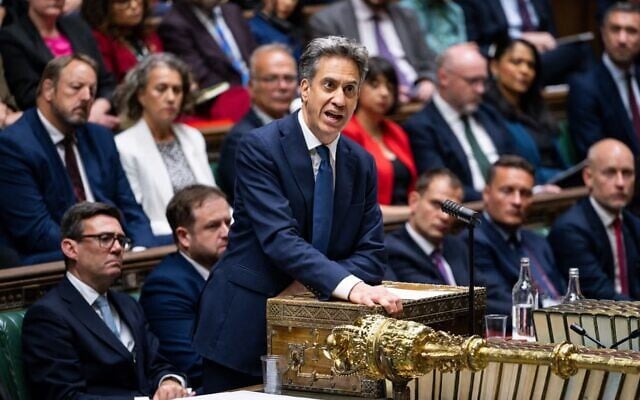
In the UK, there was internal pushback over the decision to announce the settlement trade ban shortly before Israel’s upcoming election, in light of the fact that the October 27 vote has the potential to usher in a new government in Jerusalem that could adopt a less hawkish approach toward the Palestinians.
Asked if a similar calculation was being made in Norway, Eide said the Israeli election was a non-factor, but he indicated that a final decision from the parliament in Oslo on legislation sanctioning settlements would likely come after the Knesset vote anyway.
‘Expect to see elections’
While the Norwegian legislation outlawing trade with the settlement may not be able to directly benefit Palestinians in the West Bank and Gaza, Eide noted that Oslo will continue advancing other initiatives on the file, including its hosting of the Ad Hoc Liaison Committee — an international panel that coordinates aid to the Palestinians.
Norway was convening an AHLC donor meeting on the UN General Assembly sidelines, which will focus on advancing PA reform.
The goal is to boost Palestinian institutions so they are ready for the transition to statehood when a political horizon is established, the Norwegian foreign minister explained, in a seeming acknowledgement that despite recognizing a Palestinian state Oslo does not consider it to be a reality.
He maintained that Oslo was not giving the PA a blank check. “Together with other European countries, we are saying very clearly that we expect to see elections — not only legislative elections this year, but presidential elections next year.”
Elections have not been held in over two decades amid repeated postponements by PA President Mahmoud Abbas, though a legislative vote is scheduled for November 28 and a presidential race is supposed to be held next year. Eide suggested Norway could take potential measures against the Palestinian Authority if it again delays elections.
Israel ‘very impressive,’ but…
Eide also participated in a French-led roundtable on Tuesday aimed at strengthening Israeli and Palestinian civil society, while Norway was slated to co-host a Thursday ministerial on advancing a two-state solution, with the participation of 100 countries.
“There is this very dramatic paradox of the two-state solution, which looks further away on the ground than it ever did… while at the same time, political support for Palestine has never been stronger,” he said.
Support for the framework among Israelis has gradually fallen from the majority opinion in recent decades, with the opposition to it reinforced for many following the Hamas-led October 7, 2023, terror onslaught.
The top Norwegian diplomat insisted that he maintains a long-held appreciation for Israel. “It’s a very impressive country, a startup nation and a leader of innovation.”
“But it’s important for Israelis to recognize that they’ve gone too far, both in the West Bank and in Gaza,” he said, referring to the Israeli military campaign against Hamas, which has resulted in tens of thousands of civilian casualties. Israel says it seeks to limit harm to innocents but that Hamas — which sparked the Gaza war with the October 7 invasion — purposely operates among them.
“When you start losing support, particularly Western countries, first it goes slowly, and then it goes faster,” he said outside the General Assembly chamber, where world leader after world leader laid into Israel over its policies toward the Palestinians.
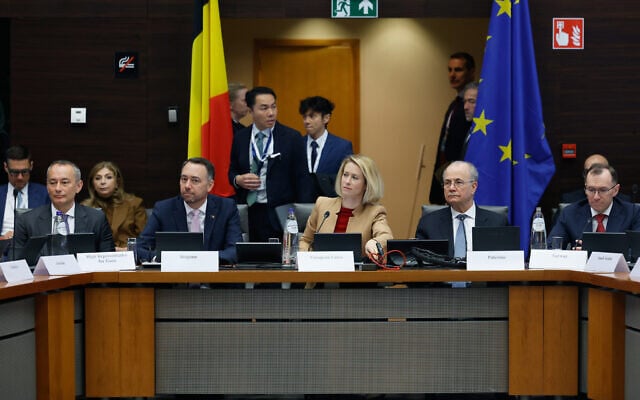
Eide pointed out that even the US has refrained from pushing back against the UK-led settlement sanctions.
“The US reaction to this was actually very mild. I think two years ago — even [under former US president Joe] Biden’s team, you would have had a much stronger reaction” against the sanctions, he continued. “So I would take that as a sign that sympathy for the Israeli government is on its way down.”
‘No contact doesn’t take you anywhere’
Asked about a report in The Times of Israel from August revealing that the Norwegian Center for Conflict Resolution worked to boost communication between the EU and Hamas in 2021, Eide defended the NGO funded by Oslo, arguing that engaging with Hamas authorities in Gaza was necessary for assisting Palestinians living there.
“Our ethos is that speaking to people is not support… This idea that you should have no contact doesn’t take you anywhere,” he argued. “If there’s one good thing about the current US administration, it is that they have exactly the same instinct.”
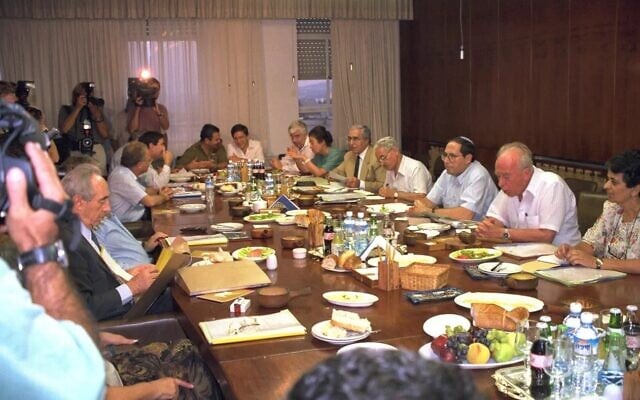
The foreign minister asserted that he still wants Norway to be a gathering place for Israeli-Palestinian dialogue, as it was in the 1990s.
However, he maintained that the format of that peace process born out of secret talks in the Norwegian capital fell short by not including repercussions for stagnation.
With initiatives like the settlement sanctions, “the idea here is to say that the world that helped establish Israel now wants to see this problem solved.”
“Is the two-state solution difficult to achieve? Yes, and I could give you a long speech about how difficult it would be. And yet, the speech about the challenges of the alternative would be much longer,” he maintained.






The Times of Israel Community.