 Add ToI as a Preferred Source on Google
Walking through ancient ruins at the foot of the Temple Mount, Uzi Leibner pointed out sites archaeologists have uncovered in recent years at the Ophel, the elevated area at the southern entrance to the ancient Temple in Jerusalem.
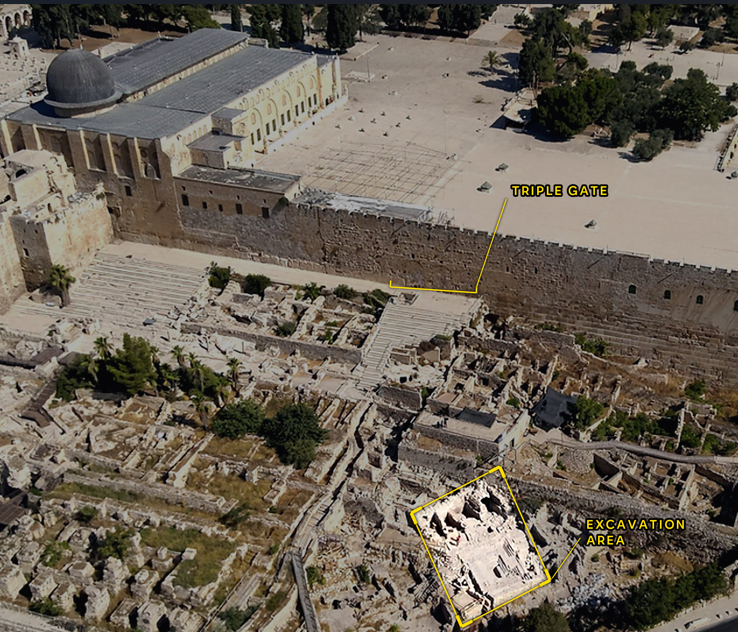
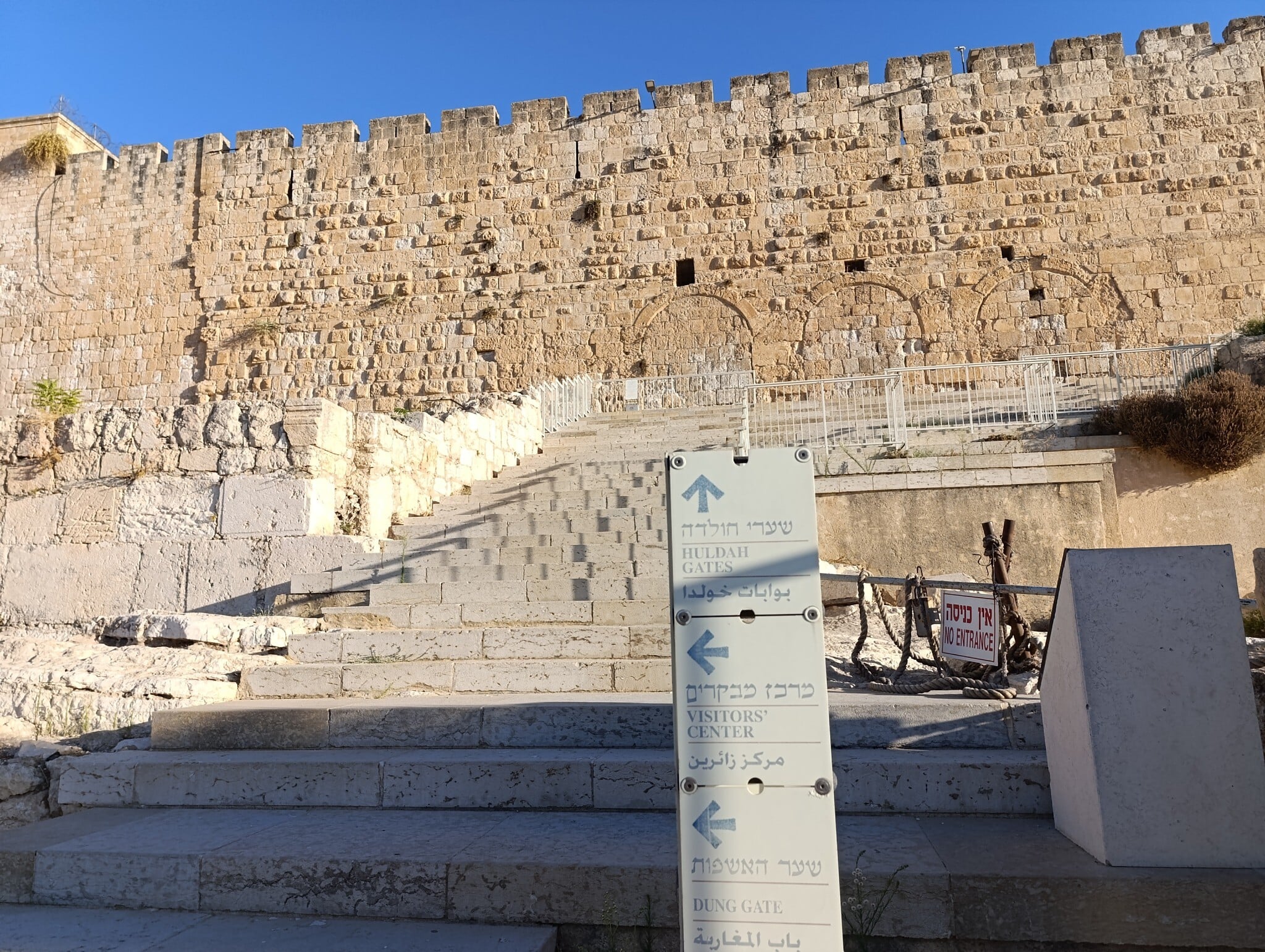
As he made his way through the excavations, he first stopped at the grand staircase leading to the Triple Gate, part of the Hulda Gates that served as one of the main entrances to the Second Temple some 2,000 years ago. He then turned toward the closed archaeological site where his team recently uncovered what he called a “monumental” find: an extensive and well-preserved complex of three ancient ritual purification baths — the Hebrew term for such an immersion bath is “mikveh” — most likely used by Jewish pilgrims during that time.
Designed for high-volume public use, the ritual bath complex is “a truly unparalleled phenomenon,” said Leibner, a professor at the Institute of Archaeology at the Hebrew University of Jerusalem.
The compound dates to the early first century CE, roughly around 10 CE, shortly after the reign of Herod the Great, Leibner said. It is a piece of public infrastructure purpose-built for large masses of pilgrims, some 50 meters (164 feet) from the entrance to Judaism’s most central house of worship.
The find, revealed ahead of the Sukkot holiday, provides an important archaeological perspective on what the three pilgrimage festivals — Passover, Shavuot and Sukkot — actually looked like during the First and Second Temple periods, said Leibner.
“During the Second Temple period, when pilgrimage to the Temple was a major part of Judaism, this area served thousands of pilgrims who had to come in a state of ritual purity,” Leibner explained. “What we find in this area, outside the main entry point to the Temple Mount, is a huge investment in infrastructure for serving these pilgrims, with walkways, stores, water reservoirs, and dozens of ritual baths.”
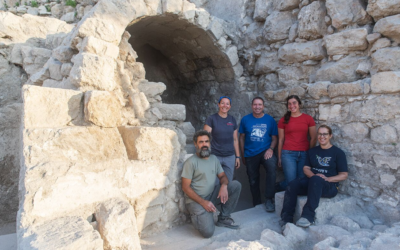
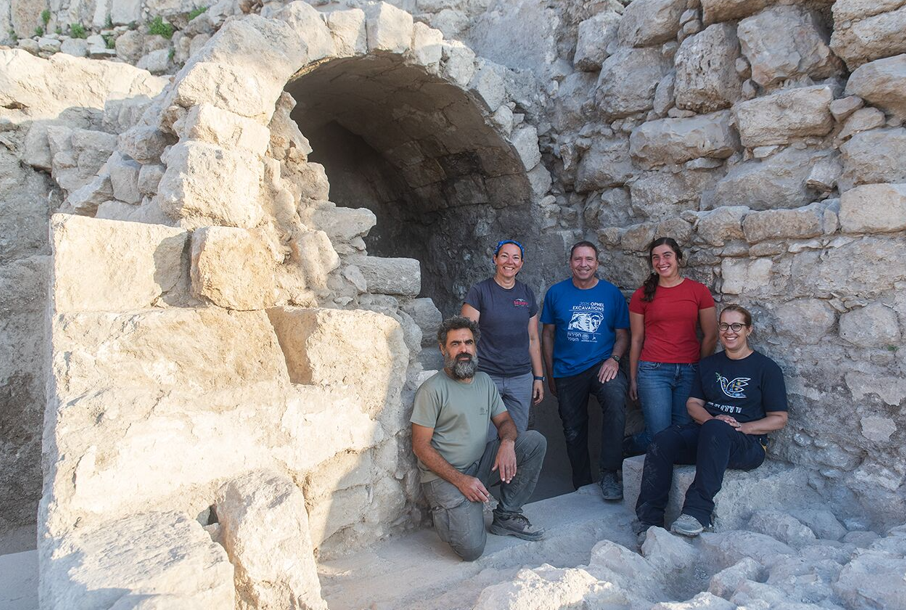
He and his colleague at the university, Prof. Orit Peleg-Barkat, have directed the excavation over five seasons of digging, taking up the gauntlet from Prof. Eilat Mazar, who died in 2021. Many ancient mikvehs have already been discovered around the Ophel and made accessible to visitors, Leibner noted.
The ongoing excavations are conducted by the Institute of Archaeology at the Hebrew University of Jerusalem in cooperation with the Armstrong Institute of Biblical Archaeology, with funding from the Israel Science Foundation (ISF), the Armstrong Institute and the Hertog Center for the Archaeological Study of Jerusalem. Visitors can access the archaeological park — but not the excavation, which is closed to the public — through the Davidson Center.
High-tech architecture in the ancient world
The complex features a sophisticated and exceptionally rare hydraulic drainage system that carried the water from the ritual baths all the way down into the Kidron Valley. The drainage tunnels, more than two meters (6.5 feet) in height in many places, are large enough to walk through comfortably.
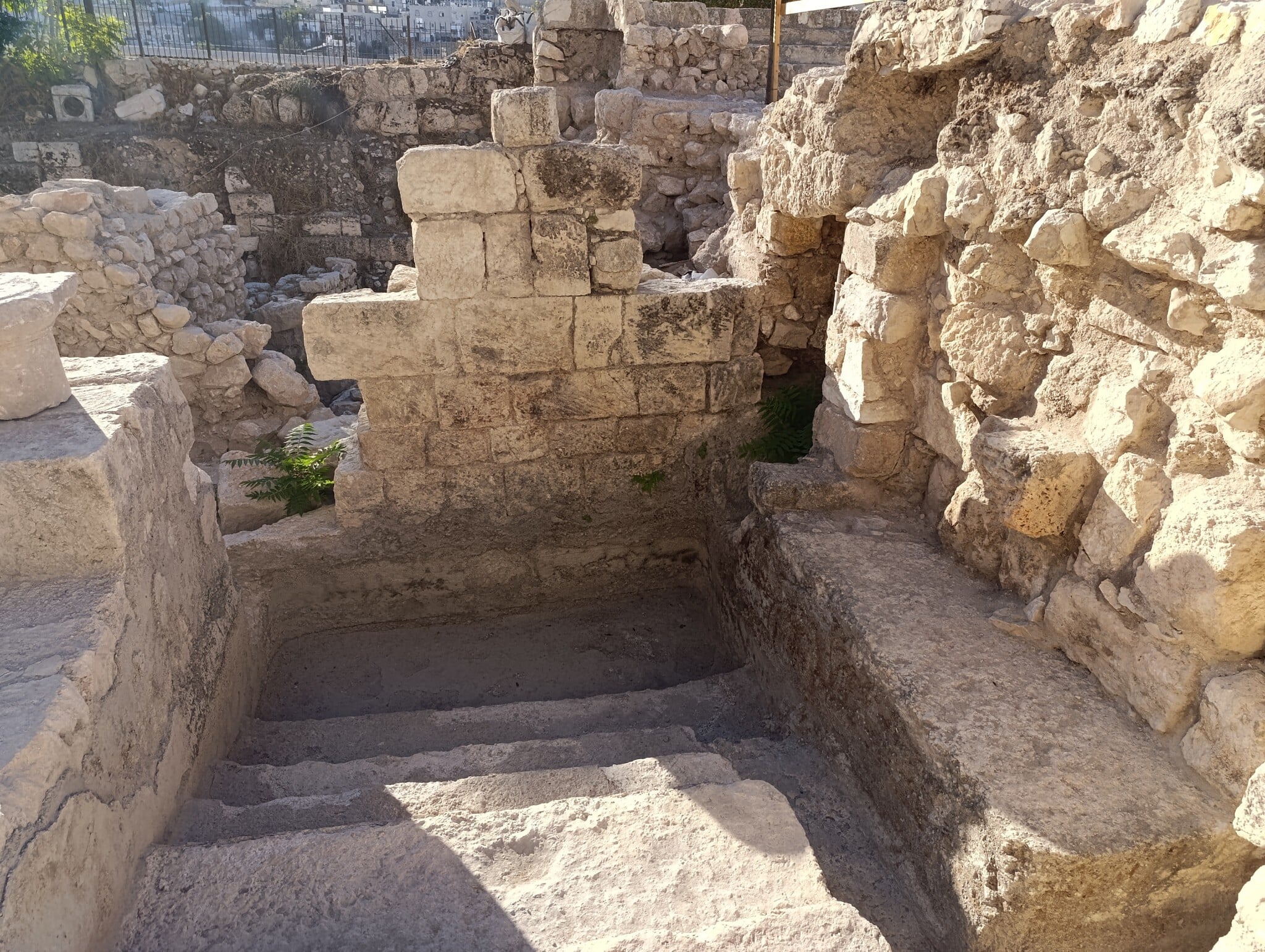
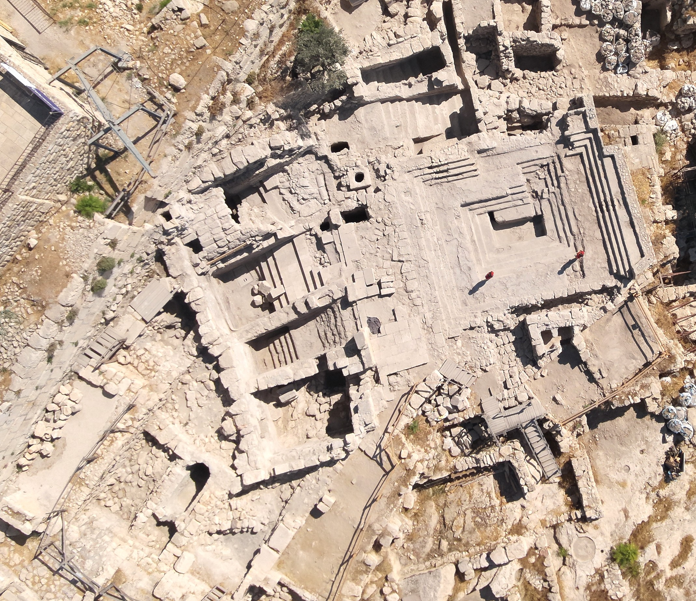
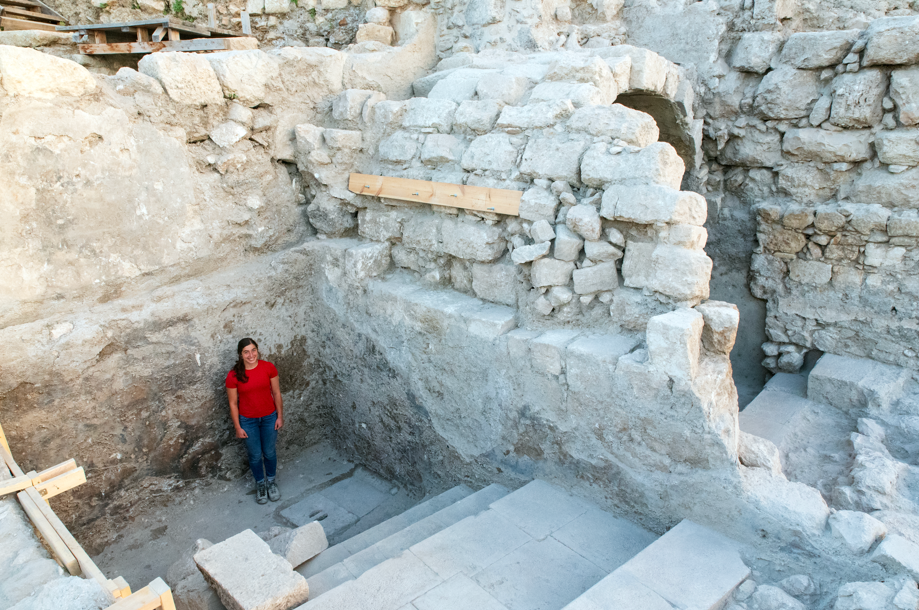
The complex, measuring approximately 280 square meters (about 3,000 square feet), is marked by a finely built structure of ashlar, finely cut rectangular stones used for building. Inside are four rooms, of which three were identified as large public ritual baths, each with well-conserved stairs descending into a plastered pool with a drain at the bottom.
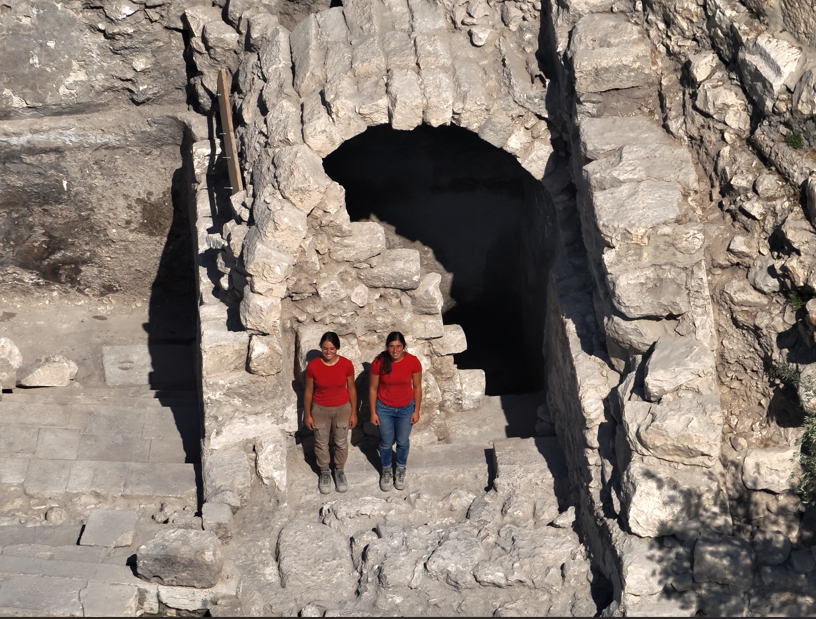
One pool is exceptionally well preserved, with its surviving vaulted stone roof standing 4.2 meters above the floor. A shaft in the ceiling shows where water was poured to fill the bath. Such floor-to-ceiling preservation of a Second Temple-period structure is exceedingly rare in Jerusalem, Leibner said.
“This is the crown jewel of this discovery,” he exclaimed.
Another rectangular pool just south of the three mikvehs has stairs descending from all four sides, but was probably used for a different purpose, perhaps for purifying vessels, Leibner noted.
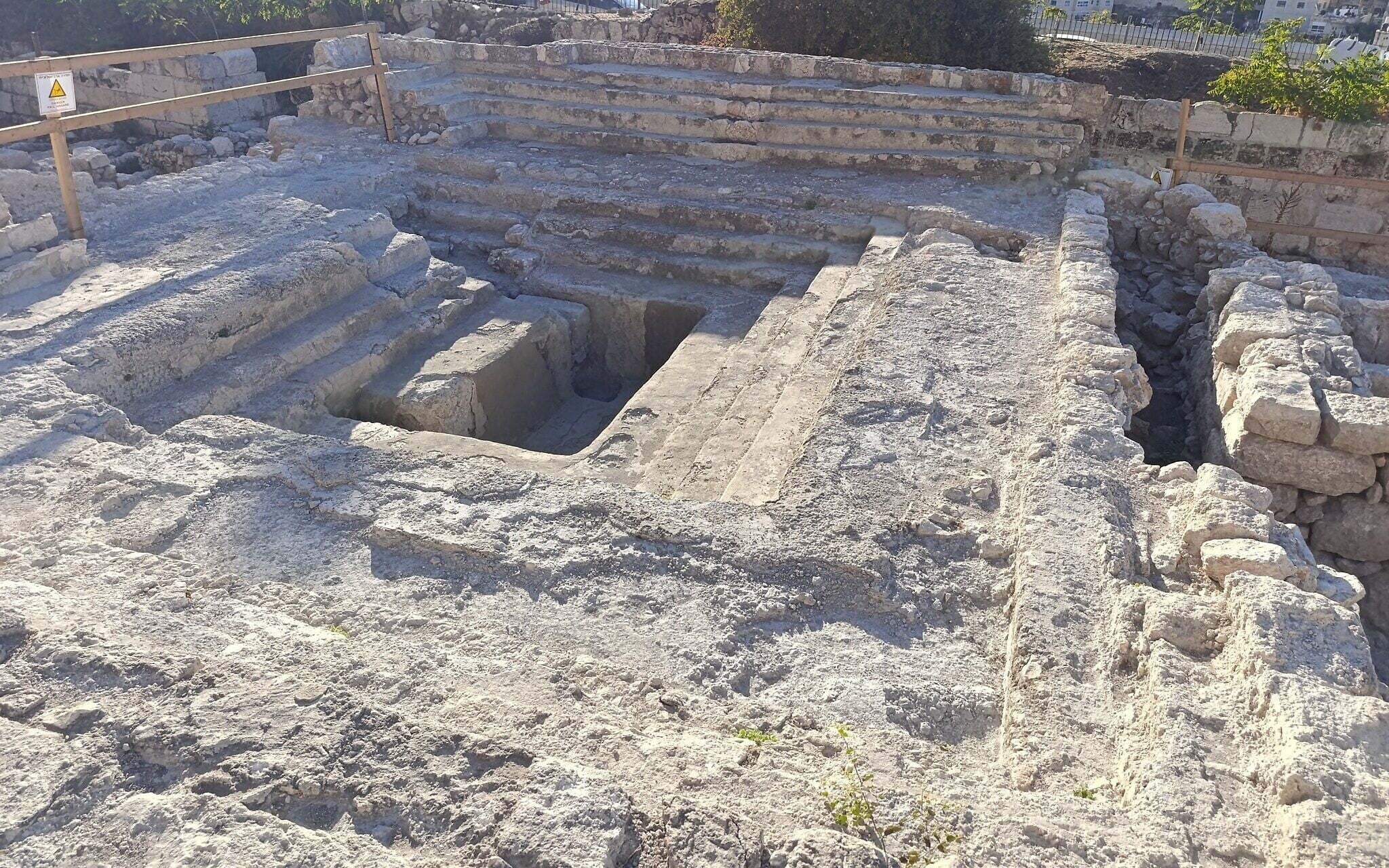
During peak seasons at the three pilgrimage festivals, it is likely that multiple people — perhaps even dozens — immersed in the water at the same time, Leibner said. A low dividing line down the middle of one of the staircases, identified by researchers, indicates that some form of traffic control was needed.
“People would go in on one side and come out on the other,” Leibner said. “People entered to achieve a state of ritual purity, and you wouldn’t want to touch someone who hadn’t immersed yet.”
Immersed in the pilgrimage festivals
Researchers are still working to piece together how the pilgrimage festivals — Passover, Shavuot and Sukkot — actually functioned during the First and Second Temple periods, Leibner said.
The Torah commands all Israelite males to appear at the Temple in a state of ritual purity with sacrificial gifts during the three harvest celebrations, a massive national undertaking which wasn’t always observed.
The Bible (2 Chronicles 35) describes an enormous Passover gathering put on by King Josiah in the First Temple during the 18th year of his reign, but notes that such a celebration had not been held for centuries beforehand. Meanwhile, residents of the rival Northern Kingdom were barred from making the pilgrimage, after King Jeroboam I set up alternative golden calf shrines in Dan and Bethel (I Kings 12:26–33).
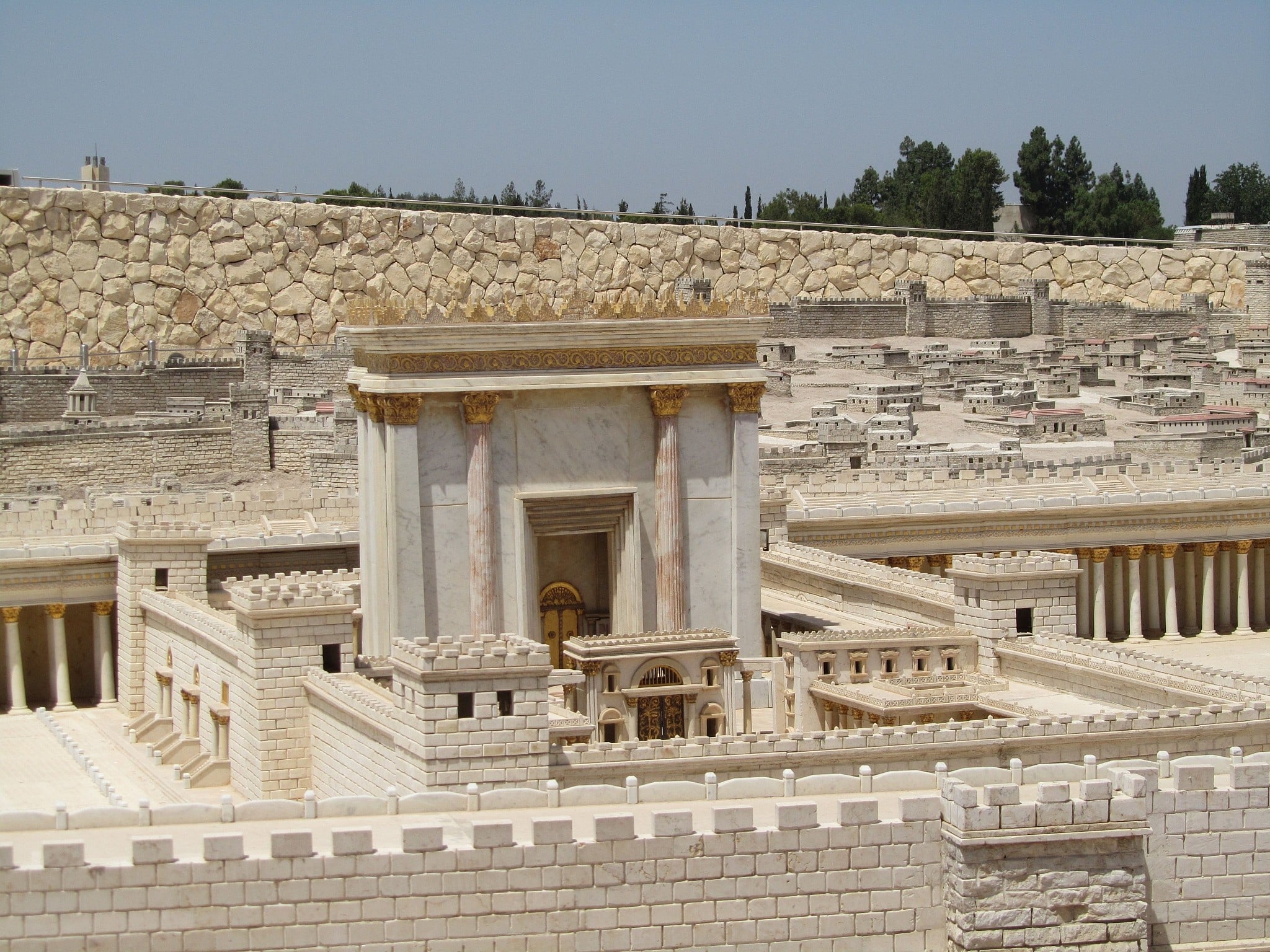
Archaeologists have yet to find physical evidence of mass pilgrimages during the First Temple period; however, the tradition is well documented by the end of the Second Temple period, Leibner said.
Colorful testimonies recorded in the Mishnah, compiled centuries after the Temple’s destruction, describe parades of pilgrims arriving in Jerusalem with music and festivities, and being greeted by religious officials as they brought their offerings to the Temple. Josephus, writing in the first century, claimed that more than 2.7 million people celebrated Passover in Jerusalem in 66 CE, on the eve of the revolt against Rome.
“Obviously, that number is a vast exaggeration, but it provides an indication of what a massive gathering it was,” Leibner said.
Jerusalem would have required significant logistical preparations during the festivals. The city became temporarily packed with a population many times its own, and visitors had to be housed and fed. An inscription found near the Temple Mount describes a synagogue built by a priest named Theodotos that maintained guest rooms and baths for visitors.
Among the challenges of such a crowded city was maintaining ritual purity at the Temple, which required avoiding contact with people who were not pure. Rabbinic authorities developed a festival-time workaround under which people arriving in Jerusalem were presumed to be ritually pure, although it is unclear whether the elitist Sadducee sect accepted the ruling, Leibner said.

In any case, ritual baths were needed at the Ophel at the southern gates of the Temple, where most pilgrims arrived, Leibner explained. Climbing up from the City of David, men likely stood in long lines waiting to purify themselves, immersing in the water before ascending to the Temple plaza to perform their religious obligations. (The biblical Hebrew word Ophel means an elevated place, or a name for a specific fortified tower located southeast of the Temple.)
“What we see in this complex is a huge investment in public infrastructure to accommodate all these people,” Leibner said.
The amount of water needed for the baths would have required more than Jerusalem’s winter rains would bring, raising the question of where the water came from. While the Gihon Spring, at the foot of the Kidron Valley, was the nearest water source in antiquity, it is more likely that water was pumped from an aqueduct running from the Hebron hills through Solomon’s Pools, near present-day Efrat, Leibner said.
“We know the aqueduct reached the Temple Mount in the late Second Temple period, but we haven’t yet identified the full route of the channel that brought the water down to these pools,” he said. “Most likely, it ran through channels on the wall to reach the baths.”
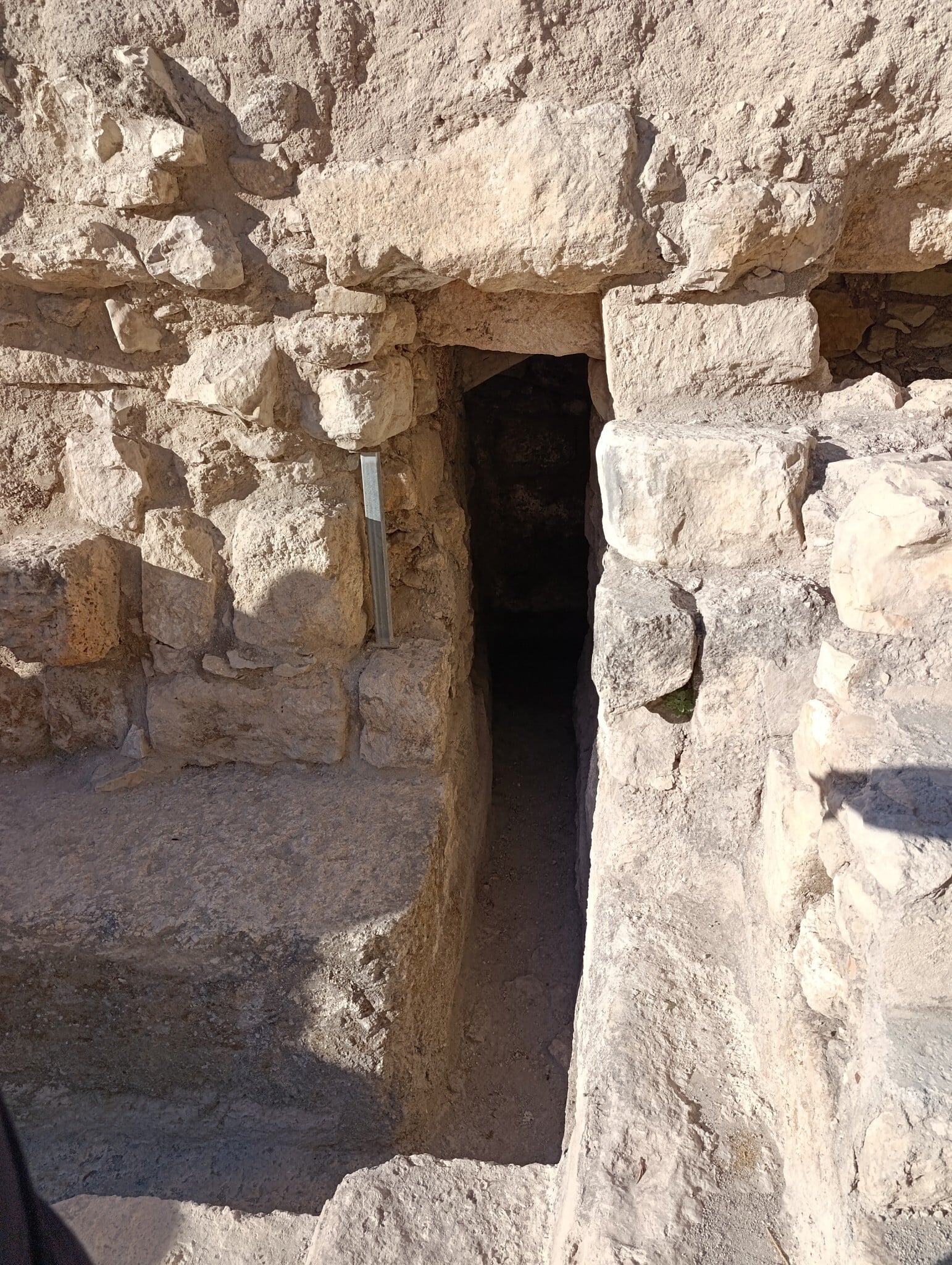
The drainage side is better understood. All three baths have drains — “with a plug, like a modern bath,” Leibner said — feeding into a system of branching, two-meter-tall tunnels that carried the water all the way down to the Kidron Valley at the bottom of the adjacent ravine.
“This is an amazing drainage system that is extremely rare,” he declared, walking through the tunnels with his flashlight. “Water from the baths would still drain into it today.”
Excavating the complex
None of the newly found complex was visible when famed archaeologist Prof. Benjamin Mazar began excavating the Ophel site in 1968, Leibner said. His daughter, Eilat Mazar, took on the project in 1986 under his guidance, and she discovered a Byzantine structure about a decade ago. However, she was unable to excavate it before she died in 2021, and Leibner and Peleg-Barkat subsequently took over the excavation on behalf of Hebrew University.
After the Roman destruction of Jerusalem in 70 CE, the area outside the Temple was abandoned until Byzantines built a residential quarter there about 300 years later.
The recently discovered baths lay beneath a dense Byzantine residential area, whose floors were about four meters above the drains of the Second Temple-period pools and whose walls covered the entire area.
Rather than demolishing the baths to make room for new construction, however, the Byzantines built a floor above the vaulted roof of the best-preserved mikveh, sealing it off and converting it into a water cistern. The decision inadvertently preserved the ancient structure for more than 1,500 years.
“This structure was preserved only because of the way they buried it beneath their buildings,” Leibner said. “Above this line of mikvehs, which was probably the basement, nothing survived.”
Beneath Byzantine homes and the mikveh complex, modern excavators also found yet another level — an earlier, less lavish bath complex that was likely used about a hundred years earlier.
The earlier installation was hewn directly into the bedrock and was smaller in scale, although quite elaborate, Leibner said. Excavators discovered it when they noticed damage in the drainage tunnels, most likely caused by ancient diggers cutting through its walls, he explained.
“We don’t yet know exactly when this was built, but it was probably in the late Hasmonean period or early in Herod’s day,” Leibner said. “So we have one purity complex from the first century CE, and another from the first century BCE.”
Use of the bustling pilgrimage center came to an abrupt end in 70 CE, when Roman legions captured Jerusalem and destroyed the Temple, just a few dozen meters above the baths.
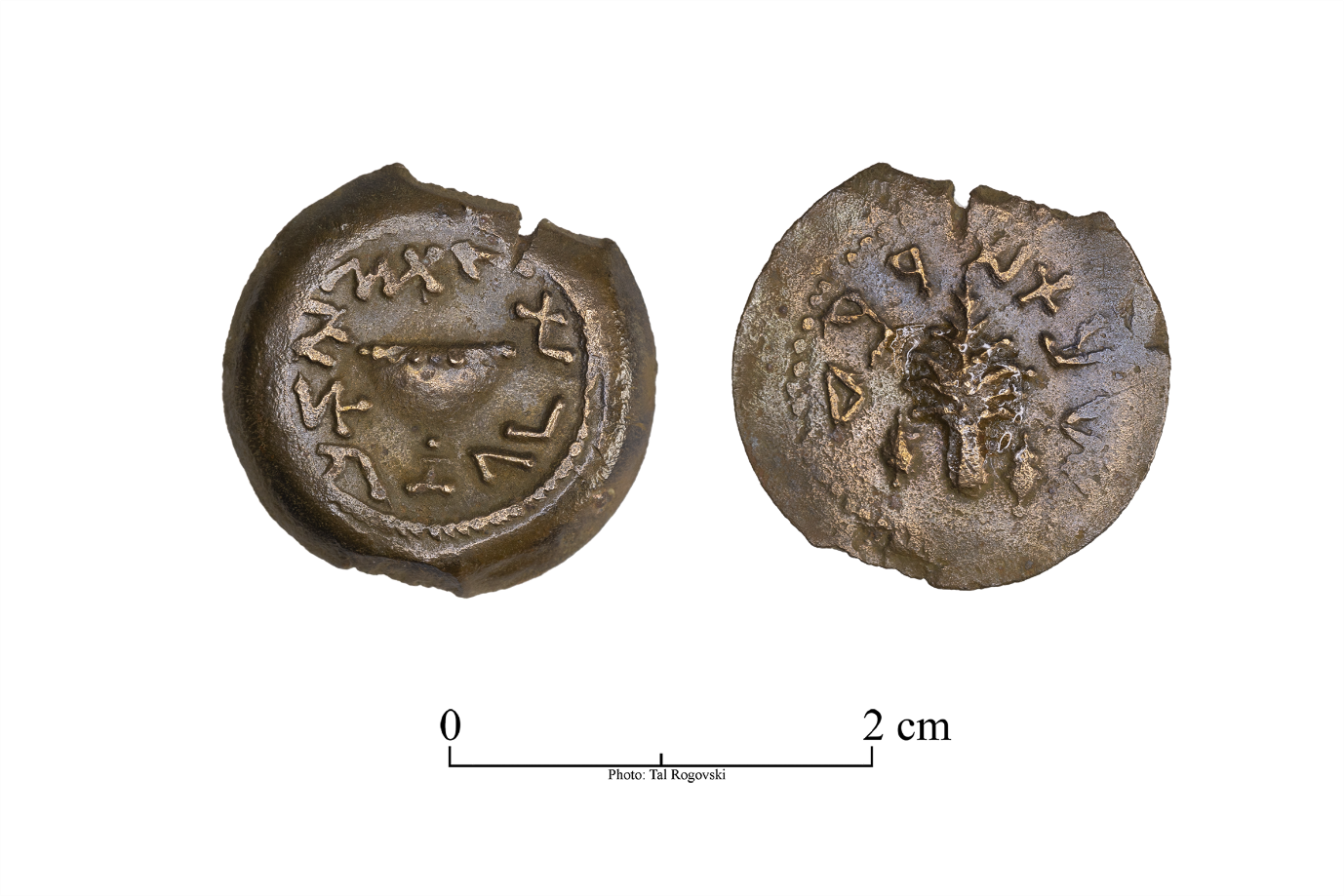
Dozens of coins struck during the First Jewish-Roman War were found on the floors of the complex, Leibner noted, offering a final glimpse of the people who passed through the baths before the city’s destruction.
“This is an area that was very active up to the destruction in the year 70,” Leibner said. “Then we find nothing for hundreds of years.”
More than 1,900 years later, as Jews once again make their way to Jerusalem for Sukkot, the newly uncovered complex offers a rare physical glimpse of how their ancient predecessors prepared for pilgrimage to the Temple.

The Times of Israel Community.