

How Germany’s far right uses emojis and fashion to sidestep ban on Nazi symbolism
From runic lettering to carefully arranged clothing, extreme-right supporters signal their affiliations, including co-opting established brands who oppose their ideology
 Add ToI as a Preferred Source on Google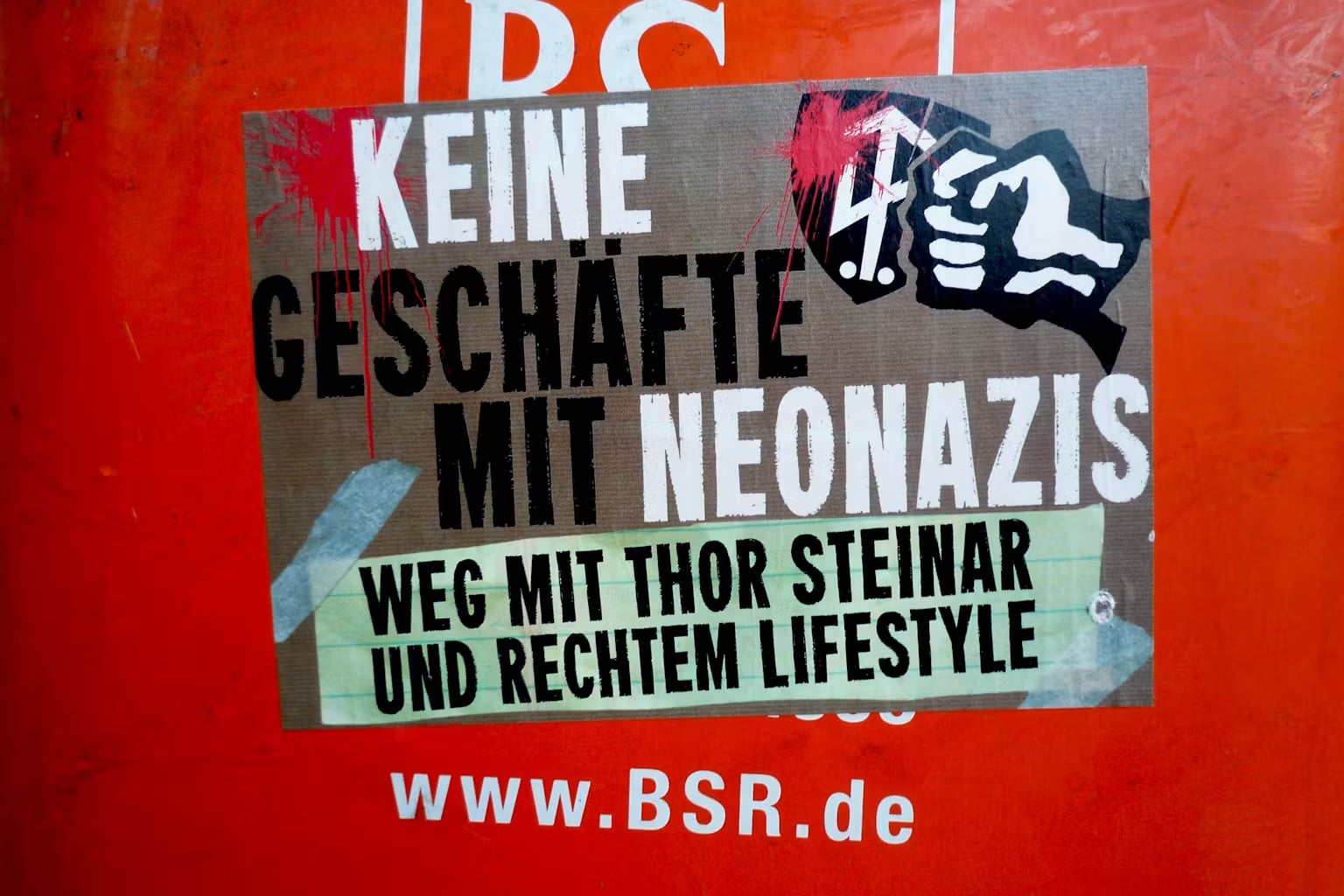
THE CONVERSATION via Reuters — In the wake of the Alternative für Deutschland’s (AfD) electoral success in the Saxony-Anhalt state election, commentators both in Germany and internationally have expressed concern with the party’s extreme right-wing policies. Among these concerns are recent calls from party elites to adopt “remigration” policies.
The AfD has a lot in common with the far right in the US and echoes the more extreme rhetoric of the Trump administration. However, unlike in the US, where extremist symbols derived from Norse culture and associated with white supremacy have been conspicuous at political rallies, Germany’s criminal code explicitly forbids such public displays.
This law is so strong that rock band KISS had to use an alternative design for marketing in Germany, as the final letters of the band’s original logo too closely resembled the runic iconography of the Schutzstaffel (SS). Gene Simmons and Paul Stanley, whose families were both persecuted during the Holocaust, vehemently denied any reference to Nazi symbolism in the band’s officially authorized autobiography, “Kiss: Behind the Mask” (2003).
To circumvent these strict laws, which until 2018 included a ban on representing Nazi images in Second World War video games, individuals who associate themselves with extreme right politics have embraced an increasingly wide range of symbols to communicate in public.
This includes the prominent use of Norse and Viking motifs and references. Since in Germany open display of symbols such as SS runes is banned, signaling of extreme right affiliation has moved into the coded, easily deflectable mediums of consumer fashion and the grammar of online emoji use.
Hiding in plain sight
The meaning of symbols derived from the Norse tradition is very dependent on context. As we are finding from contributions to the NorseMap project at University College Cork, there are diverse reasons for using runes and Norse imagery, from signalling pagan belief to personal and academic interest in the period and culture.
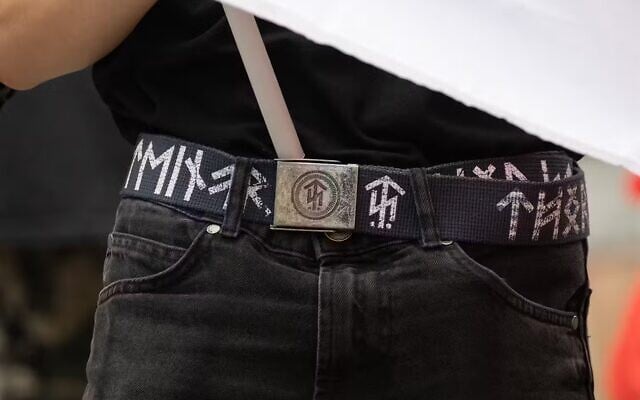
There is usually no way to extrapolate a political affiliation from the display of a Norse symbol or tattoo.
Unfortunately, the extreme right exploits this diversity in order to hide in plain sight. It’s a cynical strategy perfected under Germany’s ban on the display of traditional neo-Nazi symbols and the adaptations it forced on the extreme right.
Evolution of far-right fashion
Although some groups still adopt the traditional jackboot neo-Nazi aesthetic, it is more common for members of extreme right groups to use covert signals of their affiliation, adopting fashion choices that allow them to blend in.
Thor Steinar is a fashion brand that uses a bind rune as its logo and sells a range of runic-branded clothing, some of which refers to a “Viking race” and appears explicitly neo-Nazi. Wearing this brand is banned in the Bundestag (Germany’s national parliament) as well as regional parliaments and several sporting venues. The company has always denied any right-wing associations or that it attempts to appeal to neo-Nazis, saying: “For those who still haven’t understood, we sell clothing, not a political view.”
Erik and Sons, whose founder Udo Siegmund previously worked for Thor Steinar, similarly uses a rune as its logo, calls itself a “Viking brand”, and favors black, red and white, the color scheme of the German flag from 1933-1945. Its offerings range from bold slogans (“Viking lives matter”) through to more subtly branded fashion items.
The brand is listed as a trademark of the extremist right-wing scene by Germany’s domestic intelligence agency. An outlet selling its clothing in Berlin’s Europa-Center had its lease terminated due to the brand’s extremist connotations.
Other more mainstream brands have simply been co-opted, or “hate-jacketed”: unwittingly hijacked for use by hate groups. For example, New Balance sneakers, with their prominent N logo, have become a way of signaling “Nazi” among the extreme right. The company denies any far-right associations, saying it “does not tolerate bigotry or hate in any form.”
The British brand Lonsdale is also popular with German far-right groups. When worn under an open shirt or jacket, only the letters NSDA can be seen. This is a sequence very close to the initials of the NSDAP or Nationalsozialistische Deutsche Arbeiterpartei: the full name of Hitler’s Nazi party. Lonsdale has consistently denied any links to the far-right and in 2003, launched a marketing campaign: “Lonsdale Loves All Colors.” The company also sponsors LGBTQ+ and immigrant aid charities.
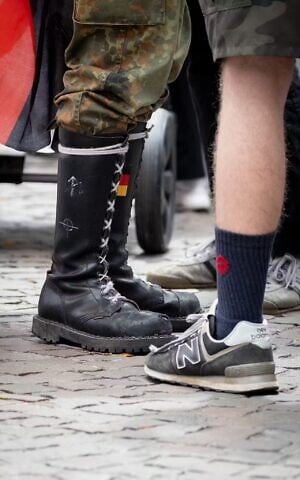
The evolution of far-right fashion choices has been well documented, including by a dedicated research project funded by the Austrian Science Fund. The trend is towards mainstreaming, blending of styles, and ultimately deniability. It should be emphasized that not everyone wearing New Balance trainers at an AfD rally will be doing so to signal neo-Nazi sympathies.
Neither will the millions of consumers from all walks of life who wear black North Face jackets be aware that the brand has recently become a uniform of sorts at far-right rallies. The brand’s white logo and reference to the “north” is what appeals to far-right groups who fetishize both whiteness and a northern European identity. Its ubiquity also allows the extreme right to effectively blend in.
North Face has taken pains to reject any far-right associations and in 2020 announced it was boycotting Facebook, declaring: “We know that for too long harmful, racist rhetoric and misinformation has made the world unequal and unsafe, and we stand with the NAACP (National Association for the Advancement of Colored People) and the other organizations who are working to #StopHateforProfit.”
Coded emojis of the extreme right
As political communication has migrated online, so too have the symbols of white supremacy. One prominent expression of this communication has been emoji use, some of which are related to Norse and Viking culture. The following table outlines several prominent examples in online discourse.
Like the co-option of mainstream brands, emojis used to signal far-right extremism online are repurposed from a benign set of symbols. They would likely go unnoticed without the in-group or esoteric knowledge needed to interpret their meanings.
A good example of this is the mushroom and pine tree emojis. In some circles, and particularly when used in combination with runes in a social media bio, they can signal ecofascist or folkish affiliation.
But they are also popular in fantasy, the cottagecore lifestyle trend, and in nature and foraging accounts. As such, caution is necessary when encountering and interpreting these symbols.
If extremists wear ordinary brands and use innocuous online symbols for in-group signaling, they don’t stand out as coming from an extreme place. Their views look more mainstream when their aesthetic also blends in with the rest of the community.
—
Tom Birkett is a professor of Old English and Old Norse, University College Cork; Felix Lummer is a postdoctoral researcher, University College Cork; Timothy Liam Waters is a postdoctoral researcher, School of English and Digital Humanities, University College Cork.







The Times of Israel Community.