

‘If only you had listened’: Oct. 7 families’ report accuses Netanyahu of enabling attack
Released six weeks before election, 12-page dossier says massacre culminated years-long policy of preserving Hamas rule; relatives of victims demand accountability
 Add ToI as a Preferred Source on Google
Stav Levaton is a military reporter for The Times of Israel
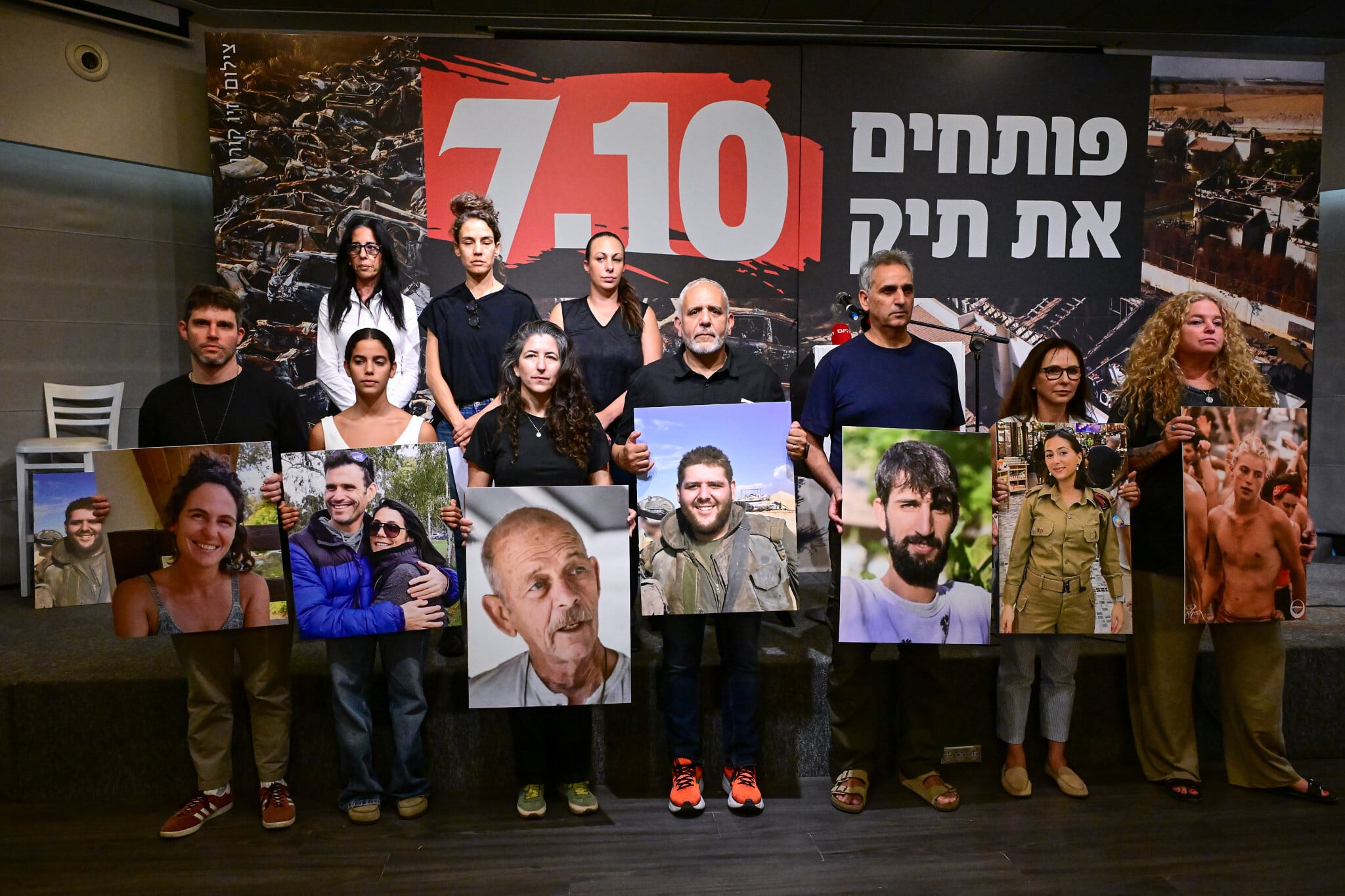
Victims of Hamas’s October 7, 2023, onslaught and relatives of those murdered or taken hostage unveiled a 12-page dossier on Tuesday that they say documents the policies and decisions that allowed the terror group to grow stronger during the 15 years preceding the massacre.
Benjamin Netanyahu served as prime minister for nearly all of that period, and speakers at a press conference presenting the document accused him and his successive governments of creating the conditions that enabled the attack while refusing to accept responsibility afterward.
The event was held exactly six weeks before the October 27 election, in which Netanyahu is seeking another term.
Titled “Case 7/10,” the dossier draws on publicly available reports, testimony and statements to argue that the massacre was not merely the result of intelligence and operational failures in the hours preceding it, but the culmination of a years-long policy.
Its four sections examine decisions not to target senior Hamas leaders or launch decisive operations against the terror group; the transfer of Qatari funds that helped Hamas build its military infrastructure; warnings that the dossier says were ignored as part of a “calculated risk”; and what it describes as Netanyahu’s subsequent efforts to evade responsibility and shape public memory of the disaster.
Among the warnings cited is a recent Haaretz report alleging that Emirati President Mohammed bin Zayed warned Netanyahu about Hamas leader in Gaza Yahya Sinwar’s intentions in the final days of September 2023, but that Netanyahu did not relay the information to security officials. Netanyahu’s office denied that the United Arab Emirates had issued any such warning.

The document concludes that no single decision caused the massacre, but that a consistent policy of containing Hamas, preserving its rule and allowing it to strengthen helped create the conditions for the attack. It acknowledges that the conduct of the Israel Defense Forces and intelligence agencies must also be investigated, while arguing that this does not diminish the political leadership’s responsibility.
Shelly Meshel-Yogev, whose 22-year-old daughter Libby Cohen Meguri was murdered at the Nova music festival, accused Netanyahu of allowing Qatari funds into Gaza for years and repeatedly rejecting recommendations to assassinate Hamas leaders. She cited a reported proposal by then-Shin Bet chief Ronen Bar to kill Sinwar, the architect of the onslaught, shortly before it occurred.
“If only you had listened to him, Libby would be here beside me,” she said. “Prime minister, why do I have a grave to cry at instead of a daughter at home?”
Meshel-Yogev recounted hearing her daughter’s final words over the phone before she was shot dead.
“Does it make sense that I should hear her say, ‘Mom, they’re coming to shoot me again,’ and then hear the enormous barrage of gunfire that went on and on?” she asked. “Am I supposed to be grateful that I heard her saying goodbye to this world?”
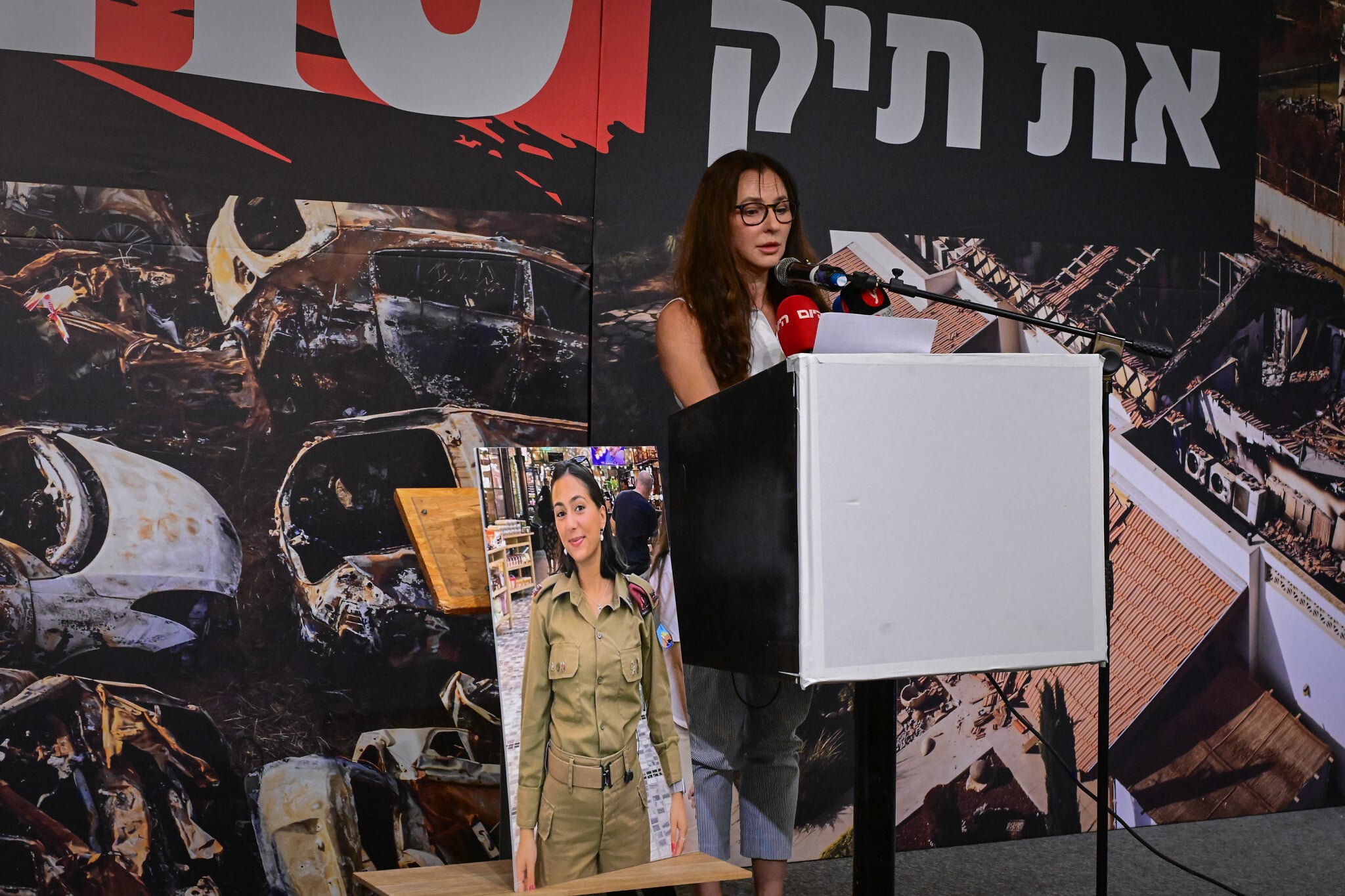
Einav Zangauker, whose son Matan, 24, was taken hostage and was among the final 20 living captives released under the October 2025 ceasefire, accused Netanyahu and his government of refusing to accept responsibility and instead conducting a “relentless” campaign of “lies, conspiracy theories, division, incitement and venom” against the IDF.
“We refuse to fall for this spin or to reduce the discussion of the failure to three hours on the morning of October 7,” said Zangauker, one of the most prominent campaigners for the hostages’ release.
She was referring to Netanyahu’s latest allegation that senior IDF and defense officials deliberately chose not to wake him in the hours before the attack because they knew he would place the entire military on alert. The accusation, for which he offered no evidence, marked an escalation from his previous claim that events would have unfolded differently had he been awakened.
Zangauker urged the public to read the dossier and demand accountability from those responsible for the failures surrounding the onslaught.
“Anyone who bore responsibility — anyone whose hand was on the steering wheel — must take responsibility and go home,” she said.
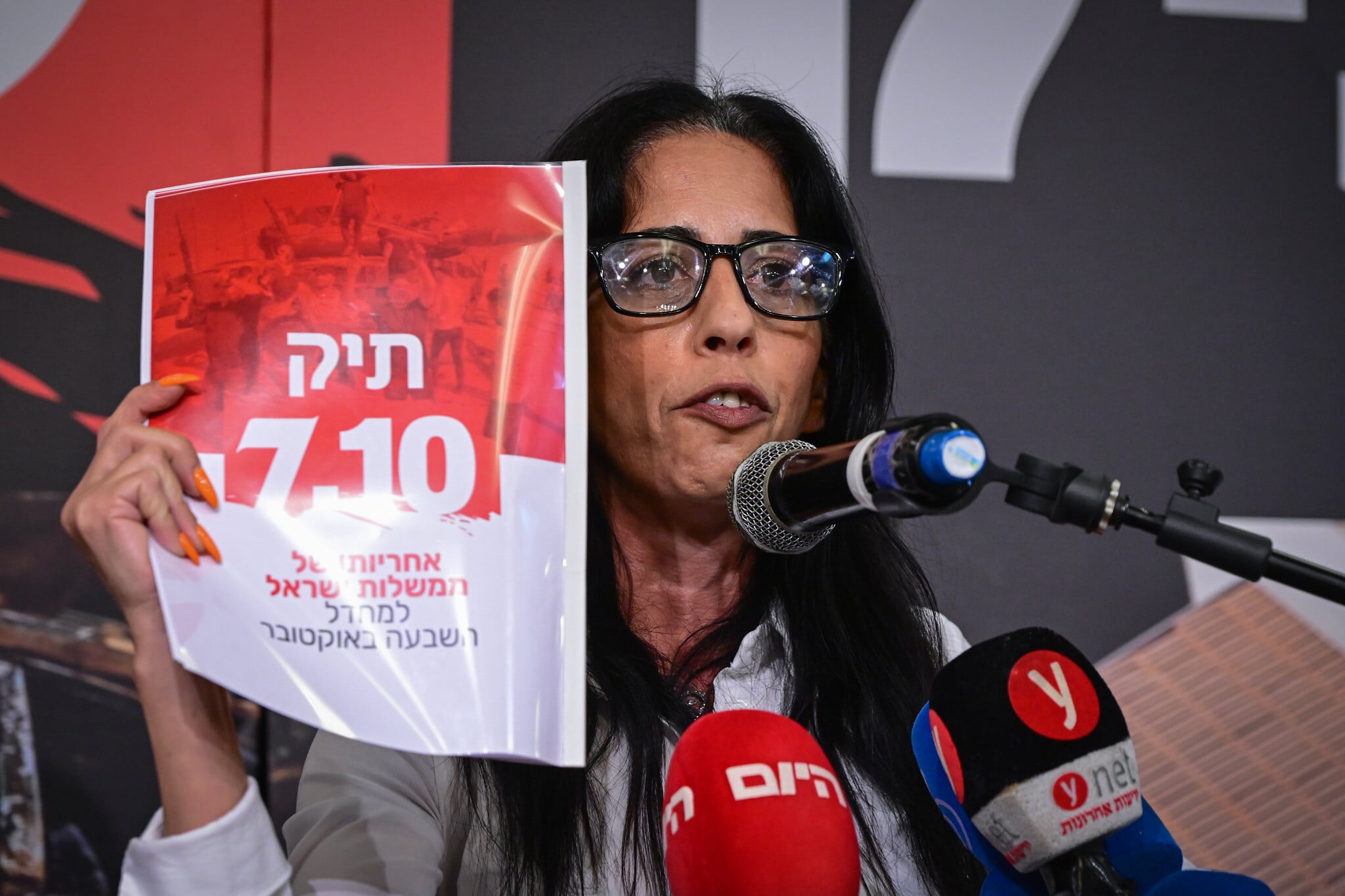
Noam Peri, whose father, Chaim Peri, 79, was abducted alive from Kibbutz Nir Oz and later murdered in Hamas captivity, lamented that no one had formally been held responsible for the disaster.
“Three years later, no one has been held accountable for their responsibility for the most horrifying military, security and political failure in our history,” she said. “A commission of inquiry has not even been established.”
Gil Dickmann, whose cousin Carmel Gat, 40, was abducted from Kibbutz Be’eri and murdered in captivity, also rejected Netanyahu’s focus on the conduct of security officials during the hours immediately preceding the attack.
“Netanyahu says he was not woken on October 7. But here, in ‘Case 7/10,’ there are 1,000 alarm clocks,” Dickmann said, accusing Netanyahu’s supporters of “trying to reduce a failure that lasted a decade and a half to a single three-hour incident.”
“We will not allow you to bury the October 7 failure as you erased the 46 hostages who were murdered in captivity,” he added. “We will not allow you to lie and claim that you brought everyone home.”
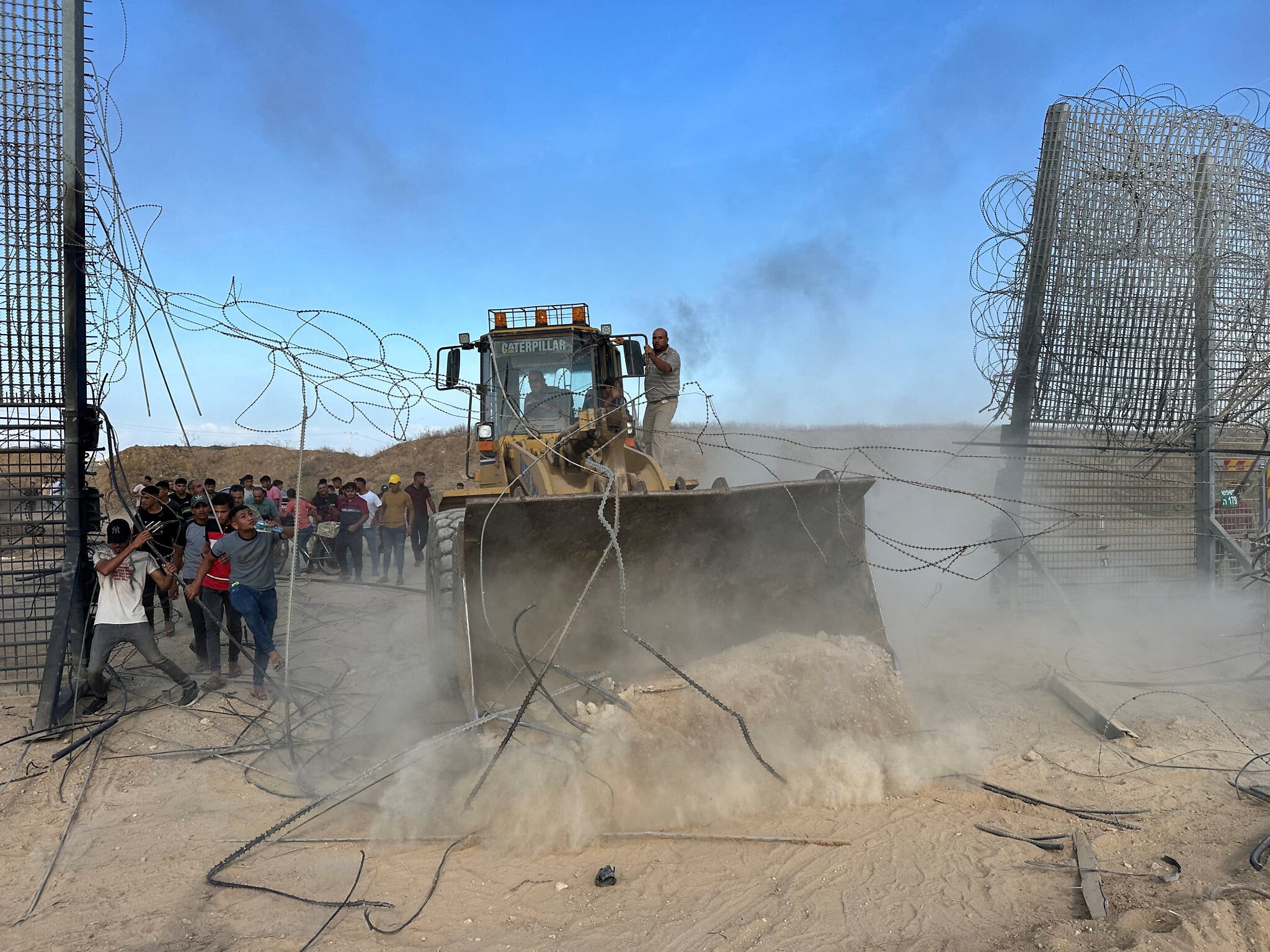
Michel Ilouz, whose son Guy, 26, was abducted to Gaza and murdered in captivity, highlighted the government’s 2018 decision to ask Qatar to transfer money into Gaza despite Hamas’s declared goal of destroying Israel.
“Did you take into account that this would end in nearly 2,000 graves? That the country’s citizens would be slaughtered here?” he asked.
“We demand answers, not spin,” Ilouz said. “We will not rest until we receive all the answers.”
Naomi Or Ofek, a 16-year-old relative of Dror and Yonat Or, who were murdered in Kibbutz Be’eri, and of surviving former hostages Liam, Noam and Alma Or, argued that the massacre was the foreseeable consequence of policies pursued throughout her lifetime.
Israel’s leaders are not “entitled to the benefit of the doubt,” she said.
“Those responsible for the failure are clear, and they are evading responsibility,” she charged. “In two years, I will enlist to defend the country. I demand that those entrusted with making decisions be people worthy of doing so.”








The Times of Israel Community.