

Ra’am’s Abbas says Palestinian state ‘a reality,’ drawing outrage from Zionist parties
Arab party chairman tells delegates he wants to be part of the opposition ‘change bloc,’ but immediately draws censure from that bloc’s leaders
 Add ToI as a Preferred Source on Google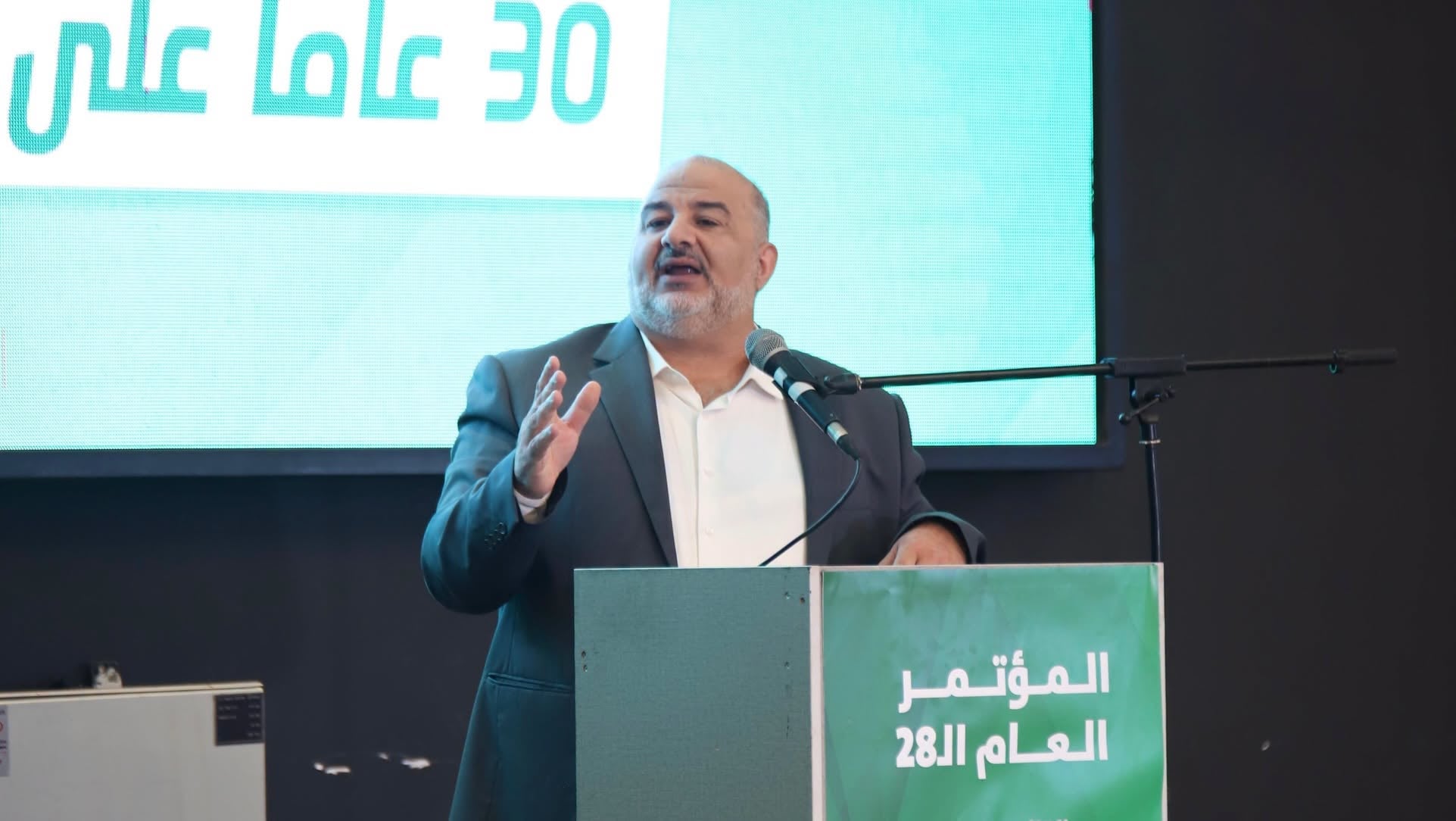
MK Mansour Abbas, head of the Ra’am (United Arab List) party, called on Israel to recognize an “independent Palestinian state” during a speech to party delegates at their convention in Tayibe on Saturday, declaring that it was already “a reality, which most of the world recognizes, with the exception of the United States and Israel.”
“We want them to recognize it, and we’ll work to achieve peace, rapprochement and an end to the occupation and conflict,” Abbas declared, calling Arab-Israelis “a bridge for achieving peace.”
Abbas insisted that the traditionalist Arab faction has “put Israeli democracy to a test” by turning an Arab party’s participation in a governing coalition into a “real political option on the table.” He spoke before an internal vote by roughly 1,050 delegates to select the party’s candidate slate for the October 27 election.
Addressing party members, Abbas declared that Ra’am intends to be part of the so-called change bloc of opposition parties, which is running to oust the current coalition.
But Abbas’s comments quickly sparked harsh backlash from both sides of the political aisle, with Prime Minister Benjamin Netanyahu declaring that as long as he remains in office, “a Palestinian state controlled by Iran will not be established.”
“The price of a left-wing coalition with the Muslim Brotherhood has been exposed once again,” Netanyahu added, referring to the Islamist roots of the Arab party, which was part of the last government that unseated Netanyahu in 2021 (and which Netanyahu also courted to join his coalition).
Yashar party chief and election frontrunner Gadi Eisenkot of the opposition also rebuked Abbas, insisting that “there is no Palestinian state, and in the government we form, a Palestinian state will not be established.”
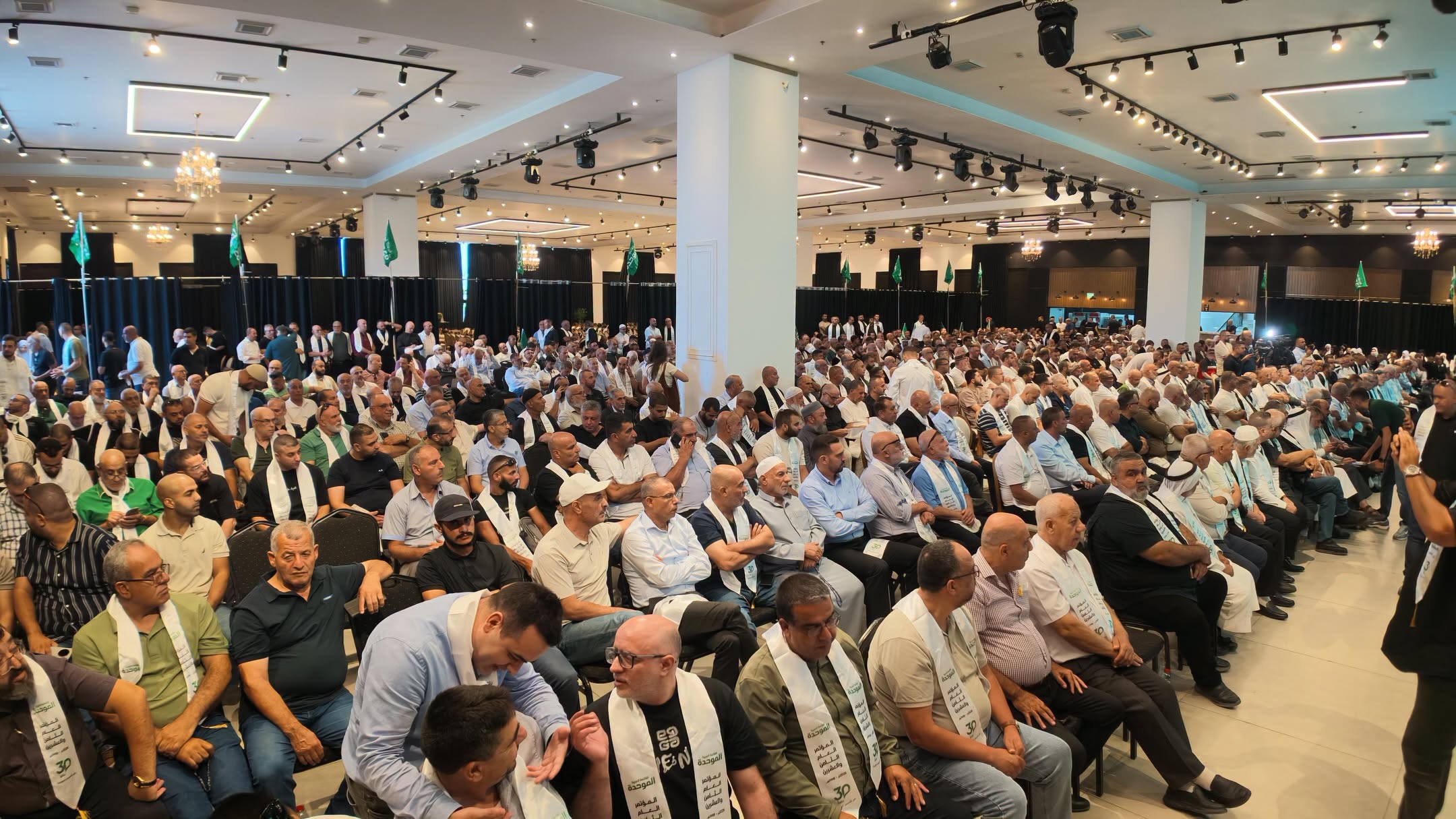
Abbas also announced “the turning of a new page in our relation with our brothers in the three Arab parties” — Balad, Hadash and Ta’al — which this week reached an agreement to revive the Joint List without Ra’am. He said he wished to reach agreements on “cooperation and coordination” and the sharing of surplus votes.
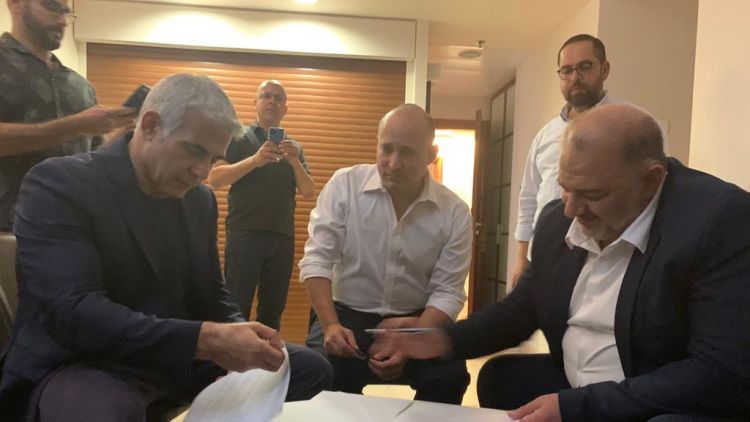
The four parties ran together between 2015 and 2021. But Ra’am decided to break off months before the 2021 election and run independently, winning four seats and eventually joining the short-lived Naftali Bennett-Yair Lapid coalition.
A historically Islamist party affiliated with the southern branch of the Islamic Movement, Ra’am has recently taken steps to depart from its religious roots and emphasize a civic identity. Saturday’s primary was its first internal election since Abbas announced that it would cut ties with its religious governing body, the Islamic Shura Council, and become a broad-based party open to Jewish candidates.
Abbas has repeatedly condemned the October 7 atrocities and recognized Israel as a Jewish state, although he has faced pushback within the party. In 2023, one party MK, Iman Khatib Yassin, drew harsh criticism from her Jewish colleagues when she cast doubt on some elements of the October 7 massacre by Hamas. Abbas called on her to resign. She refused to do so, though she apologized for her comments.
Despite opinion polls regularly showing that the Zionist opposition factions may fail to secure a majority in parliament on their own without the support of the Arab parties, they have, with the exception of The Democrats, all rejected partnering with Ra’am.
Roughly 1,050 members voted in favor of the party’s current Knesset representation, placing Abbas at number one, followed by MKs Waleed Taha, Waleed Alhwashla, Khatib Yassin (in a slot reserved for women) and Yasir Hujeirat.
Spots six through 10 on the party slate will be selected by the party’s executive council, the party said in a statement.
Ra’am MK Walid Taha also spoke at the convention, telling delegates that “the difference between Ra’am and the other [Arab] parties is that we in Ra’am are not satisfied with making demands — we also act politically to implement solutions.”
“Ra’am has chosen to suffer the fire of partnership in a coalition in order to put out the flames of injustice and discrimination that burn our people,” he said. “We extend a hand to the Jewish community to achieve just civic integration for all citizens of the state, without exception.”
Other speakers also alluded to Abbas’s effort to shed the party’s Islamist connections, with Yahya Dahamsheh, the political director of Ra’am, saying the party was “the voice of the conservative Arab community in all its forms and religious sects, including our Christian and Druze brothers.”
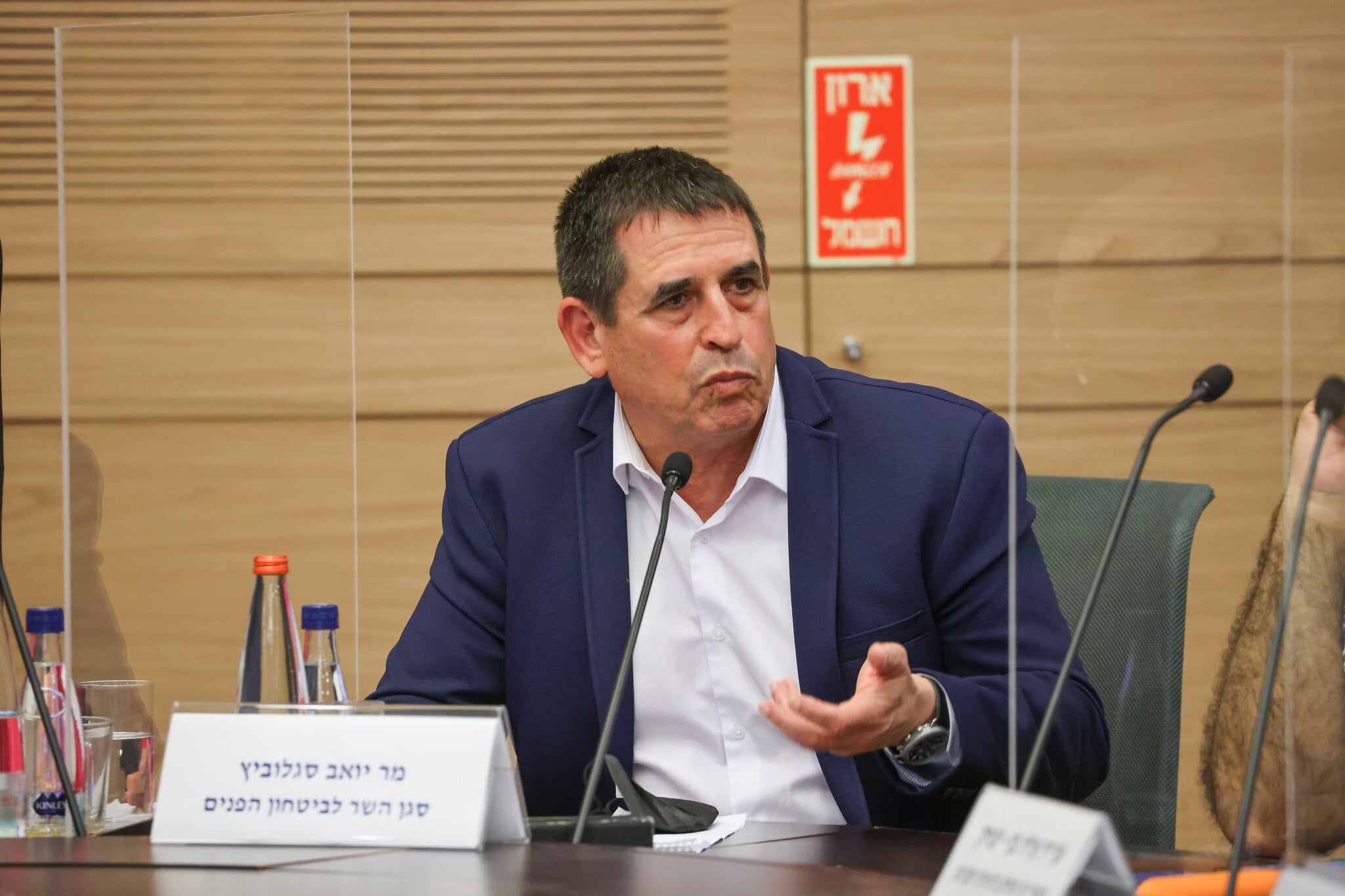
Speaking with Channel 12 later in the day, Abbas said that former Yesh Atid MK Yoav Segalovitz, who has been in talks to join Ra’am’s slate, is not set to formally join the party, but that negotiations with him are aimed at agreeing terms for him to be given a slot on the party’s Knesset slate.
Abbas said Segalovitz, a former senior police officer and deputy national security minister, would be a good fit for national security minister, replying “we’ll see,” when asked whether he himself expects to be a minister.
Segalovitz established the police’s Lahav 433 unit to fight serious crime and is a former commander of the force’s Investigations and Intelligence Division. He has been credited with helping reduce crime in Arab Israeli communities during his tenure as deputy minister for public security in the Bennett-Lapid government.
He reportedly does not intend to join any party that does not recognize Israel as a Jewish and democratic state and supports national civilian service – an alternative to the military draft – for Arab citizens of Israel.






The Times of Israel Community.