

Inside the Arab parties whose growing clout is meeting a wall of resistance from potential partners
Joint List and Ra’am won a combined 19 seats in the election, but their stances on Zionism, Hamas and Palestinian nationalism complicate Jewish-led parties’ willingness to rely on their support

 Add ToI as a Preferred Source on Google
Stav Levaton is a military reporter for The Times of Israel
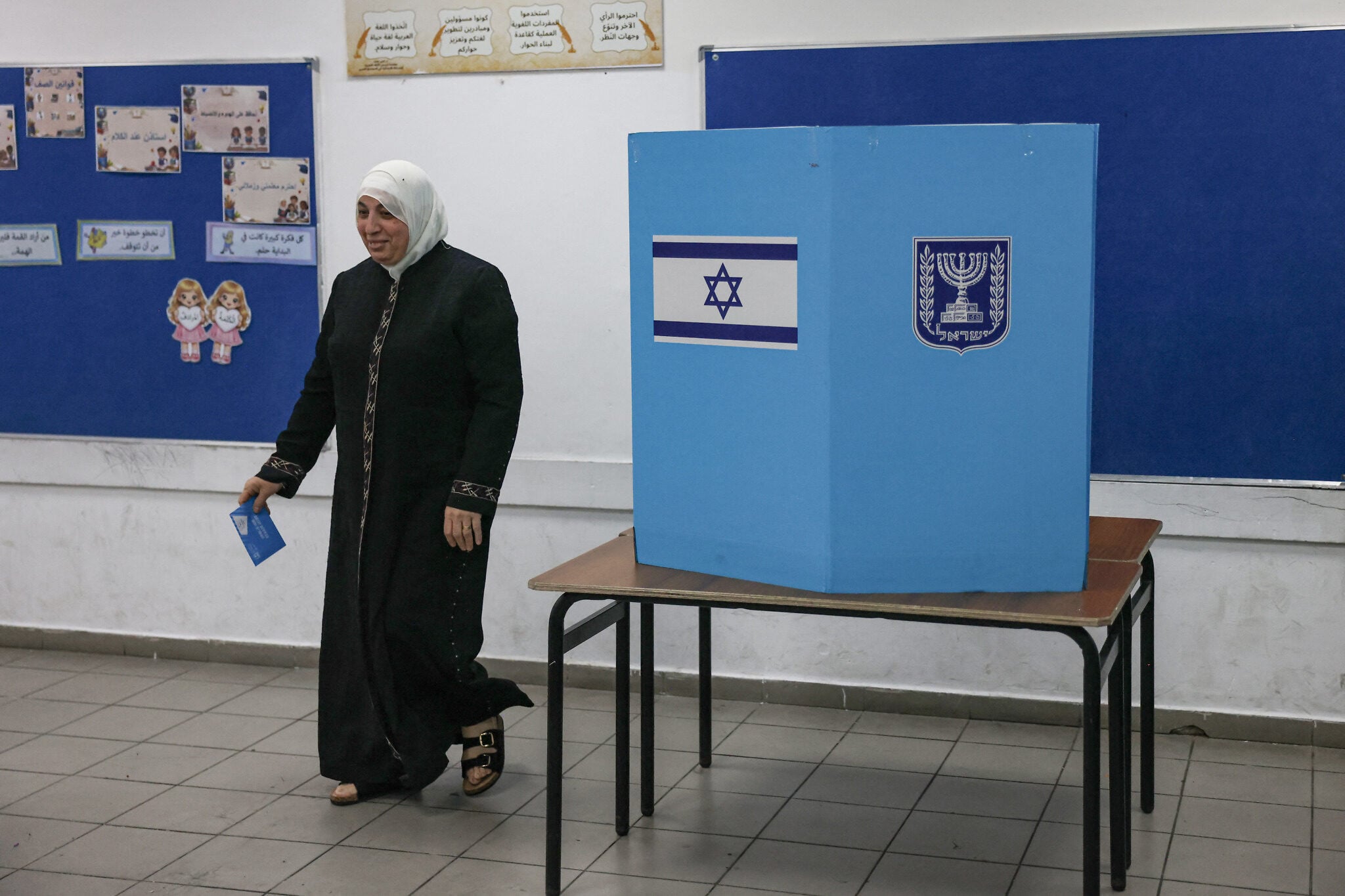
Israelis have long touted the Jewish state as the Middle East’s only democracy, where Arab citizens enjoy equal political rights. But when Arab voters turned out in record numbers on October 27, giving Arab parties unprecedented clout, much of Jewish Israel recoiled at the prospect of those same citizens wielding real political power.
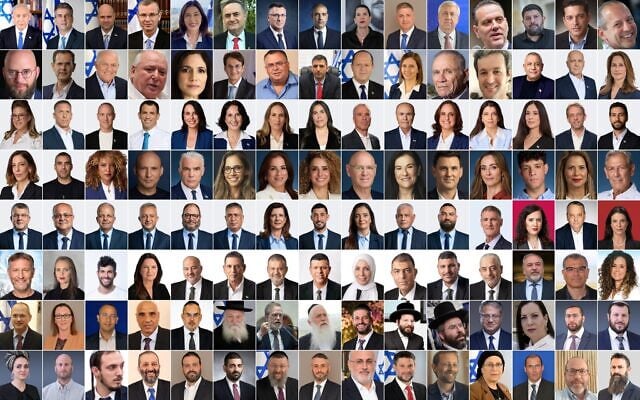
After the final votes from Israel’s closely fought elections were tallied, the Joint List emerged with 11 seats and Ra’am with 8, totaling 19 seats in Israel’s 120-member Knesset, surpassing the previous record of 15 held by the Arab parties in March 2020. According to the Israel Democracy Institute, Arab turnout stood at 77 percent, compared to just 53.2% in the 2022 election.
An analysis on Arab voters published on Tuesday by IDI suggested that many saw their previous strategy of abstaining from national elections as untenable as well as being a way of giving up their potential influence to create change. That feeling was heightened amid deepening alienation during Netanyahu’s last term, as crime surged in Arab communities, settler attacks spread in the West Bank, Bedouin homes were demolished in the Negev and the war in Gaza exacted a devastating toll.
The shift was striking in communities where calls to boycott elections had long rested on the belief that voting legitimized a state that excluded Palestinians. This time, the analysts said, even some former boycott advocates argued that the potential benefits of participation outweighed its costs.
“People reached a point where they could no longer bear [the situation], so they decided to go out and protest it,” Mirvat Abu Hadoba-Frieh, a researcher in IDI’s Arab Society in Israel Program, said, pointing to the incumbent government’s treatment of Israel’s Arab minority and the feeling that voting was a way to replace the right-wing bloc.
Casting a ballot, the IDI analysis found, became a way for Arab Israelis to demand a say in the country’s future — and to try to shape policies affecting not only Arab citizens of Israel, but also Palestinians in Gaza and the West Bank.
“We want to be part of this. We want to be equal, to feel that we are citizens, that we are heard, that we belong,” Abu Hadoba-Frieh said, describing what she saw as a desire among Arab voters to participate in Israeli society.

Meanwhile, the unexpectedly strong showing triggered a wave of backlash among Israel’s political right, with Prime Minister Benjamin Netanyahu and his allies claiming that the election had been “stolen” by Arab parties and demanding that police and the Shin Bet investigate allegations of widespread voter fraud and intimidation, for which no substantiating evidence has been published.
But beyond the accusations of electoral misconduct, the results have exposed a deeper political divide over the legitimacy of Arab parties as potential partners in governing the Jewish state.
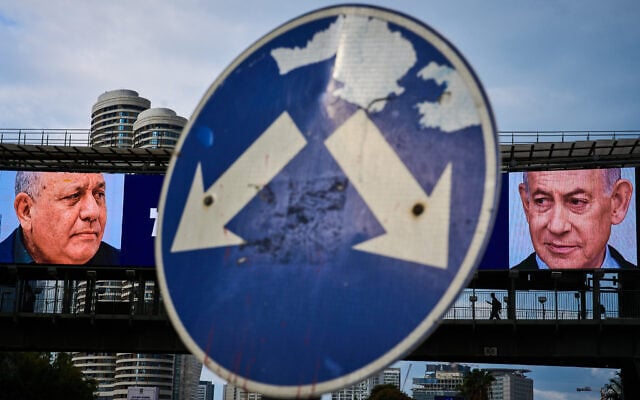
With neither Netanyahu’s right-wing bloc nor the Jewish-led opposition securing a parliamentary majority, the Arab parties have emerged as potential kingmakers, holding enough seats to determine whether a new government can be formed — even as most of the Jewish parties seeking to replace Netanyahu refuse to include them in a coalition.
“These elections force us to examine the truth about our democracy,” Abu Hadoba-Frieh said. “Is it democratic to exclude 20% of the population?”
An IDI survey conducted before the election found that 44% of Arab respondents would vote for a party that could address the cost of living, making it their top concern. Far fewer prioritized divisions within Israeli society (21.5%) or foreign policy and security (19%). For Jewish Israelis, cost of living ranks almost equal to foreign affairs and security, with almost 40% of the electorate rating each of the two burning issues as first or second.
However, while Arab parties campaign on many of the same domestic issues that concern Jewish voters, including crime, housing and the cost of living, several of the Arab lawmakers have also taken controversial positions on Zionism, Palestinian nationalism and Hamas, particularly since the October 7, 2023, Hamas-led attack on southern Israel, making them unlikely partners for Jewish-led Zionist parties.
A closer look at the Joint List and Ra’am, the two Arab parties that are now at the center of the coalition debate, reveals markedly different political traditions and approaches to wielding power.
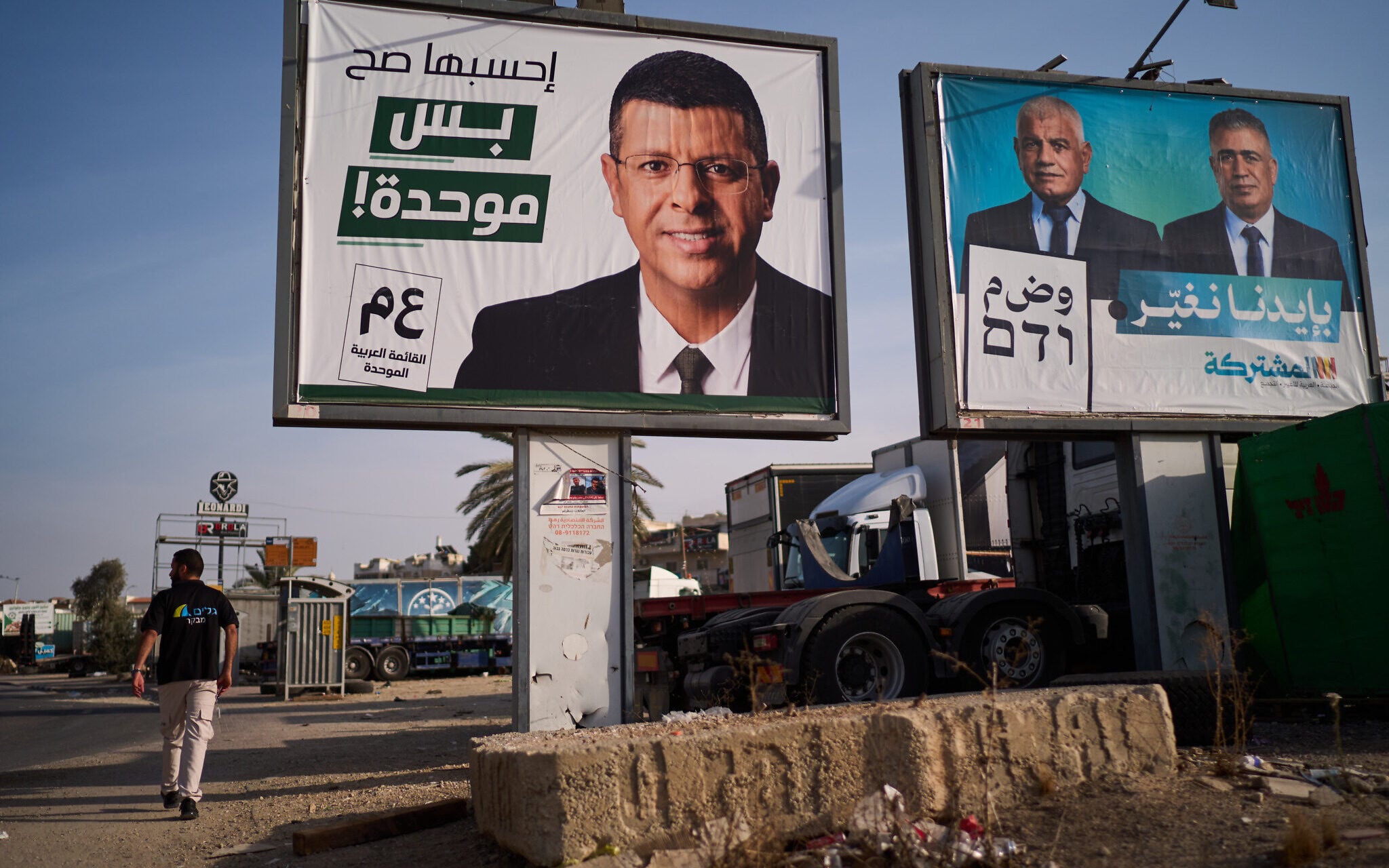
The Joint List: Cooperation without joining coalition
The larger of the two Arab parties, the Joint List, is an alliance of three factions spanning the communist left, secular Arab nationalism and Palestinian nationalism.
Established in 2015 to unite several Arab-led parties under a single electoral banner, the alliance has experienced repeated internal divisions, including a split ahead of the April 2019 election and reunification later that year.
Today, it comprises Hadash, a Jewish-Arab communist-rooted party; Ta’al, a secular Arab party; and Balad, a Palestinian nationalist faction. Led by Hadash chairman Yousef Jabareen, the Joint List draws most of its support from Arab citizens, who account for roughly one-fifth of Israel’s population, although it also includes Jewish candidates and supporters.
The alliance’s platform combines demands for greater government investment in Arab communities, expanded welfare programs and employment opportunities with a sweeping critique of Israel’s policies and founding ideology.
It says the party opposes “war, occupation and apartheid” and describes the Joint List as a “genuine democratic alternative to the racist Zionist consensus” and to “Jewish supremacy.” It also says the alliance represents Palestinian citizens of Israel as an “indigenous national group,” and calls for an end to the war and what it terms the “genocide” in Gaza, as well as an independent Palestinian state based on the 1967 borders, with East Jerusalem as its capital, alongside Israel.
Unlike Ra’am, which joined the Naftali Bennett- Yair Lapid government in 2021, the Joint List has ruled out becoming part of a Zionist-led coalition. It has, however, expressed willingness to help establish a government that would replace Netanyahu’s coalition.
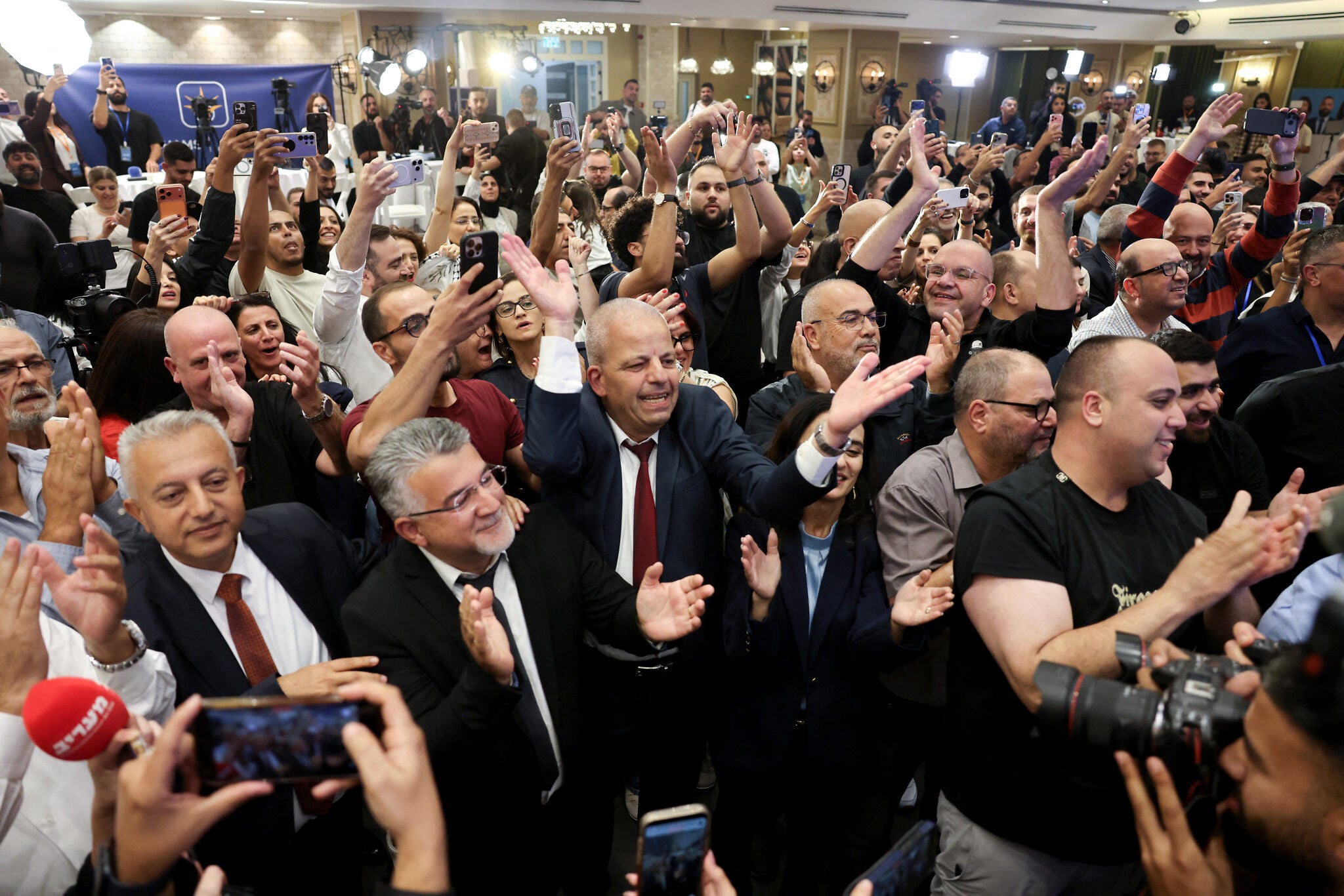
Jabareen has offered to provide a parliamentary “safety net” to such a government, conditional on commitments to increase investment in Arab towns, halt home demolitions in Bedouin communities in southern Israel and advance a political solution to the Israeli-Palestinian conflict. Such an arrangement could allow the Joint List to support a minority government from outside the coalition without formally accepting responsibility for its policies.
Ta’al chairman Ahmad Tibi, the second candidate on the Joint List’s slate, recently reiterated that distinction in an interview with Channel 12, saying his party was prepared to support the anti-Netanyahu parties in establishing a new government but had no desire to join it.
Many Joint List voters, meanwhile, want the party to have a more direct role in government. The IDI survey conducted before the election found that 51% supported including the Joint List in a future coalition.
For many Jewish Israelis, however, the distinction between joining a coalition and helping it govern offers little reassurance. The Joint List’s opposition to Zionism, coupled with the statements and political histories of some of its leading candidates, has made the prospect of relying on its support especially contentious.
Jabareen, a law professor and human rights expert, has repeatedly declined to label Hamas a terrorist organization, despite its October 7 onslaught and its history of attacks against Israeli civilians.
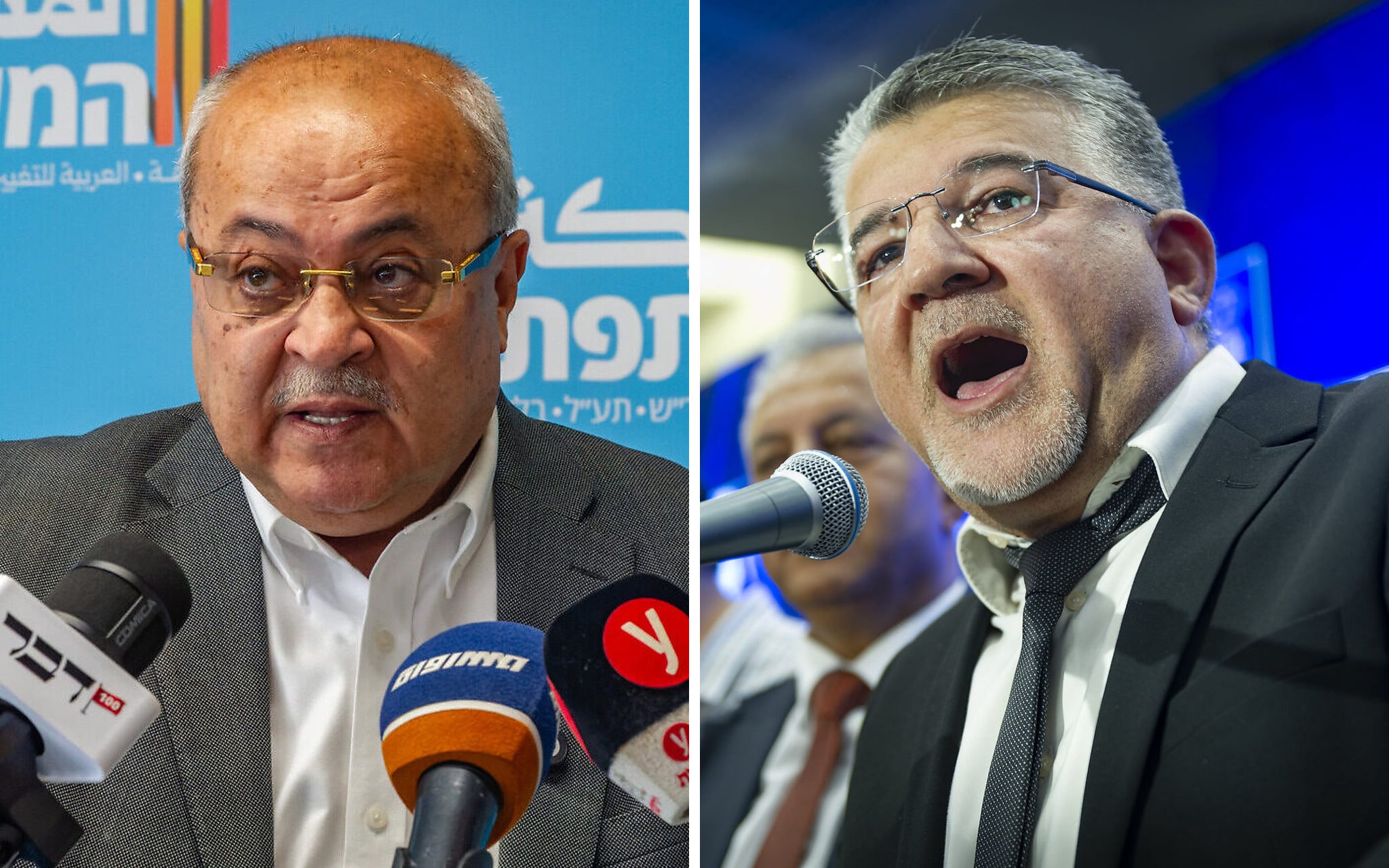
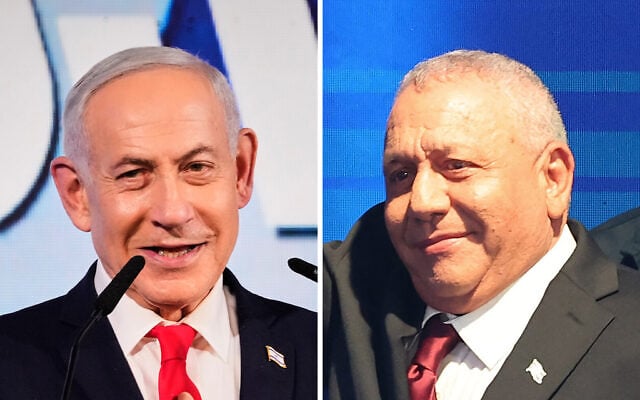
That refusal places him at odds with Yashar chairman Gadi Eisenkot, who has made recognition of Hamas as a terrorist organization one of his stated conditions for potential coalition partners.
“I don’t think whether someone agrees to define Hamas as a terrorist organization should be a test of whether I’m willing to hear them out at all,” Abu Hadoba-Frieh said, arguing that making it a precondition can prevent dialogue.
Tibi, a physician and veteran lawmaker, served as a political adviser to the late Palestinian leader Yasser Arafat from 1993 to 1999, a relationship that has long made him a controversial figure on the Israeli right.
The alliance’s Balad faction has attracted particular scrutiny for its explicitly Palestinian nationalist positions.
Its chairman, Sami Abu Shehadeh, withdrew his candidacy ahead of the election after facing a Knesset ban over an article he published the day after the October 7 attack, in which he described the Hamas assault as “an important historic event militarily, politically and strategically” and suggested that others could learn from its success in surprising Israel.
The Central Elections Committee subsequently voted to disqualify him. During a High Court hearing concerning the ban, Abu Shehadeh expressed regret over the article and denied supporting armed struggle.
Controversy has also surrounded Ofer Cassif, the Jewish Hadash lawmaker who occupies fifth place on the Joint List’s slate.
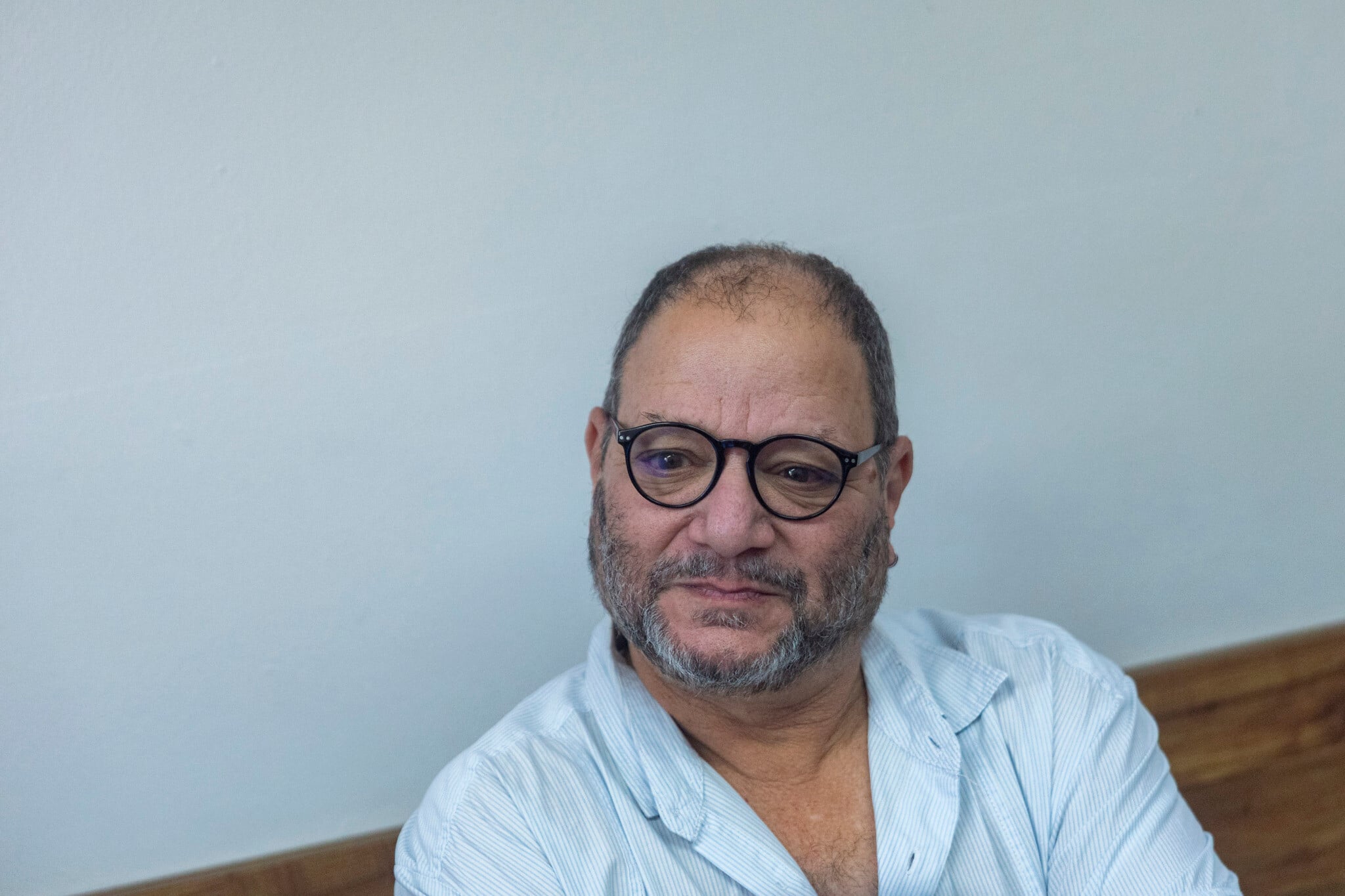
An outspoken opponent of the war in Gaza who has publicly rejected identifying as a Zionist, Cassif was also initially disqualified from running in the October 27 election by the CEC following a petition filed by Likud, but the Supreme Court quickly overturned the decision, leaving him in the running.
Last month, Cassif was also convicted of aggravated assault against a police officer over a May 2022 confrontation in which police blocked him from reaching a demonstration against the eviction of Palestinians from their homes in the West Bank.
Cassif is not the only Jewish candidate on the Joint List slate. Balad’s Orly Noy, who was placed 14th on the list and therefore did not win a seat, has drawn criticism for her outspoken condemnation of Israeli policies.
Noy, an Iranian-born activist and chair of the human rights organization B’Tselem, described Israel as a “supremacist, racist regime” in a March interview with the US-independent news program, “Democracy Now!”
Her organization has accused Israel of violations of international law, while Noy herself faced criticism following allegations by a former B’Tselem staffer that senior figures at the organization had intervened to soften its condemnation of Hamas’s October 7 atrocities.
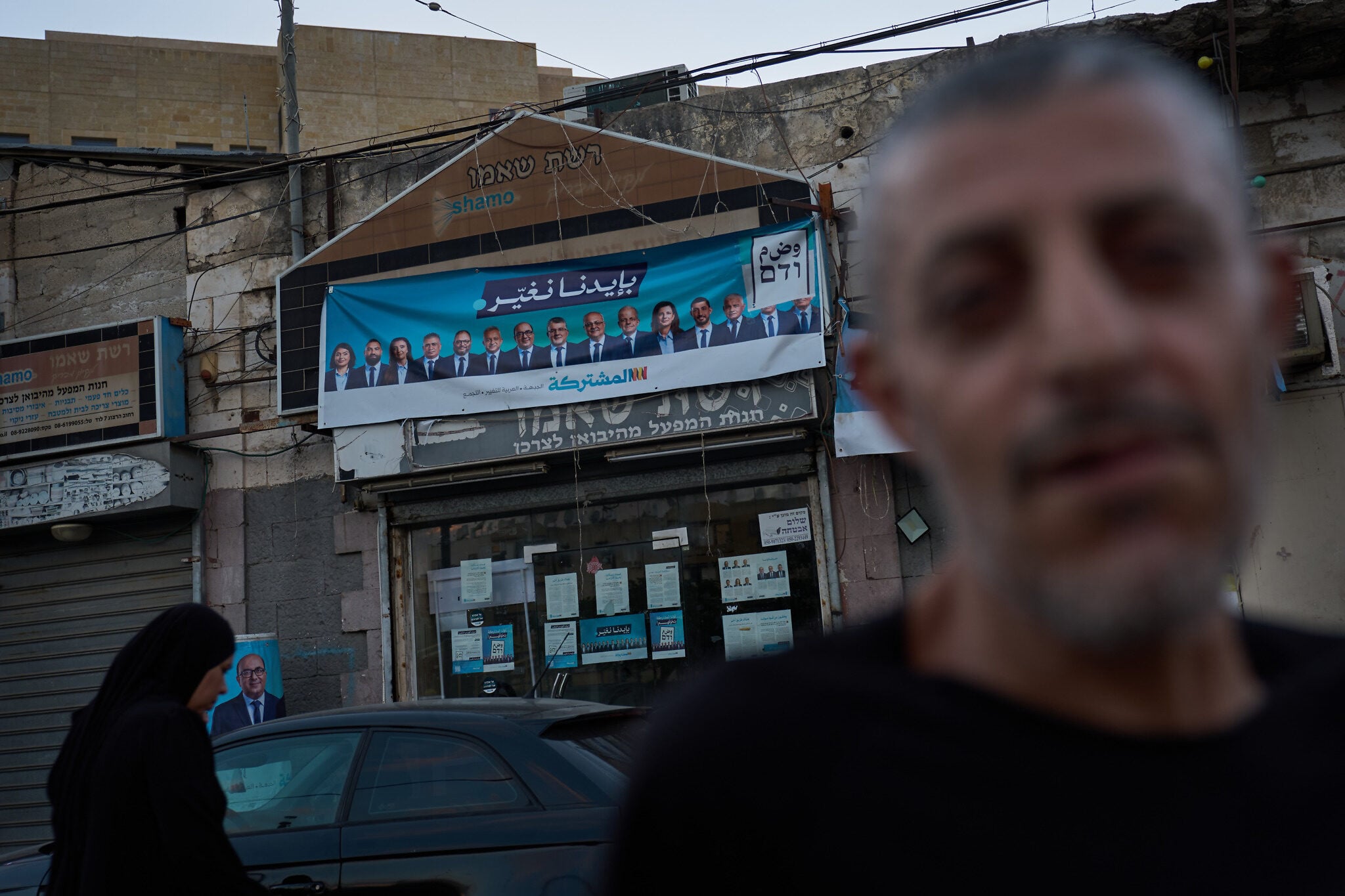
The Joint List has also found itself at the center of controversies that illustrate the rift between how its supporters and critics interpret expressions of Palestinian identity.
After the election, a video circulated online purporting to show supporters at a Joint List campaign event singing the Palestinian national anthem, which contains references to sacrifice and armed struggle.
The song, however, was not the Palestinian anthem. It was “Biladi Biladi,” an Arabic song associated with Hadash that primarily expresses love for the homeland.
Ra’am: An Arab party seeking a place at the table
While the Joint List has sought to exert influence without joining a Zionist government, Ra’am has built its political strategy around the opposite proposition: that Arab citizens can achieve more by participating directly in government than by remaining permanently in opposition.
That position is supported by most of its constituents, with IDI finding that 58% of Ra’am voters supported its inclusion in the governing coalition.
Founded in 1996, Ra’am is a socially conservative Islamist party that has increasingly presented itself as a pragmatic political force focused on improving the everyday lives of Arab citizens.
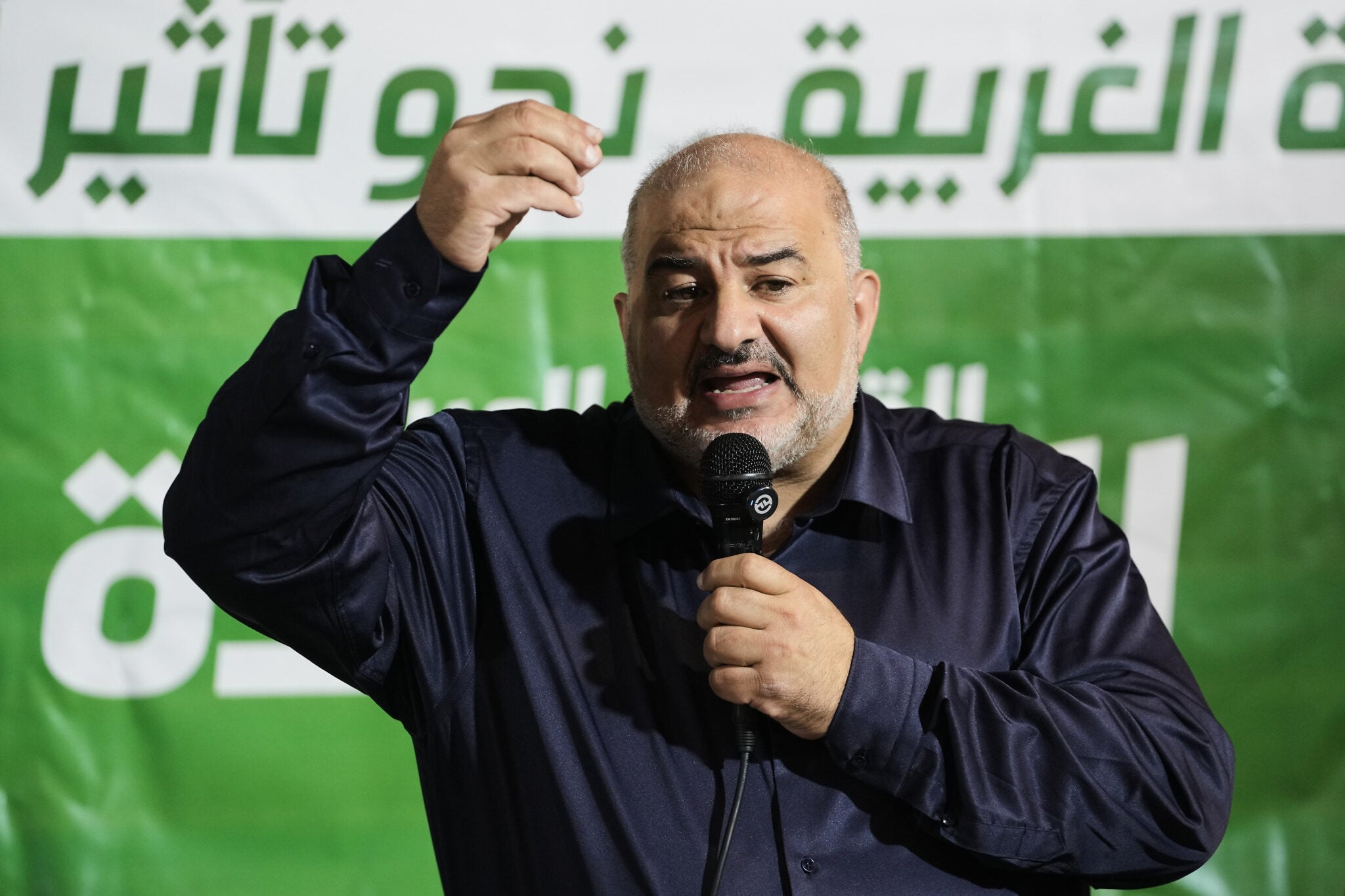
Its chairman, Mansour Abbas, has made cooperation with Jewish parties central to that strategy, arguing that ideological disagreements over the Israeli-Palestinian conflict should not prevent progress on crime, housing, infrastructure and economic development.
The approach produced a historic breakthrough in 2021, when Ra’am broke away from the Joint List and joined the coalition led by Bennett and Lapid, now leaders of the B’Yachad party, becoming the first Arab party in Israeli history to sit in the government.
However, Ra’am also played a direct role in the coalition’s unraveling: MK Mazen Ghanaim, along with Arab lawmaker Ghaida Rinawie Zoabi of Meretz, joined the opposition in voting against a bill to renew emergency regulations that gave settlers in the West Bank Israeli legal status, while Palestinians there remained under a separate military legal system. The bill failed 58-52.
With the government already lacking a majority and the regulations about to expire, Bennett and Lapid dissolved the Knesset, which automatically kept the rules in force during the subsequent election period.
Ra’am does not have a publicly available party platform, but its principal demands for participating in a coalition include increased funding for Arab municipalities, stronger action against organized crime, improved housing and planning policies, and investment in neglected infrastructure.
However, the party’s willingness to cooperate with Zionist parties has not eliminated the ideological suspicions surrounding it.
Ra’am emerged from the Southern Islamic Movement, which was inspired by the Muslim Brotherhood. Abbas has repeatedly denied that the party is affiliated with the Muslim Brotherhood and has sought to distance the party from the Islamic Movement’s religious leadership.

After announcing the plan to cut ties with its religious council in December 2025, Ra’am held its first party-run primaries in August 2026, selecting candidates independently of the Islamic Movement’s Shura Council, which had previously played a decisive role in party affairs. The move gave Ra’am formal control over its political decisions and candidate selection, though the party remains rooted in the Southern Islamic Movement.
Nevertheless, Abbas has continued to advocate Palestinian national aspirations, calling on Israel to recognize an “independent Palestinian state” during an August speech to party delegates in Tayibe.
His efforts to present Ra’am as a legitimate coalition partner were also reflected in the party’s decision to include a Jewish candidate on its electoral slate for the first time.
Yoav Segalovitz, a former Yesh Atid lawmaker and senior police officer who founded and commanded the Lahav 433 investigative unit, was placed second on the list.

Segalovitz, who served as deputy public security minister in the Bennett-Lapid government, has argued that Jewish-Arab political cooperation is essential to addressing the country’s shared challenges.
“He’s Arab. I’m a Jew. I’m secular. He’s religious,” Segalovitz said of Abbas in an interview before the election. “But we’re all citizens of Israel. We all take part in this society. If we want to get progress here, we must go in partnership together.”
Before joining Ra’am, Segalovitz set out conditions concerning recognition of Israel as a Zionist Jewish state and national civilian service. Ra’am has not publicly said it agreed to those demands, but Segalovitz’s inclusion in the No. 2 spot on its slate suggests the two sides reached an understanding.
Abbas has described the state’s Jewish character as “an existing fact that was imposed on us.” On civilian service, he has said there needs to be “a framework that addresses the needs of young Arabs and the expectations of Israeli society,” adding, “I want equal status.”
But other figures on Ra’am’s electoral slate have made the party a more difficult prospect for potential coalition partners.
Walid Taha, the party’s third-ranked candidate, has repeatedly refused to condemn Hamas or recognize it as a terrorist organization.
In 2012, he sparked controversy by meeting with Aziz Dweik, a Hamas political official who had served as speaker of the Palestinian Legislative Council, following Dweik’s release from Israeli prison, where he had been held over his Hamas affiliation.
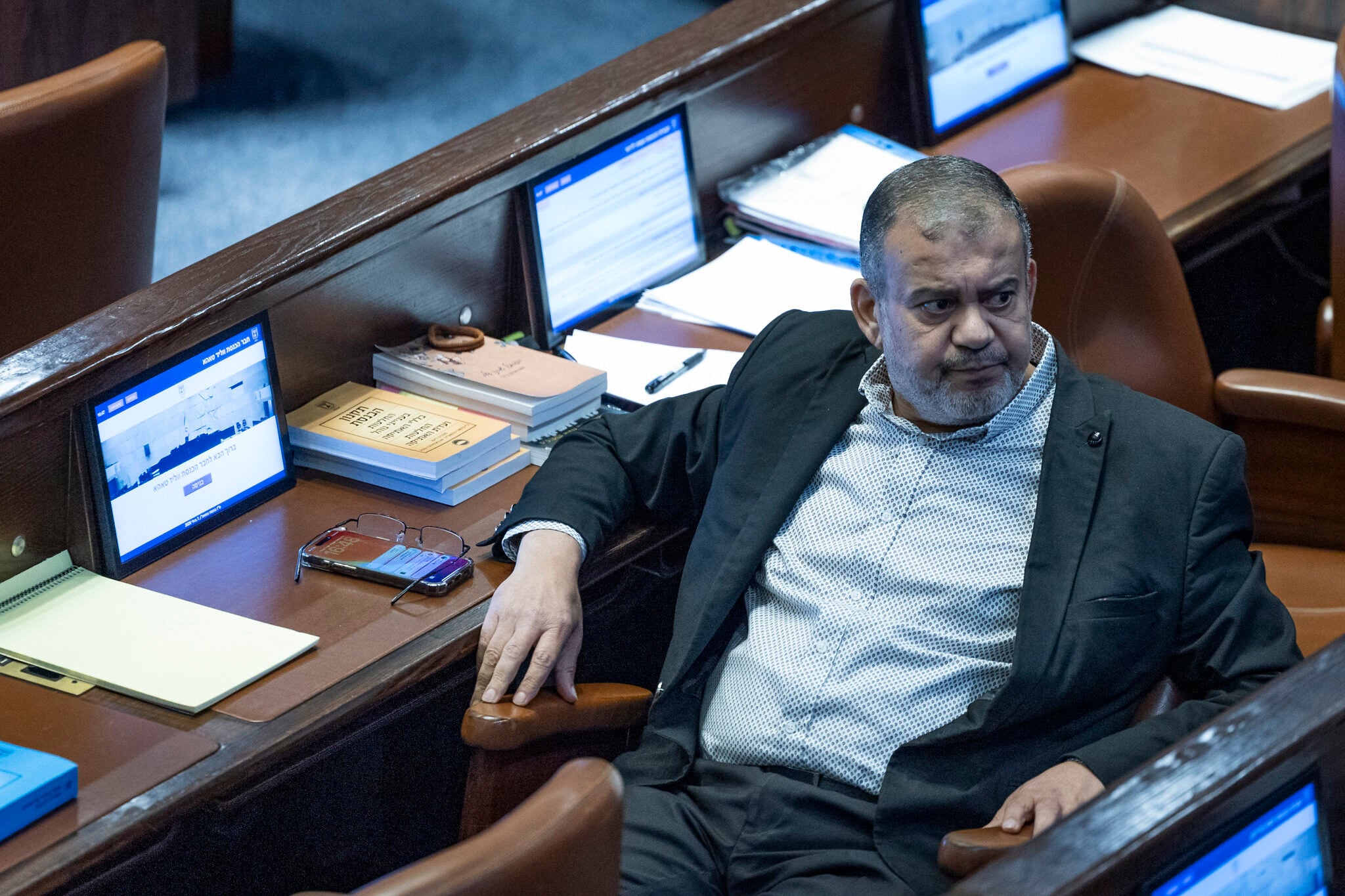
The following year, Taha participated in a delegation that visited the family of Palestinian assailants responsible for the 1992 “Night of the Pitchforks” attack, in which three Israeli soldiers were murdered.
His record has fueled criticism from those who argue that Ra’am’s pragmatic leadership cannot obscure the positions of some of its lawmakers.
Yet Taha has also demonstrated the party’s willingness to separate its opposition to Israeli military policy from its commitments as a coalition partner.
In 2021, during its time in the governing coalition, he said Ra’am would not bring down the government over Israeli military action in Gaza, even if the party opposed the operation.
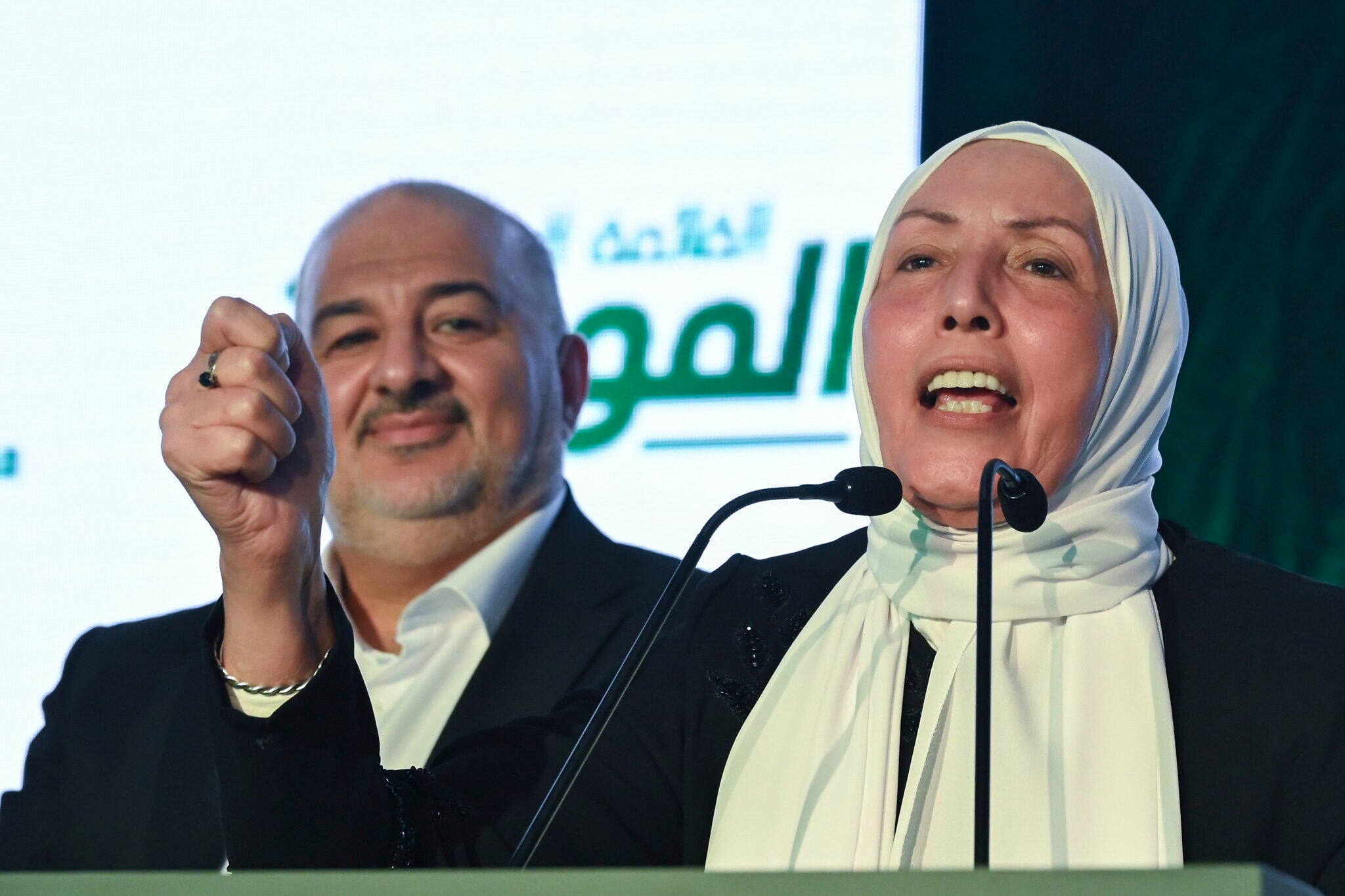
Another controversial figure in the party is Iman Khatib-Yassin, who occupies fifth place on Ra’am’s list.
In November 2023, Khatib-Yassin questioned reports of atrocities committed during the Hamas-led October 7 attack, saying that the terrorists “didn’t slaughter babies and they didn’t rape women, at least not in the footage,” despite acknowledging that she had not personally watched footage of the atrocities.
Her remarks prompted widespread condemnation, including from within her own party.
Abbas pressured her to resign her Knesset seat, and she subsequently apologized but remained in the party. She was also barred from Knesset committee and plenum sessions for a month and docked two weeks’ pay.
The coalition dilemma
Despite differences between the Joint List and Ra’am, both face resistance from the Jewish-led parties whose ability to form a government may depend on Arab parliamentary support.
Among the four parties in the anti-Netanyahu bloc, Democrats chairman Yair Golan has been the only one to support cooperation with Arab parties, holding meetings with Abbas as well as Joint List leaders Jabareen and Tibi amid efforts to establish a new government.
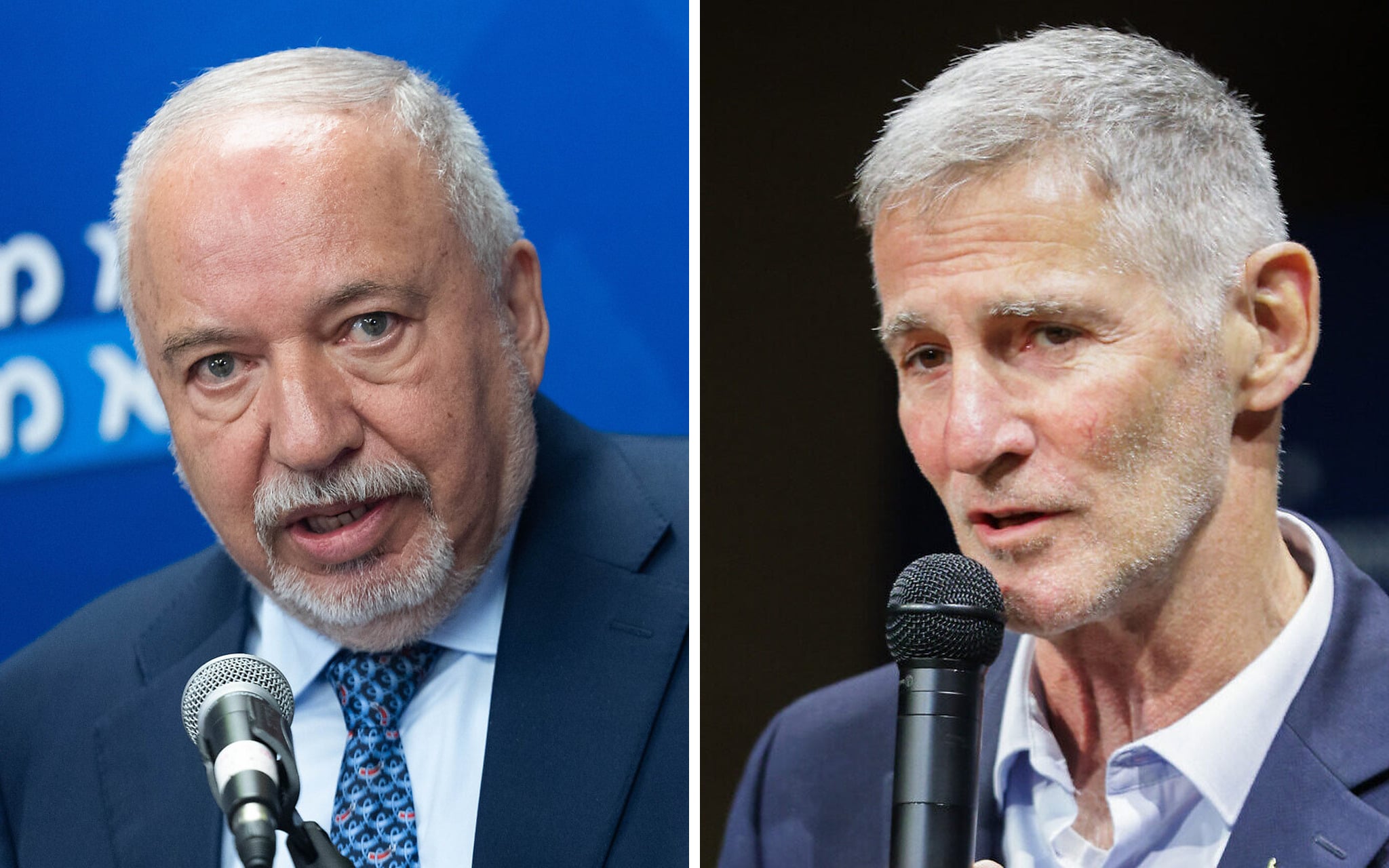
Other opposition leaders have been far more reluctant.
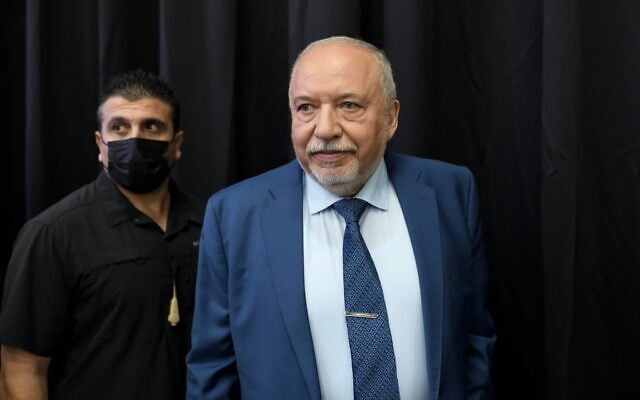
Yisrael Beytenu chairman Avigdor Liberman has ruled out supporting a minority government dependent on Arab parties, while Eisenkot’s conditions for potential coalition partners present an obstacle to cooperation with lawmakers who refuse to recognize Hamas as a terrorist organization.
The resulting impasse has placed the opposition in a difficult position: The Arab parties’ electoral success has increased the number of lawmakers opposed to Netanyahu, but it has not necessarily brought the Jewish-led opposition closer to forming a viable government.
It has also raised a fundamental question about the role of Arab citizens in Israel’s political system.
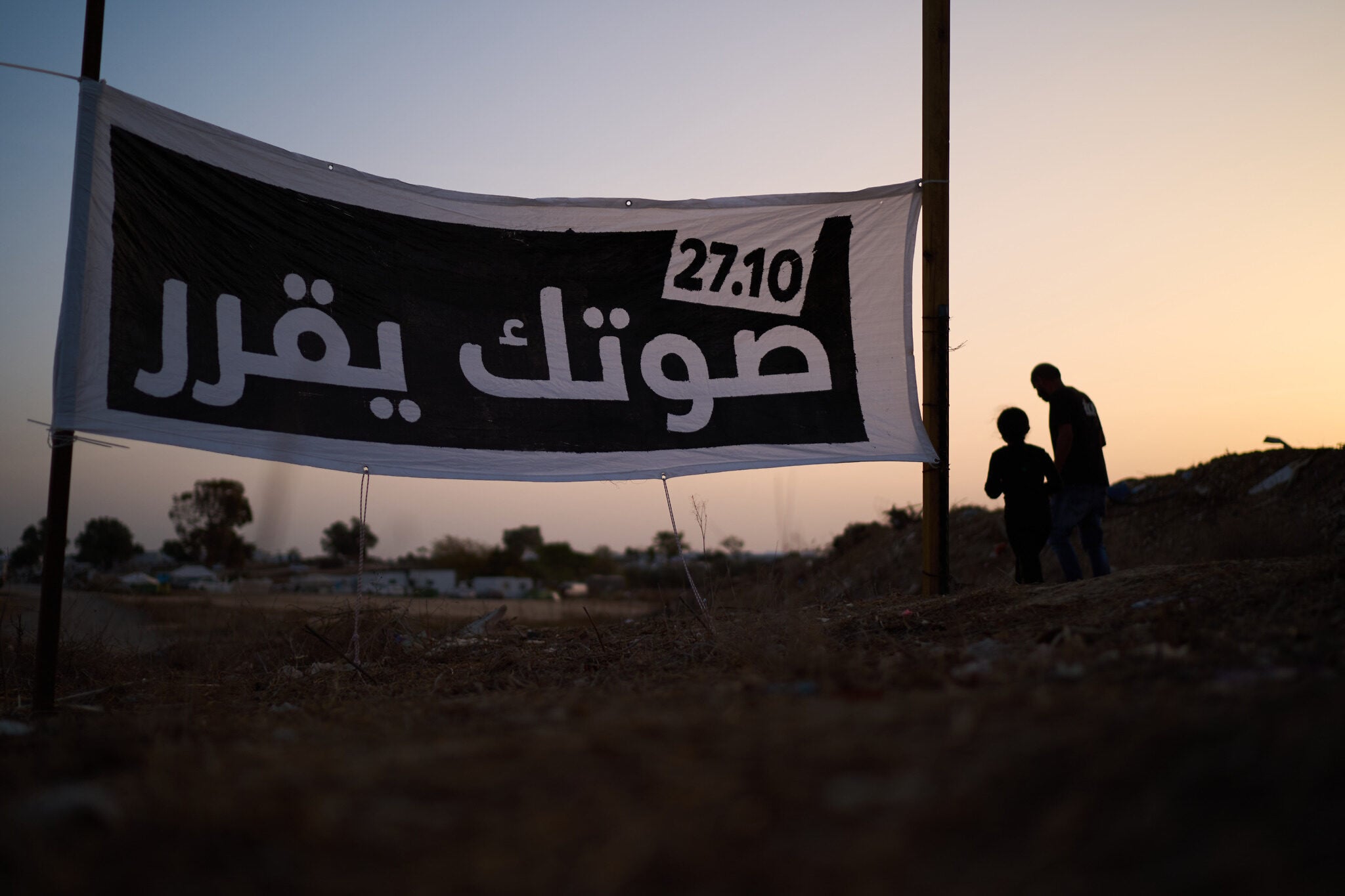
For supporters of greater Arab political participation, the election results represent a democratic breakthrough, demonstrating that Arab voters can organize effectively and influence the country’s political future.
For critics, the issue is not whether Arab citizens should be allowed to vote or hold seats in the Knesset, but whether parties whose members reject Zionism, refuse to condemn Hamas, or identify politically with Palestinian nationalism should be entrusted with determining the composition and policies of an Israeli government.





The Times of Israel Community.