

Abbas eyes Segalovitz pact amid backlash for saying he’s ‘compelled’ to accept Jewish state
Ra’am chair angers right-wing lawmakers in Facebook post asserting that Arab politicians must accept ‘imposed’ reality of Israel’s Jewish character; Erdan: Abbas wants a caliphate
 Add ToI as a Preferred Source on Google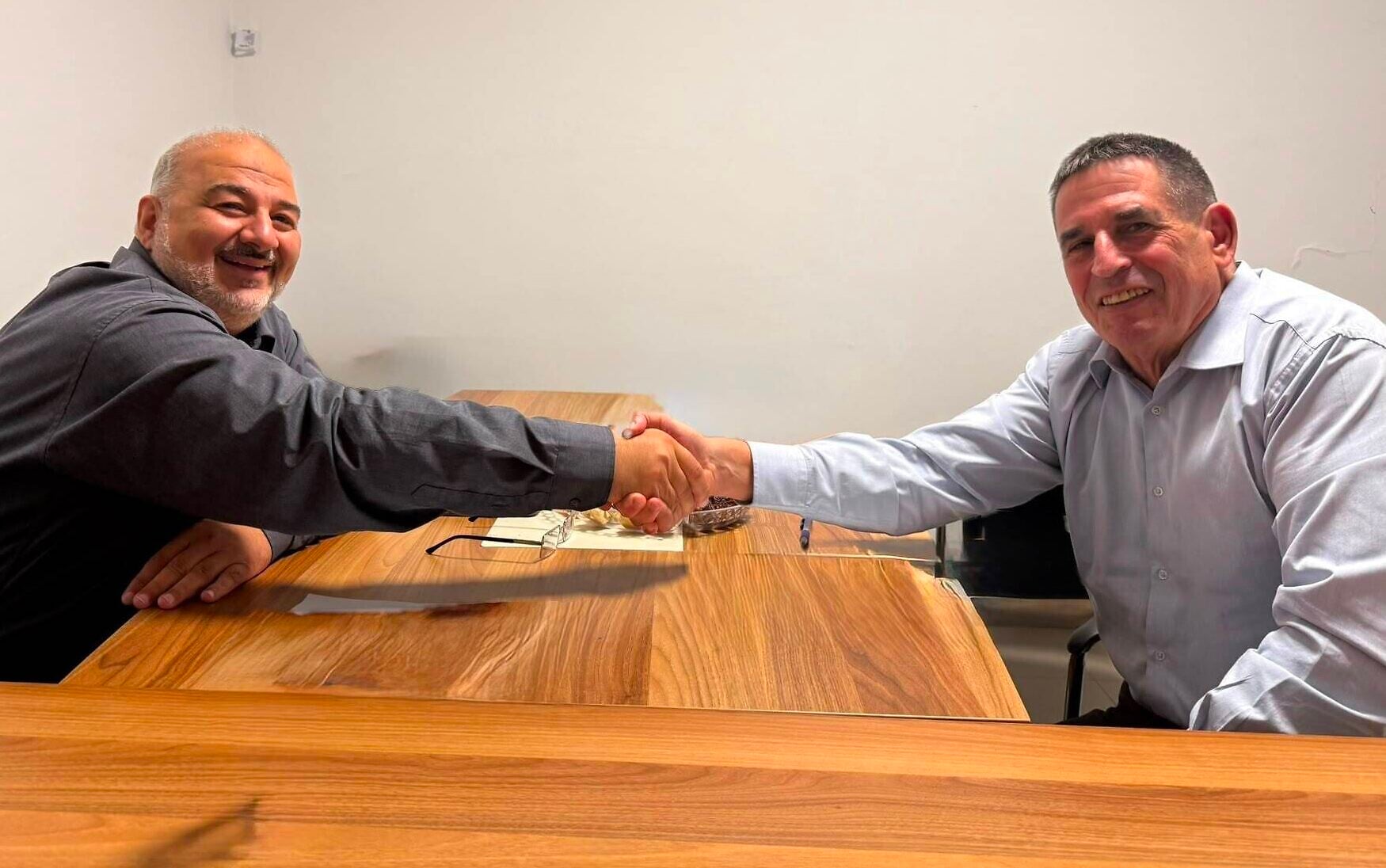
Ra’am chair Mansour Abbas and former MK Yoav Segalovitz said they had made progress toward a political alliance on Wednesday, as Abbas faced backlash for asserting that he and other Arab lawmakers had been “compelled” to accept Israel’s Jewish character.
In a joint statement, the two lawmakers confirmed that they met earlier in the day for additional talks on the possibility of Segalovitz receiving a spot on the Ra’am candidate list ahead of the October 27 election. The two men confirmed two weeks ago that they were discussing the Jewish politician’s potential membership in the party, which has Islamist roots.
The pair “discussed the details of the move and its importance for all citizens of the State of Israel and the fabric of Jewish-Arab relations, amid numerous challenges and the need to present a worthy political alternative to the country’s citizens, both Jewish and Arab,” the statement said.
The emerging partnership with Segalovitz and Abbas’s comments on Israel’s Jewish character both play into the central debate surrounding Ra’am: Whether parties hoping to oust Prime Minister Benjamin Netanyahu should welcome it into a future governing coalition.
Polls show that Ra’am, which joined a previous coalition in 2021, would again deliver a governing majority to the anti-Netanyahu camp. Those in favor of including Ra’am point to the Segalovitz talks as proof that the party is invested in Arab-Jewish partnership. But some critics of the party, which grew out of the Southern Branch of the Islamic Movement, are unwilling to rely on an Arab party to form a coalition, and have criticized Abbas’s support for the establishment of a Palestinian state.
Those criticisms gained steam on Wednesday after Abbas published a lengthy Arabic social media post, which he said was intended to set the record straight on positions he claims have been “misrepresented” in recent months.
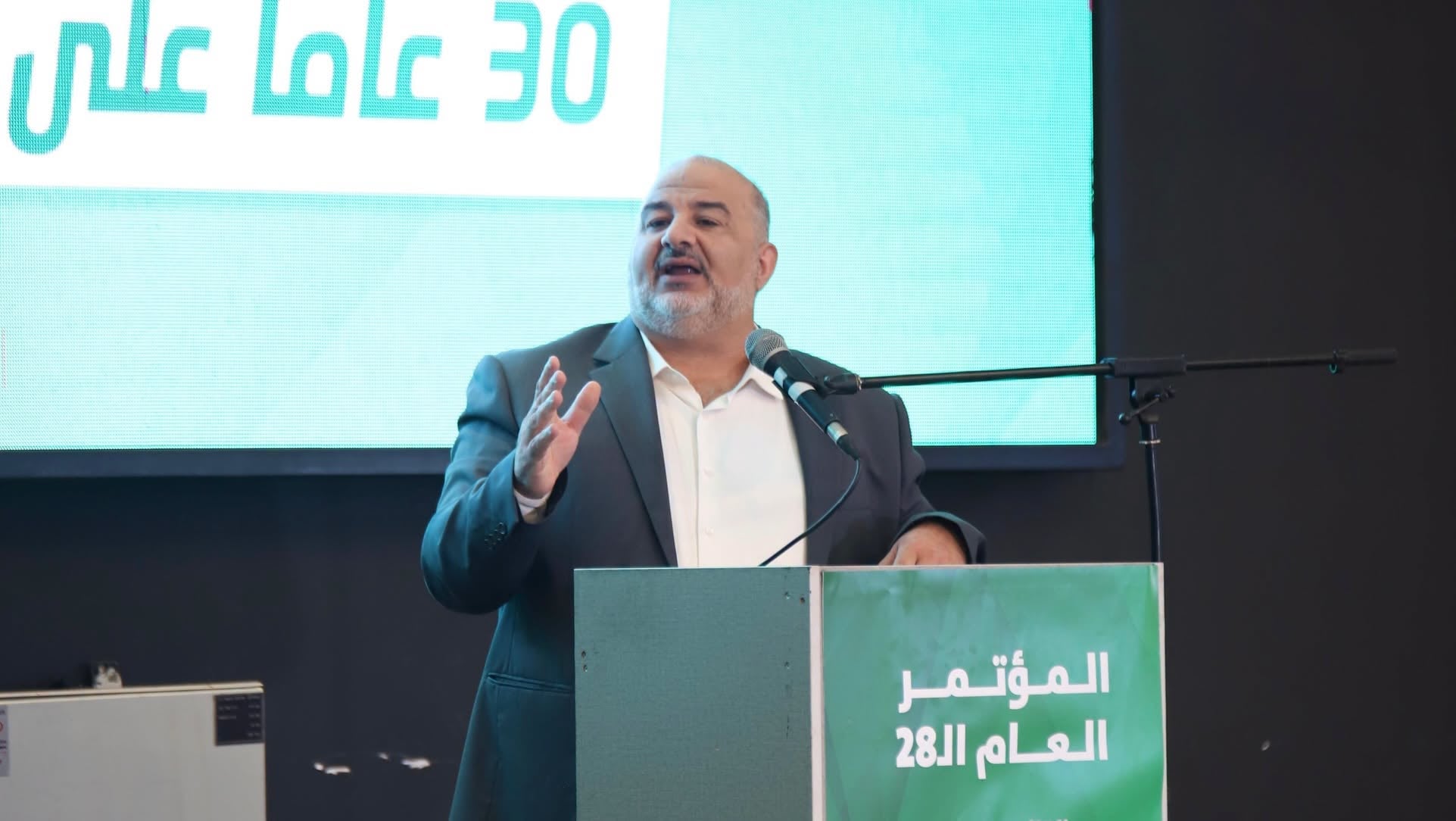
“The Jewish character of the state is a reality imposed upon us. It is not something we chose; rather, it is the choice of the Jewish majority, and not our demand,” wrote Abbas. “Arab parties have been compelled to accept it in practice; otherwise, they would be disqualified from parliamentary and local elections.”
It was not clear what sparked Abbas’s comments. However, an anonymous Ra’am official told the Kan public broadcaster that they were intended to “balance Segalovitz’s inclusion in the party in light of internal criticism.”
The exact nature of the political alliance that Segalovitz and Abbas are seeking remains unclear. The former Yesh Atid lawmaker has reportedly ruled out joining any party that does not recognize Israel as a Jewish and democratic state.
Right-wing lawmakers immediately pounced on Abbas’s statement.
Far-right Finance Minister Bezalel Smotrich, who supports Netanyahu, declared in response that Abbas was “a wolf in sheep’s clothing” who for years has been “gaining power” to enact his “real goal — jihad and eliminating the ‘infidels’ with an emphasis on the Jews and the State of Israel.”
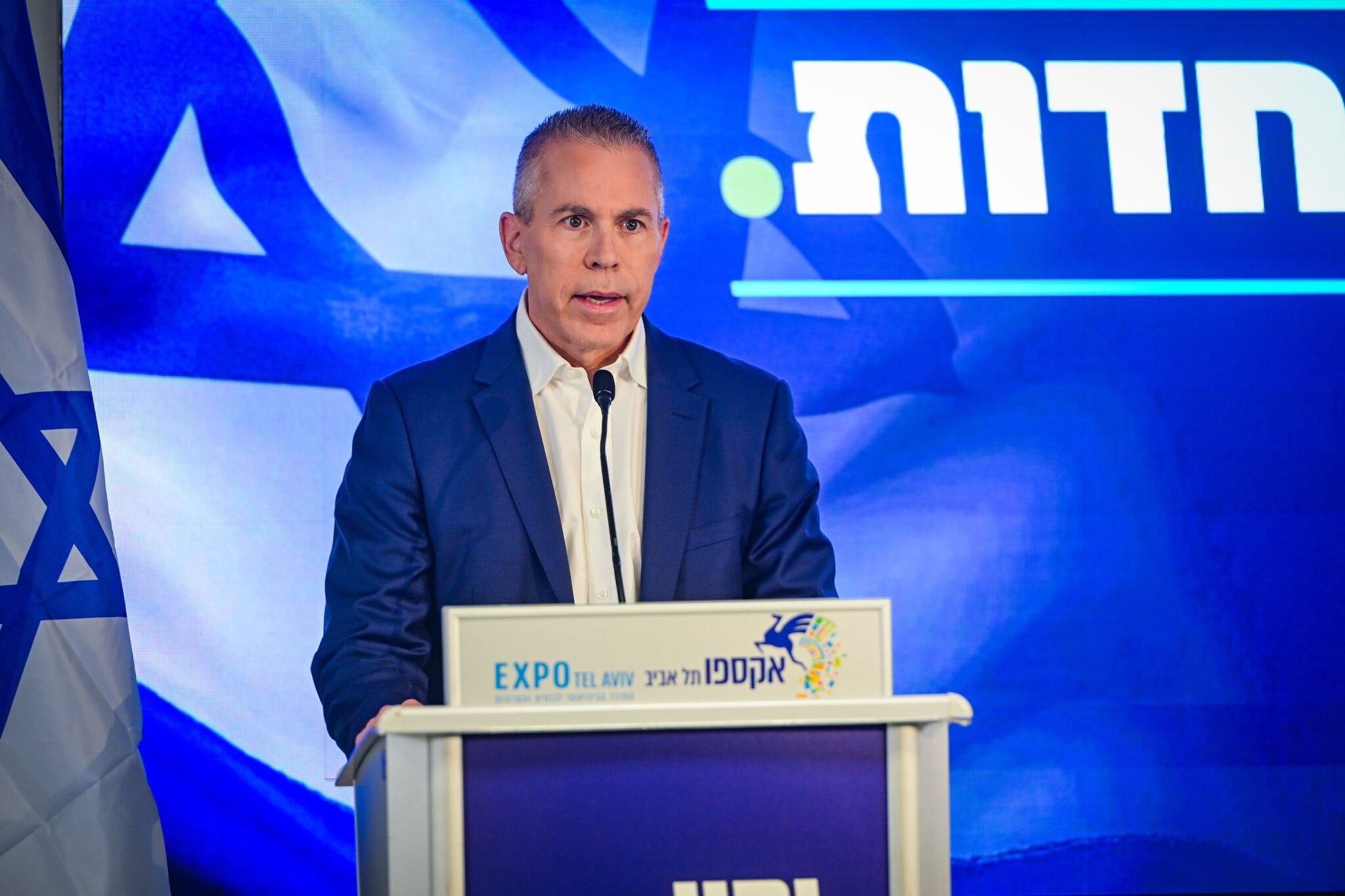
Gilad Erdan, head of the newly formed right-wing Unity party established as an alternative to Netanyahu’s Likud, also criticized Abbas, and accused him of “deceiving the Central Elections Committee, deceiving the public, and there are those who are falling for it. He does not want a Jewish state, he wants an Islamic caliphate.”
Abbas has positioned his faction as a moderate party which — unlike the other Arab-majority factions — is open to sitting in a governing coalition, as the party did when it joined the 2021 government headed by Naftali Bennett and Yair Lapid.
His post appeared to reflect Israeli law. The official website of the government states that, “An individual candidate, political party or Candidate List may be disqualified from contending in the Israeli elections if they act, directly or indirectly, against the existence of the State of Israel as the Jewish state.”
Abbas, in his Facebook post, defended Ra’am’s record and past participation in a governing coalition as benefiting Israel’s Arab citizens, saying it was focused on “strengthening our position and securing our national and civil rights,” and was “working to achieve our interests and protect our society and people from harm.”
Ra’am’s “position on the Palestinian people’s right to self-determination and the recognition of a Palestinian state alongside the State of Israel is well-known,” added the lawmaker.
His statement on the issue appeared intended to expand on his views after he drew condemnation last week by calling on Israel to recognize an “independent Palestinian state” during a speech to party delegates at their convention in Taibe.
Those comments had sparked criticism from within the bloc Ra’am hopes to join, with election frontrunner Gadi Eisenkot, chair of the opposition Yashar party, insisting that “a Palestinian state will not be established” by the government he hopes to form.
The following day, the Kan public broadcaster reported that Abbas had reassured the opposition party leaders that his belief in the Palestinian right to self-determination would not be translated into a demand for policy change during potential coalition talks after the election.
Abbas, in his post, also denied any reports that he does not recognize the Nakba, the term meaning “catastrophe” which Palestinians and their supporters use to refer to the mass displacement of Palestinians during the creation of Israel in 1948.
“The claim that I deny the Nakba, displacement, or the Palestinian narrative is another false accusation — a distortion and falsification of my words, their meaning, and their interpretation by those acting in bad faith,” he wrote.
Seemingly acknowledging the controversy that his post would generate, Abbas concluded that interpreting his statement correctly “requires good faith, a modicum of fairness, wisdom, and responsibility — qualities lacking in all our political opponents.”










The Times of Israel Community.