

Arie Zalmanowicz, 85: Kibbutz pioneer who was ‘a farmer by blood’
Kidnapped from Kibbutz Nir Oz on October 7 and died in captivity, his body returned in October 2025
 Add ToI as a Preferred Source on Google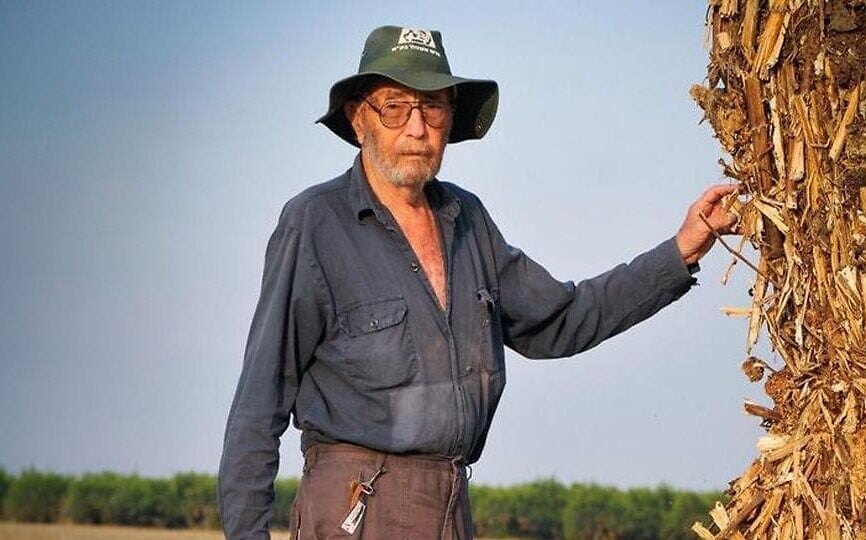
Arie “Zalman” Zalmanowicz, 85, from Kibbutz Nir Oz, was kidnapped from his home on October 7 and died in captivity. His body was finally returned to Israel in October 2025.
While seeking shelter in his reinforced room, Arie managed to text one of his sons that terrorists had infiltrated the kibbutz. Footage later emerged of Arie being driven inside Gaza on October 7 on the back of a motorcycle, bleeding and wounded.
Hamas in November 2023 released a clip showing Arie’s body and claiming that he had died, which Israeli authorities did not corroborate at the time. On December 1, 2023 – after the release of 105 hostages during a ceasefire – the IDF announced that Arie had been killed in captivity “based on findings that were collected, and intelligence.”
Authorities declared his date of death as November 17, 2023. After his death was confirmed, his family sat shiva, the traditional Jewish week of mourning, but could not hold a funeral.
Arie’s body was finally returned to Israel on October 21, 2025. He was laid to rest in Kibbutz Nir Oz on October 24. He is survived by his two sons, Boaz and Yoav, and five grandchildren. His wife, Ruth, died in 1997.
Hostage Farhan al-Qadi, who was rescued by IDF troops in August 2024, recounted that he was held in a Gaza hospital with Arie, who was diabetic, and was with him when died due to lack of treatment, malnutrition and neglect.
“He told me stories. He had a granddaughter he loved so much and two sons who live up north, and he talked about them every chance he got,” al-Qadi recalled in an interview a week after his rescue. The day he died, “he was saying goodbye to the kibbutz, goodbye to his friends, goodbye to his granddaughter… It broke me. I tried to talk to him, I was calling him ‘Arie, Arie,’ but nothing. He wasn’t hearing me. And then it was all over.”
Arie was born and raised in Haifa, an only child, according to the kibbutz. In 1957, he enlisted in the IDF and joined the Nahal group, heading south to help establish Nir Oz along with the Hashomer Hatzir youth group. He was known to one and all as “Zalman,” a shortening of his last name.
Arie was one of four young men from Haifa who helped found the kibbutz – alongside Amiram Cooper and Oded Lifshitz, who were both also kidnapped and slain in captivity, and Shlomo Margalit, who survived the attack.
“He was a man of agriculture, manual labor, and blue work clothes. He was a farmer by blood who knew how to appreciate and value the land and weather, understanding their impact on our lives,” Nir Oz wrote.
“His life’s mission was maintaining agriculture in the Negev conditions, particularly specializing in wheat cultivation,” the kibbutz added. “Although he had no formal education in the field and held no degrees, his desire to grow grain in the Negev fields, along with his professionalism, consistency, and curiosity, led him to advance research on wheat varieties, irrigation, spraying and pest control.”
On the kibbutz, Arie met Ruth, who had arrived in the early 1960s, and the couple wed and made their home in Nir Oz. Their oldest son, Boaz, was born in 1966, and Yoav followed in 1970. Ruth died of an illness in 1997, and Arie continued to live and work on the kibbutz though his sons lived elsewhere.
At a memorial service, his son, Yoav, said that “the legend” of his father was that of a “pioneer, farmer, kibbutznik, fellah. The legend tells of his love for the fields. Of his mischievous toughness. Of the connection with the earth and sky.”
And as a man, Yoav said, his father “loved and angered, worried and cared, taught and influenced. Father, grandfather. A modest and playful person, weak and strong, brave and anxious, wise and innocent.”









The Times of Israel Community.